
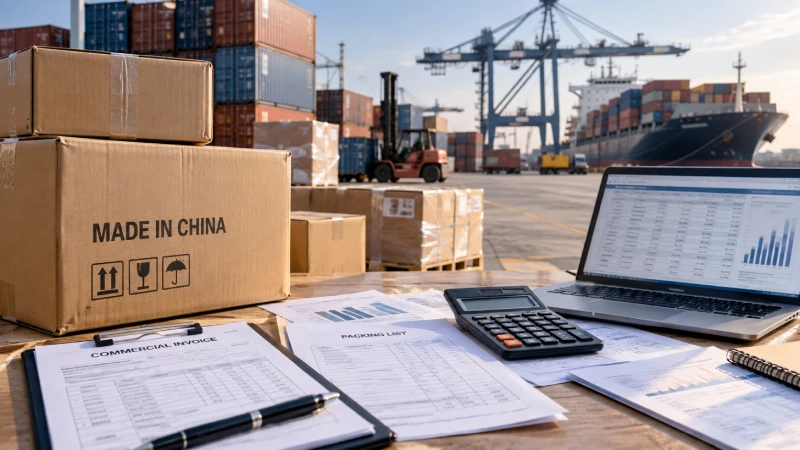
Before paying a supplier in China, a Kenyan importer should know more than the product price and freight cost. Import duty, VAT and other applicable levies can materially change the final cost of the shipment, and the amount cannot be estimated reliably from the supplier invoice alone.
There is no single “Kenya import tax from China” percentage that applies to every shipment.
Your preliminary tax estimate depends mainly on three things:
- the customs value of the goods;
- the correct HS classification;
- the current Kenyan and East African tax treatment of that tariff line.
For many commercial imports, the calculation may involve import duty, VAT, Import Declaration Fee (IDF) and Railway Development Levy (RDL). Excise duty, the Export and Investment Promotion Levy and other charges apply only to particular goods or circumstances.
This guide explains how to build a practical preliminary landed-cost estimate before you place an order with a Chinese supplier.
Data Note — Updated September 2026
Kenyan import taxes, exemptions and EAC tariff measures can change through legislation and Gazette notices. The rates and rules below should be checked against the current tariff line and legislation before shipment. Some older online guidance still displays historical IDF or RDL rates, so an undated calculator should not be treated as the final authority.
Quick Answer: How Much Import Duty Will I Pay from China to Kenya?
Kenya does not impose a special universal import-duty rate simply because goods come from China.
Imported goods are classified under the East African Community Common External Tariff. The standard CET structure includes 0%, 10%, 25% and 35% tariff bands, while certain sensitive goods can attract rates above the standard bands.
For a typical taxable commercial import, you may also need to consider:
| Charge | General position | Main calculation factor |
|---|---|---|
| Import Duty | Depends on the HS tariff line | Customs value × applicable duty rate |
| VAT | Standard taxable imports generally attract 16% | Statutory VAT taxable value |
| IDF | General rate currently 2.5%, subject to exemptions | Customs value |
| RDL | General rate currently 2%, subject to exemptions | Customs value |
| Excise Duty | Only for excisable goods | Product-specific |
| Export and Investment Promotion Levy | Only for goods listed in the relevant schedule | Product-specific |
Kenya’s VAT Act sets the general rate for taxable imported goods at 16%. Current legislation provides a general 2.5% IDF, while the Railway Development Levy is generally 2% of customs value, subject in both cases to statutory exemptions.
The practical calculation therefore starts with the product and HS code, not with a generic tax percentage.
If you are still planning the wider freight movement, see Shipping from China to Kenya for shipping methods, broad transit considerations and destination planning.
What Taxes and Levies Can Apply to Imports from China into Kenya?
When budgeting a China-to-Kenya shipment, separate charges that commonly apply to commercial imports from charges that apply only to certain products.
This distinction matters because adding every possible Kenyan tax to every shipment can overstate your landed cost just as easily as ignoring a product-specific levy can understate it.
Import Duty
Import duty depends mainly on the tariff classification of the goods under the EAC Common External Tariff.
The current standard CET structure uses four bands:
- 0% for specified raw materials and capital goods;
- 10% for specified intermediate goods not available within the region;
- 25% for specified intermediate goods available within the region;
- 35% for specified finished goods available within the region.
Some goods are classified as sensitive products and can attract rates above 35%.
These categories are useful for understanding the tariff system, but they are not a shortcut for classifying an individual product.
You should not assume, for example, that every machine imported from China qualifies for 0%, or that every finished consumer product automatically pays 35%.
The actual tariff line controls the calculation.
Value Added Tax
Kenya generally applies 16% VAT to taxable imported goods, although some products may be zero-rated or exempt under the VAT Act.
Import VAT should not simply be calculated as:
Chinese supplier invoice × 16%
The VAT Act defines the taxable value of imported goods by reference to the customs value, freight and insurance where not already included, and applicable customs duty.
This means the VAT calculation comes after the customs valuation and applicable customs-duty treatment have been established.
Import Declaration Fee
For ordinary imports subject to the fee, the current general IDF rate is:
IDF = 2.5% × Customs Value
The Miscellaneous Fees and Levies Act also contains exemptions for specified categories of goods.
This is one area where importers need to be careful with old online information. Some older KRA pages and calculators continue to display historical rates.
For current planning, use the effective legislation and recheck it before customs entry.
Railway Development Levy
The current general RDL rate is:
RDL = 2% × Customs Value
RDL also has statutory exemptions, so the 2% figure should not automatically be applied where an importer or product qualifies for specific relief.
Excise Duty
Excise duty is not a universal import charge.
It applies only when the imported product falls within an excisable category under Kenya’s Excise Duty Act. The rate and calculation method depend on the product concerned.
Therefore, a landed-cost worksheet should contain a line for excise duty, but the figure should remain zero unless the exact product has been confirmed as excisable.
Export and Investment Promotion Levy
The Export and Investment Promotion Levy, or EIPL, is another conditional charge.
Kenyan legislation applies the levy to goods specifically listed in the Third Schedule of the Miscellaneous Fees and Levies Act, at the rates specified for those goods. It does not apply universally to every import.
If your product falls within a listed tariff line, the levy needs to be included in the pre-purchase calculation.
If it does not, you should not add a generic EIPL percentage simply because a freight calculator includes one.
Start With Customs Value: What Amount Is Kenya Taxing?
One of the most common mistakes when estimating Kenya import duty from China is treating the supplier’s invoice total as the customs value.
They are not necessarily the same.
KRA states that duties are assessed based on the customs value and tariff classification, and that customs valuation is based on the price actually paid or payable for the imported goods.
The customs valuation rules can then require adjustments to the transaction value.
Supplier Invoice Value vs Customs Value
Consider three common purchasing arrangements from China.
If you purchase under EXW Shenzhen, the factory price may cover little more than the goods available at the supplier’s premises.
Costs such as pickup from the factory, transport to the export gateway, export-related movement and international freight may sit outside the supplier invoice.
If you purchase under FOB Shenzhen, more origin-side costs are normally incorporated into the commercial price, but international freight and insurance still need to be considered separately.
If you purchase under CIF Mombasa, the commercial price normally already includes cost, insurance and freight to the named destination.
This is why importers frequently use CIF as a convenient planning concept.
However, the Incoterm does not replace customs valuation law.
Customs value is ultimately determined according to the applicable customs rules, not simply by copying whichever number appears at the bottom of a supplier quotation.
A Simple Customs-Value Planning Flow
For preliminary budgeting, think about the calculation in this order:
China supplier transaction value
→ required valuation adjustments
→ freight / insurance where applicable
→ customs value
→ tariff classification
→ import taxes and levies
The exact treatment can become more complicated when the transaction involves related companies, assists, royalties, unusual discounts or other valuation issues.
For a normal SME importer, the main practical lesson is simpler:
Do not calculate Kenyan import taxes from an EXW or factory invoice until you understand which additional costs form part of the customs valuation.
Can Customs Reject My Declared Value?
The commercial invoice is an important supporting document, but it does not mean Customs must accept every declared figure without review.
The importer should keep documents that support the transaction and declared value, including purchase contracts, invoices, payment records, freight information and other relevant documentation.
This has become even more important under Kenya’s updated import-documentation requirements in 2026, which we discuss later in this guide.
Your HS Code Determines the Import Duty Rate
Once the customs value has been estimated, the next question is:
What duty rate applies to the product?
That depends on the HS classification.
A product description such as:
“LED light”
“machine”
“spare part”
“electronic accessory”
“plastic item”
or
“furniture”
is rarely detailed enough for reliable classification.
Two products that appear similar commercially may fall under different tariff lines because their function, construction, materials or technical characteristics differ.
Why Product Details Matter
Classification may depend on factors such as:
| Product information | Why it can matter |
|---|---|
| Main function | Helps determine the appropriate heading |
| Materials or composition | Important for many manufactured goods |
| Model and specification | Separates different technical products |
| Power or capacity | Relevant for some equipment |
| Degree of assembly | May affect classification |
| Intended use | Relevant for certain categories |
| Manufacturer datasheet | Provides objective technical information |
For this reason, a supplier simply writing “machine parts” on a pro forma invoice does not give an importer enough information to build a reliable tax estimate.
What to Ask Your Chinese Supplier Before Checking the HS Code
Before finalizing the tax budget, collect a proper technical description.
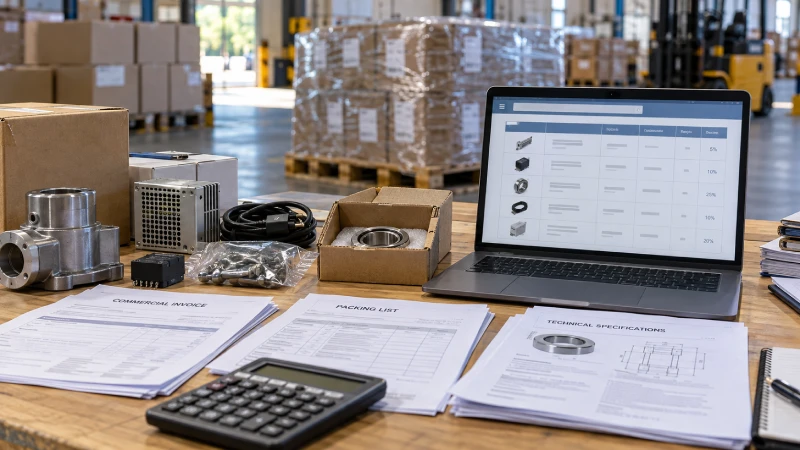
At minimum, your file should identify the product name, manufacturer or model where relevant, primary function, material or composition, technical specifications, quantity and unit value.
For machinery, electronics, auto parts, industrial components and specialized products, a datasheet or technical manual can be particularly useful.
Do Not Use the Supplier’s HS Code Blindly
Chinese suppliers often provide an HS code because they need one for their own export declaration.
That code can be a useful reference, but it should not automatically be treated as the final Kenyan tariff classification.
China’s export classification and Kenya’s import tariff treatment operate within their respective customs systems, and classifications can require country-specific verification beyond the first six harmonized digits.
The Kenyan importer remains responsible for ensuring that the goods are correctly declared on import.
When an Advance Ruling Makes Sense
For material classification uncertainty, KRA provides an Advance Ruling process.
KRA states that advance rulings can cover:
- tariff classification;
- determination of origin;
- the appropriate customs valuation methodology.
An application is made before importation. KRA states that the ruling is binding on Customs and the applicant for the goods and circumstances covered, is free, and is generally issued within 30 days after all required information has been received. A ruling is valid for 12 months.
An advance ruling can be particularly useful when you are planning:
- repeated imports of the same product;
- a high-value equipment purchase;
- a tariff classification where two plausible codes have materially different rates;
- specialized machinery;
- a product where the classification may affect an exemption, excise treatment or another levy.
For a USD 200 sample order, that level of formal confirmation may not be commercially necessary.
For a recurring container program or expensive production line, the financial difference can be significant.
How Each Kenya Import Tax Is Calculated
Once you have a preliminary customs value and a likely HS code, you can start building the tax calculation.
The order matters.
Import Duty Calculation
The basic planning formula is:
Import Duty = Customs Value × Applicable Import Duty Rate
For example, if the verified tariff treatment is 25% and the customs value is KES 1,000,000:
KES 1,000,000 × 25% = KES 250,000
But the important word here is verified.
The fact that 25% is one of the EAC tariff bands does not mean your product attracts 25%.
VAT Calculation
For standard-rated taxable imports, the VAT rate is generally 16%.
The calculation is:
Import VAT = VAT Taxable Value × Applicable VAT Rate
The VAT taxable value must first be determined under Kenya’s VAT Act.
Section 14 provides that the taxable value of imported goods includes the value established for customs-duty purposes, relevant insurance and freight not already included, and applicable duty of customs.
This is why the following shortcut can be misleading:
Supplier invoice × 16%
Before calculating VAT, establish the proper customs and duty inputs.
IDF Calculation
For an ordinary import where no exemption applies:
IDF = Customs Value × 2.5%
If the customs value is KES 1,000,000:
IDF = KES 25,000
Current statutory exemptions should still be checked before applying the fee.
RDL Calculation
For an ordinary import where no exemption applies:
RDL = Customs Value × 2%
On a KES 1,000,000 customs value:
RDL = KES 20,000
Again, specific statutory exemptions can apply.
Excise Duty Calculation
There is no useful universal formula without first identifying the product.
If the product is excisable, check:
- whether the current Excise Duty Act covers it;
- whether the rate is ad valorem, specific or calculated another way;
- the legally defined excisable value.
Do not assume that because a competing import calculator shows an excise field, every shipment pays excise.
How to Calculate a Preliminary Landed-Cost Estimate
A useful pre-purchase calculation should answer two different questions:
Question 1: Approximately how much may be payable in import taxes and levies?
Question 2: What may the shipment cost after purchasing, shipping, clearing and delivering the goods?
These are not the same number.
Step 1: Establish the Preliminary Customs Value
Start with the actual commercial transaction.
Then identify whether freight, insurance and other valuation elements are already included.
Do not add international freight twice simply because you started with a CIF supplier quotation.
Likewise, do not use an EXW invoice as though it were automatically the final customs value.
Step 2: Confirm the Likely HS Classification
Find the applicable tariff line using the actual technical details of the product.
For mixed shipments, work line by line.
A container containing machinery, spare parts, electronic components and packaging materials should not automatically be given one blended tax percentage.
Pro Tip: For mixed-SKU shipments, build the preliminary tax worksheet by HS code. One shipment can contain several different duty rates and tax treatments.
Step 3: Calculate Import Duty
Apply the verified tariff rate to the customs value attributed to that tariff line.
Step 4: Check Conditional Taxes
Before moving to VAT, check whether the product is:
- excisable;
- subject to EIPL;
- subject to another product-specific charge;
- eligible for an exemption or duty remission.
Do not add a charge simply because it appears in another importer’s customs entry.
Step 5: Determine the VAT Taxable Value
Apply the current VAT Act rules to determine the taxable base.
If you are preparing only a purchasing budget, the figure can be treated as preliminary.
If the margin between a profitable and unprofitable order is small, have the planned calculation checked before paying the supplier.
Step 6: Calculate IDF and RDL
Where applicable:
IDF = 2.5% × Customs Value
RDL = 2% × Customs Value
Step 7: Add Logistics and Compliance Costs
Only after estimating the customs-tax component should you move to the broader landed cost.
Depending on the shipment, this can include:
- supplier pickup in China;
- consolidation;
- export handling;
- ocean freight or air freight;
- cargo insurance;
- applicable conformity or regulatory costs;
- destination handling;
- customs-clearing services;
- Mombasa or inland-terminal costs;
- Nairobi or other inland delivery.
Some of these costs may already form part of your customs-value calculation, so do not count them twice when building the commercial landed-cost worksheet.

Worked Example: Preliminary Kenya Import-Tax Estimate
The following example is illustrative only.
It is designed to show the calculation process, not to state the duty rate of a real product.
Assumptions
Assume:
- customs value: KES 1,000,000
- verified import-duty rate for the example: 25%
- standard-rated VAT applies;
- no excise duty applies;
- EIPL does not apply;
- no exemption or remission applies;
- the applicable VAT taxable value produced by the assumed customs treatment is KES 1,250,000;
- logistics and destination costs outside the tax calculation are not included.
The estimate would be:
| Charge | Calculation | Amount |
|---|---|---|
| Customs Value | Assumed | KES 1,000,000 |
| Import Duty | 1,000,000 × 25% | KES 250,000 |
| IDF | 1,000,000 × 2.5% | KES 25,000 |
| RDL | 1,000,000 × 2% | KES 20,000 |
| VAT | 1,250,000 × 16% | KES 200,000 |
| Excise | Not applicable in this example | KES 0 |
| EIPL | Not applicable in this example | KES 0 |
| Illustrative taxes and levies | KES 495,000 |
This does not mean that Kenya import tax is 49.5%.
The example changes immediately if the product has:
- a 0%, 10%, 35% or other duty rate;
- a different VAT treatment;
- excise duty;
- EIPL;
- an exemption;
- another customs valuation.
It is therefore better to remember the calculation process than the final number.
From Tax Estimate to Landed Cost
Your commercial landed-cost worksheet might look like this:
| Cost layer | What to use |
|---|---|
| Product purchase | Actual supplier invoice |
| China pickup / origin | Actual quotation where not already included |
| International freight | Current freight quotation |
| Insurance | Actual insurance cost |
| Import taxes and levies | Preliminary customs calculation |
| Compliance | Actual product-specific requirements |
| Clearance / destination | Actual local quotations |
| Inland delivery | Mombasa, Nairobi or final-destination quotation |
This allows you to compare suppliers properly.
A factory that is USD 2,000 cheaper may not produce a cheaper landed cost if the product attracts different classification issues, packaging increases freight substantially or the shipment requires additional compliance.
If you are comparing freight methods as part of the landed-cost calculation, review the relevant China-to-Kenya shipping options together with the customs estimate.
What Can Change Your Tax Estimate Before the Cargo Ships?
A preliminary calculation is useful for purchasing decisions, but several things can change the final customs assessment.
The HS Code Changes
This is one of the biggest risks.
Suppose an importer budgets using an HS code with a 10% duty rate, but the product is later classified under a different line attracting 25%.
The effect is not limited to the import-duty line itself.
Because customs taxes interact, the classification change may also affect:
- VAT taxable value;
- excise treatment;
- EIPL;
- exemption eligibility;
- other regulatory requirements.
If the classification is uncertain and the order value is high, solve the issue before the goods leave China.
The Customs Value Changes
An importer may have estimated taxes using only the factory price.
If the final customs value includes additional amounts not included in the planning worksheet, the tax base can rise.
This is particularly relevant for buyers using EXW quotations and then arranging pickup, export logistics and international transport independently.
Current Tariff Measures Change
The EAC Common External Tariff is not a document that should be checked once and reused indefinitely.
Partner States can implement annual fiscal measures and Gazette changes affecting selected tariff lines.
If your previous shipment cleared several months ago, do not automatically assume the same customs treatment still applies to the next shipment.
An Exemption or Remission Applies—or Does Not Apply
Importers sometimes receive a quotation saying a product is “duty free” and assume all customs charges disappear.
That is not necessarily correct.
Relief from import duty does not automatically mean relief from:
- VAT;
- IDF;
- RDL;
- excise;
- product-specific levies.
Each charge must be checked separately.
You Import Several Products Together
This matters frequently with LCL consolidation and mixed-container purchasing.
A Kenyan importer may source from three or four Chinese factories and consolidate the cargo in Shenzhen, Guangzhou, Yiwu or another origin location.
Operationally, the goods may move under one consolidated freight plan.
Tax-wise, however, different product lines can still require different classification and treatment.
Do not calculate the whole consolidated shipment using the rate of the most expensive item.
Exemptions, Duty Remission and “Duty-Free” Imports
Kenya provides exemptions and relief mechanisms in specific circumstances, but these should not be treated as general discounts available to every importer.
A 0% Duty Rate Is Not the Same as “No Import Taxes”
Consider an HS line with 0% import duty.
The duty component may be zero, but the importer still has to check:
- VAT treatment;
- IDF;
- RDL;
- conditional levies;
- product-specific requirements.
This distinction is important when comparing machinery or raw-material sourcing options.
A Chinese supplier may tell you:
“The machine has zero duty.”
Even if the tariff classification is correct, that statement alone does not establish the complete Kenyan import-tax bill.
Statutory Exemptions
The Miscellaneous Fees and Levies Act includes exemptions from IDF and RDL for specified categories of imports.
Other taxes have their own exemption provisions.
Eligibility should therefore be verified against the specific law rather than inferred from the commercial purpose of the shipment.
Duty Remission
Kenya also operates duty-remission mechanisms for qualifying manufacturing circumstances within the EAC customs framework.
Remission approvals are typically tied to defined manufacturers, inputs, quantities, tariff lines or validity periods.
They should not be interpreted as a general lower-duty rate available to any company importing raw materials.
For a normal commercial importer buying finished goods in China for resale, do not include a remission in the landed-cost budget unless eligibility and approval have actually been established.
Documents to Collect From Your Chinese Supplier Before Finalizing the Tax Budget
Tax planning becomes much more reliable when the import documentation is prepared while the order is still being negotiated.
Do not wait until the container is already at sea.
Product and Classification Information
Ask the supplier to provide enough information to identify what is actually being imported.
For a straightforward consumer product, this may be relatively simple.
For machinery, electrical equipment, components, chemicals or technical products, collect more detail.
Useful information includes:
- full commercial product description;
- model or part number;
- primary function;
- materials or composition;
- technical specifications;
- manufacturer datasheet where relevant;
- quantity and unit;
- unit price and total value.
Pro Tip: If an invoice description would not allow someone unfamiliar with the shipment to understand what the product actually is, improve the description before shipment.
Commercial and Shipping Documents
Common import-clearance documents can include:
- commercial invoice;
- packing list;
- bill of lading or air waybill;
- freight information;
- Certificate of Origin;
- licences or permits where relevant;
- other product-specific supporting documents.
The exact document set depends on the cargo.
Regulated products may also require compliance documentation such as a Certificate of Conformity under the applicable KEBS/PVoC process.
That is a separate compliance question from the calculation of import duty and should be checked before shipment.
Certificate of Origin
Kenya introduced a mandatory Certificate of Origin requirement for imports in 2025.
For a China shipment, confirm early who will provide the required origin document and whether the issuing format meets the current Kenyan requirement.
Do not assume that the supplier’s commercial invoice stating “Made in China” replaces the formal origin requirement.
New 2026 Export Documentation Requirement
A particularly important change for China-to-Kenya importers took effect on September 1, 2026.
KRA states that importers must obtain and retain an export declaration, export entry, customs export certificate or equivalent export document from the country of export.
KRA advises importers to keep these records for at least five years and ensure the documentation supports details including:
- exporter;
- importer;
- description of the goods;
- quantity;
- value;
- tariff classification;
- country of export.
Failure to provide satisfactory documentation when requested can affect claims relating to value, origin, ownership, exemptions, deductions or refunds.
For goods leaving China, this has an important operational consequence:
Ask the Chinese supplier or exporting party about the export-side customs documentation before the cargo departs.
This is especially important if the company selling the goods to you is different from the company shown as exporter in the Chinese customs declaration.
The Certificate of Origin and export customs declaration should also not be treated as interchangeable documents. They support different aspects of the transaction.
When Should You Confirm the Tax Position Before Ordering?
Not every shipment requires a formal tax opinion.
If you import a well-known product under an established tariff line, have imported it repeatedly and are not claiming unusual relief, a preliminary calculation may be enough for purchasing and cash-flow planning.
Other shipments deserve more attention before the supplier receives a deposit.
Verify Before Ordering When the Financial Difference Is Material
You should consider additional verification when:
- the HS classification is uncertain;
- two plausible HS codes produce significantly different duties;
- the order value is high;
- you plan to import the product repeatedly;
- the product may be excisable;
- EIPL may apply;
- an exemption or remission is being claimed;
- the shipment contains many different SKUs;
- the customs valuation is unusual;
- the product is subject to specialized regulation.
For a recurring import program, spending time on classification before the first shipment is usually more efficient than disputing the treatment after the cargo arrives.
Work With a Licensed Kenyan Customs Clearing Agent
KRA states that an importer needs to engage an accredited or licensed customs clearing agent to process import documentation through Kenya’s customs system and assist with clearance.
Your clearing agent can review the proposed classification, documentary package and customs entry before the shipment reaches Kenya.
For difficult classification, origin or valuation issues, the official KRA Advance Ruling procedure may provide stronger certainty.
Do Not Leave Tax Verification Until the Cargo Reaches Mombasa
If a classification problem is identified after arrival, changing the purchase decision is no longer possible.
The goods are already manufactured, paid for and shipped.
For high-value orders, the better sequence is:
Product specification
→ preliminary classification
→ preliminary landed-cost calculation
→ compliance check
→ supplier order
→ shipment
—not the other way around.
Import Tax Is Only One Part of Your China-to-Kenya Landed Cost
Import taxes can be significant, but they should never be confused with the complete cost of importing.
A shipment moving by sea to Mombasa may also involve:
- China factory pickup;
- consolidation or warehouse handling;
- export handling;
- ocean freight;
- insurance;
- destination handling;
- customs-clearing services;
- compliance costs;
- inland transport.
For cargo destined for Nairobi, your commercial calculation should also include the appropriate inland route after the Kenyan arrival point.
Depending on the shipment and routing, that may involve movement through the Mombasa–Nairobi logistics corridor, Nairobi ICD arrangements or direct trucking.
These are logistics costs, not extra import-duty percentages.
For the wider freight side of the calculation, use our Shipping from China to Kenya guide together with the appropriate sea freight, air freight, LCL or FCL cost guide.
The two calculations should work together:
Customs-tax estimate + logistics estimate = practical preliminary landed-cost budget
A Better Way to Compare Chinese Suppliers
Many importers compare suppliers using only the factory price.
That can produce the wrong purchasing decision.
Imagine Supplier A offers a lower unit price but:
- uses larger packaging;
- quotes EXW while Supplier B quotes FOB;
- provides incomplete classification information;
- cannot provide required export documentation promptly;
- produces a specification that falls under a different tariff treatment.
The cheaper factory price may not produce the cheaper delivered cost in Kenya.
Before placing an order, compare suppliers using a common worksheet:
| Comparison item | Supplier A | Supplier B |
|---|---|---|
| Product price | Actual | Actual |
| Incoterm | Verify | Verify |
| China origin cost | Calculate | Calculate |
| Freight | Quote | Quote |
| Customs value | Estimate | Estimate |
| HS classification | Verify | Verify |
| Import duty | Calculate | Calculate |
| VAT | Calculate | Calculate |
| IDF / RDL | Calculate | Calculate |
| Conditional levy | Check | Check |
| Compliance cost | Check | Check |
| Kenya inland delivery | Quote | Quote |
| Estimated landed cost | Compare | Compare |
This is much more useful than asking:
“Which supplier is USD 1 cheaper per unit?”
Before You Ship: A Practical Kenya Import Tax Checklist
Before the cargo leaves China, confirm that your team, freight forwarder and Kenyan clearing agent are working from the same basic information.
You should know:
What exactly is the product?
Use a detailed commercial and technical description.
What HS code is being used for Kenya?
Do not rely only on the Chinese supplier’s export code.
What customs value are you budgeting?
Check whether freight and insurance are already incorporated.
What import-duty rate applies?
Verify the current tariff line and any current EAC measures.
Is VAT standard-rated, zero-rated or exempt?
Check the current VAT treatment.
Do IDF and RDL apply?
Confirm whether any statutory exemption exists.
Is the product excisable or subject to EIPL?
Do not add these charges unless the product actually qualifies.
Are you claiming an exemption or remission?
Confirm the legal basis and approval rather than assuming eligibility.
Do you have the Kenyan import documents ready?
Include the current COO and export-document requirements where applicable.
Has the Kenyan clearing agent reviewed any material uncertainty?
Do this before shipment wherever possible.
Once these inputs are known, your pre-purchase estimate becomes much more useful.
FAQ
What is the import duty from China to Kenya?
There is no universal import-duty rate for goods from China. Kenya applies the East African Community Common External Tariff, and the correct duty rate depends on the exact HS classification and current tariff treatment of the product.
Is Kenya import duty calculated on FOB price or CIF value?
Import duty is based on the customs value determined under the applicable customs valuation rules. CIF is useful for planning, but a supplier's FOB or CIF quotation does not automatically equal the legally assessed customs value.
What are the current IDF and RDL rates in Kenya?
For ordinary imports where no exemption applies, the current general planning rates are 2.5% of customs value for IDF and 2% of customs value for RDL. Recheck current legislation before shipment because rates and exemptions can change.
How is VAT calculated on imported goods in Kenya?
Standard-rated taxable imports generally attract 16% VAT, but the VAT taxable value must first be determined under the VAT Act. It should not simply be calculated as 16% of the Chinese supplier invoice.
How can I confirm an HS code before importing from China?
Start with a complete technical product description and supporting specifications. If classification remains uncertain, ask a licensed Kenyan clearing agent to review it or consider a KRA Advance Ruling for material classification, origin or valuation uncertainty.
Does 0% import duty mean my shipment is tax-free?
No. A 0% duty tariff line only means the import-duty component may be zero. VAT, IDF, RDL or another applicable levy may still need to be considered unless separate relief applies.
Are customs taxes the same as the total landed cost?
No. Customs taxes are only one part of landed cost. The total can also include the product purchase price, China pickup, consolidation, international freight, insurance, compliance, customs clearance, destination handling and delivery within Kenya.
Plan Your China-to-Kenya Shipment Before You Order
A useful Kenya import-tax estimate does not start with a generic online percentage.
It starts with the actual product.
Before purchasing from China, establish the product specification, likely HS classification, customs value and current tax treatment. Then calculate import duty, VAT, IDF, RDL and any genuinely applicable product-specific charge.
For a straightforward shipment, this produces a reasonable preliminary budget.
For a high-value, recurring or technically complex import, classification and tax treatment should be confirmed before the supplier ships.
If you already have a supplier quotation, prepare the following details:
product + quantity + commercial value + supplier location + Incoterm + packing dimensions + gross weight + HS code if available + destination in Kenya
With those inputs, the freight and customs-planning sides of your China-to-Kenya landed cost can be reviewed together before cargo leaves China.
Official Source Note
This guide should be maintained against current official materials from the Kenya Revenue Authority, Kenya Law and the East African Community, including KRA customs guidance, the Value Added Tax Act, the Miscellaneous Fees and Levies Act and the EAC Common External Tariff framework.
Useful official references include:
Kenyan tax and tariff measures can change, so current legislation and the exact HS tariff line should be checked for each shipment before customs entry.
