
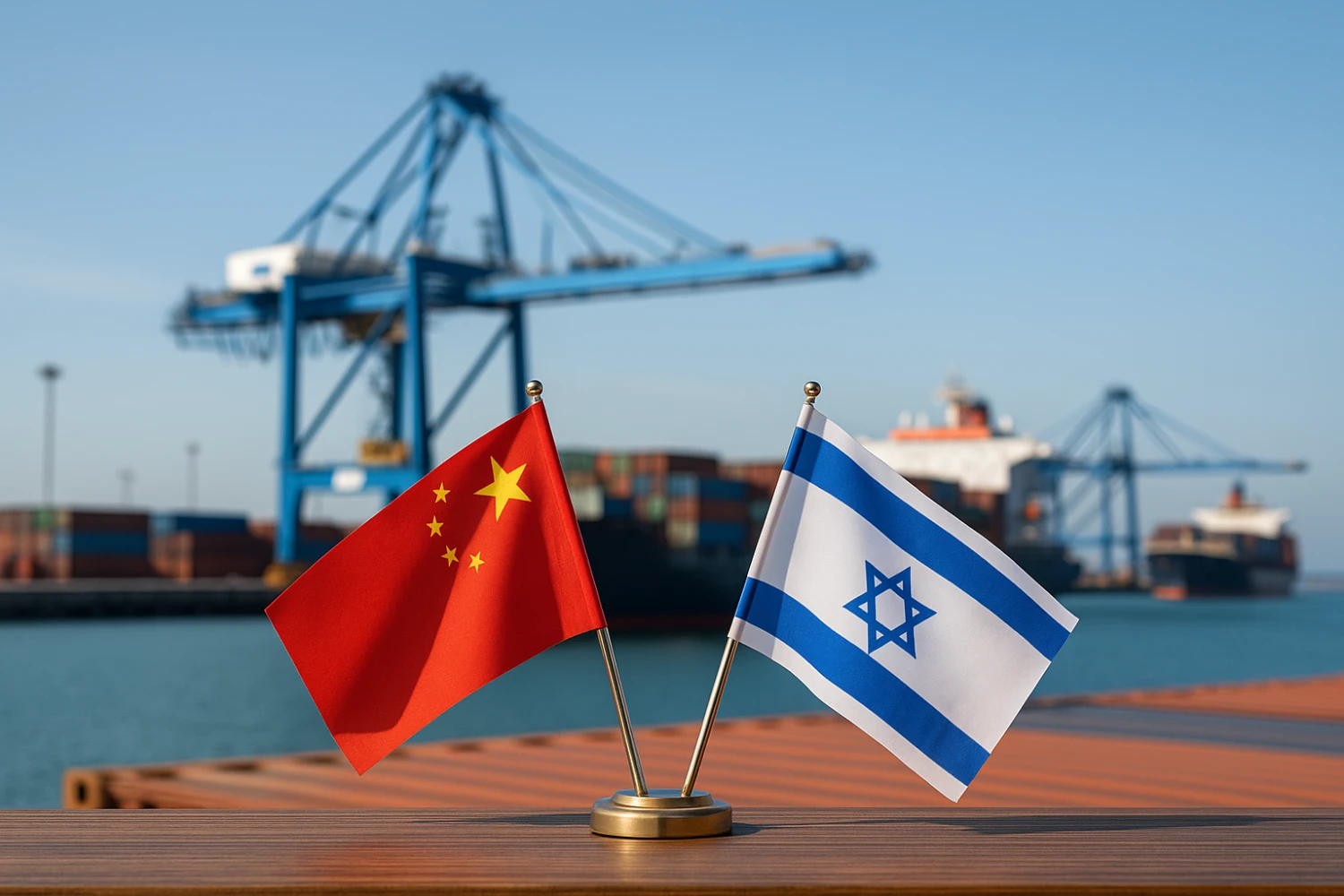
Ship from China to Israel: Cost, Transit Time & Best Shipping Methods (2026 Guide)
Overview: Shipping from China to Israel
Quick answer
DDP is currently not suitable for this route because import clearance, tax, product compliance and importer responsibilities must be confirmed and managed locally. Winsail can arrange China pickup, export handling and accepted international freight. Use FOB, CFR/CIF, CPT/CIP or a confirmed DAP arrangement, with the consignee and its licensed broker handling import clearance and charges.
Shipping from China to Israel continues to expand rapidly in 2026, driven by strong demand for affordable electronics, home products, machinery, automotive accessories, and industrial components. As one of Israel’s top import sources, China offers competitive pricing, flexible manufacturing capacity, and efficient export routes — making it the preferred procurement hub for Israeli wholesalers, retailers, and e-commerce buyers.
Israel’s geographic position on the Mediterranean Sea, combined with its developed logistics infrastructure, enables fast and flexible supply chain options. Whether you ship full containers of furniture from Ningbo, LCL pallets of electronics from Shenzhen, or urgent spare parts via air freight from Guangzhou to Tel Aviv, importers can choose the best balance of cost, speed, and customs simplicity.
Why Shipping from China to Israel Is Popular
-
Strong logistics connectivity — Multiple weekly sailings and daily flights into Israel’s ports and airports
China → Israel Trade Snapshot
Key Shipping Highlights
| Customs Authority | Israel Customs Administration |
| Import Requirements | Commercial invoice, packing list, BL/AWB, HS code, certifications for regulated goods |
Who Is This Guide For?
This page is designed for:
-
Importers and wholesalers sourcing from China
-
Amazon-style e-commerce sellers
-
Industrial purchasing teams procuring components
-
SMEs looking for predictable logistics cost and timelines
If you’re planning to import goods from China to Israel in 2026, this guide shows you the best shipping methods, real-world cost estimates, transit times, and step-by-step preparation tips — helping you avoid delays and unnecessary expenses.
Estimated Shipping Cost & Transit Time
Cost & Time Estimates by Shipping Method
Estimated ranges based on publicly available 2026 data from multiple logistics providers. Always request a formal quote for accurate pricing.
Cost & Time Comparison: Which Method to Use?
What Influences Cost & Transit Time
Sea Freight from China to Israel
Sea freight is generally the most economical option for regular, bulky or containerised cargo from China to Israel. FCL suits full-container volumes, while LCL can serve smaller consignments when consolidation schedules and destination handling charges are understood.
Main gateways and planning points
- Common gateways include Haifa and Ashdod, subject to current carrier routing and acceptance.
- Confirm the commodity, packing, dangerous-goods status and consignee before booking.
- Allow contingency time for sailing or route changes and prepare import documents before departure.
- The Israeli consignee and its licensed customs broker should confirm product eligibility, customs classification, VAT, duties and local charges.
Winsail can arrange China pickup, export handling and accepted sea-freight services. Import clearance and charges remain with the Israeli consignee under the agreed non-DDP structure.
Air Freight from China to Israel
Air freight is the fastest and most reliable shipping option for importers who need urgent replenishment, high-value components, medical devices, fashion items, electronics, or small-volume shipments. With daily flights connecting China’s manufacturing hubs to Ben Gurion International Airport (TLV), air freight helps Israeli businesses keep supply chains responsive and inventory lean.
In 2026, air cargo demand from China to Israel remains strong due to rapid e-commerce growth, shorter product lifecycles, and the need for just-in-time delivery.
Why Importers Choose Air Freight
-
Fastest shipping method (days, not weeks)
-
Suitable for fragile, high-value, or time-sensitive goods
-
Lower risk of cargo damage or theft
-
More predictable schedule compared to sea freight
-
Ideal for product launches, urgent spare parts, seasonal goods
Typical Air Freight Transit Times
Prices vary based on season, fuel surcharge, flight availability, and commodity type.
Best Cargo Types for Air Freight
| Suitable Cargo | Not Recommended |
|---|---|
| High-value electronics | Large furniture |
| Fashion, accessories | Oversized machinery |
| Medical equipment | Very heavy cargo |
| Spare parts | Low-margin bulky goods |
| Cosmetics, branded goods | Hazardous items without certificate |
Main Arrival Airport in Israel
Ben Gurion International Airport (TLV)
-
Israel’s largest cargo airport
-
Supports express and standard air freight services
-
Convenient access to Tel Aviv, Jerusalem, and central Israel distribution hubs
When Air Freight Makes Sense
Choose air freight if you:
✔ Need fast restock or guaranteed delivery times
✔ Import small/medium shipments where cost per kg is acceptable
✔ Handle sensitive, high-value, or branded goods
✔ Can’t wait for sea freight’s 3–6 week transit
If your shipment is extremely urgent and under 100 kg, Express services may be even more efficient — we cover those shortly.
Door-to-Door Shipping to Israel
DDP is currently not the appropriate operating structure for this route. This is driven by destination customs, tax, importer-of-record and product-compliance requirements rather than a limitation on China-side freight services.
Workable alternatives
- FOB: the buyer controls the main carriage and import process.
- CFR/CIF: suitable for sea freight when the seller arranges carriage to the destination port.
- CPT/CIP: suitable for air or multimodal freight while the consignee retains import responsibility.
- DAP, when confirmed: delivery may be arranged to a named place after the consignee completes clearance and pays import charges.
Confirm the consignee, customs broker, product approvals and estimated destination charges before departure.
Express Shipping from China to Israel
Express courier services are the fastest and most convenient shipping option for small parcels, samples, and urgent cargo. If you need goods delivered directly to your office, warehouse, or customer door in Israel within a few days — without dealing with customs paperwork — express is often the most efficient solution.
In 2026, major carriers like DHL, FedEx, UPS, Aramex, and China-based routing networks offer daily pickups and reliable transit schedules from key Chinese manufacturing hubs such as Shenzhen, Guangzhou, Ningbo, and Shanghai to Israel.
When Should You Use Express Shipping?
Choose express shipping when:
✔ Your goods are under 100 kg
✔ You need fast delivery (1–5 days)
✔ You are shipping samples, electronics, spare parts, or small orders
✔ You want door-to-door convenience
✔ You need to avoid complex customs processes
Typical Express Delivery Times to Israel
| Carrier | Transit Time | Notes |
|---|---|---|
| DHL Express | 3–5 days | Most reliable for electronics & commercial parcels |
| FedEx International Priority | 3–6 days | Good tracking and customs handling |
| UPS Worldwide Expedited | 4–7 days | Strong global network |
| Aramex | 4–8 days | Popular for Middle East distribution |
Times vary by city of origin, flight schedule, and customs clearance speed.
Express Shipping Cost Reference
| Weight Bracket | Typical Price Range (USD/kg) | Suitable Cargo |
|---|---|---|
| 0.5 – 20 kg | US$ 9 – 12 / kg | Samples, accessories, gadgets |
| 20 – 50 kg | US$ 8 – 10 / kg | Small commercial shipments |
| 50 – 100 kg | US$ 7.5 – 9 / kg | Bulk express items for retail restock |
Charges are based on chargeable (volumetric) weight, so compact packing saves costs.
Volumetric Weight for Express
Most express couriers calculate chargeable weight using:
Volumetric Weight(kg) = (Length × Width × Height) / 5000If volumetric weight is higher than actual weight, you pay the volumetric amount.
What Can You Ship by Express?
Suitable
-
Mobile phones, accessories
-
Small electronics & PCBs
-
Fashion items, shoes, apparel
-
Cosmetics and branded goods
-
Tools, light industrial components
Restricted / Special Handling
-
Batteries (especially lithium)
-
Liquid cosmetics, creams
-
Branded products requiring authorization
-
Hazardous materials (need MSDS)
Advantages of Express to Israel
-
Fastest delivery vs all other modes
-
Door-to-door convenience
-
Real-time tracking
-
Simplified customs process
-
Ideal for startups, Amazon-style sellers, and urgent stock
When to Avoid Express
❌ If your cargo is large, heavy, or low-value
❌ If delivery time is flexible and cost is more important
❌ If your goods exceed courier weight or size limits
In such cases, air freight or sea freight provides better cost efficiency.
Express delivery is the premium choice for time-sensitive shipments from China to Israel. Although more expensive than sea or air freight, its speed, convenience, and reliability make it the preferred option for small-volume and urgent goods — especially for e-commerce and spare parts imports.
Customs Clearance in Israel
Navigating customs clearance when importing from China to Israel is a crucial step. Below is a detailed 2026-ready guide to help you — whether you’re using FCL, LCL, air freight or express — prepare properly and avoid delays, fines, or compliance problems.
🇮🇱 Who Handles Customs in Israel
-
Incorrect HS code classification — Leads to wrong duty/tax calculation or rejection. Ensure accurate HS codes, ideally confirmed by a customs broker.
-
Undervalued commercial invoice — Risk of seizure / fine. Always declare real transaction value (CIF).
-
Missing or inconsistent paperwork — Ensure all documents (invoice, packing list, BL/AWB) match exactly in description, weights, values.
-
Regulated goods — Some products need special permits (electronics with batteries, medical devices, chemicals). Confirm compliance before shipping.
-
Not accounting for VAT & duty in landed cost — Ensure landed cost = goods value + freight + duty + VAT + local fees.
-
Even for small shipments or parcels, customs clearance and VAT/duty apply if value exceeds de minimis thresholds.
-
For small-value personal imports (non-commercial), there may be minimal duties or exemptions — but commercial imports generally follow full customs rules.
-
Many importers prefer to outsource clearance and tax payment to experienced freight forwarders or customs brokers — this reduces risk and simplifies the process.
Common Import Challenges & How to Avoid Them
Special Notes for SMEs and E-commerce Importers
Shipping Time & Cost Summary (Quick Table)
To help you choose the right logistics method, here is a fast side-by-side comparison of the main options for shipping from China to Israel. Use this table as a decision shortcut before requesting a quote.
China → Israel Shipping Overview
Which Option Should You Choose?
| Need goods urgently | Express / Air Freight |
| Smaller shipments (<18 CBM) | LCL Sea Freight |
| High-value electronics / spare parts | Air Freight |
Quick Recommendation
Key Ports & Airports: China ↔ Israel
Shipping efficiency largely depends on choosing the right origin and destination terminals. Below are the most commonly used China ports and Israel entry points for sea, air, and door-to-door logistics.
Top Export Seaports in China for Israel-Bound Cargo
These ports provide regular sailings to Haifa and Ashdod, supported by major carriers such as COSCO, ZIM, MSC, Maersk, and Evergreen:
| Port | Region | Advantages for Israel Shipping |
|---|---|---|
| Shanghai | East China | Largest port, best sailing frequency & container availability |
| Ningbo | East China | Competitive rates, strong capacity for electronics & home products |
| Shenzhen (Yantian / Shekou) | South China | Perfect for electronics, machinery, and e-commerce cargo |
| Guangzhou (Nansha Port) | South China | Cost-efficient for bulk goods and industrial shipments |
| Qingdao | North China | Ideal for machinery, heavy equipment, and northern China suppliers |
These ports offer the most reliable schedules for Israel and are commonly used for both FCL and LCL shipments.
Arrival Seaports in Israel
| Port | Location | Notes |
|---|---|---|
| Haifa Port | Northern Israel | Israel’s busiest container port; closest to northern and central distribution hubs |
| Ashdod Port | South of Tel Aviv | Ideal for cargo destined for Tel Aviv, Jerusalem, and southern regions |
Which should you choose?
-
If your suppliers are in south China → Shenzhen / Guangzhou + Ashdod Port often yields faster routing.
-
For eastern China factories → Shanghai / Ningbo to Haifa Port is efficient and widely used.
Main Airport for Imports into Israel
| Airport | Code | Notes |
|---|---|---|
| Ben Gurion International Airport | TLV | Israel’s primary cargo gateway, handles nearly all commercial air imports from China |
Why TLV matters
-
Daily flights and cargo routes from China
-
Efficient customs processing for express and general air cargo
-
Perfect for high-value, urgent, or sensitive shipments
Best Route Combinations (Quick Picks)
| Supplier Location in China | Recommended Port/Airport | Best Mode |
|---|---|---|
| Shenzhen / Guangzhou | Ashdod Port or TLV Airport | Express / Air / LCL |
| Ningbo / Shanghai | Haifa Port or TLV Airport | FCL / LCL / Air |
| Qingdao / Northern China | Haifa Port | FCL machinery / heavy goods |
Important Tip
Choosing the correct origin port can reduce freight cost by 5–12% and shorten total transit time by several days — especially if your supplier is far from the port used.
If your suppliers are scattered across China, Winsail can consolidate them at the nearest export hub to reduce inland trucking costs.
How to Ship from China to Israel: 6 Practical Steps
DDP is currently not suitable for this route because import clearance, tax, product compliance and importer responsibilities must be confirmed and managed locally. Winsail can arrange China pickup, export handling and accepted international freight. Use FOB, CFR/CIF, CPT/CIP or a confirmed DAP arrangement, with the consignee and its licensed broker handling import clearance and charges.
FAQs
For most commercial shipments, sea freight (FCL or LCL) offers the lowest landed cost per unit. If your cargo fills at least 18–22 CBM, FCL is usually the most economical.
Typical transit times range between 25–40 days depending on the port pair, vessel schedule, and customs processing.
DDP is currently not suitable for this route because import clearance, tax, product compliance and importer responsibilities must be confirmed and managed locally. Winsail can arrange China pickup, export handling and accepted international freight. Use FOB, CFR/CIF, CPT/CIP or a confirmed DAP arrangement, with the consignee and its licensed broker handling import clearance and charges.
Most general goods do not require a license, but some categories (medical devices, wireless products, chemicals, batteries, branded electronics) need permits or certifications. Always confirm based on your HS code.
Imports are subject to customs duty (rate depends on HS code) and 18% VAT, calculated on the CIF value plus any duty.
Yes, but special documents may be required, and some carriers restrict battery types. Air freight and express shipments with batteries require proper labeling and MSDS.
