Listen to the Route Summary
A short audio guide covering sea freight, air freight, express, UK customs, EORI, VAT, DDP suitability, major gateways, and quote requirements.
View Audio Transcript
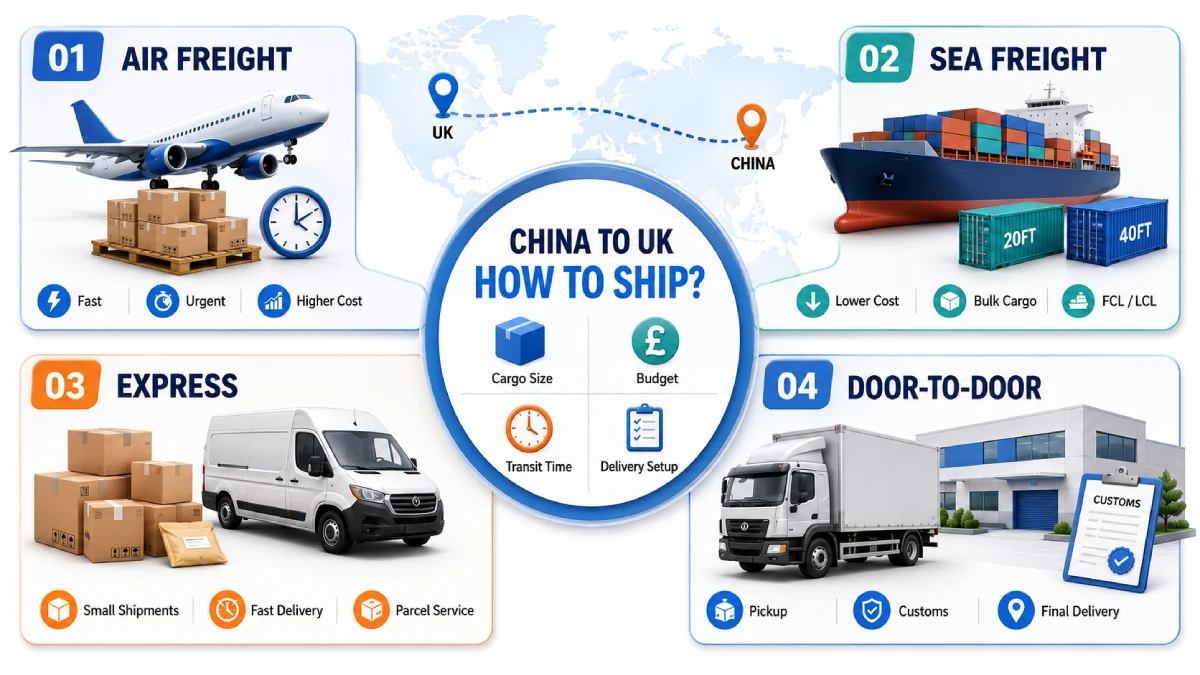
Shipping from China to the UK is a mature trade lane with several practical freight options, but the best choice depends on your cargo size, urgency, product type, customs setup, and final UK delivery postcode.
For small urgent shipments, express courier is usually the fastest option, often taking around two to seven days. Standard air freight is commonly around five to eight days and is well suited to electronics, spare parts, urgent stock, and higher-value commercial cargo.
For larger shipments, sea freight is usually more economical. FCL shipments often take around twenty-five to forty days port-to-port, while LCL can take around twenty-eight to forty-five days because consolidation and deconsolidation add extra handling time.
As a general market reference, express shipping may cost around six to twelve US dollars per kilogram, while standard air freight may range from about four and a half to nine dollars per kilogram. LCL sea freight may range from roughly forty-five to one hundred and sixty dollars per cubic metre. A twenty-foot container may be around seventeen hundred to thirty-two hundred dollars, while a forty-foot container may range from roughly twenty-eight hundred to five thousand dollars or more.
These are planning estimates only, not fixed rates. Actual pricing depends on the China origin, carrier, cargo profile, season, UK gateway, destination charges, and final delivery postcode.
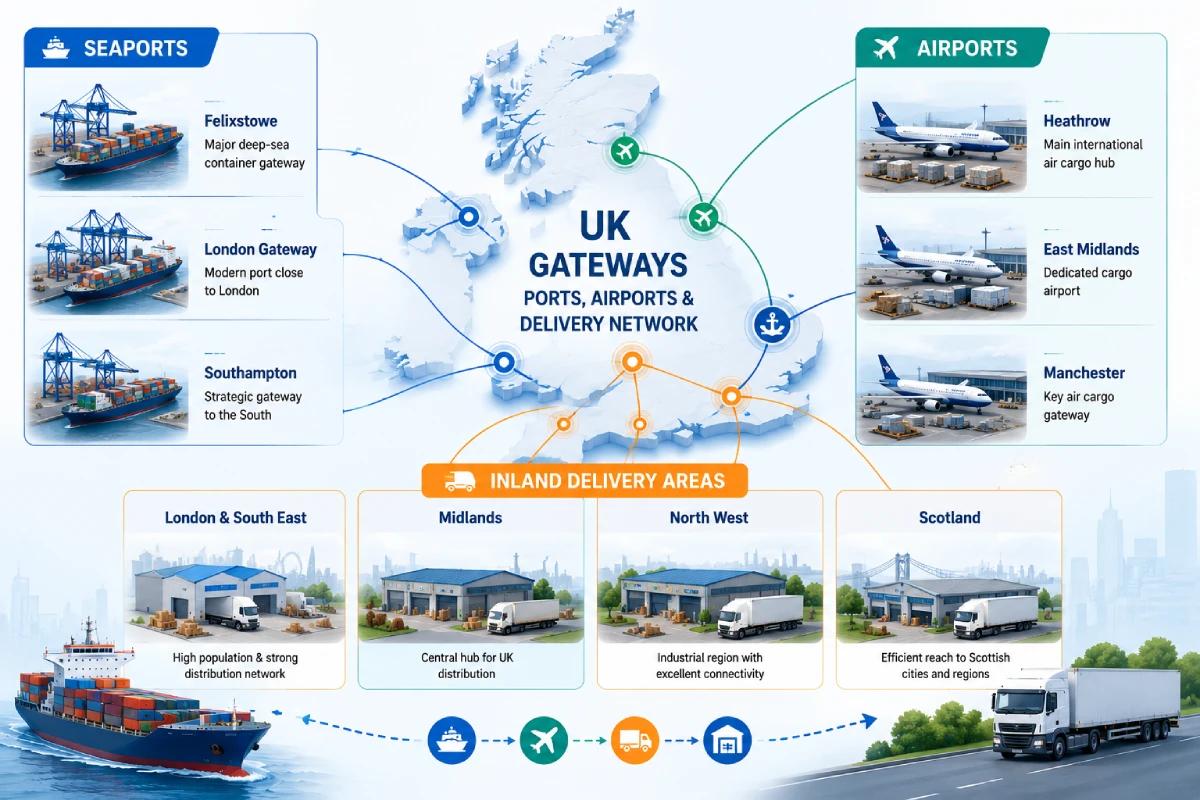
For ocean freight, Felixstowe, London Gateway, and Southampton are the main UK ports to compare. For air cargo, Heathrow is the main gateway, while East Midlands is especially important for dedicated cargo and express networks. Manchester can also be useful for deliveries into Northern England.
Customs planning is equally important. Commercial imports into England, Scotland, and Wales generally require a GB EORI number. Northern Ireland may require an XI EORI and should be reviewed separately. Import duty depends on the commodity code, while the standard UK VAT rate is twenty percent for most goods, although exceptions apply.
DDP can work for suitable shipments, but it should not be assumed automatically. The importer structure, VAT treatment, customs representation, product type, cargo value, and final delivery requirements all need to be checked before DDP is confirmed.
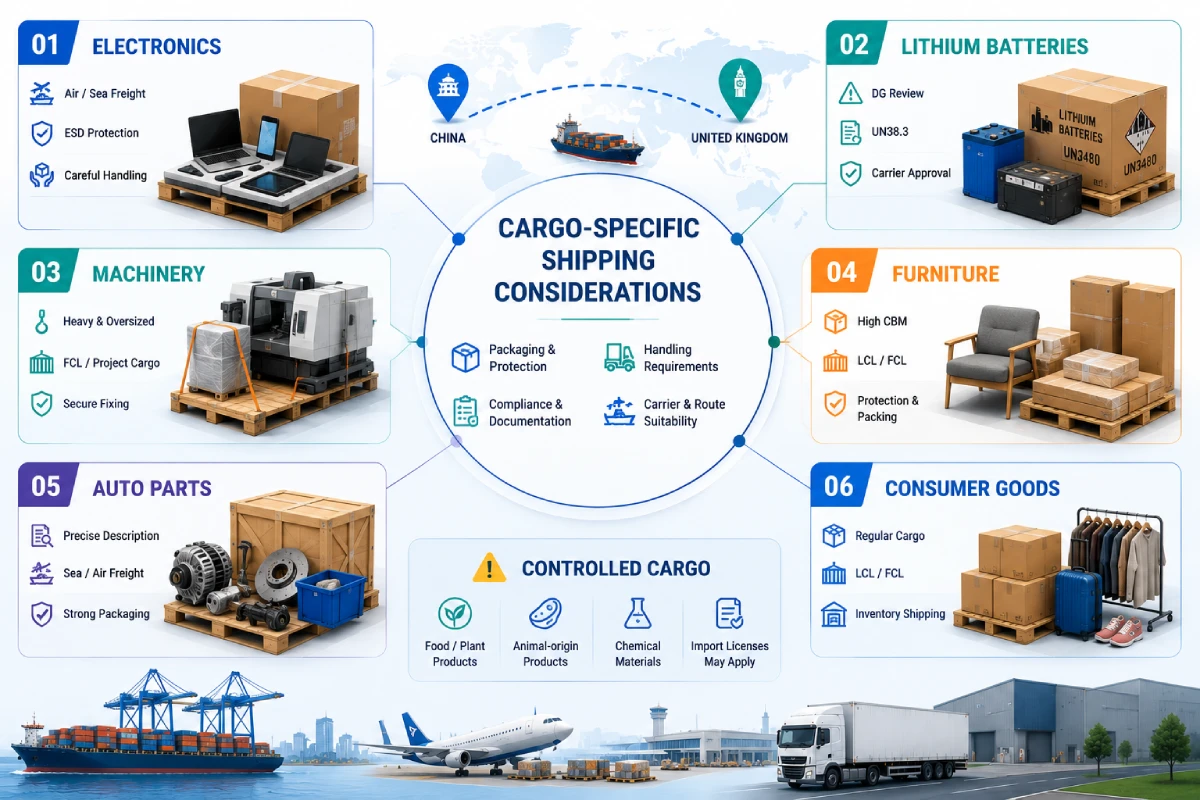
Cargo type also matters. Electronics, lithium batteries, machinery, furniture, auto parts, and controlled goods can each require different packaging, documentation, carrier approval, or compliance checks.
For the most accurate shipping plan, send Winsail Logistics your supplier city, product details, carton dimensions, gross weight, total CBM, cargo value, and final UK postcode. These details allow the team to compare sea freight, air freight, LCL, FCL, express, and suitable door-to-door options for your shipment.