

Quick Answer: A freight forwarder coordinates transportation, while a licensed customs clearing agent handles customs declarations and representation in Tanzania. A destination shipping agent manages carrier-side documentation, TRA controls customs clearance, and TPA manages port procedures. The importer must identify the authorized declarant, provide accurate shipment information, and understand its continuing customs obligations. One logistics provider may coordinate these parties, but coordination does not automatically transfer their legal responsibilities.
Data Note — October 2026: This guide focuses on commercial imports into Mainland Tanzania, particularly sea freight arriving at Dar es Salaam. It draws on published customs legislation and official TRA, TASAC, TPA, and trade guidance reviewed in October 2026. Actual licensing, filing eligibility, charges, and release requirements must be confirmed for the specific shipment. Zanzibar may have additional or different requirements.
When importing goods from China to Tanzania, you may deal with a freight forwarder in China, an ocean carrier, a shipping agent at Dar es Salaam, and a local clearing and forwarding agent. These companies may work together, but they do not necessarily have the same authority or contractual responsibilities.
The distinction matters when customs requests additional information, import duties are assessed, a shipping-line Delivery Order is required, or cargo cannot leave the port.
Before appointing a logistics provider, you should know who will submit the customs declaration, who is authorized to represent the importer, and who will arrange final cargo collection.
For an overview of transport options and destination planning, see our shipping from China to Tanzania guide.
1. Freight Forwarder, Shipping Agent or Clearing Agent: Who Does What in Tanzania?
A freight forwarder and a customs clearing agent may work on the same shipment, but their primary responsibilities are different.
A freight forwarder organizes the movement of goods, while a customs clearing agent represents the importer in customs formalities under the applicable legal authorization.
A shipping agent has another role: representing the ocean carrier in the destination market and managing relevant carrier documentation and delivery arrangements.
Understanding these differences helps importers avoid assuming that one company automatically holds every required licence.
The China-Based Freight Forwarder’s Role
A freight forwarder in China typically coordinates the transportation arrangements needed to move goods from the supplier to the agreed destination.
Depending on the service contract, this may include:
- Collecting goods from factories or warehouses in China.
- Consolidating shipments from multiple suppliers.
- Arranging export-related documentation and freight bookings.
- Coordinating FCL, LCL, air freight, or multimodal transportation.
- Providing shipment references and transport documentation.
- Communicating arrival information and documents to the destination parties.
- Coordinating with an appointed clearing agent or inland transport provider.
For example, a Tanzanian importer purchasing machinery from several Chinese factories may appoint a freight forwarder to consolidate the equipment and arrange sea transportation to Dar es Salaam.
The forwarder may also introduce or coordinate with a destination clearing agent.
However, arranging international freight does not automatically authorize a China-based forwarder to submit customs declarations in Tanzania.
If the forwarder offers customs clearance as part of a combined service, the importer should identify the legal entity authorized to carry out that regulated activity.
The Ocean Carrier and Destination Shipping Agent
The ocean carrier is responsible for maritime transportation under the applicable contract of carriage.
At the destination, the carrier may act through a shipping agent responsible for functions such as:
- Managing carrier-side arrival documentation.
- Handling applicable bill of lading release arrangements.
- Verifying consignee or authorized representative information.
- Issuing or facilitating the Delivery Order.
- Collecting applicable carrier-related charges.
- Coordinating carrier release requirements with the port or terminal.
A shipping agent is not automatically a customs clearing agent.
In Tanzania, shipping-agency licensing is governed by specific regulatory requirements administered by the Tanzania Shipping Agencies Corporation (TASAC).
The licensing framework distinguishes shipping agency activities from clearing and forwarding activities. TASAC’s official shipping agency licensing guidance also identifies restrictions concerning applicants engaged in certain other maritime businesses, including clearing and forwarding.
Therefore, when a logistics provider advertises both shipping agency and customs clearance services, importers should ask which legal entities are authorized to perform each function.
The Licensed Customs Clearing Agent
In Tanzania, the term Clearing and Forwarding Agent (CFA) commonly refers to a local service provider handling customs clearance and related logistics formalities.
For the customs representation component, appropriate authority under the customs licensing framework is essential.
A qualified and duly authorized agent may handle:
- Preparing and submitting customs declarations through TANCIS.
- Reviewing commercial invoices, packing lists, and transport documents.
- Supporting customs classification and valuation declarations.
- Communicating with TRA about customs queries.
- Coordinating payment of assessed duties and taxes.
- Obtaining or confirming customs release.
- Coordinating applicable carrier, port, terminal, and cargo-collection procedures.
These services may overlap operationally with a freight forwarder’s work.
The key difference is that customs representation requires its own legal authority, even when both services are sold together.
The Importer, TRA and TPA
The importer supplies the information and authorization needed for the shipment to be declared correctly.
The Tanzania Revenue Authority (TRA) administers customs procedures, including declaration assessment, applicable duties and taxes, verification, and customs release.
The Tanzania Ports Authority (TPA) manages the relevant port procedures, including port billing and cargo release processes at applicable TPA facilities.
Neither TRA nor TPA is simply another freight forwarder or commercial clearing agent.
Tanzania Import Roles and Responsibilities Matrix
| Party | Legal or Operational Responsibility | Key Documents or Authorization | Typical Charging Entity |
|---|---|---|---|
| China freight forwarder | Origin coordination, freight arrangements, shipment handover | Freight agreement, booking instructions, relevant transport documents | Forwarder or contracted provider |
| Ocean carrier | International carriage under the transport contract | Bill of lading and carrier documentation | Carrier or freight contracting party |
| Tanzania shipping agent | Carrier representation and applicable destination delivery formalities | Bill of lading release requirements, Delivery Order | Carrier or authorized shipping agent |
| Licensed customs clearing agent | Authorized customs representation, declaration filing, clearance coordination | Importer’s written authorization, customs declaration, service agreement | Clearing agent for professional services |
| Importer / cargo owner | Accurate information, authorization, applicable customs and contractual obligations | Importer information, commercial records, authorization letter | Normally pays charges allocated to it by law and contract |
| TRA | Customs administration, assessment, verification, customs release | Assessment, declaration and customs release records | Collects applicable statutory duties and taxes |
| TPA / relevant terminal | Port billing, handling controls, cargo collection and gate procedures | Port invoice, payment confirmation, gate documents | Port or terminal operator, as applicable |
The table identifies typical responsibility boundaries. The exact contracting party, document issuer, and payment arrangement depend on the shipment and the legal entities involved.
The practical lesson: One company may coordinate several activities, but the importer should still know who performs each regulated function and who is accountable for it.
2. Who Can Submit a Customs Declaration in TANCIS?
TANCIS, the Tanzania Customs Integrated System, is used for electronic customs declaration processing and related customs administration.
For commercial imports, a clearing agent commonly prepares the declaration using the importer’s documents and the authority granted by the importer.
This does not mean that anyone holding a bill of lading or offering freight services is authorized to file declarations.
Customs Representation Requires Proper Authorization
The East African Community Customs Management Act, 2004 (EACCMA), provides the principal customs-law framework relevant to Tanzania.
Sections 145–148 address customs-agent licensing, authority to act for cargo owners, and related liability.
Under this framework:
- A person or company acting professionally as a customs agent must hold the relevant customs-agent licence.
- The cargo owner may authorize an agent to act on its behalf.
- Customs authorities may require evidence of written authorization.
- An authorized agent may prepare and present declarations and perform other permitted customs acts.
- The agent’s involvement does not automatically remove the owner’s legal responsibilities.
The East African Community’s official customs-agent guidance explains the licensing and written authorization principles.
An importer should therefore distinguish between two agreements:
Freight service agreement: Establishes what the forwarder will arrange, transport, coordinate, or pay for under its commercial contract.
Customs agent authorization: Establishes who may represent the cargo owner before customs for the authorized activities.
A freight contract alone is not proof of customs filing authority.
Does the Importer Remain Liable When an Agent Files?
Yes. Appointing an authorized customs agent does not automatically release the cargo owner from customs obligations.
Under Section 147 of EACCMA, a duly authorized agent acting for the owner may be personally liable for applicable duties and required customs acts, without relieving the owner of liability.
Section 148 also addresses the owner’s liability for acts and declarations of an authorized agent, subject to its statutory qualifications and protections.
This means the importer should not assume that transferring declaration work to an agent eliminates responsibility for inaccurate information.
Consider an importer purchasing industrial equipment from China.
The clearing agent prepares a declaration using the commercial invoice, packing list, product specifications, and information provided by the importer.
If the goods are described incorrectly or important valuation information is omitted, customs authorities may request corrections or investigate the declaration.
The consequences depend on the facts and applicable law. They cannot be resolved merely by saying that the agent submitted the information.
Importers should review key declaration details and retain records of the information supplied and authorized.
Must Every Importer Hire an Independent Clearing Agent?
For routine commercial imports, using a properly licensed and authorized CFA is the standard practical arrangement.
Tanzania’s published national business import guidance directs importers to appoint a licensed CFA, and TPA’s cargo-release guidance similarly directs customers to select an agent from the relevant TRA list.
There is, however, an important distinction between routine administrative guidance and the full legal position.
Tanzania’s notification published in the WTO Trade Facilitation Agreement Database describes customs-broker use as not mandatory, although highly recommended.
These official statements should not be reduced to an unconditional claim that every importer must hire an independent third-party broker in every situation.
An importer considering an in-house or alternative lawful declaration arrangement should confirm its eligibility, the applicable authorization rules, and TANCIS access requirements directly with TRA before relying on that arrangement.
For most businesses importing from China, appointing an appropriately authorized local clearing agent remains the more straightforward operational approach.
For the actual documentation and declaration sequence, see our Tanzania customs clearance process.
Pro Tip: Verify the Declarant, Not Just the Freight Provider
Before shipping, request the full legal name of the company that will submit the TANCIS declaration. Confirm its current customs authority and the written authorization under which it will act. A freight forwarder’s commercial quotation is not sufficient evidence.

3. Customs Release Is Not the Same as a Shipping-Line Delivery Order
A vessel arriving at Dar es Salaam does not mean the cargo is immediately ready for collection.
Several independent requirements may need to be satisfied before goods can leave the port.
A common source of confusion is treating customs release, shipping-line delivery authorization, and physical port release as one approval.
They serve different purposes.
TRA Customs Release
Customs release concerns the goods’ compliance with the applicable customs requirements.
Before authorizing release, TRA may need to review:
- The customs declaration and supporting documents.
- Customs classification and valuation.
- Assessed duties, taxes, and applicable levies.
- Required import permits or regulatory approvals.
- Documentary discrepancies or customs queries.
- Physical inspection results, where required.
A customs declaration submitted through TANCIS is not automatically an approved release.
Additional information, corrections, payments, or inspections may still be required.
The clearing agent ordinarily coordinates these customs-related activities under its authorization.
Shipping-Line Delivery Order
A Delivery Order is a separate carrier-side authorization relating to the delivery of the shipment.
The shipping agent or carrier may need to verify the transport documents, the consignee’s entitlement, the authorized representative, and payment of applicable charges.
Requirements differ depending on the carrier, bill of lading arrangement, and shipment type.
For example, an importer may already have evidence of customs release but still be unable to collect a container because the shipping-line release requirements have not been completed.
Likewise, possession of a Delivery Order does not override customs restrictions.
The importer should confirm who will obtain the Delivery Order and who will bear any related charges.
TPA Port Charges and Cargo Gate-Out
Port collection involves another set of operational requirements.
According to the Tanzania Ports Authority’s official import process, relevant activities include:
- Engagement of a registered CFA.
- Submission of the applicable cargo and release documentation.
- Port invoice generation through the TPA Electronic Payment Portal (TePP).
- Payment using the relevant invoice control number.
- Truck and driver announcement.
- Cargo collection and verification at the port gate.
The exact workflow can vary by terminal, shipment type, and operating procedures.
Three Separate Release Controls
| Release Control | Responsible Party | What It Establishes | Evidence to Request |
|---|---|---|---|
| Customs release | TRA | Applicable customs release requirements have been satisfied | Customs release record |
| Carrier delivery authorization | Ocean carrier / shipping agent | Carrier documentation and delivery conditions have been met | Delivery Order or applicable carrier release confirmation |
| Port or terminal gate-out | TPA / relevant terminal operator | Applicable payment, handling, security, and physical collection requirements are satisfied | Port payment receipt, pickup authorization, gate record |
These are conceptual control categories, not necessarily three steps completed in a fixed sequence. Preparatory activities may overlap.
An additional terminology caution is important: operational materials sometimes use release order for different records. The importer should identify which authority issued the document and what it authorizes, rather than relying on the document name alone.
Who Coordinates Final Cargo Collection?
The clearing agent may coordinate pickup with the port, carrier, and truck operator.
However, the agent does not necessarily own the trucks, provide the inland transportation, or remain contractually responsible for delivery to the importer’s warehouse.
Those obligations depend on the service agreement.
For an FCL shipment, the parties should also establish who arranges the container pickup, unloading, and empty-container return.
For LCL cargo, the collection point and responsible warehouse or consolidation operator may differ.
The importer’s delivery arrangement should identify who is responsible after customs and carrier release have been completed.
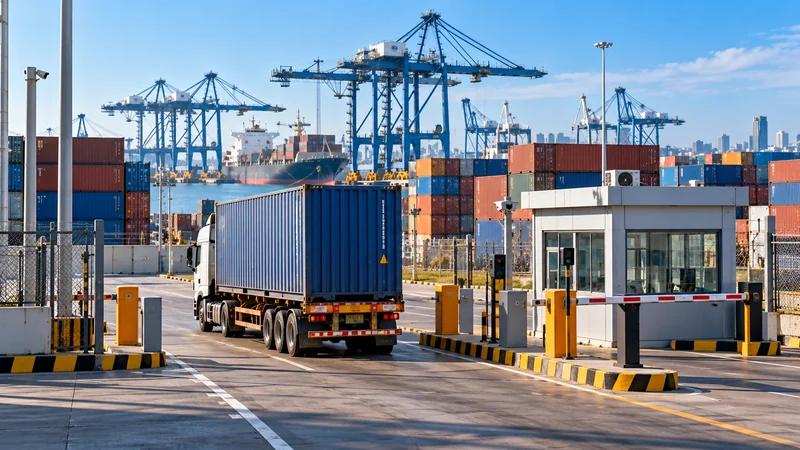
4. Who Pays Customs Duties, Port Charges and Agency Fees?
A destination clearance quotation may include several charges that originate from different organizations.
Understanding who collects each payment is just as important as understanding who performs each activity.
The first distinction is between statutory customs charges and commercial logistics service fees.
Customs Duties and Taxes
Import duties, VAT, and other applicable statutory charges arise under the relevant customs and tax laws.
Their amounts depend on factors such as the goods, tariff classification, customs value, origin, applicable tax provisions, and available exemptions.
A clearing agent may arrange or facilitate payment on behalf of the importer.
That does not make the payment an ordinary agency fee.
The importer should be able to obtain the corresponding customs assessment and government payment evidence.
The party that physically makes a payment is also not necessarily the party bearing the final economic cost under the sales contract.
Similarly, contractual cost allocation should not be confused with statutory liability to customs authorities.
Shipping-Line Charges
The carrier or destination shipping agent may charge applicable amounts relating to transportation documentation, destination services, equipment, or cargo release.
Depending on the shipment, additional carrier-related charges may arise from delays or the use of containers beyond agreed allowances.
The importer should confirm whether these costs are included in the freight arrangement or payable separately at destination.
A freight quotation labeled port-to-port does not, by itself, establish that all destination carrier charges are included.
Port, Terminal and Clearing Agent Charges
TPA or the applicable terminal operator may issue charges relating to port services, cargo handling, and other applicable operations.
A clearing agent may separately charge for customs representation, documentation, coordination, and other contracted services.
In addition, ICD, CFS, warehouse, and inland transport providers may issue their own invoices when those facilities or services are involved.
A useful destination cost breakdown identifies the original charging party rather than combining unrelated amounts under a vague description such as customs fee.
Destination Charges and Payment Responsibility Matrix
| Charge Category | Typical Issuing Entity | Who May Arrange Payment? | Who Ultimately Bears the Cost? | Evidence to Keep |
|---|---|---|---|---|
| Import duties and applicable taxes | TRA / authorized government collection channel | Importer or authorized agent | According to applicable law and contractual allocation | Customs assessment and official payment receipt |
| Shipping-line charges | Carrier or authorized shipping agent | Contracted paying party or representative | According to carrier and freight agreements | Carrier invoice and receipt |
| Port charges | TPA or relevant port operator | Importer, clearing agent, or authorized service provider | According to the agreed service scope | Official port invoice and payment confirmation |
| Terminal / CFS / ICD charges | Applicable facility operator | Contracted service provider or customer | According to actual facility and service agreements | Itemized facility invoice |
| Clearing agent service fee | Contracted and authorized clearing agent | Importer or contracting logistics party | As agreed in the agency contract, subject to applicable regulations | Agency invoice |
| Inland transportation | Trucking or contracted logistics provider | Importer, forwarder, or appointed coordinator | According to the delivery contract | Transport invoice and delivery evidence |
This matrix does not imply that all charges apply to every shipment.
The exact charges and payment responsibilities must be checked against the applicable transport contract, customs assessment, current tariffs, and service agreements.
TASAC published a 2026 order concerning fees for regulated clearing and forwarding services in Mainland Tanzania. Its commencement and current applicability should be confirmed before relying on any stated minimum fee levels. No fixed agency rates are assumed in this guide.
How to Review an All-In Destination Quote
Before accepting a quotation, ask for the following information:
- Included services: Identify precisely which freight, customs coordination, release, and delivery activities are covered.
- Excluded charges: Request separate identification of duties, taxes, port charges, carrier charges, and third-party fees not included.
- Original payees: Confirm which authority or company issues each charge.
- Payment evidence: Establish whether official invoices, payment references, and receipts will be provided.
- Unplanned costs: Agree on how additional inspection, storage, detention, or other contingent expenses will be approved and communicated.
Avoid paying an unidentified intermediary based only on a message stating that customs or port fees are outstanding.
Where government or port payments are involved, verify the relevant official assessment or control number and authorized payment channel.
An itemized quotation gives the importer a clearer view of both the total cost and the parties responsible for handling the cargo.
5. FOB, CIF, DAP and DDP: How Do Responsibilities Change?
The Incoterm used in the sales contract influences who arranges transportation, who handles import clearance, and who bears different costs.
However, Incoterms do not grant customs-agent licences or determine every statutory obligation under Tanzanian law.
The distinction is particularly important when a Chinese supplier offers a delivered price.
FOB: The Buyer Usually Arranges Main Freight and Import Clearance
Under FOB (Free On Board), the seller delivers the goods on board the nominated vessel at the named port of shipment.
The buyer generally arranges the main international carriage and is responsible for import clearance and related duties and taxes at destination.
A Tanzanian buyer purchasing goods under FOB terms may appoint a China-based freight forwarder to arrange international transportation.
The buyer must still establish who will handle the customs procedures and destination release arrangements in Tanzania.
FOB is intended for sea and inland waterway transportation. For containerized cargo handed to a carrier before loading, the suitability of FCA should also be considered.
CIF: The Seller Pays for Freight and Insurance, but Not Tanzania Import Clearance
Under CIF (Cost, Insurance and Freight), the seller contracts and pays for the main sea carriage to the named destination port and provides the insurance required by the rule.
However, the buyer generally remains responsible for import customs clearance and applicable import duties and taxes.
CIF also has a specific delivery and risk-transfer structure: the seller’s payment of freight to the destination port does not mean the seller bears transport risk until arrival there.
For Tanzania importers, the important operational point is that a CIF Dar es Salaam purchase normally still requires a destination clearance arrangement.
The Chinese supplier’s freight booking does not automatically include Tanzanian customs representation.
DAP: The Seller Arranges Delivery, but the Buyer Handles Import Clearance
DAP (Delivered at Place) allows the parties to name a delivery location, which can be a warehouse, factory, project site, or another agreed destination.
The seller has transport and delivery obligations up to the named place under the rule, but the buyer is generally responsible for import clearance and applicable import duties and taxes.
The seller also does not have the ordinary unloading obligation at the named place under DAP.
For example, a Chinese equipment supplier may agree to DAP Dodoma.
The seller arranges transportation toward the named delivery location. The buyer must still ensure that the required Tanzanian import clearance is completed so the cargo can continue inland.
That requires coordination between the seller’s logistics provider, the importer’s authorized clearing agent, and the inland delivery provider.
DAP is not limited to delivery at Dar es Salaam Port.
DDP: The Seller Takes Import Clearance and Duty Responsibilities
DDP (Delivered Duty Paid) imposes the broadest import-related contractual obligations on the seller among the Incoterms 2020 rules.
Under DDP, the seller is responsible for arranging import clearance and bearing applicable import duties and taxes as required by the rule.
However, the seller must be able to fulfill those obligations lawfully in the destination country.
A Chinese supplier or freight forwarder cannot establish customs authority merely by describing a service as DDP.
Before agreeing to DDP Tanzania, the parties should verify:
- The legal entity that will act as importer under the applicable customs arrangement.
- The party legally authorized to submit the declaration.
- The customs agent appointed for the shipment.
- Who will remit the assessed import duties and taxes.
- Whether the seller can lawfully fulfill the agreed import responsibilities.
- How the agreed obligations are documented in the sales and logistics contracts.
DDP is a contractual allocation of responsibilities. It does not override Tanzanian customs law or automatically remove the legal obligations of an entity named as importer.
Incoterms and Tanzania Import Responsibility Matrix
| Incoterm | Main Freight Arrangement | Tanzania Import Clearance | Import Duties and Taxes Under the Sales Contract | Main Coordination Point |
|---|---|---|---|---|
| FOB | Buyer normally arranges and pays main carriage | Buyer | Buyer | Buyer coordinates freight, clearing agent, and destination release |
| CIF | Seller arranges freight and required insurance to named destination port | Buyer | Buyer | Buyer needs local customs and delivery arrangements |
| DAP | Seller arranges carriage to the named place | Buyer | Buyer | Seller’s delivery provider must coordinate with buyer’s import-clearance arrangement |
| DDP | Seller arranges delivery under the DDP rule | Seller | Seller | Seller must establish a lawful import-clearance and tax-payment arrangement |
The table summarizes the standard contractual allocation under ICC Incoterms 2020. Actual legal compliance, named places, supplementary agreements, and statutory liabilities must be evaluated separately.
A further distinction is worth emphasizing:
Door-to-door shipping is a description of transportation scope, not an Incoterm.
A door-to-door quotation may be structured under DAP, DDP, or another contractual arrangement.
Importers should not infer who pays customs duties from the words door-to-door alone.
6. How to Verify a Tanzanian Clearing Agent’s Licence and Authorization
Choosing a clearing agent is not only a question of service price or experience.
The importer needs confidence that the relevant legal entity is properly authorized to perform the work being offered.
This is particularly important when a China-based freight forwarder introduces a destination partner that the importer has never worked with.
Check the TRA Customs-Agent Licence
Ask the prospective clearing agent for its exact legal business name and current customs-agent licence information.
Verify the details against the applicable current-year TRA information or through direct confirmation with the authority.
Do not rely solely on:
- A company website stating that it is licensed.
- An old list of registered agents.
- A screenshot without a verifiable source.
- A certificate belonging to a different company.
- A freight forwarder’s statement that its partner handles customs.
The name of the authorized customs agent should correspond to the entity acting under the importer’s authorization and submitting the declaration.
Where a subcontractor or other legal entity is involved, the relationship and authority should be disclosed.
Check TASAC Registration and Shipping Agency Status Separately
TRA customs-agent licensing and TASAC regulatory registration serve different purposes.
A provider offering clearing and forwarding services may be subject to applicable TASAC registration requirements in addition to the customs authority required for declaration work.
A company acting as a shipping agent must satisfy the separate requirements relevant to that activity.
TASAC’s clearing and forwarding regulations address registration and renewal arrangements. Its shipping-agency licensing rules govern a different regulated activity.
For an importer, the important questions are:
“Does this company have the authority required for the customs work it will perform?”
and
“If it also claims to act as a shipping agent, which appropriately licensed entity performs that function?”
Do not assume that one licence covers every activity.
Confirm the Importer’s Written Authorization
The importer should understand the scope of the authorization granted to the clearing agent.
Depending on the arrangement and applicable requirements, this may involve a written customs authorization, a service agreement, and supporting identity or registration documents.
Before signing, check that:
- The correct legal entity is named.
- The importer and shipment details are accurate.
- The intended activities are clearly described.
- Any authority to sign or submit documents is understood.
- Payment and reimbursement arrangements are documented.
- The importer knows who will communicate with customs when questions arise.
A customs authorization should not be treated as an unrestricted agreement covering unrelated services.
Tanzania Clearing Agent Verification Checklist
Before confirming an appointment, request and review the following:
- Full legal name of the customs clearing agent.
- Current relevant TRA customs-agent licence information.
- Applicable TASAC registration evidence for the activities offered.
- Written authorization or agency agreement.
- Confirmation of the actual TANCIS declaring entity.
- Contact details for the person managing customs queries.
- Name of the carrier or destination shipping agent handling the Delivery Order.
- Itemized service quotation and payment terms.
- Confirmation of who receives each type of charge.
- Documented escalation procedure if release is delayed.
This checklist is a due-diligence aid, not a substitute for direct licence verification with the relevant authority.
Pro Tip: Match the Legal Names Before Paying
Compare the customs-agent identity, the company named in the service agreement, and the invoice issuer. If different entities are involved, ask for a written explanation of their roles and payment authority before transferring funds.
Clarify My Tanzania Delivery Responsibilities
Not sure who should submit your customs declaration, obtain the shipping-line Delivery Order, or arrange cargo pickup at Dar es Salaam?
Clarify My Tanzania Delivery Responsibilities
Share your China origin, Tanzania destination, cargo description, agreed Incoterm, and existing shipping arrangement. Winsail Logistics can help review the proposed logistics handovers and identify which legal, customs, and delivery responsibilities need confirmation with the relevant authorized parties.
7. Choose a Clear Responsibility Model Before Cargo Leaves China
There is no single commercial coordination model suitable for every China-to-Tanzania shipment.
Some importers prefer to appoint their own local clearing agents. Others prefer one freight forwarder to coordinate the international transportation and destination providers.
The best arrangement is one in which the responsibilities are visible, documented, and assigned to appropriate parties.
Model A: The Importer Appoints a Tanzania Clearing Agent
In this model, the importer appoints a freight forwarder for the China-origin shipment and separately appoints a Tanzania clearing agent.
The forwarder handles the agreed origin and international transport activities.
The local clearing agent handles the authorized customs work and coordinates relevant release processes.
The importer normally remains actively involved in providing documents, authorizing the agent, and arranging payments or approvals.
This model may suit:
- Established Tanzanian importers with their own logistics teams.
- Businesses that already work with a trusted licensed clearing agent.
- Buyers purchasing under FOB or CIF terms.
- Companies importing regularly through the same destination facilities.
Main coordination risk: The forwarder and clearing agent may disagree about document handover, arrival communication, or which destination activities are included.
The importer should establish a clear handover deadline and a named contact on each side before shipment.
Model B: One Freight Forwarder Coordinates the Logistics Chain
In this arrangement, the importer appoints a principal logistics coordinator that manages the transportation chain and coordinates destination providers.
That coordinator may work with a locally licensed customs agent, a shipping-line agent, a terminal operator, and a trucking company.
The customer benefits from having one commercial contact, but that does not mean every service is performed by the same licensed legal entity.
This model may suit:
- Importers without a dedicated logistics department.
- Buyers consolidating goods from several suppliers in China.
- Businesses that prefer coordinated transportation and destination handling.
- Importers requiring delivery beyond Dar es Salaam.
Main coordination risk: The importer may not know which entity is actually handling customs, receiving statutory payments, or controlling cargo release.
The solution is to request a responsibility breakdown identifying the relevant parties and payment arrangements.
A single commercial contact should improve coordination, not obscure legal accountability.
When evaluating companies that offer coordinated services, consult our separate guide to shipping agents from China to Tanzania.
Model C: Seller-Arranged DDP With a Verified Import Structure
Under a DDP arrangement, the seller assumes the relevant contractual import-clearance and tax-payment obligations.
The logistics operation may involve several providers, but the seller remains responsible for fulfilling its contractual commitments.
For Tanzania, the parties should confirm that the proposed structure can be executed lawfully.
This model may suit:
- Buyers purchasing under a properly structured delivered-duty-paid sales contract.
- Projects where the seller has established a compliant import arrangement.
- Transactions where the responsible importing entity and customs agent have been identified before shipping.
Main coordination risk: A supplier may promise tax-paid delivery without identifying a lawful importer, authorized declarant, or reliable payment and documentation process.
The buyer should request clarification before accepting the DDP arrangement.
A delivery promise should not be mistaken for evidence of customs authorization.
Five Questions to Confirm Before Shipment
Regardless of which coordination model you select, obtain clear answers to these questions before the goods leave China.
| Question | What the Importer Should Confirm |
|---|---|
| 1. Who is the importer? | Exact legal entity, consignee details, and applicable import responsibilities |
| 2. Who files the declaration? | Authorized customs agent or other legally eligible declarant, including the relevant authority |
| 3. Who handles carrier release? | Shipping-line agent, Delivery Order requirements, and responsible coordinator |
| 4. Who pays each charge? | Customs duties, carrier charges, port fees, agent charges, and any exclusions |
| 5. Who delivers the cargo? | Pickup party, transport provider, final delivery point, and any container-return obligations |
These questions are especially useful when the shipment involves multiple service providers.
For example, the Chinese forwarder may arrange freight to Dar es Salaam, the importer’s clearing agent may handle customs, and a separate truck operator may deliver the goods to a warehouse in Arusha or Dodoma.
The parties should agree on the information and documents exchanged at each handover.
Where the shipment is destined for Zanzibar, confirm the applicable jurisdiction-specific customs, port, registration, and product-compliance arrangements rather than assuming that every Mainland Tanzania procedure applies unchanged.
FAQ
If I Hire a Freight Forwarder in China, Do I Still Need a Clearing Agent in Tanzania?
In most routine commercial import arrangements, a properly licensed and authorized local clearing agent is used to handle Tanzanian customs formalities. A China-based freight forwarder can coordinate with that agent, but the freight contract alone does not establish Tanzanian customs authority. Ask the forwarder to identify the legal entity responsible for filing the declaration and confirm its authorization before shipping.
Can a Tanzanian Importer Submit Customs Declarations Without an Independent Clearing Agent?
Tanzania's published import procedures generally direct commercial importers to appoint a licensed CFA. However, the country's notification in the WTO Trade Facilitation Agreement Database describes customs-broker use as not mandatory, although strongly recommended. An importer considering direct or in-house filing should confirm the current legal eligibility, representation rules, and TANCIS access conditions with TRA.
If My Clearing Agent Pays Import Duties for Me, Am I Still Legally Responsible?
Potentially, yes. Payment by an authorized agent does not automatically remove the cargo owner's customs obligations. Sections 147–148 of EACCMA address the responsibilities of authorized agents and cargo owners, including duties, declarations, and relevant acts. The precise consequences depend on the circumstances and statutory qualifications. Importers should retain their customs assessments, payment receipts, authorization records, and supporting commercial documents.
Why Do I Need a Shipping-Line Delivery Order After Customs Release?
Customs release and carrier delivery authorization address different requirements. TRA customs release concerns customs compliance. The shipping-line Delivery Order concerns the carrier's authorization to deliver the goods under the applicable transport documentation and conditions. Cargo collection may also require port payments, terminal arrangements, and gate verification. Your clearing agent or logistics coordinator should identify which approvals remain outstanding before arranging pickup.
Does Door-to-Door Shipping Mean the Seller Pays Tanzania Import Taxes?
No. Door-to-door describes the transportation or delivery scope, not necessarily the allocation of customs duties and taxes. Under DAP, the buyer generally handles import clearance and duties, even when the seller arranges transportation to an inland destination. Under DDP, the seller assumes those import-related contractual responsibilities, but must have a lawful arrangement to perform them. Always confirm the Incoterm, named destination, importing entity, and written service inclusions.
Final Recommendation: Identify the Responsible Party Before Shipping
The difference between a freight forwarder and a customs clearing agent in Tanzania is not simply the type of service each offers.
It is also a question of authority, documentation, payment responsibility, and legal accountability.
A freight forwarder can organize transportation from China. A properly authorized customs clearing agent can represent the importer in customs procedures. A shipping agent handles relevant carrier-side documentation. TRA administers customs controls, while TPA and applicable terminal operators manage port-related processes.
These roles can be coordinated under one commercial service arrangement, but their legal and operational boundaries remain important.
For a smoother import process, confirm the named importer, authorized declarant, carrier release arrangements, payment responsibilities, and final delivery provider before shipment.
Clarify My Tanzania Delivery Responsibilities
Planning an FCL, LCL, or other commercial shipment from China to Tanzania?
Share your cargo details, departure location, destination, Incoterm, and current freight arrangement with Winsail Logistics. We can help review the proposed logistics responsibilities and identify the customs and delivery handovers that need confirmation before the goods move.
Regulatory Disclaimer: This article provides general information about freight forwarding, customs representation, and cargo-release responsibilities. It is not legal advice or confirmation of any company’s current licence or import eligibility. Requirements may differ by cargo, legal entity, customs procedure, and jurisdiction. Confirm shipment-specific obligations with the relevant Tanzanian authorities and appropriately authorized professionals.
