
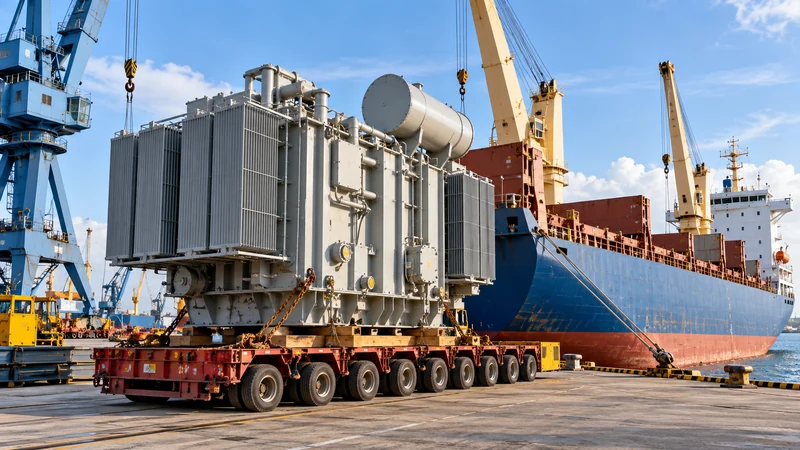
Shipping oversized machinery, power equipment, and industrial project cargo from China to Tanzania requires more than booking ocean freight. A successful transport plan must account for lifting conditions, vessel suitability, port handling, inland road restrictions, and final site access.
For engineering contractors and industrial procurement teams, the critical question is not simply whether the equipment can reach Dar es Salaam. It is whether every stage of the journey can accommodate the cargo safely and under clearly assigned responsibilities.
Quick Answer: Project cargo shipping from China to Tanzania requires verified cargo dimensions, gross weight, centre of gravity, and lifting arrangements before selecting flat rack, open top, or breakbulk transport. Dar es Salaam terminal handling, abnormal-load permits, inland route suitability, and project-site unloading must be assessed separately. Carrier acceptance alone does not guarantee inland delivery. A feasibility review should establish the required approvals and responsibilities before shipment commitments are made.
Data Note — October 2026: This guide draws on published port infrastructure information, East African Community vehicle load control regulations, and international cargo-handling principles reviewed in October 2026. Vessel availability, terminal lifting capacity, road permits, cargo insurance, transport costs, and delivery schedules require confirmation for each shipment. The discussion focuses on Mainland Tanzania.
1. When Does Heavy Equipment Require a Project Cargo Shipping Plan?
Not every industrial machine requires specialized project logistics.
A machine that fits within a standard shipping container, meets equipment payload restrictions, and can be handled using conventional loading and delivery methods may follow a normal freight process.
Project cargo becomes relevant when a shipment requires additional engineering, specialized transport equipment, unusual lifting arrangements, or coordinated approvals across multiple transport stages.
Typical examples include:
- Power generation and electrical equipment: Large transformers, generators, and turbine components.
- Mining and processing machinery: Crushers, industrial mills, processing modules, and heavy plant components.
- Industrial structures: Pressure vessels, fabricated steel sections, tanks, and large structural assemblies.
- Construction and infrastructure equipment: Oversized construction machinery, plant modules, and prefabricated components.
- Energy and manufacturing projects: Heavy production equipment and other non-standard industrial units.
A shipment may qualify as project cargo because of its weight, dimensions, handling sensitivity, or complex delivery requirements. Even equipment that fits inside a container may require a specialized approach when lifting restrictions or site conditions prevent conventional handling.
Five Feasibility Checks Before Shipping
A project cargo movement should pass five separate checks.
| Feasibility Check | Main Question | Evidence Required |
|---|---|---|
| Cargo engineering | Can the equipment be lifted, supported, and secured safely? | Technical drawings, transport weight, lifting and support information |
| China-origin transport | Can the cargo move from the factory to the loading port? | Factory access assessment, loading plan, proposed vehicle |
| Ocean transport | Will the carrier accept the cargo and loading arrangement? | Equipment specifications, stowage proposal, carrier acceptance |
| Tanzania port and inland transport | Can the cargo be discharged and transported to the destination? | Terminal acceptance, route survey, applicable permits |
| Project-site delivery | Can the receiving site accommodate the vehicle and unload the equipment? | Site-access assessment, lifting plan, receiving arrangements |
These checks are interconnected. A vessel may accept the cargo while the inland route remains unsuitable. Similarly, the destination road may be accessible even though the project site lacks adequate space for unloading.
For a broader overview of conventional freight options, see our shipping from China to Tanzania guide.
2. Verify Dimensions, Weight, Centre of Gravity, and Lifting Points Before Factory Pickup
Reliable project cargo planning begins with the physical characteristics of each shipping unit.
A commercial invoice describing a shipment as an industrial generator or power transformer does not provide enough information to determine the appropriate vessel, crane, trailer, or securing arrangement.
The logistics team needs transport-ready engineering data, ideally confirmed by the manufacturer.
Build a Complete Cargo Technical Data Pack
The dimensions used for transport planning must include the equipment’s final shipping configuration.
Protective structures, transport skids, protruding fittings, lifting frames, and other attachments can increase the overall transport envelope beyond the manufacturer’s bare-machine dimensions.
For each cargo unit, request:
- Overall dimensions: Final transport length, width, and height, including packaging and supports.
- Verified weight: Net equipment weight and actual gross transport weight.
- Centre of gravity (CoG): The location of the cargo’s mass centre relative to defined reference points.
- Lifting arrangements: Approved lifting points, permitted lifting directions, and applicable lifting-point ratings.
- Support requirements: Load-bearing areas, transport saddles, cradles, and maximum permitted support reactions.
- Securing arrangements: Approved tie-down points and restrictions on lashing or supporting sensitive components.
- Handling limitations: Restrictions on tilting, rotation, vibration, weather exposure, or removal of components.
A general arrangement drawing and manufacturer-approved lifting or transport instructions should support the information wherever available.
The centre of gravity deserves particular attention. An uneven weight distribution can affect crane hook loading, rigging arrangements, vehicle stability, and the positioning of the cargo on transport equipment.
The heaviest point of the machine is not necessarily its geometric centre.
Plan Factory Loading and Movement to the Chinese Port
The first critical lift may occur at the factory rather than the seaport.
Before arranging collection, the loading contractor should establish how the equipment will move from its production or storage position onto the nominated transport vehicle.
The review may cover the available lifting equipment, working radius, rigging geometry, lifting clearances, ground conditions, and vehicle positioning.
The planned road movement to the origin terminal also requires attention. Factory gates, internal roads, overhead structures, and access restrictions can affect the transport configuration.
A manufacturer-approved lifting point does not automatically mean that a proposed crane arrangement is suitable. The appointed competent lifting party must assess the complete operation.
Confirm Stowage and Cargo Securing
Once the transport method is proposed, the cargo must be assessed for support and securing during the sea voyage.
Depending on the arrangement, this may involve engineered cradles, blocking, bracing, lashings, friction materials, or dedicated support structures.
The International Maritime Organization’s Code of Safe Practice for Cargo Stowage and Securing provides an established safety framework for evaluating stowage and securing risks.
However, a general securing standard does not replace approval of the actual cargo, equipment, and vessel arrangement.
Project Cargo Technical Data Checklist
| Required Information | Why It Matters | Primary Evidence |
|---|---|---|
| Final transport dimensions | Determines the transport envelope and equipment suitability | Dimensioned shipping drawing |
| Gross transport weight | Supports lifting and transport calculations | Verified weight record |
| Centre of gravity | Influences stability, lifting, and load distribution | CoG drawing or manufacturer data |
| Lifting-point specifications | Establishes allowable lifting arrangements | Approved lifting drawing |
| Support and contact points | Helps evaluate local structural loading | Transport-support drawing |
| Cargo securing restrictions | Informs the securing design | Manufacturer handling instructions |
| Packaging and protection | Identifies environmental and handling requirements | Packing specification |
| Factory loading conditions | Establishes origin lifting feasibility | Loading-site assessment |
| Pickup and delivery addresses | Supports route and access assessment | Confirmed site details |
| Cargo-ready date | Establishes the planning sequence | Manufacturer production schedule |
The checklist should be completed separately for every major transport unit. It is not a substitute for engineering calculations, certification, or approval by the relevant operator.
Pro Tip — Use Transport-Ready Measurements
Do not rely solely on the dimensions shown in a product catalogue. Ask the manufacturer to confirm the final shipping dimensions and weight after transport supports, protective packaging, and lifting accessories have been considered.
Request a Project Cargo Feasibility Review
Planning to ship heavy equipment from China to Tanzania?
Request a Project Cargo Feasibility Review by sharing your cargo drawings, transport dimensions, gross weight, lifting information, factory pickup location, and Tanzania delivery address.
Winsail Logistics can discuss potential transport arrangements and identify the technical, port, and inland-delivery requirements that need confirmation before shipment planning proceeds.
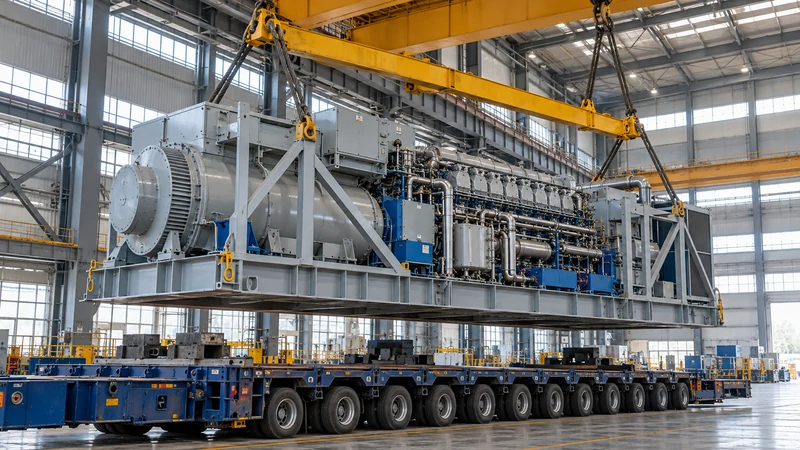
3. Flat Rack vs Open Top vs Breakbulk: Which Shipping Method Fits?
Flat rack containers, open top containers, and breakbulk vessels serve different project cargo requirements.
Selecting the appropriate option is not simply a matter of choosing the method with the lowest quoted ocean freight.
The decision must consider the cargo’s physical configuration, structural support, loading and discharge arrangements, carrier acceptance, and destination requirements.
Flat Rack Shipping for Out-of-Gauge Equipment
Flat rack containers provide a loading platform without the conventional enclosed side walls and roof of a standard dry container.
They may accommodate equipment that exceeds normal container width or height restrictions, subject to the carrier’s acceptance.
Typical candidates include industrial machinery mounted on transport frames, equipment with protruding components, and units requiring side or overhead loading.
However, several technical restrictions remain:
- The flat rack’s rated payload and structural loading limits.
- Distribution of the cargo weight over the deck.
- Concentrated loads at support or contact points.
- Actual transport dimensions and required vessel clearance.
- Approved lashing points and securing geometry.
- Terminal handling and out-of-gauge acceptance.
An equipment specification showing a particular maximum payload does not mean every cargo at that weight can safely travel on the unit.
The complete loading arrangement must be evaluated.
Open Top Containers for Top-Loaded Machinery
Open top containers are designed to accommodate cargo that needs loading access from above.
They can be suitable for certain tall or difficult-to-handle machines that cannot pass through a conventional container doorway.
Unlike flat racks, however, open top containers retain their side walls and structural framework.
Cargo must be assessed against the internal footprint, container opening, lifting clearance, permissible loads, and carrier acceptance conditions.
Weather protection also needs consideration, particularly for equipment with exposed electrical components, sensitive surfaces, or moisture-sensitive packaging.
A protective covering should not be assumed to provide the same environmental protection as a fully enclosed dry container.
Breakbulk Shipping for Non-Containerized Project Cargo
Breakbulk shipping involves transporting cargo as individual pieces rather than inside a standard shipping container.
It may be appropriate for large industrial modules, pressure vessels, heavy equipment, or structural units that are unsuitable for containerized carriage.
Depending on the service, the cargo may be carried by a multipurpose or heavy-lift vessel and handled using the vessel’s own lifting gear, shoreside equipment, or another approved lifting arrangement.
Breakbulk planning requires attention to:
- Cargo lifting and discharge geometry.
- Vessel and stowage-space suitability.
- Deck or hold loading conditions.
- Cargo support, securing, and access.
- Loading and discharge port facilities.
- Availability of compatible inland transport equipment.
Ro-Ro or mafi-trailer arrangements may be considered for suitable cargo when the actual vessel service, terminal procedures, support system, and carrier acceptance can be confirmed.
Flat Rack vs Open Top vs Breakbulk — Project Cargo Decision Matrix
| Method | Suitable Cargo Profile | Main Constraints | Key Acceptance Check |
|---|---|---|---|
| Flat Rack | Over-width or over-height machinery suitable for platform support | Deck loading, cargo securing, vessel clearance, terminal handling | Approved cargo dimensions, load distribution, and securing |
| Open Top | Equipment requiring top loading while fitting the container’s structural footprint | Side walls, top opening, lifting clearance, payload | Container suitability and accepted loading method |
| Breakbulk | Large, heavy, or irregular cargo unsuitable for containerized carriage | Vessel handling, stowage engineering, port discharge | Vessel, terminal, and lifting acceptance |
| Ro-Ro / Mafi | Suitable mobile or trailer-supported equipment | Service availability, rolling arrangement, deck access | Carrier-approved transport and terminal handling configuration |
The comparison identifies possible solutions rather than guaranteed equipment capacity.
For example, a heavy power transformer might appear suitable for flat rack transport based on its external dimensions. A detailed evaluation could still identify excessive concentrated loading or unsuitable support geometry.
Breakbulk would then become an alternative requiring its own vessel and terminal assessment.
For further information on specialized international freight arrangements, explore Winsail’s project logistics services from China.
4. Confirm Heavy-Lift and Breakbulk Handling at Dar es Salaam Port
Dar es Salaam is a major gateway for international cargo entering Mainland Tanzania.
The Tanzania Ports Authority identifies the port as a multipurpose facility, while DP World Dar es Salaam provides specific information about Terminal 1 infrastructure.
According to DP World’s published terminal information, Terminal 1 includes Berths 1–4 for breakbulk and dry-bulk vessels. This establishes that relevant general-cargo facilities exist at the port.
However, the availability of a breakbulk berth does not establish that every heavy or oversized cargo unit can be discharged there.
A project-specific terminal assessment is still necessary.
Reference: DP World Dar es Salaam — Terminal Infrastructure.
Verify Cranes, Lifting Capacity, and Discharge Arrangements
Before confirming the proposed port operation, the carrier and relevant handling parties should determine how the cargo will be transferred from the vessel to the quay or transport vehicle.
Important questions include:
Will the vessel use its own cranes or shoreside equipment?
A vessel equipped with lifting gear may offer a potential handling solution, but the gear’s rated capacity alone is insufficient.
Safe lifting depends on factors such as operating radius, rigging configuration, allowable lifting conditions, and the cargo’s centre of gravity.
Can the terminal accommodate the proposed lifting arrangement?
The assessment may need to address quay loading restrictions, crane positioning, working space, operational permissions, and the selected berth.
Will the cargo be discharged directly onto a heavy-haul trailer?
Direct vessel-to-trailer discharge may be proposed for certain operations, but it requires coordinated positioning, compatible equipment, and approval by the responsible parties.
If intermediate storage is necessary, the cargo’s support and handling requirements must be assessed again.
Are additional lifting arrangements required?
For some heavy or unusually shaped loads, an engineered multi-crane or specialized lifting system may be considered. Such arrangements require appropriate technical assessment and specific operational approval.
Publicly available port specifications cannot establish a universal maximum single-piece lifting weight for every terminal configuration.
The proposed cargo and discharge method must therefore be reviewed with the relevant terminal and appointed lifting parties.
Port Discharge and Cargo Handover Are Separate Milestones
Physical discharge from the vessel is only one stage of destination handling.
For project cargo, the operational sequence may include:
- Confirmation of vessel and berth acceptance.
- Approval of the cargo discharge and handling arrangements.
- Discharge onto the designated receiving surface or vehicle.
- Completion of applicable customs and port procedures.
- Carrier and terminal release authorization.
- Collection by the appointed inland transport operator.
The actual sequence may vary according to the terminal, vessel, cargo, and customs arrangements.
A cargo unit can be physically discharged while still awaiting customs clearance, terminal collection authorization, or a vehicle permitted to move it inland.
Port Handling Checkpoint: Before shipment, ask for written confirmation of the intended receiving facility, cargo-specific discharge feasibility, required lifting equipment, and responsibility for every major handling stage.
5. Tanzania Abnormal-Load Permits and Inland Route Surveys
For many oversized shipments, the most difficult transport stage begins after the cargo leaves Dar es Salaam Port.
Heavy equipment may need to move through urban roads, regional transport corridors, bridges, intersections, and access roads before reaching its final project site.
The sea-freight solution must therefore be compatible with a feasible inland transport plan.
When Does an Abnormal Load Require a Special Permit?
The East African Community Vehicle Load Control Act, 2016, and the East African Community Vehicle Load Control (Special Loads) Regulations, 2018, provide a relevant legal framework for special loads moving along the Regional Trunk Road Network.
The regulations identify categories including abnormal, awkward, unstable, hazardous, and super loads.
Under the applicable framework, special loads require a permit before movement on the covered network.
The permit application provisions address the proposed route, justification, and measures intended to reduce risks to road infrastructure, property, and other road users.
The applicable route may also be subject to verification by the national roads authority.
These requirements must be assessed against the specific vehicle configuration and road sections involved.
Reference: TANROADS — Acts and Regulations.
Importantly, an oversized item does not qualify for an exemption merely because it is being transported for an industrial or infrastructure project.
Why the Complete Vehicle Configuration Matters
The relevant transport measurements are not limited to the equipment itself.
The road transport assessment must consider the loaded vehicle as a complete system, including:
- Cargo dimensions and overhang.
- Trailer height and overall loaded height.
- Vehicle width and total combination length.
- Gross vehicle and combination weights.
- Axle-group configuration and load distribution.
- Turning and maneuvering requirements.
- Cargo stability and securing arrangements.
A cargo unit that is feasible for carriage on a ship may require a different support configuration for road movement.
Transporting a heavy unit on a low-loader, multi-axle trailer, or another specialized vehicle changes the overall dimensions and loading characteristics.
The responsible operator must establish which configuration is technically suitable and legally permissible.
What Should an Inland Route Survey Cover?
A route survey should examine the proposed journey from the destination port or collection point to the final unloading area.
For routes involving oversized or unusually heavy equipment, the assessment may include the following.
| Route Feature | What Must Be Checked | Potential Consequence |
|---|---|---|
| Bridges and culverts | Structural suitability for the loaded vehicle | Additional engineering assessment or alternative routing |
| Road width | Available carriageway and shoulder conditions | Restricted movement or temporary traffic measures |
| Intersections | Turning geometry and swept path | Alternative route or controlled maneuver |
| Overhead structures | Vertical clearance beneath bridges and other installations | Rejection of the proposed route |
| Power and telecom lines | Clearance and any authorized temporary works | Utility coordination |
| Road surfaces | Pavement condition, gradients, and ground stability | Vehicle restrictions or route modification |
| Roadworks and obstructions | Current access limitations | Revised route or movement arrangements |
| Project-site access | Gates, internal roads, turning areas, and unloading zone | Additional site preparation |
Not every route requires the same level of survey or intervention.
The scope should be determined by the load characteristics, applicable legal requirements, route conditions, and the responsible transport professionals.
Obtain Approval Before Road Movement
A practical planning sequence is:
Confirm cargo configuration → Select transport equipment → Assess the proposed route → Complete required surveys → Submit the applicable permit application → Obtain approval → Confirm movement conditions.
Depending on the approved movement, additional conditions may involve escort arrangements, warning equipment, traffic coordination, or restrictions on the permitted route and operating conditions.
Approval for one proposed route should not be treated as automatic authorization for another.
The transport operator should confirm the current application requirements and conditions with the competent Tanzanian authorities. Road sections outside the Regional Trunk Road Network may involve additional requirements.
Pro Tip — Treat Route Approval as a Booking Dependency
Do not make an irreversible site-delivery commitment based only on vessel acceptance. If the proposed road movement requires additional engineering, different transport equipment, or an alternative route, the inland delivery plan may need to change substantially.

6. Import Clearance, Incoterms, and Responsibility Allocation
Project cargo shipments combine normal import formalities with additional operational responsibilities.
The fact that a machine is oversized does not remove the need for accurate customs declarations, appropriate import documentation, or applicable product approvals.
Customs Clearance for Industrial Equipment
Imports into Tanzania normally require the importer to appoint a licensed Clearing and Forwarding Agent (CFA) for the relevant customs declaration procedures.
The Tanzania Revenue Authority administers customs processes through TANCIS, while the appointed agent coordinates the applicable declaration and supporting documentation.
Common documents may include:
- Commercial invoice.
- Detailed packing list.
- Bill of lading.
- Technical equipment descriptions and model information.
- Applicable import permits and regulatory approvals.
- Supporting records required for customs classification or valuation.
Project cargo often benefits from more detailed technical descriptions than those used for general merchandise.
For example, a vague invoice description such as “industrial equipment” may not adequately identify the machine’s nature and purpose for classification review.
The importer and appointed CFA should verify the relevant HS classification, tax treatment, and supporting documentation before filing.
Certain imported goods may also fall within the Tanzania Bureau of Standards’ Pre-shipment Verification of Conformity (PVoC) programme. Whether a Certificate of Conformity or another regulatory procedure applies must be checked against the specific product and current requirements.
Not every industrial machine automatically requires a CoC.
The Tanzania Trade Portal provides official information on product-related import procedures and responsible institutions.
For a detailed explanation of TANCIS declarations, customs release, and licensed agents, see our customs clearance in Tanzania guide.
DAP, DPU, and DDP: Who Handles Final Unloading?
The selected Incoterm affects the allocation of costs, risk, and delivery obligations between the seller and buyer.
For project cargo, the named delivery point and responsibility for unloading deserve particular attention.
| Incoterm 2020 | Import Clearance and Duties | Unloading at Named Destination |
|---|---|---|
| DAP — Delivered at Place | Normally buyer’s responsibility | Normally buyer’s responsibility |
| DPU — Delivered at Place Unloaded | Normally buyer’s responsibility | Seller’s responsibility |
| DDP — Delivered Duty Paid | Seller’s responsibility, subject to legal feasibility | Normally buyer’s responsibility |
These are simplified responsibilities under the ICC Incoterms 2020 rules. The specific contract and named place must be reviewed.
A DAP arrangement does not automatically include lifting a transformer from a trailer onto its foundation.
DPU requires the seller to deliver the goods unloaded at the named destination, but the parties still need a technically workable unloading plan and a precise definition of that destination.
DDP involves the seller’s contractual responsibility for import clearance and applicable duties and taxes. It requires a legally workable importing arrangement and does not override Tanzanian customs requirements.
Door-to-door transport is not necessarily DDP, and no Incoterm should be used as a substitute for a detailed heavy-lift work scope.
Project Cargo Responsibility and Handover Matrix
The following matrix identifies typical operational roles. The actual responsibilities must be confirmed through the relevant contracts, appointments, and work orders.
| Operation | Typical Coordinating Party | Required Confirmation |
|---|---|---|
| Technical cargo information | Manufacturer / Shipper | Drawings, weights, handling restrictions |
| Factory loading | Appointed loading contractor | Lifting equipment and approved work method |
| China-origin road transport | Appointed transport operator | Route and vehicle suitability |
| Vessel booking and acceptance | Freight forwarder / Carrier | Booking conditions and cargo acceptance |
| Tanzania port discharge | Terminal / Appointed handling contractor | Lifting arrangements and discharge approval |
| Customs declaration | Licensed Tanzanian CFA | Importer authorization and customs documents |
| Inland special-load movement | Appointed road transport operator | Route approval and applicable permits |
| Project-site unloading | EPC contractor / Appointed lifting contractor | Site readiness and lifting scope |
| Final cargo acceptance | Designated consignee / Receiving party | Inspection and signed handover records |
One company may coordinate multiple stages without being the legal operator or technical approver for all of them.
The transport agreement should clearly state which services are included, which activities require separate approval, and who bears responsibility at each handover point.
7. Site Delivery, Cargo Insurance, and Engineering Risk
A project cargo shipment is not complete merely because the heavy-haul vehicle has reached the destination address.
The receiving site must be prepared to accept the cargo under the agreed contractual and operational conditions.
Prepare the Project Site for Final Unloading
The delivery team should verify whether the proposed vehicle can enter the project site and reach the intended unloading position.
Important considerations include:
- Entrance dimensions and access restrictions.
- Internal road condition and turning space.
- Crane positioning and lifting radius.
- Ground-bearing conditions beneath cranes and vehicles.
- Obstructions around the unloading area.
- Availability of approved lifting equipment and personnel.
- Suitable temporary storage or support arrangements.
- Readiness of the designated receiving area or foundation.
For heavy machinery, the distinction between transport delivery and final placement can be commercially significant.
Delivery to the project gate means the vehicle reaches the agreed entrance or handover location.
Delivery to an unloading area requires suitable access to the designated location.
Unloading transfers the cargo from the transport vehicle to an agreed receiving position.
Final placement or installation may involve additional lifting, positioning, alignment, or construction activities.
These scopes should not be treated as interchangeable.
For example, a transport provider may be contracted to deliver a generator to a prepared unloading area while the EPC contractor separately arranges the crane and foundation placement.
This division must be agreed before the equipment arrives.
Review Cargo Insurance and Lifting Risk
Heavy and oversized equipment may represent a substantial insured value and may be exposed to several different handling risks.
Insurance planning should consider the intended transport stages rather than relying solely on a generic statement that the shipment is insured.
Points requiring review include:
- Insured value and valuation basis.
- Physical loss or damage coverage.
- Loading, discharge, and lifting exposures.
- Inland transport and temporary storage.
- Applicable exclusions and deductibles.
- Requirements concerning packing, surveys, or lifting procedures.
- Policy attachment and termination points.
- Insured parties and claims documentation.
Marine cargo insurance does not automatically cover every handling activity or consequential loss.
Where damage to critical equipment could delay the start of a construction or industrial project, specialist delay in start-up (DSU) or related project insurance may need separate consideration.
Such cover is subject to the insurer’s terms and cannot be inferred from ordinary cargo insurance.
Final Inspection and Proof of Delivery
The receiving party should establish the required handover evidence before delivery.
This may include a cargo condition inspection, identification of visible damage, photographic records where permitted, unloading confirmation, and signed receipt.
Any damage, shortage, or delivery exception should be documented according to the contractual requirements and applicable claims procedures.
A signed proof of delivery should accurately reflect what was received and the scope of the handover. It should not be treated as proof that installation or commissioning has been completed unless those activities are expressly included.
8. Build a Feasible Project Cargo Plan Before Booking
For project cargo shipping from China to Tanzania, the most reliable schedule is built around technical and regulatory milestones rather than a single advertised transit time.
A vessel departure date has limited value if cargo engineering remains incomplete, destination lifting arrangements are unresolved, or inland-road approval is still uncertain.
Plan the Shipment Around Approval Gates
A practical project cargo planning sequence includes eight stages.
| Stage | Main Deliverable | Condition Before Progression |
|---|---|---|
| 01. Cargo data review | Complete technical cargo information | Critical transport data verified |
| 02. Origin feasibility | Factory loading and collection proposal | Loading and pickup arrangements assessed |
| 03. Ocean transport selection | Proposed container or breakbulk solution | Relevant carrier acceptance obtained |
| 04. Destination port planning | Discharge and handling proposal | Required terminal arrangements confirmed |
| 05. Customs preparation | Import documentation and regulatory review | Responsible importer and CFA identified |
| 06. Inland transport approval | Route and permit arrangements | Required authorization obtained before movement |
| 07. Site delivery readiness | Access and unloading arrangements | Receiving site and appointed parties ready |
| 08. Final handover | Delivery and condition records | Agreed receiving process completed |
Some activities can proceed simultaneously.
For example, customs document preparation and a preliminary inland route survey may begin while the vessel option is being assessed.
However, a preliminary plan must not be presented as a completed operational approval.
Allow Contingency for Engineering, Permits, and Site Readiness
Project cargo schedules can be affected by dependencies that are less significant for conventional container freight.
Potential sources of delay include:
- Incomplete technical drawings or revised cargo dimensions.
- Changes to loading and securing arrangements.
- Carrier engineering review or vessel acceptance.
- Terminal lifting-equipment availability.
- Customs inspection or regulatory queries.
- Route surveys and special-load permit conditions.
- Weather restrictions affecting lifting or road movements.
- Delays in project-site access or lifting preparation.
A useful contingency plan identifies the decision owner, the unresolved condition, and the action required to recover the schedule.
It should also distinguish the cargo-ready date, vessel loading date, port discharge date, inland collection date, and final site delivery date.
These milestones are not interchangeable.
Understand the Main Project Cargo Cost Components
Project cargo pricing is usually scope-dependent.
A complete transport budget may need to address:
- Factory lifting and loading.
- Origin heavy-haul transport and route preparation.
- Special equipment or vessel freight.
- Engineering, securing, and cargo inspection.
- Destination port discharge and handling.
- Customs brokerage and applicable import taxes.
- Inland specialized transport, permits, and escorts.
- Project-site lifting or unloading.
- Cargo insurance and agreed contingency provisions.
Not every cost applies to every shipment, and some services may be arranged directly by the manufacturer, importer, or EPC contractor.
For meaningful comparison, suppliers should be asked to identify inclusions, exclusions, assumptions, and charges that remain subject to technical approval.
A low initial freight figure can be misleading if discharge equipment, road permissions, or site unloading have not yet been assessed.
What Should a Project Cargo Feasibility Review Establish?
Before accepting a transport plan, the buyer should have a clear understanding of:
- The proposed shipping method and its technical assumptions.
- The cargo information still requiring verification.
- The carrier and terminal acceptance conditions.
- The applicable inland-road approvals and survey requirements.
- The designated parties responsible for lifting and unloading.
- The customs and insurance responsibilities.
- Any unresolved technical or commercial risks affecting the proposed shipment.
A feasibility review does not replace certified lift engineering, regulatory approval, or formal acceptance by carriers and terminals.
It provides a structured basis for deciding what must happen next.
Request a Project Cargo Feasibility Review
Whether you are moving a power transformer, industrial processing unit, heavy generator, pressure vessel, or another oversized equipment module, the first step is to establish the transport requirements before committing to a shipping arrangement.
Request a Project Cargo Feasibility Review from Winsail Logistics.
To support the initial review, provide:
- Equipment description and intended application.
- Number of individual shipping units.
- Final dimensions and gross transport weight of each unit.
- Available general arrangement, centre-of-gravity, and lifting drawings.
- Chinese factory or pickup location.
- Tanzania project-site address and access information.
- Expected cargo-ready date.
- Required delivery scope, including whether site unloading is requested.
We can review the available shipment information, discuss potential transport solutions, and identify the carrier, terminal, regulatory, and site-delivery matters that need further confirmation.
The objective is to establish a realistic logistics scope and reduce preventable uncertainty before booking.
Final Planning Note: Project cargo transportation requires coordination among manufacturers, carriers, terminals, customs representatives, road transport operators, and receiving contractors. The information above is general planning guidance and does not constitute engineering approval, a transport permit, a customs ruling, an insurance commitment, or a confirmed service offer. Shipment-specific requirements must be verified with the responsible parties and authorities.
FAQ
Can project cargo be booked before the manufacturer confirms its centre of gravity?
A preliminary transport enquiry may be possible, but final lifting and securing acceptance can depend on verified centre-of-gravity information. Where the centre of gravity materially affects handling or stability, the manufacturer should provide approved information or an appropriate technical assessment before the cargo is committed to the proposed lifting arrangement.
Can dismantling heavy equipment reduce the need for breakbulk shipping?
Potentially. Dividing a large machine into smaller transport units may make containerized or alternative shipping arrangements feasible. However, disassembly should be assessed and authorized by the manufacturer or another qualified engineering party. Each resulting unit needs its own transport dimensions, weight, lifting information, protection, and securing assessment. The buyer should also consider reassembly and warranty implications.
If a vessel has its own cranes, can it discharge heavy cargo at Dar es Salaam?
Not automatically. The lifting gear must be suitable for the actual cargo weight, operating radius, and rigging arrangement. The receiving terminal must also accept the operation, including its required working space, quay conditions, and handover method. Cargo-specific confirmation is necessary.
Does a Tanzania special-load permit cover every road to the project site?
Not necessarily. The EAC special-load framework addresses relevant movements along the Regional Trunk Road Network. Other roads or access arrangements may involve additional requirements. The permit, approved route, vehicle configuration, and movement conditions must be checked together. A change in route or vehicle configuration may require further approval.
Does door-to-site shipping include unloading machinery onto its foundation?
Only if the agreed service scope includes that activity. Delivery, unloading, and final foundation placement are different operations. Under Incoterms 2020, DAP generally assigns unloading to the buyer, while DPU requires the seller to unload at the named destination. DDP normally does not require the seller to unload. The parties should confirm lifting responsibilities and final handover criteria before shipment.
