
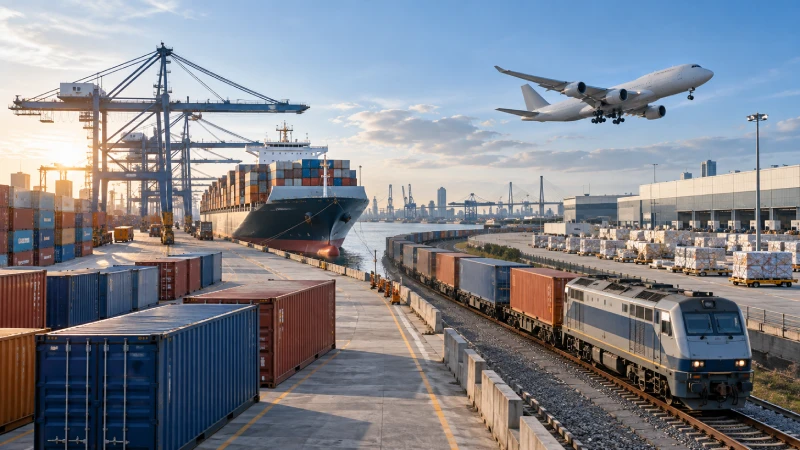
Shipping cost from China to Germany is not one single freight rate.
A supplier may quote CIF Hamburg. A freight forwarder may quote port-to-port ocean freight. Another provider may offer door-to-door delivery to your warehouse in Munich. All three prices can look like “China to Germany shipping costs,” but they cover very different parts of the journey.
For an importer, the more useful question is:
How much will the shipment actually cost from the supplier in China to the final destination in Germany?
That total may include China pickup, export handling, international freight, German destination charges, customs clearance, customs duty, import VAT and inland delivery.
This guide focuses specifically on those costs. For a broader explanation of shipping methods, routes, transit times, ports, airports and import planning, see our Shipping from China to Germany guide.
How Much Does It Cost to Ship from China to Germany?
Shipping costs vary significantly depending on the transport mode, shipment size, origin in China, German destination, cargo type and the exact scope of the quotation.
For initial budgeting, the following figures can be used only as current market references.
| Shipping Method | Charging Basis | September 2026 Market Reference | Important Scope Note |
|---|---|---|---|
| Sea freight FCL – 20GP | Per container | Typical market estimates may range from US$2,600-3,200 | Mainly international sea freight; local charges may be separate |
| Sea freight FCL – 40GP | Per container | Typical market estimates may range from US$4,100-5,000 | Mainly international sea freight; local charges may be separate |
| Sea freight LCL | Per CBM / W-M | As a general market reference, around US$45/CBM appears in current public main-freight listings | Not a reliable total LCL cost; destination CFS charges can materially change the total |
| Air freight | Chargeable kg | Typical market estimates may range from approximately US$4-5/kg for larger general-cargo shipments | Depends heavily on weight break, origin airport, cargo and available capacity |
| Rail freight – 20GP | Per container | Typical market estimates may range from approximately US$4,800-5,800 | Confirm terminal scope and local charges |
| Rail freight – 40GP / 40HQ | Per container | Typical market estimates may range from approximately US$7,000-9,100 | Different rail terminals and service models produce large variations |
| Rail LCL | CBM / chargeable basis | As a general market reference, approximately US$195-210/CBM appears in current public listings | Service scope must be checked carefully |
| Door-to-door | Per shipment | No universal rate | Requires cargo details, customs structure and German postcode |
These figures are planning references, not Winsail quotations. They should always be checked against current shipment-specific pricing before booking.
The wider ocean market also moves quickly. Xeneta reported an average Far East-to-North Europe spot rate of US$4,532 per FEU on September 3, 2026. This is a broad trade-lane benchmark rather than a Shanghai-to-Hamburg quotation, but it shows why container rates should always be date-stamped. See the Xeneta ocean market update for market context.
Air cargo pricing also changes with capacity and demand. The Baltic Exchange reported Hong Kong-to-Europe spot rates of HK$33.63/kg on August 31, 2026, reinforcing the need to confirm current air rates by origin airport, weight break and cargo profile. See the Baltic Exchange air freight market update.
Check Current China-Germany Shipping Cost
Send your commodity, total weight, dimensions, CBM, pickup city in China and German postcode for a shipment-specific cost estimate.
What Is Actually Included in a China-to-Germany Freight Quote?
One of the most common mistakes in freight procurement is comparing two numbers without comparing what those numbers include.
A US$4,500 freight quote may be more expensive than a US$5,000 quote after destination charges, customs handling and German delivery are added.
Before comparing forwarders, determine the quotation scope.
| Quotation Type | What It Usually Covers | What May Still Be Separate |
|---|---|---|
| Freight-only | Main international transport | Pickup, handling, customs, taxes, final delivery |
| Port-to-port | Origin port to German port | China inland cost, German local charges, customs, delivery |
| Airport-to-airport | China airport to German airport | Pickup, airport handling, customs, taxes, delivery |
| Rail terminal-to-terminal | Chinese rail terminal to German rail terminal | First mile, terminal charges, clearance and final delivery |
| Door-to-door | Pickup through final delivery | Duty and VAT may still be excluded unless specifically stated |
| DDP | Delivery under an agreed duty-paid structure | Feasibility depends on importer, tax, customs and cargo conditions |
The exact definition must appear in the quotation. Never assume “door-to-door” automatically means customs duty and VAT are included.
Incoterms also affect where your logistics cost begins.
Under EXW, the buyer may need to arrange transport from the supplier’s factory. Under FOB, the supplier normally handles the cargo to the agreed Chinese port and export stage, while the buyer controls the international freight onward. Under CIF, the seller pays the main sea freight to the named destination port, but German destination charges, customs and inland delivery can still remain with the buyer.
DDP goes much further, but it should not be treated simply as “freight plus tax.” Importer structure, EORI, VAT treatment, customs representation and product requirements need to be workable before a DDP solution is confirmed.
Pro Tip: Never compare two China-Germany quotations until you confirm they cover the same transport scope. A lower ocean rate can become the more expensive option once China pickup, German terminal charges and inland delivery are added.
Sea Freight Cost from China to Germany
For large, heavy or regular commercial shipments, ocean freight from China usually provides the lowest transport cost per unit.
Hamburg and Bremerhaven are the main German gateways normally considered for containerized China-Germany cargo, while the optimal Chinese loading port depends on where the supplier is located.
20ft Container Shipping Cost from China to Germany
A 20GP container is commonly used for dense cargo where weight becomes a constraint before cubic capacity is fully used.
Typical market estimates may range from approximately US$2,600 to US$3,200 per 20GP in current September 2026 public China-Germany references.
That does not mean the complete cost from a Chinese factory to a German warehouse is US$2,600-3,200.
The quoted rate may exclude China pickup, export handling, documentation, terminal charges, German destination charges, customs brokerage, duty, VAT and final trucking.
A useful FCL quotation should identify the origin port, destination port, container type, rate validity, included surcharges and whether origin and destination terminal handling are included.
40ft and 40HQ Container Shipping Cost
For larger-volume cargo, a 40GP or 40HQ generally provides a lower freight cost per cubic meter when utilization is high.
Typical market estimates may range from approximately US$4,100 to US$5,000 per 40GP in current China-Germany public references.
This is broadly consistent with the current Far East-to-North Europe market environment, but a broad market index is not the same as a carrier quotation for a specific origin, sailing and destination.
A 40HQ should not automatically be assumed to cost exactly the same as a 40GP. Equipment availability, carrier pricing, port pair and cargo conditions can change the difference.
For a broader explanation of dedicated container shipping, see our FCL shipping from China guide.
LCL Shipping Cost from China to Germany
For cargo that does not require a full container, LCL lets you pay for part of a consolidated container.
LCL is usually priced by volume or weight-to-measurement rules rather than by container.
As a general market reference, some current China-Germany public listings show approximately US$45/CBM for the main freight component.
However, this number should not be used as the total LCL budget.
For example, a five-CBM shipment does not necessarily cost:
5 CBM x US$45 = US$225 total.
The international freight may be close to that calculation, but origin CFS handling, documentation, destination deconsolidation, terminal charges, customs brokerage and final delivery may add considerably more.
This is why LCL and FCL should be compared using the complete origin-to-destination cost, not simply the published ocean rate per CBM.
For more detail on consolidation, see our LCL consolidation services from China.
Air Freight Cost from China to Germany
Air freight is normally selected when inventory urgency, product value or production schedules justify paying more for transportation.
Frankfurt is the principal German air cargo gateway for many China-origin commercial shipments.
How Much Is Air Freight from China to Germany per KG?
Air freight is normally quoted by chargeable weight, and the rate changes at different weight breaks.
A 100 kg shipment, 300 kg shipment and 1,000 kg shipment may therefore receive different rates per kilogram.
Typical market estimates may range from approximately US$4-5/kg for larger general-cargo shipments in current late-August and September 2026 market references.
These numbers should not be applied blindly to your shipment.
The actual rate depends on the departure airport, airline, weight break, dimensions, product type, available capacity, security requirements and whether airport handling or final delivery is included.
For a broader overview of airport-to-airport and door delivery, see our air freight from China service guide.
Actual Weight vs Volumetric Weight
Airlines charge based on whichever is higher: the physical gross weight or the calculated volumetric weight.
This matters especially for products such as lightweight furniture, plastic products, packaging materials and bulky consumer goods.
A shipment weighing 200 kg physically can therefore be billed at a much higher chargeable weight if it occupies significant aircraft space.
Before comparing air rates, provide exact carton dimensions rather than only the gross weight.
Rail Freight Cost from China to Germany
Germany is one of the European destinations where rail freight can be a commercially meaningful alternative to both ocean and air.
Duisburg is particularly relevant to China-Europe rail, while different services may connect through other German or European rail terminals before final trucking.
Rail generally sits between sea and air in terms of total freight cost.
Rail FCL Cost
Typical market estimates may range from approximately US$4,800-5,800 for a 20GP rail container in current public China-Germany references.
For 40GP or 40HQ services, typical market estimates may range from approximately US$7,000-9,100, although public rates vary substantially depending on the Chinese rail origin, German destination and included services.
That variation is why a rail price without a service scope is difficult to compare.
A quote should state the Chinese departure terminal, German arrival terminal, equipment type, first-mile inclusion, destination terminal charges and whether German delivery is included.
Rail LCL Cost
Rail consolidation is also available for smaller commercial shipments.
As a general market reference, current public listings may show approximately US$195-210/CBM for some China-Germany rail LCL services.
Different services may instead price rail by chargeable kilogram, especially for consolidated or door-to-door channels.
Before comparing rail quotations, confirm whether the rate is terminal-to-terminal or door-to-door and whether customs, duty, VAT and German delivery are included.
| Mode | Relative Freight Cost | Typical Commercial Use |
|---|---|---|
| Sea | Lowest | Heavy, bulky and cost-sensitive cargo |
| Rail | Medium | Cargo where inventory time justifies a premium over sea |
| Air | Highest | Urgent, high-value or time-critical cargo |
For the complete comparison of routes, transit times and shipping methods, refer to Shipping from China to Germany.
How Much Does Door-to-Door Shipping from China to Germany Cost?
There is no responsible universal door-to-door price for China-to-Germany cargo.
A door-to-door shipment could involve sea freight, air freight or rail freight, followed by customs procedures and German inland transport.
The price depends on the full shipment profile.
A properly itemized door-to-door quotation may contain the following cost layers:
| Cost Layer | Example |
|---|---|
| China pickup | Supplier factory to port, airport or rail terminal |
| Origin handling | Export warehouse, documents, terminal and declaration |
| International freight | Sea, air or rail transport |
| German destination charges | Terminal, handling, CFS or airport charges |
| Customs clearance | Broker/declaration service |
| Customs duty | Government charge based on TARIC classification |
| Import VAT | Generally 19%, subject to applicable VAT rules |
| Inland delivery | Gateway to final German postcode |
Door-to-door is therefore a scope of service, not a separate transport mode.
For an overview of end-to-end logistics options, see our door-to-door shipping from China service page.
What About DDP Shipping to Germany?
DDP may be possible for appropriate shipments, but it is conditional rather than universally available.
The customs and tax structure must be confirmed before shipment. The party acting as importer, customs representation arrangements, EORI status, product classification, cargo value, VAT treatment and any product-specific requirements can all affect whether the proposed structure is workable.
The European Commission’s EORI guidance explains the customs identification requirements that apply to economic operators undertaking customs activities in the EU.
For this reason, Winsail confirms DDP shipment by shipment rather than treating it as a standard fixed-price channel for every German import.
Request an Itemized Door-to-Door Cost
Provide your cargo value, commodity, HS code if known, China pickup location and German delivery postcode so the quotation can separate transportation, customs and tax-related costs.
Origin Charges in China
International freight is only one part of the China-side logistics cost.
If the supplier sells under EXW or if multiple suppliers must be consolidated, costs can begin before the cargo reaches the export port, airport or railway terminal.
China origin charges may include:
- Factory pickup
- China inland trucking
- Export warehouse handling
- Export customs declaration
- Documentation
- Terminal handling
- CFS consolidation for LCL
- Container loading arrangements
- VGM-related handling where applicable
- Special-cargo handling
The exact cost depends heavily on the supplier location.
Moving a container from a factory near Ningbo to Ningbo Port is different from trucking the same container hundreds of kilometers to another gateway.
For multi-supplier shipments, consolidation can reduce duplicated international freight, but it may also create warehouse receiving, repacking or additional handling charges. The correct calculation is the net total cost, not simply whether consolidation itself is cheap.
Destination Charges in Germany
German destination charges are frequently overlooked when importers compare ocean or LCL rates.
They are separate from customs duty and import VAT.
Depending on the shipment, destination-side logistics costs can include:
- Terminal handling
- Documentation or delivery-order fees
- LCL deconsolidation
- CFS handling
- Airport or rail-terminal handling
- Storage
- Inspection-related third-party charges
- Other operational fees
FCL shipments may also face detention, demurrage or storage costs if the container cannot be cleared, collected, unloaded or returned within the applicable free time.
For LCL, destination handling deserves particular attention because a very low ocean rate per CBM does not necessarily result in a low total shipping cost.
The best quotation format is therefore not simply:
Ocean Freight: US$X
It is an itemized structure showing:
Ocean Freight + Origin Charges + Destination Charges + Customs + Inland Delivery
German Customs Duty: How Much Should You Budget?
There is no universal “Germany import duty from China” percentage.
Customs duty depends on the product classification, customs value and origin of the goods.
The European Commission’s customs duty guidance identifies tariff classification, customs value and origin as core elements in the calculation.
A simplified formula is:
Customs Duty = Customs Value x Applicable TARIC Duty Rate
The difficult part is determining the correct duty rate.
Why TARIC Classification Matters
Goods imported into Germany are classified under the EU customs tariff.
The EU’s TARIC database integrates tariff measures including third-country duties, tariff preferences, tariff quotas, anti-dumping duties, countervailing measures and import restrictions.
That means two products with the same invoice value can face very different customs costs.
A machine, textile item, electronic product and automotive component should not be assigned one generic “China import duty.”
Before using duty in a landed-cost calculation, verify the product’s classification, customs value, origin and applicable TARIC measures.
German Import VAT: How Is the 19% Calculated?
Germany’s standard import VAT rate is generally 19%, while a reduced 7% rate applies to certain goods.
However, one of the biggest budgeting mistakes is calculating VAT as:
Supplier Invoice x 19%
That can be wrong.
Under EU VAT rules, the taxable amount for imported goods begins with the customs value and can also include customs duties and relevant incidental expenses, including qualifying transport and insurance costs.
The European Commission’s VAT taxable amount guidance explains the calculation principles, while German Customs provides practical import-tax guidance.
A simplified structure looks like this:
| Calculation Stage | Simplified Formula |
|---|---|
| Customs value | Goods value + applicable transport/valuation additions |
| Customs duty | Customs value x TARIC duty rate |
| Import VAT base | Customs value + duty + applicable additional costs |
| Import VAT | VAT base x applicable VAT rate |
The exact customs-value and VAT treatment should be verified against the real Incoterm, invoice structure and shipment.
Pro Tip: Do not estimate German import taxes using only the supplier’s commercial invoice. Customs value and the VAT taxable amount can include transportation and other qualifying costs.
Customs Clearance Cost in Germany
Customs clearance cost is not the same thing as customs duty.
This distinction is important when reviewing a freight quotation.
Customs duty is a government charge determined through customs rules.
Import VAT is a tax.
Customs clearance or brokerage is a service charge for preparing, submitting and managing the customs entry.
A shipment may therefore have all three costs at the same time.
Brokerage charges can vary depending on the number of tariff lines, complexity of the product, additional documents, customs inspections and whether specialist handling is required.
For related service information, see Winsail’s customs clearance and cargo insurance page.
EORI readiness also matters. The importer and customs structure should ideally be resolved before the shipment departs China, rather than after cargo reaches Germany and starts accumulating storage charges.
German Inland Delivery Cost
A complete China-to-Germany budget should include delivery from the German gateway to the final consignee.
The delivery postcode matters.
A container arriving in Hamburg for delivery within the Hamburg area creates a very different trucking profile from the same container moving to Munich, Stuttgart or another inland destination.
The same principle applies to air cargo arriving at Frankfurt and rail cargo routed through Duisburg.
German inland delivery costs can change based on:
- Distance
- Shipment weight
- Pallet count
- Container type
- Truck requirement
- Delivery appointment
- Site access
- Unloading arrangement
- Tail-lift requirement
- Waiting time
- Special equipment requirements
For FCL shipments, the quotation should also clarify who unloads the container and how quickly the empty equipment must be returned.
This is why a freight forwarder cannot provide an accurate door-to-door Germany price from only the destination country.
A German postcode is one of the minimum inputs required.
How to Calculate the Total Landed Cost from China to Germany
For purchasing decisions, international freight alone is rarely the most useful number.
What matters is the cost of getting the goods into a usable position in Germany.
A practical landed-cost structure is:
Goods Value
+ China Origin Logistics
+ International Freight
+ Insurance
+ Germany Destination Charges
+ Customs Duty
+ Customs Clearance
+ German Inland Delivery
+ Import VAT
+ Other Applicable Charges
= Cash Landed Cost
Import VAT may be recoverable for an eligible business under the applicable German VAT rules and with the correct documentation, so its accounting treatment should be considered separately from the cash amount paid at import.
Simplified Landed-Cost Example
Assume a German importer purchases machinery from China.
For illustration:
| Cost Component | Amount |
|---|---|
| Goods value | EUR 30,000 |
| Freight and qualifying cost to EU customs point | EUR 4,000 |
| Customs value | EUR 34,000 |
| Applicable duty rate | Verify in TARIC |
| Customs duty | EUR 34,000 x actual TARIC rate |
| German inland transport | EUR 800 |
| Import VAT base | EUR 34,000 + duty + EUR 800 |
| Import VAT | VAT base x 19% where the standard rate applies |
If the applicable customs duty amount is represented as D, then:
Import VAT = (EUR 34,000 + D + EUR 800) x 19%
The important point is not the hypothetical shipment value. It is the calculation sequence.
First determine the customs value. Then determine the correct tariff classification and duty rate. Then calculate the duty. Then establish the VAT taxable amount using the applicable rules.
Do not start with:
EUR 30,000 invoice x 19%
This is why no freight forwarder should promise a reliable all-in tax-inclusive Germany cost without knowing the product value and customs classification.
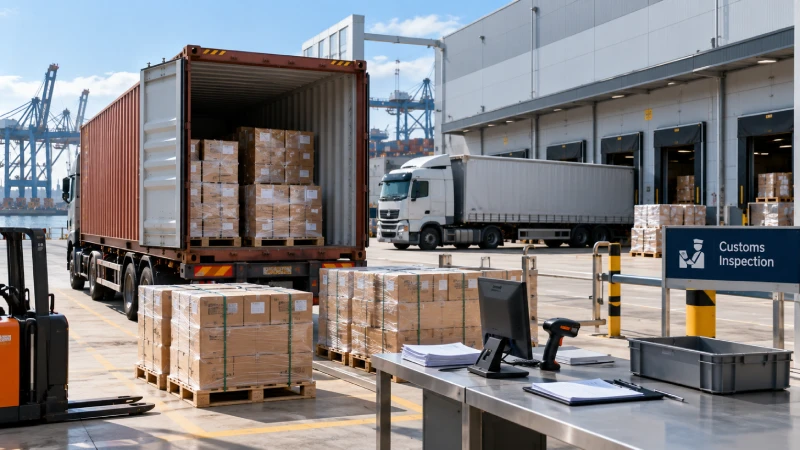
What Factors Change Shipping Cost from China to Germany?
Several shipments moving between the same two countries can have completely different costs.
Shipping Mode
Sea, rail and air use different pricing structures.
Sea normally provides the lowest transportation cost for large cargo. Rail can justify a premium when the cost of inventory delay matters. Air is usually used where speed or cargo value justifies a significantly higher freight cost.
Weight and Volume
FCL is priced primarily by container. LCL usually uses volume or weight-to-measurement rules. Air freight uses chargeable weight. Rail may be priced by container, CBM or chargeable weight depending on the service.
Supplier Location in China
A supplier near Shenzhen may naturally use a South China gateway, while cargo made around Zhejiang may be better positioned through Ningbo, Shanghai, Yiwu or a suitable rail consolidation point.
Moving cargo unnecessarily across China adds cost before international transport even begins.
German Destination
Hamburg, Frankfurt and Duisburg are logistics gateways, not necessarily the final delivery points.
The consignee postcode can materially change the total door-delivery cost.
Cargo Type
Dangerous goods, lithium batteries, chemicals, oversized machinery, temperature-sensitive products and very high-value cargo can require different carriers, packaging, documentation or handling.
This changes both price and service availability.
Market Capacity and Season
Freight prices change as carrier capacity, demand, fuel costs and network disruptions change.
That is why an old freight quotation should never be treated as a permanent benchmark.
Incoterm and Quote Scope
A US$3,000 port-to-port quotation and a US$4,500 door-delivery quotation cannot be directly compared.
Always compare the same responsibility boundary.
Customs Classification and Cargo Value
These do not necessarily change the carrier’s international freight rate, but they can significantly change the total import cost through customs duty, VAT and compliance requirements.
How to Reduce China-to-Germany Shipping Costs Without Creating More Risk
Reducing freight cost should not mean selecting the lowest headline rate regardless of service scope.
The first step is to compare quotations on the same basis. If one forwarder quotes FOB-to-port and another quotes EXW-to-door, normalize both before deciding which is cheaper.
For multi-supplier purchasing, consider consolidating cargo in China when the warehouse and handling savings justify it. This can be particularly useful where several suppliers each produce small LCL shipments.
Packaging optimization can also have a direct financial impact. Reducing unnecessary carton volume may lower LCL CBM, air-freight volumetric weight and some rail-consolidation charges.
For medium-sized ocean shipments, compare LCL with FCL using total destination cost. There is no universal CBM threshold at which every shipment should switch to FCL because cargo density, origin charges and German LCL destination fees vary.
Rail should be evaluated through inventory economics. Paying more than ocean freight can still make commercial sense if earlier stock availability prevents lost sales, production interruption or expensive emergency air shipments.
Finally, avoid preventable destination charges. Incorrect customs documents, unresolved EORI/importer issues and slow clearance can create storage, demurrage and detention costs that outweigh relatively small savings achieved when booking the freight.
Pro Tip: Do not choose LCL or FCL from the ocean-freight number alone. Compare the complete China origin, main freight and German destination bill before deciding which option is cheaper.
What Information Is Needed for an Accurate China-to-Germany Shipping Cost?
A useful freight quotation should be based on the shipment itself rather than a generic country-to-country price.
Before requesting a cost, prepare:
- Commodity name
- HS code if known
- Number of packages
- Package dimensions
- Gross weight
- Total CBM
- Cargo value
- Pickup city or address in China
- German delivery postcode
- Incoterm
- Shipment-ready date
- Preferred transport mode
If the cargo contains batteries, chemicals, liquids, magnets, dangerous goods or oversized pieces, provide that information at the beginning rather than after booking.
For door-to-door or DDP enquiries, importer and customs information may also be required before the service scope can be confirmed.
The more complete the cargo information, the easier it is to separate:
international freight -> local charges -> customs -> taxes -> final delivery
That produces a much more useful number than a generic China-to-Germany rate.
Send Cargo Details for a Current Freight Estimate
Provide your cargo details, China pickup location and German postcode, and Winsail Logistics can evaluate the appropriate sea, air or rail cost structure for your shipment from China.
FAQ
How much does it cost to ship a 20ft container from China to Germany?
Typical market estimates may range from approximately US$2,600 to US$3,200 per 20GP in current September 2026 public freight references. Treat this as an international sea-freight planning reference rather than a complete factory-to-warehouse cost because origin charges, German destination charges, customs, taxes and delivery may be additional.
How much does a 40ft container from China to Germany cost?
Typical market estimates may range from approximately US$4,100 to US$5,000 per 40GP in current public references. Actual pricing depends on the Chinese origin, carrier, German destination, equipment availability, surcharges and quotation scope.
How is LCL shipping cost from China to Germany calculated?
LCL is normally charged according to cargo volume or the applicable weight-to-measurement basis. The main freight may be quoted per CBM, but origin handling, CFS consolidation, German deconsolidation, customs handling and inland delivery can all add to the final amount.
How much is air freight from China to Germany per kg?
Typical market estimates may range from approximately US$4-5/kg for larger general-cargo shipments in current market references. The actual rate depends on chargeable weight, weight break, origin airport, cargo type, airline space and whether destination handling or final delivery is included.
Is rail freight from China to Germany cheaper than air freight?
Rail is generally positioned between sea and air in terms of freight cost. It can be useful when an importer needs faster inventory movement than ocean freight but does not want to pay for air freight. The real comparison should use the same origin, destination and service scope.
Does shipping cost from China to Germany include customs duty and VAT?
Not necessarily. International freight, destination handling, customs clearance, customs duty and import VAT are separate cost categories unless the quotation explicitly combines them. German customs duty depends on TARIC classification, customs value and origin, while import VAT is calculated from the applicable VAT taxable amount rather than simply from the supplier invoice.
Plan Your China-to-Germany Cost Using the Full Shipment, Not Just the Freight Rate
The cheapest freight rate is not always the cheapest shipment.
For a realistic China-to-Germany budget, separate every major cost layer:
international freight -> China origin charges -> German destination charges -> customs duty -> import VAT -> customs clearance -> German inland delivery
Sea freight normally provides the lowest transportation cost for large shipments. Air freight makes sense when urgency or product value justifies the premium. Rail can provide a useful middle position for selected cargo.
But whichever mode you choose, the best cost comparison is based on the same shipment, same Incoterm, same origin, same German destination and same service scope.
For a broader explanation of routes, shipping methods and Germany import planning, continue to our Shipping from China to Germany guide.
For a shipment-specific cost, send Winsail Logistics your commodity, weight, dimensions, CBM, cargo value, pickup location in China and German delivery postcode. We can then evaluate the appropriate freight structure and show which costs are included and which remain payable at destination.
