
Overview: When to Use Air Freight
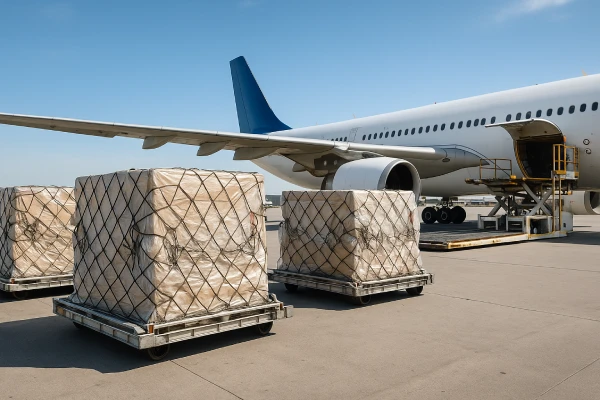
Air freight is the preferred solution for importers who need fast, reliable delivery from China to the USA. It is ideal for high-value goods, urgent replenishment, seasonal products, small-to-medium cargo batches, and Amazon FBA shipments where timing directly affects sales performance. Compared with sea freight, air shipping offers significantly shorter transit times and more predictable schedules, making it suitable for businesses that prioritize speed over cost. Compared with express couriers, air freight is more economical for shipments above 100–300 kg while still maintaining fast delivery.
If your priority is minimizing stockout risk, maintaining tight production cycles, or ensuring time-critical cargo arrives within days—not weeks—air freight is the most balanced and time-efficient choice.
Related Guide:
China–USA shipping methods and transit times
Air Freight Cost from China to the USA
Air freight costs from China to the USA vary based on chargeable weight, route, service level, and market conditions. Most airport-to-airport rates are quoted per kilogram, with prices typically decreasing as the shipment moves into higher airline weight brackets such as 45 kg, 100 kg, 300 kg, 500 kg, and 1,000 kg. Larger and denser cargo enjoys more favorable pricing, while light but bulky goods may be more expensive because airlines calculate chargeable weight using the higher value between actual weight and dimensional weight.
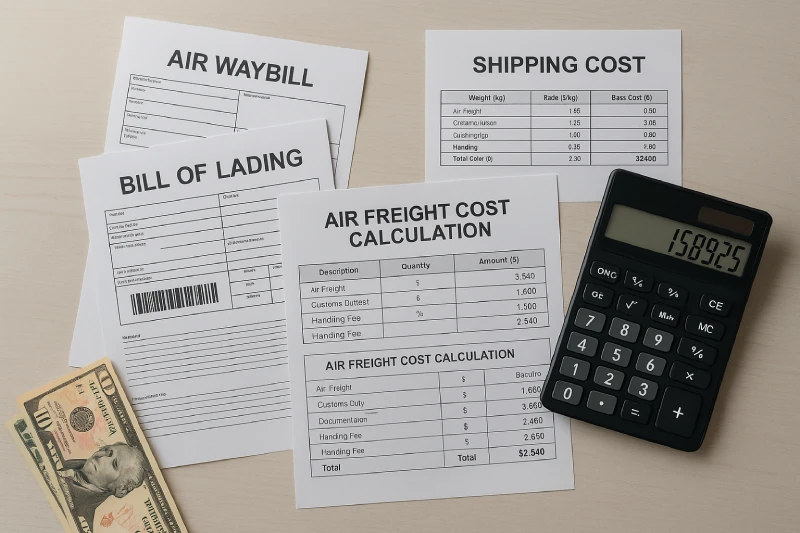
Door-to-door air freight adds last-mile delivery, customs clearance, documentation, handling, and security screening fees. These services create convenience for importers—especially FBA sellers—by simplifying the operational steps, but they contribute to a higher total landed cost than airport-only services.
Several factors influence the final rate:
- Route & airline availability(e.g., PVG → LAX usually offers the best balance of capacity and frequency)
- Fuel and security surcharges
- Peak seasons(August–October, Chinese New Year)
- Commodity type(such as batteries or DG cargo requiring special handling)
Because air freight markets fluctuate weekly, freight forwarders normally provide rate ranges rather than fixed quotations. Importers should request updated pricing based on shipment weight, dimensions, origin airport, destination airport, and desired delivery speed.
Air Freight Transit Time from China to the USA
Air freight offers significantly faster delivery compared with sea shipping, but actual transit time depends on origin airport, destination airport, flight frequency, customs processing, and whether the shipment uses a direct or connecting route. Most airport-to-airport services from major hubs such as Shanghai (PVG), Shenzhen (SZX), Guangzhou (CAN), and Hong Kong (HKG) to major U.S. gateways like Los Angeles (LAX), Chicago (ORD), and New York (JFK) take 3–6 days under normal conditions.
For door-to-door shipments, importers should expect 5–10 days, as the process includes export handling, security screening, customs clearance, and last-mile delivery. Transit times may shorten when capacity is abundant, but delays can occur during peak seasons, airline offloads, special cargo inspections, or weather disruptions.
Express air services—operated through premium airline routes or priority handling—usually reduce total time by 1–2 days compared with standard air freight. For businesses with tight replenishment schedules or Amazon FBA shipments, selecting the right service level helps balance both speed and cost.
Chargeable Weight Rules: Actual Weight vs Dimensional Weight
Understanding chargeable weight is essential for accurately estimating air freight costs from China to the USA. Airlines do not charge purely based on how heavy a shipment is—they charge based on the greater value between:
- Actual Weight
- Dimensional Weight / Volumetric Weight
This system ensures that bulky but lightweight cargo occupies space proportional to the revenue it generates.

Actual Weight(Actual Gross Weight)
This is the physical weight of the cargo measured on a scale, including packaging.
Dimensional Weight(Volumetric Weight)
Airlines use a standardized formula set by IATA to convert volume into chargeable kilograms:
Length × Width × Height (cm) ÷ 6000 = Volumetric Weight (kg)
A larger divisor means lower volumetric weight; however, 6000 is the most widely used standard among international airlines and freight forwarders.
Example Calculation
A shipment measuring 80 × 60 × 40 cm weighs 20 kg.
Volumetric Weight = 80 × 60 × 40 ÷ 6000 = 32 kg
Since 32 kg > 20 kg, the airline charges 32 kg.
This is why many importers feel air freight is expensive when goods are large but not heavy—the cost comes from volume, not weight.
How to Reduce Chargeable Weight
- Optimize packaging to minimize empty space
- Use tighter cartons that follow product shape
- Avoid oversized boxes for small items
- Ask your supplier to provide exact carton dimensions early
- Request your forwarder to review whether repacking or consolidation can reduce volumetric weight
For many U.S. importers and Amazon FBA sellers, understanding and controlling dimensional weight can reduce air freight costs by 10–25%, especially during peak seasons when every kilogram counts.
Types of Air Freight Services
Air freight from China to the USA is available in several service levels designed for different cargo needs and delivery timelines. The most common option is airport-to-airport, where the forwarder handles export processing and the importer manages U.S. customs and domestic delivery. This model offers the lowest air freight base rate but requires the buyer to coordinate more steps.
For importers who prefer a complete solution, door-to-door air freight includes export clearance, international air transport, U.S. customs clearance, and last-mile delivery. This service is highly popular among Amazon FBA sellers and small to medium businesses because it removes operational complexity.
Forwarders also provide Standard Air and Express Air options. Standard Air is cost-effective with slightly longer processing time, while Express Air prioritizes space, handling, and faster connections—ideal for urgent replenishment or time-sensitive shipments.
Major China & USA Airports for Air Freight
China’s major air cargo hubs—Shanghai Pudong (PVG), Guangzhou Baiyun (CAN), Shenzhen (SZX), and Hong Kong (HKG)—handle the majority of outbound shipments to the USA. These airports offer high-capacity freighter routes, frequent passenger flights with bellyhold space, and stable cargo handling efficiency. Among them, PVG and HKG typically provide the most competitive schedules and broader airline choices, which helps stabilize pricing during peak seasons.
On the U.S. side, the most common entry points for China-origin air cargo are Los Angeles (LAX), Chicago O’Hare (ORD), New York (JFK), and Atlanta (ATL). LAX is the primary gateway, offering the fastest processing and the most direct flights from China, while ORD and JFK serve as major hubs for central and eastern U.S. distribution.
Choosing airports with strong capacity and frequent flights can reduce both transit time and cost, especially for time-sensitive goods or FBA replenishment.
Air Freight vs Express vs Sea Freight: Which Should You Choose?
Choosing the right shipping method depends on the balance between cost, speed, and shipment volume. Air freight is ideal for medium-sized shipments where delivery time matters but express courier pricing becomes too expensive. It provides predictable schedules and fast transit while remaining more cost-efficient than express for cargo above 100–300 kg.
Express courier services such as DHL, FedEx, and UPS offer the fastest door-to-door delivery—often within 3–5 days—but come with premium pricing. They are best suited for small parcels, sample shipments, or high-value items with strict delivery deadlines.
Sea freight, on the other hand, is the most economical choice for large-volume cargo, though transit times can range from 20–35 days or longer depending on port congestion. It is the preferred solution for bulky goods, full containers, and cost-sensitive shipments.
Quick Comparison Table
| Mode | Speed | Cost | Best For |
|---|---|---|---|
| Air Freight | Fast | Medium | 100–1000 kg, urgent restocking, FBA |
| Express | Fastest | Highest | Small parcels, samples |
| Sea Freight | Slowest | Lowest | Large-volume, bulk shipments |
Practical Tips to Reduce Air Freight Cost
Reducing air freight costs from China to the USA often comes down to managing chargeable weight and choosing the right service structure. One of the most effective strategies is optimizing packaging—minimizing empty space inside cartons can significantly reduce volumetric weight, which directly lowers the total cost. Importers shipping multiple small batches can also benefit from cargo consolidation, allowing them to move into more favorable airline weight brackets such as 100 kg or 300 kg pricing levels.
Booking early is another practical way to avoid peak-season surcharges and space shortages. During high-demand periods—such as August to October and the weeks before Chinese New Year—rates increase quickly as capacity tightens. Selecting Standard Air instead of Express Air can also help balance speed and budget if the shipment is time-sensitive but not urgent.
Working closely with an experienced freight forwarder ensures proper routing, accurate cost estimations, and fewer unexpected fees.
Air Freight Restrictions for USA Imports
Certain products shipped by air from China to the USA are subject to strict airline and U.S. regulatory controls. The most common limitation involves lithium batteries, which must comply with UN38.3 testing, proper labeling, and airline acceptance rules. Shipments containing power banks, e-bikes, or built-in batteries often require DG handling or special approval.
Traditional dangerous goods—such as chemicals, flammable liquids, sprays, magnets, and corrosive substances—also fall under strict air freight restrictions and may only travel on specific aircraft with certified packaging. Importers must provide accurate MSDS documents to confirm compliance.
On the U.S. side, certain categories such as food, cosmetics, medical devices, wireless products, and environmental-related items may require clearance from agencies like FDA, FCC, or EPA before release. Additionally, prohibited items—including counterfeit goods, unauthorized pharmaceuticals, and restricted agricultural products—cannot be transported.
Checking compliance early helps avoid delays, offloading, or additional inspection costs during transit.
FAQ
1. How much does air freight from China to the USA cost?
Air freight is priced per kilogram and depends on chargeable weight, route, and season. Most rates fall within a dynamic weekly range, so importers should request updated quotations.
2. How long does air freight take?
Airport-to-airport delivery typically takes 3–6 days, while door-to-door services require 5–10 days, depending on customs clearance and final-mile delivery conditions.
3. How is chargeable weight calculated?
Airlines charge based on the higher value between actual weight and dimensional weight using the formula: L × W × H ÷ 6000.
4. Can I ship lithium batteries or electronics by air?
Yes, but batteries must meet UN38.3 standards and airline acceptance rules. Some products may require DG handling.
5. Is air freight suitable for Amazon FBA shipments?
Yes. Air freight is ideal for fast replenishment, especially for 100–500 kg shipments where express service becomes costly.
Plan Your China–USA Air Freight Shipment with Winsail
Whether you need urgent restocking, reliable delivery for Amazon FBA, or a cost-effective solution for medium-sized cargo, Winsail’s air freight specialists can help you choose the best route, control chargeable weight, and avoid unexpected delays. With years of experience handling China–USA shipments, we provide fast quotations, transparent pricing, and smooth door-to-door execution.
Contact our team to receive a tailored air freight plan for your shipment.
