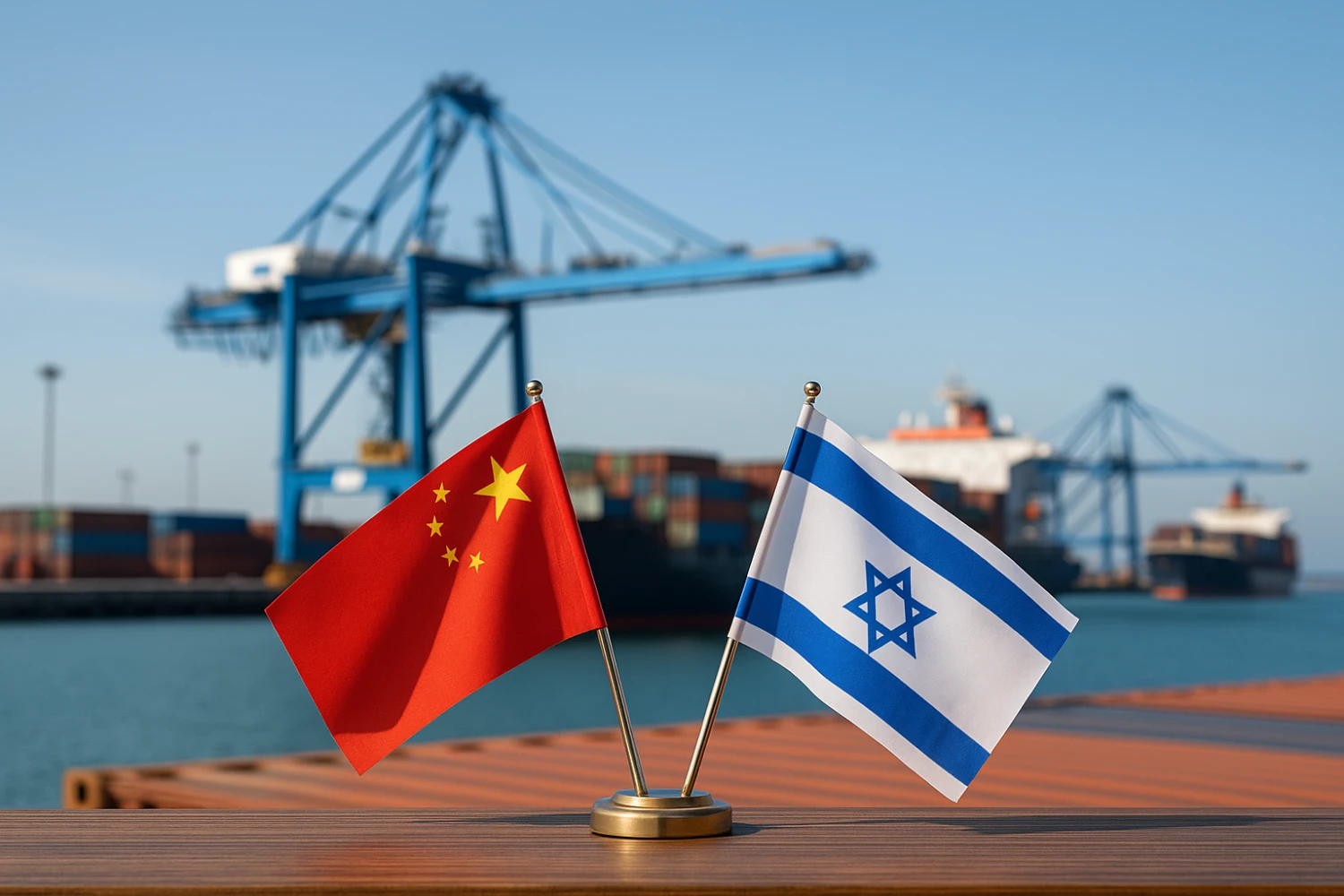
Ship from China to Israel: Cost, Transit Time & Best Shipping Methods (2025 Guide)
Overview: Shipping from China to Israel
Shipping from China to Israel continues to expand rapidly in 2025, driven by strong demand for affordable electronics, home products, machinery, automotive accessories, and industrial components. As one of Israel’s top import sources, China offers competitive pricing, flexible manufacturing capacity, and efficient export routes — making it the preferred procurement hub for Israeli wholesalers, retailers, and e-commerce buyers.
Israel’s geographic position on the Mediterranean Sea, combined with its developed logistics infrastructure, enables fast and flexible supply chain options. Whether you ship full containers of furniture from Ningbo, LCL pallets of electronics from Shenzhen, or urgent spare parts via air freight from Guangzhou to Tel Aviv, importers can choose the best balance of cost, speed, and customs simplicity.
Why Shipping from China to Israel Is Popular
-
Stable manufacturing ecosystem — Massive production capacity across electronics, solar products, textiles, and industrial machinery
-
Competitive landed cost — Even after shipping and taxes, Chinese goods remain more affordable
-
Flexible shipping options — Sea freight, air freight, DDP door-to-door, and express courier services cover all cargo types
-
Strong logistics connectivity — Multiple weekly sailings and daily flights into Israel’s ports and airports
China → Israel Trade Snapshot
| Factor | Status |
|---|---|
| Bilateral Trade Growth | Stable increase year-on-year |
| Main Cargo Types | Consumer electronics, auto parts, plastic goods, furniture, lighting, machinery |
| Popular Shipping Modes | Sea Freight (FCL/LCL), Air Freight, DDP Door-to-Door, Express |
| Fastest Method | Air Freight to Tel Aviv |
| Cheapest Method | Sea Freight via FCL |
| Best for E-commerce | DDP Air / Sea to Israel |
Key Shipping Highlights
| Item | Summary |
|---|---|
| Main China Ports | Shanghai, Ningbo, Shenzhen, Qingdao, Guangzhou |
| Israel Entry Points | Haifa Port, Ashdod Port, Ben Gurion Airport (TLV) |
| Typical Sea Transit Time | 20–32 days (port-to-port) |
| Typical Air Transit Time | 5–9 days |
| DDP Availability | Yes – Sea & Air DDP widely used |
| Customs Authority | Israel Customs Administration |
| Import Requirements | Commercial invoice, packing list, BL/AWB, HS code, certifications for regulated goods |
Who Is This Guide For?
This page is designed for:
-
Importers and wholesalers sourcing from China
-
Amazon-style e-commerce sellers
-
Industrial purchasing teams procuring components
-
SMEs looking for predictable logistics cost and timelines
If you’re planning to import goods from China to Israel in 2025, this guide shows you the best shipping methods, real-world cost estimates, transit times, and step-by-step preparation tips — helping you avoid delays and unnecessary expenses.
Estimated Shipping Cost & Transit Time
Here’s a realistic, up-to-date (2025) estimation of costs and transit times for shipping from China to Israel — for sea freight, air freight, door-to-door (DDP/DAP) and express courier options. Use this as a reference; actual costs may vary depending on seasonality, cargo type, port handling fees, fuel, and carrier rates.
Cost & Time Estimates by Shipping Method
| Shipping Method | Typical Cost Range* | Typical Transit / Delivery Time (China → Israel) |
|---|---|---|
| Sea Freight – FCL (20ft / 40ft) | ~ US$ 1,950 – US$ 3,400 per container (20ft / 40ft) | ~ 25 – 40 days (port-to-port) |
| Sea Freight – LCL (per CBM) | ~ US$ 50 – US$ 85 per CBM | ~ 25 – 40 days (depending on consolidation & schedule) |
| Air Freight (standard cargo) | ~ US$ 3.50 – US$ 6.50 per kg | ~ 3 – 7 days (airport-to-airport) |
| Air Freight / Express (urgent / small parcels) | ~ US$ 8.00 – US$ 10.00+ per kg (for time-sensitive or high-value cargo) | ~ 1 – 5 days (door-to-door or airport-to-door, depending on service level) |
| Door-to-Door (DDP / DAP, Sea or Air + Ground Delivery in Israel) | Sea-based DDP: sea freight cost + inland delivery & customs → varies Air-based DDP: air freight cost + customs & local delivery (often premium) |
Sea-based DDP: ~ 30–45 days (including customs & inland) Air-based DDP: ~ 5–10 days (including customs & local delivery) |
Estimated ranges based on publicly available 2025 data from multiple logistics providers. Always request a formal quote for accurate pricing.
Cost & Time Comparison: Which Method to Use?
| Scenario / Priority | Recommended Method | Why / When It Makes Sense |
|---|---|---|
| Large volume, non-urgent cargo (furniture, machinery, bulk goods) | Sea Freight – FCL | Lowest cost per unit, efficient for large shipments |
| Medium/small volume, not urgent, varied goods | Sea Freight – LCL | Flexible, less than full container — cost-effective for smaller loads |
| High-value or relatively small cargo needing fast delivery (e.g. electronics, components) | Air Freight (standard or express) | Fast transit time outweighs cost per kg |
| Urgent, time-sensitive delivery (urgent stock, small parcels) | Air Freight / Express | Fastest delivery — ideal for high urgency |
| SMEs / e-commerce sellers wanting hassle-free import (including customs & delivery) | Door-to-Door DDP | All-in-one solution: only need to prepare goods at origin — provider handles the rest |
What Influences Cost & Transit Time
-
Port of departure in China (e.g. Shanghai, Shenzhen, Ningbo, Qingdao, Guangzhou) — affects sail frequency and schedule.
-
Destination port/airport in Israel (main ones: Haifa Port, Ashdod Port, and Ben Gurion Airport (TLV)) — can affect inland delivery time and port fees.
-
Seasonal demand / market conditions — fuel price, container/airfreight capacity, holidays, global events.
-
Cargo type, volume, and packaging — heavy vs light, volumetric vs actual weight (especially for air freight), hazardous goods, compliance with import regulations.
-
Customs clearance & inland delivery in Israel — extra days may be needed beyond port arrival, especially for DDP or door-to-door services.
Sea Freight from China to Israel
Sea freight remains the most cost-effective and widely used method for shipping goods from China to Nigeria in 2025.
Over 80% of Chinese exports to Nigeria travel by ocean, primarily to Lagos (Apapa & Tin Can Island), Port Harcourt, and Onne ports.
With continuous trade growth and improved customs digitization by the Nigeria Customs Service (NCS), importers now enjoy greater transparency — but congestion and document checks at Lagos ports still make DDP Sea Freight the preferred solution for most businesses.
💡 For large or heavy cargo, DDP Sea Freight offers the best cost control and zero-hassle customs clearance.
🔹 Main Sea Freight Routes
| Origin Port (China) | Destination Port (Nigeria) | Transit Time (Days) | Remarks |
|---|---|---|---|
| Shanghai | Lagos (Apapa / Tin Can) | 38–45 days | Most frequent route, ideal for FCL cargo |
| Ningbo-Zhoushan | Lagos (Apapa) | 40–46 days | Reliable and cost-efficient |
| Shenzhen (Yantian) | Port Harcourt | 42–48 days | Suitable for southern Nigeria distribution |
| Guangzhou (Nansha) | Onne | 40–47 days | Balanced option, moderate congestion |
| Xiamen / Qingdao | Lagos | 45–50 days | Less frequent but available for bulk goods |
🚢 Shanghai → Lagos remains the fastest and most stable shipping route in 2025.
🔹 FCL vs LCL Shipping
| Aspect | FCL (Full Container Load) | LCL (Less than Container Load) |
|---|---|---|
| Volume | 20ft / 40ft container | Shared container |
| Best For | Bulk cargo, large shipments | Small & mixed cargo |
| Cost Efficiency | Lower cost per CBM | Higher cost per CBM |
| Handling Time | Faster customs release | Slower due to consolidation |
| Damage Risk | Low (sealed container) | Higher (mixed cargo handling) |
| Recommendation | For 15+ CBM | For 1–15 CBM |
⚙️ If your shipment is under 15 CBM, LCL or DDP Sea Freight is the most economical solution.
🔹 Sea Freight Cost Breakdown
| Cost Component | Estimated Range (USD) | Notes |
|---|---|---|
| Ocean Freight | $150–220 / CBM | Port-to-port base rate |
| Destination Handling | $25–40 / CBM | Terminal & storage charges |
| Customs Clearance (NCS) | $50–80 / shipment | Excluded unless DDP |
| Import Duty (Average) | 5–20% of CIF value | Based on HS code |
| DDP All-In Rate | $200–280 / CBM | Includes tax + clearance + delivery |
📦 With DDP, all customs, duties, and last-mile delivery are included in one fixed price.
🔹 Recommended Cargo Types for Sea Freight
✅ Construction materials (tiles, doors, pipes)
✅ Furniture & home appliances
✅ LED lighting & fixtures
✅ Automotive parts & machinery
✅ Electronics (bulk packaging)
✅ Clothing, footwear, and general merchandise
🌍 Winsail consolidates multiple suppliers in China to optimize container space and reduce costs for Nigerian importers.
🔹 Challenges & Solutions in Nigerian Sea Freight
| Challenge | Impact | Winsail Solution |
|---|---|---|
| Port congestion (Apapa, Tin Can) | Delays up to 5 days | DDP pre-cleared import & local agent coordination |
| Customs delays | High inspection frequency | Licensed IOR handles documentation |
| Unstable trucking costs (Lagos → Abuja) | Price fluctuations | Locked-in DDP delivery cost |
| Hidden charges from port agents | Unexpected fees | Transparent all-inclusive billing |
| SONCAP / Form M process | Document rejection risk | Managed through pre-approved importer profiles |
✅ Winsail’s Lagos team ensures faster cargo release through NCS pre-filing and trusted importer channels.
🔹 Why Choose DDP Sea Freight
| Feature | Standard Sea Freight | DDP Sea Freight |
|---|---|---|
| Customs Clearance | Importer handles | Forwarder handles |
| Taxes & Duties | Paid at destination | Included |
| Delivery | Port only | Door-to-door |
| Risk of Delay | Moderate | Low |
| Hidden Fees | Possible | None |
| Recommended For | Experienced importers | SMEs & traders |
🚚 DDP Sea Freight = No customs headache + No hidden fees + Nationwide delivery.
🔹 Transit Time Snapshot
Sea freight is the most common and cost-effective method for importing goods from China to Israel. It is ideal for medium to large cargo volumes, bulky products, and shipments that are not time-sensitive. In 2025, most Israeli importers use either FCL (Full Container Load) for exclusive shipments or LCL (Less than Container Load) for smaller consignments consolidated into shared containers.
With weekly sailings from China’s major export ports and stable inbound capacity to Israel’s Mediterranean terminals, sea freight offers predictable pricing and reliable delivery windows.
Why Choose Sea Freight to Israel
-
Lowest shipping cost per unit for large volumes
-
Flexible container sizes (20GP, 40GP, 40HQ)
-
Suitable for oversized, heavy, or palletized cargo
-
Frequent sailings to Haifa and Ashdod ports
-
Widely supported by global carriers (COSCO, MSC, ZIM, Maersk, Evergreen)
FCL vs LCL Comparison
| Mode | Best For | Advantages | Considerations |
|---|---|---|---|
| FCL (Full Container Load) | Shipments >18–22 CBM | Lower cost per CBM, less handling, faster customs clearance | Requires enough cargo to economically fill a container |
| LCL (Less than Container Load) | Shipments <18 CBM | No need to fill a full container, ideal for SMEs | Additional consolidation time may extend total transit time |
Typical Sea Freight Transit Times
(Port-to-port averages)
| China Origin Port | Israel Destination Port | Transit Time |
|---|---|---|
| Shanghai | Haifa | 28–35 days |
| Ningbo | Haifa | 26–34 days |
| Shenzhen (Yantian) | Ashdod | 25–32 days |
| Qingdao | Ashdod | 30–38 days |
| Guangzhou | Haifa | 27–36 days |
Note: Customs inspections, container deconsolidation (for LCL), and inland delivery in Israel may add 3–7 extra days.
Common Products Shipped by Sea to Israel
-
Consumer electronics & LED lighting
-
Furniture and home decor
-
Auto parts and tires
-
Machinery and industrial equipment
-
Plastic goods, packaging products, textiles
These categories benefit most from sea freight due to their volume, weight, and non-urgent delivery cycles.
Israel’s Main Seaports for Imports
Haifa Port
-
Largest deep-water port and primary entry point for Chinese goods
-
Efficient for northern and central Israel distribution
Ashdod Port
-
Key logistics hub located closer to Tel Aviv and southern regions
-
Handles a significant portion of containerized cargo traffic
Local Charges & Handling Notes
When shipping to Israel, importers should prepare for:
-
Terminal handling charges (THC)
-
Customs inspection fees (if applicable)
-
VAT on imports
-
Documentation fees for BL, delivery order, and clearance
These charges vary depending on cargo type, HS code, and container handling requirements.
Is Sea Freight Right for You?
Choose sea freight if:
✔ Your shipment is bulk or palletized
✔ Your delivery timeline allows 3–6 weeks
✔ You want the lowest landed cost per unit
✔ You prefer flexible container options (20GP, 40HQ)
If your cargo is urgent, sensitive, or weight-cost-driven, consider air freight or express services — which we’ll cover next.
Air Freight from China to Israel
Air freight is the fastest and most reliable shipping option for importers who need urgent replenishment, high-value components, medical devices, fashion items, electronics, or small-volume shipments. With daily flights connecting China’s manufacturing hubs to Ben Gurion International Airport (TLV), air freight helps Israeli businesses keep supply chains responsive and inventory lean.
In 2025, air cargo demand from China to Israel remains strong due to rapid e-commerce growth, shorter product lifecycles, and the need for just-in-time delivery.
Why Importers Choose Air Freight
-
Fastest shipping method (days, not weeks)
-
Suitable for fragile, high-value, or time-sensitive goods
-
Lower risk of cargo damage or theft
-
More predictable schedule compared to sea freight
-
Ideal for product launches, urgent spare parts, seasonal goods
Typical Air Freight Transit Times
| Route | Airport Code | Transit Time |
|---|---|---|
| Shanghai → Tel Aviv | PVG → TLV | 3–6 days |
| Shenzhen → Tel Aviv | SZX → TLV | 4–7 days |
| Guangzhou → Tel Aviv | CAN → TLV | 5–7 days |
| Beijing → Tel Aviv | PEK → TLV | 4–7 days |
Includes flight and handling time; add 1–3 days for local delivery inside Israel.
How Air Freight Pricing Works
Air freight costs are calculated based on the greater of:
Actual Weight vs Chargeable (Volumetric) Weight
Chargeable Weight(kg) = (Length × Width × Height) / 6000Example:
A carton measuring 80 × 60 × 50 cm
= 240,000 ÷ 6000
= 40 kg chargeable weight
This is crucial for bulky but lightweight items.
2025 Air Freight Price Reference
| Service Type | Typical Cost Range | Suitable For |
|---|---|---|
| Standard Air Freight | US$ 3.5 – 6.5 per kg | Electronics, general cargo, garments, components |
| Air Express (DHL / FedEx / UPS / Aramex) | US$ 8.0 – 10.0+ per kg | Small parcels, urgent deliveries, samples |
| Air DDP (Duty Paid Door-to-Door) | US$ 7 – 11 per kg | SMEs needing tax-included, turnkey import service |
Prices vary based on season, fuel surcharge, flight availability, and commodity type.
Best Cargo Types for Air Freight
| Suitable Cargo | Not Recommended |
|---|---|
| High-value electronics | Large furniture |
| Fashion, accessories | Oversized machinery |
| Medical equipment | Very heavy cargo |
| Spare parts | Low-margin bulky goods |
| Cosmetics, branded goods | Hazardous items without certificate |
Main Arrival Airport in Israel
Ben Gurion International Airport (TLV)
-
Israel’s largest cargo airport
-
Supports express and standard air freight services
-
Convenient access to Tel Aviv, Jerusalem, and central Israel distribution hubs
When Air Freight Makes Sense
Choose air freight if you:
✔ Need fast restock or guaranteed delivery times
✔ Import small/medium shipments where cost per kg is acceptable
✔ Handle sensitive, high-value, or branded goods
✔ Can’t wait for sea freight’s 3–6 week transit
If your shipment is extremely urgent and under 100 kg, Express services may be even more efficient — we cover those shortly.
Door-to-Door Shipping to Israel
DDP Shipping (Delivered Duty Paid) is the most convenient and risk-free method to ship goods from China to Nigeria — especially for importers who don’t have a local clearing agent or valid importer registration.
With DDP Sea Freight and DDP Air Freight, Winsail Logistics takes care of everything from pickup in China to delivery in Nigeria, including customs clearance, duties, and taxes.
That means you won’t need to handle Form M, PAAR, or SONCAP documents — we do it for you.
💡 In 2025, over 70% of Nigerian importers prefer DDP because it eliminates delays, hidden fees, and customs complications.
🔹 What Is DDP Shipping?
DDP stands for Delivered Duty Paid, meaning the seller or forwarder (Winsail) is responsible for:
✅ Freight from China
✅ Customs clearance in Nigeria
✅ Import duties and taxes
✅ Final delivery to your warehouse
🧾 You simply receive your goods — no port visit, no paperwork, no extra fees.
🔹 DDP Shipping Methods (2025 Overview)
| Mode | Transit Time (Days) | Average Cost (USD) | Pricing Unit | Ideal Cargo Type | Key Benefit |
|---|---|---|---|---|---|
| DDP Sea Freight | 40–50 | $200–280 / CBM | / CBM | Heavy or bulky goods | Cheapest all-in rate |
| DDP Air Freight | 8–12 | $7–10 / kg | / kg | Electronics, small parcels | Fastest & customs-free |
| DDP Express (DHL / Aramex) | 5–8 | $9–12 / kg | / kg | Samples, small items | Fastest delivery door-to-door |
🚚 All DDP rates include import duty, customs clearance, and delivery to your door in Lagos, Abuja, or Port Harcourt.
🔹 How DDP Shipping Works (Step-by-Step Process)
| Step | Process | Handled By |
|---|---|---|
| 1️⃣ | Supplier delivers goods to Winsail’s China warehouse | Supplier |
| 2️⃣ | Cargo consolidation & export declaration | Winsail China team |
| 3️⃣ | Sea / Air shipment to Nigeria | Winsail |
| 4️⃣ | Customs pre-clearance via licensed IOR | Winsail Lagos office |
| 5️⃣ | Duty & tax payment (included) | Winsail |
| 6️⃣ | Door-to-door delivery to client’s warehouse | Winsail |
| ✅ | You receive your cargo without any customs involvement | Importer |
🔹 DDP Sea Freight vs DDP Air Freight (2025 Comparison)
| Feature | DDP Sea Freight | DDP Air Freight |
|---|---|---|
| Transit Time | 40–50 days | 8–12 days |
| Cost Efficiency | $200–280 / CBM | $7–10 / kg |
| Cargo Type | Bulky, large-volume | Light, urgent |
| Tax & Clearance | Included | Included |
| Delivery Coverage | Lagos, Abuja, Port Harcourt | Lagos, Abuja, Kano |
| Tracking | Standard | Real-time |
| Best For | SMEs, bulk importers | eCommerce, electronics |
💡 Choose DDP Sea Freight for cost efficiency, or DDP Air Freight for speed and convenience.
🔹 Why Choose DDP Shipping in 2025
| Challenge (Without DDP) | DDP Solution (With Winsail) |
|---|---|
| Port congestion delays | Pre-cleared shipment |
| High customs inspection rate | Licensed importer (IOR) |
| Duty calculation errors | Fixed all-inclusive rate |
| Hidden port & agent fees | Transparent billing |
| Limited delivery coverage | Door-to-door nationwide |
| Need for Form M / SONCAP | Fully handled by Winsail |
✅ DDP = Predictable cost + Reliable timeline + Zero customs risk.
🔹 Common Goods Shipped via DDP to Nigeria
✅ LED lighting & electrical tools
✅ Mobile accessories & electronics
✅ Auto parts & mechanical components
✅ Clothing & footwear
✅ Home appliances & furniture
✅ Beauty & fashion products
📦 Winsail consolidates DDP shipments weekly from Guangzhou, Yiwu, and Shenzhen — directly to Lagos and Abuja.
🔹 DDP Shipping Cost Snapshot (2025)
Door-to-door shipping is increasingly popular among Israeli importers because it simplifies the entire logistics process. Instead of coordinating multiple parties — freight forwarders, customs agents, trucking companies, and tax payments — a door-to-door solution handles everything from the factory in China to your warehouse or address in Israel.
In 2025, Winsail Logistics provides both DDP (Delivered Duty Paid) and DAP (Delivered at Place) options for Israel-bound shipments. Understanding the difference helps importers choose the right model for cost, responsibility, and compliance.
What Is DDP? (Delivered Duty Paid)
DDP means the freight forwarder handles:
✔ Shipping from China
✔ Export and import customs clearance
✔ Duties and taxes (including VAT)
✔ Delivery to your location in Israel
You only need to prepare the cargo at the factory — everything else is managed for you.
Ideal for:
-
SMEs without import experience
-
E-commerce shipments
-
Small parcels and consolidated cargo
-
Importers wanting predictable, fixed landed cost
What Is DAP? (Delivered at Place)
DAP covers transportation to the destination address in Israel, but taxes and customs duties are NOT included. The importer pays them upon arrival.
More suitable for:
-
Experienced importers already familiar with Israel Customs
-
Businesses with their own customs broker
-
High-value shipments where tax optimization is needed
DDP vs DAP Comparison
| Feature | DDP | DAP |
|---|---|---|
| Customs Clearance | Handled by forwarder | Importer responsible |
| Duties & Taxes | Included in the quote | Paid separately on arrival |
| Delivery to Address | ✔ Included | ✔ Included |
| Risk for Importer | Very low | Medium |
| Best For | SMEs, new importers, e-commerce | Large buyers, experienced importers |
| Price | Higher upfront | Lower upfront but extra charges later |
Typical DDP Transit Times
| Mode | Delivery Time | Notes |
|---|---|---|
| DDP by Sea | 30–45 days | Best for bulky cargo and stable stock replenishment |
| DDP by Air | 5–10 days | Fast delivery, ideal for samples, electronics, urgent parts |
DDP door-to-door timing includes customs clearance and final-mile delivery inside Israel.
Advantages of Choosing DDP for Israel
-
No hidden costs — clear landed price in advance
-
No need for an Israel customs broker
-
Reduced delays due to prepared paperwork
-
Ideal for startups and first-time importers
-
Fast onboarding — just provide packing list & invoice
When to Choose DDP
Pick DDP if you:
-
Don’t want to handle customs or tax payments
-
Need predictable pricing for retail or online sales
-
Are unfamiliar with Israel import regulations
-
Want a single logistics provider managing the process end-to-end
When to Choose DAP
Choose DAP if:
-
You can handle customs clearance locally
-
You have negotiated tax terms or VAT structures
-
You want partial control of the import process
If your priority is simplicity and cost transparency, DDP is the best choice for most China-to-Israel shipments. DAP works well only when you already have logistics infrastructure and customs knowledge in place.
Express Shipping from China to Israel
Express courier services are the fastest and most convenient shipping option for small parcels, samples, and urgent cargo. If you need goods delivered directly to your office, warehouse, or customer door in Israel within a few days — without dealing with customs paperwork — express is often the most efficient solution.
In 2025, major carriers like DHL, FedEx, UPS, Aramex, and China-based routing networks offer daily pickups and reliable transit schedules from key Chinese manufacturing hubs such as Shenzhen, Guangzhou, Ningbo, and Shanghai to Israel.
When Should You Use Express Shipping?
Choose express shipping when:
✔ Your goods are under 100 kg
✔ You need fast delivery (1–5 days)
✔ You are shipping samples, electronics, spare parts, or small orders
✔ You want door-to-door convenience
✔ You need to avoid complex customs processes
Typical Express Delivery Times to Israel
| Carrier | Transit Time | Notes |
|---|---|---|
| DHL Express | 3–5 days | Most reliable for electronics & commercial parcels |
| FedEx International Priority | 3–6 days | Good tracking and customs handling |
| UPS Worldwide Expedited | 4–7 days | Strong global network |
| Aramex | 4–8 days | Popular for Middle East distribution |
Times vary by city of origin, flight schedule, and customs clearance speed.
Express Shipping Cost Reference
| Weight Bracket | Typical Price Range (USD/kg) | Suitable Cargo |
|---|---|---|
| 0.5 – 20 kg | US$ 9 – 12 / kg | Samples, accessories, gadgets |
| 20 – 50 kg | US$ 8 – 10 / kg | Small commercial shipments |
| 50 – 100 kg | US$ 7.5 – 9 / kg | Bulk express items for retail restock |
Charges are based on chargeable (volumetric) weight, so compact packing saves costs.
Volumetric Weight for Express
Most express couriers calculate chargeable weight using:
Volumetric Weight(kg) = (Length × Width × Height) / 5000If volumetric weight is higher than actual weight, you pay the volumetric amount.
What Can You Ship by Express?
Suitable
-
Mobile phones, accessories
-
Small electronics & PCBs
-
Fashion items, shoes, apparel
-
Cosmetics and branded goods
-
Tools, light industrial components
Restricted / Special Handling
-
Batteries (especially lithium)
-
Liquid cosmetics, creams
-
Branded products requiring authorization
-
Hazardous materials (need MSDS)
Advantages of Express to Israel
-
Fastest delivery vs all other modes
-
Door-to-door convenience
-
Real-time tracking
-
Simplified customs process
-
Ideal for startups, Amazon-style sellers, and urgent stock
When to Avoid Express
❌ If your cargo is large, heavy, or low-value
❌ If delivery time is flexible and cost is more important
❌ If your goods exceed courier weight or size limits
In such cases, air freight or sea freight provides better cost efficiency.
Express delivery is the premium choice for time-sensitive shipments from China to Israel. Although more expensive than sea or air freight, its speed, convenience, and reliability make it the preferred option for small-volume and urgent goods — especially for e-commerce and spare parts imports.
Customs Clearance in Israel
Navigating customs clearance when importing from China to Israel is a crucial step. Below is a detailed 2025-ready guide to help you — whether you’re using FCL, LCL, air freight or express — prepare properly and avoid delays, fines, or compliance problems.
🇮🇱 Who Handles Customs in Israel
-
The national authority responsible is the Israel Tax Authority (Customs & VAT Division).
-
Clearance is required upon arrival to Israel, whether via sea port or airport.
Required Documents for Import Clearance
To clear goods imported from China into Israel, at minimum you need:
-
Commercial Invoice (with full description, HS code / tariff heading, unit price, total value, country of origin)
-
Packing List (net & gross weight, dimensions, number of packages)
-
Bill of Lading (BL) for sea freight or Air Waybill (AWB) for air/express freight
-
Importer’s name and address, and — if relevant — VAT or tax ID of the importer in Israel
-
For regulated goods: appropriate certificates, licences or permits (if required under Israeli regulations)
Inaccurate or incomplete documentation — especially wrong or missing HS codes, or undervalued invoices — is a common cause of customs delays or fines.
Duties, VAT & Taxes
-
Israel calculates import duties and taxes using the CIF value method — that is: cost + insurance + freight.
-
Standard customs duty rates generally range between 0% and 12% depending on HS code; average is around 7%.
-
After duty is applied, Value Added Tax (VAT) is charged on the total (CIF + duty). In 2025, the VAT rate is 18%.
-
Additional taxes might apply depending on product type (e.g. purchase tax for certain categories).
Customs Clearance Process: Step-by-Step
-
Preparation of Documents — Ensure invoice, packing list, BL/AWB, HS codes, origin declaration are all accurate.
-
Goods Arrival & Declaration — Submit import declaration to Israel Customs upon arrival.
-
Assessment of Duties & Taxes — Customs calculates duties (based on HS code) and VAT (CIF + duty).
-
Payment of Duties & VAT — Importer (or their broker) pays taxes; shipment is released only after payment.
-
Delivery to Final Destination — Once cleared, goods are transported from port/airport to final address (warehouse, store, etc.). For DDP shipments, the freight forwarder handles this for you.
Common Import Challenges & How to Avoid Them
-
Incorrect HS code classification — Leads to wrong duty/tax calculation or rejection. Ensure accurate HS codes, ideally confirmed by a customs broker.
-
Undervalued commercial invoice — Risk of seizure / fine. Always declare real transaction value (CIF).
-
Missing or inconsistent paperwork — Ensure all documents (invoice, packing list, BL/AWB) match exactly in description, weights, values.
-
Regulated goods — Some products need special permits (electronics with batteries, medical devices, chemicals). Confirm compliance before shipping.
-
Not accounting for VAT & duty in landed cost — Ensure landed cost = goods value + freight + duty + VAT + local fees.
Special Notes for SMEs and E-commerce Importers
-
Even for small shipments or parcels, customs clearance and VAT/duty apply if value exceeds de minimis thresholds.
-
For small-value personal imports (non-commercial), there may be minimal duties or exemptions — but commercial imports generally follow full customs rules.
-
Many importers prefer to outsource clearance and tax payment to experienced freight forwarders or customs brokers — this reduces risk and simplifies the process.
Shipping Time & Cost Summary (Quick Table)
To help you choose the right logistics method, here is a fast side-by-side comparison of the main options for shipping from China to Israel. Use this table as a decision shortcut before requesting a quote.
China → Israel Shipping Overview
| Shipping Method | Estimated Cost | Delivery Speed | Best For | Pros | Cons |
|---|---|---|---|---|---|
| Sea Freight – FCL | US$ 1,950 – 3,400 per 20/40ft container | 25–40 days | Large, stable shipments | Lowest unit cost, secure | Slow, must plan inventory |
| Sea Freight – LCL | US$ 50 – 85 / CBM | 25–45 days | Small/medium cargo | No need to fill a full container | Longer due to consolidation |
| Air Freight | US$ 3.5 – 6.5 / kg | 3–7 days | High-value cargo | Fast, reliable | Higher cost |
| Express Courier | US$ 7–12 / kg | 1–5 days | Samples, urgent orders | Door-to-door speed | Expensive for heavy items |
| DDP Door-to-Door (Sea) | All-in landed price varies | 30–45 days | SMEs & e-commerce | Taxes included, no customs hassle | Longer lead time |
| DDP Door-to-Door (Air) | US$ 7–11 / kg | 5–10 days | Small-volume commercial shipments | Fast + tax included | Higher kg price |
Which Option Should You Choose?
| If your priority is… | Best Option |
|---|---|
| Lowest shipping cost | Sea FCL |
| Just starting or no customs experience | DDP (Sea/Air) |
| Need goods urgently | Express / Air Freight |
| Smaller shipments (<18 CBM) | LCL Sea Freight |
| High-value electronics / spare parts | Air Freight |
Quick Recommendation
-
Use Sea Freight (FCL/LCL) if your goods are not urgent and you want the lowest landed cost.
-
Use Air Freight if time matters but you still want freight-level pricing.
-
Use Express for samples or urgent small deliveries.
-
Choose DDP if you want a worry-free import experience with taxes included and zero customs involvement.
Key Ports & Airports: China ↔ Israel
Shipping efficiency largely depends on choosing the right origin and destination terminals. Below are the most commonly used China ports and Israel entry points for sea, air, and door-to-door logistics.
Top Export Seaports in China for Israel-Bound Cargo
These ports provide regular sailings to Haifa and Ashdod, supported by major carriers such as COSCO, ZIM, MSC, Maersk, and Evergreen:
| Port | Region | Advantages for Israel Shipping |
|---|---|---|
| Shanghai | East China | Largest port, best sailing frequency & container availability |
| Ningbo | East China | Competitive rates, strong capacity for electronics & home products |
| Shenzhen (Yantian / Shekou) | South China | Perfect for electronics, machinery, and e-commerce cargo |
| Guangzhou (Nansha Port) | South China | Cost-efficient for bulk goods and industrial shipments |
| Qingdao | North China | Ideal for machinery, heavy equipment, and northern China suppliers |
These ports offer the most reliable schedules for Israel and are commonly used for both FCL and LCL shipments.
Arrival Seaports in Israel
| Port | Location | Notes |
|---|---|---|
| Haifa Port | Northern Israel | Israel’s busiest container port; closest to northern and central distribution hubs |
| Ashdod Port | South of Tel Aviv | Ideal for cargo destined for Tel Aviv, Jerusalem, and southern regions |
Which should you choose?
-
If your suppliers are in south China → Shenzhen / Guangzhou + Ashdod Port often yields faster routing.
-
For eastern China factories → Shanghai / Ningbo to Haifa Port is efficient and widely used.
Main Airport for Imports into Israel
| Airport | Code | Notes |
|---|---|---|
| Ben Gurion International Airport | TLV | Israel’s primary cargo gateway, handles nearly all commercial air imports from China |
Why TLV matters
-
Daily flights and cargo routes from China
-
Efficient customs processing for express and general air cargo
-
Perfect for high-value, urgent, or sensitive shipments
Best Route Combinations (Quick Picks)
| Supplier Location in China | Recommended Port/Airport | Best Mode |
|---|---|---|
| Shenzhen / Guangzhou | Ashdod Port or TLV Airport | Express / Air / LCL |
| Ningbo / Shanghai | Haifa Port or TLV Airport | FCL / LCL / Air |
| Qingdao / Northern China | Haifa Port | FCL machinery / heavy goods |
Important Tip
Choosing the correct origin port can reduce freight cost by 5–12% and shorten total transit time by several days — especially if your supplier is far from the port used.
If your suppliers are scattered across China, Winsail can consolidate them at the nearest export hub to reduce inland trucking costs.
How to Ship from China to Israel: 6 Practical Steps
Importing from China may seem complex at first, but once you understand the workflow, the process becomes very manageable. Below is a simplified, step-by-step framework that Israeli importers — from SMEs to established distributors — can follow to ensure smooth logistics and compliance.
Step 1 — Confirm Product & HS Code
Before anything ships, you must:
-
Identify your product category and HS code
-
Understand import regulations and required certificates (if any)
-
Confirm if your cargo requires special handling (e.g., lithium batteries, medical devices, brand authorization)
Why this matters: Correct HS coding prevents customs delays, fines, or unexpected taxes.
Step 2 — Request a Freight Quotation
Share the following details with your freight forwarder:
-
Cargo weight & dimensions
-
Number of cartons / pallets
-
Trade terms (EXW, FOB, etc.)
-
Supplier location in China
-
Destination in Israel (city, warehouse, Amazon-style fulfillment, etc.)
Based on this, you’ll be advised whether Sea, Air, DDP, or Express is the most cost-efficient method.
Step 3 — Choose the Best Shipping Method
Your choice depends on delivery time, budget, and cargo size:
| Condition | Recommended Method |
|---|---|
| Large volume, low urgency | Sea FCL |
| <18 CBM, moderate urgency | Sea LCL |
| Time-sensitive / high-value | Air Freight |
| Under 100 kg / urgent | Express |
| Want zero customs work | DDP (Sea or Air) |
Step 4 — Arrange Pickup & Export in China
Your freight forwarder will:
-
Collect cargo from the supplier
-
Inspect packaging & labels
-
Book space with carrier (sea or air)
-
Prepare export customs declarations in China
-
Issue Bill of Lading (BL) or Air Waybill (AWB)
At this stage, it is crucial to ensure invoice, packing list, and HS codes are correct.
Step 5 — Customs Clearance in Israel
Once the shipment arrives at Haifa, Ashdod, or TLV Airport:
-
Import declaration is submitted
-
Customs reviews product value, HS code, and certificates
-
Duties + VAT are calculated and paid
-
Containers or parcels are released
If you select DDP, your logistics provider handles these steps for you.
Step 6 — Final Delivery to Your Warehouse
After clearance, cargo is:
-
Picked up from terminal
-
Loaded onto trucks
-
Delivered to your warehouse, fulfillment center, or distribution hub
Delivery Speed Tip: Choosing the nearest destination port reduces final-mile cost and speeds up inland delivery.
Checklist Before You Ship
✔ Confirm HS code and import rules
✔ Prepare invoice, packing list, product specs
✔ Choose Sea / Air / Express / DDP
✔ Confirm timeline and Incoterms
✔ Avoid undervaluation — declare real value
✔ Work with a reputable freight forwarder
FAQs
For most commercial shipments, sea freight (FCL or LCL) offers the lowest landed cost per unit. If your cargo fills at least 18–22 CBM, FCL is usually the most economical.
Typical transit times range between 25–40 days depending on the port pair, vessel schedule, and customs processing.
Yes. Choose DDP (Delivered Duty Paid). The forwarder handles shipping, duties, VAT, customs paperwork, and final delivery.
Most general goods do not require a license, but some categories (medical devices, wireless products, chemicals, batteries, branded electronics) need permits or certifications. Always confirm based on your HS code.
Imports are subject to customs duty (rate depends on HS code) and 18% VAT, calculated on the CIF value plus any duty.
Yes, but special documents may be required, and some carriers restrict battery types. Air freight and express shipments with batteries require proper labeling and MSDS.

