
If you’re responsible for deciding how goods move from China into Middle East markets, this page is written for you. It’s designed for business owners, supply-chain managers, and project teams who need to choose a freight solution—not just a shipping method—under real operational constraints.
If you’ve found that “sea or air” no longer answers your questions, and that different cargo, volumes, or destinations seem to require different logistics setups, this article will help you frame those choices more clearly before engaging with a forwarder.
How to Think in “Freight Solutions” (Not Just Shipping Methods)
The Common Mistake: Choosing a Transport Mode First
Many businesses start logistics planning by asking whether their shipment should move by sea or by air. This mode-first thinking treats transport as an isolated decision, often ignoring how cargo type, shipment structure, and operational control affect the overall outcome.
The Correct Framework: Designing a Freight Solution
A freight solution looks beyond the transport leg itself and considers how different elements work together. Instead of asking “which mode is faster or cheaper,” the focus shifts to how cargo is consolidated, handled, controlled, and integrated into the broader supply chain.
Why This Shift Matters for B2B Shipments
When logistics is framed as a solution rather than a single transport choice, decisions become more consistent and scalable. This approach reduces misalignment between business needs and execution, especially when shipping from China to multiple Middle East markets with varying operational requirements.
Core Freight Solution Categories from China to the Middle East
Sea Freight–Based Solutions
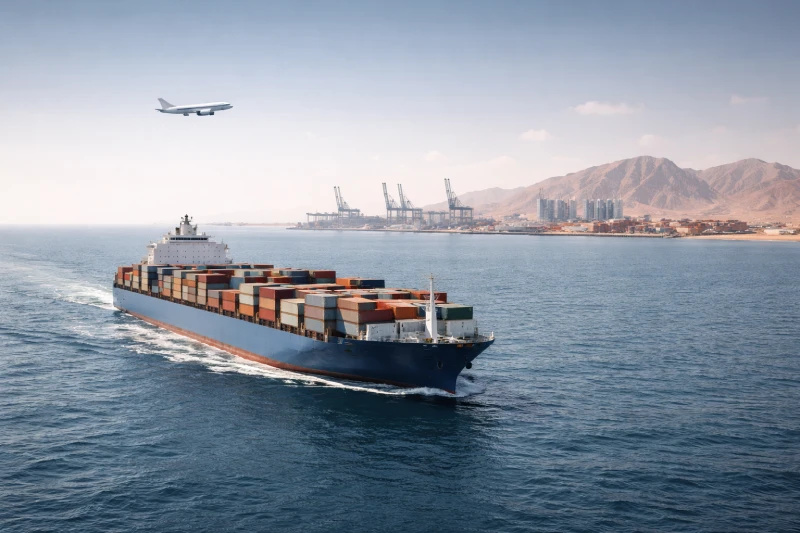
Sea-based solutions are built for stability and scale, making them suitable for businesses moving regular commercial volumes or standardized cargo. They prioritize load efficiency, planning discipline, and predictable handling conditions across long distances.
Companies usually rely on sea freight solutions when shipments can be planned in advance and inventory cycles allow for structured replenishment. These solutions are often aligned with manufacturing exports, wholesale distribution, and regional stock positioning.
Sea freight solutions are not designed for last-minute changes or highly time-sensitive cargo. When speed, flexibility, or rapid response is the primary concern, their limitations become more visible.
Air Freight–Based Solutions
Air-based solutions emphasize speed, responsiveness, and shipment control rather than volume efficiency. They are commonly used when cargo value, urgency, or supply-chain disruption risk outweighs consolidation logic.
Businesses tend to choose air freight solutions for critical components, high-value goods, or scenarios where delays would create disproportionate operational impact. These solutions often act as tactical tools within broader supply-chain planning.
Air freight solutions are not intended for routine bulk movement or cost-driven distribution models. Using them as a default strategy usually signals a mismatch between logistics design and inventory planning.
Multimodal & Combined Transport Solutions
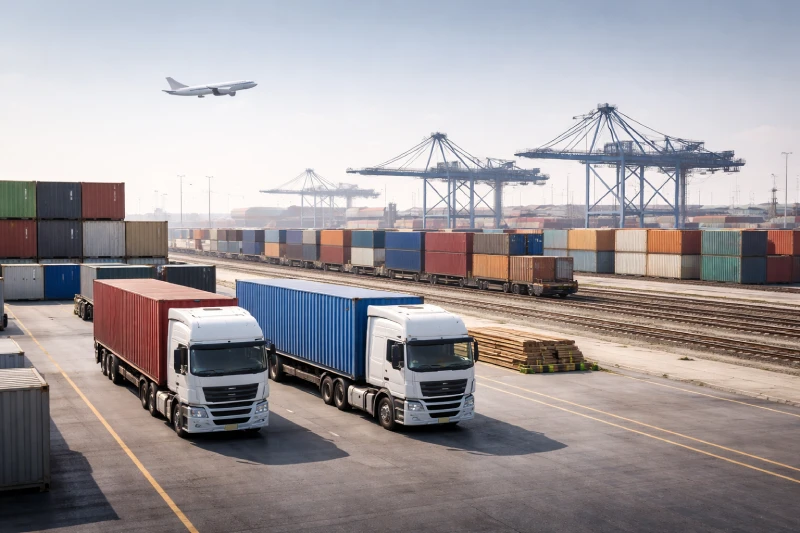
Multimodal solutions combine multiple transport legs into a coordinated structure rather than relying on a single mode. Their strength lies in balancing competing priorities such as speed, reach, and operational control.
These solutions are typically chosen when shipments must move through different logistics environments or when neither sea nor air alone fits the business requirement. They are common in regional distribution strategies serving multiple Middle East destinations.
Multimodal solutions are not simple substitutes for single-mode transport. Without clear coordination and planning discipline, they can add complexity instead of reducing risk.
Special Cargo & Non-Standard Freight Solutions
Special cargo solutions are designed around the physical and handling characteristics of the cargo itself, not around transport efficiency. They focus on feasibility, safety, and compliance rather than volume optimization.
Businesses turn to these solutions when dealing with vehicles, machinery, oversized units, or project-based shipments that fall outside standard containerized models. Each solution is shaped by cargo behavior during movement and handling.
These solutions are not scalable in the same way as standard freight models. Applying them to routine shipments usually increases complexity without delivering proportional value.
Matching Freight Solutions to Business Use Cases
Manufacturing and Industrial Supply Chains
Manufacturers shipping machinery, components, or production inputs often prioritize stability and coordination over pure transport speed. Freight solutions in this context are designed to align with production schedules, batch shipments, and predictable material flows.
The chosen solution usually reflects how tightly logistics must integrate with factory output and downstream assembly, rather than how fast individual shipments can move.
Trading, Wholesale, and Distribution Operations
Traders and distributors typically manage varying order sizes and mixed cargo profiles, which shifts the focus toward flexibility and consolidation logic. Freight solutions here are structured to balance shipment frequency with inventory turnover.
Instead of optimizing a single shipment, the solution is built around repeatability and volume management across multiple consignments.
Project-Based and One-Off Shipments
Project cargo and one-time movements introduce different priorities, where feasibility and execution control matter more than standardization. Freight solutions are shaped around cargo dimensions, handling constraints, and coordination among multiple stakeholders.
In these scenarios, logistics design often evolves around the project itself, rather than fitting the project into a predefined shipping model.
Time-Critical and High-Impact Shipments
When delays carry outsized operational or commercial risk, freight solutions emphasize responsiveness and decision control. These scenarios often arise from supply disruptions, urgent replenishment needs, or contractual deadlines.
The solution logic focuses on minimizing uncertainty, even if it means sacrificing standard logistics efficiency.
Multi-Destination Middle East Distribution
Businesses supplying multiple Middle East markets face fragmentation in routing, handling, and inland distribution. Freight solutions in this case are structured to maintain consistency while adapting to different destination requirements.
Rather than treating each shipment independently, logistics planning centers on how flows can be coordinated across the region.
Key Decision Factors When Choosing Freight Solutions
Cargo Characteristics
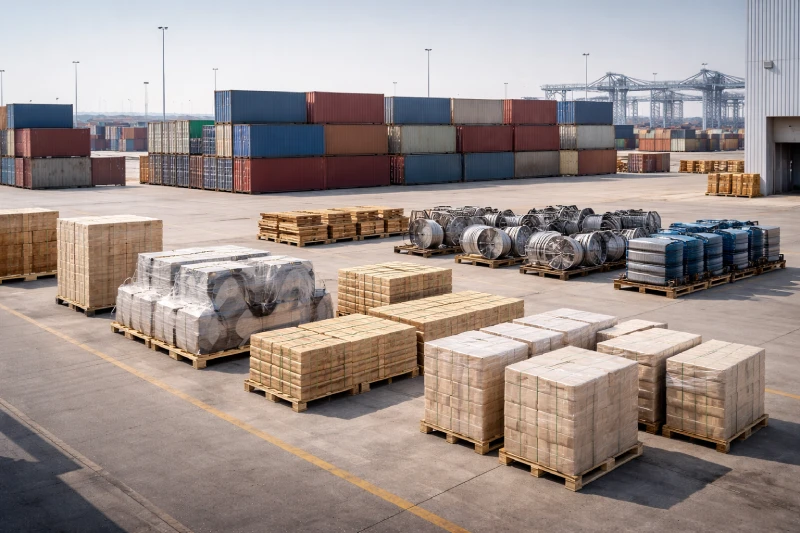
- Size and weight profile — Physical dimensions and weight directly influence how cargo can be consolidated, handled, and routed.
- Handling sensitivity — Fragile, hazardous, or precision equipment requires solutions that prioritize stability and controlled movement.
Supply Chain Structure
- Shipment frequency — Regular, repeat shipments favor structured solutions, while irregular movements call for more flexible designs.
- Destination complexity — Single-destination flows are easier to standardize than multi-country or multi-city distribution patterns.
Operational Control Preferences
- Visibility and coordination — Some businesses require tighter shipment oversight to align logistics with internal planning.
- Risk tolerance — Higher risk sensitivity pushes solution design toward predictability and accountability rather than maximum efficiency.
Comparing Freight Solutions: Conceptual Trade-Offs
Flexibility vs Operational Simplicity
Highly flexible freight solutions allow businesses to adjust routing, volumes, or handling as conditions change. Simpler solutions, while less adaptable, reduce coordination effort and are easier to manage at scale.
Speed Optimization vs Planning Stability
Solutions designed around speed prioritize rapid response and short-term continuity. Planning-stable solutions focus on consistency and predictability, supporting long-term supply-chain alignment.
Centralized Control vs Delegated Execution
Centralized control keeps decision-making and oversight within the shipper’s organization. Delegated execution relies more heavily on logistics partners to manage complexity and day-to-day coordination.
Customization vs Scalability
Highly customized solutions are shaped around specific cargo or projects. Scalable solutions trade some specificity for repeatability and long-term operational efficiency.
Common Misconceptions About Freight Solutions
Myth: Choosing the cheapest transport mode leads to the best logistics outcome.
Reality: A low-cost mode can introduce hidden operational risks if it does not align with cargo behavior, shipment structure, or supply-chain needs.
Myth: Door-to-door solutions are always the safest choice.
Reality: While convenient, door-to-door setups can reduce visibility and flexibility if responsibilities and control points are not clearly defined.
Myth: One freight solution works for all Middle East destinations.
Reality: Different markets often require different logistics designs, even when cargo and origin remain the same.
Myth: Faster transport automatically improves business performance.
Reality: Speed only adds value when it supports inventory strategy and commercial objectives, not when it disrupts planning discipline.
How Freight Forwarders Design Solution-Based Logistics
In practice, freight solutions are rarely built by selecting a single option in isolation. Forwarders start by understanding how cargo characteristics, shipment patterns, and control requirements interact, then shape a solution that balances these factors rather than optimizing only one variable.
Solution-based design also involves anticipating friction points before they occur. By aligning transport structure, handling logic, and coordination responsibilities upfront, forwarders help businesses avoid reactive decisions that can undermine consistency and control.
For B2B shipments from China to the Middle East, this approach turns logistics from a series of disconnected moves into a managed system. The value lies not in moving cargo faster, but in reducing uncertainty and improving decision quality across the supply chain.
