
Finding the cheapest shipping from China to Kenya is not as simple as choosing sea freight because it has the lowest advertised rate.
A 3 CBM shipment, a 90 kg air shipment, a 12 CBM order from four suppliers, and a full container all have very different cost structures. The cheapest option also changes depending on whether your quotation ends at Mombasa, Nairobi ICD, or your final warehouse.
The better question is:
Which shipping arrangement gives my cargo the lowest total logistics cost from the suppliers in China to the point where I actually need the goods in Kenya?
That means comparing more than ocean or air freight. China pickup, consolidation, chargeable weight, destination handling, customs coordination, inland transport, storage risk, and import-document readiness can all change the final result.
Data Note: Freight rates change with carrier capacity, season, fuel surcharges, cargo dimensions, origin city, destination, and cargo-ready date. This guide therefore focuses on cost-selection logic rather than presenting one rate as universally applicable. Any actual quotation should be checked against its date, routing, inclusions, and exclusions.
For a broader overview of routes, transport modes, customs, and destination options, see our shipping from China to Kenya guide.
Quick Answer: What Is Usually the Cheapest Option?
There is no single cheapest shipping method from China to Kenya. A practical starting point is to compare options according to shipment size.
| Shipment profile | First option to compare | Also compare | Main cost risk |
|---|---|---|---|
| 5–20 kg | Courier / express | Small air solutions where practical | Volumetric weight and surcharges |
| 50–100 kg | Air freight | Express on the same delivery scope | Airport handling and final delivery |
| 1–5 CBM | LCL sea freight | Air for urgent, high-value cargo | LCL destination charges |
| 5–15 CBM | LCL and FCL | Quote both on the same scope | Assuming a fixed break-even point |
| 15+ CBM | FCL deserves serious comparison | LCL all-in cost | Poor container utilization |
| Full container | FCL | Suitable container size | Pickup, terminal and inland costs |
| Urgent cargo | Air / express | Cost of delay versus sea saving | Stockout or missed deadline |
| Multiple suppliers | Consolidated shipment | Separate shipments | Repeated minimum charges |
These are decision starting points, not fixed rules.
For example, 12 CBM of dense cargo from one Shenzhen supplier going to Mombasa may produce a different LCL-versus-FCL answer from 12 CBM collected from five factories across different Chinese provinces and delivered to Nairobi.
If you already know your carton dimensions, gross weight, supplier locations, and final Kenya destination, compare the complete shipping options rather than asking only for the lowest freight rate.
Why the Lowest Freight Rate Is Not Always the Cheapest Shipment
One of the most common mistakes when comparing freight quotations is looking only at the largest number on the quotation: the ocean freight, airfreight rate, or courier price.
That number may represent only one part of the logistics chain.
A shipment from China to Kenya can involve costs at several stages:
Supplier → China pickup → consolidation warehouse → export handling → international freight → Mombasa or airport handling → customs clearance → inland transport → final delivery
A low ocean-freight rate does not automatically mean a low delivered cost.
Freight Cost vs Delivered Logistics Cost
A basic freight rate may cover only the main transport leg.
The delivered logistics cost can also include:
- supplier pickup in China
- warehouse receiving
- consolidation
- export documentation
- origin handling
- air or ocean freight
- destination handling
- CFS or deconsolidation costs for LCL
- customs-clearance service fees
- inland trucking
- storage or additional handling where applicable
If one quotation ends at Mombasa and another includes delivery to Nairobi, comparing the headline totals is meaningless.
Logistics Cost vs Total Landed Cost
It is also useful to keep shipping cost separate from landed cost.
Total landed cost may include:
- product purchase value
- logistics costs
- insurance
- applicable import duty
- VAT
- applicable levies and other taxes
Import taxes are not simply another freight-forwarder charge. They depend on factors such as HS classification, customs value, the product, and applicable Kenyan rules.
Pro Tip: Before comparing two quotations, confirm that both quotes start at the same point in China and finish at the same point in Kenya.
For rate-focused planning, see current China-to-Kenya shipping cost ranges.
Cheapest Shipping Option by Shipment Size
Shipment size is one of the best first filters for selecting a shipping method, but weight, density, and urgency still matter.
5–20 kg: Start by Comparing Courier and Express Services
For very small commercial shipments, traditional freight forwarding can be inefficient because minimum handling charges represent a large percentage of the total shipment cost.
Courier or express services are therefore often the first option worth pricing for:
- samples
- spare parts
- small electronics
- accessories
- urgent replenishment
- small test orders
But do not compare courier services using actual kilograms alone.
Express carriers generally charge according to the greater of actual weight or dimensional weight. A lightweight carton that occupies a large amount of aircraft space can therefore be billed at a much higher chargeable weight than the scale weight suggests.
Before requesting the price, provide:
- number of cartons
- packed carton dimensions
- gross weight per carton
- product description
- declared value
- China pickup location
- Kenyan destination
A supplier saying “the goods weigh 12 kg” is not enough to calculate an accurate express cost if the packed dimensions are unknown.
50–100 kg: Compare Air Freight and Express on the Same Scope
At around 50–100 kg, the cheapest choice becomes less obvious.
A forwarder’s airfreight rate per kilogram may look much cheaper than an express quotation. But air freight can involve separate charges for:
- China pickup
- export handling
- airport handling
- customs clearance
- collection from the arrival airport
- final delivery
Express services may bundle more of these stages into one service.
The correct comparison is therefore not:
Express: $X/kg vs air freight: $Y/kg
It is:
Total express cost to the required destination vs total airfreight cost to the same destination.
This is particularly important for cargo moving beyond the arrival airport to a warehouse, office, shop, or project location.
1–5 CBM: LCL Is Usually the First Sea-Freight Option to Price
For commercial cargo that is too large for economical air shipment but does not fill a container, LCL is normally the first sea-freight option to investigate.
With LCL, your cargo shares container space with other shipments.
This avoids paying for an entire container, but the importer should look beyond the China-to-Mombasa ocean freight.
A realistic LCL cost comparison may include:
- collection from the supplier
- China consolidation warehouse
- export handling
- LCL ocean freight
- Mombasa handling
- CFS / deconsolidation charges
- customs-clearance coordination
- delivery from Mombasa to the final destination
For cargo ultimately going to Nairobi, compare the entire route rather than stopping the calculation at Mombasa.
A low LCL rate can lose much of its apparent advantage if destination and inland costs were excluded from the first quotation.
For more detail on how volume-based LCL pricing works, see how LCL shipping cost per CBM is calculated.
5–15 CBM: Always Compare LCL and FCL
This is where importers should be particularly careful.
You may often see statements online such as:
“LCL is cheaper below 15 CBM.”
or:
“FCL becomes cheaper once you reach 12 CBM.”
Those can be useful planning references, but they are not universal rules.
The actual break-even point moves according to:
- current LCL freight rate
- current container rate
- China origin
- cargo density
- supplier pickup costs
- LCL warehouse charges
- destination CFS charges
- container terminal costs
- final destination in Kenya
- container trucking
- season and carrier conditions
For a 9 CBM, 11 CBM, 13 CBM, or 15 CBM shipment, the safest approach is simple:
Ask for both LCL and FCL quotations using the same shipment information.
Do not decide by CBM alone.
15+ CBM: FCL Deserves Serious Comparison
As shipment volume increases, LCL charges continue to accumulate against chargeable volume or weight, while the main FCL ocean-freight component is tied to the container.
This is why FCL can become increasingly competitive as volume approaches a meaningful share of container capacity.
However, “15+ CBM” still does not automatically mean FCL wins.
Consider:
- whether the cargo physically loads efficiently
- cargo weight
- container payload limits
- how many suppliers are involved
- container loading location
- inland transport requirements
- whether a 20GP or larger container is appropriate
You are paying for usable container space, not merely nominal CBM.
Full-Container Cargo: Compare the Correct Equipment
For cargo already requiring a full container, cost optimization shifts from LCL vs FCL toward:
- 20GP vs 40GP / 40HC
- loading efficiency
- supplier pickup
- factory loading vs consolidation loading
- port routing
- inland container delivery
A 40HC is not automatically more economical simply because it offers more space. Heavy cargo may reach payload limitations before cubic capacity is fully used, while low-density cargo can behave in the opposite way.
The cargo dimensions, weight, and loading plan need to be considered together.
Courier vs Air Freight: Which Is Cheaper for Small and Medium Shipments?
For small commercial cargo, both courier and conventional air freight can be viable.
The mistake is comparing them as if they contain the same services.
| Cost factor | Courier / Express | Conventional air freight |
|---|---|---|
| China pickup | May be included depending on service | Usually needs confirmation |
| Main transport | Weight / zone based | Chargeable-weight based |
| Export handling | Often bundled to some extent | May be separate |
| Destination handling | Service dependent | Usually relevant |
| Customs process | Carrier arrangement varies | Local clearance coordination needed |
| Final delivery | Often part of service area | Usually quoted separately |
| Best comparison | Delivered shipment total | Delivered shipment total |
Watch the Chargeable Weight
For air transport, the physical weight printed on the supplier’s packing list is only part of the picture.
Express carriers use dimensional-weight rules, while conventional airfreight services may apply a different volumetric conversion. The applicable formula depends on the service and carrier, so one divisor should not be assumed for every shipment.
That is why two 60 kg shipments can cost very different amounts if one consists of compact metal parts and the other is packed into several large, lightweight cartons.
Before choosing a service, calculate using the final packed dimensions.
LCL vs FCL: How to Find the Real Break-Even Point
There is no permanent CBM at which FCL becomes cheaper than LCL for every China-to-Kenya shipment.
Instead, compare the two cost structures.
Calculate the LCL Side
A realistic LCL comparison can be thought of as:
China pickup
+ warehouse receiving / consolidation
+ origin handling
+ LCL freight
+ destination CFS / deconsolidation
+ clearance-related service charges
+ Kenya inland delivery
For very small LCL shipments, minimum charges may also have a large impact.
Calculate the FCL Side
A realistic FCL comparison can include:
supplier pickup
+ container loading / stuffing
+ origin terminal and documentation
+ container ocean freight
+ destination terminal charges
+ clearance-related service charges
+ container trucking
+ applicable container-return or carrier charges
The structures are different, which is why multiplying an LCL rate by CBM and comparing it only with the FCL ocean rate can give the wrong answer.
Compare the Same Scope
For an accurate break-even comparison, both quotations should use:
- the same supplier locations
- the same cargo-ready date
- the same cargo dimensions
- the same gross weight
- the same final Kenyan destination
- the same customs assumptions
- the same Incoterm or pickup responsibility
If the LCL quotation finishes at a Mombasa CFS but the FCL quotation includes trucking to Nairobi, the totals are not comparable.
Pro Tip: In the mid-volume range, ask your forwarder to calculate LCL and 20GP at the same time. Do not ask only, “Which one is cheaper?”
Buying from Several Chinese Suppliers? Consolidation Can Change the Cheapest Option
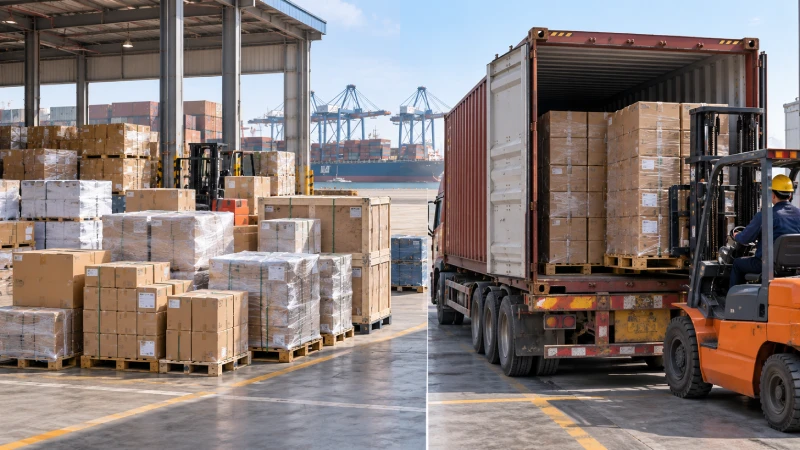
An importer purchasing from several factories or Alibaba suppliers may save more by restructuring the shipment than by negotiating a small discount on the ocean rate.
Imagine buying from four suppliers:
- supplier A in Shenzhen
- supplier B in Dongguan
- supplier C in Foshan
- supplier D in Guangzhou
If each supplier ships separately, you may repeat:
- local pickup or delivery charges
- minimum freight charges
- documentation
- handling
- courier minimums
- destination processing
A consolidation strategy can instead bring compatible cargo together before the final shipment is booked.
How Supplier Consolidation Works
A typical process is:
- Collect or receive cargo from suppliers. Each supplier sends the goods to the nominated consolidation point or pickup is arranged.
- Check the cargo received. Confirm cartons, labels, and obvious shipment discrepancies.
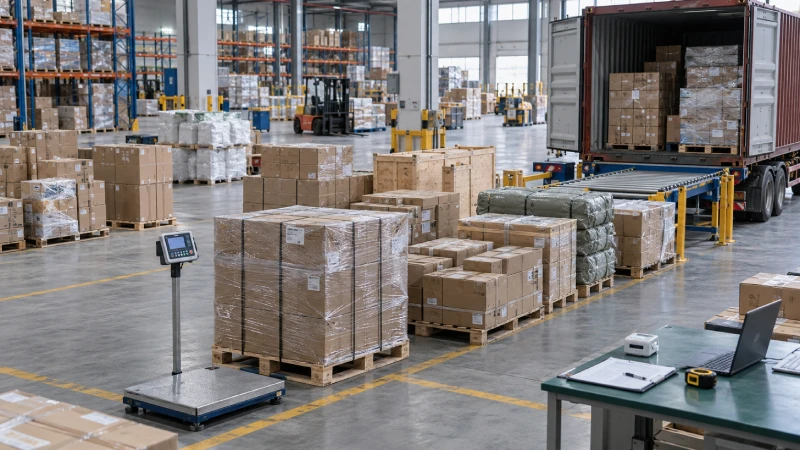
- Measure actual cargo. Record final packed dimensions, gross weight, and CBM.
- Wait for the agreed suppliers. Late cargo can be identified before international transport is booked.
- Combine compatible shipments. General cargo can be prepared together where product and transport requirements allow.
- Recalculate the best freight method. The final cargo may now justify express, air, LCL, or FCL.
- Prepare the export shipment. The combined cargo moves as the planned international shipment.
When Consolidation May Not Save Money
Consolidation is not automatically cheaper.
It may become inefficient when:
- suppliers are located very far apart
- one supplier delays the entire shipment
- goods require incompatible handling
- dangerous goods cannot be consolidated with general cargo
- an oversized machine needs a different equipment type
- warehouse time becomes excessive
- urgent goods are held while waiting for non-urgent cargo
The saving comes from designing the shipment properly, not simply putting more suppliers into one warehouse.
A Better Rule for Multiple Suppliers
Do not make the final freight decision from early supplier estimates.
Where practical, make the final decision after the consolidated cargo has been measured.
A shipment originally expected to be 9 CBM can become 12 CBM after final packing—or the reverse after unnecessary packaging is removed. That may change whether LCL or FCL is more economical.
For shipments involving several factories, a China-side consolidation plan can also make it easier to compare transport modes using one final set of shipment measurements.
Reduce Volumetric Weight Before Negotiating the Freight Rate
One of the easiest ways to reduce air or express shipping cost may have nothing to do with the rate itself.
It may be the carton.
Remove Unnecessary Empty Space
Common packaging problems include:
- oversized master cartons
- large gaps between products
- excessive non-protective void space
- items assembled before shipping when they can safely ship knocked down
- inefficient carton combinations
The objective is not to weaken packaging.
Damaged cargo is far more expensive than a few kilograms of freight savings.
The objective is to remove unnecessary volume while maintaining adequate protection.
Ask Suppliers for Packed Dimensions
Always request:
- carton quantity
- length × width × height
- gross weight
- unit count per carton
Do not rely on the product dimensions shown on an Alibaba listing.
Transportation is priced according to the shipment as packed for export.
Re-Measure After Consolidation
Where multiple suppliers are involved, warehouse measurements can reveal:
- incorrect supplier CBM
- oversized cartons
- unexpected pallets
- additional outer packaging
- differences in gross weight
This creates a better basis for selecting express, air, LCL, or FCL.
Pro Tip: For low-density air cargo, reducing carton volume can sometimes save more than negotiating a small reduction in the per-kilogram freight rate.
Shipping to Nairobi? Do Not Compare Only the Price to Mombasa
For sea freight, Mombasa is only one part of the journey for many Kenyan importers.
If the goods are ultimately required in:
- Nairobi
- Nakuru
- Thika
- Eldoret
- another inland city
the cheapest port-to-port quotation may not be the cheapest total route.
A freight quote can end at several different points:
Option A: Mombasa port / CFS
Option B: inland logistics point such as Nairobi ICD
Option C: the consignee’s final warehouse or delivery address
These should not be compared as if they were identical services.
Mombasa Costs Do Not End With Ocean Freight
Depending on shipment type and quotation scope, destination costs may include:
- port or terminal handling
- CFS handling for LCL
- customs-clearance services
- document charges
- storage if cargo is delayed
- local transport
Ask which items are included before selecting a quotation.
Nairobi Adds an Inland-Leg Decision
For Nairobi-bound goods, the importer may also need to account for:
- inland container or cargo movement
- handling at the relevant inland facility
- final local trucking
- delivery appointment or unloading requirements
The Kenya Ports Authority tariff covers container operations at inland container depots as well as the Port of Mombasa, which is another reason not to treat the ocean rate as the complete cost to Nairobi.
Six Ways “Cheap Freight” Becomes Expensive
A low initial quote can become expensive when the shipment is structured badly.
1. Low LCL Freight, High Destination Charges
A forwarder may advertise an attractive China-to-Mombasa LCL freight rate.
But the cargo still needs to be:
- deconsolidated
- handled
- cleared
- released
- delivered
Always request destination charges together with the main freight.
2. Cheap Express Rate, Large Dimensional Weight
A lightweight product packed in oversized cartons can be charged according to volumetric weight.
If you request a price using only the gross kilograms, your final invoice may be very different from the estimate.
3. Four Suppliers, Four Separate Shipments
Every shipment can create another set of minimum charges.
If compatible goods can be consolidated efficiently in China, one organized shipment may cost less than multiple independent shipments.
4. Choosing Sea Freight for Cargo That Is Actually Urgent
Ocean freight can have a lower transport cost, but a delayed stock replenishment may have its own commercial cost.
For example:
- lost retail sales
- production stoppage
- missed project deadline
- customer penalties
- emergency replacement shipment
The cheapest logistics decision should consider the consequence of the transit time.
That does not mean air freight is always justified. It means urgency should have an economic value.
5. Shipping Before Kenya Import Documents Are Ready
A booking can look inexpensive in China while missing documents create problems at destination.
The lowest freight cost means very little if the shipment cannot move smoothly through the required import process.
This is especially important now that several Kenyan import procedures require preparation before or at origin.
6. Letting Cargo Accumulate Storage Charges
Storage risk is one of the clearest examples of why logistics planning matters.
Under the Kenya Ports Authority tariff effective September 15, 2025, domestic import containers at KPA terminals at the Port of Mombasa and ICDs receive the first five consecutive days free, after which published storage charges apply.
This should not be confused with all other delay-related charges.
Depending on the shipment, there may also be:
- shipping-line demurrage
- detention
- CFS storage
- warehouse storage
- additional handling
The terms, payer, and free time are not necessarily the same.
Operational Warning: “Port storage,” “container demurrage,” “detention,” and “CFS storage” are different charges. Ask which one applies rather than using “demurrage” as a general term for every delay cost.
Compliance Problems Can Erase Freight Savings Before Cargo Leaves China
The cheapest freight booking is not useful if the cargo is not ready for Kenya’s import requirements.
This section is not a substitute for product-specific customs advice. Its purpose is to identify issues that can directly affect cost and timing.
Confirm the HS Classification
HS classification can affect:
- applicable import duty
- VAT and other taxes
- product restrictions
- permits
- conformity requirements
- customs documentation
Do not select an HS code because another importer used it for a “similar” product.
The actual product specification matters.
Check Whether PVoC / CoC Applies
The Kenya Bureau of Standards operates the Pre-Export Verification of Conformity programme for relevant imported goods.
The current KEBS PVoC framework places China, Hong Kong, Taiwan, and Mongolia in Zone 1 and lists appointed inspection/conformity-assessment contractors for that zone. The current PVoC Manual Version 15 is dated February 19, 2026.
For goods subject to PVoC, conformity should be addressed before shipment rather than discovered after arrival.
However, not every product should be assumed to follow exactly the same route.
The correct approach is:
- Mandatory requirement: when the particular goods fall within the applicable PVoC scope.
- Conditional requirement: where product rules, exemptions, or alternative procedures apply.
- Recommended action: check the product and HS classification before booking.
See the KEBS Pre-Export Verification of Conformity information for current official guidance.
Prepare the Certificate of Origin
The Kenya Revenue Authority states that imported consignments are subject to the Certificate of Origin requirement under Section 44A, with full enforcement from October 1, 2025, subject to the authority’s published exceptional and provisional measures.
For a China shipment, do not leave origin documentation until the vessel is approaching Mombasa.
Coordinate the requirement with:
- the Chinese exporter
- supplier
- freight forwarder
- Kenyan importer
- clearing agent
before cargo departs.
See the KRA Certificate of Origin notice for the current official requirement.
Containerized Sea Cargo: Prepare the ACD Before Loading
This is an important 2026 change.
The Kenya Revenue Authority launched its Advance Cargo Declaration (ACD) platform for containerized cargo destined for Kenyan ports on August 3, 2026.
KRA’s launch notice states that exporters shipping containerized cargo to Kenya obtain an ACD reference at the point of loading. The documents listed for obtaining the reference include:
- draft Bill of Lading
- commercial invoice
- freight invoice
- export declaration
The ACD reference is then endorsed on the Bill of Lading before the shipment proceeds to a Kenyan port.
This means the ACD should be part of the origin-document workflow—not treated only as something to solve after the container reaches Kenya.
See the KRA Advance Cargo Declaration notice for official details.
Kenya Importers Should Obtain China-Side Export Documentation
A further change took effect on September 1, 2026.
KRA’s Finance Act 2026 guidance states that importers must obtain and retain an export declaration, export entry, customs export certificate, or equivalent documentation from the exporting country. It advises importers to request the documentation from suppliers and retain it for at least five years.
For China sourcing, this creates a practical question before shipping:
Can the exporting entity or supplier provide the required China export documentation?
Do not choose a freight arrangement that leaves this question unresolved.
See the KRA Finance Act 2026 import guidance for current official information.
Coordinate With the Kenyan Clearing Side Early
A China freight forwarder can coordinate international transport and destination arrangements, but that should not be confused with legal importer obligations or the role of a Kenyan customs clearing agent.
Before departure, clarify:
- who is the consignee/importer
- which licensed clearing agent will process clearance
- who checks HS classification
- who handles KEBS requirements
- who prepares ACD inputs
- who provides China export documentation
- who pays duties and taxes
- who arranges final delivery
A cheap quote with an unclear responsibility chain is a common source of additional cost later.
For shipments where a broader delivered arrangement is being considered, review how DDP shipping to Kenya works before comparing service scopes.
Dangerous Goods and Oversized Cargo Need a Different Cost Comparison
The shipment-size rules in this article are mainly for standard general cargo.
They should not be applied blindly to:
- lithium batteries
- chemicals
- flammable products
- IMO dangerous goods
- machinery exceeding standard container dimensions
- heavy project cargo
- out-of-gauge cargo
These shipments may require:
- dangerous-goods documents
- carrier approval
- special packaging
- special equipment
- DG surcharges
- OOG handling
- special storage arrangements
The current KPA tariff also contains specific charging provisions for dangerous cargo and abnormal/out-of-gauge equipment, reinforcing the point that standard general-cargo cost assumptions may not apply.
For this cargo, provide the product specification, MSDS where relevant, UN information where applicable, dimensions, and gross weight before expecting a meaningful freight comparison.
How to Compare China-to-Kenya Freight Quotes Properly
If your objective is genuinely to find the cheapest reliable shipping option, every forwarder should be pricing the same shipment.
Use the following checklist.
China Origin
Provide or confirm:
- supplier address
- pickup city
- number of suppliers
- cargo-ready date
- Incoterm
- whether supplier delivery or forwarder pickup is used
- whether consolidation is required
Cargo Information
Provide:
- product name
- intended use where relevant
- HS code if confirmed
- carton or package count
- dimensions of every package type
- gross weight
- total CBM
- cargo value
- dangerous-goods status
- battery status where relevant
Main Transport
Ask the quotation to state:
- transport mode
- origin port or airport
- destination port or airport
- LCL, FCL, air, or express service type
- chargeable weight / CBM
- rate validity
- expected routing
Do not treat an estimated transit time as a delivery guarantee.
Kenya Destination
Confirm whether the quotation includes:
- destination handling
- CFS charges for LCL
- customs-clearance service
- government charges or taxes
- port or terminal charges
- inland movement
- final trucking
- delivery to your exact location
Responsibility
Ask clearly:
- Who coordinates the Kenyan customs agent?
- Who provides the import documents?
- Who obtains the Certificate of Origin?
- Who prepares the ACD inputs for containerized sea freight?
- Who supplies the China export declaration?
- Who handles KEBS / PVoC where applicable?
- Who pays duty and tax?
- Who bears storage or delay charges if documents are late?
The answer should be clear before shipment.
Practical Ways to Reduce Shipping Cost from China to Kenya
You do not always need a lower freight rate to reduce logistics cost.
Use this checklist:
- Consolidate compatible supplier orders when repeated minimum charges are making separate shipments expensive.
- Measure final packed dimensions accurately before choosing express or air freight.
- Compare express and air freight on delivered cost, not the advertised per-kilogram rate.
- Request both LCL and FCL pricing when your cargo enters the mid-volume crossover range.
- Compare quotations at the same Kenyan destination, especially for Nairobi-bound cargo.
- Confirm PVoC, COO, and product compliance before departure rather than after arrival.
- Prepare ACD documentation before container loading where the requirement applies.
- Obtain the required China export documentation before the shipment leaves origin.
- Plan clearance and inland delivery before cargo reaches Kenya to reduce avoidable storage exposure.
- Calculate logistics cost per saleable unit, not only the total shipment bill.
For example, a container may have a higher total invoice than LCL but a lower logistics cost per imported unit because substantially more saleable goods are moved at once.
That is often a more useful commercial metric.
So, What Is the Cheapest Way to Ship from China to Kenya?
The answer depends on your cargo.
For a 10 kg box, courier may deserve the first comparison.
For 80 kg, compare courier and conventional air freight.
For 2 CBM, LCL is normally the logical first sea-freight option.
For 8–15 CBM, do not guess—compare LCL and FCL.
For larger shipments, container shipping becomes increasingly important to evaluate.
If you buy from multiple Chinese suppliers, consolidation may reduce repeated charges and can change the final transport mode.
And if your final destination is Nairobi, the cheapest Mombasa rate does not necessarily mean the cheapest delivered shipment.
The most reliable rule is therefore:
Choose the option with the lowest comparable total logistics cost for your actual cargo—not the option showing the lowest freight number.
Before booking, compare the same:
- cargo
- origin
- destination
- date
- service scope
- compliance assumptions
That is how you find the genuinely cheaper shipping solution.
For a meaningful comparison, prepare:
- product
- supplier city or cities
- number of suppliers
- carton quantity
- carton dimensions
- gross weight
- total CBM
- cargo value
- final Kenya destination
- required delivery date
With those details, LCL, FCL, air freight, express, and consolidation options can be compared on the same basis.
FAQ
What is the cheapest way to ship from China to Kenya?
There is no single cheapest method for every shipment. Courier is often worth comparing for very small cargo, air freight becomes relevant for medium-weight or urgent shipments, LCL is commonly used for smaller sea-freight volumes, and FCL becomes increasingly competitive as volume grows. The correct choice depends on weight, CBM, urgency, supplier location, and the final destination in Kenya.
Is sea freight always cheaper than air freight from China to Kenya?
For larger non-urgent cargo, sea freight generally has a lower main transportation cost than air freight. However, small shipments should be compared on the full delivered cost because minimum sea-freight handling, LCL destination charges, inland transport, and the commercial cost of slower transit can affect the result.
At what CBM does FCL become cheaper than LCL to Kenya?
There is no fixed CBM that applies to every shipment. The break-even point changes with LCL rates, container rates, cargo density, Chinese origin, Mombasa destination charges, and the final Kenyan delivery point. For cargo in the mid-volume range, request both LCL and FCL quotations using the same shipment information.
Is courier or air freight cheaper for 50–100 kg from China to Kenya?
Either can be cheaper depending on the cargo dimensions and service scope. Express may bundle more pickup and delivery services, while conventional air freight may show a lower airport-to-airport rate but require separate handling, clearance, and delivery. Compare both options to the same final destination.
Can I combine purchases from several Chinese suppliers before shipping to Kenya?
Yes. Compatible cargo from multiple suppliers can often be received at a China consolidation warehouse and combined into one international shipment. This can reduce repeated minimum charges and may allow a more economical shipping method, although supplier locations, cargo compatibility, and cargo-ready dates should be checked first.
How can I avoid unexpected charges when shipping to Nairobi?
Request a quotation that clearly shows what happens after arrival in Kenya. Check destination handling, customs-clearance service, CFS charges for LCL, inland movement, final trucking, and excluded government charges. Prepare compliance and import documents before arrival to reduce the risk of storage and delay-related costs.
Does DDP mean the Kenyan importer does not need to worry about import requirements?
No. DDP is an Incoterm governing contractual cost and delivery responsibilities, but it does not automatically eliminate statutory product, customs, or documentation requirements. The exact importer-of-record arrangement, customs responsibilities, PVoC requirements, duties, and taxes should be confirmed for the specific shipment before relying on a DDP quotation.
