

In real China–Saudi shipments, the word cheapest rarely means the lowest freight rate you see in a quote. What matters in Saudi Arabia is the total landed cost—the amount you actually pay once the cargo has cleared customs, passed compliance checks, and reached its final destination.
Many importers only realize this after their first shipment. Ocean freight may look competitive, but customs clearance, SABER/SASO compliance, VAT, port handling, and inland delivery often add far more to the final cost than expected. In Saudi Arabia, a small mistake in shipping structure can easily cost more than the original freight itself.
Another practical reality is that cost predictability is more valuable than low headline pricing. With strict import regulations and a 15% VAT system, many shipments face delays or unexpected charges if documentation or compliance is incomplete. This is why DDP and door-to-door shipping are widely used in the Saudi market—not because they are always the cheapest on paper, but because they prevent costs from escalating after arrival.
This guide focuses on real decision points importers face when shipping from China to Saudi Arabia. Instead of listing rates or generic methods, it explains how different shipping choices affect total cost, where expenses are most likely to increase, and how to evaluate which option is genuinely the most economical for your cargo before requesting a quotation or confirming a shipment.
Why the Lowest Freight Rate Is Rarely the Cheapest Option for Saudi Arabia
In Saudi-bound shipments, the biggest cost mistake importers make is focusing only on the freight rate. A low ocean rate may look attractive, but in reality it often represents only a small portion of the total cost—and sometimes the least risky part.
Saudi Arabia is not a market where problems can be “fixed cheaply” after cargo arrives. Once a shipment reaches port, costs start accumulating from multiple directions at the same time: customs processing, compliance checks, port handling, storage, inspections, and inland transportation. If even one of these steps is not planned properly, the final cost can increase very quickly.
One common scenario is this: an importer accepts a low-priced shipping quote that covers only port-to-port transport. After arrival, they discover that customs clearance is slower than expected, documents require correction, or compliance approval is incomplete. While waiting, port storage and demurrage charges begin to accrue daily. These costs are rarely mentioned clearly at the quotation stage, but they are very real once the container is on the ground.
Another issue is that Saudi Arabia concentrates much of its commercial and industrial activity inland, especially in Riyadh. Even when freight into the port looks cheap, inland trucking can become a major cost factor if it is not planned in advance. Delays, appointment restrictions, or document mismatches can all trigger additional inland charges that quickly outweigh any savings on ocean freight.
This is why experienced importers evaluate shipping costs differently in the Saudi market. Instead of asking “Who has the lowest rate?”, the more practical question is “Which option keeps my total landed cost under control?” In many cases, a slightly higher upfront price results in a lower final expense because it avoids delays, rework, and unexpected local charges.
Understanding this cost structure is the first step toward identifying what cheapest really means for shipments from China to Saudi Arabia—and why freight rate alone is never a reliable benchmark.
DDP Shipping to Saudi Arabia: When It Becomes the Lowest Total Cost
In Saudi Arabia, DDP shipping is not mainly about convenience—it is about cost control. Many importers initially assume DDP is more expensive because the quoted price looks higher. In practice, however, DDP often turns out to be the lowest total-cost option, especially for first-time or repeat shipments with limited tolerance for risk.
The reason is simple: Saudi imports involve multiple cost-sensitive steps after arrival, and each step carries uncertainty when handled separately. Customs clearance, VAT payment, compliance approval, and inland delivery are usually managed by different parties under non-DDP arrangements. When responsibilities are fragmented, so are the costs. Any delay or mistake quickly turns into additional charges that were not part of the original quote.
Under DDP terms, these variables are consolidated into a single cost structure. Customs duties, 15% VAT, clearance procedures, and inland transportation are all planned in advance. This does not mean DDP is always the cheapest option on paper—but it does mean the final payable amount is predictable, which is critical in the Saudi market.
DDP becomes especially cost-effective for industrial goods, project cargo, and B2B shipments where compliance and documentation must be handled correctly the first time. In these cases, the cost of one failed clearance or extended port storage often exceeds the price difference between DDP and non-DDP shipping. Many importers only realize this after experiencing unexpected charges on their first shipment.
That said, DDP is not automatically the right choice for every shipment. Importers with strong local clearance capability, clear product classification, and stable inland partners may still benefit from non-DDP structures. The key point is that in Saudi Arabia, DDP should be evaluated as a risk-reduction and cost-stabilization tool, not simply as a premium service.
When assessing whether DDP is the cheapest option, the question should not be “Is the quote higher?” but rather “What costs does this option eliminate after arrival?” In the Saudi context, eliminating uncertainty is often the most effective way to reduce total landed cost.
Saudi Customs Clearance & Compliance: The Real Cost Driver
For shipments to Saudi Arabia, customs clearance and compliance are not procedural details—they are the main drivers of final cost. Many shipments become expensive not because of freight or distance, but because clearance does not go smoothly after arrival.
Saudi Arabia enforces strict import controls, especially for products that fall under regulated categories. SABER and SASO requirements, product conformity checks, and accurate HS code classification are critical. When documentation or registration is incomplete, clearance does not simply slow down—it often stops entirely. During this time, containers remain at the port, and storage, demurrage, and handling charges continue to accumulate.
A common misunderstanding is assuming that compliance issues can be corrected cheaply after the cargo arrives. In reality, once a shipment is under inspection, even small document corrections may require re-submission, re-approval, or physical re-inspection. Each step adds time, and in Saudi ports, time directly translates into cost.
Inspection risk is another factor that importers often underestimate. Certain product types—industrial equipment, electrical items, building materials, and regulated consumer goods—are more likely to be selected for inspection. When inspections occur, containers may be held longer than expected, and additional port charges apply regardless of the original freight rate.
This is where the choice of logistics partner becomes critical. A forwarder with limited Saudi clearance experience may quote aggressively on freight but lack the capability to manage compliance and customs efficiently. In contrast, a forwarder who understands Saudi regulations, documentation standards, and inspection practices may appear more expensive upfront but often delivers a lower final cost by avoiding delays and rework.
In the Saudi market, clearance capability is not an optional service—it is a cost-control mechanism. Importers who treat compliance as part of the shipping strategy, rather than an afterthought, are far more likely to keep their total landed cost within budget. This is why experienced shippers evaluate customs handling as carefully as they evaluate freight pricing.
Jeddah vs Dammam: Choosing the Right Port to Minimize Total Cost
Port selection in Saudi Arabia is not a neutral decision. Choosing the wrong port can increase inland costs, extend delivery time, and cancel out any savings gained on ocean freight. In many cases, importers focus on whichever port offers a slightly lower sea rate, without considering how that choice affects the entire logistics chain after arrival.
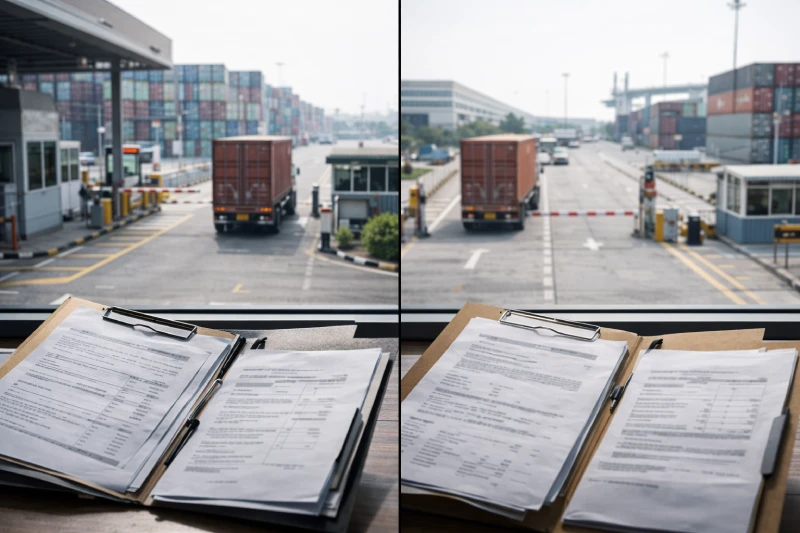
Jeddah Islamic Port primarily serves western and central Saudi Arabia. It is commonly used for cargo destined for Jeddah itself, Makkah region, and often Riyadh. For shipments heading toward central Saudi, Jeddah can be cost-effective when inland trucking is well planned. However, congestion and inspection delays can occur, especially during peak periods, which may increase port storage and handling costs if clearance is not ready in advance.
King Abdulaziz Port Dammam, on the other hand, serves eastern Saudi Arabia and is closely connected to industrial zones and energy-related cargo flows. For shipments destined for the Eastern Province or nearby industrial areas, Dammam is often the more efficient option. Using Jeddah for these destinations may reduce ocean freight slightly, but the additional inland distance usually results in higher overall cost.
The most common cost mistake occurs when importers select a port based solely on freight pricing. A small difference in sea freight can easily be outweighed by longer inland trucking routes, higher delivery risk, or additional coordination costs. In Saudi Arabia, inland transport is not a minor add-on—it is a major cost component, particularly for full containers.
For this reason, experienced shippers evaluate port choice together with final delivery location, cargo type, and clearance readiness. The cheapest shipping solution is often not the port with the lowest rate, but the one that minimizes inland distance, reduces handling complexity, and aligns with the cargo’s final destination.
Making the right port decision at the planning stage is one of the simplest ways to keep total landed cost under control when shipping from China to Saudi Arabia.
LCL vs FCL Shipping to Saudi Arabia: The Real Break-Even Point
For many importers, choosing between LCL and FCL seems like a simple volume decision. In the Saudi market, however, this choice is closely tied to risk exposure and cost predictability, not just cubic meters.
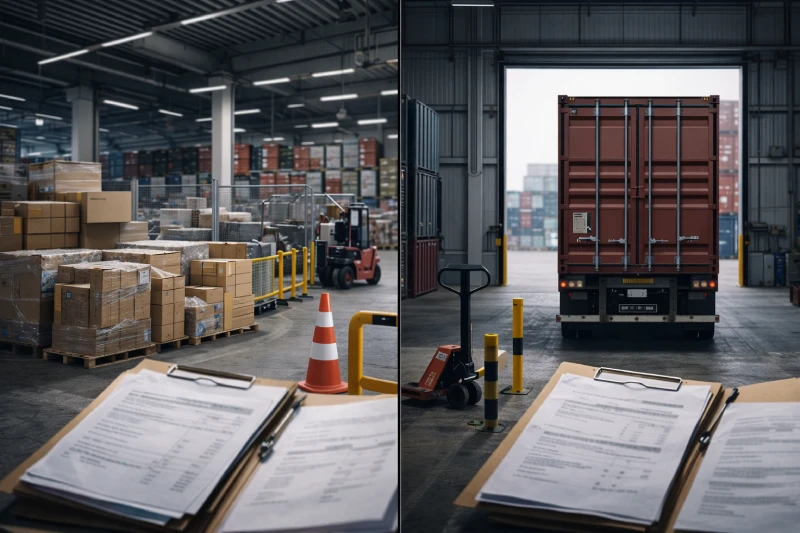
LCL shipments to Saudi Arabia often appear cheaper at the booking stage, especially for small or medium volumes. But after arrival, LCL cargo is subject to shared risk. If one shipment in the consolidation faces compliance or documentation issues, the entire container can be delayed. During this time, storage, handling, and administrative fees continue to accumulate—costs that are divided among consignees but still substantial for each shipment.
Another factor is the higher destination charges typically associated with LCL. Deconsolidation fees, documentation handling, and inspection-related costs in Saudi ports are often more complex than importers expect. These charges are usually fixed per shipment, meaning they have a much larger impact on smaller consignments than on full containers.
FCL shipments, by contrast, offer better cost control once volume reaches a certain point. With a full container, the cargo is isolated from other shipments, reducing the risk of delays caused by third parties. Clearance procedures are more straightforward, and inland transportation can be planned more efficiently. In Saudi Arabia, this often results in a lower total cost even when the initial freight rate is higher.
The break-even point between LCL and FCL is not fixed. It depends on cargo value, product type, compliance sensitivity, and destination. For regulated industrial goods or shipments heading inland, the transition to FCL often makes sense earlier than many importers expect. In these cases, avoiding shared risk is more important than minimizing initial freight expense.
The key is not asking whether LCL or FCL is cheaper in theory, but understanding which option limits exposure to unpredictable local costs. In the Saudi context, that distinction often defines which choice is truly the cheapest in the end.
Inland Delivery to Riyadh: The Second Cost Explosion Point
For shipments to Saudi Arabia, many importers assume that once the cargo clears customs, the major costs are already behind them. In reality, inland delivery—especially to Riyadh—is often the second point where costs escalate.
Saudi Arabia’s main ports are located on the coast, while Riyadh is an inland hub for government projects, industrial facilities, and distribution centers. This geographic structure makes inland trucking a significant part of the total landed cost. Even when ocean freight and port charges are well controlled, inland transport can quickly become expensive if not planned carefully.
One common issue is underestimating how sensitive inland delivery is to timing and documentation. Trucking to Riyadh often involves appointment systems, delivery window restrictions, and strict consignee requirements. If paperwork is incomplete or clearance is delayed, trucks may wait idle, resulting in additional waiting or rescheduling charges that were never included in the original estimate.
Another factor is that inland costs in Saudi Arabia are less flexible than many importers expect. Rates are influenced by fuel pricing, truck availability, and peak demand cycles. When cargo is released later than planned, it may miss the most cost-efficient transport window, leading to higher last-mile costs. These increases are rarely dramatic individually, but they add up quickly.
This is why inland delivery should never be treated as a simple extension of port handling. In Saudi shipments, inland transport needs to be integrated into the shipping plan from the beginning, not added as an afterthought. Importers who ignore this often find that savings achieved on freight are offset by unexpected inland charges.
From a cost-control perspective, door-to-door or DDP structures often reduce this risk by aligning clearance timing with inland delivery planning. Whether DDP is chosen or not, the key lesson is the same: if the final destination is Riyadh, inland delivery is a core cost component, not a minor detail.
When the “Cheapest Shipping Option” Is the Wrong Choice
In the Saudi market, the cheapest option on paper is not always the safest—or even the most economical—choice in practice. There are certain shipment types where focusing solely on price increases the likelihood of delays, compliance issues, or cost overruns that far exceed any initial savings.
High-value cargo is one clear example. When the value of goods is significant, even a short delay caused by inspection or document correction can generate substantial indirect costs. Port storage, rescheduling inland transport, or missed project timelines often outweigh the difference between a low-cost option and a more controlled shipping structure.
Project cargo and time-sensitive shipments face similar risks. In Saudi Arabia, many industrial and construction-related imports are tied to fixed schedules. Choosing the cheapest route without considering clearance readiness or inland delivery coordination can lead to disruptions that are difficult to recover from. In these cases, cost stability and execution reliability matter more than headline pricing.
The same applies to certain e-commerce and repeat B2B shipments. While cost efficiency is important, repeated exposure to clearance delays or unpredictable local charges creates operational friction. Importers handling regular volumes often find that a slightly higher but more predictable shipping model results in lower average cost over time.
This does not mean that cost should be ignored. Rather, in the Saudi context, the cheapest option must be evaluated against risk tolerance, cargo profile, and delivery expectations. When these factors are misaligned, a low-priced quote can become the most expensive decision in the shipment lifecycle.
Understanding when not to pursue the lowest price is an important step toward selecting a shipping solution that truly minimizes total landed cost.
How to Identify the Cheapest Shipping Solution for Your Saudi Shipment
At this point, one thing should be clear: there is no single cheapest shipping method that applies to every shipment going to Saudi Arabia. The lowest total cost depends on how well the shipping structure matches your specific cargo and destination, not on any fixed rate or formula.
In practice, identifying the cheapest option starts with a small set of key information. Product type and HS code determine compliance requirements. Cargo value affects risk exposure. Shipment volume influences whether LCL or FCL makes sense. Final delivery location—especially inland cities like Riyadh—directly impacts trucking cost and delivery complexity. Without these details, any comparison based on price alone is incomplete.
Another common mistake is asking for “the cheapest quote” before clarifying the shipping model. A more effective approach is to ask which option keeps total landed cost predictable. In the Saudi market, predictability is often what separates a controlled shipment from one that becomes expensive after arrival.
Experienced importers also compare options based on where costs are fixed and where they are variable. A solution that fixes customs, tax, and inland delivery costs upfront may appear higher at first glance, but it often reduces exposure to the most volatile expenses. Conversely, a low initial quote with many open variables can lead to higher final payment.
Ultimately, the cheapest shipping solution is the one that fits your shipment’s risk profile and execution requirements. Understanding this framework allows you to evaluate quotes more effectively and have more productive discussions with logistics partners—before cargo is booked and costs are locked in.
For shipments to Saudi Arabia, asking the right questions at the planning stage is usually the most reliable way to keep total cost under control.
