
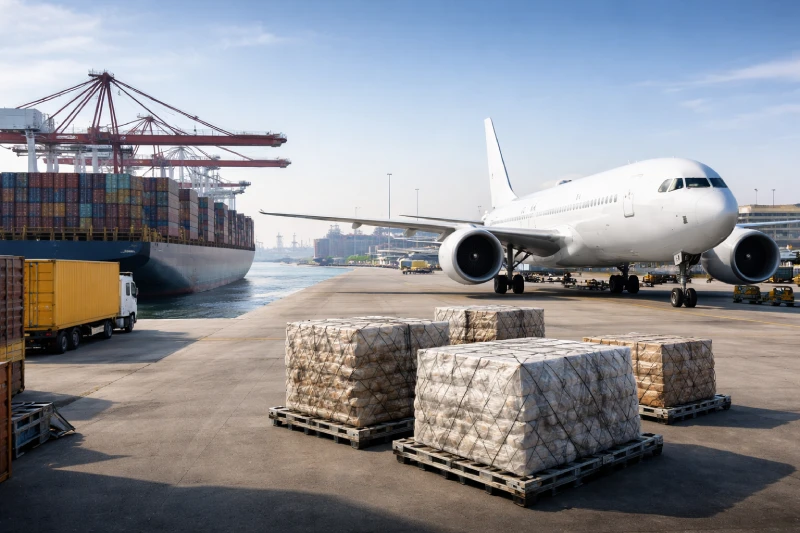
Importing from China to the UAE is not just about moving cargo from point A to point B. The shipping method you choose directly affects your landed cost, delivery reliability, cash flow, and even customs risk.
For UAE importers, this decision is especially critical because:
- The UAE operates as a regional trading and re-export hub, not just a consumption market
- Port and airport efficiency is high, but cost differences between modes are significant
- UAE customs clearance, VAT handling, and last-mile delivery models vary by shipping method
- Many shipments are time-sensitive (retail launches, construction schedules, Amazon FBA restocking)
In practice, we see three common scenarios:
- A Dubai trading company choosing LCL vs FCL to balance cost and inventory turnover
- A Sharjah distributor switching from sea freight to air freight to avoid stockouts
- A small-volume importer using courier shipping to test the UAE market before scaling
There is no “one-size-fits-all” answer.
The best shipping method from China to UAE depends on:
- Shipment weight and volume
- Cargo value and urgency
- Import purpose (resale, project use, eCommerce, FBA)
- Risk tolerance and cash flow priorities
This article is designed to help you compare shipping methods side by side, understand when each option makes sense for the UAE market, and confidently choose the most cost-effective and controllable solution for your shipment.
China to UAE Shipping Methods: Quick Comparison Overview
Before diving into details, the table below gives a clear, decision-focused snapshot of the main shipping methods used for imports from China to the UAE. This is the fastest way to narrow down the right option based on cost, speed, and shipment profile.
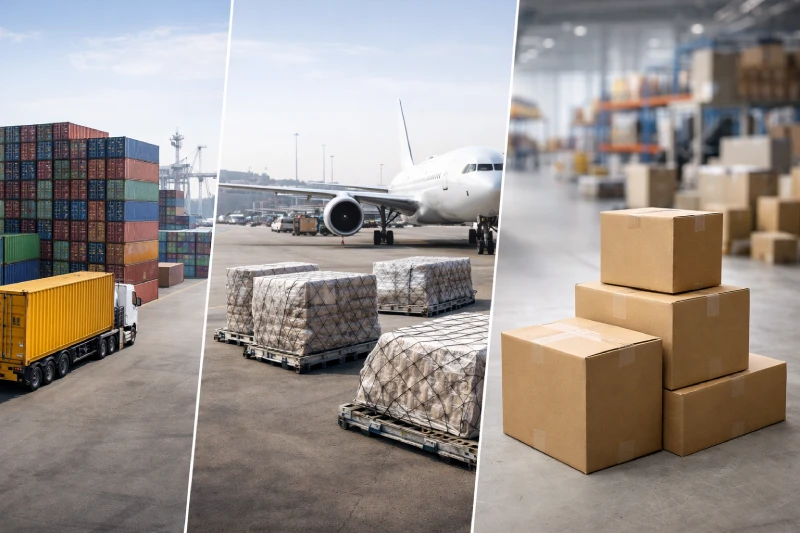
China → UAE Shipping Methods Comparison
| Shipping Mode | Cost Level | Transit Time | Best For | Key Limitations |
|---|---|---|---|---|
| Sea Freight (LCL) | Low–Medium | 20–30 days | Small–medium volume cargo (1–15 CBM) | Longer transit, consolidation delays |
| Sea Freight (FCL) | Low (per unit) | 18–25 days | Large shipments, stable supply chains | Higher upfront cost, fixed container size |
| Air Freight | High | 3–7 days | Urgent, high-value, time-sensitive cargo | Costly for bulky or heavy goods |
| Express / Courier | Very High | 2–5 days | Samples, small parcels (<100 kg) | Strict size limits, highest unit cost |
| DDP / Door-to-Door | Medium–High | Mode-dependent | Importers wanting full cost certainty | Less control, depends on forwarder quality |
How to Use This Table (UAE-Specific Guidance)
- If your shipment is bulky or price-sensitive, sea freight is usually the starting point—especially for cargo entering via Jebel Ali or Khalifa Port.
- If speed protects revenue (retail launches, replenishment, project deadlines), air freight via DXB or DWC often justifies the cost.
- If volume is very small, courier services like DHL or FedEx can bypass many operational steps—but at a premium.
- If you want predictable landed cost, DDP can work well in the UAE, where VAT and customs handling are standardized—but only with experienced agents.
Sea Freight from China to UAE: LCL vs FCL
For most importers shipping from China to the UAE, sea freight is the default and most economical choice. The key decision is not whether to use sea freight—but whether to ship as LCL or FCL.
This choice directly affects your per-unit cost, transit stability, customs efficiency, and inventory planning in the UAE.
LCL Shipping to UAE (Less than Container Load)
Best for: shipments between 1–15 CBM that don’t justify a full container
With LCL, your cargo shares a container with other shippers. This is common for:
- Dubai trading companies importing mixed SKUs
- New UAE importers testing suppliers
- Buyers with irregular purchasing cycles
Typical transit time (China → UAE):
- Port-to-port: 18–22 days
- Door-to-door (including consolidation & deconsolidation): 22–30 days
Cost logic (how pricing works):
- Charged per CBM or ton (W/M) — whichever is higher
- Minimum charge usually applies (often 1 CBM)
- UAE destination charges (THC, D/O, clearance handling) are fixed per shipment, not per CBM
This means LCL is economical at low volumes—but becomes inefficient as volume increases.
UAE-specific limitations:
- Consolidation delays at China origin
- Deconsolidation and customs queues at Jebel Ali
- Higher risk of port-side storage charges if documents are late
When LCL stops making sense: Once your cargo reaches 12–15 CBM, FCL is often cheaper and more controllable.
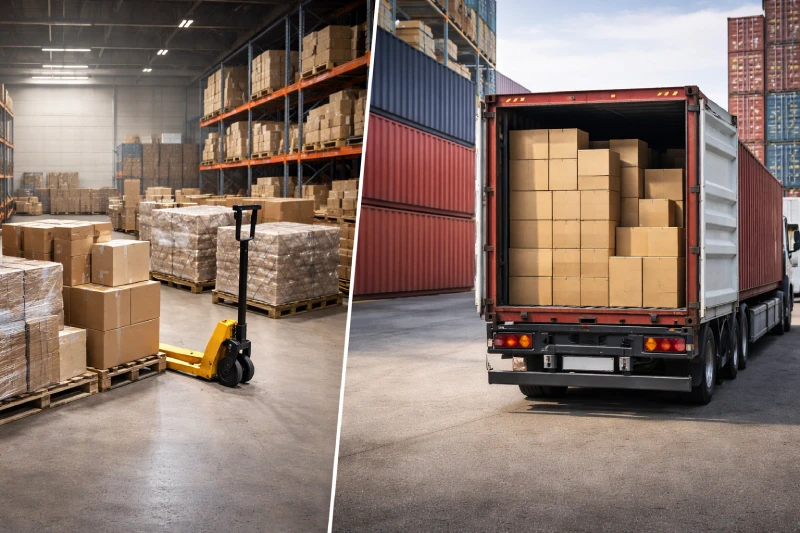
FCL Shipping to UAE (Full Container Load)
Best for: stable, medium-to-large shipments with predictable demand
FCL gives you a dedicated container, typically:
- 20ft container → ~28 CBM
- 40ft container → ~58–60 CBM
- 40HQ → ~68 CBM
Typical transit time (China → UAE):
- Port-to-port: 16–20 days
- Door-to-door: 18–25 days
FCL shipments move faster because:
- No consolidation or deconsolidation
- Fewer handling points
- Simpler customs inspection process in UAE ports
Cost logic:
- Flat container rate (independent of cargo density)
- Much lower per-CBM cost once volume increases
- Predictable UAE port and clearance fees
For UAE importers supplying:
- Construction materials
- Furniture and building products
- Electronics, lighting, or FMCG in bulk
FCL offers the best cost stability and risk control.
LCL vs FCL — Practical Decision Rule for UAE Importers
- ≤ 5 CBM → LCL (unless urgent)
- 6–11 CBM → Compare both (often borderline)
- ≥ 12–15 CBM → FCL is usually cheaper
- High-value or fragile cargo → Prefer FCL even at lower volumes
- Tight delivery window → FCL reduces delay risk
Sea Freight Pros & Cons (UAE Context)
Advantages
- Lowest cost per unit
- Ideal for bulk and heavy cargo
- Wide carrier coverage into UAE ports
Limitations
- Longer transit time
- Port congestion risks during peak seasons
- Requires accurate document coordination to avoid demurrage
Sea freight is the backbone of China–UAE trade, but it’s not always the smartest option when time or flexibility matters.
Air Freight from China to UAE: When Speed Justifies the Cost
Air freight is the fastest shipping method from China to the UAE, but it only makes sense when time, value, or supply risk outweighs cost. For UAE importers operating in fast-moving or high-margin sectors, air freight is often a strategic tool, not a default option.
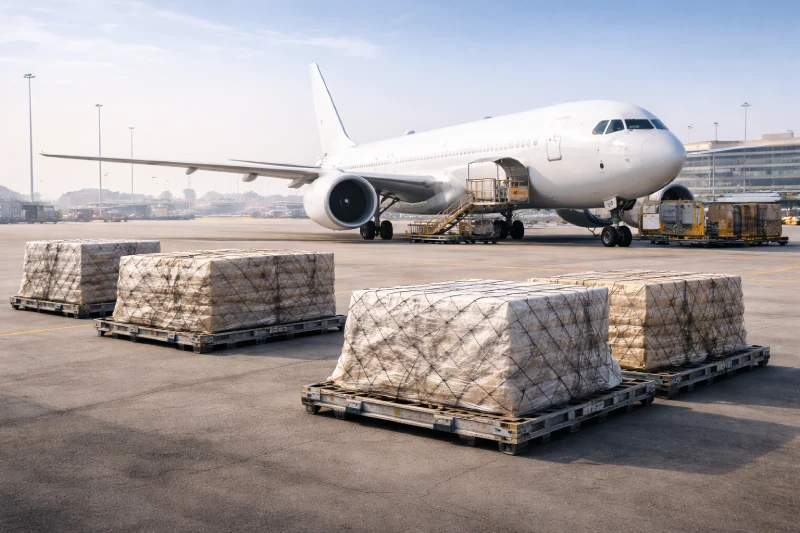
When Air Freight Makes Sense for UAE Imports
Air freight is commonly used when:
- Stockouts would cause revenue loss (retail, spare parts, fast fashion)
- Goods are high-value but low-volume
- Projects have fixed delivery deadlines
- You’re replenishing inventory between sea freight cycles
Typical UAE use cases include:
- Electronics and accessories for Dubai distributors
- Urgent spare parts for oil & gas or industrial clients
- Seasonal or promotional goods with fixed launch dates
Transit Time & Routing Logic
Typical air freight transit time (China → UAE):
- Airport-to-airport: 2–4 days
- Door-to-door (including clearance): 3–7 days
Common routing patterns:
- China origin airports: Shanghai, Shenzhen, Guangzhou, Hong Kong
- UAE destination airports: Dubai (DXB), Dubai World Central (DWC)
DXB is preferred for speed and frequency, while DWC is often used for cargo-focused handling and slightly lower terminal congestion.
Cost Structure: Why Weight & Volume Matter
Air freight pricing is based on chargeable weight, calculated as:
Chargeable weight = max(actual weight, volumetric weight)
Volumetric weight (kg) = (L × W × H in cm) ÷ 6000
This means:
- Lightweight but bulky cartons can become very expensive
- Compact, dense cargo performs best under air freight pricing
Practical UAE thresholds:
- < 300 kg, compact cargo → air freight is often viable
- 300–800 kg → case-by-case comparison with LCL sea freight
- > 1,000 kg or bulky cargo → air freight becomes cost-prohibitive
Customs & Handling Considerations in UAE
Air freight into the UAE benefits from:
- Faster customs processing
- Lower risk of port congestion
- Predictable clearance timelines
However:
- Documentation must be precise (commercial invoice, HS code accuracy)
- VAT (5%) is still applicable unless DDP is arranged
- Storage charges apply quickly if clearance is delayed
Air Freight Pros & Cons (UAE Context)
Advantages
- Fastest transit time
- High schedule reliability
- Ideal for urgent or high-value goods
Limitations
- High cost per kg
- Sensitive to volume inefficiency
- Not suitable for heavy or low-margin products
Air freight is not a replacement for sea freight, but in the UAE market—where speed often equals opportunity—it can be the right choice at the right moment.
Express / Courier Shipping from China to UAE: Best for Small, Urgent Shipments
Express courier shipping is the fastest door-to-door option from China to the UAE, but also the most expensive per unit. It is best viewed as a tactical solution, not a long-term logistics strategy.

For the right shipment profile, however, it can eliminate complexity and save time.
When Courier Shipping Makes Sense for UAE Importers
Express services are most suitable when:
- Shipment size is very small (typically under 50–100 kg)
- Cargo value is high relative to weight
- Speed matters more than freight cost
- You want minimal handling and paperwork
Common UAE use cases:
- Product samples for Dubai buyers or distributors
- Emergency spare parts
- Initial test shipments for new suppliers
- Small eCommerce parcels not yet scaled to FCL/LCL
Major Courier Options Serving UAE
The most commonly used express couriers include:
- DHL Express
- FedEx
- UPS
These carriers provide:
- Fully integrated door-to-door delivery
- Customs clearance support in the UAE
- Online tracking and predictable lead times
Typical transit time: 2–5 working days from China to UAE consignee address
Cost & Size Constraints (Critical to Understand)
Courier pricing is driven by:
- Chargeable weight (actual vs volumetric)
- Package dimensions
- Declared value and commodity type
Key limitations:
- Strict size and weight limits per carton
- Rapid cost escalation once volumetric weight increases
- Less flexibility for non-standard cargo
Rule of thumb for UAE-bound shipments:
- ≤ 30 kg, compact cartons → courier is efficient
- 30–100 kg → compare courier vs air freight
- > 100 kg → courier usually becomes uneconomical
Customs & VAT in Courier Shipments (UAE Context)
Courier shipments still require:
- Commercial invoice
- Accurate HS codes
- VAT payment (5%) unless arranged otherwise
While clearance is fast, issues can arise if:
- Commodity description is vague
- Value declaration is inconsistent
- Restricted goods are shipped without permits
For UAE importers unfamiliar with customs rules, courier shipping can reduce operational burden, but it does not remove compliance responsibility.
Express Shipping Pros & Cons
Advantages
- Fastest delivery
- Simplified process
- Ideal for samples and urgent needs
Limitations
- Highest cost per kg
- Limited scalability
- Not suitable for regular or bulky shipments
Express courier shipping is best used strategically—to test markets, meet urgent needs, or support time-critical operations—before transitioning to air or sea freight as volumes grow.
DDP / Door-to-Door & Amazon FBA Shipping to UAE: Cost Certainty vs Control
For many importers, the question is no longer which shipping mode is cheapest, but which option gives the most predictable landed cost with the least operational risk.
This is where DDP (Delivered Duty Paid) and Amazon FBA-oriented shipping become relevant for the UAE market.
When DDP Shipping Makes Sense for UAE Imports
DDP means the freight forwarder handles:
- International transport
- UAE customs clearance
- Import duty & 5% VAT
- Local delivery to your warehouse or address
Best suited for:
- Importers without a UAE customs registration
- Overseas companies selling into UAE without a local entity
- Buyers who want one all-in price before shipping
Typical DDP use cases in the UAE:
- E-commerce sellers shipping to Dubai fulfillment centers
- Overseas brands supplying UAE distributors on landed-cost terms
- Small companies avoiding direct interaction with customs
Why DDP works well in the UAE:
- VAT rate is standardized (5%)
- Customs procedures are relatively structured
- Major ports and airports are efficient for door-to-door flows
DDP vs Non-DDP: What You Gain and What You Lose
Advantages of DDP
- Clear landed cost upfront
- No surprise VAT or clearance invoices
- Simplified internal accounting
Limitations
- Less transparency on cost breakdown
- Dependence on forwarder’s compliance quality
- Not ideal for high-value or sensitive cargo without strong partners
Important note:
DDP is only as reliable as the local UAE agent executing customs clearance. Poorly structured DDP solutions can create compliance risk.
Amazon FBA Shipping to UAE (If Applicable)
For Amazon sellers targeting the UAE (primarily via Amazon.ae), logistics requirements are stricter.
Key FBA considerations:
- Carton labeling and packaging compliance
- Delivery appointment booking
- Accurate product classification to avoid clearance delays
- Preference for DDP or DAP + broker-assisted clearance
Recommended shipping modes for FBA UAE:
- Small, urgent replenishment → Air freight + DDP
- Stable inventory restocking → Sea freight (LCL/FCL) + DDP
- Samples or test SKUs → Courier (with value control)
Risk Notes Specific to UAE DDP & FBA Shipments
- Under-declared value can trigger audits
- Misclassified HS codes may delay clearance
- VAT reclaim is not available under most DDP models
- Amazon delivery refusal can lead to storage charges
For FBA sellers and overseas importers, DDP should be used as a risk-management tool, not just a convenience option.
Practical Guidance
- New to UAE importing? → DDP reduces friction
- Cost-sensitive, experienced importer? → Non-DDP with your own clearance is more controllable
- Amazon seller? → DDP with FBA-experienced forwarder is strongly recommended
DDP and FBA shipping are not separate “modes,” but logistics structures layered on top of sea, air, or express freight. Choosing the right base mode still matters.
Decision Framework: How to Choose the Best Shipping Method for China → UAE
Instead of guessing, use the rules below to quickly identify the most suitable shipping method based on shipment size, urgency, and business model. These thresholds reflect real China–UAE operating conditions.
Step 1: Start with Shipment Size & Density
If shipment is very small
- ≤ 30 kg, compact cartons
- Express / Courier
- Best for samples, urgent parts, test orders
If shipment is small–medium
- 30–300 kg
- Compare Air Freight vs LCL Sea Freight
- Choose air if urgency > cost
- Choose LCL if cost sensitivity is high
If shipment is volume-driven
- ≥ 1 CBM
- Sea Freight
- LCL for ≤ 10–12 CBM
- FCL for ≥ 12–15 CBM
Step 2: Factor in Urgency & Business Risk
If delivery delay causes revenue loss
- Retail launches
- Contractual deadlines
- Project-based supplies
👉 Air Freight
If delivery timing is flexible
- Inventory replenishment
- Bulk trading stock
👉 Sea Freight
Step 3: Consider Cargo Value & Margin
- High value / low margin pressure
→ Air freight or courier may be justified - Low value / bulky goods
→ Sea freight is almost always the right choice
Step 4: Match the Shipping Method to Your Business Model
Dubai / UAE Trading Companies
- Regular volume → FCL Sea Freight
- Mixed SKUs → LCL → FCL transition strategy
Project Cargo Buyers (Construction, Industrial)
- Heavy / oversized → FCL Sea Freight
- Critical components → Partial Air Freight
Amazon & eCommerce Sellers
- Test or emergency stock → Courier or Air Freight
- Stable sales → Sea Freight + DDP
- No local entity → DDP strongly recommended
Quick Decision Tree (Summary)
- If shipment < 30 kg → Courier
- If shipment < 300 kg & urgent → Air Freight
- If shipment 1–10 CBM & not urgent → LCL Sea Freight
- If shipment ≥ 12–15 CBM → FCL Sea Freight
- If Amazon seller or no UAE entity → Add DDP
This framework eliminates guesswork and aligns your shipping method with cost control, speed, and risk tolerance in the UAE market.
Get the Right Shipping Plan for Your China → UAE Shipment
Choosing the best shipping method is only the first step.
What actually determines success is how the method is executed—routing, cost structure, customs handling, and local delivery coordination in the UAE.
At Winsail Logistics, we help importers move beyond generic advice and apply the right strategy based on your exact shipment profile, including:
- Cargo weight, volume, and HS classification
- Delivery deadline and business risk tolerance
- UAE port or airport selection (Jebel Ali, DXB, DWC, etc.)
- Whether DDP or standard clearance makes more sense
- Special needs such as Amazon FBA, mixed SKUs, or phased shipments
What We Can Do for You
- Compare sea, air, and express costs using real China–UAE routes
- Advise when to switch from LCL to FCL to reduce unit cost
- Design DDP or door-to-door solutions with clear landed cost
- Support UAE customs clearance and last-mile delivery coordination
If you’re still evaluating options, we recommend reviewing our main guide on Shipping from China to UAE for a complete end-to-end overview, then using this page to fine-tune the best shipping method for your shipment.
Tell us your cargo details, timeline, and destination in the UAE. We’ll help you choose the most cost-effective and controllable shipping solution—before you commit.
