
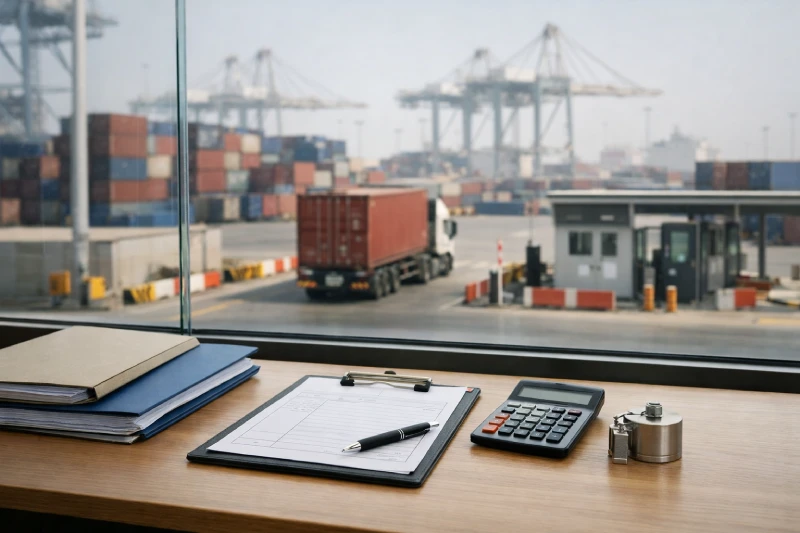
In the UAE, “cheap shipping” is rarely about the lowest number on a freight quote. What matters is how much you actually pay once the cargo is cleared, released, and delivered to its final destination.
Many importers only realize this after the vessel arrives. Customs clearance charges, VAT, inspections, port handling fees, and inland delivery costs start adding up, and a shipment that looked inexpensive at booking suddenly becomes over budget. In the UAE, this happens often—especially when documentation is not perfectly aligned or when the logistics plan is built only around ocean freight rates.
The UAE logistics market is efficient, but it leaves little room for mistakes. Incorrect HS codes, inconsistent declared values, or poorly structured shipping terms can quickly turn into delays, extra fees, or unexpected cash outlays. This is particularly true for first-time shipments or for importers without strong local clearance support.
Another reality many shippers underestimate is that the UAE is not a single-cost destination. Shipping to Dubai, Abu Dhabi, or the Northern Emirates can lead to very different total costs, even for the same cargo. Decisions such as LCL versus FCL, or DDP versus non-DDP, often determine whether a shipment is genuinely economical or quietly expensive.
This guide is not about chasing the lowest visible rate. It is designed to help you understand which shipping choices actually minimize total landed cost in the UAE, reduce risk, and keep your shipment under control—before you commit to a booking or approve a quotation.
If you are preparing to ship, comparing offers, or trying to avoid “cheap that becomes expensive”, the sections below are built around how UAE shipments work in real operations, not in theory.
Why “Cheapest” in the UAE Always Means Total Landed Cost, Not Just Freight
In shipments to the UAE, focusing only on ocean freight is one of the fastest ways to misjudge the real cost. Sea freight is often the smallest and most visible part of the overall expense, while the less obvious charges—those applied after arrival—are where budgets are most commonly exceeded.
Once cargo reaches a UAE port, several cost layers are triggered almost simultaneously. Customs clearance fees, port handling charges, documentation costs, and VAT are applied regardless of how low the freight rate was. These charges are not optional, and they are largely fixed by local procedures rather than by negotiation with the carrier. This is why two shipments with identical ocean freight rates can end up with very different final costs.
Another important factor is how costs accumulate, not just how much they are. In the UAE, delays caused by documentation issues or valuation discrepancies often create secondary expenses—storage, demurrage, and re-handling—that did not appear in the original quote. A shipment that looks “cheap” on paper but lacks a clean clearance plan can quickly become more expensive than a higher-priced but better-structured option.
VAT also plays a role that many first-time importers underestimate. The 5% VAT is calculated on the CIF value plus duties and certain local charges, meaning that small miscalculations earlier in the process can increase the tax base itself. This makes accurate cost planning more important than aggressively cutting the initial freight rate.
Most importantly, the UAE market penalizes fragmented responsibility. When freight, clearance, and inland delivery are handled by different parties without clear coordination, costs tend to rise. Each handover introduces potential delays, rework, or additional service fees. This is why solutions that look more expensive upfront—such as structured door-to-door or DDP models—often result in a lower total landed cost.
For shipments into the UAE, the cheapest option is rarely the one with the lowest freight line. It is the one where all post-arrival costs are predictable, controlled, and already accounted for before the cargo leaves China. Understanding this principle is the foundation for every cost-saving decision discussed in the sections that follow.
How Port Selection in the UAE Can Instantly Change Your Shipping Cost
Choosing the port of discharge in the UAE is not a neutral decision. Even for the same cargo on the same vessel, the final landed cost can vary significantly depending on where the container is discharged. This is one of the most common reasons two “similar” shipments end up with very different budgets.
Why Jebel Ali Is the Safest—but Not Always the Cheapest—Option
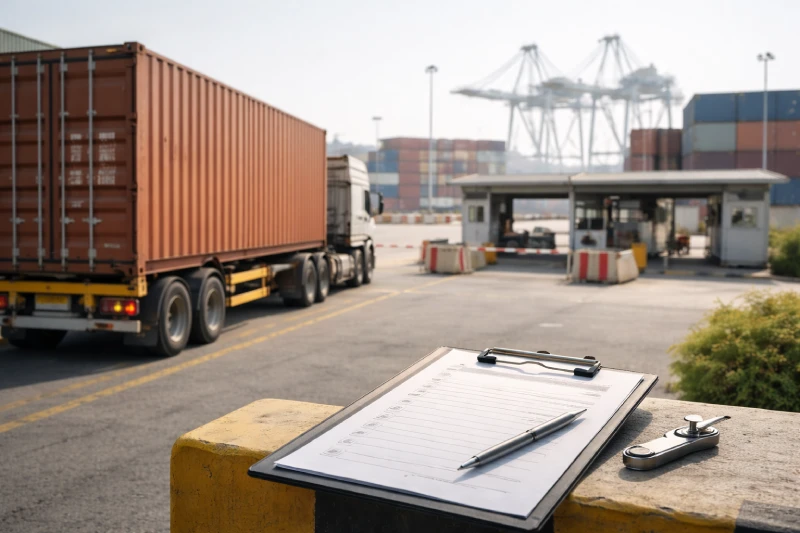
Jebel Ali Port is the primary gateway for imports into the UAE, and for good reason. It offers the most mature infrastructure, the highest clearance efficiency, and the widest range of experienced customs brokers and inland transport providers. For mixed cargo, industrial goods, and first-time shipments, Jebel Ali usually provides the lowest operational risk.
However, safety and efficiency come at a price. Port handling charges, documentation fees, and certain terminal costs at Jebel Ali are often higher than at secondary ports. For shipments that are highly cost-sensitive and operationally simple, this means Jebel Ali may not always deliver the lowest total cost—despite being the most popular choice.
In practice, Jebel Ali is often the most predictable port, but not automatically the cheapest one.
When Abu Dhabi or Sharjah Can Reduce Total Landed Cost
Khalifa Port and Port of Khalid can be cost-effective alternatives in specific scenarios.
Abu Dhabi may reduce costs when:
- The final delivery point is closer to Abu Dhabi than Dubai
- The cargo is full-container (FCL) with clean documentation
- Inland delivery savings offset slightly slower clearance cycles
Sharjah can sometimes lower port-side charges, but it requires very careful evaluation. Clearance capacity is more limited, and LCL cargo in particular can face longer handling times. Any delay quickly erodes the initial savings through storage and waiting charges.
The Hidden Cost of “Choosing the Wrong Port”
The biggest risk is not choosing a port that is slightly more expensive—it is choosing one that does not match your cargo profile or delivery plan. Importers often discover too late that:
- Inland trucking from a cheaper port costs more than expected
- Clearance speed is slower, triggering storage or demurrage
- Fewer qualified brokers are available for complex cargo
In the UAE, port selection should always be made together with clearance and inland delivery planning, not in isolation. A port that looks cheaper at the port gate can become more expensive once the cargo starts moving inland.
For this reason, experienced shippers evaluate UAE port options based on end-to-end cost, not just port charges. Getting this decision right early often saves more money than negotiating a few dollars off the ocean freight rate.
LCL vs FCL in the UAE: Where the Real Cost Turning Point Is
For shipments from China to the UAE, the choice between LCL (Less than Container Load) and FCL (Full Container Load) is one of the most misunderstood cost decisions. Many importers assume LCL is automatically cheaper for small volumes—but in the UAE, this assumption often breaks down faster than expected.
Why LCL Looks Cheap but Becomes Expensive in the UAE
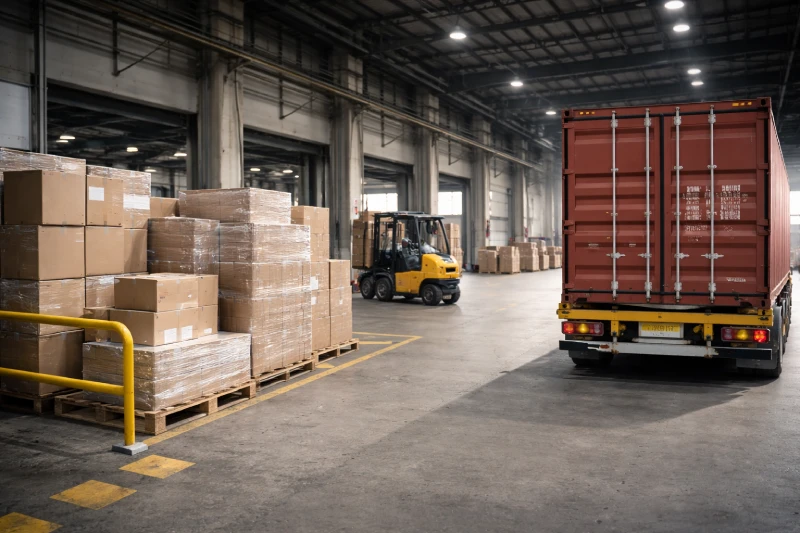
On the surface, LCL appears attractive because you only pay for the space you use. However, in the UAE, LCL cargo carries a high fixed-cost structure after arrival. These costs apply regardless of how small the shipment is.
Common LCL-specific charges include:
- Destination handling and deconsolidation fees
- LCL customs clearance service charges
- Warehouse handling and release fees
- Higher per-CBM inland delivery costs
Because these fees are not volume-based in the same way as freight, they quickly dilute the apparent savings of LCL. Importers often discover that while the ocean freight portion was low, the destination invoice is disproportionately high.
This is why many UAE-bound LCL shipments feel inexpensive at booking—but painful at release.
The Real LCL-to-FCL Cost Breakpoint in the UAE
In practice, the UAE has a much earlier cost crossover point between LCL and FCL than many other markets.
As a general rule:
- Below a small CBM threshold, LCL can still make sense
- As volume increases, fixed destination charges dominate
- At a certain point, FCL becomes cheaper overall, even if the freight rate looks higher
What makes this decision critical is that once cargo is shipped as LCL, there is no way to convert it later. A misjudgment at this stage locks in higher downstream costs.
When FCL Is the More Economical Choice—Even for Medium Volumes
FCL shipments in the UAE benefit from:
- Simpler and faster customs clearance
- Lower per-unit handling costs
- More predictable inland delivery pricing
- Reduced risk of delay or re-handling
For importers shipping regularly, or for cargo with any compliance sensitivity, FCL often delivers a lower total landed cost, even if the upfront freight rate is higher than LCL.
How to Decide Correctly Before You Book
The correct choice is not based on volume alone. It depends on:
- Cargo type and packaging
- Port of discharge
- Final delivery location
- Clearance structure and documentation readiness
In the UAE, choosing between LCL and FCL should always be done with a full destination cost breakdown, not just a freight quote. Importers who make this decision early—and correctly—avoid one of the most common reasons “cheap shipping” becomes unexpectedly expensive.
Is DDP Really Cheaper in the UAE? Comparing DDP vs Non-DDP in Real Operations
In the UAE, DDP (Delivered Duty Paid) is not just a pricing option—it is often a risk-management decision. Many importers initially hesitate when they see a DDP quote that looks higher than a CIF or FOB-based solution, but in practice, DDP frequently results in a lower and more predictable total landed cost.
Why DDP Is Commonly Preferred by UAE Importers
The main reason DDP is so widely used in the UAE is operational simplicity. Under non-DDP terms, the importer must coordinate customs clearance, VAT payment, port release, and inland delivery—often through multiple local parties. Each handover increases the chance of miscommunication, delays, or additional service fees.
With DDP:
- Customs clearance is handled by one responsible party
- VAT, duties, and port charges are pre-accounted for
- Inland delivery is planned as part of the same cost structure
- The risk of surprise charges after arrival is significantly reduced
For importers without a dedicated local logistics team, this consolidation of responsibility often translates into real cost savings, even if the headline price is higher.
When DDP Usually Delivers the Lowest Total Cost
DDP tends to be the most economical option in the UAE when:
- The importer is shipping for the first time
- The cargo is industrial, project-based, or time-sensitive
- There is no in-house customs clearance capability
- The final delivery point is outside central Dubai
In these cases, the value of cost certainty and risk reduction outweighs any perceived premium in the DDP rate.
Situations Where Non-DDP Can Make Sense
Non-DDP shipping is not always wrong—but it requires strong local control. It can be suitable when:
- The importer has an experienced in-house clearance team
- Long-term contracts with local brokers and transporters are in place
- The cargo has stable, well-established HS classification
- Cost transparency at each step is already well managed
Without these conditions, non-DDP shipments often become fragmented, and fragmentation is where UAE logistics costs tend to escalate.
The Key Question Is Not Price—It Is Control
In the UAE, the real comparison is not DDP vs non-DDP freight rates, but controlled cost vs exposed cost. Many shipments that look cheaper under non-DDP terms end up costing more once delays, corrections, and add-on fees are factored in.
For importers focused on minimizing total landed cost rather than chasing the lowest visible number, DDP is often the option that keeps both expenses and risk under control.
How Customs and Compliance Issues Can Quickly Erase Any “Cheap” Advantage
In the UAE, customs clearance is generally efficient—but it is strict and detail-driven. This combination means that when documentation is correct, cargo moves smoothly. When it is not, even a small error can quickly erase any cost advantage gained from a low shipping rate.
The Most Common Customs Problems in the UAE
The issues that cause the most disruption are rarely dramatic; they are usually administrative mistakes that escalate after arrival. The most frequent problems include:
- Incorrect or overly generic HS codes
- Declared values that do not align with market benchmarks
- Inconsistencies between commercial invoices, packing lists, and BLs
- Missing product descriptions or compliance documents
Because the UAE customs system is highly digitized, discrepancies are flagged quickly. Once flagged, a shipment often enters a slower, more expensive handling path.
What a Single Inspection Can Really Cost
When a shipment is selected for inspection, the cost impact goes far beyond the inspection fee itself. Importers may face:
- Port storage while awaiting inspection clearance
- Additional handling or re-stuffing charges
- Delays in inland delivery schedules
- Higher demurrage risk if timelines extend
These costs are not always visible in advance, but they accumulate fast. A shipment that saved a few hundred dollars on freight can lose several times that amount during a prolonged clearance process.
Why “Low Declaration” Is Especially Risky in the UAE
Some importers attempt to reduce VAT exposure through under-declaration. In the UAE, this strategy is particularly risky. Customs authorities actively compare declared values against reference data, and corrections often trigger:
- Re-assessment of duties and VAT
- Administrative penalties
- Increased scrutiny on future shipments
In the long run, compliance failures increase not only the cost of a single shipment, but the risk profile of the importer, making future shipments slower and more expensive.
Cost Control Starts Before the Cargo Leaves China
The most effective way to protect total landed cost is not to negotiate harder after arrival, but to eliminate clearance risk before shipment. Correct HS classification, realistic valuation, and consistent documentation reduce the likelihood of inspection and delay.
In the UAE, compliance is not a bureaucratic formality—it is one of the strongest cost-control tools an importer has.
Inland Delivery in the UAE: Why Costs Escalate Fast Outside Dubai
Inland delivery is one of the most underestimated cost components in UAE-bound shipments. Many importers focus heavily on ocean freight and clearance, only to find that the final leg—from port to warehouse or site—pushes the shipment over budget. This happens most often when the delivery point is outside central Dubai.
Dubai vs Abu Dhabi vs Northern Emirates: Cost Structures Are Not the Same
Delivery pricing in the UAE changes significantly depending on destination:
- Dubai
The most competitive and transparent inland market. High truck availability, shorter turnaround times, and relatively stable pricing. - Abu Dhabi
Higher base trucking costs compared to Dubai, but predictable when planned correctly—especially for FCL cargo. - Northern Emirates (Sharjah, Ajman, RAK, Fujairah)
This is where cost overruns happen most often. Limited trucking supply, longer distances, and additional handling fees are common.
Importers are often surprised that a shipment discharged at a “cheaper” port can end up costing more once inland delivery is added.
Why Inland Costs Are Often Underquoted
In many cases, inland delivery is either:
- Quoted separately and underestimated
- Quoted without clear destination confirmation
- Excluded from the initial “cheap” offer
Common inland-related add-ons include:
- Waiting time charges
- Off-hour delivery surcharges
- Special equipment or access fees
- Re-delivery costs due to scheduling issues
These charges rarely appear in the first quote but are routinely added after arrival.
How to Lock Inland Costs Before You Ship
To keep inland delivery from eroding your cost advantage, pricing must be fixed before the cargo leaves China. This requires:
- Exact delivery address (not just city name)
- Confirmation of unloading conditions
- Alignment between port of discharge and final destination
- Clear responsibility for delays or re-delivery
This is one reason why door-to-door or DDP structures often perform better in the UAE. When inland delivery is part of a single, end-to-end plan, there is far less room for cost leakage.
In the UAE, shipping is not finished at the port gate. Importers who treat inland delivery as a core cost component—not an afterthought—are far more likely to keep their total landed cost under control.
When Timing Becomes a Cost Factor: The Cheapest Shipping Windows to the UAE
In the UAE, when you ship can be almost as important as how you ship. Many cost overruns are not caused by poor routing or incorrect terms, but by sending cargo at the wrong time—when ports, customs, and inland transport are under pressure.
How Peak Seasons Quietly Increase Total Landed Cost
The UAE experiences clear seasonal patterns that affect cost and reliability:
- Q4 (September–December)
This is the most expensive and congested period. Retail buildup, project cargo, and year-end demand push up ocean freight, slow port operations, and reduce truck availability. - Pre-Ramadan and Post-Ramadan Periods
While ports remain operational, clearance speed and inland delivery efficiency can fluctuate. Delays during these periods often lead to storage and waiting charges rather than obvious freight increases. - Global Shipping Disruptions
Rerouting, blank sailings, or carrier capacity adjustments tend to affect the UAE quickly because of its role as a regional hub.
What makes these periods costly is not just higher rates, but secondary expenses—longer dwell times, delayed clearance, and harder-to-secure inland transport.
The Best Windows for Cost-Controlled Shipments
From a cost-management perspective, the most stable shipping windows to the UAE are usually:
- Late Q1 to early Q2
- Mid-year periods outside major global shipping peaks
During these times:
- Ocean freight rates are more negotiable
- Port congestion is lower
- Clearance and inland delivery are more predictable
Even modest improvements in timing can reduce total landed cost by 10–20%, simply by avoiding congestion-related add-ons.
Planning Ahead Is the Real Cost Advantage
Many importers treat timing as a secondary consideration, but in the UAE it should be part of the initial cost calculation. Booking early, confirming cut-off dates, and aligning shipment schedules with clearance capacity often saves more money than negotiating a slightly lower freight rate.
In practice, the cheapest shipments to the UAE are rarely rushed ones. They are the shipments planned around operational calm rather than market pressure—where every step from port to delivery runs without friction.
How to Secure the Lowest Real Cost for Your Shipment to the UAE
At this point, most cost savings no longer come from choosing a different vessel or negotiating a few dollars off the freight rate. They come from structuring the shipment correctly before pricing is finalized. In the UAE, the quality of the quotation process often determines whether the final cost stays under control—or drifts upward after arrival.
What You Must Prepare Before Requesting a Quote
To receive a quote that reflects the true landed cost, the following information should be clear from the start:
- Accurate cargo description and HS code
- Total volume, weight, and packaging method
- Preferred port of discharge and final delivery address
- Whether DDP or non-DDP is required
- Any special compliance, certification, or handling needs
Incomplete information leads to incomplete pricing. In the UAE, incomplete pricing almost always means additional charges later.
How to Identify a “Cheap but Incomplete” Quote
A quotation that looks attractive at first glance often has warning signs. Be cautious if:
- Clearance and inland delivery are listed as “estimated”
- VAT or port charges are excluded or vaguely defined
- LCL destination fees are not itemized
- Responsibility shifts between multiple local parties
These gaps are where cost overruns usually begin. A slightly higher but fully itemized quote is often the cheaper option in practice.
When It Makes Sense to Speak With a UAE-Experienced Forwarder
If any of the following apply, direct consultation is usually the most cost-effective next step:
- This is your first shipment to the UAE
- You are comparing LCL vs FCL or DDP vs non-DDP
- Your delivery point is outside central Dubai
- You want cost certainty rather than post-arrival negotiation
An experienced China–UAE forwarder does not reduce cost by cutting corners. They reduce cost by eliminating uncertainty—before the cargo moves.
In the UAE, the cheapest shipping outcome is not achieved by chasing the lowest visible number. It is achieved by making the right structural decisions early, with pricing that reflects the full journey from China to final delivery.
