
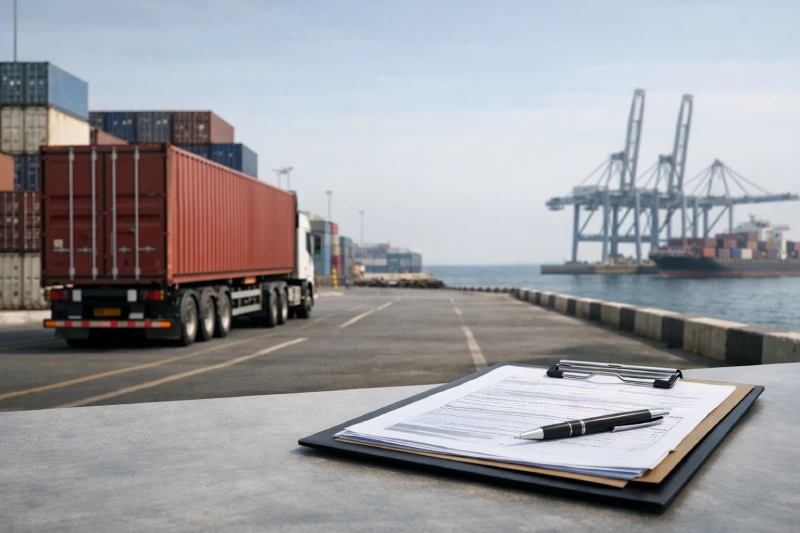
Shipping cost from China to Qatar is not a single number, but the result of multiple logistics decisions made before a shipment ever leaves the factory. For B2B importers and project cargo owners, total freight cost is shaped by transport mode, cargo profile, routing, Incoterms, and how origin and destination operations are structured together.
In practice, two shipments with similar volumes can end up with very different landed costs. Differences often come from factors such as whether the cargo moves as FCL or LCL, how efficiently space is used inside a container, which Chinese export port is selected, and how customs clearance and inland delivery are arranged in Qatar. These elements interact with each other, meaning cost should always be evaluated as a system rather than a line item.
This page explains how shipping costs from China to Qatar are formed in real-world freight forwarding scenarios. Instead of focusing on price figures, it breaks down cost components, compares shipping methods, and highlights decision logic commonly used by experienced importers. The goal is to help businesses understand where costs originate, which factors they can control, and how different shipping strategies affect the overall cost structure when moving commercial cargo into Qatar.
How Shipping Costs from China to Qatar Are Structured
Shipping costs on the China–Qatar trade lane are built from several interconnected layers rather than a single freight charge. Understanding this structure helps importers evaluate quotations correctly and avoid comparing costs that are not calculated on the same basis.
Core Cost Components in International Freight
At a high level, shipping cost from China to Qatar can be grouped into three operational stages:
- Origin-side costs in China, including export handling, documentation preparation, and inland transport from factory to port or airport
- Main freight costs, covering ocean freight, air freight, or multimodal transport between China and Qatar
- Destination-side costs in Qatar, such as terminal handling, customs clearance procedures, and inland delivery to the final site or warehouse
Each stage involves different service providers and cost drivers, which is why a quotation that looks competitive on the freight portion alone may still result in a higher total landed cost.
Fixed vs Variable Charges in the Cost Structure
Some cost elements remain relatively stable regardless of shipment size, while others fluctuate based on cargo and routing decisions.
- Fixed or semi-fixed charges typically include documentation fees, customs processing, and basic terminal handling
- Variable charges are influenced by factors such as cargo volume, weight, container utilization, handling complexity, and selected transport mode
For example, variable charges tend to dominate in LCL shipments, while fixed costs are diluted more effectively in full-container loads.
Contract-Based Rates vs Transactional Pricing
Cost structure also differs depending on how freight rates are arranged.
- Contract-based pricing is commonly used by regular importers with predictable volumes and lanes, providing cost stability over a defined period
- Transactional or spot pricing applies to irregular shipments and project cargo, where routing, equipment type, or timing may vary from shipment to shipment
From a cost-analysis perspective, understanding whether a quotation reflects a contract framework or a one-off transaction is essential when benchmarking shipping cost from China to Qatar across multiple forwarders.
This structural breakdown forms the foundation for comparing shipping methods, Incoterms, and routing options, which are explored in the following sections.
Main Shipping Methods from China to Qatar and Cost Implications
Different shipping methods follow very different cost logics on the China–Qatar route. For B2B cargo, the choice is rarely about the cheapest headline rate, but about how cost behaves in relation to cargo volume, shipment frequency, and operational requirements.

Ocean Freight (FCL) Cost Structure for B2B Cargo
Full Container Load (FCL) is commonly used by importers with stable volumes or project-based shipments. Cost efficiency in FCL shipping is driven by how well the container is utilized rather than by the absolute freight charge itself.
Key cost characteristics of FCL shipments include:
- Costs are calculated on a per-container basis, making space utilization a primary decision factor
- Fixed origin and destination charges are spread across the entire container
- Predictable handling processes reduce exposure to consolidation-related surcharges
FCL is often preferred for regular import programs, heavy cargo, or goods with higher sensitivity to handling and transit risk.
Ocean Freight (LCL) Cost Considerations and When It Applies
Less than Container Load (LCL) shipments consolidate cargo from multiple shippers into one container. While LCL lowers the entry threshold for smaller volumes, its cost structure behaves differently from FCL.
Typical LCL cost characteristics include:
- Charges based on chargeable volume or weight, whichever is higher
- Higher proportion of handling and consolidation-related costs
- Increased sensitivity to documentation accuracy and cargo readiness
LCL may be suitable for testing new suppliers, managing uneven purchase cycles, or supplementing inventory, but it often becomes less cost-efficient as volume increases.
Air Freight Cost Logic for Time-Sensitive Shipments
Air freight is used selectively for cargo where speed, reliability, or value density outweigh transport cost considerations. Its pricing logic differs fundamentally from ocean freight.
Common air freight cost drivers include:
- Chargeable weight based on volumetric conversion
- Security screening and airline handling requirements
- Airport choice and connectivity between China and Qatar
For B2B importers, air freight is typically positioned as a risk-mitigation or schedule-protection tool rather than a default shipping method.
Multimodal and Sea–Air Options via Regional Hubs
In certain scenarios, multimodal or sea–air solutions are used to balance cost and transit requirements. These routes usually involve transshipment through regional hubs before final delivery into Qatar.
Cost implications of these options depend on:
- Number of handling points and transfers
- Coordination between ocean and air segments
- Customs and documentation alignment across jurisdictions
While not suitable for all cargo types, multimodal strategies can play a role in complex supply chains or project-driven imports where flexibility is required.
Understanding how each shipping method structures its costs provides the basis for selecting the most appropriate option before evaluating ports, cargo characteristics, and Incoterms in the next sections.
Key Origin and Destination Factors Affecting Shipping Cost
Beyond the choice of transport mode, shipping cost from China to Qatar is strongly influenced by where cargo enters and exits the logistics network. Port selection, inland routing, and terminal operations all affect how costs accumulate across the shipment lifecycle.
Major China Export Ports Used for Qatar Shipments
China exports to Qatar typically move through a limited number of major coastal gateways. While these ports offer comparable international connectivity, their cost profiles are shaped by different operational conditions.
Key factors at the origin side include:
- Distance from factory to port, which directly affects inland trucking or rail costs
- Port congestion and handling efficiency, influencing storage and waiting time
- Availability of direct or transshipment services toward the Middle East
Selecting an export port is often a balance between inland logistics efficiency and international sailing frequency, rather than a decision based on port tariffs alone.
Primary Qatar Port of Entry and Terminal Handling Factors
Commercial cargo entering Qatar is concentrated through a small number of controlled gateways, where terminal operations play a significant role in total cost.
Destination-side cost considerations typically involve:
- Terminal handling processes and container throughput efficiency
- Equipment availability for unloading and inspection
- Coordination between port operations and customs authorities
Because port infrastructure and procedures are highly standardized, cost differences often arise from operational timing and documentation readiness rather than from published port charges.
Inland Transport and Final Delivery Cost Variables in Qatar
The final leg of delivery within Qatar can represent a meaningful share of total logistics cost, particularly for project cargo or time-sensitive deliveries.
Key inland cost drivers include:
- Distance between port and final delivery location
- Truck type and equipment requirements
- Delivery scheduling constraints and site access conditions
For B2B importers, aligning port clearance timing with inland transport planning is essential to avoid unnecessary storage or re-handling costs at the destination.
Together, origin and destination factors form the physical framework of the shipment. Once these are defined, cargo-specific characteristics become the next major determinant of shipping cost, which is addressed in the following section.
Cargo Characteristics That Directly Influence Shipping Cost
Cargo itself is one of the most decisive factors in determining shipping cost from China to Qatar. Even when routing and transport mode remain the same, differences in cargo profile can lead to significant cost variation.

Volume, Weight, and Chargeable Weight Calculations
Freight charges are rarely based on actual weight alone. Instead, cost calculations rely on how much space the cargo occupies relative to its weight.
Key considerations include:
- Chargeable weight principles, where freight is billed on the higher of actual weight or volumetric weight
- Density of cargo, which affects whether space or weight becomes the dominant cost driver
- Packing efficiency, influencing how well cargo fits into pallets or containers
Inefficient packing often results in higher cost without increasing shipment value, making packaging design a critical cost-control factor.
Commodity Type, HS Classification, and Handling Requirements
The nature of the goods being shipped affects cost beyond basic transport charges.
Important commodity-related factors include:
- HS code classification and its impact on handling and clearance processes
- Special handling needs, such as fragile, high-value, or regulated goods
- Additional documentation or inspection requirements tied to specific product categories
Accurate cargo declaration is essential, as misclassification can trigger delays and unplanned charges at destination.
Packaging Method and Space Utilization Efficiency
How cargo is packed often determines whether a shipment remains cost-efficient.
Cost-sensitive packaging variables include:
- Use of pallets versus loose cartons
- Stackability and load distribution inside containers
- Protection measures that increase volume without adding functional value
Optimizing packaging for transport, rather than for production or storage alone, helps reduce unnecessary freight expense.
Project Cargo, Oversized, and Non-Standard Freight Cost Drivers
For oversized or project cargo, standard freight assumptions no longer apply.
Typical cost drivers in these cases involve:
- Specialized equipment and handling procedures
- Route surveys and operational planning
- Coordination with port authorities and transport providers
Because these shipments follow bespoke logistics plans, cost evaluation must focus on operational feasibility and risk management rather than unit cost comparisons.
Understanding cargo characteristics allows importers to assess how freight rates will behave in practice. The next section examines how Incoterms further shape cost responsibility and financial exposure.
Incoterms and Their Impact on Total Landed Cost
Incoterms define how cost, risk, and responsibility are divided between buyer and seller. For shipments from China to Qatar, Incoterms selection has a direct impact on how shipping costs are structured and how transparent those costs are to the importer.
Cost Responsibility Differences Under EXW, FOB, and CIF
The most commonly used Incoterms on the China–Qatar trade lane allocate cost responsibility in very different ways.
- EXW (Ex Works) places most logistics responsibility on the buyer, including export handling in China
- FOB (Free on Board) shifts origin port costs and export clearance to the seller, while the buyer controls main freight and destination arrangements
- CIF (Cost, Insurance, and Freight) bundles ocean freight into the seller’s price, limiting the buyer’s visibility into freight cost components
From a cost-control perspective, FOB is often preferred by experienced importers because it separates product value from logistics cost.
When DAP or DDP Makes Sense for Qatar Imports
For some importers, especially those without a local presence in Qatar, delivered terms can simplify operations.
- DAP (Delivered at Place) includes transport to a named destination but excludes import duties and taxes
- DDP (Delivered Duty Paid) places nearly all cost and compliance responsibility on the seller or forwarder
While these terms reduce administrative burden, they can obscure cost breakdowns and limit the importer’s ability to optimize individual cost elements.
Common Cost Misalignments Caused by Incoterms Selection
Misunderstanding Incoterms frequently leads to unexpected charges.
Typical issues include:
- Overlapping cost responsibility between buyer and seller
- Excluded destination charges assumed to be included
- Limited control over carrier and routing choices
Aligning Incoterms with internal procurement and logistics capabilities is essential to avoid cost gaps and ensure accurate landed cost forecasting.
Once Incoterms are clearly defined, the next major cost consideration lies in destination compliance, particularly customs clearance and regulatory procedures in Qatar.
Customs Clearance and Regulatory Cost Considerations in Qatar
Customs clearance is a critical cost and risk checkpoint in shipments from China to Qatar. While import procedures are standardized, cost exposure often depends on preparation quality rather than tariff levels alone.
Import Duties, Taxes, and Typical Charge Categories
Destination-side costs in Qatar generally fall into several operational categories that go beyond freight charges.
Common cost elements include:
- Customs processing and clearance service fees
- Duties and taxes applied based on declared cargo value and classification
- Port and terminal-related handling charges during inspection and release
Although these charges follow formal rules, total cost impact varies depending on how smoothly clearance is completed.
Documentation Accuracy and Its Cost Implications
Documentation quality plays a decisive role in cost control during customs clearance.
Key documents influencing clearance efficiency include:
- Commercial invoice and packing list consistency
- Accurate HS classification and cargo description
- Supporting certificates or permits when required
Errors or discrepancies can lead to reprocessing, storage accumulation, or additional inspections, all of which translate directly into higher logistics costs.
Restricted, Regulated, and Approval-Based Cargo Types
Certain products entering Qatar require additional scrutiny or pre-approval from relevant authorities.
Cost-sensitive scenarios often arise when:
- Cargo is subject to import restrictions or special licensing
- Product standards or conformity requirements apply
- Advance approvals are not aligned with shipment arrival
For these cargo types, proactive compliance planning is often more cost-effective than resolving issues after arrival.
Effective customs coordination minimizes delay-related expenses and supports predictable landed cost outcomes. The next section examines how broader market and seasonal conditions can further influence shipping costs on the China–Qatar route.
Seasonal, Market, and Operational Factors Affecting Freight Costs
In addition to shipment-specific variables, shipping cost from China to Qatar is influenced by broader market conditions and operational dynamics. These factors are often outside the importer’s direct control but still affect cost planning and risk exposure.
Peak Shipping Seasons and Capacity Constraints
Freight demand does not remain constant throughout the year. Periods of concentrated shipping activity place pressure on vessel space, equipment availability, and terminal operations.
During peak demand cycles:
- Competition for container space increases
- Schedule reliability becomes less predictable
- Cost volatility tends to rise even for standard cargo
Importers with fixed delivery windows are more exposed to these effects than those with flexible shipping schedules.
Carrier Space Allocation and Equipment Availability
Shipping cost is also affected by how carriers allocate capacity across trade lanes.
Key considerations include:
- Availability of empty containers at origin ports
- Balance between inbound and outbound cargo flows
- Priority given to contracted versus ad hoc shipments
Limited equipment or space often leads to indirect cost increases through rerouting, waiting time, or forced mode changes.
External Factors Impacting China–Middle East Freight Lanes
External operational factors can reshape cost structures without warning.
Examples include:
- Port congestion or temporary operational restrictions
- Regulatory or security-related controls affecting transit routes
- Disruptions in regional transshipment hubs
While these elements cannot be controlled, understanding their potential impact allows importers to evaluate contingency options and avoid cost surprises.
With these broader influences in mind, the next section focuses on how importers compare options and select cost-effective shipping strategies based on their specific cargo and business requirements.
Cost Comparison Logic: Choosing the Right Shipping Strategy
Comparing shipping costs from China to Qatar requires more than lining up quotations. Effective cost comparison is based on how different shipping strategies behave under real operating conditions and how well they align with the importer’s priorities.
FCL vs LCL Cost Decision Framework for Importers
The choice between FCL and LCL is one of the most common cost decisions faced by importers.
A practical comparison typically considers:
- Total volume consistency across shipments rather than one-time volume
- Cost predictability, including exposure to handling and consolidation charges
- Operational simplicity, especially at destination clearance and delivery
While LCL may appear more economical for small volumes, FCL often provides better cost stability once shipment frequency or volume reaches a certain threshold.
Ocean Freight vs Air Freight Trade-Off Analysis
Ocean and air freight serve fundamentally different cost and risk functions.
Decision logic usually focuses on:
- Impact of transit time on inventory and production planning
- Value density of the cargo relative to transport cost
- Financial consequences of delay versus higher freight expenditure
Rather than being direct substitutes, ocean and air freight are often used in complementary roles within the same supply chain.
Consolidation, Deconsolidation, and Cost Optimization Scenarios
Cost optimization is not limited to transport mode selection. How shipments are grouped or separated also affects overall cost.
Common scenarios include:
- Origin consolidation to reduce per-unit handling costs
- Destination deconsolidation to support multi-site delivery
- Adjusting shipment frequency to balance inventory holding and freight expense
These strategies require coordination across procurement, logistics, and inventory planning to deliver sustainable cost benefits.
Once a shipping strategy is selected, attention shifts to managing potential cost risks that can undermine even well-planned freight movements. This is addressed in the next section.
Typical Cost Risk Areas and How Importers Manage Them
Even when shipping plans are well structured, certain cost risks can disrupt the expected cost outcome of shipments from China to Qatar. Identifying these risk areas early allows importers to apply controls before costs escalate.
Surcharges, Accessorial Fees, and Unplanned Charges
Not all logistics charges are visible at the quotation stage. Some costs arise from operational conditions rather than standard rate components.
Common sources of unplanned charges include:
- Additional handling or repositioning at origin or destination
- Storage-related charges caused by clearance or delivery delays
- Equipment or service upgrades required to meet operational constraints
Clear scope definition and alignment on service inclusions help reduce exposure to these charges.
Documentation Errors and Rework Costs
Administrative inaccuracies are a frequent but avoidable cost driver.
Typical issues involve:
- Inconsistencies between commercial and shipping documents
- Missing or incomplete supporting certificates
- Incorrect consignee or notify party details
Correcting these errors often results in time loss, additional handling, and administrative fees.
Delays, Storage, and Demurrage Exposure
Time-related costs can accumulate rapidly when shipments do not move as planned.
Risk factors include:
- Delays in customs inspection or release
- Mismatch between container availability and delivery scheduling
- Limited coordination between port clearance and inland transport
Proactive scheduling and close coordination with local partners are key tools for managing these risks.
Understanding where cost overruns typically occur prepares importers to evaluate the role of freight forwarders in controlling and mitigating shipping costs, which is the focus of the following section.
How Freight Forwarders Evaluate and Control Shipping Costs
In B2B freight movements from China to Qatar, freight forwarders play a central role in translating shipping requirements into a workable cost structure. Their value lies less in accessing individual rates and more in coordinating how costs are generated and managed across the entire transport chain.
Route Planning and Carrier Selection Logic
Cost control begins with route and carrier selection rather than with rate negotiation alone.
Key evaluation factors typically include:
- Suitability of routing for the specific cargo type and volume
- Reliability and operational consistency of selected carriers
- Alignment between sailing schedules and destination delivery requirements
Well-matched routing reduces the likelihood of delays, re-handling, or forced changes that increase cost.
Cost Transparency and Quotation Structures
Clear quotation structures help importers understand what they are paying for and why.
Effective cost presentation usually involves:
- Separating origin, main freight, and destination cost components
- Defining service scope and exclusions upfront
- Clarifying assumptions related to cargo readiness and documentation
This transparency allows importers to compare quotations on a like-for-like basis rather than on headline figures alone.
Coordination Between Origin, Transit, and Destination Operations
Many cost overruns occur at the handover points between different logistics stages.
Forwarders manage cost exposure by:
- Synchronizing export preparation with vessel or flight schedules
- Coordinating documentation flow across all parties
- Aligning destination clearance timing with inland delivery planning
Strong operational coordination reduces idle time and prevents cost leakage across the shipment lifecycle.
With forwarder cost control logic established, the final comparative step is to view China–Qatar shipping costs in the broader context of other Gulf trade lanes, which is explored in the next section.
