
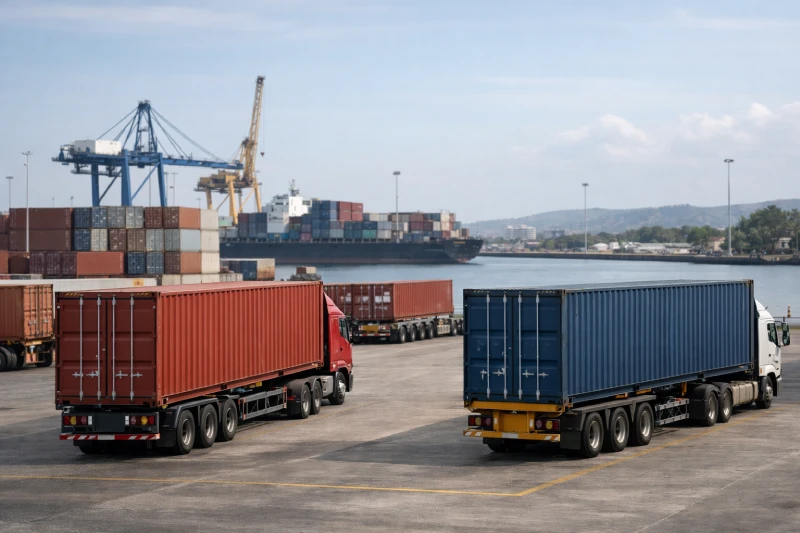
DDP (Delivered Duty Paid) shipping is increasingly chosen by importers who want maximum cost certainty and minimum local complexity when moving goods from China to Tanzania. Under a true DDP arrangement, the seller or appointed forwarder takes full responsibility for the shipment—from export handling in China, international transport, and customs clearance in Tanzania, to final delivery at the agreed destination.
For Tanzania-bound cargo, DDP is not just an Incoterms label. It is a practical logistics solution that must account for local customs procedures, import tax mechanisms, documentation accuracy, and last-mile delivery conditions beyond major ports. When managed correctly, DDP allows importers to avoid unexpected charges, clearance delays, and compliance risks that commonly arise under CIF or DAP terms.
This guide focuses specifically on DDP shipping from China to Tanzania, explaining how it works in real operations, who it is suitable for, what costs and timelines to expect, and why local experience is critical. It is written for importers, exporters, e-commerce sellers, and project cargo owners who need clarity before making a shipping decision.
What Does DDP Shipping Mean for Tanzania Imports?
In theory, DDP (Delivered Duty Paid) means that the seller is responsible for delivering the goods to the buyer’s named place, with all duties, taxes, and customs formalities completed. In Tanzania, however, DDP has a more practical and operational meaning that goes beyond the textbook definition of Incoterms.
For Tanzania-bound shipments, DDP typically involves the freight forwarder arranging export clearance in China, international transportation, import customs clearance in Tanzania, payment of applicable duties and VAT, and final inland delivery—often to locations well beyond the port of Dar es Salaam. This requires a clear understanding of local customs procedures, document requirements, and coordination with licensed clearing agents on the ground.
One critical aspect of DDP in Tanzania is the Importer of Record (IOR). Even under DDP terms, Tanzanian customs authorities require a compliant local entity or authorized arrangement for import declaration. How this is structured—whether through the consignee, a local partner, or an appointed agent—directly affects clearance speed, tax handling, and compliance risk. This is why not all “DDP” offers in the market represent the same level of responsibility or legality.
In practice, a well-managed DDP shipment to Tanzania is designed to eliminate surprises for the buyer. Instead of dealing with port charges, customs queries, or unexpected tax assessments after arrival, the importer receives the cargo at an agreed destination with costs and responsibilities clearly defined in advance. Understanding this operational reality is the first step in deciding whether DDP is the right shipping model for your Tanzania imports.
Why Choose DDP Shipping from China to Tanzania?
DDP shipping is often selected by importers who want to simplify their supply chain and reduce local operational risk when importing into Tanzania. Instead of managing multiple service providers, customs interactions, and unpredictable charges after arrival, DDP consolidates these responsibilities into a single logistics arrangement.
For first-time importers to Tanzania, DDP provides a clear advantage. Local customs procedures, document requirements, and tax assessments can be unfamiliar and time-consuming. Under DDP terms, these processes are handled in advance by an experienced forwarder, allowing the buyer to focus on sales, distribution, or project execution rather than clearance administration. This is especially valuable for overseas companies without a permanent presence or logistics team in Tanzania.
DDP is also well suited for e-commerce sellers, Amazon-related shipments, and time-sensitive project cargo. These shipments often require predictable landed costs and reliable delivery timelines. With DDP, duties, taxes, and inland transport are pre-arranged, reducing the risk of cargo being held at the port due to payment disputes or missing documentation.
That said, DDP is not ideal for every shipment. Importers with established local clearance teams or those needing flexible tax structures may prefer DAP or CIF terms. However, for buyers who prioritize cost visibility, compliance control, and operational simplicity, DDP shipping from China to Tanzania remains one of the most practical solutions available.
DDP Shipping Process from China to Tanzania (Step by Step)
A DDP shipment from China to Tanzania follows a clearly defined end-to-end process, designed to transfer operational responsibility away from the buyer and reduce uncertainty at each stage. While the exact details may vary by cargo type and destination, the overall workflow is consistent.

Step 1: Export Handling and Documentation in China
The process begins with cargo pickup or delivery to the export facility in China. The forwarder prepares export documentation, including the commercial invoice, packing list, and export customs declaration. Accuracy at this stage is critical, as errors in product description, HS code, or declared value can create downstream issues during Tanzanian import clearance.
Step 2: International Transportation
Once export clearance is completed, the shipment moves by the selected mode—sea freight (FCL or LCL) or air freight. Routing decisions are made based on cargo volume, urgency, and budget, with transit planning aligned to the final delivery location in Tanzania rather than just port arrival.
Step 3: Arrival at Tanzania Port or Airport
Most sea shipments arrive at Dar es Salaam, Tanzania’s primary gateway. Upon arrival, the forwarder’s local partner coordinates port handling, cargo release procedures, and preparation for customs clearance. At this stage, complete and compliant documentation significantly reduces inspection delays.
Step 4: Customs Clearance and Tax Handling under DDP
Import declaration, duty assessment, and VAT handling are completed under the DDP arrangement. This requires coordination with licensed local clearing agents and compliance with Tanzanian customs regulations. Any discrepancies in classification or valuation are addressed by the forwarder rather than the buyer.
Step 5: Inland Transport and Final Delivery
After clearance, the cargo is transported to the agreed delivery point—whether a warehouse, retail location, or project site. Under DDP, the shipment is considered complete only when the goods are delivered as agreed, providing the buyer with a true door-to-door logistics solution.
DDP Shipping Cost Breakdown to Tanzania
DDP shipping costs to Tanzania are often perceived as higher than CIF or DAP at first glance, but this is mainly because all mandatory charges are consolidated into a single, upfront quote. Instead of facing multiple payments at different stages, the buyer sees the full landed cost from the beginning.
A typical DDP cost structure for Tanzania includes several key components. International freight covers sea or air transportation from China to Tanzania and varies based on shipment volume, routing, and seasonality. Local port and handling charges include terminal handling, documentation, and release procedures upon arrival, which are unavoidable costs under any import term.
Another major component is customs clearance and import taxes. Under DDP, duties and VAT are calculated based on the declared HS code and customs value, then handled on behalf of the shipment. While tax rates themselves are determined by Tanzanian regulations, the accuracy of classification and valuation plays a significant role in avoiding reassessments or delays.
Finally, inland transportation and last-mile delivery are included, covering movement from the port or airport to the final destination. Costs can vary significantly depending on whether delivery is within Dar es Salaam or to inland cities and project sites.
The key advantage of DDP is not lower cost, but cost predictability. By consolidating these elements into one structure, DDP allows importers to budget accurately, compare logistics options more effectively, and avoid unexpected charges after the cargo arrives in Tanzania.
DDP Shipping Time from China to Tanzania
Shipping time under DDP terms is often misunderstood. While DDP does not automatically make a shipment faster, it does make the overall delivery timeline more predictable, especially for importers unfamiliar with Tanzania’s clearance process.
Transit time starts with the chosen shipping mode. Sea freight from China to Tanzania typically requires several weeks depending on the port of loading, routing, and whether the shipment is FCL or LCL. Air freight significantly shortens the transit leg but still requires coordination for import clearance and final delivery. Under DDP, these stages are planned as one continuous timeline rather than isolated steps.
The most critical variables affecting DDP delivery time are customs clearance efficiency and documentation accuracy. In Tanzania, delays are commonly caused by HS code disputes, valuation questions, or missing supporting documents. With DDP, these risks are managed by the forwarder in advance, reducing the likelihood of cargo being held after arrival.
Another factor is final delivery location. Delivery within Dar es Salaam is generally faster than inland destinations, where road conditions, distance, and local logistics capacity can affect timing. A realistic DDP timeline accounts for these inland factors from the beginning, rather than treating port arrival as the endpoint.
Overall, DDP shipping time should be evaluated as door-to-door delivery time, not just ocean or air transit. For importers who value reliability and planning certainty, this end-to-end perspective is often more important than the shortest possible transit leg.
DDP vs DAP / DDU / CIF for Tanzania Imports
Choosing between DDP, DAP, DDU, and CIF has a significant impact on risk allocation and operational responsibility when importing into Tanzania. While these Incoterms may appear similar on paper, the practical differences become clear once the cargo arrives and customs procedures begin.
Under CIF (Cost, Insurance, and Freight), the seller’s responsibility ends when the goods reach the port of Dar es Salaam. From that point onward, the importer must handle customs clearance, pay duties and VAT, and arrange inland delivery. For buyers without local experience, this often leads to unexpected costs, delays, and reliance on third-party clearing agents with varying service quality.
DAP (Delivered at Place) shifts delivery responsibility closer to the final destination, but customs clearance and taxes in Tanzania still remain the importer’s obligation. In practice, this means the cargo can reach the agreed location but remain legally uncleared, exposing the buyer to compliance risks and last-minute payment demands from customs authorities.
DDU, an older term still used informally in some markets, functions similarly to DAP—delivery without duties paid. In Tanzania, DDU shipments frequently cause confusion, as import taxes must be settled quickly to avoid storage charges and release delays.
By contrast, DDP places full responsibility on the seller or appointed forwarder, including customs clearance and tax handling. For Tanzania imports, this significantly reduces uncertainty, especially for overseas buyers who are not familiar with local regulations or do not have a permanent entity in the country.
The right choice depends on the importer’s capabilities. Companies with strong local clearance teams may prefer CIF or DAP for cost control. However, for buyers prioritizing risk reduction, compliance assurance, and a true door-to-door solution, DDP is often the most practical option for shipping from China to Tanzania.
Tanzania Customs & Import Taxes under DDP
Under DDP shipping, customs clearance and import taxes in Tanzania are managed as part of the overall delivery responsibility, but the underlying regulatory mechanisms remain the same. Understanding how these mechanisms work helps importers assess whether DDP is suitable for their shipments.

Tanzanian customs assesses import duties and value-added tax based on the HS code classification and declared customs value of the goods. The customs value generally includes the cost of the goods, international freight, and insurance, forming the basis for duty and VAT calculation. Even under DDP, accurate product descriptions and supporting documents are essential to avoid reassessment or inspection delays.
One key consideration is that customs authorities in Tanzania place strong emphasis on classification accuracy and valuation consistency. If the declared HS code or value appears inconsistent with the cargo or local reference data, the shipment may be subject to queries or physical inspection. Under DDP terms, these issues are addressed by the forwarder and their local clearing agent rather than the buyer, reducing operational burden but not eliminating compliance requirements.
DDP does not bypass customs regulations or taxes—it simply transfers the execution and payment responsibility. Importers should view DDP as a structured way to manage compliance, not as a shortcut. When handled by an experienced forwarder with local knowledge, DDP can streamline the import process while maintaining full adherence to Tanzanian customs and tax rules.
Common Risks & Mistakes in DDP Shipping to Tanzania
Although DDP can significantly simplify importing into Tanzania, it also comes with specific risks if not structured correctly. Many problems arise not from the DDP concept itself, but from how it is implemented.
One common issue is the use of incomplete or “fake” DDP offers. In these cases, a forwarder may quote DDP pricing but exclude certain port charges, taxes, or inland delivery costs, which are then passed to the buyer after arrival. This undermines the core purpose of DDP—cost certainty—and often leads to disputes at the clearance stage.
Another frequent risk involves incorrect HS code classification or under-declaration. Tanzania customs authorities closely review declared values and product descriptions. If discrepancies are found, the shipment may be delayed for reassessment or inspection. Even under DDP, such issues can extend clearance time and increase overall costs, especially if documentation was not properly prepared at origin.
Inland delivery challenges are another factor often underestimated. While delivery within Dar es Salaam is relatively straightforward, shipments to inland cities or project sites may face longer transit times, road constraints, or local handling limitations. If these conditions are not considered during DDP planning, the “door-to-door” promise can fall short in practice.
To avoid these risks, DDP shipments to Tanzania should be structured with clear scope definitions, compliant documentation, and realistic delivery planning from the outset. This ensures that DDP remains a risk-reduction tool rather than a source of new complications.
Why a Local-Experienced DDP Forwarder Matters in Tanzania
DDP shipping to Tanzania relies heavily on local execution, not just international transport coordination. While many forwarders can arrange freight from China, far fewer have the on-the-ground capability required to manage customs clearance, tax handling, and inland delivery consistently under DDP terms.
Local experience is critical because Tanzanian customs procedures are process-driven rather than purely document-driven. Clearance outcomes often depend on how documentation is presented, how queries are handled, and how communication with customs officers and port authorities is managed. A forwarder with established local partners and operational experience can anticipate potential issues and resolve them before they escalate into delays.
Another key factor is control over inland logistics. Beyond the port of Dar es Salaam, delivery conditions vary significantly by region. A locally experienced DDP forwarder understands route planning, realistic transit times, and delivery constraints for different destinations. This ensures that door-to-door commitments made at the quotation stage remain achievable in practice.
Ultimately, DDP is about accountability. When a forwarder has genuine local expertise, they can take full responsibility for the shipment rather than shifting problems back to the importer. For buyers shipping from China to Tanzania, this local capability is often the difference between a smooth DDP experience and an unexpected operational challenge.
Is DDP Shipping to Tanzania Right for Your Shipment?
DDP shipping is not a universal solution, but it can be the right choice for many China–Tanzania trade flows when simplicity, cost visibility, and compliance control are priorities. Importers who lack local clearance experience, operate without a permanent entity in Tanzania, or need predictable landed costs often benefit the most from a well-structured DDP arrangement.
At the same time, DDP should be evaluated carefully. Factors such as cargo type, HS code complexity, declared value, and final delivery location all influence whether DDP is efficient or unnecessarily restrictive. In some cases, alternative terms may offer more flexibility—but only if the importer has the resources to manage local processes independently.
Before confirming DDP, it is advisable to review the shipment details holistically rather than focusing on price alone. Clear product descriptions, realistic delivery expectations, and an understanding of local execution capabilities are essential to determining feasibility.
When assessed properly, DDP shipping from China to Tanzania can serve as a reliable door-to-door solution that reduces operational friction and allows importers to focus on their core business instead of customs and logistics management.
