
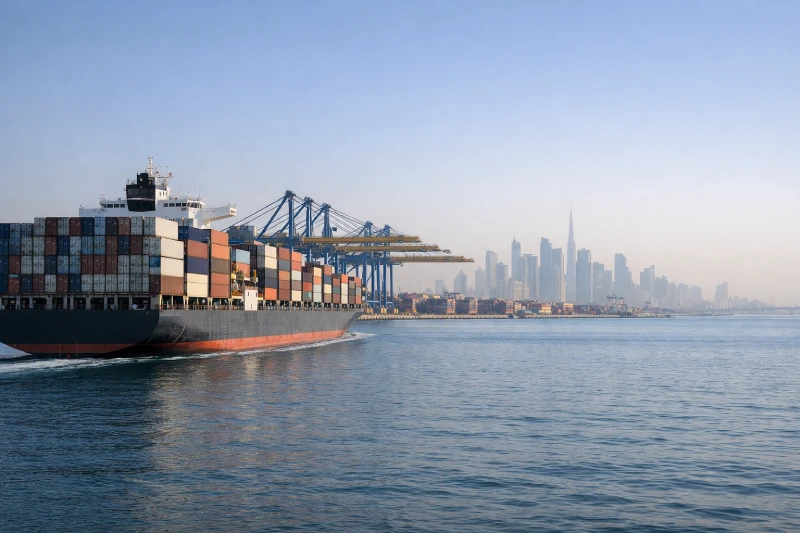
Typical Shipping Time from China to Dubai (By Mode & Entry Point)
For shipments already destined for Dubai, transit time planning should be based on how the cargo enters the city, not on UAE-wide averages. Dubai shipments typically arrive through either Jebel Ali Port (sea freight) or Dubai International Airport / Al Maktoum International Airport (air cargo). Each entry point has its own processing rhythm, bottlenecks, and variability.
As a reference point, door-to-door shipping time from China to Dubai typically ranges from 3–7 days by express to 30–45 days by sea freight, depending on the mode, shipment structure, and local handling conditions. These are planning ranges, not guarantees, and assume commercially normal cargo with complete documentation.
Shipping Time to Dubai: Typical Ranges
| Mode | Entry point | Port-to-Port / Airport-to-Airport | Door-to-Door (Typical) | Best for | Main time risk |
|---|---|---|---|---|---|
| Express | DXB | 2–4 days | 3–7 days | Samples, urgent small parcels | Customs inspection, peak volume |
| Air freight | DXB / DWC | 3–6 days | 5–10 days | Time-sensitive commercial cargo | Flight capacity, clearance queue |
| Sea freight (FCL) | Jebel Ali | 18–28 days | 25–40 days | Full container loads | Port congestion, vessel delays |
| Sea freight (LCL) | Jebel Ali | 22–35 days | 30–45 days | Small-volume shipments | Consolidation & deconsolidation |
The key takeaway: the ocean or flight time is only part of the picture. In Dubai, total lead time is often shaped just as much by port handling, customs clearance, and last-mile delivery arrangements as by the voyage itself.
Sea Freight to Dubai: Jebel Ali Port Transit Time Breakdown
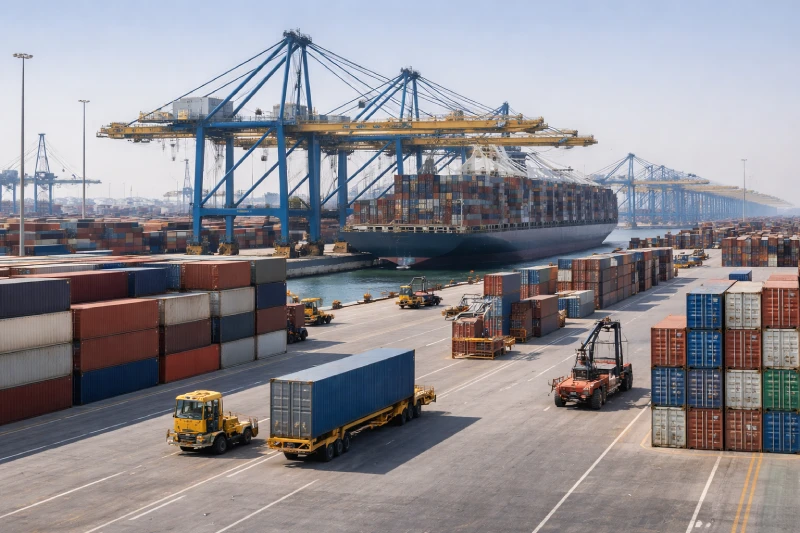
For ocean shipments bound for Dubai, almost all commercial cargo moves through Jebel Ali Port. This is one of the largest and most efficient container ports in the Middle East—but efficiency does not mean predictability. Understanding where time is actually spent is critical when planning sea freight to Dubai.
Why Jebel Ali Is Not “Just Another UAE Port”
Jebel Ali functions as both a destination port and a regional transshipment hub. This dual role explains why two shipments on the same vessel can experience very different timelines after arrival. While berth productivity is generally high, congestion can still occur due to vessel bunching, feeder connections, or peak-season surges.
For shippers, the implication is simple: arrival at Jebel Ali does not equal immediate cargo release.
China → Jebel Ali: Port-to-Port vs Door-to-Door Timing
From China to Jebel Ali, port-to-port transit time typically falls within a predictable sailing window. However, door-to-door timelines expand once local handling is included.
Key time components after vessel arrival include:
- Container discharge and yard positioning
- Import customs clearance in Dubai
- Container availability for pickup or deconsolidation
- Inland transport scheduling within Dubai
Each of these steps introduces variability that is not visible when looking only at sailing schedules.
FCL vs LCL at Jebel Ali: Where LCL Loses Time
At Jebel Ali, FCL shipments are structurally more time-controlled than LCL.
- FCL cargo can usually proceed to customs clearance and container release once discharged.
- LCL cargo must first wait for:
- Container transfer to the CFS
- Deconsolidation
- Cargo segregation and documentation matching
This consolidation workflow means that, even with similar vessel arrival dates, LCL shipments often trail FCL by several additional days before they are ready for delivery.
For Dubai-bound sea freight, the practical rule is: the smaller the shipment, the more post-arrival time matters—often more than the ocean transit itself.
Air Freight to Dubai: DXB vs DWC Makes a Difference
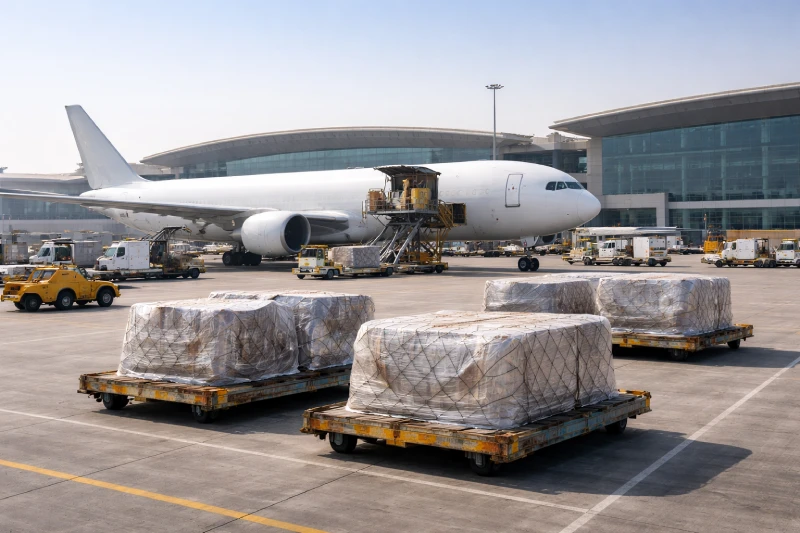
For air cargo from China to Dubai, transit time is not determined by “air freight” alone. The choice of arrival airport—Dubai International Airport (DXB) or Al Maktoum International Airport (DWC)—has a direct impact on clearance speed, cargo handling, and final delivery timelines.
While flight time from China is broadly similar, what happens after landing is where time is won or lost.
DXB Cargo: Faster Access, Tighter Controls
DXB is Dubai’s most established cargo gateway, with:
- Very high flight frequency
- Dense global airline networks
- Fast access to central Dubai
For standard commercial cargo, airport-to-airport transit is typically short, and door-to-door timelines can be competitive. However, DXB also operates under tighter inspection and capacity controls, especially during peak periods.
Common DXB-related time risks include:
- Cargo backlog during high-volume weeks
- Additional scrutiny for mixed or unclear declarations
- Limited flexibility for oversized or non-standard cargo
In practice, DXB works best when documents are clean, cargo is standard, and delivery urgency outweighs handling flexibility.
DWC Cargo: More Capacity, Different Trade-Offs
DWC was developed to absorb volume and handle complex cargo more efficiently. It generally offers:
- Greater handling capacity
- More flexibility for oversized or project cargo
- Smoother throughput during peak demand
That said, DWC is farther from central Dubai, and inland transport can add extra time compared with DXB, particularly for urgent door-to-door shipments.
DWC is often the better option when:
- Cargo size or weight limits restrict DXB handling
- Consistency matters more than absolute speed
- Peak-season congestion at DXB is expected
Airport Choice and Its Impact on Final Delivery Time
From a planning perspective, DXB vs DWC can shift total delivery time by 1–3 days, even when flights depart China on the same date. This difference typically comes from:
- Clearance queue length
- Handling priorities
- Inland delivery distance and scheduling
For shippers focused on Dubai-specific timelines, the takeaway is clear: air freight speed depends as much on the landing airport as on the flight itself.
Why “China to Dubai” Timing Is More Predictable Than Other UAE Cities
When shipping to the UAE, Dubai stands out as the most time-predictable destination, especially compared with other emirates. This does not mean delays never happen—but the sources of delay in Dubai are clearer, more repeatable, and easier to plan around.
Centralized Entry Points Reduce Variability
Dubai’s cargo flow is highly centralized. Most international shipments enter through Jebel Ali Port, Dubai International Airport (DXB), or Al Maktoum International Airport (DWC). These gateways operate at scale every day, which results in:
- More stable handling routines
- Established customs workflows
- Faster issue escalation when problems occur
For shippers, this consistency translates into narrower transit-time ranges than those seen in smaller or less centralized entry points.
Mature Customs Processes—but Zero Tolerance for Incomplete Data
Dubai customs is known for being efficient, but efficiency depends heavily on document accuracy. Shipments with aligned commercial invoices, packing lists, and HS codes often move smoothly. When data is incomplete or inconsistent, clearance can slow down just as quickly.
This predictability cuts both ways:
- Clean files move fast
- Problematic files stop early and visibly
There are fewer “unknown” delays, but also less room for correction after arrival.
Strong Inland Infrastructure Supports Faster Final Delivery
Once cleared, cargo movement inside Dubai benefits from:
- Short inland distances
- Dense warehouse and free zone networks
- Frequent trucking availability
Compared with shipments routed through other UAE cities, last-mile delivery in Dubai is typically easier to schedule, provided the delivery location and access requirements are clearly defined in advance.
The practical takeaway: Dubai is not immune to delays—but it is easier to forecast, buffer, and manage time risk here than elsewhere in the UAE.
Common Delay Points Specific to Dubai Shipments
Even with Dubai’s mature logistics infrastructure, delays still occur—and they tend to happen in the same places. Understanding these Dubai-specific friction points allows shippers to plan buffers where they actually matter, rather than adding unnecessary time across the entire route.
Jebel Ali Port Congestion: What Actually Causes the Wait
At Jebel Ali Port, delays rarely come from slow vessel unloading. More often, they stem from vessel bunching and yard congestion, especially during regional peak seasons.
Typical scenarios include:
- Multiple mainline vessels arriving within a short window
- Containers waiting for yard positioning before clearance
- Rolled containers due to missed berth windows
These delays usually add days, not weeks, but they can disrupt tightly planned delivery schedules if no buffer is built in.
Dubai Customs: Fast When Clean, Slow When Not
Dubai customs processing is efficient by design, but highly intolerant of discrepancies. The most common clearance delays are linked to:
- Mismatch between invoice and packing list
- Unclear or overly generic cargo descriptions
- HS code inconsistencies across documents
Once a shipment enters inspection, resolution time depends largely on how quickly missing or corrected information can be provided. In Dubai, documentation errors surface early, which makes them easier to identify—but not easier to fix after arrival.
Free Zone vs Mainland Delivery: A Hidden Time Variable
Dubai shipments often end in either a free zone or the mainland, and the difference matters for timing.
- Free zone deliveries may require additional gate approvals or appointment scheduling
- Mainland deliveries can face access restrictions at warehouses or industrial areas
In both cases, incomplete delivery instructions can delay the final handover by one or more days, even after customs clearance is complete.
Air Cargo Backlogs at DXB During Peak Weeks
At Dubai International Airport (DXB), peak-volume weeks can lead to short-term backlogs, particularly for:
- Mixed or consolidated air cargo
- Shipments arriving close to weekends or public holidays
These delays are usually temporary but can extend airport dwell time beyond initial expectations.
The practical takeaway for Dubai-bound cargo is clear: most delays are procedural, not operational—and they are often preventable with correct preparation.
When Shipping to Dubai, Which Mode Should You Choose? (3 Real Scenarios)
Choosing a shipping mode for Dubai is rarely about “fastest” or “cheapest” in isolation. It’s about where time risk actually sits for your specific situation. Below are three common, real-world scenarios where the right choice is usually clearer than it first appears.
Scenario 1: Retail Replenishment for Dubai Distribution
The situation:
Stock levels are running low, sales are ongoing, and delays risk lost revenue—but the shipment is not a one-off emergency.
What usually works best:
- Air freight for the immediate replenishment window
- Sea freight (FCL or planned LCL) for follow-up stock
Why:
Air freight into DXB or DWC offers predictable lead times when documents are clean, allowing inventory gaps to be covered quickly. At the same time, relying entirely on express or repeated air shipments often inflates costs without improving long-term stability.
Where time is lost if you choose wrong:
- Using LCL sea freight too late in the cycle can push restocking out by weeks
- Overusing express can trigger customs scrutiny on repeated shipments
Scenario 2: Samples or Trial Orders to Dubai
The situation:
Small volume, high urgency, often tied to buyer approval or first-time business.
What usually works best: Express courier or priority air freight
Why:
Speed matters, but so does simplicity. Express shipments reduce handover points and documentation complexity, which is often more important than shaving a single day off transit time.
Where time is lost if you choose wrong:
- Incomplete or informal documentation can stall even the fastest shipment
- Declaring samples inaccurately may trigger inspections that erase the speed advantage
For Dubai-bound samples, clean paperwork is as critical as the transport mode.
Scenario 3: Project Cargo or Time-Sensitive Commercial Shipments
The situation:
Larger, heavier, or non-standard cargo tied to construction, engineering, or installation schedules.
What usually works best:
- Sea freight (FCL) for main cargo
- Air freight only for critical components
Why:
Dubai’s infrastructure handles project cargo efficiently, but timing depends on coordination, not speed alone. Splitting shipments strategically often reduces overall risk more than forcing everything through a single fast channel.
Where time is lost if you choose wrong:
- Routing oversized cargo through the wrong airport
- Underestimating port handling and inland delivery planning
For project shipments to Dubai, predictability beats raw transit speed.
Across all three scenarios, the pattern is consistent: the best shipping mode is the one that minimizes risk at the point where delay would hurt most—not necessarily the one with the shortest quoted transit time.
How to Shorten China → Dubai Shipping Lead Time (City-Specific Actions)
Shortening transit time to Dubai is less about “shipping faster” and more about removing friction at predictable choke points. The actions below focus on steps that specifically matter for Dubai-bound cargo, rather than generic logistics advice.
1) Lock the Entry Point Early (Jebel Ali vs DXB vs DWC)
Decide before booking whether the shipment will enter via Jebel Ali Port, Dubai International Airport (DXB), or Al Maktoum International Airport (DWC). Late changes often cause re-documentation or re-routing, which can add days without improving speed.
Why it helps: Dubai customs and terminals process faster when routing is consistent from the start.
2) Pre-Validate Dubai Customs Data (Not Just Export Docs)
Ensure the commercial invoice, packing list, and HS code are Dubai-ready, not merely export-compliant. Dubai customs is efficient but unforgiving with inconsistencies.
Why it helps: Most Dubai clearance delays originate from data mismatches, not inspections.
3) Avoid LCL During Peak Weeks If Timing Is Critical
For sea freight into Jebel Ali, LCL adds unavoidable steps: deconsolidation, segregation, and release scheduling. During peak periods, these steps stretch further.
Why it helps: FCL shipments typically move to clearance sooner after vessel arrival.
4) Build Buffer at the Right Stage (Post-Arrival, Not Sailing)
Instead of padding sailing time, plan buffer days after arrival—for clearance, terminal handling, or delivery appointments.
Why it helps: Dubai transit variability is concentrated on the ground, not at sea or in the air.
5) Confirm Final Delivery Details Before Arrival
Clarify whether delivery is to a free zone or mainland, and confirm:
- Exact warehouse address
- Access requirements
- Appointment rules
Why it helps: Many “last-mile” delays in Dubai occur after clearance due to incomplete delivery instructions.
6) Align Cargo Type With the Right Airport
For air freight:
- Use DXB for standard, time-critical cargo
- Use DWC for oversized or capacity-heavy shipments
Why it helps: Mismatched cargo and airport choice often results in handling delays rather than faster delivery.
7) Avoid Last-Minute Shipment Modifications
Changes to consignee details, cargo descriptions, or delivery mode after dispatch often trigger document rechecks in Dubai.
Why it helps: Dubai systems surface discrepancies early, and corrections after arrival take longer.
8) Split Shipments Strategically
For mixed-urgency cargo, consider splitting:
- Critical items by air
- Main volume by sea
Why it helps: This reduces overall schedule risk without forcing everything through the fastest—and most sensitive—channel.
9) Plan Around Dubai’s Weekly Rhythm
Cargo arriving just before weekends or public holidays may wait longer for clearance or delivery slots.
Why it helps: Timing arrival to align with local operating days can shave real time off door-to-door delivery.
10) Treat Time as a Process, Not a Quote
Transit time to Dubai is the result of multiple linked steps. Optimizing one step while ignoring others rarely improves the final outcome.
The core principle: Most lead-time savings to Dubai come from preparation, not acceleration.
FAQs
1) How long does sea freight from China to Dubai usually take?
For shipments arriving at Jebel Ali Port, port-to-port transit typically falls within a few weeks, while door-to-door delivery usually extends into the following weeks once clearance and local handling are included. Final timing depends on vessel schedules, container type (FCL vs LCL), and post-arrival processing.
2) Is air freight to Dubai always faster than express courier?
Not always. While air freight often has short airport-to-airport transit, express courier can be faster door-to-door for small shipments because it reduces handovers. Air freight may lose time at clearance or local delivery if documents or airport choice are not optimized.
3) Why do some shipments arrive in Dubai but still take days to deliver?
Arrival does not equal release. Time is often spent on customs clearance, terminal handling, and delivery appointment scheduling. In Dubai, these steps are efficient but sequential—any delay in one step pauses the entire process.
4) Does “door-to-door” shipping include customs clearance in Dubai?
Typically yes, but only if documentation is complete and accurate. Door-to-door timelines assume standard clearance without inspection. If issues arise, clearance time can extend beyond the original estimate.
5) Is shipping to Dubai faster than to other UAE cities?
In most cases, yes. Dubai benefits from centralized ports, major airports, and dense inland infrastructure, which makes transit times more predictable. That said, predictability still depends on preparation—poor documentation or last-minute changes can slow shipments anywhere.
