

How Shipping Costs to Dubai Are Actually Calculated
Shipping costs to Dubai are not a single number—and they are rarely the same as a general “UAE average.” Most cargo enters through Jebel Ali, and what you pay depends on how the shipment moves, where responsibility changes, and which local charges apply on arrival.
A practical way to estimate your total cost is to think in five parts:
Total Shipping Cost = Main Freight + Origin Charges + Dubai Local Charges + Customs & VAT + Last-Mile Delivery
Each part is affected by different variables. For example, the same sea freight rate can lead to very different totals once Dubai port handling, clearance, and inland delivery are added—especially for LCL shipments. Incoterms also matter: under EXW or DDP, costs that are invisible in an FOB quote can become significant.
If you want a fast, realistic budget check, you should have these details ready before asking for a quote: origin city in China, destination in Dubai (Jebel Ali port, free zone, or mainland), cargo dimensions and weight, cargo type, and Incoterms. With this information, most of the uncertainty can be narrowed to a workable range—without relying on a fixed or guaranteed price.
Cost Components for Shipping to Dubai (Jebel Ali Focus)
Understanding where the money actually goes is the fastest way to avoid surprises when shipping to Dubai. Even with the same freight rate, totals can differ once charges on both ends—and especially at Jebel Ali Port—are added. Below is a practical breakdown, in the order costs usually appear.
Origin Charges (China Side)
These are costs incurred before the cargo leaves China. They vary by Incoterms and pickup location.
- What’s included: export handling, documentation, customs declaration, trucking to port.
- Why it matters: under EXW, these costs are often underestimated and later added line by line.
- Common pitfall: assuming “FOB price” covers everything up to loading—local trucking and export handling can still vary by city.
Main Freight to Jebel Ali
This is the line most people focus on, but it’s only one piece.
- Sea freight: quoted per container (FCL) or per CBM (LCL).
- Air freight: based on chargeable weight.
- What changes it: seasonality, available space, fuel surcharges, and carrier adjustments.
- Reality check: a low base rate doesn’t guarantee a low total cost.
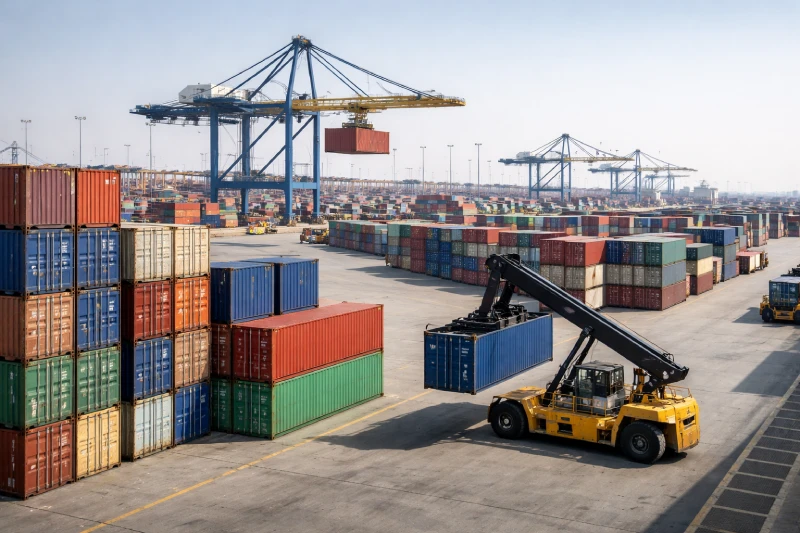
Dubai Local Charges (Often Underestimated)
Costs collected after arrival in Dubai, typically by the local agent or terminal.
- Typical items: terminal handling, documentation, delivery order fees.
- LCL warning: shared containers usually trigger higher per-CBM local charges.
- Why surprises happen: these fees are rarely visible when comparing freight-only quotes.
Customs Duty & VAT in Dubai
UAE clearance is generally efficient, but taxes still apply.
- Customs duty: depends on HS code and cargo type.
- VAT: 5% is applied to the CIF value plus duty.
- Key distinction: shipments to free zones and mainland Dubai can follow different clearance and tax treatments.
Last-Mile Delivery Within Dubai
The final leg—from port to warehouse or site.
- Cost drivers: distance from Jebel Ali, access requirements, free zone entry rules.
- Why it matters: delivery is often quoted separately and finalized only after arrival details are confirmed.
Bottom line: shipping to Dubai is best estimated as a chain of costs, not a single rate. Knowing which charges appear at each stage—especially on arrival—makes the difference between a rough guess and a usable budget range.
Cost Ranges Overview: China to Dubai Shipping Cost by Mode
The table below provides numerical cost ranges commonly seen when shipping from China to Dubai, with most sea shipments discharged at Jebel Ali Port. These figures are for budgeting and comparison only—they are not fixed prices and will fluctuate with season, vessel space, fuel surcharges, exchange rates, and local charges in Dubai.
How to read this section:
Use these ranges to judge order of magnitude. If your expected cost is far outside these bands, the shipment setup (mode, Incoterms, volume, or timing) likely needs to be reconsidered.
Cost Ranges Overview (China → Dubai)
| Shipping Mode | Pricing Unit | Typical Cost Range (USD) | Transit Time (Approx.) | Notes |
|---|---|---|---|---|
| Sea Freight – LCL | Per CBM | 120 – 280 / CBM | 22–35 days | Main freight only; Dubai local charges usually apply on top |
| Sea Freight – FCL (20GP) | Per container | 1,200 – 2,800 | 20–30 days | More predictable than LCL, but seasonality is strong |
| Sea Freight – FCL (40HQ) | Per container | 1,900 – 4,200 | 20–30 days | Lower unit cost for volume cargo |
| Air Freight | Per chargeable kg | 3.5 – 7.5 / kg | 3–7 days | Based on chargeable weight, general cargo |
| Express Courier | Per kg (all-in) | 8 – 15 / kg | 2–5 days | Convenience-focused; cost rises quickly with weight |
Important cost context for Dubai-bound shipments:
- LCL shipments almost always cost more than the table suggests in total.
Dubai destination charges (CFS handling, documentation, delivery order fees) commonly add USD 200–450 per shipment, regardless of CBM. - FCL rates vary widely by season and space availability.
During peak periods, prices often sit near the upper end of the range and can move quickly. - Air freight pricing is highly sensitive to chargeable weight.
Voluminous cargo may price at the same per-kg rate but result in a much higher total. - Express rates look simple but are rarely cost-efficient beyond small, urgent shipments.
These ranges are best used as a starting point. In the following sections, we’ll look at how each transport mode behaves in practice and which hidden variables most often push Dubai shipping costs above initial expectations.
Shipping Cost to Dubai by Transport Mode
Choosing the right transport mode matters more than most first-time shippers expect. For Dubai-bound cargo—especially shipments discharged at Jebel Ali Port—the difference is not just transit time, but how costs accumulate and where surprises usually appear.

Sea Freight LCL (Less than Container Load)
LCL is often the first option considered for small shipments, but it is also the most misunderstood in terms of total cost.
- How it’s priced: per CBM, with a minimum charge.
- Why it looks cheap: the headline ocean rate per CBM is relatively low.
- Where costs add up: Dubai destination charges (CFS handling, documentation, delivery order fees) are typically charged per shipment, not per CBM.
- Practical takeaway: LCL works best when volume is truly small and timing is flexible. For borderline volumes, it can end up close to—or even higher than—a 20GP on a per-unit basis.
Sea Freight FCL (20GP / 40HQ)
Full-container shipping offers the clearest cost structure and is often the easiest to budget.
- How it’s priced: one rate per container, plus fixed origin and destination charges.
- Why it’s predictable: most costs are known upfront, especially under FOB or CIF terms.
- Key risk in Dubai: detention and demurrage if customs clearance or delivery is delayed.
- Practical takeaway: if your cargo can fill a container reasonably well, FCL usually delivers the most stable unit cost to Dubai.
Air Freight to Dubai
Air freight is chosen for speed, but cost depends heavily on how the shipment is measured.
- How it’s priced: per chargeable weight (the higher of actual weight or volume weight).
- What drives the range: cargo density, flight availability, fuel surcharges, and special handling.
- Common misunderstanding: per-kg rates may look acceptable, but bulky cargo can double the total once volume weight applies.
- Practical takeaway: air freight suits high-value or time-critical goods, but it requires accurate dimensions to avoid budget shocks.
Express Courier to Dubai
Express services bundle transport, clearance, and delivery into one price—but convenience comes at a premium.
- How it’s priced: per kg, all-in.
- Why it’s simple: minimal paperwork and fast delivery.
- Why it’s costly: rates escalate quickly as weight increases, and flexibility is limited.
- Practical takeaway: best for documents, samples, or very small urgent shipments—not for regular commercial cargo.
Bottom line:
The “cheapest” option on paper is rarely the cheapest in reality. For Dubai shipments, the right choice depends on volume, urgency, and how destination charges behave under each mode—not just the base rate you see first.
How Incoterms Affect What You Actually Pay in Dubai
When shipping to Dubai, Incoterms don’t just define responsibility—they determine which costs you actually see. Two quotes with the same freight rate can end up very different once Incoterms decide where charges start and stop, especially around Jebel Ali Free Zone and mainland delivery.
Below is a practical, Dubai-focused way to read the most common terms.
EXW to Dubai: Why Costs Are Hard to Predict
Under EXW, the buyer takes responsibility from the seller’s door in China.
- What you pay: everything—pickup, export handling, main freight, Dubai local charges, clearance, VAT, and delivery.
- Why it’s risky: origin charges in China vary widely by city and supplier setup, making early estimates unreliable.
- Dubai reality: many costs only become visible after arrival, which is why EXW quotes often feel “low at first, high at the end.”
Best for: experienced importers who want full control and understand both China-side and Dubai-side charges.
FOB vs CIF: Where Dubai Costs Begin
These two terms are often confused, but the difference matters once cargo reaches Dubai.
- FOB (Free On Board):
- You pay main freight onward.
- All Dubai destination charges, clearance, VAT, and delivery are on you.
- More transparent, but requires understanding local costs.
- CIF (Cost, Insurance & Freight):
- Main freight is included to Jebel Ali.
- Dubai local charges, customs, VAT, and delivery are still payable on arrival.
- Common misconception: CIF does not mean “door-to-door.”
Dubai reality: CIF simplifies booking but does not reduce destination-side expenses.
DDP to Dubai: When It Makes Sense (and When It Doesn’t)
DDP is often seen as the most expensive option—but that’s not always true.
- What you pay: one all-inclusive price covering transport, clearance, duty, VAT, and delivery.
- Why it can work: predictable landed cost, fewer operational steps for the buyer.
- Where problems arise: inaccurate cargo details (HS code, value, battery status) can force adjustments later.
Dubai reality: DDP relies heavily on correct upfront information. When data is accurate, it can reduce risk; when it’s not, it creates disputes.
Key takeaway:
For Dubai shipments, Incoterms don’t change the existence of costs—they change when you see them and who manages them. If your priority is cost transparency, FOB is often the clearest. If your priority is administrative simplicity, DDP may be worth the premium—provided the shipment details are solid from the start.
3 Typical China to Dubai Shipping Cost Scenarios
The examples below show how costs are usually estimated in practice when shipping to Dubai. They are not quotes, but working scenarios that illustrate what inputs matter, what ranges are commonly seen, and which fees are most often missed.
Scenario 1: Small LCL Shipment to Dubai (Charged by CBM)
Typical use case
Small commercial cargo that doesn’t fill a container and is not time-critical.
Information you need
- Origin city in China
- Total volume (CBM)
- Cargo type (general / special)
- Incoterms (most often FOB or EXW)
Common cost ranges
- Ocean freight (LCL): USD 120–280 / CBM
- Dubai local charges: often USD 200–450 per shipment
- Delivery inside Dubai: depends on distance and access
What’s most often overlooked
- Minimum chargeable volume (many shipments are billed at 1 CBM even if smaller)
- Dubai CFS handling and documentation fees, which apply regardless of CBM
- LCL delivery charges that exceed expectations for small volumes
Reality check
LCL works well for very small shipments, but once volume grows, total landed cost can approach that of a 20GP container.
Scenario 2: Full Container Shipment (20GP / 40HQ) to Dubai
Typical use case
Regular commercial cargo with enough volume to justify a full container.
Information you need
- Container type (20GP or 40HQ)
- Origin port in China
- Cargo weight (to check heavy container surcharges)
- Incoterms (FOB and CIF are common)
Common cost ranges
- 20GP ocean freight: USD 1,200–2,800
- 40HQ ocean freight: USD 1,900–4,200
- Origin + destination fixed charges: relatively stable per container
What’s most often overlooked
- Demurrage and detention if clearance or delivery is delayed
- Peak season surcharges during high-demand periods
- Port congestion that affects schedule but not base rates
Reality check
FCL offers the clearest and most predictable cost structure. For medium to large volumes, it usually delivers the lowest unit cost to Dubai.
Scenario 3: Urgent Air Freight Shipment to Dubai (Charged by Weight)
Typical use case
Time-sensitive, high-value, or urgent replenishment cargo.
Information you need
- Exact dimensions and gross weight
- Cargo nature (battery, magnetic, restricted goods)
- Required delivery timeline
Common cost ranges
- Air freight: USD 3.5–7.5 per chargeable kg
- Additional surcharges: fuel, security, or special handling where applicable
How cost is calculated
- Chargeable weight = max(actual weight, volumetric weight)
- Volumetric weight often drives the final price for bulky cargo
What’s most often overlooked
- Volume weight causing a much higher chargeable weight than expected
- Battery or special cargo surcharges applied after initial estimates
- Airport-to-door delivery costs in Dubai, quoted separately
Reality check
Air freight buys speed, not cost efficiency. Without accurate dimensions, early estimates can be misleading.
Summary insight
Each mode has a different “cost behavior.” LCL hides charges at destination, FCL concentrates cost upfront, and air freight magnifies measurement errors. For Dubai-bound shipments, realistic budgeting starts with choosing the right scenario, not just comparing base rates.
How to Get an Accurate Shipping Quote to Dubai
Most pricing disputes don’t come from high rates—they come from missing or incomplete information. For Dubai-bound shipments, even a small detail can shift the final cost once the cargo arrives and is cleared.
If you want a quote that stays close to reality, the goal is simple: eliminate assumptions early.
Information You Must Provide Upfront
At minimum, a workable Dubai quote requires:
- Origin city in China (not just “China”)
- Destination in Dubai (port, free zone, or mainland delivery address)
- Cargo dimensions and gross weight (per package)
- Cargo type (general cargo, battery, liquid, restricted items)
- Incoterms (EXW, FOB, CIF, or DDP)
Without these, any number you receive is only a rough placeholder.
Why Missing One Detail Changes the Price
Some inputs have an outsized impact on Dubai costs:
- HS Code: determines duty rate and affects clearance speed. A wrong code can change taxes and cause delays.
- Dimensions vs weight: air freight is billed on chargeable weight; inaccurate sizes can double the cost.
- Battery or special cargo status: triggers airline or handling surcharges that are not optional.
- Free zone vs mainland delivery: affects clearance procedures, VAT handling, and last-mile charges.
Practical Tip for First Estimates
If you’re still in the budgeting stage, provide conservative, realistic figures rather than estimates you hope are smaller. Overstated dimensions or weight can be corrected later; understated data almost always leads to upward price revisions.
Key takeaway:
An accurate shipping quote to Dubai isn’t about finding the lowest number—it’s about supplying enough detail so the number doesn’t change after the cargo is already on the water or in the air.
Quote Input Checklist for China to Dubai Shipments
Use the checklist below to lock down a quote that stays accurate once your shipment moves. Every missing item forces assumptions—and assumptions are what cause revisions after booking or on arrival.
| Information Required | Why It Matters | What Happens If Missing |
|---|---|---|
| Origin city (China) | Determines inland trucking, export handling, and cut-off times | Origin charges guessed; price revised later |
| Destination (Dubai) | Port vs free zone vs mainland affects clearance and delivery | Wrong local charges or VAT handling |
| Port of discharge | Most sea cargo moves via Jebel Ali | Misaligned destination fees |
| Cargo dimensions (L×W×H) | Sets CBM and air volumetric weight | Air cost can double after re-measurement |
| Gross weight | Checks heavy cargo surcharges and handling limits | Re-rating or rejection |
| Number of packages | Impacts handling, consolidation, and delivery | Incorrect minimum charges |
| Cargo type | General vs battery/liquid/restricted | Mandatory surcharges added late |
| HS code | Drives duty rate and clearance rules | Tax changes or customs delay |
| Declared value | Basis for duty and 5% VAT | Clearance hold or reassessment |
| Incoterms | Defines cost boundary and responsibility | Charges appear “unexpectedly” |
| Delivery requirement | Port-only vs door delivery | Last-mile cost added post-arrival |
| Timeline / urgency | Affects mode and space availability | Forced mode upgrade |
How to Use This Checklist
- Provide all items upfront when requesting a quote—even if some are estimates.
- Be conservative with dimensions and weight during budgeting; corrections downward are easier than upward.
- Confirm the destination type (free zone or mainland) early to avoid VAT and delivery surprises.
Bottom line:
A stable Dubai quote isn’t about finding a perfect number—it’s about removing guesswork. The more complete your inputs, the closer your initial estimate will be to the final landed cost.
FAQs
1. Why do shipping costs to Dubai vary so much for the same route?
Because the base freight rate is only one part of the total cost. Seasonality, space availability, fuel surcharges, and—most importantly—Dubai local charges can change the final number significantly. Two quotes can look similar on paper but diverge once destination handling and delivery are added.
2. Why is LCL shipping to Dubai often more expensive than expected?
LCL rates are quoted per CBM, but many Dubai destination charges are billed per shipment, not per volume. CFS handling, documentation, and delivery order fees apply even to small shipments, which is why LCL totals often exceed initial expectations.
3. Is DDP shipping to Dubai always more expensive?
Not always. DDP can appear higher because all costs—transport, duty, VAT, and delivery—are bundled into one figure. When shipment details are accurate, DDP can actually reduce cost risk by eliminating post-arrival adjustments. The trade-off is less visibility into individual cost components.
4. Does shipping to a Dubai free zone change the total cost?
It can. Free zone shipments follow different clearance and VAT handling rules than mainland Dubai deliveries. While free zones may simplify certain processes, local handling and delivery costs still apply, and the total is not automatically lower.
5. Can I estimate my Dubai shipping cost without a full quote?
Yes, but only at a budget level. Using realistic ranges for freight and allowing for Dubai local charges can help with early planning. For a number that holds after booking, you’ll need full details—origin, dimensions, cargo type, HS code, and Incoterms.
