
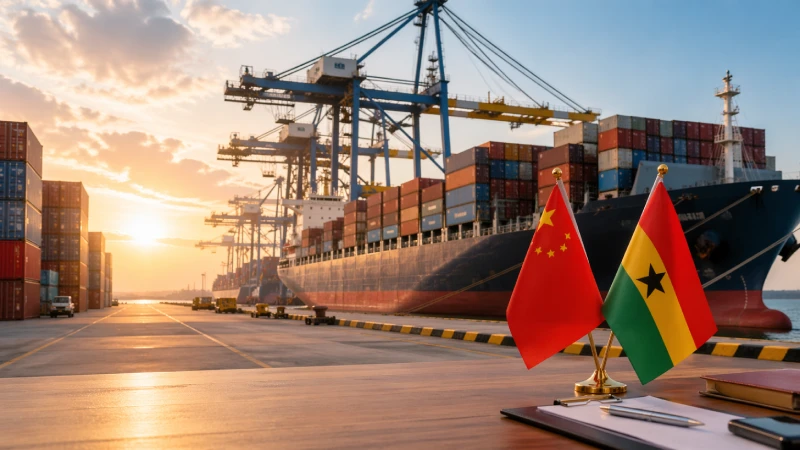
Importing goods from China to Ghana is one of the most common trade routes for West African businesses. Sea freight remains the preferred shipping method for most importers because it offers lower costs than air freight and is suitable for large, heavy, or bulky cargo.
Most cargo from China to Ghana is shipped through major Chinese ports such as Shanghai, Ningbo, Shenzhen, Guangzhou, Qingdao, and Xiamen. The cargo usually arrives at Tema Port, which handles most containerized imports in Ghana, or Takoradi Port for certain industrial and project shipments.
Depending on the shipment size, importers can choose between:
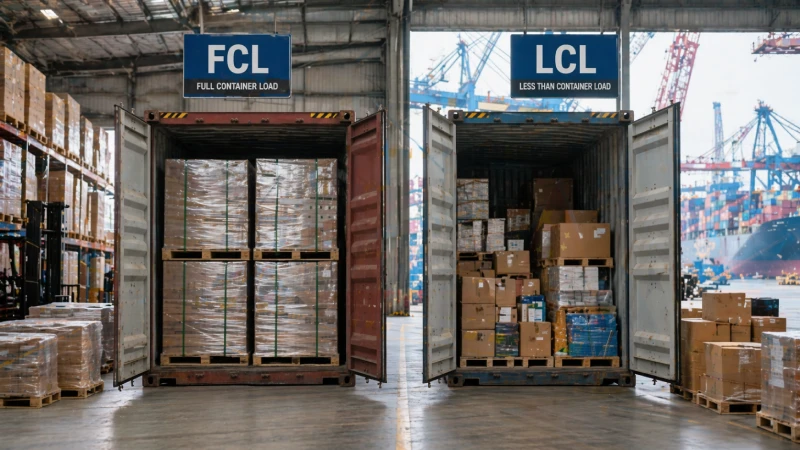
- FCL (Full Container Load): when your cargo fills an entire container
- LCL (Less than Container Load): when your goods share container space with other shipments
For many Ghanaian importers, choosing the right option depends on cargo volume, urgency, budget, and how often they ship.
If you are still deciding which shipping method is best overall, see our complete guide to shipping from China to Ghana.
How Sea Freight Works
Sea freight from China to Ghana usually follows a straightforward process, but each stage affects transit time and total cost.
- Supplier prepares the cargo in China.
- Goods are collected from the factory or warehouse.
- Cargo is delivered to the export port in China.
- The shipment is loaded into a container and exported.
- The container travels by sea to Ghana.
- The shipment arrives at Tema or Takoradi Port.
- Customs clearance and import procedures are completed.
- Cargo is delivered to the final destination in Ghana.
For FCL shipments, the cargo is loaded into a dedicated 20ft or 40ft container at the supplier’s factory or a consolidation warehouse. For LCL shipments, the freight forwarder combines your cargo with goods from multiple shippers before loading.
The most common shipping route is:
China Port → Transshipment Hub (often Singapore, Tanjung Pelepas, or Dubai) → Tema Port, Ghana
Because there are rarely direct sailings from China to Ghana, most shipments require one transshipment stop. This adds several days to the journey.
Sea freight is ideal for:
- Machinery and industrial equipment
- Building materials
- Consumer goods
- Electronics and household products
- Furniture and bulk cargo
Compared with air freight, sea freight usually reduces shipping costs significantly, especially for larger volumes.
FCL vs LCL
Choosing between FCL and LCL is one of the most important decisions when shipping from China to Ghana.
What Is FCL?
FCL means Full Container Load. You book an entire container for your shipment, even if the container is not completely full.
Typical container sizes:
- 20ft container: around 28–33 CBM
- 40ft container: around 58–68 CBM
- 40ft high cube container: around 68–76 CBM
FCL is usually the better choice when your shipment exceeds around 15 CBM or when you want greater control and security.
Advantages of FCL:
- Lower cost per CBM for larger shipments
- Faster transit because there is no consolidation or deconsolidation
- Reduced risk of cargo damage
- Better protection for fragile or high-value goods
- Easier customs handling
FCL is commonly used by:
- Importers of furniture
- Building material suppliers
- Machinery and equipment buyers
- Businesses importing large quantities regularly
What Is LCL?
LCL means Less than Container Load. Your goods share container space with shipments from other importers.
LCL is ideal when you do not have enough cargo to fill a full container.
LCL is generally recommended for shipments below 10–15 CBM.
Advantages of LCL:
- Lower upfront shipping cost
- No need to wait until you have enough cargo for a full container
- Suitable for small businesses and first-time importers
- Useful for testing new products or markets
However, LCL also has disadvantages:
- Longer transit time because cargo must be consolidated in China and separated in Ghana
- Higher cost per CBM than FCL
- Increased risk of damage because multiple shipments are handled together
- Possible delays if another shipment in the same container has customs issues
Which Option Is Better?
As a simple rule:
- Under 10 CBM → usually choose LCL
- Over 15 CBM → usually choose FCL
- Between 10–15 CBM → compare both options carefully
For example, if your shipment is 12 CBM, the LCL rate may seem cheaper at first. But after adding local charges, handling fees, and port charges in Ghana, booking a 20ft FCL container may actually cost almost the same while providing faster delivery and better security.
If you are shipping regularly from China to Ghana, FCL usually becomes more economical over time.
Transit Time
Sea freight transit time from China to Ghana depends mainly on the departure port in China, the shipping line, whether there is transshipment, and whether you use FCL or LCL.
Typical transit times from major Chinese ports to Tema Port are:
| China Port | Typical Transit Time |
|---|---|
| Shanghai to Tema | 32–40 days |
| Ningbo to Tema | 33–42 days |
| Shenzhen to Tema | 28–38 days |
| Guangzhou to Tema | 28–36 days |
| Qingdao to Tema | 35–45 days |
| Xiamen to Tema | 30–38 days |
LCL shipments are usually 3–7 days slower than FCL because the cargo must be consolidated before departure and unpacked after arrival.
Transit time can also increase because of:
- Port congestion in China or Ghana
- Customs inspection
- Bad weather during the sailing period
- Missed transshipment connections
- Peak shipping season before Chinese New Year or year-end holidays
For example, a shipment from Shenzhen to Tema may take only 30 days during a normal period, but 40 days or more during peak season.
For a more detailed breakdown by city, shipping line, and shipping season, read our guide to shipping time from China to Ghana.
Cost Breakdown
Sea freight cost from China to Ghana depends on container size, shipment volume, departure port, season, and destination within Ghana.
Typical sea freight price ranges in 2026 are:
| Shipment Type | Estimated Cost |
|---|---|
| LCL | USD 150–260 per chargeable CBM |
| 20ft FCL | USD 3,300–4,400 |
| 40ft FCL | USD 4,500–5,900 |
However, the freight charge is only one part of the total cost. Importers should also budget for:
- Pickup from the supplier in China
- Export customs clearance in China
- Documentation fees
- Port and terminal handling charges
- Customs clearance in Ghana
- Import duty and VAT
- Local delivery from Tema or Takoradi
For LCL shipments, local charges in Ghana can sometimes be surprisingly high because you pay separate handling and warehouse fees based on volume.
A typical total cost example:
- 5 CBM LCL shipment: use the LCL planning range of USD 150–260 per chargeable CBM, then add any excluded origin, destination, customs and delivery charges.
- 20GP container: use USD 3,300–4,400 per container as a major-China-port-to-Tema freight planning range; it is not landed cost.
Sea freight prices also rise during:
- August to October peak season
- Before Chinese New Year
- Periods of global container shortages
To estimate your shipment more accurately, see our detailed shipping cost from China to Ghana guide and our cost per CBM calculator page.
Port Operations in Ghana
Most containerized sea freight from China arrives at Tema Port, located near Accra. Tema is Ghana’s largest and busiest port and handles the majority of imports from Asia.
Takoradi Port is smaller and mainly used for:
- Mining and industrial equipment
- Oil and gas cargo
- Project cargo and oversized machinery
At Tema Port, the typical process is:
- Container arrives at the terminal
- Shipping line releases the arrival notice
- Import documents are submitted to customs
- Duty and taxes are paid
- Customs may inspect the cargo
- Container is released for pickup or delivery
The most important documents for customs clearance are:
- Bill of Lading
- Commercial Invoice
- Packing List
- Import Declaration Form
- Certificate of Origin if required
Tema Port has improved significantly in recent years, but delays can still happen because of customs inspections, missing paperwork, or congestion.
For LCL shipments, cargo is first moved from the port to a bonded warehouse or container freight station, where it is unpacked before collection. This process can add several extra days.
Many importers reduce delays by using a local customs broker or freight forwarder in Ghana who understands the port procedures and can handle documentation before the vessel arrives.
Common Delays & Solutions
Although sea freight from China to Ghana is reliable, several common issues can delay delivery.
Port Congestion
Tema Port can become congested during peak seasons. Containers may wait several days before unloading.
Solution:
Book early during busy periods and avoid shipping immediately before Chinese New Year or major holidays.
Missing or Incorrect Documents
If the invoice, packing list, or Bill of Lading contains errors, customs clearance may be delayed.
Solution:
Check all shipping documents carefully before the vessel departs from China.
Customs Inspection
Some shipments are selected for physical inspection, especially electronics, machinery, or high-value cargo.
Solution:
Provide complete and accurate cargo descriptions and use an experienced customs broker.
LCL Consolidation Delays
LCL shipments may be delayed while waiting for enough cargo to fill the container.
Solution:
If timing is critical, choose FCL or ask your freight forwarder about the latest consolidation schedule.
Peak Season and Space Shortage
During peak periods, shipping lines may run out of container space or delay bookings.
Solution:
Reserve space 2–3 weeks in advance and keep flexibility in your shipping schedule.
The best way to reduce delays is to work with an experienced freight forwarder who can monitor the shipment, prepare documents correctly, and communicate with both the shipping line and customs authorities.
FAQs
How long does sea freight from China to Ghana take?
Most shipments take 28–45 days depending on the Chinese port, shipping line, and whether the shipment is FCL or LCL.
Is FCL cheaper than LCL?
For large shipments, yes. Once your cargo reaches around 15 CBM, FCL often becomes cheaper overall than LCL.
Which port in Ghana is best for imports from China?
Tema Port is the main choice for most importers because it handles the majority of containerized cargo. Takoradi is more suitable for industrial or project cargo.
What documents are required for sea freight to Ghana?
You generally need a Bill of Lading, Commercial Invoice, Packing List, and import customs documents.
Can I ship small cargo from China to Ghana by sea?
Yes. LCL shipping is specifically designed for small shipments that do not fill an entire container. Many importers use LCL for cargo under 10 CBM.
