
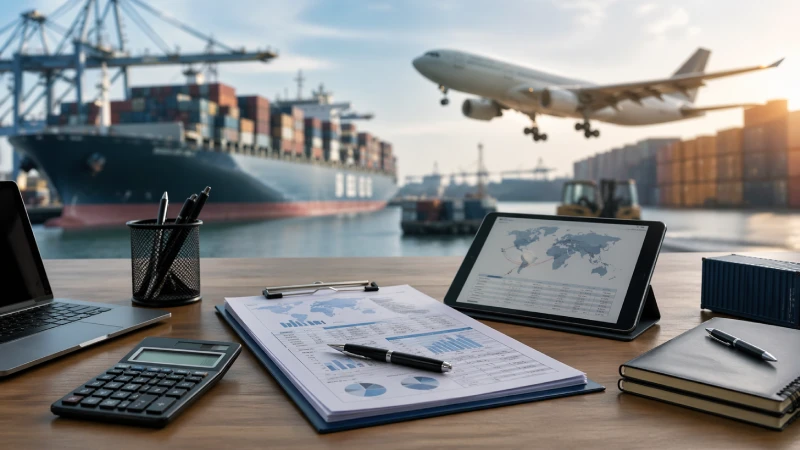
Shipping Options from China to Ghana
Shipping from China to Ghana mainly relies on three core methods: sea freight, air freight, and express courier services. Each option serves a different purpose depending on your shipment size, urgency, and budget.
For most importers in Ghana, sea freight via Tema Port is the primary choice, especially for bulk cargo such as building materials, furniture, or wholesale goods. It offers the lowest cost per cubic meter but requires longer transit times, typically ranging from 30 to 45 days depending on the port of origin in China.
When speed becomes critical, air freight to Kotoka International Airport is the preferred option. It significantly reduces transit time to around 5–10 days door-to-door, making it ideal for high-value or time-sensitive shipments like electronics, spare parts, or urgent restocking.
For very small shipments or samples, express courier services such as DHL, FedEx, and UPS provide the fastest and simplest solution. These services are fully door-to-door and typically deliver within 3–7 days, though at a higher cost per kilogram.
Choosing the right method depends on balancing cost, speed, and cargo volume. In the next section, we’ll compare these options side by side to help you quickly identify the best fit for your shipment.
Comparison Table: Sea vs Air vs Express
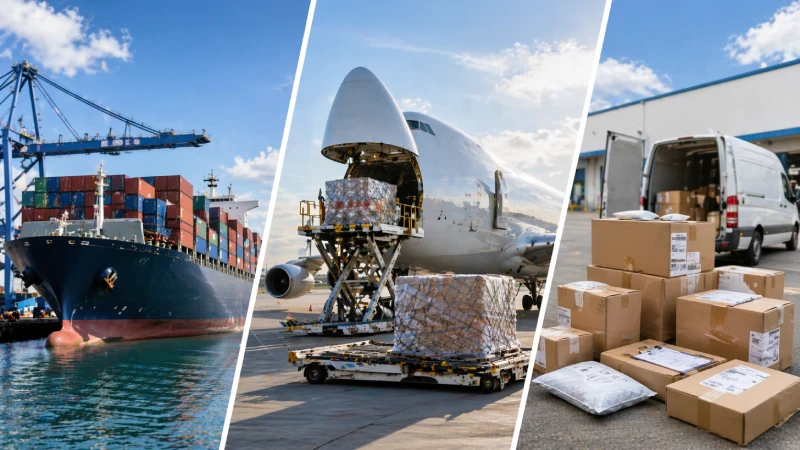
To quickly determine the best shipping method from China to Ghana, use the comparison below. This table summarizes cost, speed, and ideal use cases based on real-world shipping scenarios.
| Shipping Mode | Cost Level | Transit Time | Best For | Limitations |
|---|---|---|---|---|
| Sea Freight (FCL/LCL) | Low | 30–45 days | Bulk cargo, >2–3 CBM, cost-sensitive shipments | Slow transit, port congestion at Tema Port |
| Air Freight | Medium–High | 5–10 days | 100–500 kg cargo, urgent goods, high-value items | Higher cost, volumetric weight charges |
| Express (DHL/FedEx/UPS) | High | 3–7 days | Samples, small parcels (<100 kg), e-commerce | Very expensive per kg, size limitations |
Key Takeaways for Ghana Importers
- If your shipment is large and not urgent, sea freight is almost always the most economical option.
- If you need a balance between speed and cost, air freight is the practical middle ground.
- If your shipment is small and urgent, express courier services offer unmatched convenience with full door-to-door delivery, including customs clearance through Kotoka International Airport.
This comparison gives you a quick snapshot—but choosing the best method depends on more detailed factors like volume thresholds, cargo type, and delivery urgency.
Sea Freight from China to Ghana (FCL & LCL)
Sea freight is the most cost-effective shipping method from China to Ghana, especially for medium to large shipments. Most cargo arrives via Tema Port, Ghana’s main commercial gateway, with some shipments routed through Takoradi for specific industries.
FCL vs LCL: Which One Should You Choose?
- FCL (Full Container Load)
Best when your cargo can fill (or nearly fill) a container.- Typical sizes: 20GP / 40HQ
- Ideal for: >15 CBM or high-volume shipments
- Advantage: Lower cost per unit, faster handling, reduced risk of damage
- LCL (Less than Container Load)
Used when your cargo shares container space with others.- Ideal for: 2–15 CBM shipments
- Charged per CBM
- Requires consolidation in China and deconsolidation in Ghana
👉 Simple rule:
- <2 CBM → consider air or express
- 2–15 CBM → LCL
- 15 CBM → FCL
Transit Time (China → Ghana)
- Port-to-port: 30–40 days
- Door-to-door: 35–45 days
Transit depends on:
- Origin port (Shanghai, Ningbo, Shenzhen, Guangzhou)
- Vessel schedule and transshipment (often via Singapore or Tanjung Pelepas)
- Congestion at Tema
Cost Logic (Why Sea Freight Is Cheap)
Sea freight pricing is based on volume (CBM), not weight:
- LCL: charged per CBM (e.g., 1–10 CBM pricing tiers)
- FCL: fixed container rate regardless of exact load
This makes sea freight ideal for:
- Bulky but low-value goods
- Shipments where time is not critical
Pros & Cons
Advantages:
- Lowest cost per unit
- Suitable for heavy and oversized cargo
- Flexible for different cargo types
Limitations:
- Long transit time
- Port delays and customs clearance variability in Ghana
- LCL shipments may face additional handling time
Real Scenario (Ghana Importers)
A Ghana-based distributor importing tiles, furniture, or construction materials from China typically uses:
- LCL for trial orders (5–10 CBM)
- FCL once volume stabilizes
This approach minimizes risk while optimizing cost as the business scales.
Air Freight from China to Ghana
Air freight is the fastest reliable shipping method from China to Ghana, widely used for urgent, high-value, or time-sensitive cargo. Shipments typically arrive at Kotoka International Airport, the country’s main air cargo hub.
When Does Air Freight Make Sense?
Air freight is the right choice when:
- Your shipment is time-critical (restocking fast-moving goods)
- Cargo value is high relative to weight (electronics, components)
- Shipment size is moderate (100–500 kg)
- Delays would result in lost sales or production downtime
👉 Typical users in Ghana:
- Electronics importers in Accra
- Spare parts distributors
- Retailers with fast turnover inventory
Transit Time (China → Ghana)
- Airport-to-airport: 3–5 days
- Door-to-door: 5–10 days
Transit depends on:
- Departure airport (Guangzhou, Shenzhen, Shanghai, Hong Kong)
- Flight availability (direct vs transshipment via Middle East or Europe)
- Customs clearance speed in Ghana
Pricing Logic (Volumetric Weight Matters)
Air freight is charged based on chargeable weight, which is the higher of:
- Actual weight (kg)
- Volumetric weight
Standard formula:
Volumetric weight (kg) = Length × Width × Height (cm) ÷ 6000
Example: A 200 kg shipment with large cartons may be charged as 300–400 kg if it’s bulky.
Pros & Cons
Advantages:
- Fast and predictable transit time
- Lower risk of damage or loss
- Ideal for high-value goods
Limitations:
- Significantly higher cost than sea freight
- Sensitive to volumetric weight (bulky cargo becomes expensive)
- Requires proper packaging and documentation
Real Scenario (Ghana Importers)
A Ghana-based electronics importer sourcing mobile accessories from Shenzhen may choose air freight when:
- Inventory is running low
- Sea freight transit time (30+ days) is too slow
- Shipment weight is around 200–300 kg
This allows them to restock within a week and maintain sales momentum.
Express Shipping (DHL / FedEx / UPS) to Ghana
Express courier services are the fastest and most convenient shipping option from China to Ghana, especially for small shipments, samples, or urgent parcels. Major carriers like DHL, FedEx, and UPS operate strong networks into Ghana with reliable last-mile delivery.
When Should You Use Express Shipping?
Express is the best option when:
- Shipment is small (<100 kg)
- You need very fast delivery (3–7 days)
- You want simple door-to-door service
- You don’t want to manage complex customs procedures
👉 Typical use cases in Ghana:
- Product samples from Chinese suppliers
- E-commerce or trial orders
- Urgent spare parts or documents
Transit Time (China → Ghana)
- Door-to-door: 3–7 days
Delivery includes:
- Pickup from supplier in China
- Air transport
- Customs clearance at Kotoka International Airport
- Final delivery in Accra or other major cities
Pricing Logic (Why It’s Expensive)
Express shipping has the highest cost per kg, because it includes:
- Air freight
- Customs clearance handling
- Last-mile delivery
- Carrier service premium
Charges are based on:
- Weight (actual vs volumetric, similar to air freight)
- Destination zone
- Service level (priority vs economy)
Important: Even a small but bulky shipment can become expensive due to volumetric weight.
Pros & Cons
Advantages:
- Fastest transit time
- Fully door-to-door (minimal coordination needed)
- Simplified customs handling
Limitations:
- Highest cost per kg
- Not suitable for bulk cargo
- Limited flexibility for large or oversized shipments
Real Scenario (Ghana Importers)
A Ghana-based startup importing custom-branded samples (10–20 kg) from China will typically use express shipping because:
- Speed is critical for product validation
- Volume is too small for air freight consolidation
- The convenience outweighs the higher cost
DDP Shipping to Ghana (Door-to-Door Solution)
DDP (Delivered Duty Paid) shipping is a door-to-door logistics solution where the freight forwarder handles everything from pickup in China to final delivery in Ghana, including customs clearance, import duties, and taxes.
For many Ghana importers—especially those without local customs experience—DDP offers a simplified and predictable shipping model.
What Does DDP Shipping Include?
A typical DDP shipment covers:
- Pickup from supplier in China
- International transport (sea or air)
- Customs clearance in Ghana
- Import duties and VAT
- Final delivery to your address
👉 In most cases, cargo still arrives via:
- Sea freight → Tema Port
- Air freight → Kotoka International Airport
But the importer does not need to handle any procedures directly.
Why Ghana Importers Choose DDP
DDP is especially popular in Ghana because:
- Local customs procedures can be complex and time-consuming
- Importers may not have a licensed clearing agent
- It reduces uncertainty in total landed cost
👉 Best suited for:
- First-time importers
- Small to medium businesses
- Buyers sourcing from platforms like Alibaba or 1688
Cost & Risk Considerations
While DDP is convenient, there are important points to understand:
Advantages:
- Fully hands-off process
- Clear, all-in pricing
- Reduced risk of customs delays (handled by experts)
Limitations:
- Less transparency in duty/tax breakdown
- Some forwarders may underdeclare cargo (compliance risk)
- Slightly higher total cost compared to self-managed shipping
Important: Always confirm that your forwarder uses legal and compliant customs declaration practices in Ghana.
Real Scenario (Ghana Importers)
A Ghana-based e-commerce seller importing mixed goods (2–5 CBM) from multiple suppliers in China may choose DDP because:
- They want one invoice covering all costs
- They don’t want to coordinate customs clearance
- They need direct delivery to their warehouse in Accra
How to Choose the Best Shipping Method
Choosing the right shipping method from China to Ghana comes down to three key factors: shipment size, urgency, and budget. Instead of guessing, use the decision framework below to quickly identify the best option.
Step 1 — Start with Shipment Size
- < 100 kg
→ Use Express (DHL / FedEx / UPS)
Best for samples, small parcels, and trial orders - 100 – 500 kg
→ Use Air Freight
Ideal balance between speed and cost - 2 – 15 CBM
→ Use LCL Sea Freight
Suitable for medium-volume shipments - > 15 CBM
→ Use FCL Sea Freight
Lowest cost per unit for bulk cargo
Step 2 — Consider Urgency
- Urgent (need within 1 week)
→ Express or Air Freight via Kotoka International Airport - Moderate urgency (1–2 weeks)
→ Air Freight - Flexible timeline (1+ month)
→ Sea Freight via Tema Port
Step 3 — Match Your Business Scenario
1) First-Time Importer
→ Choose DDP Shipping
- No need to manage customs
- Predictable total cost
2) Cost-Sensitive Bulk Buyer
→ Choose Sea Freight (FCL/LCL)
- Ideal for wholesale goods
- Lowest landed cost
3) Fast-Moving Retail / E-commerce Seller
→ Choose Air Freight or Express
- Keeps inventory flowing
- Reduces stockout risk
4) High-Value or Fragile Goods Importer
→ Choose Air Freight
- Lower damage risk
- Faster turnover
Simple Decision Tree
- If shipment is small and urgent → Express
- If shipment is medium and time-sensitive → Air Freight
- If shipment is large and cost-focused → Sea Freight
- If you want zero hassle → DDP Shipping
Practical Insight for Ghana
Many Ghana importers use a hybrid strategy:
- Sea freight for bulk inventory
- Air freight or express for urgent restocking
This combination helps balance cost efficiency and supply chain stability, especially when dealing with long sea transit times and potential port delays.
Common Mistakes When Choosing Shipping Methods
Even experienced importers sometimes choose the wrong shipping method, leading to unnecessary costs, delays, or operational issues. If you’re shipping from China to Ghana, avoiding the mistakes below can save both time and money.
1) Choosing Air Freight for Bulky Cargo
Many importers focus on speed without considering volume.
Problem:
Air freight charges are based on volumetric weight, so large but lightweight cargo (e.g., plastic products, furniture parts) can become extremely expensive.
Better approach:
If cargo exceeds 2–3 CBM, sea freight (LCL) is usually more economical.
2) Ignoring Volumetric Weight in Pricing
This is one of the most common cost surprises.
Example:
A shipment weighing 150 kg but occupying large cartons may be charged as 300+ kg in air or express shipping.
Solution:
Always calculate chargeable weight before choosing air or express.
3) Using LCL When FCL Is More Efficient
Some importers continue using LCL even when volume increases.
Problem:
- Higher cost per CBM
- More handling (higher risk of delay/damage)
Rule of thumb:
Once cargo reaches 12–15 CBM, switching to FCL often reduces total cost and improves reliability.
4) Underestimating Delays at Tema Port
Sea freight timelines are not just about sailing time.
Common issues:
- Port congestion
- Customs clearance delays
- Documentation errors
Impact:
Delays can extend delivery by 5–10+ days beyond estimated schedules.
Solution:
Plan buffer time, especially for commercial shipments.
5) Choosing the Cheapest Option Without Understanding DDP Risks
Some importers select DDP solely based on price.
Risk:
- Under-declared cargo values
- Compliance issues with Ghana customs
- Potential penalties or shipment holds
Best practice:
Work with a reliable forwarder and ensure transparent documentation.
6) Not Matching Shipping Method to Business Model
A mismatch between shipping strategy and business needs can hurt profitability.
Example:
- Using sea freight for fast-selling products → stockouts
- Using express for bulk inventory → margin loss
Solution:
Align shipping method with:
- Inventory turnover
- Cash flow
- Sales cycle
Avoiding these mistakes ensures your logistics strategy is not just functional—but optimized for cost, speed, and reliability in the Ghana market.
Get a Shipping Quote from China to Ghana
Choosing the right shipping method is only the first step—the next is getting a reliable, all-in quote tailored to your cargo and delivery needs.
At Winsail Logistics, we help Ghana importers select the most cost-effective and efficient shipping solution based on real shipment data—not guesswork.
What We Need to Quote Accurately
To provide a precise shipping plan and pricing, please share:
- Cargo type (e.g., electronics, furniture, textiles)
- Total weight (kg)
- Total volume (CBM)
- Pickup city in China
- Delivery location in Ghana (Accra, Tema, Kumasi, etc.)
- Preferred shipping method (if any)
With this information, we can recommend:
- The best shipping mode (sea, air, express, or DDP)
- Estimated transit time
- Total landed cost
