
Introduction
Shipping goods from China to the UAE involves more than just booking freight—it requires careful coordination across suppliers, transport modes, customs clearance, and final delivery. For importers and distributors, choosing the right shipping agent can directly impact cost, transit time, and overall reliability.
A professional China to UAE shipping agent acts as your logistics partner, managing everything from cargo pickup in China to customs clearance in the UAE and door delivery. Whether you are shipping small LCL cargo, full containers, or urgent air freight, having the right support helps avoid delays, hidden charges, and compliance issues.
If you are new to this trade lane, it’s helpful to first understand the overall process of shipping from China to UAE, including key steps, timelines, and logistics options.
In this guide, you will learn how shipping works from China to the UAE, what services to expect, how pricing is structured, and how to choose a reliable agent for your business.
Why You Need a Shipping Agent from China to UAE
Shipping from China to the UAE may seem straightforward at first, but in practice, it involves multiple stages, regulations, and coordination points that can quickly become complex—especially for importers without dedicated logistics experience.
Challenges of Direct Shipping Without an Agent
Without a shipping agent, importers must handle supplier coordination, export documentation, freight booking, customs clearance, and final delivery on their own. Even a small mistake—such as incorrect paperwork or HS code classification—can lead to shipment delays, unexpected costs, or cargo being held at UAE customs.
Role of a Freight Forwarder in International Trade
A shipping agent (freight forwarder) acts as the central coordinator of your entire logistics chain. They arrange transportation, prepare documents, manage customs procedures, and ensure your cargo moves efficiently from origin to destination. This reduces operational burden and minimizes risk.
UAE Import Requirements That Require Expert Handling
The UAE has specific import requirements, including customs declarations, duty and VAT payments, and compliance with restricted goods regulations. An experienced agent ensures all requirements are met in advance, helping you avoid clearance issues and ensuring smooth delivery into markets like Dubai and Abu Dhabi.
What Services a China to UAE Shipping Agent Provides
A reliable China to UAE shipping agent offers more than just transportation—they provide a complete logistics solution that covers every stage of the shipment, from supplier pickup to final delivery. Understanding these services helps you evaluate whether an agent can truly support your business needs.
Freight Booking (Sea Freight FCL/LCL & Air Freight)
Shipping agents arrange the most suitable transport based on your cargo type, volume, and urgency. This includes Full Container Load (FCL) for large shipments, Less than Container Load (LCL) for smaller volumes, and air freight for time-sensitive goods. They also optimize routes and carrier selection to balance cost and transit time.
Door-to-Door (DDP) Shipping Solutions
Many importers prefer Delivered Duty Paid (DDP) shipping, where the agent handles the entire process, including duties, VAT, and delivery to your address in the UAE. This is especially valuable for SMEs or first-time importers who want a predictable, all-in cost and minimal involvement.
Export Documentation & Customs Clearance
Accurate documentation is critical for smooth shipping. A professional agent prepares commercial invoices, packing lists, and export declarations, ensuring compliance with Chinese export regulations and preventing delays at origin.
UAE Import Customs Handling & Last-Mile Delivery
On arrival, the agent manages customs clearance in the UAE, including duty and VAT processing. They also arrange inland transportation to your warehouse, retail location, or project site.
Cargo Consolidation & Warehousing in China
For buyers sourcing from multiple suppliers, agents can consolidate goods into a single shipment, reducing costs and simplifying logistics. Temporary warehousing and inspection services are often included.
Cargo Insurance & Risk Management
To protect against loss or damage, agents offer cargo insurance options and help assess shipping risks, ensuring your goods are covered throughout the journey.
Shipping Methods from China to UAE (Quick Comparison)
Choosing the right shipping method is one of the most important decisions when working with a China to UAE shipping agent. The best option depends on your cargo size, urgency, and budget. A good agent will recommend the most cost-effective and reliable solution based on your specific scenario.
Sea Freight: Best for Bulk Cargo (FCL vs LCL)
Sea freight is the most economical option for large shipments. Full Container Load (FCL) is ideal when you have enough cargo to fill a container, offering better security and lower unit cost. Less than Container Load (LCL) is suitable for smaller shipments, allowing you to share container space with other cargo. While slower than air freight, sea shipping is widely used for regular imports to UAE ports like Jebel Ali.
Air Freight: Fastest Option for Urgent Shipments
Air freight is the preferred choice for high-value or time-sensitive goods. Transit times are significantly shorter, typically a few days compared to weeks by sea. However, costs are higher and calculated based on chargeable weight, making it more suitable for smaller or urgent shipments.
Express Courier: Small Parcels & Samples
For very small shipments, samples, or e-commerce parcels, express couriers provide door-to-door delivery with minimal handling. This option is fast and convenient but usually the most expensive per kilogram.
When to Use DDP Shipping to UAE
For importers who want a hassle-free experience, DDP (Delivered Duty Paid) shipping is often the best choice. The shipping agent manages the entire process, including customs clearance, duties, VAT, and final delivery. This is especially useful for businesses new to importing or those without a local customs setup.
Shipping Cost Factors from China to UAE
Understanding shipping costs is essential when working with a China to UAE shipping agent. Pricing is not fixed—it depends on multiple variables that can significantly affect your total landed cost.

Freight Costs (Sea vs Air Pricing Structure)
The base cost depends on your chosen shipping method. Sea freight is typically charged per container (FCL) or per cubic meter (LCL), making it more economical for larger volumes. Air freight, on the other hand, is calculated based on chargeable weight (either actual weight or volumetric weight), which makes it more suitable for smaller, high-value shipments.
UAE Duties, VAT, and Clearance Fees
In the UAE, most goods are subject to import duty (commonly around 5%) and a 5% VAT. In addition, there are customs clearance fees, documentation charges, and possible inspection costs. These are often overlooked but can impact your final budget if not clearly estimated in advance.
Fuel Surcharges, Peak Season, and Hidden Costs
Shipping rates fluctuate due to fuel prices, peak seasons, and market demand. During busy periods, both sea and air freight rates can increase significantly. Additional charges such as port handling fees, destination charges, and delivery surcharges should also be clarified upfront.
Cost Per CBM vs Cost Per KG Explained
For sea freight, especially LCL shipments, pricing is based on volume (CBM). For air freight, pricing is based on weight. Understanding how your cargo is measured helps avoid unexpected costs and allows for better budgeting.
How to Reduce Total Shipping Costs
Working with an experienced shipping agent can help you optimize routes, consolidate cargo, and choose the right shipping method. For a detailed breakdown and current market estimates, refer to Shipping Cost from China to UAE, which provides practical benchmarks for planning your logistics budget.
Transit Time from China to UAE
Transit time is a key factor when planning shipments from China to the UAE, especially for businesses managing inventory, production schedules, or customer delivery commitments. The total delivery time depends on the shipping method, route, and how efficiently each stage of the process is handled.
Sea Freight Transit Time (Port-to-Port & Door-to-Door)
Sea freight typically takes around 18–30 days from major China ports to the UAE, depending on the origin and destination. Port-to-port transit is only part of the timeline—when including cargo pickup, customs clearance, and final delivery, door-to-door shipping may take slightly longer. Despite the longer duration, sea freight remains the preferred option for cost efficiency.
Air Freight Transit Time Breakdown
Air freight is significantly faster, usually taking 3–7 days door-to-door. This includes cargo handling, flight time, customs clearance, and delivery. It is ideal for urgent shipments, high-value goods, or when stock replenishment timelines are tight.
Factors That Affect Delivery Time
Transit time can vary due to customs inspections, port congestion, flight availability, and documentation accuracy. Peak seasons may also cause delays if capacity is limited.
How to Plan Lead Time for UAE Imports
To avoid stockouts or delays, importers should plan shipments with buffer time and choose the right shipping method based on urgency. For detailed timelines by route and method, see Shipping Time from China to UAE.
Step-by-Step Shipping Process from China to UAE
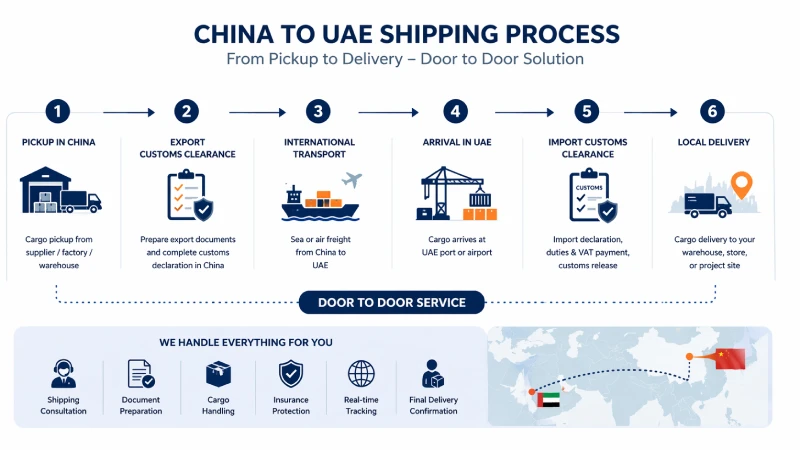
Understanding the full shipping process helps importers better coordinate with suppliers and avoid delays. A professional shipping agent streamlines each stage, ensuring your cargo moves efficiently from China to the UAE.
Step 1: Supplier Coordination & Cargo Pickup
The process begins with coordinating your supplier in China. The shipping agent arranges cargo pickup from the factory or warehouse, verifies packaging, and checks shipment details such as weight, volume, and documentation readiness.
Step 2: Export Customs Clearance in China
Before leaving China, your cargo must go through export customs clearance. This includes submitting required documents such as the commercial invoice, packing list, and export declaration. Proper handling at this stage prevents delays at origin.
Step 3: International Transportation (Air/Sea)
Once cleared, the shipment is loaded onto a vessel or aircraft based on your chosen shipping method. The agent manages booking, tracking, and coordination with carriers to ensure timely departure and transit.
Step 4: UAE Customs Clearance (Dubai, Jebel Ali, Abu Dhabi)
Upon arrival, the shipment undergoes import customs clearance in the UAE. This includes duty and VAT processing, documentation checks, and possible inspections. Experienced agents ensure compliance to avoid clearance issues.
Step 5: Final Delivery to Warehouse or Business Location
After clearance, the cargo is transported to your specified address—whether a warehouse, retail store, or project site. Door-to-door delivery ensures a smooth final handover, completing the shipping process with minimal involvement from the importer.
Key Ports and Airports for China–UAE Shipping
Choosing the right origin and destination points can significantly impact both shipping cost and transit time. A knowledgeable shipping agent will recommend the most efficient routes based on your cargo type and delivery requirements.
Major China Export Ports
Key export hubs in China include Shenzhen, Guangzhou, Ningbo, and Shanghai. These ports handle the majority of outbound cargo to the Middle East and offer frequent sailings, making them ideal for both FCL and LCL shipments. Southern ports like Shenzhen and Guangzhou are especially advantageous for suppliers located in Guangdong.
UAE Entry Ports
In the UAE, Jebel Ali Port (Dubai) is the primary gateway for international sea freight and one of the busiest ports in the region. Khalifa Port (Abu Dhabi) is another major entry point, particularly for industrial and project cargo.
Major UAE Airports
For air freight, Dubai International Airport (DXB) and Al Maktoum International Airport (DWC) handle most cargo shipments, offering strong global connectivity and fast customs processing.
Choosing the Best Route Based on Cargo Type
The optimal route depends on your shipment size, urgency, and final delivery location. Selecting the right port or airport helps reduce transit time and overall logistics costs.
How to Choose a Reliable China to UAE Shipping Agent
Selecting the right shipping agent is critical to ensuring smooth, cost-effective, and reliable logistics from China to the UAE. Not all agents offer the same level of service, so understanding what to look for can help you avoid costly mistakes.
Experience in UAE Trade Lanes
Choose an agent with proven experience handling shipments to the UAE. Familiarity with local customs procedures, documentation requirements, and port operations (such as Dubai and Abu Dhabi) helps prevent delays and ensures efficient handling.
Transparent Pricing & No Hidden Fees
A reliable agent provides clear, itemized quotations that include freight, customs clearance, destination charges, and delivery fees. Avoid agents who offer unusually low prices without explaining the full cost structure, as hidden charges often appear later.
Strong Customs Clearance Capability in UAE
Customs clearance is one of the most sensitive stages. An experienced agent should be able to handle HS code classification, duty calculation, and compliance with UAE regulations, reducing the risk of cargo being held or delayed.
Communication & Real-Time Tracking
Timely updates and clear communication are essential. A professional agent should provide shipment tracking, proactive updates, and quick responses to inquiries, allowing you to plan your operations with confidence.
Ability to Offer DDP and Door-to-Door Solutions
Agents who can provide DDP (Delivered Duty Paid) services offer greater convenience, especially for SMEs or first-time importers. This ensures all logistics, customs, and delivery steps are handled under one coordinated solution.
Red Flags to Avoid When Selecting an Agent
Be cautious of agents who lack verifiable experience, provide vague quotations, or have poor communication. Inconsistent service, unclear processes, and limited support are strong indicators of potential risk.
Common Mistakes Importers Make (and How to Avoid Them)
Even experienced importers can encounter issues when shipping from China to the UAE. Most problems are not caused by transportation itself, but by avoidable mistakes in planning, documentation, or supplier coordination.
Choosing the Cheapest Agent Without Service Verification
Focusing only on the lowest price often leads to hidden costs, poor communication, or delays. It’s important to evaluate the agent’s service scope, experience, and reliability—not just the quote.
Incorrect HS Codes Leading to Customs Delays
Misclassification of goods can result in incorrect duty calculations or customs holds. A professional shipping agent ensures accurate HS code declaration to avoid clearance issues in the UAE.
Underestimating Duties and VAT in UAE
Some importers fail to account for import duty and 5% VAT, leading to unexpected expenses at destination. Understanding the full landed cost in advance is essential for proper budgeting.
Poor Packaging Causing Cargo Damage
Inadequate packaging can lead to damaged goods, especially during sea freight. Ensuring proper packing standards and protection reduces the risk of loss and additional costs.
Lack of Proper Documentation
Missing or inaccurate documents—such as invoices, packing lists, or certificates—can delay shipments at both origin and destination. Working with an experienced agent helps ensure all paperwork is complete and compliant.
UAE-Specific Import Considerations
When shipping from China to the UAE, understanding local import regulations is essential to ensure smooth customs clearance and avoid unnecessary delays or penalties. The UAE has a relatively efficient import system, but compliance requirements must still be handled carefully.
UAE Customs Regulations and Documentation Requirements
Standard import documents include the commercial invoice, packing list, bill of lading or airway bill, and, in some cases, certificates of origin or conformity. Accurate and consistent documentation is critical, as discrepancies can lead to inspections or clearance delays.
VAT (5%) and Duty Structure Explained
Most goods imported into the UAE are subject to a 5% customs duty, followed by a 5% Value Added Tax (VAT). Certain product categories may have different duty rates or exemptions. These charges are typically calculated based on the CIF (Cost, Insurance, Freight) value of the goods.
Free Zone vs Mainland Delivery Differences
The UAE offers both free zone and mainland import options. Deliveries to free zones may have different customs procedures and duty treatments compared to mainland shipments. Choosing the right setup depends on your business model and distribution plan.
Restricted and Regulated Goods in UAE
Some goods require special approvals or are restricted, such as electronics, cosmetics, food products, and medical items. A knowledgeable shipping agent can help identify these requirements in advance and ensure compliance before shipment.
FAQs
Do I need a license to import goods into UAE?
Yes, in most cases you need a valid trade license to import goods into the UAE mainland. If you don’t have one, you can use a shipping agent offering DDP services or partner with a local importer of record to handle customs clearance legally.
What is the cheapest shipping method from China to UAE?
Sea freight is generally the most cost-effective option, especially for shipments above 2–3 CBM. LCL works for smaller volumes, while FCL provides better unit cost for larger cargo. Air freight is faster but significantly more expensive.
How long does customs clearance take in UAE?
Customs clearance in the UAE is relatively efficient and typically takes 1–3 working days, provided all documents are accurate. Delays may occur if inspections are required or documentation is incomplete.
Can a shipping agent handle everything (door-to-door)?
Yes. Many shipping agents offer door-to-door or DDP services, managing pickup, freight, customs clearance, duties, VAT, and final delivery. This is ideal for businesses seeking a simplified logistics process.
What documents are required for shipping to UAE?
Common documents include a commercial invoice, packing list, bill of lading or airway bill, and sometimes a certificate of origin. Additional documents may be required depending on the product type and UAE regulations.
Get a Reliable Shipping Solution from China to UAE
Finding the right shipping agent is not just about moving goods—it’s about ensuring your supply chain runs smoothly, predictably, and cost-effectively. Whether you are importing small volumes, managing regular shipments, or exploring a door-to-door solution, having a clear logistics plan makes a significant difference.
Tell Us Your Cargo Details (Weight, Volume, Product Type)
Start by preparing basic shipment information, including cargo type, weight, volume, and pickup location. This allows for an accurate assessment of your shipping needs.
Get a Tailored Shipping Plan (Air, Sea, or DDP)
Based on your requirements, a suitable shipping method and routing plan can be recommended to balance cost and delivery time.
Receive a Clear, All-In Quote with Timeline
A transparent quotation should outline all costs and estimated transit time, helping you plan with confidence.
Start Shipping with Full Support from Pickup to Delivery
With the right coordination, your shipment can be managed end-to-end, ensuring efficient delivery from China to your destination in the UAE.
