
Introduction
Understanding the DDP shipping cost from China to UAE is essential for importers who want a clear, all-inclusive price without unexpected charges. Unlike standard freight quotes, DDP (Delivered Duty Paid) covers everything—from international transport and customs clearance to import duties, VAT, and final delivery in the UAE.
This guide breaks down real DDP pricing structures, shows how costs are calculated, and provides practical examples so you can estimate your total landed cost accurately—and avoid common pricing mistakes when shipping to the UAE.
How Much Does DDP Shipping Cost from China to UAE?
If you are looking for a fast estimate, here are the typical DDP shipping costs from China to UAE in 2026:
- Air DDP (per kg): $6 – $15/kg
- Sea DDP (per CBM): $100 – $300/CBM
- Door-to-door blended range: $4 – $12/kg (depending on volume and cargo type)
These prices are all-inclusive, meaning they usually cover:
- International freight (air or sea)
- UAE customs clearance
- Import duty (typically ~5%)
- VAT (5%)
- Local delivery to your address
Quick decision rule
- Under 300 kg → Air DDP is usually better (faster, simpler)
- Above 2–3 CBM → Sea DDP is more cost-effective
- Sensitive cargo (battery, liquids) → expect 20–50% higher cost
In most real shipments, the biggest cost difference comes from volume efficiency and cargo type, not just distance.
What Does DDP Shipping Include in the UAE? (Cost Structure Explained)
To understand why DDP pricing looks higher than standard freight quotes, you need to break down what is actually included in a DDP shipment to the UAE. Unlike EXW or FOB, DDP is a fully landed cost model—meaning almost every logistics and import step is bundled into one price.
Core Cost Components
A typical DDP quote from China to UAE includes:
- International freight
Air or sea transport from China (e.g., Shenzhen, Ningbo) to UAE ports such as Jebel Ali or Dubai Airport - Export handling in China
Documentation, customs declaration, origin clearance - UAE import duty
Usually around 5% of cargo value (depending on HS code) - VAT (Value Added Tax)
Standard 5% in the UAE, applied on CIF value + duty - Customs clearance in UAE
Broker fees, documentation, inspection handling - Last-mile delivery
Transport from port/airport to your warehouse or business address
In short, DDP = door-to-door, tax-included delivery
Why DDP Pricing Looks Higher Than Freight Rates
Many buyers compare DDP quotes with freight-only prices and assume DDP is expensive. In reality, it’s just more transparent.
Here’s the key difference:
- Freight-only quote (FOB/EXW):
Covers only transport → you still pay customs, tax, delivery separately - DDP quote:
Combines all costs into one figure → no operational handling required from buyer
The “extra cost” in DDP is not markup alone—it includes:
- Taxes you would pay anyway
- Clearance risks handled by the forwarder
- Time and coordination savings
For most UAE importers—especially those without a local clearance team—DDP simplifies the process and reduces unexpected costs, even if the upfront price appears higher.
DDP Shipping Cost Breakdown (Air vs Sea)
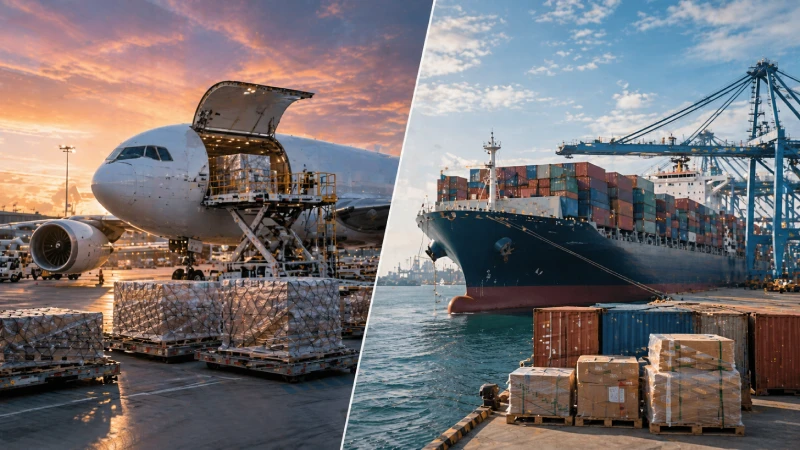
Understanding the cost difference between air and sea DDP shipping is critical, because the choice of transport mode can change your total landed cost by 2–4×. Below is a practical breakdown based on real market ranges for China → UAE shipments.
Air Freight DDP Cost (Per KG)
- Typical range: $6 – $15/kg
- Common market average: $7 – $10/kg for general cargo
Air DDP pricing includes:
- Air freight (China → Dubai/Abu Dhabi)
- Export + import clearance
- Duty + VAT
- Final delivery
When air DDP makes sense:
- Shipments under 300–500 kg
- High-value goods (electronics, samples)
- Urgent orders (5–10 days delivery)
Cost structure insight:
- Base air freight: ~$4–6/kg
- DDP add-ons (tax + clearance + delivery): ~$2–6/kg
👉 Air DDP is fast but cost-sensitive—small increases in weight directly raise total cost.
Sea Freight DDP Cost (Per CBM)
- Typical range: $100 – $300/CBM
- Common market average: $120 – $180/CBM for general cargo
Sea DDP pricing includes:
- Ocean freight (LCL consolidation)
- Port handling (China + UAE)
- Customs clearance
- Duty + VAT
- Door delivery
When sea DDP makes sense:
- Shipments above 2–3 CBM
- Non-urgent cargo (25–40 days transit)
- Bulky or low-value goods (furniture, building materials)
Cost structure insight:
- Base sea freight: ~$30–60/CBM
- DDP add-ons: ~$70–200/CBM
👉 Sea DDP offers significant cost savings per unit, especially as volume increases.
Cost Conversion (How to Compare Air vs Sea)
To compare air and sea pricing, you need to understand chargeable weight vs volume:
- Air freight:
Charged by higher of actual weight or volumetric weight
Formula: 1 CBM ≈ 167 kg - Sea freight (LCL):
Charged by volume (CBM)
1 CBM ≈ standard unit for billing
Example comparison:
- 1 CBM cargo
- Air DDP: 167 kg × $8/kg ≈ $1,336
- Sea DDP: 1 CBM × $150 ≈ $150
This is why choosing the wrong mode can multiply your cost by 5–8×.
Key Takeaway
- Air DDP = speed + simplicity, higher cost per unit
- Sea DDP = lowest cost, slower transit
In most China → UAE shipments, the breakpoint is around 300 kg or 2–3 CBM—above that, sea freight becomes significantly more economical.
Cost per KG vs Cost per CBM — Which One Applies to You?
One of the most common mistakes importers make is comparing quotes without understanding whether they are priced per kg or per CBM. This directly affects how your DDP shipping cost is calculated—and why two quotes can look very different.
When You Are Charged Per KG
You will be quoted per kilogram when:
- Shipping by air freight (DDP air)
- Sending small or dense cargo
- Urgent shipments where speed matters
Key rule (air freight):
You are charged based on the higher of actual weight or volumetric weight
👉 Volumetric formula:
- 1 CBM = 167 kg (chargeable weight)
Example:
- Cargo: 1 CBM, actual weight = 120 kg
- Chargeable weight = 167 kg
- Air DDP cost: 167 × $8/kg = $1,336
When You Are Charged Per CBM
You will be quoted per cubic meter (CBM) when:
- Shipping by sea freight (LCL DDP)
- Cargo is bulky but not very heavy
- Volume optimization matters more than weight
Key rule (sea freight):
- Pricing is based on space occupied (CBM), not weight
Example:
- Cargo: 1 CBM
- Sea DDP cost: 1 × $150 = $150
Even if your cargo is heavy, you still pay per CBM (within normal limits)
Practical Conversion Examples
Understanding conversion helps you choose the cheaper method:
Example 1 — 2 CBM cargo
- Air equivalent weight: 2 × 167 = 334 kg
- Air DDP: 334 × $8 = $2,672
- Sea DDP: 2 × $150 = $300
👉 Sea is dramatically cheaper
Example 2 — 200 kg cargo (compact)
- Volume: ~0.8 CBM
- Air DDP: 200 × $8 = $1,600
- Sea DDP: 0.8 × $150 = $120
👉 Sea is cheaper, but slower (decision depends on urgency)
Example 3 — Dense cargo (metal parts, 500 kg, 1 CBM)
- Air chargeable: 167 kg (volume-based)
- Air DDP: 167 × $8 = $1,336
- Sea DDP: 1 × $150 = $150
👉 Volume still dominates pricing—even for heavy cargo
Key Takeaway
- Air pricing = weight-driven (kg)
- Sea pricing = space-driven (CBM)
The most important cost control strategy is not just choosing air or sea—but reducing your CBM (volume).
In real China → UAE DDP shipments, volume optimization often saves more money than negotiating freight rates.
Factors That Affect DDP Shipping Cost to UAE
DDP pricing is not fixed. Two shipments with the same weight can have very different costs depending on several key variables. Understanding these factors helps you predict pricing more accurately and avoid surprises.
Cargo Type
The type of goods you ship has a direct impact on DDP cost:
- General cargo (clothing, furniture, accessories): lowest rates
- Sensitive cargo (batteries, liquids, cosmetics): +20–50% higher
- Restricted items: may require special approvals or cannot ship via standard DDP
👉 Why it matters:
Sensitive goods involve extra documentation, carrier limitations, and higher risk, all of which increase cost.
Shipment Volume & Weight
DDP pricing changes significantly with size:
- Small shipments (<300 kg): higher cost per unit
- Medium shipments (2–5 CBM): optimal pricing range
- Large shipments (>8–10 CBM): discounted rates per CBM
👉 Key insight:
Freight pricing follows economies of scale—larger shipments reduce your cost per kg or per CBM.
Destination in UAE
Where your cargo is delivered also affects cost:
- Dubai (Jebel Ali / urban areas): lowest delivery cost
- Abu Dhabi / Sharjah: slightly higher
- Remote or industrial zones: additional delivery fees
👉 Last-mile delivery can vary by $20–100+ per shipment, depending on location.
Seasonality & Market Conditions
Shipping rates fluctuate throughout the year:
- Peak season (Aug–Dec): prices can increase by 15–30%
- Chinese New Year period: delays + temporary rate spikes
- Global disruptions: fuel price changes, capacity shortages
👉 Even DDP rates (which are “all-in”) are still influenced by market volatility.
Supplier Location in China
Your supplier’s city affects inland logistics cost:
- Coastal cities (Shenzhen, Guangzhou, Ningbo): lower cost
- Inland cities (Chengdu, Chongqing): higher trucking fees
👉 Inland pickup can add $50–200+ per shipment, depending on distance.
Key Takeaway
DDP cost is driven by a combination of:
- Cargo characteristics
- Shipment size
- Logistics complexity
In most cases, the biggest cost drivers are cargo type and volume, not just distance. Understanding these variables allows you to plan shipments more strategically and avoid unnecessary expenses.
Hidden Costs in DDP Shipping (What Most Buyers Miss)
DDP is designed to be all-inclusive, but in practice, not all quotes are equally transparent. Many unexpected charges come from unclear scope, incorrect declarations, or delivery conditions. Knowing these risks helps you avoid underpriced quotes that later become expensive.
Customs Reclassification Risk
If your product is declared under the wrong HS code, UAE customs may:
- Recalculate duty and VAT
- Request additional documentation
- Delay clearance
Impact:
- Extra charges + delays (2–7 days)
- Possible penalties in some cases
Common issue:
Suppliers using generic product descriptions to reduce declared value
Storage & Delay Fees
Even under DDP, delays can still generate costs:
- Port or airport congestion
- Customs inspection holds
- Missing or incorrect documents
Possible charges:
- Storage fees (after free days)
- Handling or reprocessing fees
These costs are sometimes excluded from low-cost DDP quotes
Remote Area Delivery Charges
Not all UAE destinations are priced equally:
- Standard zones (Dubai): included
- Remote or industrial areas: may incur extra fees
Typical surcharge:
- $20–100+ depending on distance and accessibility
Tip: Always confirm if your delivery address is considered a “remote area”
Insurance (Often Not Fully Covered)
Some DDP quotes do not include full cargo insurance:
- Basic liability coverage only
- Full insurance often optional (~0.3% of cargo value)
Risk:
- Damage or loss during transit may not be fully compensated
Low Quote Trap (Most Common Issue)
The biggest hidden cost is choosing the wrong forwarder:
Red flags:
- Price significantly below market range
- No clear breakdown of duties and VAT
- Vague wording like “all included” without details
What usually happens:
- Extra charges appear after arrival
- Customs clearance not fully handled
- Delivery fees added separately
Key Takeaway
DDP should mean predictable, all-in pricing—but only if the quote is structured correctly.
To avoid hidden costs:
- Confirm what is included (duty, VAT, delivery scope)
- Provide accurate product details upfront
- Work with forwarders experienced in UAE customs clearance
In real shipments, avoiding hidden costs often saves more money than negotiating a slightly lower freight rate.
DDP vs FOB — Cost Comparison (What You Really Pay)
Many importers compare DDP vs FOB only on the quoted price—but the real difference is in who pays, who manages, and who takes the risk. To evaluate true cost, you need to look at the full landed cost, not just the freight rate.
FOB Cost Structure (What You Still Need to Pay)
Under FOB (Free On Board), your supplier delivers goods to the port in China, but everything after that is your responsibility:
- International freight (air or sea)
- UAE customs clearance
- Import duty (~5%)
- VAT (5%)
- Destination handling charges
- Local delivery to your warehouse
In FOB, costs are fragmented and often handled by multiple parties.
DDP Cost Structure (All-Inclusive Model)
Under DDP (Delivered Duty Paid), the forwarder handles everything:
- Freight from China to UAE
- Export & import clearance
- Duty and VAT
- Final delivery to your address
In DDP, you receive one consolidated price with minimal operational involvement.
Side-by-Side Cost Comparison
| Cost Element | FOB | DDP |
|---|---|---|
| Freight | Paid separately | Included |
| Export clearance (China) | Included | Included |
| Import clearance (UAE) | Buyer handles | Included |
| Duty & VAT | Buyer pays | Included |
| Port / terminal fees | Buyer pays | Included |
| Last-mile delivery | Buyer arranges | Included |
| Cost predictability | Low | High |
| Operational effort | High | Low |
Real Cost Difference Example
Example: 3 CBM shipment (general cargo)
- FOB scenario:
- Sea freight: $180
- UAE clearance + duty + VAT: ~$200
- Delivery: ~$80
- Total: ~$460
- DDP scenario:
- All-in rate: 3 × $150 = $450
The total cost is often very similar, but:
- FOB requires coordination and risk handling
- DDP simplifies everything into one transaction
When DDP Is More Cost-Effective
DDP is usually the better choice when:
- You are a first-time importer
- You don’t have a UAE customs clearance setup
- Your shipment is small to medium-sized
- You want to avoid unexpected charges
When FOB May Be Better
FOB can be more suitable if:
- You import large volumes regularly
- You already have a local customs broker in UAE
- You want to optimize each cost component separately
Key Takeaway
- FOB may look cheaper upfront, but requires more coordination and carries hidden risks
- DDP provides cost clarity and simplicity, especially for growing importers
In most China → UAE shipments, the decision is not just about price—it’s about control vs convenience and how much risk you are willing to manage.
How to Estimate Your DDP Shipping Cost (Step-by-Step)
If you don’t have a forwarder quote yet, you can still build a reliable DDP cost estimate using a simple step-by-step method. This helps you budget early and avoid unrealistic supplier expectations.
Step 1 — Calculate Chargeable Weight or Volume
Start by identifying how your shipment will be charged:
- Air freight: use chargeable weight (kg)
- Formula: 1 CBM = 167 kg
- Chargeable = higher of actual weight vs volumetric weight
- Sea freight (LCL): use volume (CBM)
- Formula: Length × Width × Height (meters)
👉 Example:
- Cartons total: 2 CBM →
- Air chargeable = 334 kg
- Sea chargeable = 2 CBM
Step 2 — Choose the Shipping Method
Use a simple decision rule:
- < 300 kg → Air DDP
- > 2–3 CBM → Sea DDP
- Urgent shipment → Air
- Cost-sensitive shipment → Sea
👉 Choosing the wrong mode can increase cost by 3–8×
Step 3 — Apply Typical DDP Rates
Use current market benchmarks:
- Air DDP: $6 – $15/kg
- Sea DDP: $100 – $300/CBM
👉 For estimation:
- Use mid-range values
- Air: ~$8–10/kg
- Sea: ~$130–180/CBM
Step 4 — Add a Risk Buffer (5–15%)
DDP pricing can fluctuate due to:
- Rate changes
- Cargo classification adjustments
- Minor delivery variations
👉 Add a buffer:
- Small shipments: +10–15%
- Stable cargo: +5–10%
Step 5 — Validate with a Freight Forwarder
Your estimate gives a solid range—but final pricing depends on:
- Exact product type
- Packing details
- Delivery address
👉 Always request a formal DDP quote before confirming orders.
Quick Example (Putting It All Together)
- Shipment: 3 CBM (general cargo)
- Method: Sea DDP
- Rate used: $150/CBM
Estimated cost:
- 3 × $150 = $450
- +10% buffer = ~$495 total landed cost
Key Takeaway
DDP cost estimation is straightforward if you follow a structure:
- Identify kg or CBM
- Choose air or sea
- Apply realistic market rates
- Add a small buffer
With this method, you can quickly evaluate supplier quotes and avoid overpaying before even contacting a forwarder.
How to Reduce Your DDP Shipping Cost to UAE
DDP pricing may look fixed, but in practice, there are several practical ways to reduce your total landed cost—often by 10–30%—without negotiating freight rates aggressively. The key is optimizing how your shipment is prepared and structured.
Optimize Packaging (Reduce CBM)
For sea freight, volume (CBM) is the primary cost driver.
- Use compact packaging (reduce empty space in cartons)
- Switch to stackable carton designs
- Avoid oversized packaging from suppliers
Even a 10–20% reduction in CBM directly lowers your shipping cost by the same percentage.
Consolidate Shipments
Instead of shipping multiple small orders:
- Combine goods from multiple suppliers into one shipment
- Use freight consolidation services (LCL)
Benefits:
- Lower cost per CBM
- Reduced handling and clearance fees
Example:
- 3 separate 1 CBM shipments vs 1 × 3 CBM shipment
→ The combined shipment is significantly cheaper per unit
Choose the Right Shipping Method
Many importers overpay by selecting the wrong mode:
- Avoid air freight for non-urgent cargo
- Plan ahead to use sea DDP whenever possible
Switching from air to sea can reduce cost by 70–90%
Improve Product Classification Accuracy
Incorrect HS codes can lead to:
- Higher duty rates
- Customs reclassification
- Additional fees
Work with your supplier or forwarder to:
- Use accurate product descriptions
- Apply the correct HS code for UAE import
Work with UAE-Specialized Forwarders
Not all forwarders handle UAE shipments efficiently.
Experienced UAE-focused forwarders can:
- Optimize clearance process
- Avoid delays and penalties
- Provide more accurate all-in DDP pricing
This reduces hidden costs and improves delivery reliability.
Key Takeaway
Reducing DDP cost is less about negotiating price—and more about logistics efficiency:
- Lower CBM = lower cost
- Better planning = cheaper shipping mode
- Accurate data = fewer unexpected charges
In most China → UAE shipments, the biggest savings come from shipment optimization before booking, not after.
When Should You Use DDP Shipping to UAE?
DDP is not always the cheapest option—but in many real-world situations, it is the most practical and predictable. The key is knowing when DDP actually makes sense for your shipment.
Ideal Use Cases for DDP Shipping
DDP is typically the best choice when:
- You are a first-time importer
No experience with UAE customs, documentation, or tax handling - You don’t have a UAE import license or clearance agent
DDP allows the forwarder to handle the entire import process - Your shipment is small to medium-sized
(e.g., <500 kg or <5 CBM) where operational simplicity matters more than marginal cost savings - You want predictable, all-in pricing
No need to manage multiple payments (freight, duty, VAT, delivery) - You are running e-commerce or test orders
Faster setup, lower operational burden
In these cases, DDP reduces both time cost and operational risk, even if the upfront price is slightly higher.
When NOT to Use DDP
DDP may not be the best option if:
- You import large volumes regularly
(e.g., full containers or frequent bulk shipments) - You already have a UAE customs clearance setup
(licensed importer, broker, warehouse) - You want to control each cost component
(freight, duty, local delivery separately)
In these scenarios, using FOB or CIF can give you more flexibility and potentially lower total cost.
Practical Decision Rule
- New importer → Choose DDP
- Experienced importer with local setup → Consider FOB/CIF
- Small shipment → DDP is usually more efficient
- Large shipment → Compare both options carefully
Key Takeaway
DDP is not just a pricing model—it’s a risk and responsibility model.
- It shifts logistics complexity from the buyer to the forwarder
- It simplifies international trade for growing businesses
For most China → UAE shipments, especially in early stages, DDP is the fastest way to start importing with minimal friction.
How to Get an Accurate DDP Shipping Quote (Conversion Guide)
At this stage, you already have a working cost estimate. The next step is getting a precise DDP quote that reflects your actual shipment—without hidden charges or last-minute changes.
What Information You Need to Provide
A reliable DDP quote depends on accurate input. Prepare the following:
- Product type (clear description)
e.g., “LED lights,” “wooden furniture,” “cosmetics” - HS code (if available)
Helps determine duty and compliance requirements - Total weight and volume
- Weight (kg)
- Volume (CBM)
- Pickup location in China
City or supplier address (e.g., Shenzhen, Yiwu) - Delivery location in UAE
Dubai, Abu Dhabi, or specific warehouse address
The more precise your data, the more accurate your DDP price.
What a Professional DDP Quote Should Include
Not all quotes are equal. A proper DDP quotation should clearly state:
- All-in price (per kg or per CBM)
- Included services
- Duty
- VAT
- Customs clearance
- Delivery scope
- Transit time estimate
(air vs sea timelines) - Cargo restrictions or notes
(especially for sensitive goods)
If any of these are missing, the quote may not be fully transparent.
Red Flags to Avoid
Be cautious if you see:
- Prices far below market range
(often excludes duty or delivery) - No cost breakdown or vague wording
e.g., “all included” without details - No UAE customs handling mentioned
→ risk of additional charges on arrival
Low upfront pricing often leads to higher total cost later
How to Request a Quote Efficiently
To speed up the process and get comparable quotes:
- Send the same shipment details to multiple forwarders
- Ask for DDP pricing only (not EXW/FOB)
- Request clarification on what is included
- Compare based on:
- Total cost
- Transit time
- Service scope
Key Takeaway
An accurate DDP quote is not just about price—it’s about clarity and completeness.
When done correctly, DDP quoting allows you to:
- Know your total landed cost upfront
- Avoid unexpected fees
- Make faster purchasing decisions
For most importers, the difference between a good and bad forwarder is not the rate—but how clearly the DDP scope is defined from the beginning.
FAQs
What is the cheapest way to ship DDP from China to UAE?
The most cost-effective option is usually sea freight DDP, especially for shipments above 2–3 CBM. Sea shipping spreads costs over volume, resulting in significantly lower rates per unit compared to air. While transit time is longer (typically 25–40 days), it offers the best balance between cost and scalability for most importers.
How long does DDP shipping from China to UAE take?
Transit time depends on the shipping method. Air DDP typically takes around 5–12 days, including customs clearance and delivery, while sea DDP generally takes 25–40 days. Delays can occur during peak seasons or if additional inspections are required, but DDP usually reduces coordination delays since the forwarder manages the full process.
Is DDP really all-inclusive, or are there extra charges?
In most cases, DDP is designed to be fully all-inclusive, covering freight, customs clearance, import duty, VAT, and delivery. However, not all quotes are structured equally. Additional charges may arise if shipment details are inaccurate, if the delivery location is considered remote, or if unexpected customs inspections occur. This is why it’s important to confirm the exact scope of the quote in advance.
Can I ship batteries or liquids using DDP to UAE?
Yes, but these are classified as sensitive or restricted cargo, which means higher costs and stricter compliance requirements. You can expect DDP rates to be 20–50% higher compared to general cargo due to additional documentation, carrier restrictions, and safety regulations. Working with a forwarder experienced in handling such goods is essential to avoid delays.
Do I need a UAE import license when using DDP?
In most DDP arrangements, you do not need to handle import licensing directly, as the forwarder or their local partner manages the customs process. This is one of the main advantages of DDP, especially for new importers or businesses without a local entity in the UAE. However, for large or recurring shipments, having your own import setup may provide more flexibility and cost control.
Conclusion — How to Control Your DDP Shipping Cost
DDP shipping from China to UAE offers a clear, all-in pricing model, but the final cost depends on how well you plan your shipment. The biggest cost drivers are not just freight rates—they are volume (CBM), cargo type, and shipping method.
In most cases, you can control your cost by:
- Choosing sea freight for larger shipments
- Reducing unnecessary packaging to lower CBM
- Providing accurate cargo details to avoid reclassification
While DDP may appear more expensive upfront, it often delivers better cost predictability and fewer operational risks, especially for new or growing importers.
The most effective approach is to use the estimation methods in this guide, then validate with a clear, all-inclusive DDP quote. This ensures you know your true landed cost before committing—without unexpected surprises after arrival in the UAE.
