
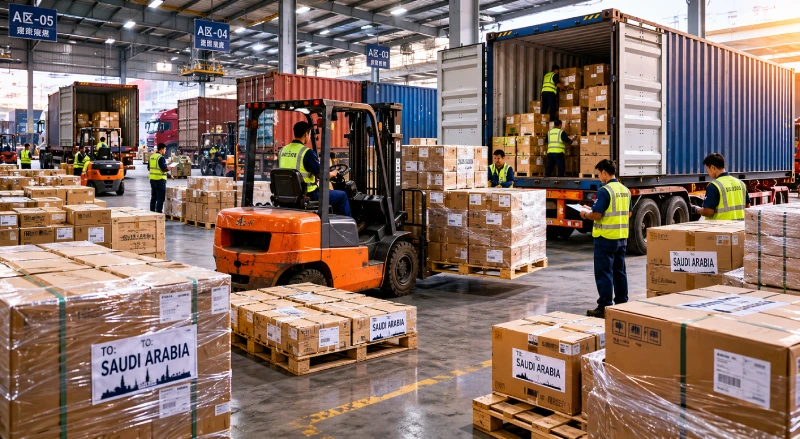
LCL shipping from China to Saudi Arabia is often chosen by importers that do not have enough cargo to fill a full container. On paper, it looks simple: pay by CBM, share a container, reduce upfront freight costs. In reality, LCL pricing is one of the most misunderstood parts of international logistics.
Many Saudi importers focus only on the ocean freight quote and overlook destination handling fees, customs inspection risks, consolidation delays, and inland delivery costs after arrival. In some cases, a “cheap” LCL shipment ends up costing more per unit than FCL shipping or even certain DDP solutions.
For businesses importing electronics, furniture, machinery parts, building materials, or retail goods into Saudi Arabia, understanding how LCL shipping actually works is critical for controlling landed cost.
Why Many Saudi Importers Miscalculate LCL Shipping Costs
The biggest mistake in LCL shipping is assuming the freight rate represents the total shipping cost. Most LCL quotations only show the international ocean freight portion, while many local charges appear later after the cargo reaches Saudi Arabia.
For example, a shipment from Shenzhen to Jeddah may initially appear inexpensive at a low per-CBM rate. However, after adding destination terminal handling charges, deconsolidation fees, customs clearance costs, VAT, inspection fees, and final delivery charges, the total landed cost can increase significantly.
This becomes even more noticeable for smaller shipments. A 2 CBM shipment often carries nearly the same destination documentation and handling fees as an 8 CBM shipment. As a result, the smaller shipment may have a much higher shipping cost per product unit.
Saudi importers dealing with low-volume but high-frequency shipments should carefully compare:
- total landed cost
- delivery urgency
- cargo density
- inventory turnover
- customs complexity
In many cases, shipment frequency matters more than the freight rate itself.
How LCL Pricing from China to Saudi Arabia Is Actually Calculated
LCL shipping pricing is built around shared container utilization. Since multiple importers share the same container, freight forwarders divide costs according to cargo volume, handling complexity, and destination operations.
The cost structure usually includes three major parts.
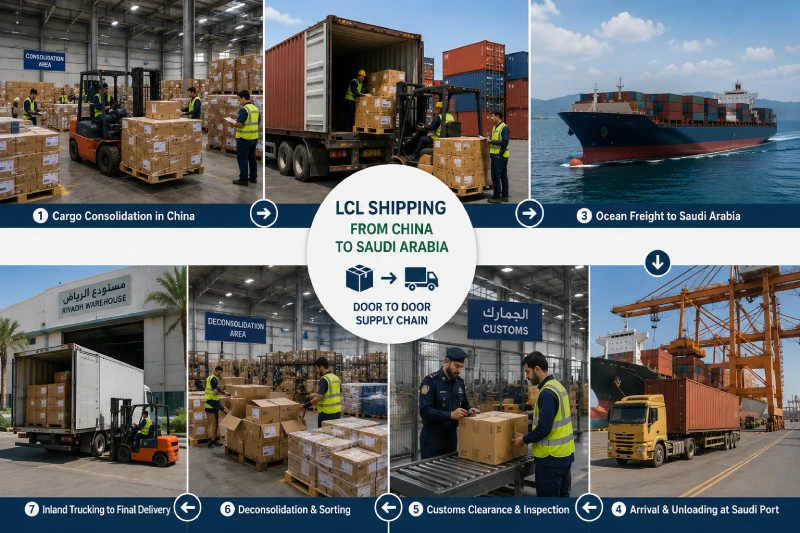
First are origin charges in China. These include warehouse receiving, export customs declaration, documentation, cargo handling, and consolidation warehouse operations. Cargo from different suppliers may first move into a consolidation warehouse before container loading.
Second is the international ocean freight portion, usually charged per CBM. Most LCL shipments also have minimum billing rules. Even if the shipment volume is below 1 CBM, many carriers still charge based on a minimum unit.
Third are destination charges in Saudi Arabia. This is where many importers underestimate the real cost. These charges may include:
- deconsolidation fees
- terminal handling charges
- customs inspection costs
- port storage
- document fees
- inland trucking
- VAT and duties
Unlike FCL shipping, LCL shipments require additional unpacking and sorting operations after container arrival. These handling stages create extra operational costs.
The Hidden Cost Structure Behind LCL Shipments to Saudi Ports
Saudi Arabia’s major ports operate differently, and the final cost of LCL shipping can vary depending on the destination city.
Jeddah is the primary gateway for western Saudi Arabia imports. It handles a large cargo volume, but congestion during peak seasons and Ramadan periods can increase clearance times and warehouse handling delays.
Dammam serves the eastern region and often supports industrial cargo imports connected to manufacturing and energy sectors. Inland trucking from Dammam to Riyadh can become expensive, especially for low-volume shipments.
Many importers focus only on ocean freight and forget the impact of destination handling.
For LCL shipments, the container must first be unloaded at a deconsolidation warehouse after arriving at port. Individual shipments are then separated before customs release or local delivery. This extra warehouse process creates handling fees that do not exist in the same way for FCL cargo.
Additional Saudi port-related expenses may include:
- X-ray inspection fees
- customs examination charges
- storage fees during inspection delays
- port congestion surcharges
- delivery appointment fees for warehouses
During high-import periods, delays in customs processing may also trigger demurrage or storage charges faster than importers expect.
When LCL Shipping Stops Making Financial Sense
LCL is not always the cheapest shipping option.
As cargo volume increases, shared-container economics become less efficient. Once shipments reach a certain threshold, FCL shipping may produce a lower total cost.
For many China–Saudi Arabia trade lanes, the transition point often happens between 12–18 CBM, depending on:
- cargo density
- season
- destination port
- trucking distance
- customs requirements
Cargo density also changes the economics significantly.
Heavy cargo with compact dimensions usually performs well under LCL billing because it consumes less container space. Bulky but lightweight cargo performs poorly because LCL charges are mainly based on volume rather than weight.
Furniture shipments are a common example. Sofas, chairs, and assembled products consume large space inside containers, increasing shipping cost per saleable unit.
Importers should regularly evaluate whether:
- multiple small LCL shipments should become one larger shipment
- supplier consolidation can improve utilization
- switching to FCL reduces destination handling costs
Shared Container Risks Most Importers Ignore
Unlike FCL cargo, LCL shipments move together with goods from multiple shippers inside one container. This creates additional operational risks.
Cargo damage often happens during:
- warehouse consolidation
- container loading
- container unloading
- cargo separation at destination
Fragile products may share container space with heavy industrial cargo. Poor palletization increases the risk of compression damage during ocean transit.
Moisture is another issue frequently ignored in LCL shipping. Containers moving through humid marine environments can develop condensation inside. Electronics, paper packaging, furniture, and textile products are especially vulnerable.
Saudi importers should pay close attention to:
- export packaging standards
- pallet reinforcement
- moisture protection
- cargo labeling
- stacking compatibility
Reducing cargo damage is often more valuable than negotiating a slightly lower freight rate.
Saudi Arabia Customs and Compliance Costs That Affect LCL Cargo
Saudi Arabia maintains strict import compliance procedures for many product categories.
SABER and SASO certification requirements can directly affect LCL shipping timelines and costs. If compliance documents are incomplete, shipments may face customs delays, inspections, or storage charges.
This is particularly important for:
- electronics
- lighting products
- machinery
- construction materials
- consumer goods
For LCL cargo, customs delays are even more problematic because warehouse handling and container deconsolidation are time-sensitive operations.
VAT and import duties also influence final landed cost calculations. Saudi Arabia generally applies VAT on the CIF value plus applicable duties and local charges. Some importers underestimate how these taxes affect small-volume shipments.
Incorrect cargo descriptions or undervalued invoices may trigger customs valuation reviews, which can extend clearance time and increase operational costs.
Businesses unfamiliar with Saudi import procedures often choose DDP shipping to reduce compliance risks and avoid dealing with local customs coordination directly.
How Transit Time Changes Under LCL Consolidation
LCL shipping is usually slower than standard FCL sea freight because consolidation operations require additional warehouse coordination.
Before departure, freight forwarders wait for enough cargo from multiple shippers to fill a shared container. This consolidation process alone may add several days to transit time.
After arrival in Saudi Arabia, the container must be unpacked before individual cargo release. Customs inspection delays can further extend delivery schedules.
Transit times become less predictable during:
- Ramadan
- Chinese peak export seasons
- Red Sea disruptions
- port congestion periods
Importers with urgent inventory requirements should calculate the real business impact of delays instead of focusing only on freight cost savings.
In some cases, partial air freight combined with sea freight may create a better balance between inventory availability and transportation cost.
The Real Difference Between Port-to-Port LCL and DDP LCL Shipping
Many first-time importers assume port-to-port shipping is always cheaper. However, Saudi Arabia’s destination handling environment can make DDP shipping surprisingly competitive for certain cargo categories.
Under port-to-port shipping, the importer usually manages:
- customs clearance
- VAT payment
- local delivery
- inspection coordination
- warehouse release procedures
Under DDP shipping, these responsibilities are bundled into one total price.
For smaller importers without local customs experience, DDP shipping often reduces:
- unexpected fees
- customs delays
- documentation risks
- operational coordination workload
This is especially useful for e-commerce sellers, startup importers, and businesses shipping low-volume commercial cargo into Riyadh or Jeddah warehouses.
However, DDP pricing must still be reviewed carefully. Some low-cost DDP offers hide delivery restrictions, delayed schedules, or limited compensation coverage.
Practical Cost Reduction Strategies for China–Saudi LCL Shipments
The most effective way to reduce LCL cost is improving cargo efficiency rather than simply negotiating freight rates.
Increasing cargo density can significantly reduce shipping cost per unit. Compact packaging and optimized carton dimensions help improve container utilization.
Supplier consolidation is another major strategy. Instead of shipping separately from multiple factories, many importers combine cargo into one consolidated shipment from China. This reduces:
- documentation duplication
- minimum charges
- destination handling costs
Importers should also negotiate destination charges separately from ocean freight. Some freight forwarders advertise extremely low freight rates while recovering profit through high destination fees.
A proper freight comparison should always evaluate:
- total landed cost
- customs risk
- transit stability
- warehouse delivery capability
- damage prevention standards
How to Decide Between LCL, FCL, Air Freight, and DDP Shipping
There is no universal “best” shipping method for Saudi Arabia imports.
LCL works best when:
- shipment volume is moderate
- delivery urgency is flexible
- cargo density is reasonable
- inventory planning supports consolidation schedules
FCL becomes more economical when shipment volume grows large enough to offset shared handling costs.
Air freight works better for:
- urgent replenishment
- high-value products
- low-volume cargo
- time-sensitive inventory
DDP shipping suits businesses prioritizing operational simplicity and predictable landed cost.
The right decision depends on balancing freight cost, inventory turnover, customs complexity, and delivery reliability across the entire supply chain rather than evaluating ocean freight pricing alone.
