
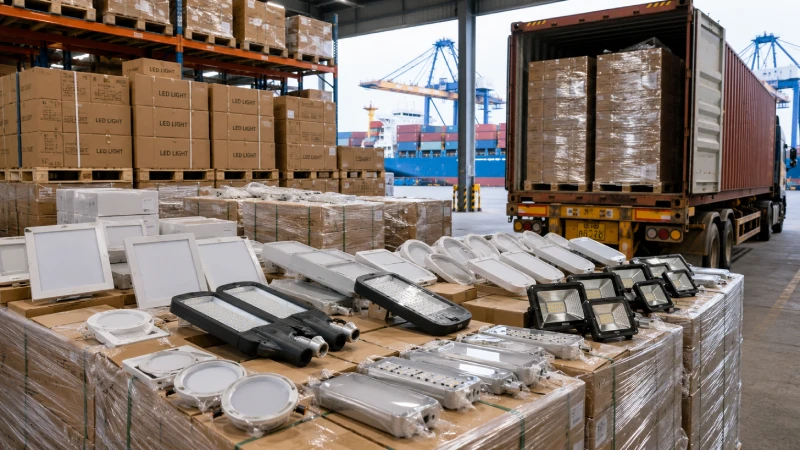
Saudi Arabia is one of the largest LED lighting markets in the Middle East. Driven by smart city initiatives, commercial construction projects, infrastructure upgrades, retail expansion, and energy-efficiency programs, demand for LED bulbs, panel lights, floodlights, street lights, and decorative lighting continues to grow.
China remains the primary sourcing destination for Saudi importers due to its manufacturing scale, competitive pricing, and extensive product selection. However, shipping LED lights is not as straightforward as many buyers assume. Fragile components, certification requirements, customs compliance, and project delivery deadlines all influence transportation decisions.
Whether you are importing a few pallets of LED lighting products or multiple containers for a large commercial project, understanding the logistics challenges can significantly reduce costs and prevent delays.
Understanding Your LED Lighting Shipment Before Choosing a Freight Method
Unlike many general consumer products, LED lighting shipments often contain a combination of fragile materials, electronic components, metal housings, glass covers, and specialized packaging.
A shipment consisting of simple LED bulbs may require a completely different transportation strategy compared to architectural lighting fixtures or industrial LED floodlights.
Commercial lighting products are frequently shipped in oversized cartons that consume significant container space. In many cases, transportation costs are driven more by volume than actual cargo weight.
Another common challenge involves mixed shipments. A Saudi distributor may purchase LED bulbs, panel lights, spotlights, and accessories from several suppliers. Consolidating these products into one shipment can reduce costs, but it also increases documentation complexity and customs classification requirements.
Before selecting transportation, importers should evaluate:
- Product fragility
- Total shipment volume
- Project delivery deadlines
- SABER requirements
- Final delivery destination within Saudi Arabia
These factors ultimately determine the most cost-effective logistics solution.
The Most Common Problems Saudi Importers Face When Shipping LED Lights
Many LED lighting shipments encounter avoidable issues during transportation.
The first concern is physical damage. LED panels and decorative lighting fixtures often contain acrylic covers, aluminum frames, and sensitive electronic drivers. Improper stacking inside containers can lead to cracked panels, bent frames, or damaged internal components.
Documentation errors are another major issue. LED products may appear similar, but customs authorities often require precise product descriptions and accurate HS code declarations. Incorrect classifications can trigger inspections and clearance delays.
Certification-related problems are particularly common among first-time importers. Products arriving without proper SABER registration may face clearance difficulties, resulting in storage charges and delivery delays.
Timing is also critical. Construction projects in Saudi Arabia frequently operate on strict schedules. Importers who fail to account for Ramadan slowdowns, peak shipping seasons, or port congestion can face unexpected disruptions.
SABER, SASO, and Compliance Requirements for LED Light Imports into Saudi Arabia
For LED lighting products, compliance is often more important than transportation itself.
Many LED products entering Saudi Arabia require registration through the SABER platform and compliance with applicable SASO regulations. Importers should confirm certification requirements before cargo departs China rather than after arrival.
One of the most common misconceptions is assuming the manufacturer handles everything. While factories may provide test reports and certificates, Saudi importers remain responsible for ensuring products meet local import requirements.
Failure to prepare documentation early can result in customs holds, inspection delays, and additional storage expenses.
Importers looking for a deeper understanding of Saudi import procedures should also review our Customs Clearance from China to Saudi Arabia guide to better understand documentation requirements and clearance processes.
Choosing the Right Shipping Strategy Based on LED Lighting Order Type
The ideal transportation method depends largely on order size, urgency, and project requirements.
For urgent commercial projects, air freight is often the preferred solution. Replacement lighting components, sample orders, and time-sensitive project shipments benefit from faster transit times.
Buyers evaluating urgent shipments can learn more through our Air Freight from China to Saudi Arabia resource.
For medium-sized orders, LCL shipping may provide a balance between cost and flexibility. Importers can avoid paying for an entire container while still benefiting from ocean freight pricing.
Large distributors and project contractors usually benefit from full-container shipping. When importing large quantities of LED panels, street lights, or commercial fixtures, container utilization becomes a major factor in cost control.
Importers comparing transportation options should also review our comprehensive Sea Freight from China to Saudi Arabia guide.
For buyers seeking simplified logistics management, DDP Shipping from China to Saudi Arabia may be an attractive option. Under DDP arrangements, the logistics provider manages transportation, customs clearance, duties, and final delivery, reducing administrative workload for importers.
How Experienced Importers Reduce Shipping Costs on LED Lighting Shipments
Successful importers focus on optimizing packaging and shipment structure long before transportation begins.
One effective strategy is carton redesign. Many LED products are packaged with excessive empty space, increasing volumetric charges during transportation. Working with suppliers to optimize carton dimensions can reduce freight costs significantly.
Another proven approach involves supplier consolidation. Rather than shipping multiple small orders separately, experienced buyers combine purchases from different factories into a single consolidated shipment.
Container utilization is particularly important for LED lighting products because they tend to be volume-heavy rather than weight-heavy. Maximizing container space can dramatically improve shipping economics.
Many buyers also overlook destination-side expenses. Storage fees, customs inspections, delivery surcharges, and handling fees can significantly increase overall logistics costs.
Importers seeking more cost-reduction strategies should review our detailed Shipping Cost from China to Saudi Arabia guide.
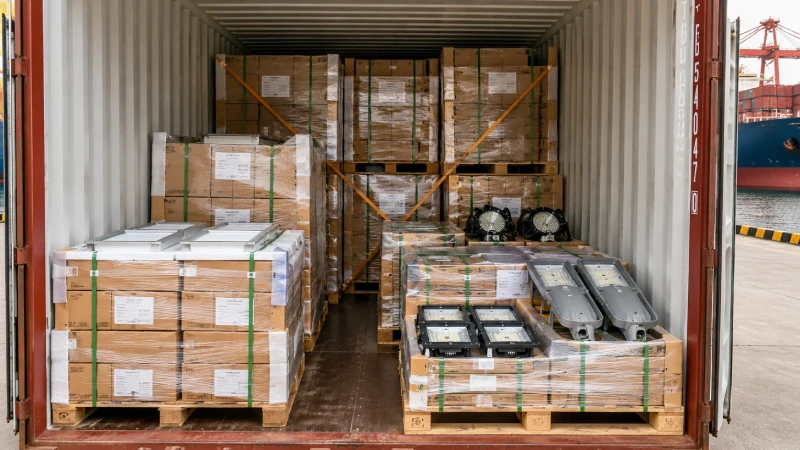
Container Loading Strategies for Commercial LED Lighting Projects
Proper container loading plays a major role in cargo protection.
LED lighting products often contain fragile surfaces that can be damaged by vibration, compression, or improper stacking during long ocean voyages.
For high-value architectural lighting systems, palletized loading is often preferred because it reduces handling risks throughout the transportation process.
For bulk orders of standard LED products, floor-loaded containers may improve space utilization and reduce overall freight costs.
Moisture protection is another consideration. Long ocean transit periods can create condensation inside containers, potentially affecting electronic components and packaging materials.
Experienced freight forwarders typically recommend moisture absorbers, reinforced carton structures, and strategic loading patterns to minimize these risks.
Jeddah vs Dammam: Which Saudi Entry Port Is Better for Your LED Shipment?
Choosing the correct Saudi entry port can influence both cost and delivery speed.
Jeddah Islamic Port is generally preferred for shipments destined for western Saudi Arabia, including Jeddah, Mecca, Medina, and surrounding regions.
Dammam’s King Abdulaziz Port is often the better option for cargo serving Riyadh, the Eastern Province, and industrial zones near the Gulf region.
Importers sometimes focus exclusively on ocean freight rates while ignoring inland transportation expenses. In many cases, selecting the right arrival port can generate larger savings than negotiating lower freight rates.
Project-based shipments should also account for warehouse locations and final delivery requirements before choosing a destination port.
Hidden Costs That Often Surprise First-Time LED Importers
Freight charges represent only part of the total logistics cost.
Certification expenses, SABER registration fees, customs inspection charges, and storage costs can significantly impact budgets.
Another commonly overlooked expense is final delivery. Delivering LED products to retail stores, warehouses, shopping centers, or construction sites may involve additional coordination and handling requirements.
Cargo insurance is frequently underestimated as well. While LED lighting products are generally not considered high-risk cargo, damage to large commercial lighting systems can result in substantial financial losses.
For many importers, insurance provides relatively inexpensive protection against unexpected transportation incidents.
Shipping Time Expectations for LED Lights from China to Saudi Arabia
Transit times vary depending on transportation mode and shipment origin.
Air freight typically offers the fastest solution and is commonly used for urgent project requirements.
Ocean freight remains the preferred choice for most commercial LED imports because of its lower cost structure.
However, actual delivery schedules depend on more than transportation alone. SABER approvals, customs processing, inspections, and inland delivery arrangements all contribute to total lead time.
Importers planning project-based purchases should build buffer time into procurement schedules rather than relying solely on estimated transit times.
For updated transit benchmarks, refer to our Shipping Time from China to Saudi Arabia guide.
A Practical Example: Shipping LED Lights for a Saudi Commercial Project
Consider a Riyadh-based contractor sourcing LED panel lights, floodlights, and decorative fixtures from three different Chinese suppliers.
Instead of arranging separate shipments, the buyer consolidates all cargo into a single container through a freight forwarder’s warehouse in China.
Documentation is prepared before departure, SABER requirements are completed in advance, and cargo is loaded using reinforced pallet protection.
The shipment enters Saudi Arabia through Dammam, reducing inland trucking costs to Riyadh.
By combining suppliers, optimizing packaging, and selecting the correct entry port, the importer reduces logistics costs while maintaining project delivery schedules.
Building a Reliable Long-Term LED Lighting Supply Chain Between China and Saudi Arabia
Long-term success in LED importing is rarely achieved through freight rate negotiations alone.
The most successful Saudi importers develop repeatable logistics systems that integrate supplier management, compliance preparation, freight planning, and customs coordination.
Establishing clear procedures for documentation, cargo consolidation, quality inspection, and transportation scheduling can significantly reduce operational risk.
As order volumes grow, a structured logistics strategy becomes increasingly valuable. Importers who treat freight as part of their overall supply chain rather than a standalone service often achieve lower costs, fewer delays, and more predictable delivery performance.
For LED lighting businesses serving Saudi Arabia’s expanding construction and infrastructure sectors, logistics efficiency can become a significant competitive advantage.
