
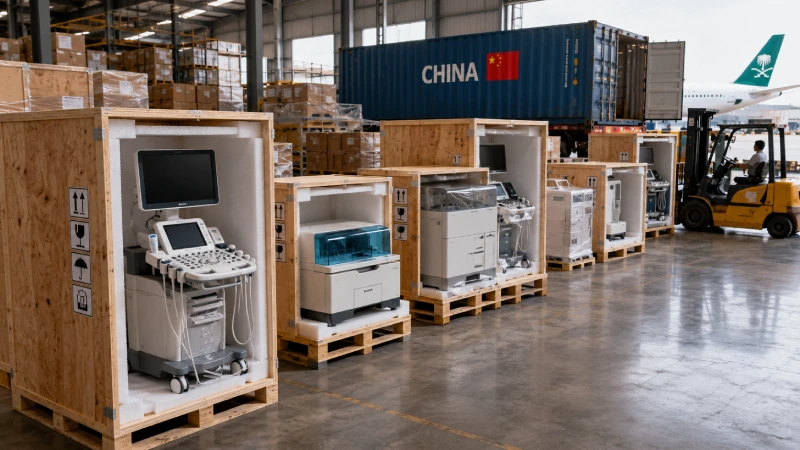
Medical equipment is one of the most challenging cargo categories to transport internationally. Unlike ordinary consumer products, medical devices often combine high cargo value, strict compliance requirements, delicate components, and time-sensitive delivery schedules.
For Saudi Arabian hospitals, laboratories, healthcare distributors, and government procurement projects, delays or cargo damage can create significant operational and financial consequences. As a result, shipping medical equipment from China to Saudi Arabia requires a logistics strategy that goes beyond standard freight forwarding.
Whether you are importing diagnostic systems, laboratory instruments, hospital beds, patient monitoring devices, or specialized healthcare equipment, understanding the operational realities of Saudi medical logistics can help reduce risk, lower costs, and avoid customs delays.
Why Medical Equipment Logistics Requires a Different Shipping Strategy
Medical equipment shipments are fundamentally different from general cargo.
First, many devices contain precision electronics, optical components, sensors, or calibration systems that can be damaged by vibration, moisture, or improper handling.
Second, Saudi Arabia maintains strict import controls for healthcare-related products. Documentation accuracy is often more important than freight speed.
Third, many medical imports are linked to hospital construction projects, healthcare facility expansions, or government tenders where delivery deadlines are fixed long before the shipment leaves China.
Unlike standard retail products, replacing damaged medical equipment is often difficult and expensive. A delayed ultrasound machine or laboratory analyzer can disrupt entire healthcare operations.
Understanding Different Types of Medical Equipment Cargo
Not all medical equipment requires the same shipping approach.
Large diagnostic systems such as ultrasound units, imaging equipment, and laboratory analyzers often require custom crating and shock protection.
Hospital furniture, including beds, examination tables, and medical carts, typically occupies more volume than weight. In these cases, freight optimization becomes critical.
Portable medical devices such as patient monitors and testing instruments usually have high value relative to their size, making air freight a viable option.
Some specialized medical products may also include temperature-sensitive components, batteries, or sensitive electronics that require additional transport planning.
Choosing the wrong freight method based solely on cost can lead to unnecessary risks and delays.
Selecting the Right Freight Solution
The best shipping method depends on the equipment’s value, urgency, dimensions, and installation schedule.
For emergency hospital procurement projects, air freight is often justified despite higher transportation costs. A delayed medical device may cost far more than the freight itself.
Importers evaluating urgent shipments should review available options through Air Freight from China to Saudi Arabia to determine whether faster transit aligns with project requirements.
For larger shipments, sea freight usually provides better cost efficiency. Hospital furniture, medical consumables, and bulk healthcare equipment are commonly shipped via containerized ocean freight.
Businesses planning larger procurement orders can explore Sea Freight from China to Saudi Arabia to compare available shipping solutions.
Some experienced healthcare distributors use hybrid logistics strategies. Critical components may move by air while larger supporting equipment travels by sea, reducing overall landed costs while maintaining installation schedules.
The Most Common Causes of Medical Equipment Damage
Medical equipment damage rarely occurs during long-distance transit itself.
Instead, problems often arise during cargo handling.
Forklift impacts remain one of the most common causes of damage. Improper lifting can damage crates containing sensitive equipment even when external packaging appears intact.
Ocean shipments face additional risks from humidity and condensation. During long voyages from China to Saudi Arabia, temperature fluctuations inside containers can create moisture buildup.
Sensitive electronics, optical devices, and testing equipment may be affected if moisture protection measures are inadequate.
Airport handling can also introduce vibration-related risks, especially for precision instruments with calibrated components.
Importers frequently underestimate the importance of cargo handling instructions and packaging engineering.
Crating and Protection Strategies for High-Value Medical Cargo
Proper packaging is often the difference between a successful shipment and an insurance claim.
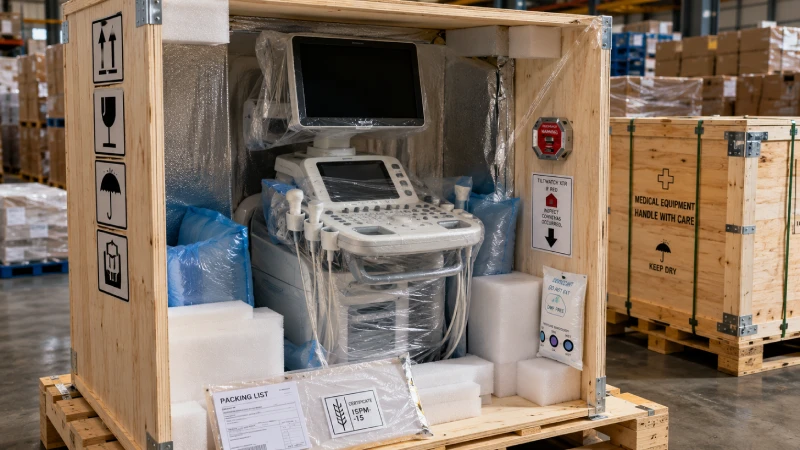
Custom wooden crates should be designed according to equipment dimensions and weight distribution. For Saudi imports, all wood packaging must comply with ISPM-15 requirements.
High-value diagnostic equipment frequently incorporates shock indicators and tilt sensors. These devices record mishandling events and provide evidence if damage claims become necessary.
Many healthcare importers also require sealed protective packaging to prevent contamination and environmental exposure during transit.
When evaluating suppliers in China, packaging standards should be reviewed before production is completed rather than after cargo is ready to ship.
Saudi Compliance Requirements Importers Cannot Ignore
Medical equipment imports often face more scrutiny than standard commercial products.
Many products require compliance verification through SABER, while certain medical devices may also involve Saudi Food and Drug Authority (SFDA) requirements depending on product classification.
Documentation errors remain one of the leading causes of customs delays.
Common issues include:
- Incorrect HS codes
- Incomplete product descriptions
- Missing certificates
- Inconsistent invoice information
- Mismatched product specifications
Importers should prepare compliance documentation before cargo departure rather than attempting corrections after arrival.
Businesses unfamiliar with regulatory procedures should review Customs Clearance in Saudi Arabia before arranging shipment.
Choosing Between Jeddah and Dammam
The choice of entry port can significantly impact delivery efficiency.
Jeddah serves western Saudi Arabia and handles a large share of healthcare imports destined for Riyadh, Makkah, Madinah, and western regional hospitals.
Dammam provides excellent access to the Eastern Province and industrial healthcare projects around Al Khobar and Jubail.
For some medical projects, selecting the nearest port is not always the best option.
Warehouse availability, inland trucking capacity, customs workload, and final installation location should all influence routing decisions.
A professional freight forwarder can evaluate total logistics costs rather than focusing solely on ocean freight rates.
Hospital Delivery Challenges Importers Often Overlook
Getting medical equipment into Saudi Arabia is only part of the process.
The final delivery stage can be surprisingly complex.
Many hospitals restrict delivery hours and require advance scheduling.
Large diagnostic equipment may require special lifting arrangements, service elevators, or dedicated unloading zones.
In some cases, installation engineers arrive separately from the equipment shipment. Delays between cargo arrival and installation schedules can create storage costs and project disruptions.
Government healthcare facilities often impose additional access procedures that must be coordinated before delivery.
These operational details should be planned long before the shipment leaves China.
Hidden Costs in Medical Equipment Logistics
Many importers focus exclusively on freight rates while overlooking other significant expenses.
Potential hidden costs include:
- Customs inspection fees
- Port storage charges
- Demurrage and detention
- Specialized handling fees
- Lift-gate delivery services
- Inland transportation surcharges
- Insurance premiums
For high-value equipment, insurance costs can become a meaningful portion of total logistics expenses.
Before finalizing procurement budgets, importers should compare projected transportation expenses using Shipping Cost from China to Saudi Arabia to better understand total landed cost expectations.
Is DDP Shipping Suitable for Medical Equipment?
Many Saudi buyers ask whether DDP shipping is the easiest solution.
The answer depends on the product category and compliance requirements.
DDP can simplify logistics by allowing the supplier or freight provider to manage transportation, customs clearance, duties, and final delivery.
However, medical equipment often involves regulatory complexities that may limit DDP feasibility.
Importers should verify who will assume responsibility for SABER compliance, SFDA requirements, customs declarations, and post-arrival inspections.
Businesses considering this model should evaluate DDP Shipping from China to Saudi Arabia to understand both advantages and limitations.
How Experienced Medical Importers Reduce Delays and Costs
The most successful healthcare importers share several common practices.
They begin compliance preparation early.
They confirm certification requirements before production starts.
They consolidate purchases from multiple suppliers whenever possible.
They schedule shipments around peak congestion periods.
Saudi logistics networks frequently experience increased pressure during Ramadan and Hajj seasons. Transit delays, customs backlogs, and trucking shortages become more common during these periods.
Experienced importers also select Incoterms carefully.
While FOB remains popular, some projects benefit from CIF, DAP, or DDP arrangements depending on operational capabilities and risk tolerance.
Planning Medical Equipment Shipments Around Project Timelines
Medical equipment logistics should be planned backward from the installation date.
Many importers focus only on factory completion and freight transit times.
However, successful project execution requires consideration of customs clearance, inland delivery, equipment installation, and commissioning activities.
Businesses planning healthcare projects should consult Shipping Time from China to Saudi Arabia when establishing procurement schedules.
Allowing sufficient buffer time helps prevent expensive disruptions caused by customs inspections, documentation corrections, or transportation delays.
Conclusion
Shipping medical equipment from China to Saudi Arabia requires much more than selecting the cheapest freight option.
Successful imports depend on proper packaging, regulatory compliance, port selection, hospital delivery planning, and risk management.
Medical equipment is often mission-critical cargo with high value and low tolerance for delays or damage. Importers who prepare documentation early, choose the appropriate shipping method, and coordinate logistics around installation schedules are far more likely to achieve successful outcomes.
Whether you are importing a single diagnostic unit or supplying an entire healthcare facility, a carefully planned logistics strategy can reduce costs, prevent delays, and ensure your equipment arrives ready for deployment.
