
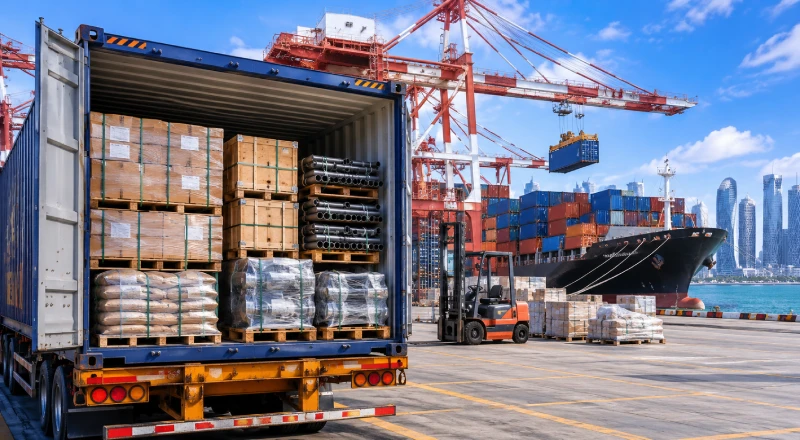
For importers shipping cargo from China to Qatar, selecting a container size is often a more important decision than choosing a shipping route.
Many buyers automatically request a 20ft container because the freight rate appears lower than a 40ft container. However, experienced importers know that container selection is not about freight cost alone. The real objective is achieving the lowest landed cost per ton, per cubic meter, or per unit sold.
A 20ft container (20GP) remains one of the most widely used shipping solutions for cargo moving through Hamad Port and into Doha’s distribution network. Yet it is not always the cheapest option.
Understanding how container capacity, cargo density, weight limits, and utilization rates affect total logistics costs can help importers avoid costly mistakes and improve shipping efficiency.
Before evaluating container size, importers should first understand the broader market conditions involved in Shipping from China to Qatar, including freight pricing trends, port congestion, and local distribution costs.
Why Many Qatar Importers Prefer a 20ft Container
The primary advantage of a 20GP container is its ability to carry heavy cargo efficiently.
Unlike a 40ft container, which focuses on maximizing volume, a 20GP is designed to maximize payload utilization.
A standard 20ft container offers:
| Specification | 20GP Container |
|---|---|
| Internal Volume | Approx. 33 CBM |
| Maximum Payload | Approx. 28 Tons |
| Gross Weight Limit | Approx. 30.48 Tons |
| Internal Length | 5.9 Meters |
| Internal Width | 2.35 Meters |
| Internal Height | 2.39 Meters |
For many Qatar-bound shipments, weight becomes the limiting factor before space does.
This is especially true for industries that import construction materials, industrial equipment, mechanical parts, hardware products, and stone materials.
In these situations, a 20GP container often delivers better shipping economics than a larger container because importers pay for capacity they can actually use.
Which Types of Cargo Are Best Suited for a 20GP Container?
Not every product benefits from a 20ft container.
The best candidates are dense products that generate significant weight relative to their volume.
Typical examples include:
- Ceramic tiles
- Marble and granite
- Steel fittings
- Industrial machinery components
- Auto spare parts
- Electrical cable reels
- Fasteners and hardware products
- Pumps and valves
- Construction materials
- Metal fabrication products
For these commodities, importers often reach payload limits while significant space still remains inside the container.
In contrast, products such as furniture, mattresses, plastic products, and household goods usually fill available volume long before reaching weight limits.
Those products often favor larger containers.
The key question is simple:
Are you running out of space first or running out of weight allowance first?
The answer determines whether a 20GP container makes economic sense.
How Much Cargo Can Actually Fit Into a 20ft Container?
One of the biggest mistakes importers make is relying on theoretical container capacity.
While a 20GP container offers approximately 33 cubic meters of space, actual loading capacity is usually lower.
Real-world utilization often looks like this:
| Cargo Type | Practical Utilization |
|---|---|
| Standard Cartons | 90-95% |
| Mixed Cartons | 80-90% |
| Palletized Cargo | 75-85% |
| Machinery | 60-80% |
| Heavy Materials | Weight Limited |
The difference between theoretical and practical volume can significantly affect landed costs.
For example, a shipment occupying only 24 CBM inside a 20GP container is utilizing roughly 73% of available space.
The importer is effectively paying freight on unused volume.
Companies that improve packaging dimensions and stacking methods often reduce shipping costs without negotiating lower freight rates.
Container utilization is one of the most overlooked profit drivers in international logistics.
Understanding the Real Cost Structure of a 20GP Shipment
Many importers compare only ocean freight quotes.
This creates an incomplete picture of actual shipping costs.
The total landed cost of a 20ft container shipment to Qatar typically includes multiple cost components.
Origin Costs in China
These may include:
- Factory pickup
- Inland trucking
- Export documentation
- Terminal handling charges
- Customs declaration fees
Ocean Freight
This is the transportation charge from the Chinese port to Hamad Port.
Rates vary depending on:
- Shipping season
- Carrier availability
- Equipment demand
- Port congestion
- Fuel costs
Destination Costs in Qatar
These may include:
- Port handling charges
- Documentation fees
- Customs processing
- Inspection fees
- Delivery to warehouse
For many shipments, ocean freight represents only 40-60% of total logistics spending.
This is why focusing solely on container freight rates often leads to poor purchasing decisions.
The smarter approach is evaluating total landed cost.
Cost Per Ton: The Number That Really Matters
Professional importers rarely evaluate shipping costs on a per-container basis.
Instead, they calculate logistics costs per ton.
This metric allows accurate comparison between shipments and suppliers.
The formula is simple:
Total Logistics Cost ÷ Cargo Weight
For example:
- Total logistics cost: USD 4,800
- Cargo weight: 24 tons
Cost per ton:
USD 4,800 ÷ 24 = USD 200 per ton
Now compare another shipment:
- Total logistics cost: USD 4,800
- Cargo weight: 10 tons
Cost per ton:
USD 480 per ton
The freight rate is identical.
The shipping economics are completely different.
This explains why importers of dense products frequently prefer 20GP containers.
They can spread fixed logistics costs across more cargo weight.
The result is a lower cost per ton and often a lower cost per unit sold.
Doha Import Realities: Why Container Utilization Matters
Qatar’s market has several characteristics that influence container selection.
Unlike larger regional markets, many importers serve relatively concentrated customer bases around Doha and surrounding industrial zones.
Warehouse costs, inventory turnover, and cash flow management all affect shipping decisions.
Many distributors intentionally choose smaller shipment volumes because:
- Inventory moves more slowly
- Storage space is limited
- Cash flow must remain flexible
- Project demand fluctuates
In these situations, a fully optimized 20GP container often provides better financial performance than a partially utilized 40GP.
The goal is not simply moving more cargo.
The goal is moving the right amount of cargo at the lowest landed cost.
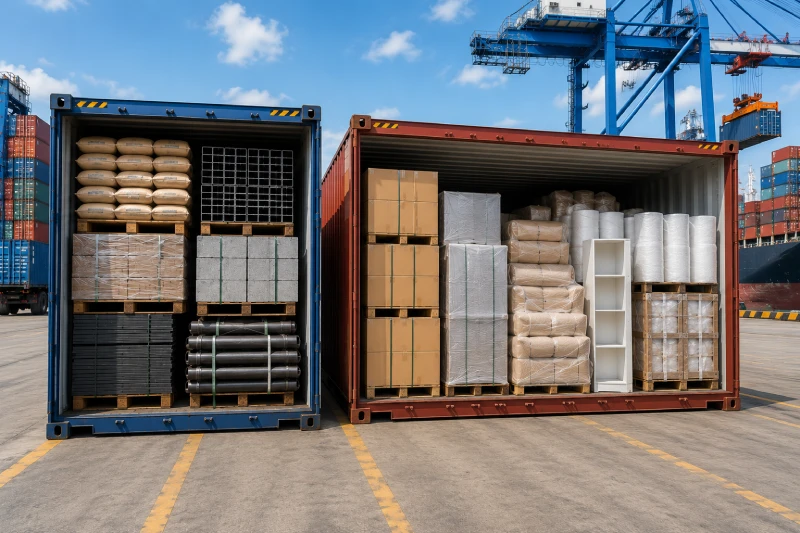
When a 40ft Container Becomes Cheaper Than a 20GP
One of the most common misconceptions in international shipping is that a 20ft container is always cheaper.
This is not necessarily true.
Let’s examine a simple example.
| Container Type | Freight Cost |
|---|---|
| 20GP | USD 2,200 |
| 40GP | USD 3,000 |
At first glance, the 20GP appears cheaper.
However, the cost per cubic meter tells a different story.
20GP:
- 33 CBM capacity
- Cost per CBM = USD 66.67
40GP:
- 67 CBM capacity
- Cost per CBM = USD 44.78
The larger container delivers substantially lower volume costs.
This becomes important when shipping:
- Furniture
- Plastic products
- Consumer goods
- Packaging materials
- Home décor products
If cargo exceeds approximately 30 CBM but weighs less than 20-22 tons, a 40ft container frequently becomes the more economical solution.
The comparison should always be based on utilization efficiency rather than freight rate alone.
How to Improve 20GP Shipping Economics
The most successful importers constantly improve container utilization.
Small operational improvements can generate significant savings.
Optimize Packaging Dimensions
Reducing unused air space inside cartons increases loading efficiency.
More products fit inside the container without increasing freight costs.
Mix Complementary Cargo
Combining heavier and lighter products often improves utilization rates.
This approach maximizes both weight and volume simultaneously.
Reduce Empty Container Space
Dead space directly increases shipping cost per unit.
Improved loading plans can significantly lower logistics expenses.
Analyze Cost Per Product
Rather than focusing only on freight cost, evaluate:
- Freight cost per SKU
- Freight cost per pallet
- Freight cost per ton
- Freight cost per sales unit
These metrics provide much better visibility into logistics performance.
Is a 20GP Container the Right Choice for Your Qatar Shipment?
A 20ft container is usually the best option when cargo is dense, heavy, and capable of utilizing the container’s payload capacity.
Products such as building materials, industrial equipment, machinery components, hardware products, stone materials, and auto parts typically generate excellent shipping economics inside a 20GP container.
However, if cargo approaches 30 CBM while remaining relatively lightweight, a 40ft container may offer lower logistics costs per cubic meter and per unit sold.
The smartest importers evaluate more than freight rates.
Some importers also choose DDP Shipping from China to Qatar when they prefer predictable landed costs and reduced coordination between multiple logistics providers.
They analyze:
- Container utilization
- Cargo density
- Payload efficiency
- Cost per ton
- Cost per unit
- Inventory carrying costs
- Total landed cost
When viewed through this lens, container selection becomes a profitability decision rather than a freight purchasing decision.
For many Qatar-bound shipments, a well-loaded 20GP container remains one of the most efficient and cost-effective ways to move cargo from China. The key is ensuring the container is matched to the cargo—not simply choosing the smallest option because the freight quote looks lower.
