
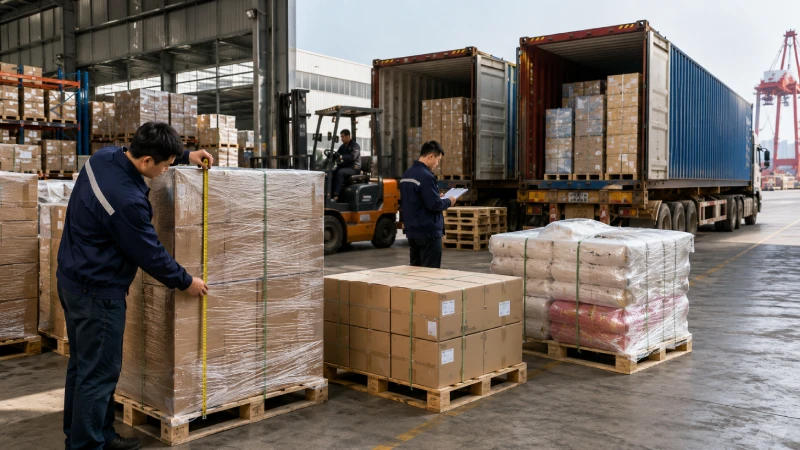
When importing goods from China to Qatar, most buyers focus on one question: “What is the freight rate?”
However, experienced importers usually ask a different question:
“How much am I paying per CBM?”
This distinction may seem minor, but it often determines whether a shipment is truly cost-efficient.
For importers shipping less than a full container load, freight charges are typically based on cargo volume rather than total weight. As a result, understanding CBM pricing becomes one of the most important skills for controlling logistics costs.
The challenge is that many Qatar importers know their shipment volume but are unsure whether they should continue using LCL shipping, consolidate more cargo, or switch to a full container solution. Without understanding how freight forwarders calculate costs per cubic meter, it becomes difficult to make the most economical decision.
This guide explains how CBM-based pricing works, how cargo density influences shipping economics, when LCL stops making financial sense, and how importers can reduce shipping costs through smarter freight planning.
Why Cost Per CBM Matters More Than Total Freight Cost
Many importers compare quotations using only the total freight amount.
For example:
- Shipment A costs $600
- Shipment B costs $1,100
At first glance, Shipment A appears cheaper.
However, if Shipment A contains 4 CBM while Shipment B contains 15 CBM, the picture changes dramatically.
Shipment A:
- $600 ÷ 4 CBM = $150 per CBM
Shipment B:
- $1,100 ÷ 15 CBM = $73 per CBM
Although Shipment B has a higher total freight bill, it is significantly more efficient from a logistics perspective.
This is why freight professionals often evaluate transportation costs using volume efficiency metrics rather than total freight spend.
For Qatar importers purchasing from multiple Chinese suppliers, cost per CBM provides a much clearer indication of shipping performance than total freight cost alone.
It allows businesses to compare:
- Different shipment sizes
- Different freight forwarders
- Different sourcing strategies
- Different consolidation options
Most importantly, it helps identify opportunities to reduce transportation expenses before cargo even leaves China.
How Freight Forwarders Calculate Shipping Cost Per CBM
In LCL shipping, freight forwarders usually allocate transportation expenses according to the amount of space occupied inside a consolidated container.
The basic calculation is simple:
Suppose a shipment occupies 8 CBM and the total logistics cost is $720.
The result would be:
$720 ÷ 8 = $90 per CBM
While this formula appears straightforward, many importers underestimate how many individual charges contribute to the final figure.
A typical LCL shipment from China to Qatar may include:
- Origin handling charges
- Export documentation fees
- Consolidation warehouse charges
- Ocean freight
- Destination deconsolidation charges
- Port handling fees
- Delivery-related expenses
As a result, the actual landed cost per CBM is often much higher than the advertised ocean freight rate.
For example, a freight forwarder may quote:
- Ocean freight: $35 per CBM
But after all operational charges are added, the real transportation cost could exceed $80 or even $100 per CBM depending on shipment size and destination requirements.
This is why experienced importers always evaluate total logistics cost rather than focusing exclusively on the ocean freight component.
A Real Example of CBM Cost Calculation
Imagine a Doha-based importer purchasing lighting products from three factories in Shenzhen.
The combined shipment volume equals 10 CBM.
The logistics expenses may look like this:
| Cost Item | Amount |
|---|---|
| Origin Charges | $140 |
| Documentation | $60 |
| Ocean Freight | $420 |
| Destination Charges | $250 |
| Total Cost | $870 |
Calculation:
10 CBM shipment
$870 ÷ 10 = $87 per CBM
At first glance, the ocean freight appears to represent the majority of costs.
However, nearly half of the total bill actually comes from handling and operational charges.
This explains why very small shipments often experience high cost-per-CBM figures.
Fixed charges are distributed across fewer cubic meters, causing overall logistics efficiency to decline.
Why Cargo Density Has a Huge Impact on Freight Economics
Two shipments can occupy exactly the same volume while producing completely different financial outcomes.
This is where cargo density becomes important.
High-density cargo generally includes:
- Hardware
- Steel products
- Machinery parts
- Building materials
- Automotive components
Low-density cargo typically includes:
- Furniture
- Decorative items
- Plastic products
- Household goods
- Packaging materials
Imagine two shipments:
Shipment A:
- 10 CBM
- Value: $50,000
- Machinery components
Shipment B:
- 10 CBM
- Value: $8,000
- Furniture products
Assume both shipments incur identical freight charges of $850.
For Shipment A:
Freight cost equals only 1.7% of cargo value.
For Shipment B:
Freight cost exceeds 10% of cargo value.
Although both shipments occupy the same space, transportation costs affect profitability very differently.
This is why low-density cargo often requires more careful freight planning.
Reducing wasted space can have a significant impact on landed cost competitiveness in Qatar’s market.
At What Point Should You Stop Using LCL?
One of the most common questions among importers is:
“When should I switch from LCL to FCL?”
There is no universal answer because freight rates fluctuate constantly.
However, the economic logic remains consistent.
LCL costs generally increase in proportion to volume.
FCL costs remain relatively stable because the importer pays for the entire container regardless of utilization.
As shipment volume grows, the gap between the two models narrows.
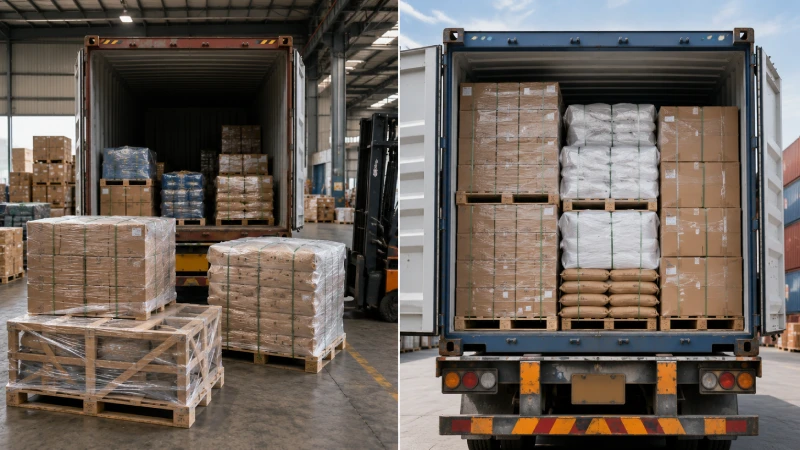
Typical planning guidelines look like this:
| Shipment Volume | Recommended Option |
|---|---|
| Below 8 CBM | Usually LCL |
| 8–15 CBM | Compare Both |
| 15–20 CBM | Borderline Zone |
| Above 20 CBM | Frequently FCL |
For example:
A shipment occupies 16 CBM.
Option 1:
LCL Shipping Cost = $1,450
Option 2:
20GP Container Cost = $1,600
The difference is only $150.
Many importers would choose FCL because it offers:
- Better cargo protection
- Fewer handling stages
- Lower damage risk
- Faster destination processing
- Improved inventory control
This is why volume planning is often more important than freight negotiation.
The best logistics savings frequently come from selecting the right shipping model rather than securing a slightly lower rate.
You may also want to compare LCL Shipping from China to Qatar and FCL Shipping from China to Qatar when evaluating future shipment strategies.
Five Practical Ways to Reduce Cost Per CBM
Improve Packaging Efficiency
Many suppliers design packaging for manufacturing convenience rather than freight efficiency.
Even small carton adjustments can generate meaningful savings.
Reducing carton dimensions by 10% can reduce total shipment volume by a similar percentage.
For regular importers, this improvement accumulates quickly over multiple shipments each year.
Consolidate Multiple Suppliers
Instead of shipping separately from several factories, many Qatar importers use consolidation warehouses in China.
Benefits include:
- Larger shipment volumes
- Better freight rates
- Fewer documentation charges
- Lower cost per CBM
Supplier consolidation is particularly valuable when sourcing from industrial regions such as Guangdong, Zhejiang, and Jiangsu.
Ship Less Frequently
Small weekly shipments often create unnecessary logistics expenses.
For example:
Four shipments of 3 CBM each month may generate higher costs than one consolidated shipment of 12 CBM.
Larger shipments spread fixed operational charges across more cargo volume, improving overall transportation efficiency.
Optimize Pallet Configuration
Poor stacking practices create empty air inside containers.
Simple improvements such as:
- Better carton alignment
- Stackable packaging
- Pallet redesign
can increase loading density and reduce freight costs without changing the products themselves.
Track Logistics KPIs
Many importers monitor freight rates but ignore efficiency metrics.
A better approach is to track:
- Cost per CBM
- Cost per shipment
- Cost per SKU
- Cost per order
These indicators help identify trends before logistics expenses become a serious profitability issue.
Freight Planning Strategies for Different Qatar Importers
Not every importer should evaluate CBM costs in the same way.
Retail businesses importing consumer products often benefit from flexible LCL solutions because inventory turnover remains unpredictable.
Construction material importers typically deal with dense cargo and stable demand patterns. These companies frequently reach FCL break-even points earlier and may benefit from comparing 20ft Container Shipping Cost from China to Qatar and 40ft Container Shipping Cost from China to Qatar options.
Meanwhile, importers sourcing from multiple Chinese factories often achieve the greatest savings through supplier consolidation programs.
In many cases, improving shipment structure can reduce annual freight expenses more effectively than negotiating lower rates.
The Questions Smart Importers Ask Their Freight Forwarders
Many buyers ask:
“What is your rate per CBM?”
But strategic importers usually ask:
- What is my actual landed cost per CBM?
- At what shipment volume should I switch to FCL?
- How can supplier consolidation reduce logistics costs?
- Are my packaging dimensions efficient?
- How does cargo density affect transportation economics?
These questions focus on freight planning rather than freight purchasing.
As a result, they often lead to much larger cost reductions.
Conclusion
Knowing your shipment volume is only the beginning of effective freight planning.
The real objective is understanding how volume, density, consolidation, and container economics influence your total logistics cost.
For Qatar importers, cost per CBM is one of the most useful metrics for evaluating transportation efficiency. It provides a clearer picture than total freight cost and helps businesses identify the most economical shipping arrangement for each order.
Whether you are shipping 5 CBM, 15 CBM, or approaching a full container load, the goal should never be to find the lowest freight rate alone.
The goal is to achieve the lowest landed cost per unit sold.
Importers who understand their cost per CBM are better positioned to optimize shipments, improve inventory planning, and make more profitable sourcing decisions throughout the year.
