
Tiles are one of the most commonly imported building materials in Qatar. They are widely used in residential developments, commercial buildings, hotels, shopping centers, and infrastructure projects. While sourcing tiles from China offers significant cost advantages and a broad range of designs, many importers underestimate the risks associated with transporting fragile ceramic and porcelain products over long distances.
Unlike steel products or packaged consumer goods, tiles can suffer from cracked edges, broken corners, pallet collapse, and handling damage throughout the logistics process. Even a small percentage of damaged tiles can create costly project delays, replacement expenses, and disputes between buyers, suppliers, and logistics providers.
For companies sourcing construction materials through Shipping from China to Qatar, protecting cargo quality during transit is just as important as controlling freight costs. A single damaged tile shipment can lead to project delays, replacement purchases, and installation disruptions. The good news is that most tile damage can be prevented. By focusing on packaging quality, palletization methods, loading procedures, insurance protection, and documentation, Qatar importers can dramatically reduce breakage rates and improve overall shipment reliability.
Why Tile Shipments Are More Vulnerable Than Most Construction Materials
Many importers assume that tiles are durable because they are made from ceramic or porcelain. In reality, tiles possess high compressive strength but relatively poor impact resistance.
A tile can withstand significant weight when pressure is evenly distributed across its surface. However, a sudden impact against a corner or edge can easily cause cracking or chipping. During international transportation, cargo is exposed to vibration, movement, stacking pressure, and multiple handling stages, making these weak points particularly vulnerable.
Most tile damage occurs in one of five stages:
- Factory handling and pallet preparation
- Warehouse consolidation
- Container loading
- Ocean transportation
- Destination unloading and delivery
Damage is rarely caused by a single incident. More often, it results from multiple small failures that gradually weaken packaging and expose the cargo to unnecessary stress.
For importers managing large construction schedules, a damaged tile shipment can create installation delays that affect entire project timelines. This is why breakage prevention should be considered long before the container reaches Doha.
Choosing the Right Tile Packaging Method Before Export
The first line of defense against cargo damage is proper packaging. Unfortunately, some manufacturers still use packaging designed for domestic transportation rather than international export.
Standard domestic cartons may be sufficient for short-distance trucking within China, but they often fail during long ocean voyages to Qatar. Export shipments require stronger cartons capable of resisting compression, vibration, and moisture exposure.
Reinforced export packaging typically includes:
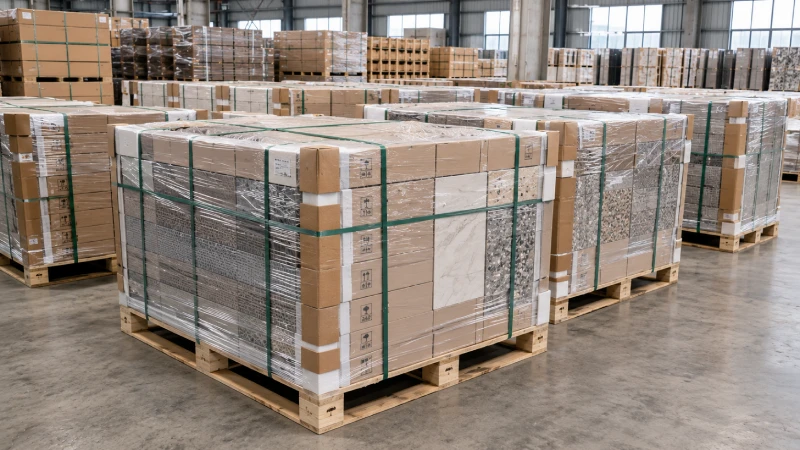
- Heavy-duty corrugated cartons
- Double-wall cardboard construction
- Reinforced corner protection
- Internal separators
- Moisture-resistant wrapping materials
Corner protection deserves particular attention because tile corners are the most fragile areas. Foam inserts, cardboard corner guards, and protective edge strips help absorb shocks during loading and unloading.
Many experienced exporters also combine shrink wrapping and strapping systems. Stretch film stabilizes cartons and prevents movement, while PET straps secure the cargo firmly to the pallet. Together, these methods create a more stable shipping unit that can withstand rough handling.
Importers should never assume that all factories use export-grade packaging by default. Packaging specifications should be clearly defined in the purchase agreement before production begins.
Palletization Strategy That Protects Tiles During Ocean Transport
Even excellent packaging cannot compensate for poor palletization.
The pallet serves as the foundation of the entire shipment. If the pallet fails, the packaging above it usually fails as well.
Wooden pallets remain popular because of their strength and durability. However, they must comply with international phytosanitary regulations and should be properly treated before export.
Plywood pallets offer several advantages:
- Lower moisture absorption
- Better dimensional consistency
- Reduced risk of splintering
- Easier compliance with export requirements
Equally important is pallet size and weight distribution.
One of the most common mistakes is building excessively tall pallets in an attempt to maximize container space. While this may increase loading efficiency, it also raises the center of gravity and increases the likelihood of pallet instability.
For tile shipments, shorter and heavier pallets are generally safer than tall, narrow configurations.
Overloaded pallets can also create hidden damage. The weight from upper layers may place excessive pressure on tiles positioned near the bottom of the stack. Although damage may not be visible during loading, cracks often appear after arrival when cartons are opened.
Maintaining reasonable pallet weights improves both cargo protection and forklift safety. Experienced importers often prioritize cargo safety over loading density because replacing damaged materials is usually far more expensive than shipping a few fewer pallets.
Container Loading Practices That Minimize Tile Damage
Container loading is another critical factor in preventing breakage.
Importers frequently focus on maximizing container utilization, but higher loading density does not always translate into lower overall costs. A damaged shipment can easily eliminate any savings gained from aggressive loading strategies.
For companies shipping larger volumes through FCL Shipping from China to Qatar, loading quality becomes even more important because the entire container is dedicated to a single shipment.
Two common loading methods are used for tile exports.
The first is floor loading, where cartons are stacked directly inside the container without pallets. This method allows maximum cargo volume and is often used to reduce transportation costs.
However, floor-loaded cargo presents several risks:
- Greater pressure on lower cartons
- More difficult unloading procedures
- Increased handling damage
- Limited access for inspections
The second method uses palletized cargo. Although palletization reduces total loading capacity, it significantly improves cargo stability and handling efficiency.
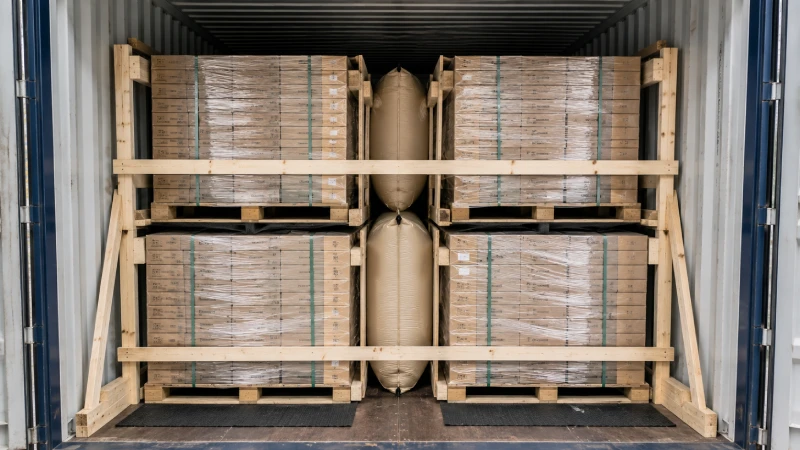
During ocean transit, containers experience constant motion caused by waves, vessel movement, and port operations. Without proper securing measures, pallets can shift, tilt, or collide with neighboring cargo.
To reduce movement, exporters often use:
- Airbags
- Timber blocking
- Anti-slip mats
- Bracing materials
- Void fillers
These materials help distribute forces throughout the container and prevent sudden cargo movement that can lead to tile breakage.
Common Causes of Tile Breakage Claims in Qatar Imports
Understanding the most common damage scenarios helps importers take preventive action before problems occur.
One major issue is moisture exposure.
Ocean containers frequently experience condensation due to temperature fluctuations between day and night. Moisture can weaken cartons, reduce pallet stability, and compromise protective materials.
This phenomenon, often referred to as container rain, is particularly problematic for long-distance shipments traveling through humid environments.
Another frequent cause of damage is forklift handling.
Even well-packaged cargo can be damaged when forklift forks puncture cartons, strike pallet bases, or lift unstable loads improperly. These incidents often occur during loading, unloading, or warehouse transfers.
Documentation deficiencies can also create serious challenges when filing claims.
Many importers discover too late that they lack sufficient evidence to prove when and where damage occurred. Missing photographs, incomplete inspection reports, and inadequate loading records can weaken compensation claims considerably.
For high-value tile shipments, maintaining a detailed photographic record of packaging, palletization, and loading operations is highly recommended.
Should Importers Buy Cargo Insurance for Tile Shipments?
Many buyers assume that shipping carriers automatically cover cargo damage. In reality, carrier liability is often limited and may not reflect the true value of the shipment.
Compensation calculations are frequently based on international liability conventions rather than actual commercial losses. As a result, recovered amounts may be significantly lower than the replacement cost of damaged tiles.
Cargo insurance provides an additional layer of protection.
Insurance becomes particularly valuable in situations involving:
- Large construction projects
- Full container loads of tiles
- High-value porcelain products
- Tight project deadlines
- Long-distance ocean transportation
The cost of cargo insurance is generally small compared with the potential financial impact of a damaged shipment.
For example, replacing damaged tiles may involve more than simply purchasing new products. Importers may also face:
- Additional freight charges
- Project delays
- Labor disruptions
- Storage costs
- Contract penalties
When these factors are considered, insurance often represents a cost-effective risk management tool rather than an unnecessary expense.
Pre-Shipment Inspection Checklist for Tile Importers
Preventing damage begins long before cargo reaches the port.
A structured inspection process helps identify weaknesses before they become costly problems.
Packaging Inspection
Before loading, importers should verify:
- Carton strength
- Corner protection quality
- Internal separators
- Moisture protection materials
- Shrink wrapping condition
Any damaged or poorly assembled cartons should be replaced immediately.
Pallet Inspection
The following items should be reviewed:
- Pallet integrity
- Weight distribution
- Strapping tension
- Stack stability
- Forklift accessibility
Pallets showing signs of weakness should not be loaded.
Loading Inspection
During container loading, importers should confirm:
- Proper cargo arrangement
- Even weight distribution
- Adequate securing materials
- Absence of excessive empty spaces
- Protection against shifting
Photographs should be taken throughout the loading process.
Documentation Inspection
Essential documents include:
- Commercial invoice
- Packing list
- Cargo photos
- Inspection reports
- Insurance certificates
These records provide critical support if damage claims become necessary.
Container Selection and Cost Considerations for Tile Cargo
Tiles are typically classified as heavy cargo. Choosing the wrong container size can increase transportation costs while also creating handling challenges.
For smaller but heavier shipments, many importers evaluate 20ft Container Shipping Cost from China to Qatar because 20GP containers usually reach weight limits before reaching volume limits.
For larger construction projects, buyers often compare 40ft Container Shipping Cost from China to Qatar to determine whether a larger container can reduce transportation costs per square meter of tile.
When shipment quantities are too small to fill an entire container, importers may consider Shipping Cost per CBM from China to Qatar. However, fragile products such as tiles often face higher breakage risks in shared container environments because cargo from multiple shippers may be consolidated together.
Understanding these trade-offs helps importers balance transportation costs against cargo protection requirements.
Best Practices Used by Experienced Qatar Tile Importers
Experienced importers understand that reducing breakage requires a comprehensive approach rather than relying on a single solution.
Successful companies typically implement several protective measures simultaneously.
They require export-grade packaging rather than standard domestic cartons.
They establish pallet weight limits to prevent compression damage.
They insist on proper cargo securing inside containers.
They document loading operations with photographs and inspection reports.
They purchase cargo insurance for high-value shipments and project cargo.
Most importantly, they work with logistics providers that have experience handling fragile building materials rather than treating tiles as ordinary cargo.
By combining these practices, importers can significantly reduce loss rates and improve delivery reliability.
Conclusion
Tile damage is one of the most preventable risks in international construction logistics.
Most breakage occurs because of inadequate packaging, poor palletization, improper loading, cargo movement, or insufficient documentation. Each of these factors can be addressed before the shipment leaves China.
For Qatar importers, protecting tiles is not simply a logistics concern—it is a project management decision. Every damaged pallet can affect installation schedules, labor planning, and construction deadlines.
By investing in export-grade packaging, safe palletization, professional loading procedures, comprehensive documentation, and appropriate cargo insurance, importers can dramatically reduce losses and ensure their tile shipments arrive in Qatar safely and ready for installation.
