
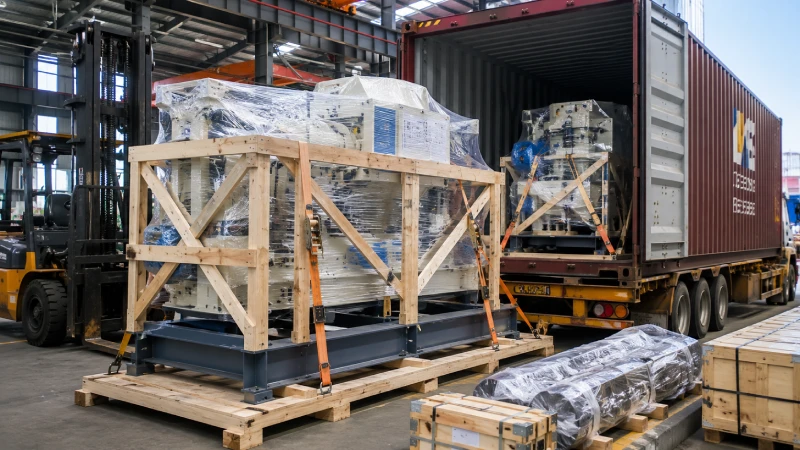
When importing expensive machinery from China to Qatar, freight cost is only one piece of the puzzle. The main concern for any importer at the Investment Protection Stage is safeguarding capital investment. Machinery is not like ordinary cargo—it represents thousands or even hundreds of thousands of dollars, and damage during transport can halt projects, trigger warranty disputes, and create significant delays. For companies planning equipment procurement, proper handling, packaging, inspection, and insurance are critical. For more general guidance, see our hub page on shipping from China to Qatar.
In this guide, we focus on practical measures to reduce risk, protect machinery integrity, and ensure smooth delivery to Qatar.
Understanding the Financial Risk of Machinery Shipments
Unlike standard cargo, machinery carries higher financial exposure:
- High unit value – Replacing a damaged CNC machine, industrial press, or printing line can cost six figures.
- Custom-built equipment – Most machines are model-specific, with parts that may be difficult or impossible to source locally.
- Heavy and oversized cargo – Equipment with uneven weight distribution or high center of gravity is prone to tipping or shifting.
- Sensitive components – Electronics, hydraulic systems, and precision tooling are vulnerable to shocks, moisture, or vibration.
- Hidden damage – Some failures, like misaligned bearings or sensor malfunctions, only become apparent after installation.
Importers who ignore these risks may face not just replacement costs, but also project delays, contractual penalties, and lost revenue. Mitigating these risks requires a structured, capital-focused logistics strategy.
Machinery Packaging: Your First Line of Defense
Proper packaging is critical to protecting expensive machinery during ocean transit.
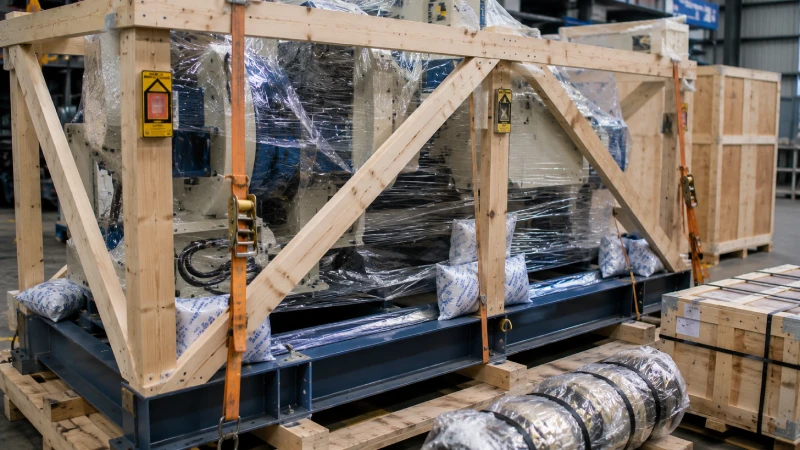
Reinforced Crates and Steel Frames
- Wooden crates are suitable for most mid-size machinery, while heavy or oversized equipment often requires steel bases or reinforced frames.
- ISPM 15-compliant wood ensures quarantine compliance and reduces fumigation delays.
- Internal bracing and anti-vibration supports prevent internal movement.
Moisture, Rust, and Dust Protection
- Use VCI film, desiccants, and sealed shrink wrap to protect against moisture.
- Apply anti-rust oil on exposed metal parts.
- Qatar’s hot and humid climate makes moisture barriers essential for preventing corrosion during storage.
Protecting Sensitive Components
- Remove or separately pack fragile accessories, such as sensors, control panels, or tooling.
- Apply shock or tilt indicators to crates, ensuring handlers know the cargo’s sensitivity.
Pre-Shipment Inspection: Avoiding Disputes
Documenting machine condition before leaving the factory helps prevent insurance or warranty disputes.
- Conduct factory acceptance testing (FAT) and verify serial numbers.
- Take detailed photos and videos of each unit before packing.
- Confirm that all accessories and spare parts match the packing list.
- Record the condition of crates, lifting points, and fragile components.
A Pre-Shipment Machinery Protection Checklist might include:
- Serial number photos
- Electrical cabinet inspection
- Accessory inventory
- Packing list verification
- Lifting points marked
- Center of gravity indicated
- Insurance value confirmed
Loading and Handling Procedures
Most machinery damage occurs during loading, unloading, or storage.
Lifting and Forklift Guidelines
- Verify machine weight and lifting points.
- Use spreader bars for oversized or top-heavy equipment.
- Avoid lifting from fragile areas.
Container Loading
- Properly secure machinery inside containers, using blocking and bracing to prevent shifting.
- Ensure weight distribution is balanced for 20ft or 40ft containers.
- Separate machinery from loose cargo or sharp objects.
Flat Rack and Open Top Shipments
- Oversized equipment often requires flat rack containers.
- Reinforce lashing and waterproof covers, and supervise handling closely to reduce the risk of damage.
Cargo Security: Preventing Loss or Tampering
Expensive machinery must be protected against theft and mishandling:
- Use numbered container seals and take seal photos.
- Minimize cargo transfers to reduce handling risk.
- Store in secure warehouses before departure.
- Document all procedures to support insurance claims.
Suggested security documents to retain: photos, packing list, commercial invoice, bill of lading, insurance certificates, and pre-shipment inspection reports.
Customs Inspection in Qatar
Inspection is a major risk for machinery:
- Improperly packed crates may be opened unnecessarily.
- Accurate documentation—HS code, value, and description—reduces inspection likelihood.
- Label crates to prevent wrong items from being opened.
- Organize spare parts to avoid damage if crates are opened.
Marine Insurance for Machinery
Insurance should reflect the value and nature of machinery:
- Ensure coverage includes replacement cost and potential installation delay losses.
- Avoid under-declaration or blind spots, such as poor packaging exclusions.
- Maintain pre-shipment photos, bill of lading, packing list, and inspection reports for claims.
Door-to-Door Delivery in Qatar
The final leg carries risks as well:
- Use cranes or forklifts appropriate for machine weight.
- Check unloading site conditions and access.
- Inspect cargo before signing delivery receipts.
- Immediately report any damage to the insurer or forwarder.
A simple Arrival Inspection Checklist includes:
- Crate condition verification
- Seal number confirmation
- Shock/tilt indicator check
- Damage photo documentation
- Notification to insurer if damage is found
Risk Control Plan for Machinery Importers
A structured approach helps reduce capital risk:
- Confirm machine value, weight, dimensions, and sensitivity.
- Select packaging tailored to the machine’s risk profile.
- Document condition pre-shipment.
- Control loading, sealing, and transport supervision.
- Inspect cargo upon arrival in Qatar before acceptance.
| Risk Area | Potential Issue | Mitigation |
|---|---|---|
| Packaging | Rust, vibration, broken parts | Reinforced crates, VCI film, shock indicators |
| Loading | Shifting or falling | Proper lifting plan, blocking, and bracing |
| Inspection | Mishandling | Clear documentation, labeled crates |
| Insurance | Claim denied | Correct value, photos, complete documents |
| Delivery | Late detection | Arrival inspection before signing |
Selecting a Machinery-Focused Freight Forwarder
Not all freight forwarders can handle high-value machinery:
- Require expertise in packaging advice, loading supervision, documentation, and insurance coordination.
- Direct or low-touch shipping arrangements reduce handling.
- For machinery, the cheapest quote may increase total project risk.
Importers should request quotes including photos, weight, dimensions, cargo value, and delivery address in Qatar.
Conclusion
Shipping machinery from China to Qatar is not just a logistical operation—it is a capital protection exercise. By prioritizing packaging integrity, pre-shipment inspection, secure loading, insurance coverage, and careful delivery checks, importers can minimize damage, prevent costly delays, and safeguard their investment. Treating machinery as high-value equipment, rather than ordinary cargo, is the key to protecting both assets and project timelines.
For specialized machinery shipments, production lines, or project cargo, contact Winsail Logistics to plan a secure, low-risk transport from China to Qatar.
