
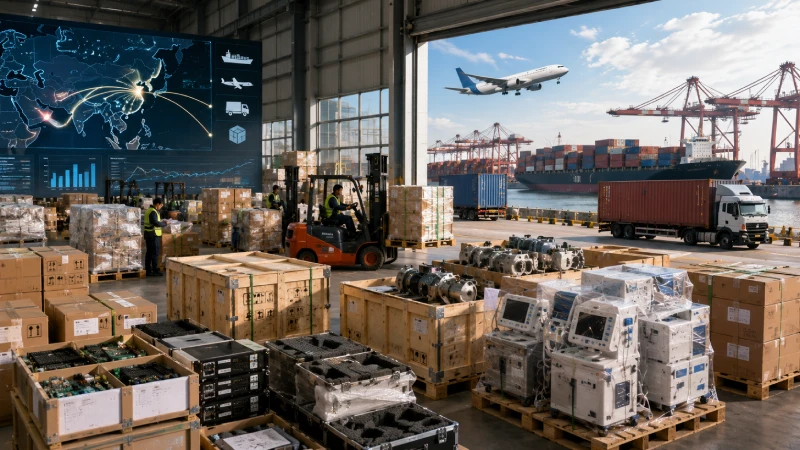
When importers compare different origins for shipping from China to Qatar, Shanghai should not be treated as just another port option. It is one of China’s strongest export coordination hubs for diversified, high-value, and time-sensitive cargo. For Qatar importers sourcing from Shanghai, Jiangsu, Zhejiang, Suzhou, Kunshan, Wuxi, Hangzhou, or multiple suppliers across East China, Shanghai can offer a strong balance of sea freight capacity, air freight access, supplier consolidation, and cargo control.
But Shanghai is not automatically the best choice for every shipment. If your goods are produced by one factory in South China, Shenzhen or Guangzhou may be more practical. If your cargo is mainly from Zhejiang factories and does not need air freight backup, Ningbo may be more cost-efficient. The real question is not “Can I ship from Shanghai to Qatar?” The better question is: “Does Shanghai give my Qatar shipment better control, flexibility, and value protection than another China origin?”
Why Shanghai Is Used for Qatar Shipments
Shanghai is often selected for Qatar shipments because it works as a coordination center, not only as a departure port. Many importers sourcing from China do not buy from just one factory. A Qatar buyer may order machinery parts from Suzhou, electronic components from Shanghai, packaging materials from Kunshan, spare parts from Wuxi, and samples from Hangzhou. In this situation, choosing Shanghai as the export origin can simplify cargo collection and reduce the risk of fragmented shipments.
Shanghai’s strength is especially clear when the shipment involves multiple product categories. Instead of asking every supplier to ship separately, an importer can consolidate cargo near Shanghai, check cartons, combine documents, arrange palletizing, and decide whether the goods should move by sea, by air, or through a split shipment.
This makes Shanghai particularly useful for Qatar importers handling technical products, branded commercial goods, industrial parts, medical devices, trade show materials, and urgent replacement cargo. For simple low-value cargo, Shanghai may not always be the cheapest origin. For complex cargo, however, the value of coordination can be higher than the difference in freight rate.
Shanghai’s Industrial Profile: What Qatar Importers Usually Source Here
Shanghai and the surrounding Yangtze River Delta form one of China’s most diversified manufacturing and trading regions. This gives Qatar importers access to a wide range of products that are different from the cargo typically shipped from pure manufacturing cities.
For electronics and technical products, Shanghai is a strong origin for control systems, industrial sensors, electronic components, automation parts, communication equipment, testing instruments, and precision devices. These goods often have higher unit value, require careful packing, and may need air freight backup if a project or maintenance schedule becomes urgent. For this type of cargo, Shanghai’s logistics structure is a major advantage.
For machinery and industrial cargo, Shanghai is often used for spare parts, machine components, factory automation systems, production equipment, and project-related technical goods. Qatar importers in construction, oil and gas support, facility maintenance, and industrial services may use Shanghai when suppliers are spread across East China.
Shanghai is also suitable for medical, laboratory, and high-value commercial products. Importers shipping diagnostic equipment, lab instruments, fragile devices, branded retail goods, or sample batches often care more about safe handling and reliable coordination than the lowest possible port charge. This is where Shanghai becomes a practical origin for value-sensitive cargo.
Sea Freight from Shanghai to Qatar: Best for Planned Multi-Supplier Shipments
Sea freight from Shanghai to Qatar is most suitable when the shipment is planned in advance and the cargo comes from Shanghai or nearby East China suppliers. FCL shipments can work well when enough cargo is ready for a full container. LCL shipping can also be useful when multiple suppliers provide smaller cargo volumes that need to be combined before export.
Shanghai sea freight is not only about container loading. It is about managing cargo readiness. If different suppliers have different production schedules, a Shanghai warehouse can receive cargo in stages, check labels, confirm carton marks, repack fragile goods, and prepare a cleaner export plan. This reduces communication pressure for the importer and helps avoid missed cut-off dates.
Shanghai sea freight makes sense when your shipment includes several suppliers, multiple SKUs, non-urgent commercial goods, or cargo that requires inspection before loading. It is also useful when the importer wants one consolidated shipment into Qatar instead of several scattered deliveries.
However, Shanghai may not be ideal if all factories are located far from East China. For example, if your goods are mainly produced in Guangdong, shipping from Shenzhen to Qatar or Guangzhou may be more logical. If your suppliers are concentrated in Zhejiang and the cargo is mainly containerized sea freight, shipping from Ningbo to Qatar may offer a stronger cost position.
Air Freight from Shanghai to Qatar: The High-Value Backup Advantage
Shanghai’s major advantage for Qatar shipments is not limited to ocean freight. Its air freight capability makes it especially valuable for importers who deal with urgent, high-value, or time-sensitive cargo. If a Qatar buyer imports replacement parts, medical devices, electronics, samples, or urgent project components, Shanghai can support a more flexible shipping strategy.
This matters because many Qatar shipments are not purely routine. A project may require spare parts before installation. A distributor may need urgent replenishment before stock runs out. A technical buyer may need samples by air before approving a sea freight order. A maintenance company may need one small part urgently while the bulk cargo still moves by sea.
In these situations, Shanghai allows importers to use a hybrid plan. Bulk goods can move by sea freight for cost control, while urgent components can move by air freight to reduce downtime. This is especially useful for Qatar buyers managing service contracts, construction timelines, industrial maintenance, or fast-moving technical inventory.
If air freight is part of your decision, Shanghai often has a stronger strategic role than a lower-cost port with weaker air cargo flexibility. For urgent routing options, importers can compare this with air freight from China to Qatar.
Shanghai vs Other China Export Origins for Qatar Shipments
Choosing Shanghai should be based on supplier geography and cargo profile, not habit. Different China origins serve different types of Qatar shipments.
| Origin | Best suited for | Strength for Qatar shipments | Possible limitation |
|---|---|---|---|
| Shanghai | Diversified, high-value, technical, and multi-supplier cargo | Strong sea and air integration, consolidation, and cargo control | Not always the cheapest for simple low-value cargo |
| Ningbo | Zhejiang manufacturing, hardware, furniture, building materials, containerized exports | Strong sea freight cost position | Less useful when air freight backup is important |
| Shenzhen | Electronics, consumer tech, e-commerce, South China suppliers | Strong for fast-moving tech cargo | Not logical for East China suppliers |
| Guangzhou | Wholesale goods, apparel, lighting, auto parts, mixed trading cargo | Flexible sourcing from Pearl River Delta markets | May be less efficient for Yangtze River Delta consolidation |
| Qingdao | North China cargo, machinery, tires, industrial exports | Suitable for Shandong and northern supplier bases | Not ideal for Shanghai/Jiangsu/Zhejiang suppliers |
Shanghai is not the default answer for every shipment. It is the better choice when the importer needs coordination, reliability, cargo visibility, air freight backup, or protection for higher-value products. If the shipment is simple, bulky, low-value, and produced far from Shanghai, another origin may be more cost-effective.
Cargo Profiles That Fit Shanghai-to-Qatar Shipping Best
Shanghai is strongest when the cargo has value, complexity, urgency, or mixed supplier involvement. It is a good fit for electronics, electrical products, machinery parts, industrial equipment, medical devices, lab instruments, branded goods, trade show materials, urgent replacement parts, samples, and technical project cargo.
For example, an importer shipping control panels, sensors, and spare parts to Qatar may benefit from Shanghai because the goods are compact, valuable, and sensitive to handling. A company shipping industrial equipment with accessories from several suppliers can also use Shanghai as a consolidation point before export. A distributor importing electronic devices may prefer Shanghai because air freight backup is easier if part of the order becomes urgent.
This is why Shanghai is often useful for importers handling shipping electronics from China to Qatar or shipping machinery from China to Qatar. These cargo types are not only about freight cost; they require better packing, schedule control, and sometimes split transportation.
Shanghai is less suitable for very low-value bulky goods from South China, stone or heavy construction materials closer to another port, or simple FCL cargo that can be loaded directly at a factory far from East China. In short, Shanghai is a control-driven origin, not always a lowest-cost origin.
Cost Positioning: When Shanghai Is Worth the Premium
The cost of shipping from Shanghai to Qatar should be evaluated by total logistics impact, not just the ocean freight rate. A lower sea freight rate from another port may not actually reduce total cost if the cargo has to be moved long distance, repacked, delayed, or split across several suppliers.
Shanghai may be worth the premium when it reduces supplier coordination problems, improves cargo readiness, supports warehouse consolidation, or gives the importer a practical air freight backup. For high-value cargo, one delayed shipment or damaged batch can cost more than the difference between two freight options.
Important cost factors include supplier distance to Shanghai, cargo volume, FCL or LCL suitability, warehouse handling, packing requirements, cargo value, urgency, and the need for inspection or consolidation. For small high-value goods, Shanghai’s stronger air-sea flexibility can be more important than saving a small amount on inland pickup. For low-value bulky goods, however, the lowest total cost may come from a port closer to the factory.
The right comparison is not “Shanghai freight rate vs Ningbo freight rate.” It is “Which origin gives the best balance of inland cost, export control, transit reliability, cargo safety, and Qatar delivery needs?”
Transit Time Positioning: Reliable Planning Over Fastest Claims
Shanghai is usually selected for reliable planning rather than simply for the fastest sea route. Sea freight from Shanghai to Qatar depends on carrier schedules, routing, transshipment arrangements, sailing frequency, port cut-off, and final delivery planning in Qatar. Importers should avoid making decisions based only on advertised transit time.
For planned FCL and LCL shipments, Shanghai is useful when cargo readiness can be managed properly. If several suppliers must deliver to one warehouse, the schedule should be built around the latest cargo-ready date, not the earliest sailing. Missing a cut-off because one supplier is late can create more delay than choosing a slightly slower but better-coordinated plan.
For urgent shipments, air freight from Shanghai is the more practical option. Many importers use sea freight from China to Qatar for bulk orders and air freight for urgent parts, samples, or replenishment cargo. This hybrid approach is one of Shanghai’s biggest strengths.
Shanghai Consolidation Strategy for Multi-Supplier Qatar Shipments
Many Qatar importers choose Shanghai because their cargo does not come from one source. A shipment may include five suppliers, different ready dates, mixed carton sizes, and several product categories. Without consolidation, the importer may face repeated pickups, inconsistent documents, scattered packing quality, and higher communication costs.
A Shanghai consolidation plan can solve these problems. Cargo from Shanghai, Suzhou, Kunshan, Wuxi, Hangzhou, and nearby cities can be collected into one warehouse before export. The logistics team can check carton marks, count packages, confirm dimensions, arrange palletizing, reinforce packaging, combine documents, and prepare the final shipping plan.
Consolidation is especially useful for LCL shipments, mixed SKUs, fragile cargo, high-value goods, project cargo, and shipments with phased supplier readiness. It can also help importers avoid sending incomplete or poorly packed goods to Qatar.
However, direct factory loading may be better when there is only one supplier, enough cargo for a full container, and the factory is experienced in export loading. In that case, moving cargo to Shanghai first may create unnecessary inland cost. The decision should be made after reviewing the supplier city list, cargo volume, product value, and target delivery date.
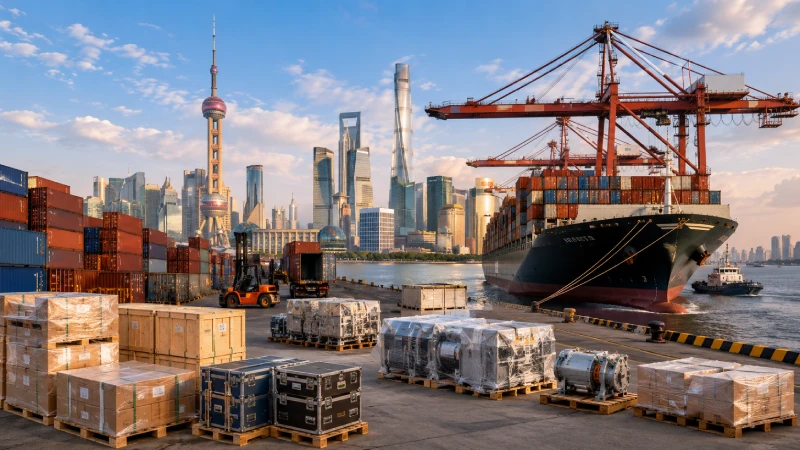
Risk Factors When Shipping from Shanghai to Qatar
Shanghai is powerful, but choosing it for the wrong reason can create avoidable cost. The most common risk is using Shanghai when the supplier base is actually closer to another port. If the cargo is produced in Guangdong, Shandong, or inland regions far from East China, inland pickup to Shanghai may increase cost and handling time.
Another risk is poor consolidation timing. If one supplier is late, the entire shipment may miss the warehouse cut-off or sailing schedule. For LCL cargo, this can delay the whole order. For high-value goods, careless warehouse handling or weak packing can also increase damage risk.
Peak season space pressure is another issue. Shanghai has strong capacity, but high-demand periods can still affect booking availability and cost. Importers shipping branded goods, urgent parts, or project cargo should avoid last-minute planning.
The main risk is not Shanghai itself. The real risk is mismatching the origin with the cargo profile. Shanghai should be selected because it improves control, not simply because it is famous.
Decision Matrix: Is Shanghai the Right Origin for Your Qatar Shipment?
| Decision Factor | Shanghai Is a Good Choice If… | Consider Another Origin If… |
|---|---|---|
| Supplier location | Suppliers are in Shanghai, Jiangsu, Zhejiang, or nearby East China cities | Suppliers are mainly in Guangdong, Shandong, or another region |
| Cargo value | Goods are high-value, fragile, technical, or branded | Cargo is low-value, simple, and bulky |
| Shipment type | You need LCL, consolidation, or mixed supplier coordination | One factory can load a full container directly |
| Urgency | Air freight backup may be needed | Cargo is not urgent and another port is much closer |
| Cargo complexity | Multiple SKUs, packing checks, or staged deliveries are involved | Shipment is routine and easy to load |
| Cost priority | Reliability and control matter as much as freight rate | Lowest inland and sea cost is the main goal |
Choose Shanghai when the shipment needs coordination, value protection, and flexible sea-air planning. Choose another origin when supplier geography and cargo type clearly support a lower-cost port.
How Winsail Helps Qatar Importers Evaluate Shanghai as an Export Origin
Winsail helps Qatar importers decide whether Shanghai is the right export origin before the shipment is booked. Instead of recommending one route automatically, we review supplier locations, cargo volume, product type, urgency, packing needs, and delivery requirements in Qatar.
For multi-supplier shipments, we can compare Shanghai consolidation against direct loading from Ningbo, Shenzhen, Guangzhou, Qingdao, or another origin. For high-value or urgent cargo, we can evaluate whether a sea-air split is more practical. For industrial cargo, electronics, spare parts, and technical goods, we can advise on packaging, warehouse handling, and shipment sequencing.
If you are unsure whether Shanghai is the best origin for your Qatar shipment, send us your supplier city list, cargo details, volume, and target delivery date. Winsail can help you compare export origins and design a shipping plan that balances cost, transit time, cargo safety, and delivery reliability.
FAQ
Is Shanghai a good port for shipping to Qatar?
Yes. Shanghai is a strong choice for diversified, high-value, technical, and multi-supplier cargo from Shanghai and the Yangtze River Delta. It is especially useful when cargo control and air freight backup matter.
What cargo is commonly shipped from Shanghai to Qatar?
Common cargo includes electronics, machinery parts, industrial equipment, medical devices, laboratory instruments, branded goods, samples, trade show materials, and mixed commercial shipments.
Is Shanghai better than Ningbo for Qatar shipments?
Shanghai is often better for high-value cargo, urgent shipments, and multi-supplier coordination. Ningbo may be more cost-effective when suppliers are closer to Zhejiang manufacturing areas and the shipment is mainly sea freight.
Is Shanghai suitable for air freight to Qatar?
Yes. Shanghai is suitable for urgent, high-value, small-volume, or time-sensitive cargo such as spare parts, electronics, samples, and medical equipment.
Should I consolidate cargo in Shanghai before shipping to Qatar?
Consolidation is useful when cargo comes from several suppliers, has different ready dates, or needs checking, labeling, repacking, or palletizing before export.
When should I avoid shipping from Shanghai?
Avoid Shanghai if all suppliers are far from East China, cargo is low-value and bulky, or another port is clearly closer and cheaper for direct loading.
Is Shanghai good for LCL shipping to Qatar?
Yes, especially when cargo comes from multiple suppliers or when the importer needs flexible consolidation. However, warehouse cut-off timing and cargo readiness must be managed carefully.
How do I decide between sea freight and air freight from Shanghai to Qatar?
Use sea freight for planned volume and cost control. Use air freight for urgent, high-value, or time-sensitive cargo. For many Qatar importers, the best solution is to ship bulk cargo by sea and urgent components by air.
