
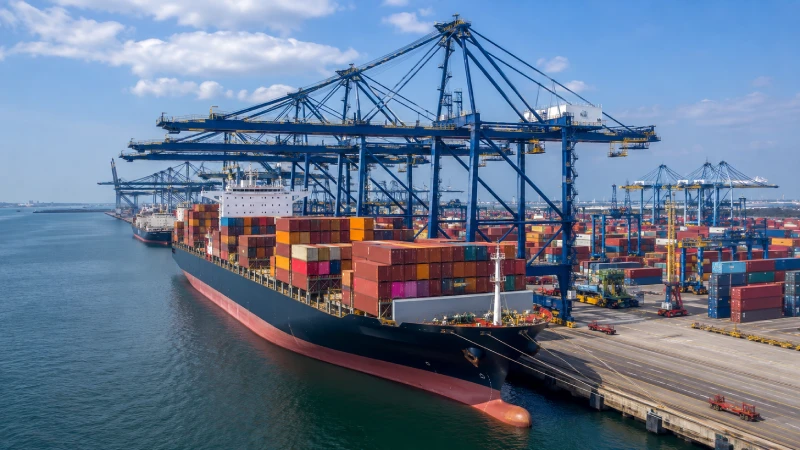
Sea freight from China to UK is usually the most economical option for importers moving commercial volumes of machinery, furniture, consumer goods, building materials, industrial components and other non-urgent cargo.
But choosing an ocean service is not simply a matter of asking for the lowest rate from Shanghai or Shenzhen to a UK port.
A strong routing decision needs to consider the complete shipment:
factory location in China → origin port → FCL or LCL → carrier service → UK gateway → destination charges → customs clearance → inland delivery to the final UK postcode.
A container with a lower ocean rate can ultimately cost more if it arrives through the wrong UK gateway, requires expensive inland haulage, has a poor sailing frequency or creates additional storage and equipment charges.
For a broader comparison of sea freight, air freight, express, DDP and other transport options, see Shipping from China to UK. This guide goes deeper into ocean freight route selection, FCL versus LCL, carrier schedules, UK port selection, destination charges and port-to-door execution.
Quick Answer: What Is the Best Way to Ship by Sea from China to the UK?
For most commercial shipments, the main China origin ports include Shanghai, Ningbo, Yantian/Shenzhen, Nansha, Qingdao, Xiamen and Tianjin/Xingang.
On the UK side, the main gateways worth comparing are:
- Felixstowe — particularly strong for East Anglia, the Midlands and nationwide rail distribution.
- London Gateway — highly competitive for London, Essex, the South East and Thames-side logistics.
- Southampton — strong for southern England, the South West, South Wales and many Midlands distribution centres.
- Liverpool — worth evaluating for Manchester, North West England and some northern destinations when the ocean service works.
The correct port is not necessarily the nearest port to your warehouse.
The better decision is normally based on:
Ocean freight + UK port charges + customs costs + inland haulage + sailing frequency + transit reliability
For shipment size, the following ranges are useful starting points:
| Cargo profile | Practical starting point |
|---|---|
| 1–5 CBM | Usually LCL |
| 5–10 CBM | Usually LCL, but check cargo density and handling risk |
| 10–15 CBM | Compare LCL and 20ft FCL |
| 15+ CBM | FCL deserves serious comparison |
| Dense/heavy cargo | Often 20GP rather than 40ft equipment |
| High-volume/light cargo | 40HC often provides better utilisation |
| Fragile/high-value cargo | FCL may be preferable even below normal volume thresholds |
These are planning guidelines, not fixed break-even points.
Transit-time assumptions also need to reflect the actual carrier network. In 2026, several major Asia–North Europe services continue to use Cape of Good Hope routings. As a practical planning range, many China–UK ocean services should therefore be budgeted at roughly 40–55 days port-to-port, depending on the Chinese origin, carrier rotation and UK call. Live schedules should always override generic transit estimates.
Main Sea Freight Routes from China to the UK
There is no single “China to UK sea route.”
China’s manufacturing regions stretch across thousands of kilometres, and moving a container to the wrong Chinese port can create unnecessary trucking costs before the ocean journey even starts.
The first routing decision should therefore be made at origin.
Practical China–UK Route Table
| Supplier location | Common origin port | UK ports to compare | Routing logic |
|---|---|---|---|
| Shanghai / Suzhou / Jiangsu | Shanghai | London Gateway, Felixstowe, Southampton | Strong Asia–Europe services and good access for Yangtze River Delta suppliers |
| Ningbo / Yiwu / Zhejiang | Ningbo-Zhoushan | Felixstowe, London Gateway, Southampton | Natural gateway for Zhejiang manufacturing and Yiwu sourcing |
| Shenzhen / Dongguan / Huizhou | Yantian / Shenzhen | Felixstowe, London Gateway, Southampton | Strong deep-sea capacity from the Pearl River Delta |
| Guangzhou / Foshan / Zhongshan | Nansha or Yantian | Felixstowe, London Gateway, Southampton | Compare origin trucking and available carrier services |
| Qingdao / Shandong | Qingdao | Felixstowe, London Gateway or connecting services | Common for machinery, tyres, industrial and manufactured cargo |
| Tianjin / Beijing / Hebei | Tianjin / Xingang | Major UK gateways via available North Europe service | Avoid unnecessary trucking south unless sailing economics justify it |
| Xiamen / Fujian | Xiamen | Major UK gateway directly or through connecting service | Check direct-call availability and transshipment pattern |
| Multiple suppliers | Selected consolidation hub | Depends on final FCL/LCL plan | Consolidation economics may determine the best origin port |
The objective is not to select the port with the cheapest ocean freight in isolation.
A supplier in Dongguan may receive a slightly lower sea freight offer from a more distant Chinese port, but trucking the cargo hundreds of kilometres across China can eliminate that advantage before the container is loaded on a vessel.
Similarly, goods manufactured around Suzhou, Hangzhou or Yiwu should normally be evaluated through Shanghai or Ningbo before considering more distant gateways.
Match the Origin Port to the Factory, Not Just the Freight Rate
A practical route plan starts by asking:
- Where is the factory?
- Is the cargo EXW, FCA or FOB?
- When will the cargo actually be ready?
- Is the shipment FCL or LCL?
- Are there multiple suppliers that need consolidation?
- Which ports have suitable weekly services at the required time?
For FCL, trucking a container from the supplier to the origin port can be a significant part of the total logistics cost.
For LCL, the forwarder also needs to determine which consolidation warehouse gives the best combination of pickup cost, consolidation frequency and sailing schedule.
If five suppliers are located around Shenzhen and Dongguan, consolidating locally and using Yantian will normally be more efficient than moving everything to East China just because an ocean rate appears lower there.
Direct Service vs Transshipment: Why It Matters
Another important route distinction is whether the shipment moves on a direct mainline service or is transferred to another vessel during transit.
A direct service does not mean the vessel sails from China to Britain without calling anywhere else. It means the container remains on the same vessel until the UK port.
A transshipment service requires the container to be discharged at an intermediate hub and loaded onto another vessel.
Depending on the carrier network, that connection may take place at an Asian or European hub.
Transshipment is not automatically a bad choice. It can provide:
- better origin-port coverage
- lower freight rates
- access to smaller ports
- more departure options
- a better destination gateway
However, it introduces another connection.
If the first vessel is delayed and misses the planned connecting vessel, the container may remain at the transshipment port until the next departure.
For inventory-sensitive cargo, a slightly more expensive direct service can therefore be commercially better than the cheapest connecting service.
Carrier Schedule Considerations
A good freight forwarder should not evaluate a vessel using transit time alone.
Carrier networks, vessel rotations and UK calls can change. For example, current Asia–Europe network structures from major carriers show different combinations of Shanghai, Ningbo, Qingdao and Yantian linked with Felixstowe, London Gateway and Southampton. This is why the exact service rotation matters more than simply choosing a shipping line by name.
Before booking, check the following.
Sailing Frequency
Imagine two services:
Service A
- 42-day port-to-port transit
- departs every week
Service B
- 38-day port-to-port transit
- departs every two weeks
If your cargo becomes ready immediately after Service B’s cut-off, the nominally faster service could deliver later.
Cargo-ready date must therefore be matched to the departure schedule.
UK Port Position in the Rotation
Where the UK port appears in a North Europe rotation can materially affect transit time.
If the UK port is the first European call, the container may discharge several days earlier than a service that calls Rotterdam, Hamburg, Antwerp or other ports first.
Another service may call London Gateway earlier but Southampton later.
That means the correct comparison is:
specific service + specific sailing + specific port rotation
—not simply “Carrier A versus Carrier B.”
Direct vs Transshipment
A direct service normally reduces connection risk.
However, a well-timed transshipment service can still be commercially attractive if it:
- sails earlier
- has better equipment availability
- provides confirmed space
- reaches a more economical UK gateway
- reduces the total landed logistics cost
The trade-off should be deliberate rather than accidental.
Blank Sailings
Container lines sometimes cancel scheduled sailings to adjust capacity.
If a weekly sailing is blanked, cargo may:
- roll to the next week’s vessel
- move onto another service
- require a different origin port
- move via transshipment
Importers shipping against strict retail or production deadlines should build schedule buffer into the plan.
Cargo Rollover
A booking confirmation does not always guarantee loading on the intended vessel.
During peak periods, cargo may be rolled because:
- the vessel is overbooked
- equipment is unavailable
- weight allocation is exceeded
- terminal conditions disrupt loading
- carriers prioritise contracted cargo
This is especially important around Chinese New Year, Golden Week and major retail replenishment periods.
Origin Cut-Off
A container must normally meet several deadlines before departure.
These may include:
- CY cut-off
- customs declaration cut-off
- shipping instruction cut-off
- VGM cut-off
- documentation deadlines
A factory saying “the cargo will be ready on Friday” does not mean it can board a vessel departing Friday.
The forwarder needs to work backwards from the vessel and terminal cut-offs.
FCL vs LCL from China to UK
Choosing between FCL (Full Container Load) and LCL (Less than Container Load) is one of the most important cost decisions in China UK ocean freight.
If the cargo does not fill a container, the China-to-UK LCL shipping guide explains groupage pricing, handling and when LCL remains practical.
The simple rule is:
- small cargo → LCL
- large cargo → FCL
But the real decision should consider:
- total CBM
- gross weight
- package dimensions
- cargo value
- handling sensitivity
- origin charges
- destination charges
- container utilisation
- transit-time requirement
- delivery method
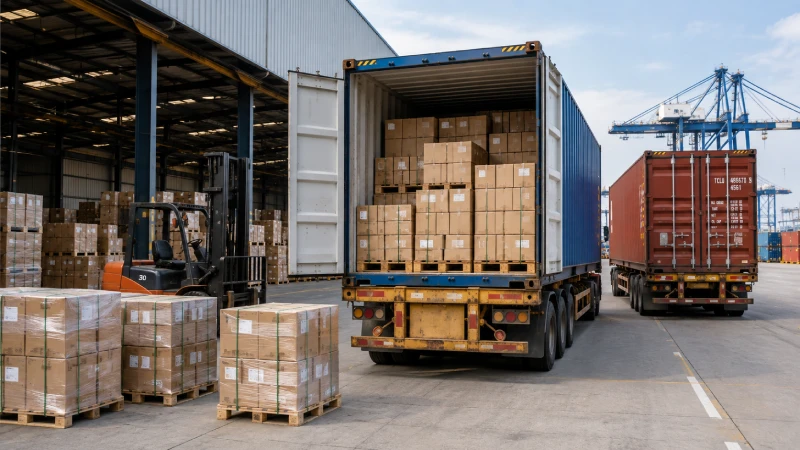
FCL vs LCL Decision Table
| Factor | LCL | FCL |
|---|---|---|
| Best for | Smaller consignments | Medium and large shipments |
| Pricing | Usually W/M or chargeable CBM | Per container |
| Shared container | Yes | No |
| Origin consolidation | Required | Normally not required |
| UK deconsolidation | Required | No |
| Number of cargo handlings | Higher | Lower |
| Transit predictability | Usually lower | Usually better |
| CFS charges | Yes | Normally no LCL CFS charge |
| Fragile cargo | Higher handling exposure | Better cargo control |
| Multiple suppliers | Very suitable | Suitable with supplier consolidation |
| High volume | Increasingly expensive | Better unit economics |
When Does FCL Become Cheaper Than LCL?
There is no universal break-even point.
For very small shipments, LCL is clearly more practical because the importer only pays for part of the container.
As cargo volume increases, however, LCL charges increase with the chargeable volume while the FCL ocean rate remains based primarily on the whole container.
The crossover often begins to deserve attention around 10–15 CBM.
Below 5 CBM
LCL will normally make more sense.
Booking an entire 20ft container for 3 CBM of ordinary cargo usually creates poor utilisation.
5–10 CBM
LCL is still normally preferred, but other factors begin to matter.
For example, a 9 CBM shipment consisting of expensive or fragile machinery may justify FCL because the importer wants fewer handling stages.
Around 10–15 CBM
Always compare both.
This is where many importers make mistakes by continuing to assume that LCL must be cheaper.
UK CFS charges, destination handling, documentation fees and final delivery can materially change the calculation.
Above Approximately 15 CBM
FCL becomes increasingly competitive.
The exact break-even depends on:
- the live 20GP rate
- LCL origin tariff
- UK destination tariff
- cargo density
- cargo dimensions
- final delivery method
- handling risk
The correct comparison is therefore complete door-to-door LCL versus FCL cost, not just the ocean freight line.
LCL Is Not Just “Ocean Freight Per CBM”
LCL quotations commonly use a weight-or-measure (W/M) calculation.
For normal cargo, the consolidator may compare the shipment’s volume and weight and charge according to the higher chargeable amount under the applicable tariff.
The ocean freight itself is only one element.
LCL can also include the following charges.
China Side
- supplier pickup
- consolidation warehouse receiving
- warehouse handling
- export documentation
- export customs declaration
- CFS charges
- pallet handling where required
UK Side
- deconsolidation
- CFS handling
- documentation
- customs clearance
- warehouse release
- pallet or handling fees where applicable
- final delivery
This explains why an advertised LCL ocean rate that is a few dollars cheaper per CBM does not necessarily create a lower delivered cost.
Sea Freight Cost Structure from China to UK
Container freight prices fluctuate significantly.
A market index can help importers understand whether ocean freight is rising or falling, but it cannot calculate the final cost from a factory in Foshan to a warehouse in Birmingham.
A real shipment contains several cost layers.
Typical FCL Cost Structure
| Stage | Typical cost item |
|---|---|
| China inland | Factory pickup / container positioning / trucking |
| China port | Terminal handling and local port charges |
| Documentation | Booking, documentation and B/L-related fees |
| Export | Customs declaration and associated handling |
| Ocean | Basic ocean freight |
| Surcharges | Carrier and trade-lane surcharges where applicable |
| UK terminal | Terminal handling / carrier destination charges |
| Documentation | Delivery order or cargo-release-related charges |
| Customs | UK import declaration |
| Government | Customs Duty and import VAT where applicable |
| Inspection | Customs or agency examination if selected |
| Port storage | If the container remains at terminal beyond free period |
| Equipment | Detention where the container is retained beyond agreed free time |
| Inland | UK container haulage or intermodal transport |
| Delivery | Unloading, devanning or final pallet distribution if required |
The number that matters is therefore not:
Ocean Freight = US$X
It is:
Total logistics cost to the final UK warehouse = £X
Why Ocean Freight Rates Move
China UK ocean freight rates can change because of:
- vessel capacity
- blank sailings
- peak-season demand
- equipment availability
- fuel costs
- route diversions
- port congestion
- carrier pricing strategy
- contract versus spot-market conditions
For this reason, a published rate should always be treated as a planning reference rather than a guaranteed future price.
For a live shipment, the forwarder should quote against:
- cargo-ready date
- origin
- container type
- UK port
- destination postcode
- required free time
- cargo classification
Destination Charges: The Part Importers Often Underestimate
Destination charges can substantially change the economics of sea shipping China to UK.
This is particularly important when comparing:
- FOB quotations
- CIF quotations
- LCL services
- different UK destination ports
- different shipping lines
Typical FCL Destination Costs
Depending on the carrier, terminal and commercial arrangement, UK destination costs can include:
- terminal handling
- port or infrastructure-related charges
- carrier documentation
- cargo release fees
- customs clearance
- examination charges if applicable
- storage
- demurrage
- detention
- container haulage
- waiting time
- additional delivery charges
Not every quotation uses the same terminology.
For this reason, comparing two freight quotations line by line can be misleading unless they cover the same scope.
Be Especially Careful with CIF Quotes
A common sourcing situation is:
“The supplier can ship CIF Felixstowe for a very low price.”
CIF means the seller arranges the main carriage and insurance to the named destination port under the Incoterm.
It does not mean the shipment has been paid through to the UK warehouse.
The importer may still face:
- destination handling
- carrier release fees
- customs clearance
- Customs Duty
- import VAT
- examination fees
- UK inland transport
- other destination charges
For some LCL shipments, a very low headline freight rate can be paired with relatively high destination charges.
When possible, request the destination-charge schedule before approving the supplier’s shipping arrangement.
How Long Does Sea Freight from China to UK Take?
Transit time should be defined before it is compared.
There are at least three different timelines commonly described as “shipping time.”
Port-to-Port
Vessel departure from the Chinese port to vessel arrival at the UK port.
Factory-to-Port
Includes China pickup and export handling before vessel departure.
Door-to-Door
Includes the entire process from factory collection through UK delivery.
These are not interchangeable.
Current 2026 Transit-Time Logic
Historic China–Europe shipping guides often quote approximately 25–35 days.
Importers should be cautious about applying those numbers to every current shipment.
Several major Asia–North Europe service networks in 2026 continue to use Cape of Good Hope routings, extending voyage distance compared with traditional Red Sea and Suez routing.
A practical planning assumption for many current China-to-UK ocean services is therefore approximately:
40–55 days port-to-port
Some sailings may be faster.
Others may take longer because of:
- port rotation
- origin location
- transshipment
- Cape routing
- congestion
- weather
- vessel delays
- blank sailings
- port omissions
Always use the live carrier schedule for the intended vessel rather than relying on a generic website transit time.
Door-to-Door Transit Is Longer Than Port-to-Port
Suppose a vessel takes 44 days from China to the UK.
That does not mean the cargo reaches the warehouse in 44 days.
A realistic timeline is:
Cargo ready → factory pickup → origin warehouse or container loading → export customs clearance → vessel cut-off → waiting for departure → ocean transit → UK vessel discharge → customs clearance → terminal release → container collection → final warehouse delivery
LCL adds another layer because the cargo normally needs:
- origin consolidation before departure
- UK deconsolidation after arrival
Consequently, an LCL shipment travelling on the same vessel as an FCL shipment may still reach the consignee several days later.
Container Sizes for China–UK Ocean Freight
Most China–UK FCL cargo moves in:
- 20GP
- 40GP
- 40HC
Special equipment is available for more demanding cargo.
| Container | Approx. internal volume | Typical use |
|---|---|---|
| 20GP | About 33 CBM theoretical | Dense or heavy general cargo |
| 40GP | About 67 CBM theoretical | Larger general cargo |
| 40HC | About 76 CBM theoretical | Bulky or lightweight cargo |
| Reefer | Lower usable volume than equivalent dry equipment | Temperature-controlled cargo |
| Open Top | Depends on equipment | Tall cargo requiring top loading |
| Flat Rack | Cargo-specific | Oversized and out-of-gauge equipment |
Equipment specifications vary by carrier, and actual permitted cargo weight can also be limited by road, terminal and operational requirements.
Do Not Use Theoretical Volume as the Loading Plan
A 40HC may have a theoretical internal volume above 76 CBM.
That does not mean you can automatically load 76 CBM of cartons.
Actual utilisation depends on:
- carton dimensions
- pallets
- cargo shape
- loading orientation
- void spaces
- door dimensions
- weight distribution
- loading equipment
- whether cartons can be stacked
A shipment measured at 70 CBM may or may not fit a 40HC.
A loading simulation or detailed packing data is safer than selecting equipment based only on total CBM.
When a 20GP Is Better Than a 40HC
Importers sometimes assume that the larger container is always the better option.
For dense cargo such as:
- steel components
- stone
- industrial machinery
- metal fittings
- hardware
the limiting factor may be weight rather than volume.
A 20GP may therefore be more practical than using a lightly filled 40ft container.
The forwarder should check container payload and UK road transport restrictions before the supplier starts loading.
Reefer Containers
Reefer equipment is suitable for temperature-controlled cargo such as certain:
- food products
- ingredients
- pharmaceuticals
- temperature-sensitive goods
Temperature setting, ventilation, humidity and regulatory requirements should be confirmed before booking.
Open Top Containers
Open tops are useful when cargo cannot be loaded through standard container doors and needs crane loading from above.
Typical examples include tall machinery and industrial equipment.
Flat Rack Containers
Flat racks are used for cargo that exceeds standard container width or height.
Typical applications include:
- large machinery
- industrial equipment
- construction equipment
- project cargo
Out-of-gauge cargo requires separate carrier approval and normally attracts additional handling and freight charges.
Which UK Port Is Best for Cargo from China?
There is no universally best UK port for China freight.
For an eastern UK gateway, review the China-to-Felixstowe route guide before comparing the complete port-to-door cost.
For most importers, the serious comparison is between:
- Felixstowe
- London Gateway
- Southampton
with Liverpool added when the final delivery location and available vessel service justify it.
The destination postcode matters, but road distance alone is not enough.
Rail availability, carrier service frequency, port charges and haulage capacity can completely change the result.
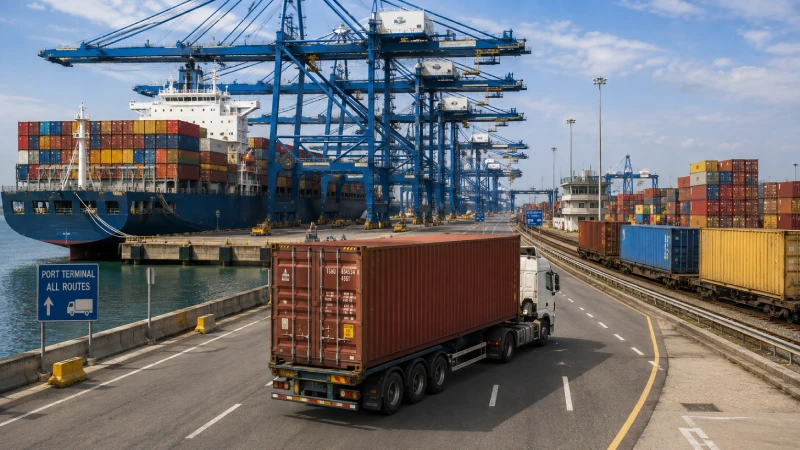
Felixstowe
Felixstowe remains one of Britain’s most important container gateways and is particularly strong in intermodal distribution.
Its extensive rail connections make it worth comparing for:
- East Anglia
- Cambridge-area distribution
- Midlands warehouses
- Birmingham-area distribution
- northern logistics centres linked by rail
- national import programmes
Its location also makes it an obvious road option for many East of England deliveries.
But the key point is that Felixstowe should not be judged only by road distance.
Its rail network can make it competitive for inland locations far from Suffolk.
For current infrastructure and rail information, importers can refer to the Port of Felixstowe rail services.
London Gateway
London Gateway is strategically positioned in Essex and is particularly attractive for London and the South East.
Its road connection to the M25 corridor and integrated rail infrastructure make it worth prioritising for cargo destined for:
- Greater London
- Essex
- parts of Kent
- Thames-side logistics parks
- South East distribution centres
- national distribution centres connected by rail
Its port and adjacent logistics park can also reduce supply-chain handoffs for businesses using port-centric warehousing.
For current terminal and infrastructure information, see DP World London Gateway.
Southampton
Southampton is often assumed to be relevant only for southern England.
That is too simplistic.
Its road and rail links can make it competitive for:
- Southampton
- southern England
- South West England
- parts of West London
- South Wales
- Midlands distribution centres
- selected northern destinations using rail
For a distribution centre near Birmingham, the correct decision should not automatically be “Felixstowe because it is the main container port.”
Southampton’s inland rail economics and carrier schedule may produce a better total result.
Current infrastructure information is available from DP World Southampton.
Liverpool
Liverpool becomes particularly interesting for importers delivering to:
- Liverpool
- Manchester
- Warrington
- North West England
- parts of North Wales
- selected northern distribution centres
From a UK inland perspective, this can be a major advantage.
However, Liverpool does not always offer the same depth of direct Far East mainline options as Felixstowe, London Gateway or Southampton.
Therefore, Liverpool should be evaluated on a shipment-by-shipment basis.
A routing via Liverpool may save several hundred pounds in inland transport but lose time or frequency on the ocean side.
The correct question is:
Does the inland saving outweigh any additional ocean cost, transshipment or schedule disadvantage?
For current terminal information, see the Port of Liverpool container terminals.
Practical UK Port Selection Table
| Final UK delivery area | Ports to compare first | Main decision factor |
|---|---|---|
| London | London Gateway, Felixstowe | M25 access, carrier schedule and haulage |
| Essex | London Gateway, Felixstowe | Short inland distance and service availability |
| Kent | London Gateway, Southampton, Felixstowe | Exact postcode and M25 route |
| East Anglia | Felixstowe | Geographic proximity |
| Birmingham / Midlands | Felixstowe, Southampton, London Gateway | Rail and road haulage cost |
| South England | Southampton | Strong road positioning |
| South West | Southampton | Inland distance |
| South Wales | Southampton, London Gateway | Rail/road combination |
| Manchester | Liverpool plus major southern/eastern ports | Compare Liverpool inland saving with ocean service |
| North West | Liverpool, Felixstowe, Southampton | Total door cost |
| Yorkshire | Felixstowe, Southampton, London Gateway | Rail service and final postcode |
| Scotland | Major UK gateways using rail/intermodal | Ocean schedule versus long-distance inland cost |
This table should be used only as a starting point.
A warehouse postcode, container size and live carrier schedule are still needed before selecting the port.
Practical Example: Shanghai to Birmingham
Consider a 40HC shipment from a factory near Shanghai to a warehouse near Birmingham.
The importer receives:
Option A: Shanghai → Felixstowe
The ocean freight is lower.
Option B: Shanghai → Southampton
The ocean freight is US$200 higher.
Choosing Felixstowe immediately because its ocean rate is cheaper would be premature.
The comparison should include:
- Shanghai origin trucking
- origin charges
- ocean freight
- Felixstowe or Southampton destination charges
- customs clearance
- rail or road delivery to Birmingham
- carrier free time
- available delivery dates
- expected vessel arrival
If Southampton saves £300 on inland logistics, the US$200 ocean difference may disappear.
If the Felixstowe vessel sails a week earlier, Felixstowe may still be the better option.
This is what practical route optimisation looks like.
Customs Preparation for Sea Freight into the UK
Customs preparation should begin before the vessel leaves China.
For imports into England, Scotland or Wales, businesses generally need an EORI number beginning with GB.
Movements involving Northern Ireland can have different requirements and may require an XI EORI depending on the transaction.
Most commercial importers appoint a customs broker or freight forwarder to make the declaration.
Official import guidance is available from GOV.UK.
Documents and Data Commonly Required
Prepare the following before arrival:
- commercial invoice
- packing list
- Bill of Lading information
- consignor details
- consignee details
- importer EORI
- accurate commodity code
- detailed product description
- quantity
- net and gross weight
- package count and packaging type
- country of origin
- customs value
- Incoterm
- transport costs where required
- licences or certificates for controlled products
HMRC’s Customs Declaration Service requires detailed information including the customs procedure, commodity code, consignor and consignee, packaging, transport method, valuation and applicable certificates or licences.
See GOV.UK guidance on making a full import declaration for current requirements.
Customs Value Is Not Always Just the Supplier Invoice
Importers also need to understand which logistics costs form part of the customs value.
Under HMRC valuation rules, transport, loading and handling costs up to the relevant place of introduction can form part of the customs value, depending on the transaction and Incoterm.
This is another reason accurate freight cost information matters.
The Incoterm affects which costs may already appear in the supplier’s invoice and which need to be separately considered for customs purposes.
See HMRC customs valuation guidance for the current rules.
Import VAT and Postponed VAT Accounting
VAT-registered UK businesses may be able to use Postponed VAT Accounting (PVA).
Instead of paying import VAT upfront and recovering it later, eligible businesses can account for import VAT through their VAT Return, subject to the normal rules.
This can be important for cash flow on larger container shipments.
The customs broker needs correct instructions because the import declaration must be completed appropriately for PVA.
Current guidance is available from GOV.UK postponed VAT accounting.
Safety and Security Data
Sea imports into Great Britain can also be subject to safety and security requirements.
The party responsible for the Entry Summary Declaration will normally manage the filing, but the importer and supplier still need to provide complete and accurate shipment information.
Avoid vague product descriptions such as:
- Parts
- Accessories
- Samples
Use clear commercial descriptions that accurately identify the goods.
Current rules can be checked in the GOV.UK Entry Summary Declaration guidance.
What Cargo Is Best Suited to Sea Freight?
Ocean freight is particularly effective when shipment size and unit economics matter more than speed.
Common cargo includes:
- machinery
- industrial components
- furniture
- homeware
- lighting
- construction materials
- textiles
- clothing
- footwear
- packaging
- auto parts
- consumer electronics
- kitchen equipment
- hardware
- wholesale products
- e-commerce inventory
Lithium Batteries
Battery products may require:
- correct UN classification
- MSDS/SDS
- test documentation such as UN38.3 where applicable
- compliant packaging
- dangerous goods declaration where applicable
- carrier approval
Acceptance rules can vary by shipping line.
Chemicals and Dangerous Goods
The forwarder needs the exact product classification before booking.
Do not book hazardous cargo as general goods and disclose its characteristics later.
Doing so can cause:
- booking rejection
- container removal
- penalties
- delays
- safety issues
Food and Agricultural Goods
Products such as food, plants and animal-origin products may be subject to additional UK border controls.
The importer should verify product-specific requirements before shipping rather than waiting until the container reaches Britain.
Machinery
Standard machinery often moves efficiently in FCL.
However, check:
- dimensions
- centre of gravity
- gross weight
- lifting points
- packaging
- whether the machinery fits through the container doors
Oversized machinery may require:
- open top
- flat rack
- breakbulk
- special lifting
Destination Delivery: From UK Port to the Final Warehouse
The shipment does not finish when the vessel reaches Felixstowe, London Gateway, Southampton or Liverpool.
A successful China–UK sea shipment requires the final UK delivery to be planned while the cargo is still at sea.
FCL Port-to-Door Process
A typical FCL import follows:
Vessel arrival → container discharge → customs clearance → carrier and terminal release → haulier collection → delivery to consignee → container unloading → empty container return
Before arranging the vehicle, confirm:
- delivery postcode
- warehouse opening hours
- booking slot
- container vehicle access
- unloading equipment
- unloading time requirements
- whether the site accepts articulated vehicles
- empty-container return requirements
Live Unload vs Devanning at a Warehouse
Not every consignee should receive a shipping container directly.
Live Container Delivery
The haulier delivers the container on the trailer.
The consignee unloads it.
The truck then takes the empty container back.
This works well when the warehouse has:
- forklift capability
- adequate loading area
- experienced staff
- fast unloading
- container vehicle access
Devanning Before Final Delivery
For some businesses, a better solution is:
Port → UK warehouse → devanning → pallet/carton delivery
This may be preferable when:
- the consignee cannot unload containers
- the location has limited vehicle access
- cargo needs sorting
- cargo is going to multiple destinations
- pallet delivery is easier
- the importer needs temporary storage
Although devanning adds handling cost, it can make the final-mile operation substantially easier.
LCL Door Delivery
LCL works differently.
After the vessel arrives:
- the master container is discharged
- it moves to the designated CFS
- the container is devanned
- individual consignments are separated
- the import shipment is customs-cleared
- the cargo is released
- final delivery is arranged
That means LCL generally contains more handling stages than FCL.
For this reason, fragile or easily damaged products should use strong export packaging.
Demurrage, Detention and Storage
These charges can turn an otherwise competitive shipment into an expensive one.
Terminology and tariff structures differ between carriers and terminals, but the practical distinctions are important.
Port or Terminal Storage
The container or cargo remains in the terminal longer than the applicable free storage period.
Demurrage
Demurrage frequently refers to carrier equipment remaining within the terminal beyond free time.
Detention
Detention frequently refers to the carrier’s container remaining outside the terminal beyond the permitted equipment free time.
Always check the shipping line’s actual tariff because terminology and combined free-time arrangements can vary.
Example
A container arrives Friday.
Customs documentation is incomplete.
The warehouse cannot take delivery until the following Thursday.
By the time clearance, collection and unloading are arranged, the shipment may exceed its free-time allowance.
Possible additional costs include:
- terminal storage
- demurrage
- detention
- wasted haulage
- rescheduled delivery
Most of this risk can be reduced by preparing the customs entry and delivery plan before arrival.
Common Sea Freight Delay and Cost Risks
| Risk | What can happen | Prevention |
|---|---|---|
| Cargo misses cut-off | Shipment waits for later vessel | Confirm cargo-ready date early |
| Blank sailing | Departure cancelled | Maintain alternative service options |
| Rollover | Container moved to later vessel | Book early during peak periods |
| Equipment shortage | No suitable container available | Reserve equipment early |
| Transshipment failure | Container misses connecting vessel | Consider direct service for urgent inventory |
| Incorrect documents | Customs clearance delayed | Pre-check documents before departure |
| Wrong HS code | Duty or compliance problem | Verify classification before shipment |
| Customs inspection | Additional time and charges | Allow operational buffer |
| LCL CFS delay | Cargo released later | Include deconsolidation time |
| Port congestion | Collection delayed | Track vessel and terminal status |
| Storage | Container remains at terminal | Clear cargo before or immediately after arrival |
| Detention | Empty container returned late | Coordinate unloading and return |
| Wrong UK port | Inland delivery becomes expensive | Compare full door cost |
| Incorrect CBM | LCL cost increases | Verify packed dimensions |
| Overweight container | Trucking or terminal problems | Check weight before loading |
| Poor packaging | Damage during LCL handling | Use export-quality packing |
One of the most preventable problems is arranging UK trucking only after the vessel has arrived.
Customs documentation, terminal release planning and provisional haulage should already be coordinated while the container is at sea.
How to Choose the Best Sea Freight Route from China to UK
A professional routing decision should be made in the following order.
Step 1: Start With the Factory
Identify:
- supplier city
- pickup address
- Incoterm
- cargo-ready date
Then determine which Chinese ports are realistically competitive.
Step 2: Calculate the Cargo Correctly
Collect:
- number of cartons
- carton dimensions
- pallet dimensions
- gross weight
- total CBM
- cargo type
Do not make FCL/LCL decisions from purchase value alone.
Step 3: Compare FCL and LCL
If the cargo is near the crossover range, calculate both.
Compare:
China origin cost + ocean freight + UK destination cost + final delivery
—not just ocean freight.
Step 4: Compare UK Gateways
Use the final postcode.
Compare at least two ports when commercially sensible.
For example:
Manchester warehouse: Felixstowe vs Southampton vs London Gateway vs Liverpool
Birmingham warehouse: Felixstowe vs Southampton vs London Gateway
London warehouse: London Gateway vs Felixstowe
Step 5: Check the Actual Vessel Rotation
Ask:
- Is it direct?
- Where does it transship?
- Is the UK the first European call?
- How often does the service sail?
- What is the cargo cut-off?
- Is equipment available?
- What route is the service currently using?
- What are the carrier’s free-time conditions?
Step 6: Calculate Port-to-Door Cost
The final comparison should look like this:
| Cost component | Route A | Route B |
|---|---|---|
| China pickup | £ | £ |
| Origin charges | £ | £ |
| Ocean freight | £ | £ |
| UK destination charges | £ | £ |
| Customs clearance | £ | £ |
| UK inland delivery | £ | £ |
| Total | £ | £ |
| Estimated door transit | Days | Days |
Only then does the importer have enough information to make a meaningful routing decision.
Three Practical Routing Scenarios
Scenario 1: 4 CBM from Yiwu to London
Cargo:
- household products
- 4 CBM
- 650 kg
- destination: London
Likely starting solution:
Yiwu → Ningbo consolidation → LCL → suitable UK CFS/gateway → customs → London delivery
Why?
The shipment is too small to justify FCL under normal circumstances.
Ningbo is geographically logical for Yiwu.
The UK solution should then be selected based on the available consolidation service and final CFS/delivery cost.
Scenario 2: 26 CBM Machinery from Suzhou to Birmingham
Cargo:
- industrial machinery
- 26 CBM
- high gross weight
- destination: Birmingham
Likely starting solution:
Suzhou → Shanghai → FCL → compare Felixstowe/Southampton/London Gateway → Birmingham
Why?
The shipment is large enough for FCL comparison and may reach container weight limitations before volume limitations.
Depending on the actual weight and dimensions, a 20GP may be more practical than a 40ft container.
The best UK gateway should be chosen after comparing inland haulage or rail options.
Scenario 3: 68 CBM Furniture from Foshan to Manchester
Cargo:
- furniture
- 68 CBM
- relatively lightweight
- destination: Manchester
Likely starting solution:
Foshan → Nansha/Yantian → 40HC → compare UK gateways including Liverpool
Why?
Furniture consumes volume quickly but is often relatively light, making a 40HC attractive.
Liverpool deserves consideration because of its inland position for Manchester.
However, the forwarder should first compare the available Far East service against services to Felixstowe, London Gateway or Southampton.
If Liverpool requires a slower or less frequent connection, the inland saving may not justify the ocean-side disadvantage.
Information Needed Before Booking Sea Freight
To build an accurate China–UK routing plan, prepare the following.
To move from route planning to booking, Winsail’s ocean freight service can compare current FCL or LCL options against the cargo and UK destination.
Origin
- supplier name
- pickup address
- Chinese city
- Incoterm
- cargo-ready date
Cargo
- product name
- HS code if known
- carton count
- carton dimensions
- total CBM
- gross weight
- pallet details
- dangerous goods status
- battery information where applicable
Destination
- UK postcode
- company/importer details
- EORI
- VAT status where relevant
- unloading capability
- warehouse booking requirements
Commercial Requirement
- target arrival date
- FCL or LCL preference if any
- acceptable transshipment
- insurance requirement
- preferred carrier if applicable
With this information, the shipment can be evaluated as a complete supply chain rather than a generic ocean freight enquiry.
Final Takeaway
The best sea freight from China to UK route is rarely determined by the lowest ocean freight rate alone.
A good shipping plan connects six decisions:
- Select the right China origin port.
- Compare FCL and LCL using total cost.
- Choose the carrier service, not just the carrier name.
- Check the actual vessel rotation and transit logic.
- Select Felixstowe, London Gateway, Southampton or Liverpool according to total UK logistics cost.
- Plan customs clearance and final delivery before the vessel arrives.
For a warehouse in Manchester, Liverpool may offer an inland advantage, but Felixstowe could have the better direct sailing.
For Birmingham, Southampton may outperform Felixstowe on one shipment while Felixstowe wins the next because of carrier timing and inland transport.
For London, London Gateway may appear geographically obvious, but a lower-cost Felixstowe service can still produce the better total solution.
That is why the correct routing calculation is:
China origin cost + ocean freight + UK destination charges + customs + inland delivery + schedule risk
—not simply:
Which port has the cheapest ocean freight?
When these elements are evaluated together, China–UK ocean freight becomes more predictable, easier to budget and less exposed to unexpected destination costs.
FAQ
How long does sea freight from China to UK take?
Under current 2026 network conditions, roughly 40–55 days port-to-port is a practical planning range for many China–UK ocean services. Actual transit depends on origin port, carrier rotation, UK gateway, route and whether transshipment is required.
How much does sea freight from China to UK cost?
Rates change frequently. The final cost depends on the China origin, container size or LCL volume, carrier, sailing date, UK port, destination charges, customs clearance and final UK delivery postcode.
Which is cheaper, FCL or LCL?
LCL is normally cheaper for small shipments. As cargo approaches roughly 10–15 CBM, compare an actual LCL quotation with 20ft FCL because destination charges and handling can move the break-even point.
Which UK port is best for shipping from China to London?
London Gateway and Felixstowe are normally the first ports to compare. The better option depends on the live carrier service, destination charges and haulage rate to the exact London postcode.
Which UK port is best for Birmingham?
Felixstowe, Southampton and London Gateway are all worth comparing. Rail availability, road haulage, carrier schedules and destination charges can matter more than simple road distance.
Is Liverpool better for Manchester deliveries?
Liverpool can offer a strong inland advantage for Manchester and North West England, but the ocean service may be less direct or less frequent than services to major southern and eastern gateways. Compare total door cost and transit time before selecting it.
What is the difference between a 40GP and 40HC?
A 40HC is taller and provides more internal volume than a 40GP, making it popular for bulky, lightweight cargo such as furniture and consumer goods. Actual usable capacity depends on packaging and loading configuration.
Can a container be delivered directly to my UK warehouse?
Yes. After customs and terminal release, an FCL container can be collected by a UK haulier and delivered to the consignee if the site has suitable vehicle access and unloading capability. Otherwise, the container can be devanned at a warehouse before final delivery.
What documents are needed for sea shipping China to UK?
Normal commercial imports typically require a commercial invoice, packing list, Bill of Lading information, commodity code, customs value, origin, consignee and consignor details, EORI information and any licences or certificates required for regulated goods.
Continue with related UK shipping guides
Use these focused guides for the next part of your China-to-UK shipping plan.
