
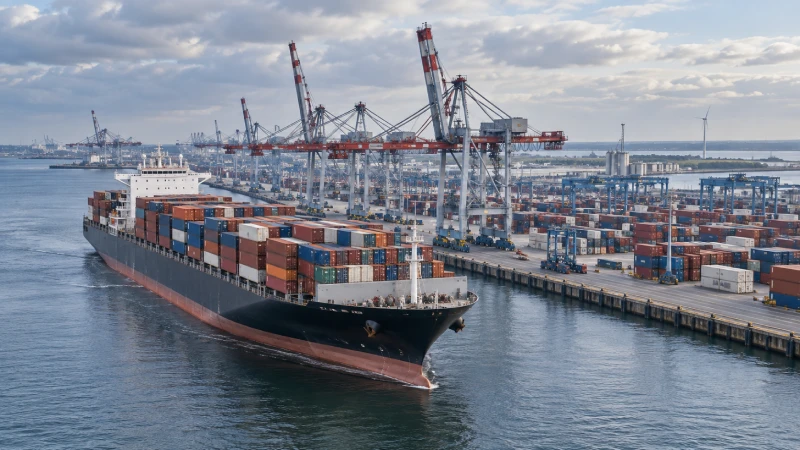
Bremerhaven is one of Germany’s most important gateways for containerised cargo, vehicles and rolling equipment arriving from China. For importers moving general commercial goods, automotive cargo, machinery or vehicles, the port can be a strong alternative to Hamburg—particularly when the carrier routing, cargo type and final German delivery location favour Bremerhaven.
Most commercial shipments from China reach Bremerhaven by FCL container, while LCL is suitable for smaller volumes. For cars, trucks, buses and self-propelled machinery, RoRo shipping may also be relevant when an appropriate carrier service is available.
However, Bremerhaven should not be confused with Bremen. Both belong to the Bremen/Bremerhaven port system, but they have different cargo strengths. Bremerhaven is particularly important for containers and automotive logistics, while Bremen’s city-port facilities play a stronger role in breakbulk, conventional cargo and high & heavy project shipments.
If you are still comparing German ports, start with our Shipping from China to Germany guide before choosing Bremerhaven, Hamburg or another entry point.
Why Ship from China to Bremerhaven?
Bremerhaven sits near the mouth of the River Weser and serves as one of Germany’s major North Sea gateways. Its location, container infrastructure, automotive terminals and inland transport connections make it suitable for a wide range of China–Germany shipments.
For most importers, Bremerhaven is especially relevant when the cargo falls into one of four categories:
- containerised commercial goods;
- vehicles and automotive cargo;
- self-propelled machinery suitable for RoRo;
- machinery or industrial cargo that can move in standard or special containers.
Its container terminal is designed for large deep-sea vessels and provides direct access to road and rail networks connecting northern Germany, western Germany and inland European destinations.
Bremerhaven is also particularly important to the automotive sector. Finished vehicles, trucks and other rolling cargo can be handled through specialised automotive facilities, which gives the port a different cargo profile from many conventional container gateways.
For official port information, see Bremenports’ Bremerhaven overview.
Bremerhaven Is Not the Same as Bremen
The names “Bremen” and “Bremerhaven” are sometimes used too loosely in freight discussions, but they should not be treated as interchangeable.
| Point | Bremerhaven | Bremen |
|---|---|---|
| Port code | DEBRV | DEBRE |
| Location | North Sea / mouth of the Weser | Inland on the Weser |
| Major strengths | Containers, vehicles, RoRo-related cargo | Breakbulk, conventional cargo, high & heavy |
| Typical China cargo | FCL, LCL, cars, auto parts, rolling equipment | Machinery, project cargo, heavy industrial shipments |
| Best used when | Mainline container or automotive service fits | Specialist breakbulk or project handling is required |
For standard container shipments, cars and many types of rolling equipment, Bremerhaven is usually the more relevant of the two.
For extremely heavy machinery, non-containerised equipment or specialised project cargo, Bremen may deserve separate evaluation.
Pro Tip: Always confirm the destination port code on the booking. DEBRV means Bremerhaven, while DEBRE means Bremen. Using the wrong port assumption can affect carrier routing, terminal charges and inland delivery planning.
China to Bremerhaven Shipping Routes
Cargo can be shipped to Bremerhaven from most major Chinese export regions.
The best origin port is not necessarily the largest port in China. It should normally be selected according to:
- factory location;
- domestic trucking distance;
- carrier schedule;
- direct or transshipment routing;
- container availability;
- ocean freight;
- sailing frequency;
- total door-to-door cost.
The main Chinese origins typically considered for Bremerhaven include Shanghai, Ningbo, Yantian, Nansha, Qingdao and Tianjin.
Main China Origins for Bremerhaven
| China Origin | Main Export Region | Indicative Ocean Transit Profile | Typical Cargo | Routing Consideration |
|---|---|---|---|---|
| Shanghai | Jiangsu, Shanghai, Yangtze River Delta | About 30–40 days | General goods, machinery, auto parts | Strong mainline coverage |
| Ningbo | Zhejiang and East China | About 31–45 days | FCL, machinery, industrial goods | Compare with Shanghai |
| Yantian / Shenzhen | Shenzhen, Dongguan, South China | About 32–42 days | Electronics, equipment, general cargo | Strong option for Pearl River Delta factories |
| Nansha / Guangzhou | Guangzhou, Foshan, Zhongshan | About 32–45+ days | Machinery, furniture, general cargo | Factory-to-port trucking matters |
| Qingdao | Shandong and North China | About 33–51 days | Machinery, auto parts, industrial cargo | Direct and transshipment services vary |
| Tianjin / Xingang | Beijing, Tianjin, Hebei | About 36–55 days | Vehicles, machinery, industrial goods | Vessel rotation can significantly affect time |
| Dalian | Northeast China | About 35–53 days | Industrial cargo, machinery | Fewer routing choices than Shanghai/Ningbo |
These are planning ranges rather than guaranteed sailing times.
A shipment quoted at 33 days on one carrier may take more than 40 days on another route because of different port rotations, transshipment arrangements or vessel schedules.
Direct vs Transshipment Services
A direct service generally reduces handling and routing complexity, but it is not automatically the cheapest option.
A transshipment route may offer:
- a lower ocean rate;
- better departure timing;
- more equipment availability;
- access from smaller Chinese ports.
However, it may also add:
- several days of transit;
- another terminal handling point;
- greater schedule variability.
For time-sensitive shipments, the routing should therefore be evaluated together with the quoted transit time rather than by freight rate alone.
Pro Tip: Do not plan around a statement such as “China to Bremerhaven always takes 32 days.” Transit time changes by port, carrier, sailing date and vessel rotation.
FCL Shipping from China to Bremerhaven
FCL, or Full Container Load, is the standard option for larger commercial shipments from China to Bremerhaven.
The most commonly used equipment includes:
- 20GP;
- 40GP;
- 40HC.
Special equipment may also be used for cargo that cannot fit into a standard dry container, including:
- open-top containers;
- flat racks;
- other carrier-approved special equipment.
20ft, 40ft and 40HC Containers
A 20ft container is often suitable for dense or heavy goods where volume is limited but weight is high.
Typical examples include:
- metal components;
- mechanical parts;
- compact machinery;
- tools;
- industrial products.
A 40ft or 40HC container is more suitable when cubic volume rather than cargo weight is the main constraint.
Typical cargo includes:
- furniture;
- finished consumer products;
- packaged machinery;
- automotive components;
- building products;
- commercial inventory.
The 40HC container provides additional internal height and cubic capacity, making it particularly useful for lightweight or bulky cargo.
When FCL Makes More Sense Than LCL
There is no universal volume at which FCL automatically becomes cheaper than LCL.
The correct comparison should include:
- total CBM;
- weight;
- China origin handling;
- LCL consolidation charges;
- ocean freight;
- Bremerhaven destination charges;
- customs handling;
- local delivery.
For example, a shipment with a relatively high CBM may appear economical as LCL based only on the ocean charge, but destination CFS and deconsolidation fees may make FCL more competitive.
FCL also reduces the number of cargo handling stages because the goods generally remain inside one container from loading until destination release.
This can be useful for:
- fragile equipment;
- high-value goods;
- machinery;
- products sensitive to repeated handling.
Pro Tip: For machinery, check payload limits, axle weights, internal dimensions and floor loading—not only whether the machine physically fits inside the container.
LCL Shipping from China to Bremerhaven
LCL, or Less than Container Load, allows several importers to share the same container.
It is commonly used for smaller commercial shipments where the volume does not justify booking an entire container.
Suitable cargo may include:
- several pallets;
- spare parts;
- small machinery;
- packaged industrial components;
- samples;
- regular low-volume inventory.
How LCL Shipping Works
A typical LCL movement involves:
- collection from the supplier or delivery to an origin warehouse;
- consolidation at a Chinese CFS;
- export customs procedures;
- loading into a shared container;
- ocean transport;
- deconsolidation in Germany;
- customs clearance;
- pickup or final delivery.
Because of these additional handling stages, LCL normally has a longer overall lead time than a comparable FCL shipment.
Why LCL Transit Can Be Longer
The vessel itself may travel at the same speed as an FCL shipment.
The difference is usually caused by processes before and after the sailing.
At origin, cargo may need to wait until the consolidation container is ready.
At destination, the container must be discharged, transferred to the CFS, stripped and separated before individual shipments can be released.
This can add several days beyond the ocean transit itself.
LCL Charging
LCL freight is typically based on chargeable volume or weight according to the consolidator’s tariff.
The final cost may include:
- China pickup;
- origin CFS charges;
- documentation;
- ocean freight;
- destination CFS charges;
- customs clearance;
- delivery.
Pro Tip: Request the destination charges in Germany before confirming an LCL booking. The lowest ocean freight per CBM does not always produce the lowest total cost.
Shipping Cars and Automotive Cargo from China to Bremerhaven
Automotive logistics are one of the strongest reasons to consider Bremerhaven.
The port has extensive vehicle handling infrastructure and is regularly used for the import, export, storage and distribution of finished vehicles.
For China-origin automotive cargo, Bremerhaven can be relevant for:
- passenger cars;
- electric vehicles;
- commercial vehicles;
- trucks;
- buses;
- auto parts;
- vehicle components;
- rolling machinery.
Official information on the port’s automotive capabilities is available from Bremenports.
Why Bremerhaven Is Important for Automotive Cargo
A major vehicle port requires more than a simple loading berth.
Automotive logistics may involve:
- dedicated car-carrier berths;
- vehicle storage;
- technical processing;
- inspection;
- onward rail transport;
- road distribution.
Bremerhaven’s existing automotive ecosystem therefore gives it a natural advantage for certain vehicle shipments.
RoRo vs Container Shipping for Vehicles
Cars can sometimes be shipped either by RoRo or container.
The better option depends on:
- vehicle type;
- quantity;
- dimensions;
- vehicle value;
- sailing availability;
- whether the vehicle runs;
- whether additional cargo must move with it.
| Factor | RoRo | Container |
|---|---|---|
| Standard passenger cars | Very suitable when service is available | Suitable |
| Multiple vehicles | Efficient for larger vehicle movements | Loading plan required |
| Trucks / buses | Strong option | Often impractical |
| Non-running vehicles | Carrier restrictions may apply | Often easier to control |
| Loose spare parts | Usually restricted | Easier to load separately |
| Cargo protection | Vehicle deck environment | Enclosed container |
| China origin availability | Route-specific | Generally broader |
For one or two high-value cars, container shipping may still be attractive where better physical separation or enclosed transport is preferred.
For trucks, buses and large rolling equipment, RoRo may be significantly more practical.
RoRo Shipping from China to Bremerhaven
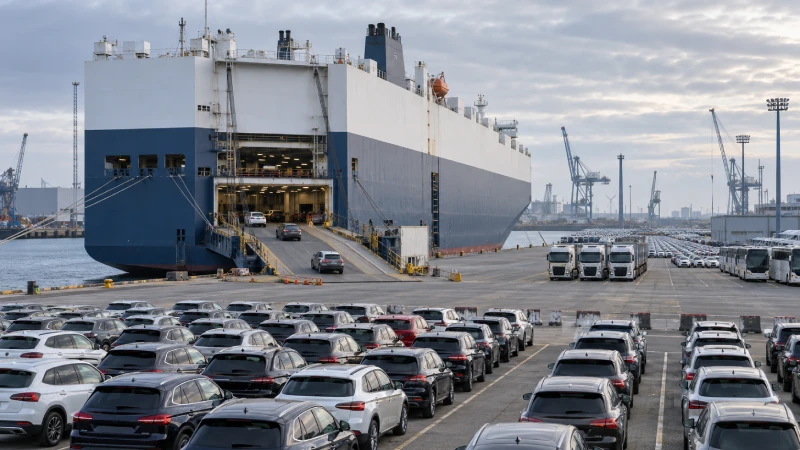
RoRo means “roll-on/roll-off.”
The cargo is driven or moved onto the vessel rather than lifted into a container.
This shipping method is especially relevant for cargo that can roll under its own power or be moved using approved terminal procedures.
Cargo Suitable for RoRo
Typical RoRo cargo includes:
- passenger vehicles;
- trucks;
- buses;
- tractors;
- excavators;
- wheel loaders;
- cranes;
- agricultural machinery;
- construction equipment;
- other wheeled or self-propelled units.
The main advantage is that large rolling cargo does not need to be dismantled to fit within container dimensions.
When RoRo May Be Better Than Flat Rack
For oversized machinery, both RoRo and flat-rack shipping may be technically possible.
RoRo may be more appropriate when:
- the unit is self-propelled;
- it can safely roll onto the vessel;
- its dimensions fit carrier limits;
- there is a suitable China-origin service.
Flat rack may be preferable where:
- there is no suitable RoRo sailing;
- the cargo does not operate;
- the unit needs controlled lashing;
- the selected container carrier offers a better schedule.
Important information for quotation includes:
- length;
- width;
- height;
- gross weight;
- model;
- operating condition;
- photographs;
- battery/fuel information.
RoRo service should never be assumed solely because the destination is Bremerhaven.
A suitable carrier, vessel rotation and origin terminal must be available for the specific shipment.
Pro Tip: For electric vehicles or battery-powered machinery, confirm battery status, dangerous-goods requirements and carrier acceptance before the unit is delivered to the terminal.
Shipping Machinery and Industrial Cargo to Bremerhaven
Bremerhaven can also be a strong arrival port for machinery and industrial cargo from China, particularly when the equipment can move inside a container or as rolling cargo.
Containerised Machinery
Machinery that fits inside a standard container can normally move by 20GP, 40GP or 40HC.
Examples include:
- production equipment;
- packaging machinery;
- pumps;
- compressors;
- generators;
- machine tools;
- industrial assemblies.
Before selecting the container, provide:
- packed dimensions;
- gross weight;
- number of packages;
- individual package weight;
- photos;
- loading method.
For heavier machinery, individual package weight matters because the equipment must also be safely loaded, positioned and unloaded.
Open-Top and Flat-Rack Machinery
Open-top containers may be useful when machinery is too high for normal container doors but can still fit within the container footprint.
Flat racks are normally considered when cargo is oversized in width, height or both.
Examples may include:
- industrial presses;
- large fabrication equipment;
- oversized machinery;
- structural equipment.
Special-equipment bookings should be confirmed before cargo arrives at the Chinese port because availability is lower than standard dry-container equipment.
Rolling Machinery
Self-propelled machinery may be suitable for RoRo.
Examples include:
- excavators;
- wheel loaders;
- mobile cranes;
- tractors;
- forklifts;
- other wheeled equipment.
For these shipments, compare RoRo against flat rack based on:
- equipment dimensions;
- operating condition;
- carrier schedule;
- freight cost;
- loading risk;
- destination handling.
Very Heavy or Non-Containerised Project Cargo
Bremerhaven should not automatically be selected for every heavy industrial shipment.
Very large, non-rolling machinery may require:
- heavy-lift cranes;
- breakbulk handling;
- project-cargo terminals;
- specialised stevedoring;
- heavy-haul road permits.
For this type of cargo, Bremen’s specialist breakbulk and high & heavy facilities may be more appropriate than Bremerhaven.
The correct decision should be made only after reviewing:
- dimensions;
- weight;
- centre of gravity;
- lifting points;
- transport drawings;
- inland delivery route.
Pro Tip: “Shipping to Bremen” and “shipping to Bremerhaven” can mean very different operations for project cargo. Select the actual terminal based on cargo-handling requirements, not just the city name on the enquiry.
China to Bremerhaven Transit Time
Shipping time should be divided into two different concepts:
- port-to-port ocean transit time;
- total door-to-door lead time.
Confusing these two can result in unrealistic delivery expectations.
Port-to-Port Transit
For many China origins, container transit to Bremerhaven may fall within roughly 30–45 days, although some routes from North China or transshipment services may take longer.
Typical planning ranges include:
| Origin | Indicative Transit |
|---|---|
| Shanghai | About 30–40 days |
| Ningbo | About 31–45 days |
| Shenzhen / Yantian | About 32–42 days |
| Guangzhou / Nansha | About 32–45+ days |
| Qingdao | About 33–51 days |
| Tianjin / Xingang | About 36–55 days |
Actual transit should always be checked against the specific sailing.
Time Before Vessel Departure
Cargo does not normally leave China immediately after collection from the factory.
Additional origin time may be needed for:
- supplier pickup;
- warehouse receiving;
- consolidation;
- export customs;
- container loading;
- terminal gate-in;
- vessel cut-off.
LCL cargo normally requires more origin preparation than FCL.
Time After Arrival in Bremerhaven
After the vessel arrives, additional time is required before the cargo reaches the consignee.
This may include:
- vessel discharge;
- terminal processing;
- customs declaration;
- customs inspection if selected;
- release;
- container pickup;
- LCL deconsolidation;
- inland transport.
Therefore, a 35-day ocean transit does not mean the cargo reaches the final German address in 35 days.
What Can Delay a Shipment?
Common causes include:
- transshipment delays;
- blank sailings;
- terminal congestion;
- Chinese public holidays;
- European holidays;
- customs examination;
- incorrect documentation;
- dangerous-goods approval;
- delayed LCL consolidation;
- special-equipment shortages;
- truck or rail capacity.
Allowing reasonable buffer time is particularly important for factory projects, vehicle deliveries and time-sensitive inventory.
Shipping Cost from China to Bremerhaven
There is no reliable permanent price for shipping from China to Bremerhaven.
Ocean freight changes according to:
- market conditions;
- vessel capacity;
- season;
- carrier;
- origin;
- container type;
- cargo characteristics;
- sailing date.
A useful quotation should therefore show more than the basic ocean freight.
Main Cost Components
| Cost Component | FCL | LCL | RoRo / Vehicle |
|---|---|---|---|
| Factory pickup | If required | If required | If required |
| China export handling | Yes | Yes | Yes |
| Ocean freight | Per container | Based on CBM/weight | Unit or measurement-based |
| Documentation | Yes | Yes | Yes |
| German terminal / CFS | Yes | Yes | Yes |
| Customs clearance | If arranged | If arranged | If arranged |
| Duty / import VAT | Cargo-specific | Cargo-specific | Cargo-specific |
| Inland delivery | Container truck / rail | Truck | Vehicle transporter / truck / rail |
| Special handling | Cargo-dependent | Cargo-dependent | Often cargo-specific |
Factors That Change the Freight Rate
China Origin
A factory located near Ningbo may be cheaper to ship through Ningbo than by trucking the cargo to Shanghai just because a Shanghai ocean rate looks slightly lower.
Always compare:
factory pickup + origin handling + ocean freight
rather than ocean freight alone.
Container Size
20GP, 40GP and 40HC containers have different rates.
The cheapest equipment depends on cargo volume and weight.
Cargo Weight
Heavy containers may trigger:
- truck restrictions;
- axle-weight issues;
- overweight fees;
- special handling.
Season
Rates often change around:
- Chinese New Year;
- Golden Week;
- peak retail seasons;
- periods of vessel capacity disruption.
Direct vs Transshipment Service
The cheapest rate may use a slower service.
The importer should decide whether the savings justify the additional transit time.
Dangerous Goods
Batteries, chemicals and other regulated cargo may require:
- DG declaration;
- special packaging;
- carrier approval;
- surcharges.
Oversized Cargo
Flat rack, open top and project cargo require individual pricing.
German Delivery Postcode
Inland delivery can significantly change the total landed logistics cost.
A low ocean rate to Bremerhaven may not be the best option if another German port provides a cheaper inland connection.
Pro Tip: Compare the total cost to the final German delivery address, not just the freight rate between the Chinese port and Bremerhaven.
Customs Clearance in Bremerhaven
Goods imported from China into Germany must complete EU customs procedures before they can enter free circulation.
Customs requirements depend on:
- importer structure;
- commodity classification;
- customs value;
- country of origin;
- product type;
- regulatory requirements.
For official guidance, refer to German Customs.
Basic Import Documents
Common documentation includes:
- commercial invoice;
- packing list;
- bill of lading;
- HS/CN classification;
- EORI details where applicable;
- customs value information;
- certificates or permits for regulated products.
The invoice should clearly identify:
- seller;
- buyer;
- product description;
- quantity;
- value;
- Incoterm;
- currency.
Vague descriptions such as “parts” or “equipment” can cause classification or clearance problems.
HS Code and TARIC Classification
The customs duty rate depends on the correct commodity classification.
European imports use the EU Combined Nomenclature and TARIC system.
The correct code may also determine:
- anti-dumping measures;
- licensing requirements;
- product restrictions;
- additional documentation.
The factory HS code provided in China should therefore be treated as a useful reference, not automatically accepted as the final EU customs classification.
For tariff and import requirement checks, use the European Commission’s Access2Markets.
EORI
Businesses involved in EU customs procedures normally require an appropriate EORI number when acting as the importer or customs party.
The correct setup depends on whether the importer is:
- a German company;
- another EU company;
- a non-EU company using customs representation.
This should be confirmed before the cargo arrives.
Customs Duty and Import VAT
Customs duty depends on the product classification and applicable EU tariff.
Germany’s standard import VAT rate is generally 19%, although a reduced rate applies to certain goods.
For many commercial imports, the calculation may involve:
- customs value;
- applicable customs duty;
- import VAT base;
- import VAT.
Do not assume all goods from China have the same duty rate.
Some products may also be subject to:
- anti-dumping duties;
- safeguard measures;
- excise duties;
- special trade measures.
Product Compliance Is Separate from Customs Clearance
Customs release does not automatically mean a product is compliant for sale or use in Germany.
Depending on the product, additional requirements may involve:
- CE conformity;
- machinery safety;
- electrical safety;
- EMC;
- RoHS;
- batteries;
- packaging obligations;
- vehicle approval;
- food controls;
- medical-device rules.
Compliance should ideally be checked before the goods leave China.
Pro Tip: Customs classification, import duty and product compliance should be reviewed before booking—not after the vessel reaches Bremerhaven.
German Inland Delivery from Bremerhaven
Bremerhaven is only the seaport.
Most commercial cargo still needs to travel to a warehouse, factory, dealer or distribution centre elsewhere in Germany.
Inland transport can normally be arranged by:
- truck;
- rail;
- rail + truck.
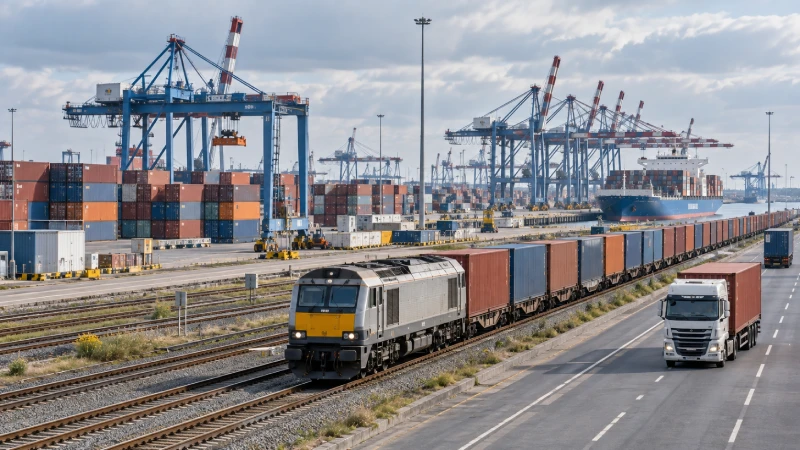
Bremerhaven’s port railway connects terminal areas with Germany’s wider rail network. See the Bremenports port railway overview.
Truck Delivery
Truck delivery is the most flexible option.
It is commonly used for:
- FCL containers;
- LCL cargo;
- urgent shipments;
- northern German destinations;
- locations without convenient rail access.
The quotation should include the exact postcode because truck cost depends heavily on distance and local delivery conditions.
For FCL shipments, additional questions may include:
- live unloading or drop-and-pick;
- unloading time;
- container return;
- delivery appointment;
- site accessibility.
Rail Delivery
Bremerhaven has extensive port railway infrastructure connecting the terminals with Germany’s inland rail network.
Rail can be particularly useful for:
- regular container flows;
- longer inland distances;
- intermodal logistics;
- high-volume cargo.
It may be competitive for central and southern German destinations where an inland rail terminal is available.
Rail + Truck
Many inland movements combine both modes.
A typical structure is:
Bremerhaven terminal → inland rail terminal → truck → consignee
This can reduce long-distance road mileage while retaining final-mile flexibility.
Final Delivery Planning
Provide the following information before requesting inland transport:
- German postcode;
- container type;
- cargo weight;
- unloading method;
- delivery restrictions;
- whether the site has a dock or forklift;
- required delivery date.
Pro Tip: Always provide the final delivery postcode when comparing Bremerhaven with Hamburg. The port with the lower ocean freight is not always the port with the lowest total delivered cost.
Bremerhaven vs Hamburg: Which Port Should You Choose?
Bremerhaven and Hamburg are both major German seaports and both handle significant China-related container traffic.
Neither is automatically better.
The correct choice depends on:
- Chinese origin;
- carrier;
- cargo;
- shipping mode;
- sailing frequency;
- inland destination;
- total logistics cost.
Bremerhaven vs Hamburg Comparison
| Requirement | Bremerhaven | Hamburg | Likely Decision |
|---|---|---|---|
| Standard China FCL | Strong | Strong | Compare actual sailing and total cost |
| China LCL | Available | Large consolidation market | Compare CFS and destination charges |
| Passenger cars | Major strength | Available | Often favour Bremerhaven |
| RoRo / rolling machinery | Highly relevant | Service-dependent | Check current carrier route |
| Containerised machinery | Strong | Strong | Compare route and inland delivery |
| Heavy non-rolling machinery | Case-specific | Multipurpose options | Also evaluate Bremen/project terminals |
| Northwest Germany | Strong | Strong | Bremerhaven often logical |
| Central Germany | Strong road/rail | Strong road/rail | Calculate inland cost |
| Southern Germany | Good intermodal options | Strong rail connectivity | Depends on inland terminal |
| Eastern/Central European rail | Possible | Strong network | Hamburg may have an advantage on some corridors |
When Bremerhaven May Be the Better Choice
Bremerhaven may be particularly attractive when:
- the selected carrier has a direct Bremerhaven call;
- the cargo is automotive-related;
- RoRo handling is important;
- the consignee is in northern or western Germany;
- inland rail/truck connections are competitive.
When Hamburg May Be the Better Choice
Hamburg may be stronger when:
- the carrier offers a better China service;
- the shipment is LCL and the consolidator uses Hamburg;
- the final destination aligns better with Hamburg’s rail network;
- ocean freight or equipment availability is better;
- the importer already has established customs and warehouse arrangements there.
Do Not Compare Only Ocean Freight
A proper port comparison should use:
Ocean freight
+ destination handling
+ customs costs
+ storage/free-time risk
+ inland transport
+ cargo-specific handling
= real delivered logistics cost
For a difference of only a few hundred dollars in ocean freight, inland transport can easily change which port is actually cheaper.
Port congestion should also be treated as a current operational factor rather than a permanent advantage of one port.
Which Shipping Method Is Best for Your Cargo?
The following table provides a practical starting point.
| Cargo | Recommended Method | Bremerhaven Suitability | Key Consideration |
|---|---|---|---|
| General commercial goods | FCL / LCL | Excellent | Compare total FCL/LCL cost |
| Auto parts | FCL / LCL | Excellent | Strong automotive ecosystem |
| Passenger cars | RoRo / container | Excellent | Confirm carrier service |
| Trucks and buses | RoRo | Excellent | Provide dimensions and weight |
| Construction machinery | RoRo / flat rack | Strong | Check rolling capability |
| Agricultural machinery | RoRo / flat rack | Strong | Carrier approval required |
| Standard machinery | FCL | Strong | Check payload and loading |
| Oversized machinery | Flat rack / open top | Case-specific | Special equipment required |
| Heavy non-rolling project cargo | Breakbulk | Evaluate separately | Bremen may be more suitable |
| EV / battery vehicles | RoRo / container | Case-specific | DG and carrier requirements |
How Shipping from China to Bremerhaven Works
01 — Send Cargo Details
Provide:
- commodity;
- quantity;
- dimensions;
- weight;
- cargo value;
- supplier location;
- German delivery postcode.
For machinery or vehicles, also provide photos and model information.
02 — Select the Shipping Method
The cargo is evaluated for:
- FCL;
- LCL;
- RoRo;
- special container;
- project cargo.
The shipping method should be selected according to total cost, handling risk and route availability.
03 — Confirm the China Origin Port
The origin port is selected based on the supplier location and carrier schedule.
Possible origins include:
- Shanghai;
- Ningbo;
- Yantian;
- Nansha;
- Qingdao;
- Tianjin.
04 — Export Handling in China
Depending on the Incoterm and service scope, this may include:
- factory pickup;
- warehouse delivery;
- container loading;
- export declaration;
- terminal handling.
05 — Ocean Shipping to Bremerhaven
The cargo sails on the confirmed carrier route.
The booking should show whether the service is:
- direct;
- transshipment.
06 — German Customs Clearance
Import documentation is submitted and any required:
- duty;
- import VAT;
- inspection;
- regulatory clearance
is completed.
07 — Terminal or CFS Release
FCL containers are released from the terminal after clearance.
LCL cargo normally requires deconsolidation before pickup.
Vehicles follow the relevant terminal release procedure.
08 — Inland Delivery
The cargo continues by:
- truck;
- rail;
- combined rail/truck.
Final delivery is arranged according to the consignee’s postcode and unloading conditions.
How to Reduce Shipping and Customs Risks
China–Bremerhaven shipments can often be made more predictable by identifying problems before the cargo leaves the factory.
Confirm the Correct Cargo Description
Avoid vague descriptions.
Use accurate commercial descriptions such as:
- CNC machining centre;
- automotive drive shaft;
- electric pallet truck;
- aluminium furniture frame.
Better descriptions help with:
- customs classification;
- carrier acceptance;
- dangerous-goods review.
Check Container Loading Before Booking
For machinery and dense cargo, confirm:
- dimensions;
- package weight;
- container payload;
- door dimensions;
- floor loading.
Review Product Compliance Early
Compliance issues discovered after arrival may result in:
- customs holds;
- storage;
- testing;
- return shipment;
- destruction in serious cases.
Check Free Time
For FCL shipments, confirm:
- demurrage;
- detention;
- terminal storage;
- free days.
Unexpected customs delays can otherwise create significant charges.
Compare the Full Routing
The cheapest China origin port may not be the best option after factory pickup is included.
The cheapest German port may not be the cheapest after inland delivery is included.
Plan the shipment as one complete route.
Need to Check Whether Bremerhaven Fits Your Shipment?
Bremerhaven can be an excellent entry point for containers, vehicles and rolling machinery from China, but the correct route depends on the exact cargo.
Send us:
- China pickup location;
- cargo description;
- quantity;
- dimensions;
- gross weight;
- total CBM;
- preferred shipping method if known;
- German delivery postcode.
We can compare the practical options for FCL, LCL, RoRo and German inland delivery and determine whether Bremerhaven, Hamburg or another German port provides the better routing.
FAQ
How long does shipping from China to Bremerhaven take?
For many major Chinese ports, ocean transit to Bremerhaven is roughly 30–45 days, although some North China and transshipment routings may take longer. Always confirm the current sailing schedule before booking.
How much does shipping from China to Bremerhaven cost?
The cost depends on the Chinese origin, container size, cargo volume and weight, carrier, sailing date, FCL or LCL service, destination charges, customs requirements and German delivery postcode.
Is Bremerhaven good for shipping cars from China?
Yes. Bremerhaven is one of Germany’s major automotive logistics ports and is particularly well suited to finished vehicles and related automotive cargo.
Can I ship vehicles from China to Bremerhaven by RoRo?
Yes, where a suitable carrier service is available. RoRo is especially relevant for passenger cars, trucks, buses, tractors, construction equipment and self-propelled machinery.
Can I ship machinery from China to Bremerhaven?
Yes. Machinery can move by standard container, open top, flat rack or RoRo where suitable. Extremely heavy or non-containerised machinery may require a specialist breakbulk terminal.
What is the difference between Bremen and Bremerhaven ports?
Bremerhaven is particularly important for containers, vehicles and RoRo-related cargo, while Bremen has stronger specialisation in breakbulk, conventional cargo and high & heavy shipments. Bremerhaven uses port code DEBRV, while Bremen uses DEBRE.
Is Bremerhaven or Hamburg better for shipments from China?
It depends on the carrier service, cargo type, sailing schedule, destination charges and inland delivery cost. Bremerhaven is particularly strong for automotive and RoRo cargo, while Hamburg has extensive China container and rail connections.
What customs documents are required in Bremerhaven?
Typical commercial shipments may require a commercial invoice, packing list, bill of lading, correct HS or CN classification, EORI information where applicable and any product-specific certificates or permits.
What is the port code for Bremerhaven?
The UN/LOCODE for Bremerhaven is DEBRV. Bremen is DEBRE.
Can cargo be delivered from Bremerhaven to other parts of Germany?
Yes. Cargo can continue by truck, rail or combined rail and truck to destinations throughout Germany.
Is LCL available from China to Bremerhaven?
Yes. LCL can be arranged from major Chinese export regions, but the German deconsolidation point and destination charges depend on the consolidator.
Should I use Bremerhaven for oversized machinery?
Not automatically. Flat rack, open top or RoRo may work for some oversized equipment, while extremely heavy or non-rolling machinery may be better routed through Bremen or another specialist project-cargo terminal.
Can electric vehicles be shipped from China to Bremerhaven?
Potentially yes. EV shipments require carrier-specific acceptance and battery-related documentation, and the exact requirements depend on vehicle condition, battery type, state of charge and shipping method.
