

Central Asia is becoming an increasingly important market for Chinese exporters, and for landlocked destinations, freight does not always move through a seaport.
Road transport through Xinjiang provides a direct overland connection between China and Central Asia. These same western corridors also form part of a wider Eurasian transport network extending toward the Caucasus, West Asia and Europe.
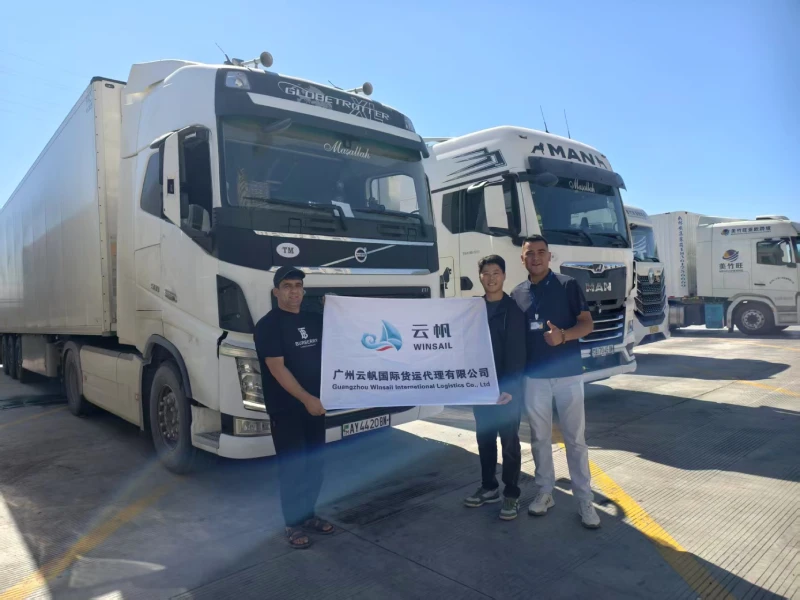
To better understand how these routes operate in practice, Winsail Logistics CEO Kofi recently travelled to Xinjiang and visited the Khorgos area, studying cross-border trucking operations, border logistics and the transport process behind China–Central Asia road freight.
Xinjiang Is More Than One Border Crossing
Khorgos is one of the most important road gateways on the China–Kazakhstan border, but it is only one part of Xinjiang’s international road network.
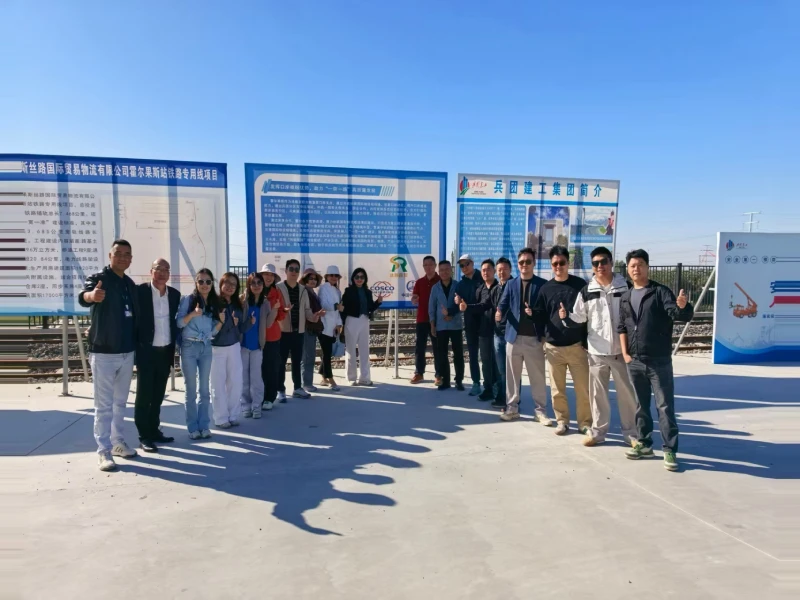
China also connects with Kazakhstan through Alashankou and other crossings, with Kyrgyzstan through Irkeshtam and Torugart, and with Tajikistan through the Karasu–Kulma crossing.
This means there is no single “China to Central Asia trucking route.”
The correct border and transport plan depend on the pickup location in China, final destination, cargo type, vehicle requirements and current border conditions.
That was one of the most important practical points behind Kofi’s Xinjiang visit.
What Happens Between the Factory and the Destination?
International road freight involves much more than booking a truck.
A typical shipment may move through several stages:
China factory pickup → domestic trucking → Xinjiang gateway → export customs → border handling → international road transport → destination customs → final delivery
Depending on the route, the same vehicle may not necessarily complete every part of the journey.
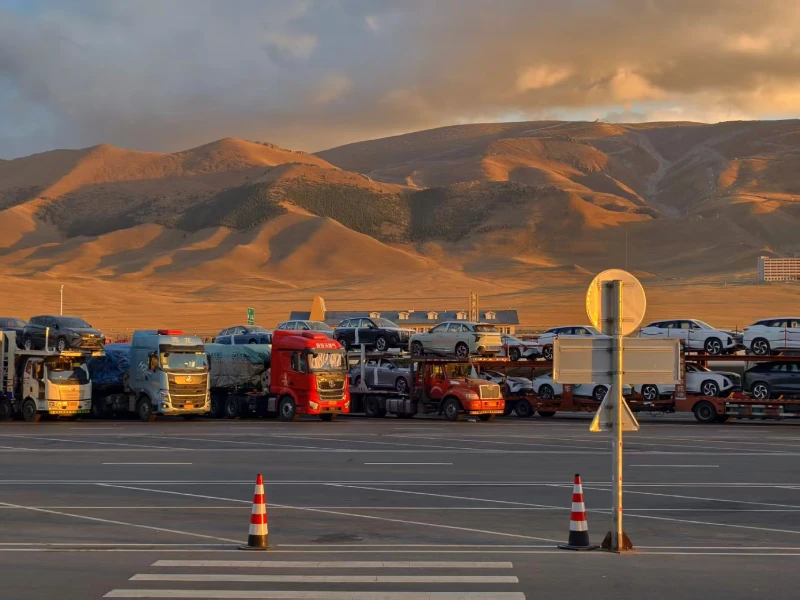
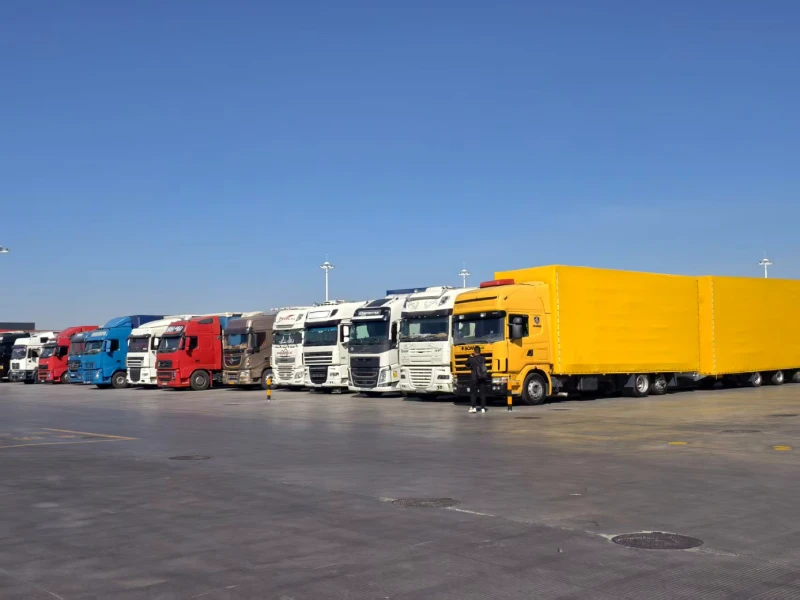
Some shipments require a change of truck, trailer or cargo transloading at or after the border. Vehicle availability, permitted payload, cargo dimensions and local transport regulations can therefore affect both the routing and the final freight cost.
Different Countries Need Different Routes
Although the five Central Asian countries belong to the same region, their road connections with China are quite different.
Kazakhstan has the most direct connection with the Khorgos corridor. Cargo can enter Kazakhstan and continue toward Almaty, Astana, Shymkent and other inland destinations.
Uzbekistan does not share a border with China. Road freight therefore normally transits another Central Asian country, with routes through Kazakhstan or Kyrgyzstan selected according to the origin and destination.
Kyrgyzstan shares a direct border with China. Irkeshtam and Torugart provide important alternatives, while routes through Kazakhstan may also be considered for certain destinations.
Tajikistan also has a direct road connection with China through the Karasu–Kulma crossing. Route planning needs to consider destination, seasonal road conditions and cargo requirements.
Turkmenistan is reached through regional transit routes connecting China with other Central Asian countries before entering the destination market.
This is why Winsail does not intend to use one fixed route for every Central Asia shipment.
FTL, LTL and TIR Transport
Road freight can also be organised in different ways.
For larger shipments, FTL — Full Truckload provides a dedicated truck and is often suitable for machinery, industrial equipment, auto parts, commercial goods and other sizeable cargo.
For smaller loads, LTL — Less-than-Truckload consolidation may be available on selected routes, allowing several shipments to share transport capacity.
For suitable international routes, TIR transport can help simplify customs transit across multiple participating countries.
The appropriate model depends on the cargo, route, vehicle availability and customs requirements rather than simply the shipment weight.
Documents Matter Before the Truck Reaches the Border
International trucking also requires closer coordination between transport and customs documentation.
For many cross-border road shipments, the CMR consignment note is an important transport document. Commercial invoices, packing lists, customs declarations and other shipment information also need to remain consistent.
Cargo such as batteries, chemicals, oversized equipment or temperature-controlled goods may require additional documents or route approval.
This is another reason Winsail recommends checking the shipment requirements before dispatch rather than resolving documentation issues only when the truck reaches the border.
Road Freight Is About Flexibility
Road freight is not automatically better than rail or air freight.
Its main advantage is flexibility.
A truck can often connect the Chinese supplier, border gateway and inland destination with fewer terminal transfers. This can make road freight particularly useful when the consignee is located far from a railway terminal or when the shipment needs a more flexible pickup and delivery plan.
Rail may remain attractive for larger or regular volumes, while air freight is more appropriate for highly urgent shipments.
The best transport method should therefore be selected around the actual shipment.
Building Winsail’s Central Asia Road Freight Service
Kofi’s Xinjiang visit was not simply a visit to a border port.
It gave Winsail a closer look at how international road freight operates in practice — including route selection, border crossings, vehicle connections, documentation and onward delivery.
It also showed why Xinjiang should be viewed as more than a gateway to one country.
The region connects Chinese manufacturing and sourcing markets with Kazakhstan, Uzbekistan, Kyrgyzstan, Tajikistan and Turkmenistan, while forming part of a broader overland network across Eurasia.
Winsail is now using this field experience to develop its Central Asia Road Freight service around a simple principle:
choose the route according to the cargo and destination, rather than forcing every shipment into the same transport model.
