
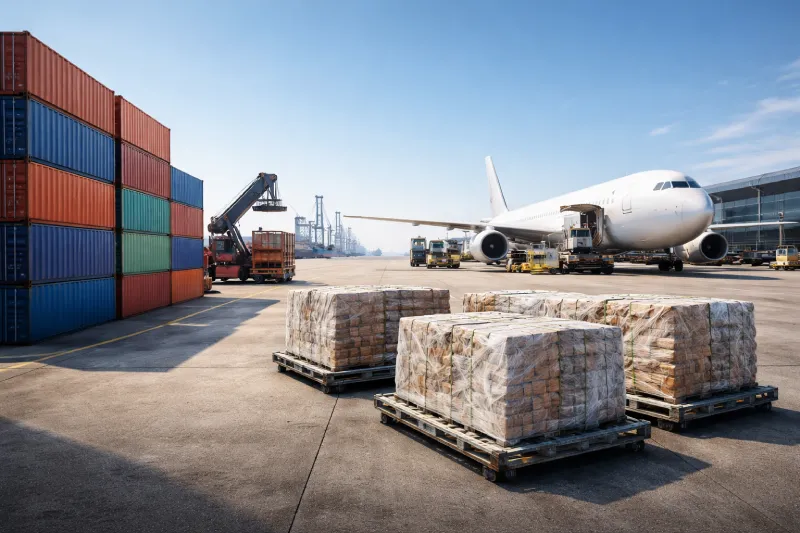
Choosing the Best Shipping Method from China to Ethiopia
Choosing the best shipping method from China to Ethiopia is not a one-size-fits-all decision. The right option depends on how your cargo moves into a landlocked country, how fast it must arrive, and how much cost risk you are willing to carry.
For Ethiopian importers, the key challenge is not just China to Africa, but China → seaport → inland transit → Ethiopian customs. This makes shipping method selection more strategic than in coastal markets. A low ocean freight rate can quickly lose its advantage if inland transit, congestion, or customs delays are not planned correctly.
In practice, most Ethiopia-bound shipments fall into three decision scenarios:
- Bulk or heavy cargo prioritizing cost control
- Time-sensitive or high-value goods prioritizing speed and reliability
- Small or urgent shipments where simplicity matters more than unit cost
This guide compares sea freight, air freight, and express courier options specifically for Ethiopia-bound cargo. Instead of generic logistics theory, we focus on real thresholds, transit logic, and Ethiopia-specific constraints—so you can choose the method that fits your shipment, not just the headline rate.
China to Ethiopia Shipping Methods Overview (Comparison Table)
Before diving into each option, the table below provides a high-level comparison of the main shipping methods from China to Ethiopia, based on real operational use cases.
This comparison reflects Ethiopia’s landlocked structure, inland transit requirements, and typical importer behavior — not generic global averages.
| Shipping Method | Cost Level | Transit Time* | Best For | Key Limitations |
|---|---|---|---|---|
| Sea Freight (LCL) | Low–Medium | 35–50 days | Small to mid-volume cargo (1–15 CBM) | Longer transit, consolidation delays |
| Sea Freight (FCL) | Lowest per unit | 30–45 days | Full container loads, heavy goods | Requires larger volume commitment |
| Air Freight | High | 5–9 days | Urgent, high-value, time-sensitive cargo | Volumetric weight cost |
| Express / Courier | Very High | 3–6 days | Samples, documents, <100 kg shipments | Poor cost efficiency at scale |
| DDP / Door-to-Door | Medium–High | Varies by mode | Importers avoiding clearance risk | Higher upfront cost, reliance on forwarder |
*Transit time includes international leg + inland transit, excluding customs inspection delays.
Sea Freight from China to Ethiopia (FCL vs LCL)
Sea freight is the most commonly used shipping method from China to Ethiopia, especially for commercial cargo where cost control matters more than speed. Because Ethiopia is landlocked, all ocean shipments first arrive at a regional seaport and then move inland by truck or rail to Addis Ababa or other inland destinations.
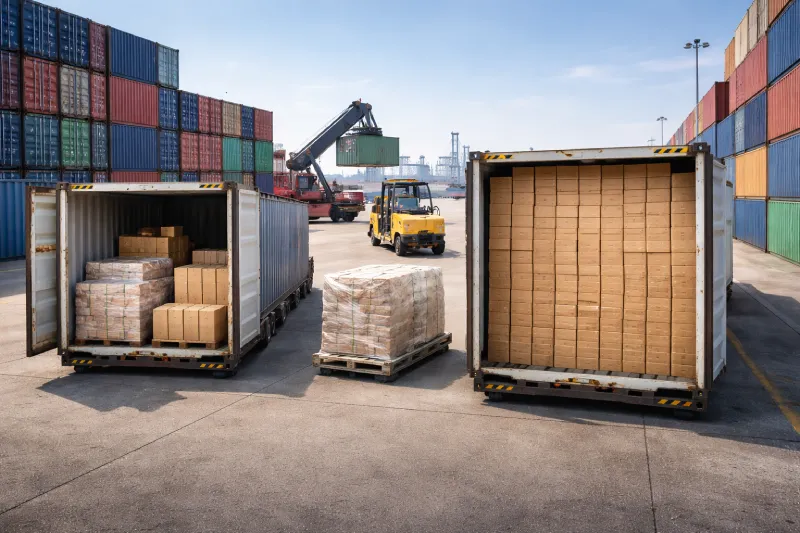
How Sea Freight to Ethiopia Actually Works
Most China–Ethiopia sea freight routes move via Port of Djibouti, followed by inland transit of roughly 2–4 days depending on congestion, documentation readiness, and customs release timing.
This makes container selection (FCL vs LCL) a critical decision.
LCL (Less than Container Load) — When Volume Is Limited
Best for:
- Shipments between 1–15 CBM
- First-time importers
- Mixed cargo or trial orders
Cost logic:
- Charged per CBM, not by weight (unless extremely dense)
- Lower upfront cost, but higher cost per unit
Transit time:
- Typically 40–50 days door-to-port, sometimes longer
- Extra time for consolidation and deconsolidation
Pros:
- No need to wait for full container volume
- Lower cash pressure for SMEs
Cons:
- Higher risk of delay from consolidation schedules
- More handling points → higher damage risk
- Less predictable arrival timing (important for Ethiopian clearance planning)
LCL works well when shipment size is small, but once volume grows, inefficiency becomes obvious.
FCL (Full Container Load) — The Preferred Option at Scale
Best for:
- Shipments above 15–18 CBM
- Heavy machinery, construction materials, FMCG pallets
- Importers with regular purchasing cycles
Cost logic:
- Fixed container rate (20GP / 40GP / 40HQ)
- Lowest cost per CBM once volume threshold is reached
Transit time:
- Typically 30–45 days to port + inland transit
- Fewer handling steps, more stable scheduling
Pros:
- Better cargo safety and sealing
- Faster and more predictable than LCL
- Easier customs coordination for Ethiopian importers
Cons:
- Requires higher upfront freight and inventory commitment
Practical Ethiopia-Specific Advice
- Below 10 CBM: LCL may be acceptable, but plan for buffer time
- Above 15 CBM: FCL is usually more economical and reliable
- Heavy cargo: FCL almost always wins, even at lower volumes
For most serious importers into Ethiopia, FCL sea freight becomes the long-term cost-efficient strategy once volumes stabilize.
Air Freight from China to Ethiopia
Air freight is the fastest commercial shipping method from China to Ethiopia, but it only makes sense when time, value, or urgency justifies the higher cost.
Most air cargo destined for Ethiopia arrives at Addis Ababa Bole International Airport, which functions as the country’s primary air logistics hub. Compared with sea freight, air shipments avoid port congestion and inland transit from coastal countries, significantly reducing overall lead time.
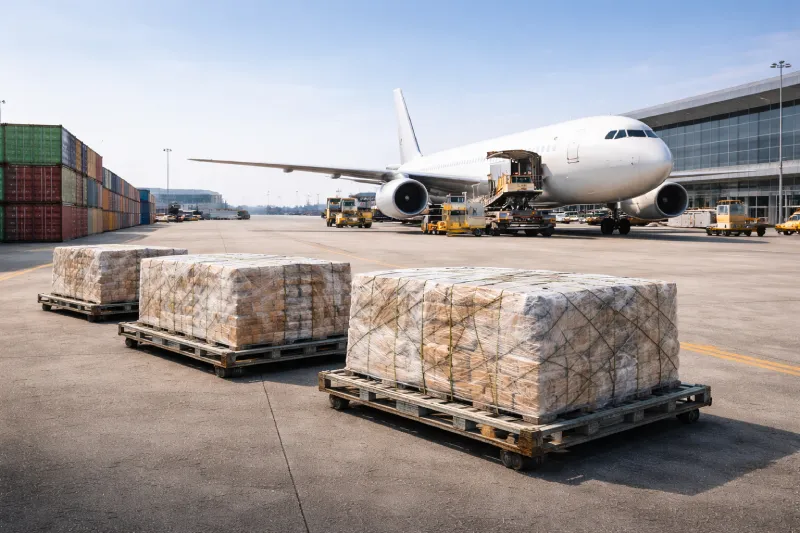
When Air Freight Makes Sense for Ethiopia
Air freight is typically chosen when:
- Cargo value is high relative to weight
- Stock-out risk outweighs freight cost
- Delivery deadlines are contractually fixed
- Goods are seasonal, promotional, or perishable
Common Ethiopia-bound air freight cargo includes electronics, medical supplies, apparel for urgent retail cycles, and industrial spare parts.
Cost & Weight Calculation Logic
Air freight pricing is based on chargeable weight, calculated as the greater of:
- Actual weight (kg)
- Volumetric weight = (L × W × H in cm) ÷ 6000
This means:
- Light but bulky cargo becomes expensive
- Dense, compact cargo is more cost-efficient by air
As a rule of thumb:
- <300 kg, urgent: air freight is often reasonable
- >500 kg or bulky: costs rise sharply, consider sea freight instead
Transit Time Expectations
Typical timelines:
- Airport-to-airport: 3–5 days
- Door-to-airport: 5–7 days
- Door-to-door: 6–9 days (excluding customs inspection delays)
While faster than sea freight, Ethiopian customs clearance still plays a role in final delivery timing.
Pros & Cons of Air Freight for Ethiopia
Pros:
- Fastest transit time
- High schedule reliability
- Reduced inventory holding cost
Cons:
- Significantly higher cost per kg
- Strict packing and documentation rules
- Less forgiving of volumetric inefficiency
Air freight is not a default choice—but when time equals money, it can be the most strategic option for Ethiopia-bound imports.
Express / Courier Shipping from China to Ethiopia
Express courier shipping is the fastest and simplest option for moving small shipments from China to Ethiopia—but it is also the most expensive per kilogram. This method is best viewed as a problem-solving tool, not a long-term logistics strategy.
The main express carriers serving Ethiopia include DHL, FedEx, and UPS. Shipments are typically flown directly to Addis Ababa and cleared under courier procedures.
When Express Shipping Makes Sense
Express is suitable if:
- Shipment weight is under 50–100 kg
- Cargo consists of samples, documents, spare parts, or test orders
- Speed and simplicity matter more than freight cost
- The importer lacks experience with freight forwarding or customs coordination
For first-time Ethiopian importers, express shipping is often used to validate suppliers or product quality before committing to sea or air freight.
Cost & Practical Limitations
Key cost realities:
- Pricing is based on chargeable weight, similar to air freight
- Rates increase sharply beyond 100–150 kg
- No cost advantage for palletized or bulky cargo
Operational limitations:
- Limited control over customs classification
- Duties and taxes are often pre-assessed or advanced by the courier
- Less flexibility in handling disputes or inspection delays
Pros & Cons for Ethiopia Importers
Pros:
- Fastest end-to-end delivery (typically 3–6 days)
- Minimal paperwork and coordination
- Ideal for urgent, low-volume needs
Cons:
- Very high unit cost
- Poor scalability
- Not suitable for regular commercial imports
Express shipping works best as a temporary or tactical solution, not as the backbone of Ethiopia-bound supply chains.
DDP & Door-to-Door Shipping to Ethiopia: When It Works (and When It Doesn’t)
DDP (Delivered Duty Paid) or door-to-door shipping is increasingly requested by Ethiopia importers who want to avoid direct involvement in customs clearance, tax calculation, and inland transport coordination. Under this model, the freight forwarder manages the shipment from China all the way to the final inland destination.

In theory, DDP simplifies importing. In practice, Ethiopia is a high-risk DDP market if the structure is not clearly defined.
When DDP Makes Sense for Ethiopia
DDP can be suitable if:
- You are a new importer unfamiliar with Ethiopian customs procedures
- Shipment size is small to medium (air freight or LCL)
- Goods are standard, non-restricted, and clearly classifiable
- You value cost predictability over cost minimization
Typical DDP users include SMEs importing consumer goods, light machinery parts, or consolidated cargo without an in-house logistics team.
Key Risks & Cost Considerations
Ethiopia-specific DDP challenges include:
- High import duties and VAT, which vary widely by HS code
- Customs inspections that may override pre-estimated taxes
- Limited transparency if the forwarder does not break down duty components
Because duties are prepaid by the forwarder, DDP quotes often appear higher upfront, but this includes risk buffering.
Important note:
- DDP is not recommended for high-value machinery or complex HS codes
- Misclassification risk shifts entirely to the service provider—and ultimately back to the importer through pricing
Practical Advice
- Use DDP for speed, simplicity, and risk transfer, not for the lowest cost
- Always confirm what is included: customs duty, VAT, inland delivery, storage
- For regular or high-value imports, DAP + self-clearance is often safer long term
DDP can work well in Ethiopia—but only with clear scope, realistic tax assumptions, and an experienced forwarder.
How to Choose the Best Shipping Method for Ethiopia
If you strip away freight terminology, choosing the best shipping method from China to Ethiopia comes down to three variables: shipment size, urgency, and cost tolerance. The framework below reflects how experienced Ethiopia importers actually decide.
Step 1: Start with Shipment Size
- Under 50 kg
- Use express / courier
- Best for samples, documents, urgent spare parts
- 50–300 kg
- If urgent → air freight
- If not urgent → LCL sea freight
- Above 300 kg or bulky cargo
- Default to sea freight
- Air becomes cost-inefficient very quickly
Step 2: Check Volume (CBM)
- Below 10 CBM
- LCL is acceptable, but expect longer transit variability
- 15–18 CBM and above
- Switch to FCL
- Lower cost per unit + more predictable delivery
Step 3: Factor in Business Model
- First-time importer
- Start with express or small LCL to reduce operational risk
- Regular commercial importer
- FCL sea freight becomes the most stable long-term option
- Time-sensitive retail or project cargo
- Air freight offsets stock-out or penalty risk
- No local clearance capability
- Consider DDP, but only for standard, low-risk goods
Simple Rule of Thumb
- Urgent + light → Air / Express
- Heavy + non-urgent → FCL Sea
- Small + non-urgent → LCL Sea
Using this framework prevents the most common mistake in Ethiopia-bound logistics: choosing based on headline freight rate instead of total delivery logic.
Final Recommendation: Which Shipping Method Is Right for You?
There is no single “best” shipping method from China to Ethiopia — only the best choice for your specific shipment.
If your priority is cost control and scalability, sea freight (especially FCL) remains the most practical option for most Ethiopian importers. If time sensitivity or cargo value matters more than freight cost, air freight offers speed and reliability. For small, urgent, or trial shipments, express courier services provide simplicity at a premium price.
The key is to evaluate the total delivery picture: freight cost, inland transit, customs exposure, and business risk — not just the headline rate.
If you’re unsure which option fits your cargo, our team can help you compare routes, costs, and risks before you ship.
