

Introduction
Selecting the best shipping method from China to Qatar is less about finding the fastest or cheapest option in isolation—and more about matching the transport mode to how Qatar actually imports goods.
Qatar’s import environment is highly centralized. Most commercial cargo flows through one primary seaport and one main international airport, with strict customs controls and relatively predictable inland delivery distances. This structure simplifies logistics on paper, but it also means that choosing the wrong shipping mode can quickly inflate costs or cause clearance delays, especially for first-time importers.
For example:
- A 6–8 CBM shipment sent by air “for speed” may cost 3–5× more than sea LCL, without saving meaningful delivery time after customs.
- A small shipment rushed via courier may clear faster, but trigger unexpected duty or documentation issues if used incorrectly for commercial imports.
- Conversely, large or bulky cargo sent as LCL instead of FCL often ends up paying more due to CBM-based pricing and port handling charges in Qatar.
This article is designed to help you make that decision correctly.
Rather than repeating general shipping knowledge, we’ll compare sea freight, air freight, courier, and optional DDP solutions specifically through a Qatar importer’s lens—looking at real cost thresholds, transit time ranges, and common use cases.
By the end, you should clearly know which shipping method fits your cargo, urgency, and risk tolerance—and which ones to avoid.
Overview Comparison
Before diving into details, the table below gives a clear, decision-focused comparison of the main shipping methods used for China–Qatar trade. This snapshot reflects real-world cost behavior, transit performance, and suitability for Qatar imports—not generic global averages.

Shipping Method Comparison Table (China → Qatar)
| Shipping Mode | Cost Level | Transit Time* | Best For | Key Limitations |
|---|---|---|---|---|
| Sea Freight (FCL) | Lowest (per unit) | 25–35 days | Full-container, heavy or bulky cargo | Requires enough volume; longer lead time |
| Sea Freight (LCL) | Medium | 28–40 days | Small–medium shipments (2–15 CBM) | CBM charges + port handling fees |
| Air Freight | High | 3–7 days | Urgent, high-value, time-sensitive goods | Volumetric weight drives cost |
| Express Courier | Very High | 3–5 days | Small parcels, samples, urgent replacements | Not cost-effective for commercial volume |
| DDP (Optional) | Medium–High | Mode-dependent | Importers wanting risk control | Less cost transparency if unmanaged |
*Transit time refers to port/airport to port/airport, excluding customs clearance and inland delivery.
How Qatar Importers Should Read This Table
- Cost sensitivity matters more than speed for most Qatar-bound cargo due to predictable inland logistics.
- Sea freight dominates for commercial imports, but choosing FCL vs LCL correctly is critical.
- Air and courier are strategic tools—not default choices—and should be used only when time or value justifies the premium.
- DDP can simplify imports, but only when structured correctly for Qatar’s customs environment.
In the next sections, we’ll break down each option in detail—starting with the most commonly used method.
Sea Freight from China to Qatar (FCL vs LCL)
For most commercial importers, sea freight is the most practical and cost-controlled shipping method from China to Qatar. The key decision is not whether to use sea freight—but whether to ship as FCL or LCL.
Qatar’s seaborne imports are highly centralized, with nearly all container cargo clearing through Hamad Port, which favors well-documented, consolidated shipments but penalizes inefficient volume use.
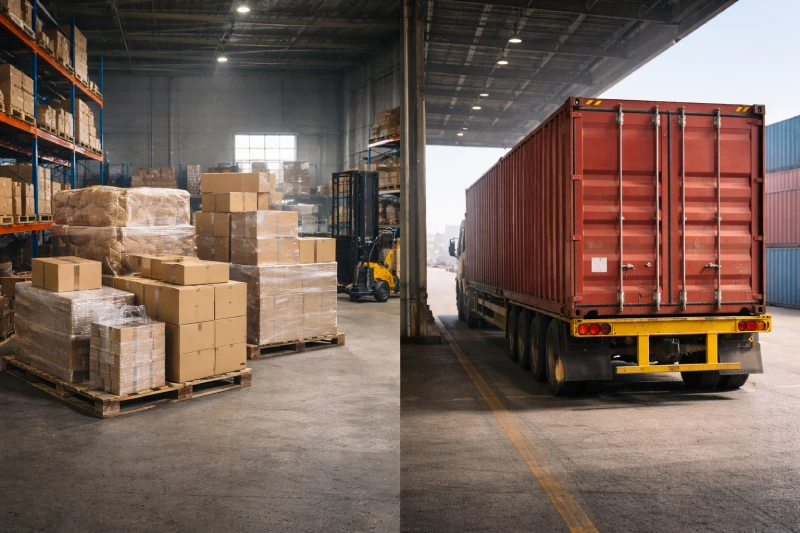
FCL (Full Container Load): Best for Cost Control at Scale
FCL means your cargo occupies an entire container (20ft or 40ft), even if it’s not fully packed.
When FCL makes sense for Qatar:
- Shipment volume ≥ 15–18 CBM
- Heavy or bulky cargo (building materials, machinery, furniture)
- Importers with stable supply schedules or project cargo
Typical transit time (China → Qatar):
- 25–35 days, depending on origin port and transshipment routing
Cost logic:
- You pay a flat container rate, not by volume
- Lower per-unit cost as volume increases
- Minimal port handling complexity at Hamad Port
Pros:
- Predictable total cost
- Faster port handling and clearance
- Lower risk of cargo damage or delay
Cons:
- Not economical for small shipments
- Requires accurate volume planning
👉 In Qatar, FCL is usually cheaper than LCL once you cross ~18 CBM, even if the container isn’t fully utilized.
LCL (Less than Container Load): Flexible but Volume-Sensitive
LCL combines your cargo with other shippers’ goods in one container. It’s common—but often misunderstood.
When LCL works in Qatar:
- Shipment volume 2–12 CBM
- Regular replenishment shipments
- Cargo not time-sensitive
Typical transit time:
- 28–40 days
- Additional time due to consolidation, deconsolidation, and inspections
Cost logic (critical):
- Charged per CBM or 1,000 kg (whichever is higher)
- Subject to destination charges:
- Port handling
- Deconsolidation fees
- Documentation fees at Hamad Port
Pros:
- No need to wait for full-container volume
- Lower upfront freight cost for small shipments
Cons (Qatar-specific):
- Destination charges can erode savings
- Clearance delays affect all cargo in the container
- Poorly packed cargo may increase billable CBM
👉 A common mistake: Shipping 10–12 CBM as LCL, then discovering total cost is close to a 20ft FCL.
Practical Rule of Thumb for Qatar
- < 8 CBM → LCL usually makes sense
- 8–15 CBM → Compare LCL vs FCL carefully
- ≥ 18 CBM → FCL is almost always more economical
Sea freight is the foundation—but it’s not always the right answer when time or cargo value changes. That’s where air freight comes in.
Air Freight from China to Qatar
Air freight is not a default solution for Qatar imports—but when used correctly, it can solve very specific business problems that sea freight cannot.
Qatar benefits from a highly efficient air cargo hub, which makes air freight operationally reliable. However, the cost structure means only certain cargo profiles truly benefit from this option.
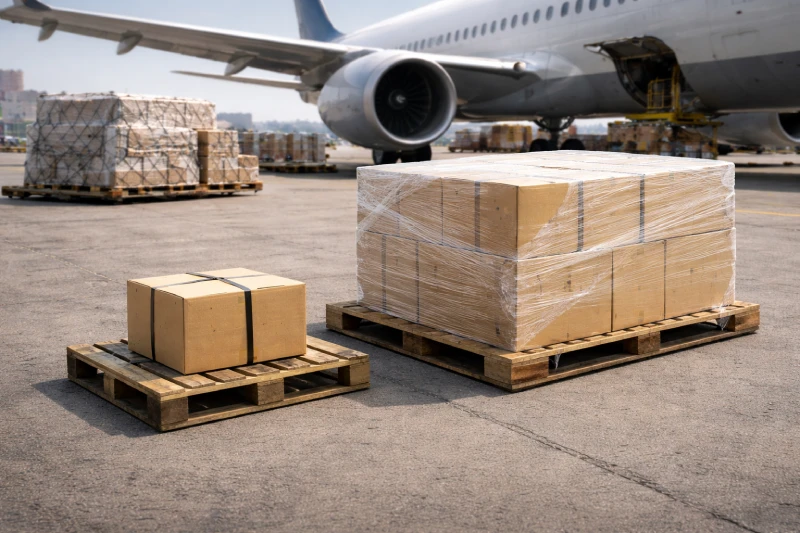
When Air Freight Makes Sense for Qatar Imports
Air freight is typically justified when time, value, or urgency outweighs cost:
- Shipment weight 100–500 kg
- High-value or fragile goods (electronics, medical devices, precision components)
- Project cargo with penalties for delay
- Production stoppages or urgent replenishment
- Seasonal or time-bound retail launches
If your cargo is bulky, low-value, or heavy, air freight to Qatar will almost always be cost-inefficient.
Transit Time Reality (China → Qatar)
Typical air freight timeline:
- Airport-to-airport: 3–7 days
- Including export handling + customs clearance: 5–10 days door-to-door
In practice, the real advantage is not just flight time—but schedule reliability compared to multi-stop sea routes.
Cost Structure: Why Air Freight Gets Expensive Fast
Air freight is charged by chargeable weight, calculated as:
Chargeable Weight = max(Actual Weight, Volumetric Weight)
Volumetric Weight = (Length × Width × Height in cm) ÷ 6000
Qatar-specific implication:
- Light but bulky cartons often cost more than expected
- Poor packaging design dramatically increases cost
- Consolidation at origin can reduce per-kg rates
👉 Many Qatar importers overpay simply because carton dimensions were not optimized before shipping.
Pros & Cons of Air Freight to Qatar
Pros
- Fastest transit option
- High schedule reliability
- Lower inventory holding risk
- Ideal for urgent or high-value cargo
Cons
- High cost per kg
- Sensitive to packaging size
- Not suitable for heavy or low-margin goods
- Still subject to customs compliance checks
Strategic Use Case Example
A Qatar trading company importing electronic components may:
- Ship core inventory by sea (FCL or LCL)
- Use air freight only for urgent top-up shipments
- Reduce stockout risk without inflating overall logistics cost
Air freight works best as a supplement, not a replacement, for sea freight.
Express Courier Shipping to Qatar (DHL / FedEx / UPS)
Express courier services are often the fastest way to ship from China to Qatar—but they are also the most misunderstood and most misused option for commercial imports.
For Qatar-bound shipments, couriers should be viewed as a precision tool, not a general logistics solution.

When Express Courier Works Best
Courier shipping is most suitable when speed and simplicity outweigh cost:
- Shipment weight under 30–50 kg
- Small parcels, samples, spare parts
- Urgent replacements or after-sales support
- Shipments with very limited commercial value
Typical transit time:
- 3–5 days door-to-door, including customs clearance
Because couriers handle customs clearance internally, they often appear “easier” than freight forwarding—especially for first-time importers.
Cost Reality for Qatar Imports
Courier pricing is based on:
- Chargeable weight (actual vs volumetric)
- Fuel surcharges
- Remote or destination handling fees
For Qatar:
- Costs escalate quickly once shipments exceed 50–70 kg
- Multiple cartons are often re-rated at higher brackets
- Commercial shipments may still trigger import duty and VAT, even when shipped by courier
👉 A common mistake is using courier for 80–120 kg shipments, where air freight would be significantly cheaper and more controllable.
Limitations & Risks (Qatar-Specific)
Key drawbacks:
- Highest cost per kg
- Limited flexibility for HS code disputes
- Less control over documentation
- Not suitable for repeated commercial imports at scale
In Qatar, repeated courier shipments for commercial resale can also raise compliance questions, especially if documentation is inconsistent.
Practical Rule of Thumb
- < 20 kg → Courier is usually fine
- 20–50 kg → Compare courier vs air freight
- > 50 kg → Air freight is often more economical
Courier shipping should be reserved for urgency-driven decisions, not routine supply chains.
DDP Shipping & Amazon FBA Considerations for Qatar
DDP (Delivered Duty Paid) shipping is often promoted as the “simplest” way to ship from China to Qatar—but in practice, it is only suitable for specific importer profiles.
For Qatar-bound cargo, DDP should be viewed as a risk-transfer model, not a cost-saving method.
When DDP Makes Sense in Qatar
DDP can be effective if you:
- Are a first-time importer unfamiliar with Qatar customs
- Want one all-in quote with no local coordination
- Ship small-to-medium volumes with stable product classification
- Do not have a local customs broker or importer-of-record structure
Under DDP, the freight forwarder:
- Manages freight, customs clearance, duties, and VAT
- Acts as the operational coordinator for the entire move
- Delivers cargo to a final Qatar address
Key Risks to Understand (Very Important)
Cost transparency
- DDP quotes bundle duties, VAT, and clearance fees
- Difficult to verify exact tax calculations
- Changes in HS code classification may affect margin
Compliance responsibility
- Even under DDP, the importer remains legally responsible
- Misdeclared cargo can still trigger penalties or delays
Limited flexibility
- Harder to change delivery locations
- Less control over clearance timing
👉 DDP works best when trust and experience exist between shipper and forwarder.
Amazon FBA to Qatar: Is It Relevant?
Unlike the US or EU, Amazon FBA in Qatar is limited. Most e-commerce sellers:
- Use local fulfillment or regional platforms
- Rely on direct-to-consumer courier models
If you are testing e-commerce demand:
- Courier or air freight is more common than sea freight
- DDP can simplify initial trials, but should not be a long-term solution
Bottom Line on DDP
DDP is about reducing operational friction, not minimizing cost. For growing importers, transitioning to DAP or FOB with local clearance often provides better control over time.
Decision Framework: How to Choose the Best Shipping Method
After comparing sea freight, air freight, courier, and DDP, the final step is turning information into a clear decision rule. The framework below reflects real Qatar import scenarios, not theory.
Step 1: Start with Shipment Size & Weight
- < 20 kg
→ Express Courier
Best for samples, spare parts, urgent replacements. - 20–50 kg
→ Compare Courier vs Air Freight
Choose air freight if volumetric weight is high or if repeated shipments are planned. - 50–500 kg
→ Air Freight
Suitable for urgent, high-value, or production-critical cargo. - > 500 kg or bulky cargo
→ Sea Freight (LCL or FCL depending on volume)
Step 2: Check Volume (CBM)
- < 8 CBM → LCL
- 8–15 CBM → Compare LCL vs FCL carefully
- ≥ 18 CBM → FCL is usually more economical for Qatar
Step 3: Consider Time Sensitivity
- Delay causes production or contract penalties → Air Freight
- Flexible delivery window → Sea Freight
- One-off urgent delivery → Courier
Step 4: Evaluate Your Import Capability
- No local customs experience → Consider DDP (short-term)
- Regular importer with broker → FOB / DAP + Sea or Air
- Testing market demand → Courier or Air Freight
One Practical Qatar Example
A Qatar trading company importing lighting products might:
- Ship bulk inventory by FCL
- Use air freight for urgent replenishment
- Avoid courier except for samples
This layered approach controls cost without sacrificing reliability.
Get the Right Shipping Quote for China → Qatar
(≈ 140 words)
Choosing the best shipping method is only effective if the pricing and routing are calculated correctly. Many Qatar importers overpay not because they chose the wrong mode—but because key details were missing at the quotation stage.
To get an accurate recommendation, a forwarder needs:
- Cargo weight, dimensions, and total CBM
- Product type and HS code
- Required delivery timeline
- Preferred Incoterm (FOB, CIF, DAP, DDP)
- Final delivery location in Qatar
At Winsail Logistics, we don’t push a single “default” solution. We compare sea, air, courier, and DDP options side by side, explain the trade-offs, and recommend the most cost-effective structure for your specific shipment.
If you’re planning to ship regularly, this page complements our main guide: Shipping from China to Qatar — where we cover routes, ports, customs clearance, and full cost structures in detail.
