
Introduction
Shipping from China to Tanzania is not a one-size-fits-all decision. The best shipping method depends on cargo volume, urgency, budget, and how experienced you are with Tanzanian import procedures. Choosing the wrong mode can easily lead to unexpected costs, port delays, or customs complications—especially for first-time importers.
For Tanzania-bound shipments, most goods move through Dar es Salaam Port, which serves not only Tanzania but also nearby landlocked markets. While sea freight offers the lowest unit cost for bulk cargo, it comes with longer transit times and stricter planning requirements. Air freight, on the other hand, is significantly faster but cost-sensitive and heavily influenced by chargeable (volumetric) weight. Express courier services sit in between, often ideal for small, urgent shipments but unsuitable for scale.
Many Tanzanian importers also face practical challenges:
- Limited customs experience
- Lack of a registered import license
- Sensitivity to total landed cost (not just freight)
Because of this, the “best” shipping method is always context-driven, not defined by price or speed alone.
In this guide, we compare sea freight, air freight, express courier, and optional DDP solutions specifically for China–Tanzania trade. The goal is simple: help you quickly identify the most suitable shipping method for your cargo, based on real shipping scenarios, cost logic, and local conditions.
Shipping Methods Comparison: China to Tanzania
Before diving into detailed explanations, the table below provides a side-by-side comparison of the main shipping methods from China to Tanzania. This overview helps you quickly narrow down the most suitable option based on cost sensitivity, delivery urgency, and cargo size—the three factors that matter most for Tanzanian imports.
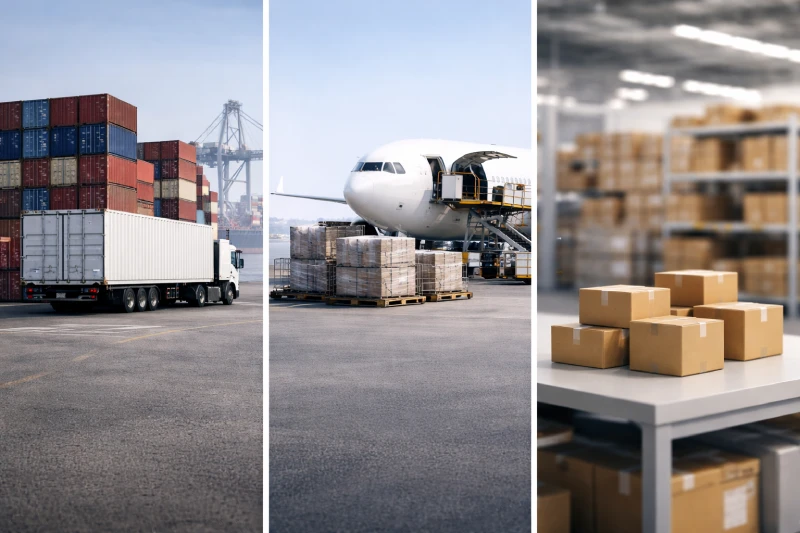
Most international cargo enters Tanzania via Port of Dar es Salaam, while urgent or high-value goods typically arrive by air through Dar es Salaam’s international airport. Each mode behaves very differently once customs clearance, inland delivery, and local handling are considered.
Overview Comparison Table
| Shipping Mode | Cost Level | Transit Time (China → Tanzania) | Best For | Key Limitations |
|---|---|---|---|---|
| Sea Freight (FCL) | Low (best unit cost) | 28–40 days | Full-container shipments, machinery, building materials | Requires sufficient volume; longer lead time |
| Sea Freight (LCL) | Medium | 30–45 days | Small to mid-size shipments (1–15 CBM) | Shared container delays; higher risk of port congestion |
| Air Freight | High | 5–8 days | Urgent, high-value, or time-sensitive cargo | Cost rises fast with volumetric weight |
| Express / Courier | Very High | 3–6 days | Samples, documents, small parcels (<100 kg) | Not economical for commercial bulk cargo |
| DDP / Door-to-Door | All-inclusive | Depends on mode | New importers, buyers without import license | Requires experienced local handling to avoid tax risks |
How to Use This Table
- If cost control is your priority and delivery timing is flexible → focus on sea freight
- If speed is critical or stock-out risk is high → evaluate air freight
- If shipment is small and urgent → express courier may be acceptable
- If you want minimum involvement in customs and taxes → DDP can reduce operational burden, but must be structured carefully
Sea Freight from China to Tanzania (FCL vs LCL)
Sea freight is the most widely used shipping method from China to Tanzania, especially for commercial cargo where cost efficiency matters more than speed. However, choosing between FCL (Full Container Load) and LCL (Less than Container Load) has a major impact on total landed cost, clearance speed, and risk exposure at the port.
FCL Shipping to Tanzania (Full Container Load)
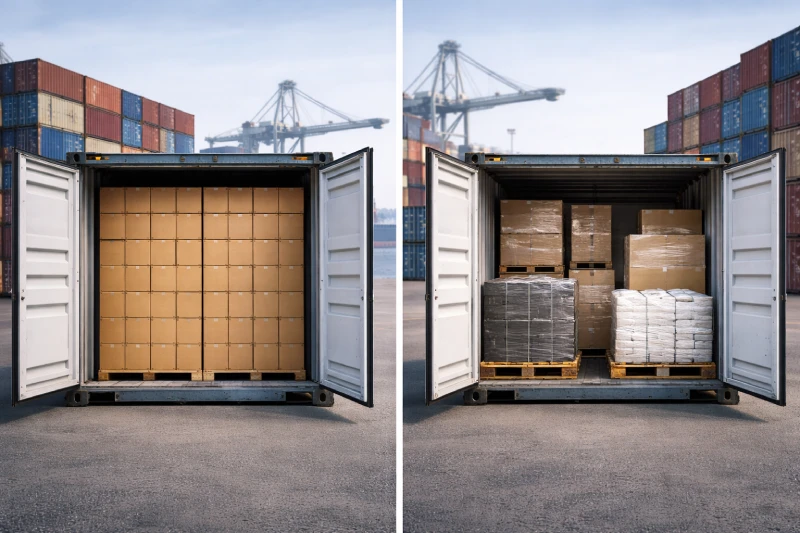
FCL means your cargo occupies an entire container—typically 20ft or 40ft—even if it is not completely full.
Typical use cases
- Construction materials (tiles, steel products, cables)
- Machinery and spare parts
- Furniture and bulk consumer goods
- Shipments above 18–20 CBM
Transit time
- 28–40 days from major China ports (Shanghai, Ningbo, Shenzhen) to Tanzania
- Transit time varies depending on transshipment and vessel schedule reliability
Cost logic
- Fixed container price regardless of volume
- Lower cost per CBM as volume increases
- More predictable port and clearance costs
Advantages
- Faster clearance than LCL (single consignee, single bill)
- Lower risk of damage or cargo mixing
- Better control over packing, sealing, and documentation
- More stable delivery planning for Tanzanian inland transport
Limitations
- Higher upfront freight cost
- Inefficient for small-volume shipments
Practical rule:
If your shipment exceeds 18 CBM or is high-value, FCL is usually more economical and safer than LCL for Tanzania.
LCL Shipping to Tanzania (Less than Container Load)
LCL consolidates your cargo with shipments from other importers into one container.
Typical use cases
- Small shipments 1–15 CBM
- Trial orders or low-volume restocking
- Buyers not ready for a full container
Transit time
- 30–45 days, sometimes longer during congestion
- Extra time required for:
- Consolidation at origin
- Deconsolidation at destination
Cost logic
- Charged by CBM or ton (whichever is higher)
- Additional destination charges often surprise importers:
- CFS handling
- Deconsolidation fees
- Documentation and storage
Advantages
- Lower entry cost for small shipments
- Flexible for irregular purchasing cycles
Limitations
- Higher per-unit cost than FCL
- Greater delay risk at destination
- Cargo condition depends on other shippers’ compliance
- Customs clearance can be slower under Tanzania Revenue Authority due to multiple consignees
Common mistake:
Many importers choose LCL to “save money” but end up paying more due to destination charges and delays.
FCL vs LCL: Which Is Better for Tanzania?
| Factor | FCL | LCL |
|---|---|---|
| Cost predictability | High | Medium–Low |
| Clearance speed | Faster | Slower |
| Risk level | Lower | Higher |
| Best volume range | 18+ CBM | 1–15 CBM |
| Recommended for new importers | Yes | With caution |
Air Freight from China to Tanzania
Air freight is the fastest shipping method from China to Tanzania, but it is also the most misunderstood. Many importers focus on “air freight is expensive” without understanding when it is actually the most cost-effective choice once delays, stock risks, and opportunity cost are considered.
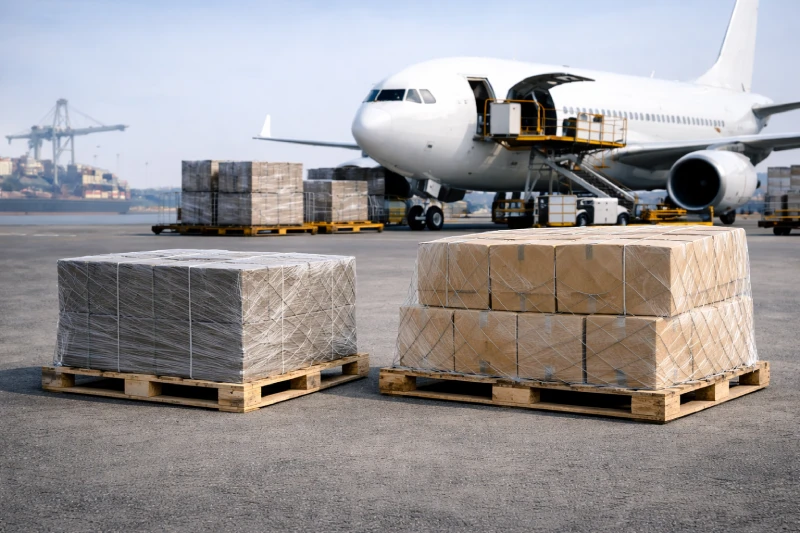
For Tanzania, air cargo typically arrives via Julius Nyerere International Airport, with onward delivery handled locally after customs clearance.
When Air Freight Makes Sense for Tanzania
Air freight is suitable if at least one of the following applies:
- Shipment value is high relative to weight
- Delivery urgency affects sales or operations
- Stock-out risk costs more than air freight premium
- Cargo volume is small but time-critical
Common Tanzania-bound air freight cargo
- Electronics and accessories
- Medical supplies
- Branded consumer goods
- Machinery spare parts
- Urgent replenishment orders
Transit Time: What to Expect
- 5–8 days door to airport (China → Dar es Salaam)
- Additional 1–3 days for customs clearance and local delivery
- Faster than sea freight by 3–4 weeks
This speed advantage is critical for Tanzanian importers dealing with:
- Seasonal demand
- Project-based deadlines
- Unpredictable port congestion
Cost Logic: Why Volumetric Weight Matters
Air freight is charged by chargeable weight, calculated as:
Chargeable Weight = max (Actual Weight, Volumetric Weight)
Volumetric weight formula (standard): L × W × H (cm) ÷ 6000
Implication
- Light but bulky cargo becomes expensive
- Dense, compact goods perform best under air freight
Practical thresholds
- Under 300–500 kg, air freight may be competitive
- Over 1,000 kg, cost usually escalates rapidly
- Bulky cartons often price themselves out unintentionally
Advantages of Air Freight to Tanzania
- Fastest transit time
- Lower inventory holding cost
- Reduced risk of port congestion
- Suitable for fragile or high-value goods
- More predictable arrival scheduling
Limitations & Risks
- High cost sensitivity to size and packaging
- Airline restrictions on dangerous goods
- Requires accurate documentation (HS code, invoice value)
- Clearance delays still possible if paperwork is incomplete
Real-world insight:
Many Tanzania importers overspend on air freight because cartons were not optimized. Repacking alone can reduce air freight cost by 15–25%.
Expert Recommendation
Choose air freight only if speed creates real commercial value:
- Emergency restocking
- Project-critical parts
- High-margin goods with fast turnover
If your cargo is bulky, low-margin, or above 1 CBM per carton, sea freight is almost always more economical—even if slower.
Express / Courier Shipping to Tanzania (DHL, FedEx, UPS)
Express courier services are often the simplest—but most expensive—way to ship from China to Tanzania. They work best for small, urgent shipments where speed and convenience matter more than freight cost control.
For Tanzania-bound express cargo, international couriers handle pickup, linehaul, customs clearance, and final delivery in one chain, typically routing through Dar es Salaam.

When Express Shipping Makes Sense
Express is suitable if all or most of the following apply:
- Shipment is small-volume (usually under 100 kg)
- Delivery is time-critical (days, not weeks)
- Cargo value is high relative to weight
- You want minimal operational involvement
Typical express cargo to Tanzania
- Samples and prototypes
- Documents and spare parts
- Small electronics or accessories
- Urgent replacement components
Transit Time & Service Level
- 3–6 days door-to-door from China to Tanzania
- Predictable delivery windows
- Real-time tracking and delivery confirmation
Compared with air freight, express is often faster in practice because it avoids airport cargo queues and separate clearance coordination.
Cost Structure: Why It Gets Expensive Fast
Express charges are based on:
- Chargeable weight (actual vs volumetric)
- Fixed service premiums
- Destination surcharges
Key reality
- Costs rise sharply after 30–50 kg
- Bulky cartons become uneconomical very quickly
- Not designed for commercial bulk shipments
Rule of thumb:
If your shipment exceeds 2–3 cartons or 0.3–0.5 CBM, express usually stops making financial sense for Tanzania.
Advantages
- Fastest door-to-door option
- Minimal paperwork for the shipper
- Courier-managed customs process
- Ideal for first-time or non-commercial shipments
Limitations & Risks
- Highest cost per kg of all shipping modes
- Limited flexibility for cargo type
- Less suitable for regular commercial imports
- Import taxes and duties still apply in Tanzania and are often prepaid by the courier
Major providers such as DHL, FedEx, and UPS all operate in Tanzania, but their pricing models are similar—speed and simplicity come at a premium.
Expert Recommendation
Use express courier shipping to Tanzania only for:
- Samples
- Emergency replacements
- Low-volume, high-urgency goods
For anything larger or recurring, air freight or sea freight will always scale better and provide more cost control.
DDP / Door-to-Door Shipping to Tanzania
DDP (Delivered Duty Paid) shipping is often requested by Tanzania importers who want a single, all-inclusive solution. Under DDP, the logistics provider takes responsibility for international transport, customs clearance, import duties, VAT, and final delivery—reducing the buyer’s operational workload.
For China–Tanzania trade, DDP can be effective only when structured correctly and handled by a forwarder with strong local execution.
When DDP Makes Sense for Tanzania
DDP is suitable if you fall into one of these categories:
- First-time importer without a Tanzanian import license
- Buyer unfamiliar with local customs procedures
- Small or mid-size businesses prioritizing simplicity over cost optimization
- Importers who want clear landed cost upfront
Common DDP cargo
- Consumer goods
- Furniture and home products
- Small machinery
- E-commerce or mixed general cargo
How DDP Works in Practice
A DDP shipment typically includes:
- Export handling in China
- Main transport (sea or air)
- Import customs clearance in Tanzania
- Import duty + VAT payment
- Inland delivery to final address
For sea freight, DDP is usually built on FCL or LCL, arriving through Dar es Salaam, then cleared and delivered locally.
Advantages of DDP for Tanzania Importers
- Single quotation, predictable total cost
- No need to manage customs brokers separately
- Reduced risk of clearance mistakes for new buyers
- Faster operational decision-making
Limitations & Risk Considerations
Despite its convenience, DDP is not always the cheapest or safest option.
Key risks include:
- Limited transparency on duty and VAT calculation
- Dependence on the forwarder’s local compliance capability
- Higher total cost compared to self-managed CIF or FOB
- Less flexibility if cargo details change
Important note:
DDP should never be chosen purely on price. In Tanzania, under-declared or misclassified DDP shipments can lead to audits, penalties, or delivery delays.
Expert Recommendation
Use DDP for Tanzania only if:
- You work with an experienced China–Tanzania forwarder
- Cargo value and HS classification are clearly defined
- You prefer risk reduction over maximum cost efficiency
For experienced importers with stable volumes, CIF or FOB + local clearance often provides better long-term control.
How to Choose the Best Shipping Method to Tanzania
The best shipping method from China to Tanzania depends on shipment size, urgency, and your import capability.
Use the tables below to quickly match your situation with the most suitable option.
Choose by Shipment Size & Urgency
| Shipment Profile | Typical Size / Weight | Delivery Urgency | Recommended Shipping Method | Why This Option Fits |
|---|---|---|---|---|
| Samples or documents | Under 30 kg / 1–2 cartons | Very urgent (3–6 days) | Express Courier | Fastest door-to-door delivery with minimal handling |
| Small high-value cargo | 30–300 kg, compact | Urgent (5–8 days) | Air Freight | Speed justifies cost when timing affects sales or operations |
| Trial orders or small batches | 1–15 CBM | Flexible | LCL Sea Freight | Lower upfront cost for small commercial shipments |
| Bulk or regular imports | 18+ CBM or full container | Not urgent | FCL Sea Freight | Lowest cost per unit and better control over cargo |
Choose by Import Experience & Risk Preference
| Importer Situation | Customs Experience in Tanzania | Cost Sensitivity | Suggested Shipping Approach | Key Risk Notes |
|---|---|---|---|---|
| First-time importer | Low | Medium | DDP Door-to-Door | Must use a compliant and experienced forwarder |
| SME with local broker | Medium | High | FOB or CIF + Self-Clearance | Better long-term cost control and transparency |
| Project-based importer | High | Medium | FCL or Partial Air + Sea | Separate critical items to avoid project delays |
| E-commerce or urgent restocking | Medium | Low | Air Freight or Express | Watch volumetric weight to avoid cost escalation |
Practical Takeaway
There is no single “best” shipping method for Tanzania.
The right choice comes from balancing:
- Cost vs speed
- Shipment volume vs flexibility
- Control vs operational simplicity
A structured decision at this stage can prevent delays at Dar es Salaam and reduce total landed cost significantly.
Get the Right Shipping Plan for Your Tanzania Shipment
Choosing the best shipping method from China to Tanzania is not about picking the cheapest or fastest option in isolation—it’s about matching the shipping mode to your cargo, timeline, and local import conditions.
At Winsail Logistics, we work with Tanzania-bound shipments every week. We see where importers lose money most often:
- LCL shipments delayed at Dar es Salaam due to destination charges
- Air freight quoted too cheaply because volumetric weight was ignored
- DDP offers that look simple upfront but create tax or compliance risk later
Our role is to help you avoid these mistakes before they happen.
What We Need to Advise You Accurately
To recommend the most suitable shipping method, we typically review:
- Cargo description + HS code (if available)
- Total weight and carton dimensions
- Shipment urgency
- Delivery address in Tanzania
- Whether you prefer cost optimization or operational simplicity
Based on this, we’ll tell you clearly:
- Which shipping mode fits best (sea, air, express, or DDP)
- What cost range to expect
- Where the risks are—and how to control them
Why Importers Choose Winsail Logistics
- Proven experience on China–Tanzania trade lanes
- Practical advice, not sales-driven recommendations
- Transparent cost logic and mode comparison
- Support for both first-time and experienced importers
If you’re still comparing options, we also recommend reviewing our main guide on Shipping from China to Tanzania, where we explain the full process, documents, and customs flow in detail.
