
Introduction
Choosing the best shipping method from China to the USA is not always straightforward. Costs, transit times, customs requirements, and urgency vary widely across sea freight, air freight, express couriers, and Amazon-focused solutions. The challenge for most importers is not “which option exists,” but which option is right for their specific shipment size, destination, and budget.
China–USA trade is one of the busiest global corridors, with import hotspots such as Los Angeles/Long Beach, New York/New Jersey, Houston, Chicago, and Amazon FBA centers across California, Texas, and the East Coast. Each shipping mode serves a different purpose along this route. For example, bulky cargo may fit better with slower but economical sea freight, while high-value electronics often move by air or express.
This guide gives you a clear, data-driven comparison of all major transport modes—Sea (FCL/LCL), Air Freight, Express (DHL/FedEx/UPS), and Amazon FBA/DDP—so you can make an informed decision based on weight, volume, budget, and delivery deadlines. Real USA-specific examples are included to help you evaluate the most suitable solution.
Related Guide:
overall guide to shipping from China to the USA
Overview Comparison Table
Below is a quick, decision-focused comparison of the four primary shipping methods from China to the USA. Times and cost levels reflect typical China → West Coast / East Coast performance.
Shipping Method Comparison (China → USA)
| Mode | Cost Level | Transit Time | Best For | Limitations |
|---|---|---|---|---|
| Sea Freight – FCL | Lowest per CBM | 15–30 days (WC), 25–40 days (EC) | 12–28+ CBM cargo, bulky goods, stable schedules | Slow; port congestion risks; requires customs & trucking coordination |
| Sea Freight – LCL | Medium | 20–35 days (WC), 30–45 days (EC) | 2–12 CBM shipments, furniture, mixed goods | Longer consolidation time; more handling; higher risk of delays |
| Air Freight | High | 3–7 days | 100–500 kg cargo, high-value items, urgent orders | Expensive; volumetric weight applies; restrictions (batteries, liquids) |
| Express (DHL / FedEx / UPS) | Very high | 2–5 days | Samples, 1–100 kg parcels, Amazon replenishment | Highest cost per kg; limited for oversized cargo |
| Amazon FBA / DDP | Medium–High | Sea: 25–40 days / Air: 7–12 days | Amazon sellers, no customs handling, door-to-FBA delivery | DDP rules vary; risk of hidden fees; compliance must be accurate |
How to Use This Table
- If your cargo is small and urgent, express or air will deliver the best speed-to-cost ratio.
- If your shipment is large or price-sensitive, sea freight—especially FCL—provides unmatched cost efficiency.
- Amazon sellers can rely on DDP/FBA-specific routes to avoid customs complexity and reach fulfillment centers smoothly.
Sea Freight from China to the USA
Sea freight is the most cost-efficient way to move medium to large shipments from China to the USA, making it the default mode for furniture, machinery, building materials, outdoor products, and most Amazon bulk replenishment. The key reason importers choose sea freight is simple: the lowest cost per CBM and the ability to scale shipments as the business grows.
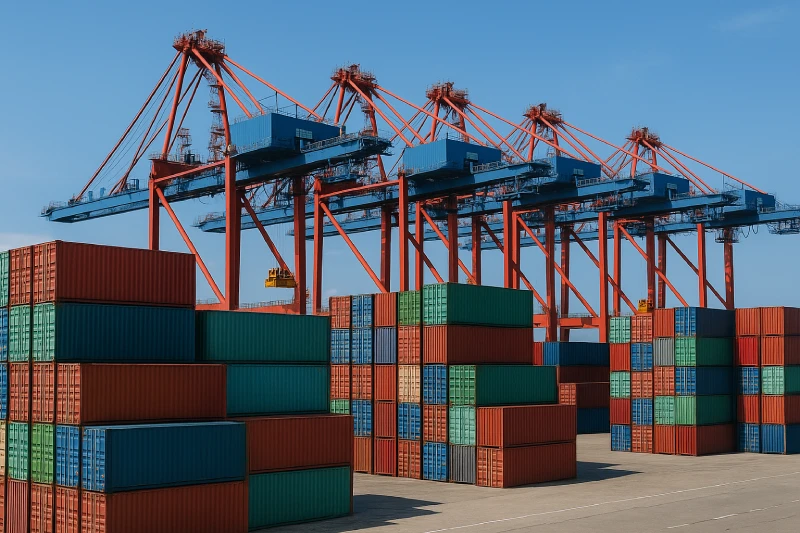
For most U.S. importers, the core decision is not whether to use sea freight, but whether FCL or LCL fits their volume and timeline:
FCL (Full Container Load) works best when your shipment is large enough to justify a full 20GP or 40HQ container. It offers stable transit times and minimal cargo handling, which reduces the risk of delays and damage.
LCL (Less than Container Load) is designed for smaller volumes, allowing you to ship even a few CBMs without waiting until you fill a full container. While economical at certain thresholds, it typically involves more handling and can be slower due to consolidation steps.
Transit times depend largely on West Coast vs East Coast routing—with Los Angeles/Long Beach as the fastest entry point and New York/New Jersey or Savannah requiring longer voyages. What matters most for decision-making is:
- Budget sensitivity → Sea freight is the lowest-cost mode.
- Time flexibility → Expect weeks, not days.
- Cargo size → Larger shipments benefit disproportionately from FCL.
Sea freight is ideal when cost control outweighs urgency, and when inventory planning allows for longer lead times. For time-sensitive or smaller U.S. shipments, air freight or express usually becomes more competitive.
Air Freight from China to the USA
Air freight becomes the preferred option when U.S. importers need a balance between speed and cost. It is significantly faster than sea freight yet far more economical than express couriers at medium weight ranges. This makes air freight ideal for 100–500 kg shipments, product launches, seasonal goods, or Amazon FBA replenishment where delays directly impact sales.
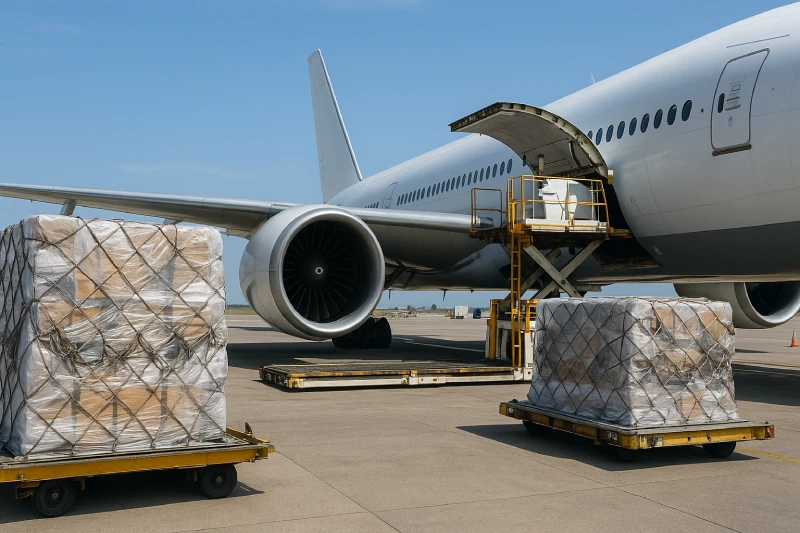
The major advantage of air freight is predictability. Most China–USA routes deliver within 3–7 days, regardless of whether cargo is headed to West Coast hubs like LAX or to inland markets such as Chicago, Dallas, or Atlanta. For businesses with tight inventory cycles, this consistency is often more valuable than the pure speed of express.
Unlike sea freight—where volume determines cost efficiency—air freight requires importers to consider volumetric weight, which affects pricing for lightweight but bulky products. The decision usually comes down to urgency and density:
- If the shipment is time-sensitive or compact → air freight is competitive.
- If the shipment is bulky or your margins rely heavily on freight cost → sea freight remains better.
In practice, air freight fills a specific strategic role: it prevents stockouts, supports new product introductions, and provides a reliable middle option when sea freight is too slow and express is too expensive. For many USA importers, it is the “stability mode” in their logistics mix.
Express / Courier (DHL, FedEx, UPS)
Express courier services—primarily DHL, FedEx, and UPS—serve a very different purpose compared with sea and air freight. Instead of optimizing for cost or volume, express shipping is designed for speed, simplicity, and small-parcel agility. This makes it the best match for 1–100 kg shipments, product samples, early-stage eCommerce testing, and urgent Amazon FBA replenishment.
What sets express apart is the integrated end-to-end workflow: one carrier handles pickup, air transit, customs clearance, and last-mile delivery anywhere in the USA. Transit time is typically 2–5 days, regardless of whether the destination is Los Angeles, New York, or a remote Midwest location. This consistency makes express shipping ideal when timing directly influences sales or production schedules.
However, express is also the least cost-effective option as shipment weight increases. Volumetric weight charges can make seemingly small but bulky shipments disproportionately expensive. That’s why most U.S. importers view express as a tactical solution rather than a primary logistics mode.
In the broader decision framework, express shipping is the right choice when speed outweighs freight cost, when shipment size is genuinely small, or when you need rapid validation of new products. For anything larger or less urgent, air freight or sea freight typically delivers a better cost-performance ratio.
DDP & Amazon FBA Shipping
For sellers shipping to Amazon FBA in the USA, the biggest challenge is often not choosing between sea, air, or express—but managing the layers of compliance, labeling, appointments, and customs rules that sit between China and an FBA warehouse. This is why many sellers choose DDP (Delivered Duty Paid) solutions: a bundled service where freight, duties, customs filing, and delivery to FBA are handled by the forwarder.
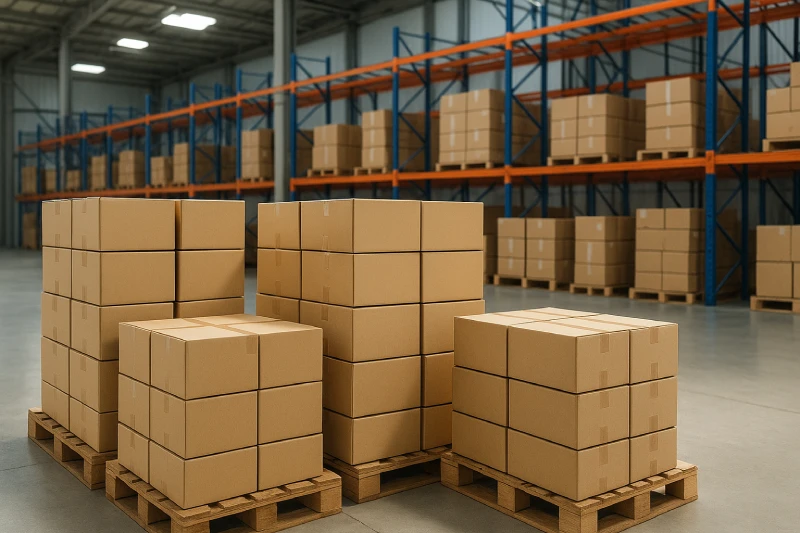
DDP is less about a transport mode and more about risk reduction. It simplifies the operational load for both new and experienced Amazon sellers, especially during peak seasons when delays can directly affect listing performance and inventory health. Whether shipped by sea, air, or express, DDP’s key advantage is removing uncertainty: importers know the total landed cost upfront and avoid dealing with U.S. customs procedures.
From a strategic perspective, sellers typically select the DDP option that matches their replenishment cycle:
- Sea + DDP is the most economical for bulk restocks when lead time is flexible.
- Air + DDP offers dependable mid-speed replenishment without express-level costs.
- Express + DDP is a rapid-response option used to protect rankings or bridge short-term inventory gaps.
The underlying value of FBA/DDP shipping is consistency. When the priority is maintaining stock levels, protecting the Buy Box, or planning predictable cash flow, having a logistics partner manage the entire route—from China to ONT8, LAX9, MDW2, JFK8, or any other FBA center—gives sellers the reliability needed to scale.
How to Choose the Best Shipping Method
Choosing the right shipping mode from China to the USA depends on weight, volume, urgency, delivery location, and product type. Below is a practical decision guide used by many U.S. importers and Amazon sellers.
1) If your shipment is under 30 kg
→ Choose Express (DHL / FedEx / UPS)
- Fastest (2–5 days)
- Best for samples, small parcels, urgent Amazon restocks
- Avoid if your cartons are oversized (volumetric weight spikes cost)
2) If your shipment is 30–100 kg
→ Choose Express or Air Freight
- Express is faster but pricier
- Air can be cheaper for denser cargo
- Consider air freight if going to inland cities like Chicago, Dallas, Atlanta
3) If your shipment is 100–500 kg
→ Choose Air Freight
- Best speed-to-cost ratio
- Ideal for electronics, components, premium goods
- Works well for Amazon FBA replenishment (Air + DDP)
4) If your shipment is 2–12 CBM
→ Choose LCL Sea Freight
- Most economical mid-volume option
- Expect 20–45 days depending on West/East Coast
- Avoid LCL if you have strict deadlines (consolidation delays are common)
5) If your shipment is above 12–15 CBM
→ Choose FCL Sea Freight
- Lowest cost per CBM
- Faster than LCL
- Recommended for furniture, fitness equipment, home goods, bulk orders
6) If you are an Amazon seller
- Small parcels (1–200 kg): Express + DDP
- Regular replenishment (100–500 kg): Air + DDP
- Bulk restock (5–30+ CBM): Sea + DDP (Economical)
Amazon-specific logic:
- West Coast FBA (ONT8/LAX9): Sea is faster
- East Coast FBA (JFK8/CLT2): Air may be more reliable
Final Guidance
If you’re still unsure, compare: Cargo size → urgency → USA destination → product restrictions → budget.
When any two factors conflict (e.g., low cost but high urgency), air freight or a mixed solution usually offers the best balance.
Final Recommendation & Get a Customized Quote
Choosing the right shipping method from China to the USA isn’t about picking the “fastest” or the “cheapest” option—it’s about finding the best balance for your shipment’s size, urgency, and destination. Sea freight works perfectly for larger, planned restocks, while air freight and express options keep your business running smoothly when time is critical. Amazon sellers can simplify their workflow with DDP solutions that cover freight, customs, and delivery to FBA centers.
Every shipment is different, and the ideal method depends on details like product type, carton dimensions, seasonality, and your target warehouse or port in the USA. Winsail Logistics helps importers compare all available routes—FCL, LCL, air freight, express, or FBA/DDP—so you always make a cost-effective, reliable decision.
⭐ Need a customized quote?
Our team will compare all modes and recommend the best solution for your shipment.
