
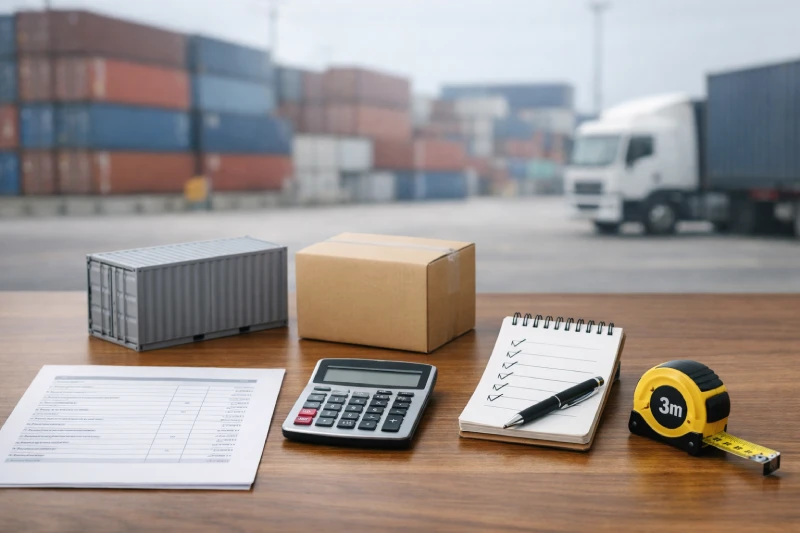
“Cheap” shipping from China to Nigeria often turns out to be expensive—just not on the first invoice.
Many importers choose a forwarder based on the lowest freight rate, only to discover later that port charges, customs issues, delays, or unclear local fees push the final cost far beyond expectations. By the time the cargo is released, the savings are gone.
In China–Nigeria logistics, the real cost is never just the ocean or air freight. What matters is the total landed cost: freight, destination charges, customs clearance, time delays, and risk exposure. Ignore any one of these, and the “cheapest” option can quickly become the most costly.
This guide focuses on how to actually reduce total shipping cost, not how to chase the lowest headline rate. The cheapest solution depends on your cargo size, HS code, routing, destination port, and whether clearance and duties are included—not on a single number in a quote.
Below, you’ll see how experienced importers evaluate pricing, where hidden costs usually appear in China-to-Nigeria shipments, and how to choose a shipping plan that stays cheap from factory pickup to final delivery, not just on paper.
First, define what “cheap” really means in China–Nigeria shipping
Before comparing any quotes, it’s important to clarify what kind of “cheap” you are actually looking for.
Most pricing disputes and cost overruns happen because the buyer and the forwarder are talking about different types of cost from the start.
Only comparing ocean freight? That’s how destination charges wipe out your savings
A low sea freight rate looks attractive—especially when it’s quoted quickly and without many questions.
But in China–Nigeria trade, freight is often the smallest part of the final bill.
Destination port charges in Nigeria can easily exceed the ocean freight itself, especially for LCL shipments. THC, documentation fees, port handling, customs-related charges, and storage fees are usually not included in a cheap-looking quote. If these costs are unclear upfront, they surface only after arrival—when you no longer have leverage.
Many importers realize too late that they didn’t choose the cheapest option; they only chose the cheapest visible number.
Lowest total cost means looking beyond freight
To control cost properly, you need to evaluate total landed cost, not just transport price.
A truly cheap shipping solution from China to Nigeria includes:
- International freight
- Destination port and local charges
- Customs clearance costs
- Time-related costs (delays, storage, demurrage)
- Risk costs (inspection, reclassification, missing documents)
Ignoring any one of these can turn a “low-cost” shipment into an expensive lesson.
Experienced importers always ask one question first: What will this shipment cost me when it is fully released and delivered?
Three common pricing scopes—and why they are not interchangeable
Most China–Nigeria quotes fall into one of three structures:
- Port-to-Port
Covers only international freight. Cheapest on paper, highest risk for first-time importers. - Door-to-Port
Includes pickup in China but stops at the Nigerian port. Destination costs are still your responsibility. - DDP Door-to-Door
Includes freight, customs clearance, duties, and delivery. Higher upfront price, but often the lowest total cost when calculated correctly.
None of these is “right” or “wrong.”
But comparing prices across different scopes without aligning them is one of the most common reasons importers think they found a cheap solution—until the cargo arrives.
Once “cheap” is clearly defined, finding the right shipping option becomes much easier.
The 5 key details you must provide to find the cheapest shipping option
If two forwarders give you very different prices, it’s usually not because one is expensive and the other is cheap.
In most cases, it’s because they are calculating based on different assumptions.
To identify the cheapest shipping solution from China to Nigeria, these five details are not optional.
Without them, any quote is only a guess—and guesses are rarely cheap.
Cargo type and HS code: the foundation of cost control
What you ship matters more than how much you ship.
The HS code determines:
- Whether your cargo is likely to be inspected
- What documents are required
- How customs duties and taxes are calculated
A wrong or vague HS code may look harmless at quoting stage, but it often leads to inspection, reclassification, or delays in Nigeria—each adding cost.
Accurate cargo description and HS code allow the forwarder to assess risk before pricing, not after arrival.
Weight, CBM, and number of cartons: LCL vs FCL vs air
Shipping cost is driven by how your cargo is measured.
For sea freight, pricing depends on:
- Total volume (CBM)
- Chargeable weight
- Number of packages and how they can be consolidated
Small differences in packing can push a shipment from economical LCL into a much higher cost bracket.
Without confirmed weight and dimensions, it’s impossible to judge whether LCL, FCL, or even air freight is the cheapest option overall.
Origin in China: port choice and pickup matter
China is not one shipping point.
The cost difference between shipping from Shenzhen, Guangzhou, Ningbo, or Shanghai is not only about ocean freight. Inland trucking, port congestion, and vessel availability all affect the final price.
If factory pickup is required, the distance to port and loading conditions can significantly change the cost—sometimes more than the freight itself.
Destination port in Nigeria and inland delivery needs
Nigeria has multiple ports, and they are not equal in cost or efficiency.
Apapa, Tin Can, Lagos, and Onne each have different congestion levels, handling charges, and clearance
dynamics. Choosing the wrong port for your final destination can add unnecessary port charges or inland transport costs.
If inland delivery is required, this must be considered upfront—not added later.
Tax and clearance scope: DDP or not?
Whether duties and customs clearance are included makes a major difference in pricing.
A non-DDP quote may look cheap, but leaves you exposed to:
- Unclear duty calculations
- Local agent handling fees
- Clearance delays
For many importers, especially repeat shipments, DDP is not more expensive—it’s more predictable.
Once these five parameters are clearly defined, comparing prices becomes meaningful.
Three practical ways to achieve the lowest cost—based on your shipment size
There is no single “cheapest” shipping method that works for everyone.
What actually saves money depends on how much you are shipping, how it is packed, and how costs are structured on arrival in Nigeria.
Below are three cost-effective paths used by experienced China–Nigeria importers, matched to different shipment sizes.
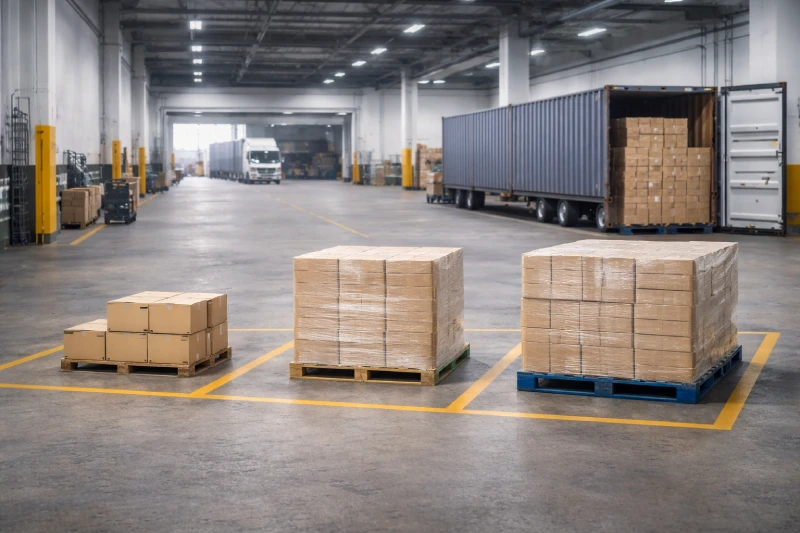
Small shipments (< 1–2 CBM): consolidation done right, or you pay twice
For small volumes, LCL consolidation is usually the only realistic option—but it’s also where costs are most easily lost.
The key risk with small shipments is overpaying for space you don’t use. Poor carton sizing, inefficient stacking, or sharing containers with incompatible cargo can push your chargeable volume far above your actual cargo size.
To keep costs low:
- Optimize carton dimensions before booking
- Avoid cargo that triggers extra handling or inspection within the same consolidation
- Confirm how minimum CBM and billing rules are applied
When consolidation is handled properly, small shipments can remain economical. When it isn’t, destination charges often exceed the freight itself.
Medium shipments (2–15 CBM): LCL can still be cheaper—but only if volume is controlled
This is the range where many importers assume they are “not big enough for a container yet,” and stick with LCL by default.
In reality, billing volume control becomes critical at this stage. Slight overpacking, unnecessary pallets, or loose cartons can inflate CBM and erase the cost advantage of LCL.
At this volume level, experienced forwarders focus on:
- Reducing wasted space through packing adjustments
- Evaluating whether shared containers or partial FCL make sense
- Comparing total destination charges, not just freight
In some cases, a carefully planned near-FCL solution is cheaper than standard LCL once all costs are counted.
Large shipments (near full container): why FCL is often cheaper—but not always
For shipments approaching a full container, FCL is often assumed to be the cheapest option—and in many cases, it is.
FCL provides:
- Fixed container cost
- Lower handling risk
- Better control over destination charges
However, FCL is only truly cheaper when:
- The container is efficiently loaded
- Destination port charges are clearly confirmed
- Demurrage and detention risks are managed
If these factors are ignored, a poorly planned FCL shipment can still end up more expensive than expected.
The cheapest solution is not about choosing LCL or FCL blindly.
It’s about matching shipment size, packing strategy, and destination cost structure into a single, controlled plan.
Hidden costs in China–Nigeria shipping that are easy to overlook
Many shipping quotes look clean and simple.
The problem is that the most expensive costs often appear after the cargo arrives in Nigeria, not in the initial quotation.
These hidden costs are not unusual or dishonest—they are simply left unexplained. And because many competitors avoid talking about them, importers are left unprepared.
Destination port charges: the costs that surprise most importers
At Nigerian ports, destination charges add up quickly.
Common items include:
- Terminal Handling Charges (THC)
- Documentation and release fees
- Port handling and container positioning
- Storage and warehouse rent if clearance is delayed
- Demurrage and detention if free time is exceeded
For LCL shipments, these charges are often calculated per CBM, not per shipment. This is why a small shipment can still generate a large local bill.
If destination charges are not clarified before booking, they become non-negotiable after arrival.
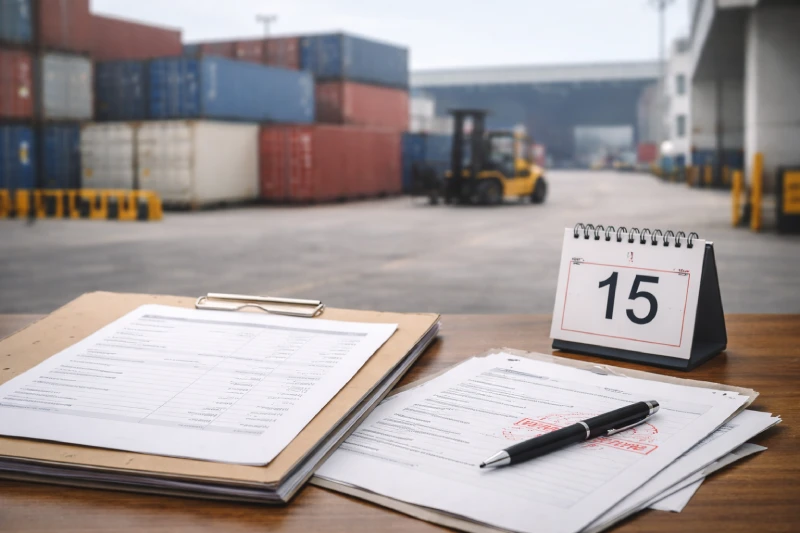
The cost of inspections, missing documents, or incorrect HS codes
Customs inspections are not random—they are usually triggered.
Incomplete documents, unclear cargo descriptions, or questionable HS codes increase the likelihood of inspection. Once this happens, costs rise through:
- Inspection handling fees
- Storage during inspection
- Reclassification or duty reassessment
In some cases, the financial impact of an incorrect HS code is higher than the original freight cost. This is why accurate documentation is not a formality—it is a cost-control tool.
Time costs during peak season and port congestion
Time is money in international shipping, especially in Nigeria.
Port congestion, seasonal surcharges, and vessel delays can extend transit and clearance time. Each extra day increases:
- Storage charges
- Demurrage risk
- Cash flow pressure
What looks like a “cheap” option with longer transit time often ends up costing more once these time-related expenses are added.
Understanding these hidden costs is what separates cheap-looking quotes from genuinely low-cost solutions.
How to tell if a quote is really cheap (a practical reality check)
A cheap quote is easy to create.
A cheap final cost is much harder—and that’s where many importers get caught.
Before choosing any shipping option from China to Nigeria, it’s worth taking a few minutes to check whether the price in front of you reflects reality, or just looks good on paper.
What a serious quote must clearly list
A reliable quotation should never be a single line number.
At minimum, it should break down the major cost components so you know what is included and what is not.
A transparent quote usually lists:
- Freight cost (sea or air)
- Origin charges in China
- Documentation fees
- Port of loading and destination port
- Estimated transit time
- Destination port charges
- Customs clearance scope
- Duties and taxes (or clearly stated exclusions)
- Demurrage and free-time terms
- Delivery scope (port, city, final address)
- Validity period of the rate
- Any conditional or variable charges
If several of these items are missing or described vaguely, the quote is incomplete—not cheap.
Three common “low-price” traps to watch for
Some pricing patterns appear again and again in China–Nigeria shipping:
- Low freight, high destination charges
The freight looks unbeatable, but local fees more than compensate. - Unclear “local charges”
A small line item that grows significantly after arrival. - “All-in” quotes that exclude clearance or duties
The wording sounds complete, but key costs are simply shifted outside the quote.
None of these are unusual. The risk is assuming the cheapest number equals the cheapest outcome.
Why a comparison table reveals the truth quickly
The fastest way to spot a real bargain is to compare quotes side by side, line by line.
When costs are structured in a table—freight, destination charges, clearance, delivery—it becomes immediately clear:
- Which quote is truly complete
- Where costs are hidden
- Which option delivers the lowest total landed cost
This is also why structured cost tables are easier to trust than email-only quotes. They leave much less room for surprises.
Once you know how to read a quote properly, the cheapest option usually becomes obvious.
How Winsail delivers the lowest total shipping cost (without cutting corners)
Keeping shipping costs low is not about chasing the cheapest rate on the market.
It’s about designing the right route and cost structure for your specific cargo, so the final number stays under control from start to finish.
This is where many generic quotes fail—and where a structured approach makes the difference.
Route design: balancing port choice, cost, and time
Instead of defaulting to one port or one shipping line, Winsail evaluates each shipment individually.
Route design typically includes:
- Selecting the most cost-efficient China export port based on factory location
- Matching vessel schedules to reduce waiting and congestion risk
- Choosing Nigerian ports with lower overall destination cost, not just availability
- Balancing transit time against storage and demurrage exposure
A slightly higher freight rate can often reduce destination charges and delays—resulting in a lower total cost.
What we need from you to deliver an itemized quote in 24 hours
To provide a realistic, low-risk quotation, we only ask for essential information—nothing more.
With basic cargo details, volume, origin, destination, and clearance scope, we prepare:
- A fully itemized cost breakdown
- Clear inclusions and exclusions
- Optional scenarios (LCL vs FCL, DDP vs non-DDP)
- A recommendation focused on lowest total landed cost
This approach avoids surprises and allows you to compare options with confidence—not assumptions.
Get a Cheapest Total Cost Quote
If you’re comparing options or feel unsure about a “cheap” quote you’ve received, we can help you verify it.
Submit your shipment details, and receive a clear, itemized cost breakdown—designed to minimize your total shipping cost from China to Nigeria, not just the freight rate.
No hidden fees. No obligation. Just clarity before you ship.
