

In real China–Qatar shipments, “cheap” is rarely about seeing the lowest number on a freight quote. What actually matters is how much the shipment costs by the time the cargo is legally cleared and ready to be used or sold in Qatar. Many shippers only realize this difference after their first shipment.
For Qatar-bound cargo, freight is only the starting point. Once the cargo arrives, a series of unavoidable costs begin to appear: port handling, documentation processing, customs clearance service fees, inspections, and inland delivery. These costs are part of the normal import process, but they are often not included in “cheap” offers quoted at origin.
This is where cost perception usually breaks down. A low ocean or air freight rate may look attractive, but if destination charges are excluded or loosely defined, the final payable amount can increase significantly. In Qatar’s import system, these fees are procedural rather than optional, and once the cargo has arrived, the consignee has very limited leverage to control them.
Another overlooked factor is cost certainty. Quotes based on FOB or CIF terms often shift responsibility to the buyer at the most sensitive stage—customs clearance and delivery. Any delay caused by documentation issues, unclear cargo description, or responsibility disputes can lead to storage, demurrage, or re-handling costs that quickly erase any upfront savings.
For B2B, industrial, and project-related shipments—common cargo types entering Qatar—the financial impact of these post-arrival issues is even more pronounced. A shipment that looks “cheap” on paper can easily become the most expensive option once time pressure and operational risks are added.
In practical terms, cheapest shipping to Qatar means:
- The full cost is visible before the shipment starts
- Destination-side responsibilities are clearly assigned
- Clearance and delivery risks are managed, not postponed
Only when the shipment is viewed as one continuous cost structure, rather than a freight-only transaction, does “cheap” truly make sense in the Qatar market.
Qatar Entry Port & Logistics Structure: Why Hamad Port Matters
Most cargo entering Qatar moves through Hamad Port, and this concentration shapes how shipping costs behave in ways many first-time shippers don’t expect. Unlike countries with multiple competing ports, Qatar’s import flow is highly centralized, which brings efficiency—but also very specific cost characteristics.
From a planning perspective, a single dominant port simplifies routing. Sailing schedules are stable, transit times are predictable, and operational standards are consistent. This is one reason freight rates to Qatar can look competitive at first glance. However, the same concentration means that destination charges are standardized and unavoidable. There is little room to “shop around” at the port level once the cargo arrives.
For LCL shipments, this structure often works against small volumes. Consolidation and deconsolidation costs are fixed per shipment rather than per cubic meter, so smaller consignments carry a higher per-unit burden. What appears economical at origin can become disproportionately expensive at destination once terminal handling, documentation, and release fees are applied.
For FCL shipments, the picture is different. Containers move more directly through the port system, with fewer handling stages and clearer cost boundaries. This is why many Qatar-bound shipments reach a point where moving to a full container becomes more cost-efficient than continuing with LCL—even at relatively modest volumes.
Another practical consideration is time sensitivity at the port. Storage rules are strict, and delays caused by documentation issues or unclear responsibility quickly translate into charges. Because Hamad Port operates on a regulated, process-driven model, these costs are not negotiable after arrival.
Understanding how Hamad Port functions is essential to understanding total shipping cost to Qatar. The port itself is efficient—but efficiency does not automatically mean cheaper. The real advantage comes when the shipment method, volume, and responsibility structure are aligned with how the port actually operates.
LCL vs FCL to Qatar: The Real Cost Break-even Point
For shipments from China to Qatar, the assumption that LCL is always the cheaper option for small cargo often leads to miscalculation. In reality, Qatar is one of those markets where the cost gap between LCL and FCL closes much faster than many shippers expect.

The main reason lies in how LCL costs are structured at destination. While ocean freight for LCL is charged per cubic meter, most destination-side fees are charged per shipment, not proportionally by volume. Terminal handling, documentation processing, customs coordination, and deconsolidation all apply as fixed costs. When shipment volume is small, these fixed charges create a high cost per cubic meter.
As volume increases, LCL does not scale efficiently. Once a shipment approaches a moderate size, the accumulated LCL charges can rival—or even exceed—the cost of moving a full container. At that point, FCL becomes financially and operationally more efficient, even if the container is not fully utilized.
FCL shipments also benefit from simpler handling at Hamad Port. Containers move through a more direct process, with fewer touchpoints and clearer responsibility boundaries. This reduces exposure to delays, minimizes handling-related fees, and provides better control over delivery timing. For industrial and project cargo, these operational advantages often translate into real cost savings.
Another factor often overlooked is risk cost. LCL shipments are more sensitive to consolidation delays, document mismatches between different consignments, and release coordination issues. Any delay can trigger storage or handling charges that disproportionately affect smaller shipments. With FCL, these risks are easier to manage because the shipment is treated as a single controlled unit.
In practical terms, the LCL–FCL decision for Qatar should never be based on volume alone. It should be evaluated on:
- Total destination charges per shipment
- Time sensitivity of the cargo
- Clearance and delivery risk tolerance
- Whether cost certainty matters more than minimum upfront freight
This is why many experienced Qatar importers shift to FCL earlier than they initially planned. The goal is not to ship bigger—it is to pay less overall and reduce uncertainty.
DDP Shipping to Qatar: When Door-to-Door Is the Lowest-Risk Option
For many China–Qatar shipments, the question is not whether DDP is cheaper on paper, but whether it reduces total cost risk. In practice, DDP is widely chosen because it consolidates responsibility at the most sensitive stages of the shipment—customs clearance and final delivery.
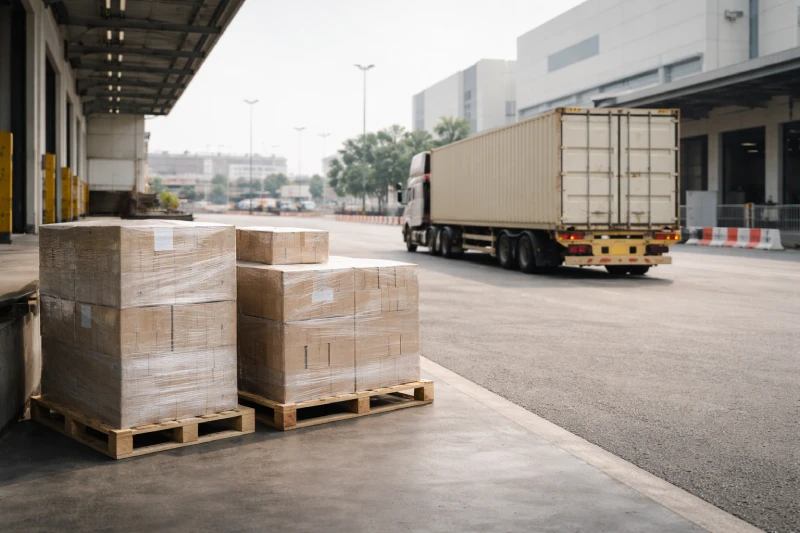
Under non-DDP terms such as FOB or CIF, responsibility shifts to the buyer exactly when costs become least predictable. Destination charges, customs coordination, inspections, and inland delivery are handled locally, often by parties the shipper does not control. Any mismatch in documents, HS code interpretation, or delivery arrangements can trigger delays and extra fees that were never part of the original comparison.
DDP changes this dynamic. When properly structured, it combines freight, clearance, duties, taxes, and inland delivery into one accountable cost framework. This does not automatically mean a lower number than CIF or FOB, but it often means fewer surprises. For importers who value budget certainty—especially for industrial or project cargo—this predictability is frequently more important than a marginal difference in upfront pricing.
Another reason DDP is common on Qatar-bound shipments is the expectation of clear delivery outcomes. Buyers and project managers typically want cargo delivered to a defined location, on a defined timeline, without coordinating multiple local service providers. When delays occur under non-DDP terms, the cost impact is often indirect but significant: idle labor, delayed installation, or postponed project milestones.
That said, not all DDP offers are equal. A low DDP price that lacks clarity on what is included can be more dangerous than a transparent CIF quote. Proper DDP to Qatar should clearly define:
- Scope of customs clearance and representation
- Handling of inspections or additional documentation requests
- Inland delivery limits and unloading conditions
When these elements are clearly controlled, DDP often becomes the lowest total-cost option, not because the freight is cheaper, but because the risk of cost escalation is minimized.
Qatar Customs Clearance: Compliance Errors That Increase Total Cost
In Qatar, customs clearance is generally efficient, but it is not forgiving. The system works well when documentation is accurate and cargo details are clear. When they are not, costs rise quickly—and those costs are rarely visible in the original freight quote.
Most clearance-related cost increases are not caused by high duty rates, but by process interruptions. Incorrect HS codes, inconsistent cargo descriptions, missing supporting documents, or unclear end-use declarations can all trigger additional review. Each interruption extends clearance time, which in turn leads to storage, handling, or coordination fees at the port.
Another common issue is underestimating the importance of cargo classification accuracy. In Qatar, HS code interpretation is closely linked to compliance requirements. A code that appears acceptable at origin may be questioned at destination, especially for industrial equipment, mechanical parts, or project-related materials. When reclassification is required, the shipment may be held while values, duties, or permits are reassessed.
Inspection-related delays are another cost multiplier. While inspections are not guaranteed for every shipment, certain cargo types attract more attention. If the shipment is held for inspection and the responsible party is unclear, additional charges—such as container handling, labor, or extended storage—accumulate regardless of who initially quoted the freight.
What makes these costs particularly problematic is timing. Clearance issues arise after the cargo has arrived, when alternative options are limited. At that stage, the consignee has little negotiating power, and resolving the issue quickly often becomes more important than minimizing cost.
This is why clearance preparation should be treated as a cost-control function, not a paperwork formality. Clear documentation, correct classification, and defined responsibility before shipment are often the difference between a shipment that stays within budget and one that quietly exceeds it.
Inland Delivery in Qatar: Hidden Costs Beyond the Port
Once cargo is released from the port, many shippers assume the major costs are behind them. In Qatar, this is often where unexpected expenses begin. Although distances are short, inland delivery is governed by strict site conditions, scheduling requirements, and responsibility boundaries that directly affect total cost.
Delivery within Doha is usually straightforward when the destination is a commercial warehouse with proper access and unloading equipment. Costs are predictable, and turnaround times are short. However, a large portion of Qatar-bound cargo—especially industrial and project shipments—is delivered to construction sites, industrial zones, or temporary project locations. These destinations introduce variables that standard freight quotes rarely account for.
Waiting time is one of the most common cost drivers. If a delivery truck arrives without confirmed site readiness, unloading equipment, or authorized personnel, delays accumulate quickly. In Qatar, waiting and overtime charges are applied strictly, and once incurred, they cannot be reversed. These costs are operational, not negotiable.
Unloading conditions also matter. Many project sites require specialized handling, restricted delivery windows, or compliance with site safety protocols. If these requirements are not defined in advance, additional labor or equipment may be needed at short notice, adding to the final cost.
Responsibility control is the final factor. When inland delivery is handled separately from freight and clearance, accountability becomes fragmented. Each party protects its own scope, and the consignee absorbs the coordination risk. When delivery responsibility is clearly assigned—whether under DDP or a tightly defined door-to-site arrangement—cost exposure is significantly reduced.
In Qatar, inland delivery is not expensive because of distance. It becomes expensive because of unclear assumptions. The more precisely delivery conditions are defined before shipment, the easier it is to keep total cost under control.
How to Evaluate If a China–Qatar Shipping Quote Is Truly “Cheapest”
By the time a shipment reaches the pricing stage, most decisions are made based on numbers rather than structure. This is where many Qatar-bound shipments go off track. A quote that looks competitive is not necessarily economical if it leaves key responsibilities undefined.
A reliable quote for Qatar should clearly show what is included and what is not. Freight alone is not enough. Destination port charges, customs clearance scope, documentation handling, and inland delivery terms must be explicitly stated. If these elements are missing or vaguely described, the price comparison is incomplete by definition.
One useful test is to look for cost gaps rather than cost lines. If a quote lists only origin and freight charges but stays silent on destination handling, clearance service, or delivery conditions, those costs have not disappeared—they have simply been postponed. In Qatar, postponed costs almost always reappear after arrival, when options are limited and time pressure is high.
Another evaluation point is responsibility alignment. Quotes that shift critical tasks to “consignee’s account” without explaining operational consequences tend to expose the buyer to the highest risk. This is especially relevant for clearance coordination, inspection handling, and site delivery. A low price with unclear responsibility often costs more than a higher, fully defined offer.
Warning signs that a quote may not be truly cheap include:
- Destination charges described as “to be confirmed”
- Clearance or delivery excluded without alternatives explained
- No reference to inspection or document verification scope
- Inland delivery terms that ignore site conditions
In contrast, a genuinely economical quote does not rely on optimism. It reflects how the shipment will actually move, who controls each step, and how costs behave if something does not go exactly as planned. For Qatar-bound cargo, this level of clarity is often the difference between staying on budget and exceeding it quietly.
How to Request an Accurate Shipping Quote for Qatar
Many pricing issues on China–Qatar routes do not come from the quote itself, but from how the inquiry is made. Vague requests often produce incomplete pricing, which later turns into unexpected cost adjustments. An accurate quote starts with clear shipment definition.
At a minimum, a Qatar-bound inquiry should clearly state the cargo type, dimensions, weight, and packaging method, along with the intended delivery location. For industrial or project cargo, end-use information and site conditions are equally important. Without this context, any price given is only a rough estimate, regardless of how precise it appears.
It is also important to specify what outcome is expected, not just the transport mode. Requesting a CIF or FOB rate without clarifying who will manage clearance and delivery often leads to fragmented responsibility. In contrast, asking for a defined door-to-door or controlled delivery scope forces all cost elements to be addressed upfront.
Another common mistake is comparing multiple quotes that are based on different assumptions. One quote may include clearance coordination, while another excludes it. One may assume warehouse delivery, while another assumes site delivery. Without aligning these assumptions, price comparison becomes misleading.
For Qatar shipments, consultation is often more effective than blind comparison. A short discussion about cargo characteristics, delivery expectations, and risk tolerance can eliminate most cost uncertainty before the shipment even begins. The goal is not to obtain the lowest initial number, but to secure a shipment plan that remains stable from origin to final delivery.
When the inquiry is clear, the quote becomes meaningful—and only then does “cheapest” have real value in the Qatar context.
