
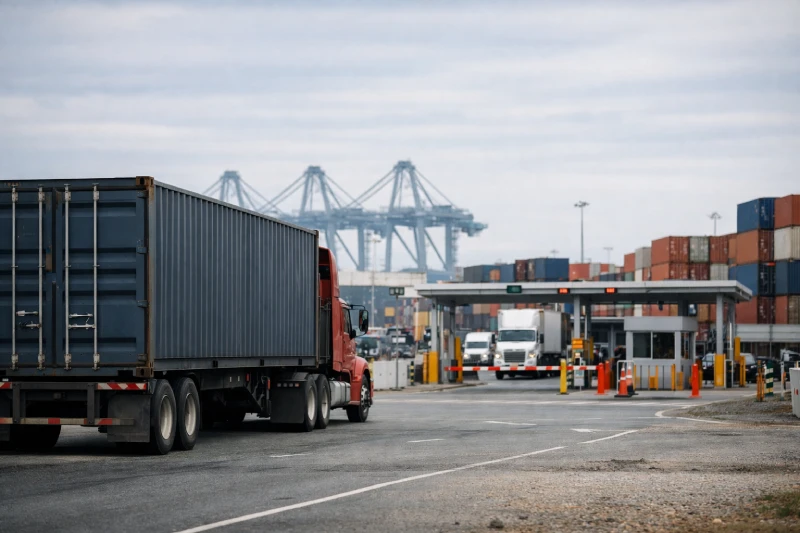
For most importers moving goods from China to the United States, the word “cheapest” rarely means the lowest freight rate on a quote sheet. What really matters is how much the shipment costs after it is cleared, released, and delivered.
The U.S. import process is efficient, but it is not simple. Ocean freight is only one piece of the cost structure. Customs clearance, compliance checks, inspections, port congestion, and inland transportation often have a much bigger impact on the final landed cost than the base shipping rate itself.
This page focuses on how to reduce the real total cost of shipping from China to the USA. It explains where unexpected expenses usually come from, how different shipping methods change risk and cost, and what to consider before choosing a “cheap” option that may not stay cheap once the cargo arrives.
In the USA, “Cheapest Shipping” Means the Lowest Total Landed Cost
In U.S. imports, the final cost of a shipment is rarely decided by the ocean freight rate alone. In many cases, freight is only a visible starting point, while the total landed cost is shaped by what happens after the cargo arrives.
Once a shipment reaches a U.S. port, several cost layers begin to apply. Customs clearance, import bonds, compliance filings, port handling, inspections, and inland transportation all add to the total expense. These costs vary widely depending on shipment size, cargo type, port of entry, and delivery location, which is why two shipments with similar freight rates can end up with very different final costs.

One common mistake is comparing shipping options based only on the quoted freight price. A low ocean rate may come with higher destination charges, longer port delays, or more complex inland delivery arrangements. In the U.S., inland trucking and drayage alone can exceed the ocean freight cost, especially when cargo is released late or routed through congested ports.
Another factor that affects landed cost is risk exposure. Shipments that trigger inspections or compliance reviews often face unexpected storage, demurrage, and trucking rescheduling fees. These costs are rarely included in “cheap” quotes, but they directly impact what importers actually pay in the end.
For this reason, the cheapest shipping solution to the USA is not the one with the lowest headline price, but the one with the most predictable and controlled total cost. Understanding how freight, clearance, and delivery interact is the first step toward choosing a shipping method that stays cheap beyond the initial quote.
Typical Shipment Sizes from China to the USA — And Their Cost Traps
Shipment size plays a critical role in determining whether shipping to the USA is truly cheap or quietly becomes expensive after arrival. In the U.S. market, cost risk increases sharply as shipment size gets smaller, especially when importers rely on simplified comparisons.
Small shipments are often assumed to be low risk. In reality, small-volume cargo is the most vulnerable to destination-side cost inflation. For shipments under a few cubic meters, fixed charges such as customs clearance, documentation, terminal handling, and minimum trucking fees represent a much larger percentage of the total cost. What looks affordable at origin can quickly lose its advantage once these charges apply.
Mid-size shipments fall into a more complex zone. At this level, importers often choose LCL by default, believing it is still the cheapest option. However, in the USA, this is where cost uncertainty increases rather than decreases. Congestion, inspections, and port-side handling delays tend to affect consolidated cargo more heavily, making final costs difficult to predict. The result is a shipment that is not large enough to justify a full container, yet exposed to many of the same risks.
Full container loads, while appearing more expensive upfront, often offer greater cost stability. With fewer parties involved in handling and a clearer inland delivery path, FCL shipments reduce the chance of unexpected charges caused by delays or re-handling. For many U.S.-bound shipments, this stability becomes a cost advantage over time.
Understanding how shipment size interacts with the U.S. cost structure is essential. The cheapest option is rarely defined by volume alone, but by how that volume behaves once it enters the U.S. port and inland logistics system.
LCL vs FCL: The Real Cost Breakpoint for Shipping to the USA
In theory, the decision between LCL and FCL should be simple: smaller volumes ship LCL, larger volumes move into full containers. In the U.S. import environment, however, this theoretical breakpoint often fails to reflect real costs.
Many importers rely on cubic meter comparisons alone. While this approach may work in less complex markets, the USA operates differently. Fixed destination charges, port handling practices, and inland delivery structures mean that costs do not scale linearly with volume. As a result, LCL shipments can become disproportionately expensive once they reach the destination port.
One of the key reasons is how consolidated cargo is processed. LCL shipments are more exposed to port congestion, unpacking delays, and inspection-related holds. When a single shipment in a consolidation is flagged, the entire container can be delayed. Storage, re-handling, and trucking rescheduling costs then accumulate quickly, even if the cargo itself is small.
FCL shipments, by contrast, move through the system with fewer variables. They are handled as a single unit, cleared more predictably, and dispatched inland without the need for deconsolidation. While the upfront freight cost may be higher, the overall cost curve becomes flatter and more controllable, especially for time-sensitive or higher-value goods.
In practical terms, the real cost breakpoint for the USA is not defined by a specific CBM number. It depends on how sensitive the shipment is to delays, inspections, and inland delivery complexity. For many importers, reaching this breakpoint earlier than expected can actually reduce total landed cost rather than increase it.
Choosing between LCL and FCL in the U.S. should therefore be a risk-based decision, not just a volume-based one. The cheapest option is the one that minimizes exposure to unpredictable destination-side costs.
Choosing the Right US Port: How POD Selection Changes Total Cost
Port selection plays a much larger role in U.S. shipping costs than many importers expect. While the United States has multiple major ports, the cost structure behind each port is very different, and those differences directly affect the final landed cost.
West Coast ports are often chosen for their shorter transit time from China. However, they are also more exposed to congestion, chassis shortages, and volatile drayage pricing. When cargo is released late, inland trucking costs can escalate quickly, particularly for shipments moving to inland states. In some cases, the savings gained from a faster ocean transit are offset by higher post-port expenses.
East Coast ports involve longer ocean transit, but they can offer more stable inland distribution for cargo destined for the eastern half of the country. For shipments with fixed delivery schedules or higher sensitivity to inland delays, this stability can translate into lower total cost, even if the ocean freight rate is higher.
Gulf ports serve specific routing needs and are often used for certain industries or regional distribution strategies. While not suitable for every shipment, they can provide cost advantages in niche scenarios where inland mileage and congestion risks are reduced.
A common misconception is choosing the port closest to the origin or the final delivery point. In reality, the cheapest port is often the one that minimizes inland risk, not the one with the shortest ocean route. Rail availability, drayage capacity, warehouse access, and regional congestion patterns all influence the final cost more than distance alone.
In the U.S., port selection is a strategic cost decision. The wrong POD can turn a low freight rate into an expensive shipment, while the right one can stabilize costs across the entire supply chain.
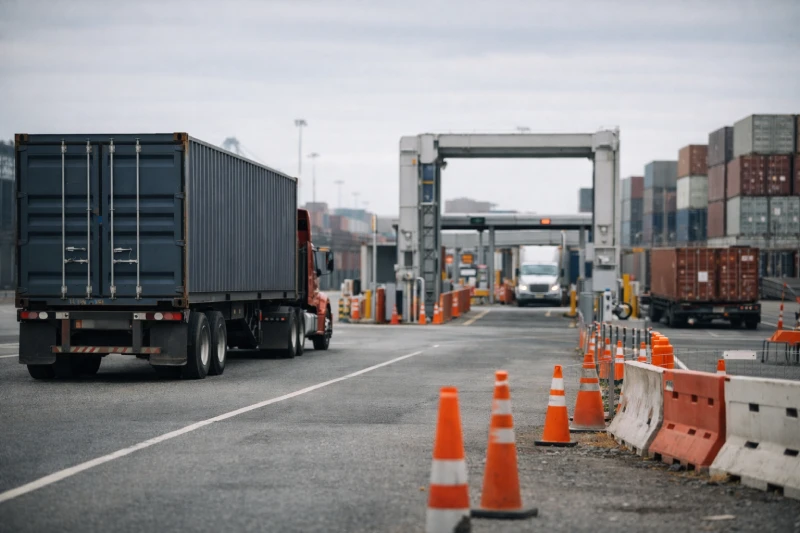
DDP vs Non-DDP Shipping to the USA: Which Is Truly Cheaper?
In the U.S. market, the question is not whether DDP shipping is cheaper by default, but whether responsibility is clearly defined from origin to final delivery. This is where many cost misunderstandings begin.
On paper, DDP appears simple. One price covers freight, customs clearance, duties, and delivery. In practice, DDP to the USA varies widely in quality. Some DDP quotes genuinely cover the full landed cost, while others leave critical risks outside the scope. The difference is not visible in the price, but it becomes obvious when something goes wrong.
True DDP shipping to the USA should include import clearance, duty and tax handling, inspection coordination, and final-mile delivery responsibility. When any of these elements are excluded or vaguely defined, the importer remains exposed to unexpected charges. These costs often surface only after the cargo arrives, when negotiating leverage is already lost.
Non-DDP shipping can appear cheaper upfront, especially for importers with existing customs brokers or domestic trucking partners. However, this approach requires accurate coordination. Delays between clearance and pickup, misaligned delivery windows, or unexpected inspections can quickly increase inland costs. In the U.S., where trucking and storage fees escalate fast, these gaps are expensive.
The real cost difference between DDP and non-DDP is therefore not the shipping method itself, but how well risk is controlled. For standardized goods with predictable compliance and clear delivery points, DDP can stabilize total cost and reduce administrative burden. For specialized cargo or importers with strong local infrastructure, non-DDP may offer more flexibility.
In the USA, the cheapest option is rarely defined by Incoterms alone. It is defined by whether cost responsibility is continuous, from export to final delivery. When that responsibility is fragmented, even a low quote can become an expensive decision.
US Customs, Compliance, and Inspections: The Biggest Cost Risk
In the United States, customs clearance is efficient, but it is also unforgiving. Most cost overruns do not come from high freight rates, but from compliance failures that trigger delays or inspections.
U.S. Customs relies heavily on pre-arrival data and risk profiling. Errors in HS classification, incomplete documentation, or missing regulatory filings can immediately place a shipment on hold. Once a shipment is flagged, costs begin to accumulate quickly — not only in administrative fees, but in storage, demurrage, and delayed inland delivery.
Regulatory requirements add another layer of risk. Cargo subject to FDA, FCC, or other agency oversight is more likely to face inspection if documentation is unclear or inconsistent. Even when the cargo itself is compliant, the inspection process still generates time-based costs that are rarely reflected in initial shipping quotes.
One of the most underestimated issues is the impact of timing. A shipment cleared late in the week may miss its scheduled pickup window, forcing rebooking of trucking or rail services. In the U.S., these changes are expensive, especially during periods of high demand. What begins as a minor clearance delay can turn into a multi-day cost escalation.
These risks affect LCL shipments more severely. Consolidated cargo depends on synchronized release and deconsolidation. When one shipment in a container encounters issues, others are often delayed as well, increasing shared costs across the entire consolidation.
From a cost perspective, compliance is not a paperwork exercise — it is a direct cost control mechanism. In the U.S. market, the cheapest shipping solution is often the one that avoids inspection-related disruption, even if the base freight rate is not the lowest.
Peak Season, Congestion, and Policy Changes: Why Costs Fluctuate in the USA
In the U.S. import market, shipping costs are not static. Even when freight rates appear stable, external pressures can quickly reshape the total cost structure.
Peak season is the most visible factor. From late summer through the end of the year, increased cargo volume places pressure on ports, trucking capacity, and warehouses. During this period, inland delivery becomes a bottleneck. Truck availability tightens, appointment windows shrink, and delays lead to higher drayage and storage costs. These increases often outweigh changes in ocean freight rates.
Port congestion amplifies this effect. When terminals operate near capacity, cargo release becomes less predictable. Missed pickup windows force rebooking of trucks or rail services, adding costs that were never part of the original plan. For importers relying on tight delivery schedules, congestion-related delays can turn a low-cost option into an expensive one.
Policy and regulatory changes introduce another layer of uncertainty. Adjustments to tariffs, enforcement priorities, or documentation requirements can affect clearance timelines and compliance risk. These changes may not be reflected immediately in shipping quotes, but they directly influence landed cost once cargo arrives.
In the U.S., the cheapest shipping decision is not only about choosing the right method, but also about timing and risk exposure. Understanding how seasonal and policy-driven factors affect cost helps importers avoid decisions that look cheap today but become expensive under changing conditions.
How to Calculate the Cheapest Shipping Solution for Your Cargo to the USA
After understanding how costs behave in the U.S. market, the final step is applying that logic to your own shipment. There is no universal cheapest option for shipping from China to the USA — the lowest total cost depends on how your specific cargo interacts with the system.
To calculate a realistic landed cost, several details matter more than the freight rate itself. Shipment volume and weight determine whether LCL or FCL creates more risk. Cargo type affects compliance requirements and inspection probability. The delivery location influences inland trucking distance, availability, and pricing. Even small differences in these variables can change the cost outcome significantly.
Another critical factor is how responsibilities are structured. Whether shipping under DDP or non-DDP terms, clarity around customs clearance, duties, inspections, and final delivery determines how predictable the cost will be. When responsibility gaps exist, unexpected charges tend to appear at the destination — often after choices can no longer be changed.
Many importers try to simplify decisions by comparing quotes alone. In the U.S., this approach often leads to higher final costs. A tailored cost calculation that considers risk, timing, and delivery structure is usually cheaper than choosing the lowest upfront price. It allows potential problems to be addressed before the cargo ships, rather than paid for after arrival.
The most cost-effective shipping solution is the one designed around your cargo, your destination, and your risk tolerance. Understanding these factors in advance helps ensure that “cheap” remains cheap all the way through clearance and delivery — not just on the initial quote.
