
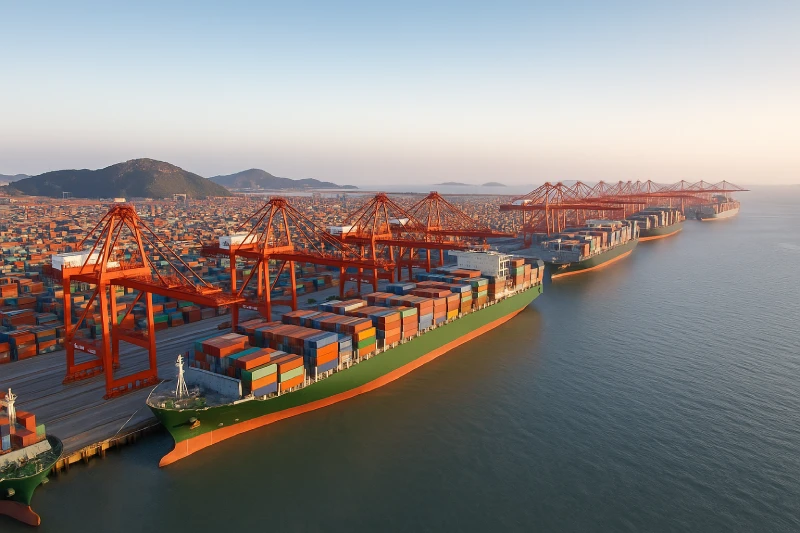
China’s extensive network of world-class seaports forms the backbone of its global export system.
From Shanghai and Ningbo in the east to Shenzhen and Guangzhou in the south, China ports handle more than half of the world’s containerized trade.
Each port serves a distinct industrial and regional function — some specialize in electronics and machinery, while others focus on bulk commodities or Ro-Ro shipments.

For importers, knowing which shipping port in China your cargo departs from can significantly affect shipping costs, transit times, and available routes.
This comprehensive guide by Winsail Logistics introduces the major ports in China, compares their advantages, and helps you choose the most efficient gateway for your international shipment.
How Ports Drive China’s Export Power
China’s ports are not just transportation hubs — they are the foundation of the world’s largest export economy.
With over 30 major international seaports and thousands of smaller regional terminals, China has built an unmatched maritime logistics network connecting factories to every global market.
These ports handle more than 290 million TEUs annually, linking manufacturers across the Pearl River Delta, Yangtze River Delta, and Bohai Economic Rim to destinations in the Middle East, Africa, Europe, and North America.
This vast infrastructure enables Chinese exporters to deliver goods faster, cheaper, and more reliably than almost any other country in the world.
The Role of Seaports in China’s Global Logistics Network
China’s seaports act as the final gateway between inland manufacturing hubs and international buyers.
Modern container terminals like Shanghai, Ningbo-Zhoushan, and Shenzhen are fully integrated with expressways, rail networks, and bonded logistics zones — allowing seamless container transfers from factory to vessel.
Beyond cargo handling, many ports provide value-added services such as warehousing, customs inspection, consolidation, and multimodal transshipment.
This integration transforms ports from simple gateways into comprehensive logistics ecosystems that optimize export efficiency.
Annual Container Throughput and Global Ranking (2024–2025)
China dominates global port rankings — home to seven of the world’s top ten busiest container ports.
According to 2024 throughput data, Shanghai Port remains the world leader, followed by Ningbo-Zhoushan, Shenzhen, and Guangzhou.
Together, these ports represent nearly 40% of global container movement, underscoring China’s central role in international trade.
Port Classifications — Coastal, River, and Inland Terminals
China’s port system is divided into three main categories:
- Coastal deep-water ports – handle large international container vessels (e.g., Shanghai, Shenzhen).
- River ports – connect inland cities to the sea through navigable rivers (e.g., Nanjing, Wuhan).
- Inland dry ports – logistics hubs that consolidate goods for export (e.g., Chongqing, Chengdu).
This multilayered structure ensures that even factories located deep inland can access efficient export routes through multimodal rail–sea connections.
China Port Map — Key Coastal and Inland Locations
China’s ports are strategically distributed along its vast eastern coastline and major inland waterways, ensuring full regional coverage from north to south.
Each port cluster plays a unique role in supporting China’s manufacturing, export logistics, and trade with specific global regions.
To help importers and logistics planners visualize these routes, the following map highlights the main coastal ports — from Dalian in the north to Shenzhen in the south — as well as key inland ports connected via multimodal rail-sea corridors.
East China Ports — Shanghai and Ningbo-Zhoushan
East China is home to the world’s two busiest ports: Shanghai and Ningbo-Zhoushan.
Both serve the vast Yangtze River Delta, the heart of China’s advanced manufacturing and export industries.
- Shanghai Port leads in global container throughput and offers unmatched connectivity for FCL and LCL shipments.
- Ningbo-Zhoushan Port, located just south of Shanghai, provides deep-water capacity ideal for mega-vessels and acts as a cost-efficient alternative for exporters in Zhejiang and Jiangsu provinces.
These ports are the preferred gateways for shipments to Europe, North America, and the Middle East.
Alt text suggestion: “Map highlighting Shanghai and Ningbo-Zhoushan ports on China’s east coast with arrows pointing toward Europe and the USA.”
South China Ports — Shenzhen, Guangzhou, and Hong Kong
The Pearl River Delta in South China is a powerhouse of global manufacturing and trade.
Shenzhen, Guangzhou (Nansha), and Hong Kong form a world-class port cluster serving electronics, machinery, and consumer goods exporters.
- Shenzhen Port includes major terminals such as Yantian and Shekou, known for high-efficiency operations and fast customs clearance.
- Guangzhou (Nansha) Port connects seamlessly with inland factories across Guangdong and Guangxi provinces.
- Hong Kong Port remains an important international transshipment and free-trade hub.
These ports are the best choices for cargo heading to the Middle East, Africa, and Southeast Asia.
North China Ports — Qingdao, Tianjin, and Dalian
Northern China’s port cluster supports heavy industry, machinery, and chemical exports.
Qingdao, Tianjin, and Dalian provide access to the Bohai Economic Rim and nearby manufacturing centers like Beijing, Shandong, and Liaoning.
- Qingdao Port is a key export hub to Japan, Korea, and Europe.
- Tianjin Port serves as the maritime gateway for Beijing and northern provinces.
- Dalian Port specializes in industrial goods and bulk shipments to Russia and Northeast Asia.
These northern ports are strategically positioned for short-sea shipping and Eurasian trade routes.
Inland River and Dry Ports — Linking China’s Interior to the Sea
China’s inland ports extend maritime access deep into the country, enabling efficient exports from central and western regions.
- Chongqing Port and Wuhan Port on the Yangtze River are major inland container hubs connected to Shanghai and Ningbo by barge and rail.
- Chengdu and Xi’an operate as inland dry ports, supporting rail-sea multimodal transport through Belt & Road routes.
- These facilities allow exporters far from the coast to ship globally without relying solely on coastal ports.
This integrated inland-to-sea network strengthens China’s logistics competitiveness and supports regional industrial growth.
Summary — Regional Advantages at a Glance
| Region | Major Ports | Core Export Industries | Main Destinations | Key Advantage |
|---|---|---|---|---|
| East China | Shanghai, Ningbo-Zhoushan | Machinery, textiles, electronics | Europe, USA, Middle East | Highest capacity and efficiency |
| South China | Shenzhen, Guangzhou, Hong Kong | Electronics, consumer goods | Middle East, Africa, SE Asia | Fastest customs and route diversity |
| North China | Qingdao, Tianjin, Dalian | Heavy machinery, bulk goods | Japan, Korea, Europe | Strong regional rail links |
| Inland | Chongqing, Wuhan, Chengdu | Automotive, equipment, general cargo | Global via coastal ports | Seamless rail-sea connection |
Top 10 Busiest Ports in China (with Functions & Routes)
China dominates global maritime trade — home to 7 of the world’s top 10 busiest container ports.These ports form the backbone of China’s export logistics network, connecting manufacturing clusters with major global markets across Asia, Europe, the Middle East, Africa, and North America.
This section provides a detailed overview of the Top 10 Chinese ports, their core functions, industries served, and main international shipping routes, helping importers choose the most efficient gateway for their supply chains.
1. Port of Shanghai — The World’s Logistics Superhub
The Port of Shanghai remains the world’s largest container port, handling over 47 million TEUs annually.
Located at the mouth of the Yangtze River, it integrates deep-sea, river, and rail networks — a key hub for FCL and LCL shipments from the Yangtze River Delta.
- Main cargo: machinery, electronics, vehicles, textiles
- Export routes: Europe, North America, Middle East
- Facilities: Waigaoqiao, Yangshan Deep-Water Terminal
- Competitive edge: world-class efficiency and automation
2. Port of Ningbo-Zhoushan — Deep-Water Gateway for Mega Vessels
Located south of Shanghai, Ningbo-Zhoushan Port combines one of the world’s deepest natural harbors with exceptional throughput capacity.
It is ideal for bulk cargo, containers, and Ro-Ro shipments.
- Main cargo: machinery, chemicals, industrial goods
- Export routes: Europe, Africa, Middle East
- Facilities: Beilun Container Terminal, Chuanshan Terminal
- Competitive edge: deep-water capacity, direct ocean access
3. Port of Shenzhen — Tech Manufacturing Export Powerhouse
The Port of Shenzhen serves as the shipping hub for the Pearl River Delta manufacturing base, including electronics, appliances, and hardware.
It encompasses multiple terminals — Yantian, Shekou, and Chiwan.
- Main cargo: electronics, consumer goods, machinery
- Export routes: Middle East, Africa, USA
- Facilities: Yantian International Container Terminal (YICT), Shekou Container Terminal
- Competitive edge: proximity to manufacturers and fast customs
4. Port of Guangzhou (Nansha) — Southern China’s Industrial Gateway
Guangzhou Port, particularly the Nansha terminal, plays a vital role in connecting South China’s inland industries to global routes.
It is one of the fastest-growing ports in China.
- Main cargo: building materials, electronics, furniture
- Export routes: Southeast Asia, Middle East, Africa
- Facilities: Nansha Deep-Water Port, Inner River Port
- Competitive edge: strong multimodal connections with inland factories
5. Port of Qingdao — Northern Hub for Japan and Korea Trade
Located in Shandong Province, Qingdao Port is a key player in trade with Northeast Asia and Europe.
It handles a wide range of cargo including containers, bulk goods, and refrigerated cargo.
- Main cargo: vehicles, machinery, steel, seafood
- Export routes: Japan, Korea, Europe
- Facilities: Qianwan and Dongjiakou terminals
- Competitive edge: balanced operations across bulk and container logistics
6. Port of Tianjin — Maritime Gateway for Northern China
The Port of Tianjin serves Beijing, Hebei, and Inner Mongolia, connecting northern industrial zones to the sea.
It is one of the largest man-made ports in the world.
- Main cargo: chemicals, vehicles, machinery
- Export routes: Europe, Russia, Middle East
- Facilities: Beijiang Container Terminal, Dongjiang Free Trade Port Zone
- Competitive edge: direct access to Beijing via expressway and rail
7. Port of Xiamen — Gateway to Southeast Asia and Taiwan
Xiamen Port in Fujian Province connects East China’s manufacturers to Southeast Asian and Taiwanese markets.
It is known for high-efficiency customs and strategic location.
- Main cargo: electronics, footwear, textiles
- Export routes: Taiwan, Vietnam, Malaysia, Singapore
- Facilities: Haicang and Dongdu terminals
- Competitive edge: short-sea and cross-strait trade hub
8. Port of Dalian — Key Node for Northeast Industrial Exports
Dalian Port, in Liaoning Province, is the northernmost ice-free port in China and a key export base for heavy industry.
- Main cargo: steel, equipment, oil, chemicals
- Export routes: Russia, Korea, Japan
- Facilities: Dayao Bay Container Terminal, Petrochemical Port Area
- Competitive edge: stable year-round operation, strong regional rail links
9. Port of Hong Kong — Global Transshipment Hub
Although no longer the largest in volume, Hong Kong Port remains a crucial international transshipment center.
Its free-trade status and world-class logistics ecosystem make it ideal for re-export operations.
- Main cargo: electronics, garments, high-value goods
- Export routes: global transshipment hub
- Facilities: Kwai Tsing Container Terminals
- Competitive edge: zero customs duties and advanced logistics services
10. Port of Lianyungang — Strategic Link to Central Asia
Located in Jiangsu Province, Lianyungang Port is the eastern terminus of the New Eurasian Land Bridge — connecting China with Kazakhstan, Uzbekistan, and Europe by rail.
- Main cargo: chemicals, machinery, minerals
- Export routes: Central Asia, Middle East, Europe
- Facilities: Container Terminal Area, Petrochemical Terminal
- Competitive edge: strong integration with Belt & Road rail corridors
Summary — Overview of China’s Top 10 Ports
| Rank | Port | Region | Annual Throughput (Million TEUs) | Core Industries | Main Routes |
|---|---|---|---|---|---|
| 1 | Shanghai | East China | 47.3 | Machinery, electronics | Europe, USA, ME |
| 2 | Ningbo-Zhoushan | East China | 35.2 | Industrial goods | Europe, ME, Africa |
| 3 | Shenzhen | South China | 30.0 | Electronics | ME, Africa, USA |
| 4 | Guangzhou (Nansha) | South China | 25.5 | Furniture, appliances | SE Asia, ME |
| 5 | Qingdao | North China | 25.0 | Steel, machinery | Japan, Korea, Europe |
| 6 | Tianjin | North China | 21.0 | Chemicals, autos | Europe, Russia |
| 7 | Xiamen | East China | 13.5 | Footwear, electronics | Taiwan, SE Asia |
| 8 | Dalian | North China | 12.0 | Steel, oil | Korea, Russia |
| 9 | Hong Kong | South China | 11.5 | High-value goods | Global hub |
| 10 | Lianyungang | East China | 9.0 | Machinery, minerals | Central Asia, Europe |
How to Choose the Right Port for Your Shipment
Choosing the right port in China can significantly affect your shipping cost, transit time, customs efficiency, and overall supply chain performance.
With over 2,000 ports across the country and multiple major gateways in each region, importers must evaluate both geographical and operational factors to optimize their logistics strategy.
This section explains the key criteria for selecting the most suitable Chinese port for your cargo — whether you’re shipping by sea, air, or multimodal routes.
1. Match the Port to Your Supplier’s Location
The closer your supplier or factory is to a port, the lower your domestic trucking cost and lead time will be.
For example:
- If your manufacturer is in Guangdong or Shenzhen, use Shenzhen Port or Guangzhou (Nansha).
- For suppliers in Zhejiang or Jiangsu, Ningbo-Zhoushan or Shanghai are the best options.
- For northern provinces like Shandong or Hebei, Qingdao and Tianjin provide the most efficient routes.
- For inland factories (e.g., Chengdu, Chongqing, Xi’an), consider using dry ports connected by rail to Shanghai or Ningbo.
Selecting a nearby port minimizes domestic logistics and avoids delays caused by long internal transfers.
2. Compare Transit Times to Destination Markets
Each port has different sailing schedules and route frequencies to key global destinations.
Major ports like Shanghai, Shenzhen, and Ningbo offer daily departures, while smaller ports may have fewer sailings per week.
| Destination | Fastest Port | Typical Transit Time (Days) | Route Frequency |
|---|---|---|---|
| Europe (Rotterdam, Hamburg) | Shanghai / Ningbo | 28–35 | Daily |
| Middle East (Dubai, Jeddah) | Shenzhen / Guangzhou | 15–20 | 3–5 per week |
| Africa (Mombasa, Lagos) | Guangzhou / Qingdao | 25–35 | 2–3 per week |
| North America (Los Angeles, Vancouver) | Shanghai / Ningbo | 15–18 | Daily |
| Southeast Asia (Singapore, Manila) | Shenzhen / Xiamen | 5–8 | Daily |
Choosing a port with frequent sailings to your target destination can reduce waiting time and improve delivery reliability.
3. Consider Port Handling Efficiency and Customs Clearance Speed
Not all ports operate at the same level of efficiency.
Leading international gateways like Shanghai, Shenzhen (Yantian), and Ningbo have advanced automation systems, digital documentation, and 24/7 operations.
In contrast, smaller or secondary ports may experience congestion or slower customs processes.
Key indicators to evaluate include:
- Average dwell time (time cargo stays in port before shipment)
- Customs clearance process (manual vs. electronic filing)
- Availability of bonded warehouse or FTZ (Free Trade Zone)
- Port congestion index and seasonal trends
Ports within Free Trade Zones (such as Shanghai Waigaoqiao FTZ and Shenzhen Qianhai FTZ) offer faster export procedures and better support for re-export or transshipment cargo.
4. Evaluate Cost Differences — Local Charges, THC, and Inland Fees
Port-related costs can vary widely depending on terminal handling charges (THC), local port surcharges, and inland haulage.
| Port | Avg. THC (USD/Container) | Trucking to Factory (Approx.) | Local Surcharge | Notes |
|---|---|---|---|---|
| Shanghai | 120–150 | $200–400 (within 100 km) | Moderate | Highly efficient but premium cost |
| Ningbo-Zhoushan | 100–130 | $150–350 | Low | Good value alternative to Shanghai |
| Shenzhen (Yantian) | 110–140 | $100–250 | Moderate | Fast customs, best for electronics |
| Guangzhou (Nansha) | 100–120 | $80–200 | Low | Strong for furniture and consumer goods |
| Qingdao | 90–120 | $150–300 | Low | Ideal for heavy machinery exports |
When negotiating FOB or EXW terms, confirm which local charges are covered by your supplier and which fall under your responsibility.
5. Assess Cargo Type Compatibility — Container, Bulk, or Ro-Ro
Each port specializes in certain cargo types:
- Container cargo (FCL/LCL): Shanghai, Ningbo, Shenzhen
- Bulk cargo (coal, steel, grain): Qingdao, Tianjin, Dalian
- Ro-Ro (vehicles and machinery): Xiamen, Dalian, Lianyungang
For example, auto exporters often use Lianyungang or Dalian due to dedicated Ro-Ro terminals and simplified customs procedures.
Selecting a port suited to your cargo category ensures lower handling costs and faster loading operations.
6. Leverage Multimodal and Belt & Road Routes
For inland exporters, combining rail + sea transport can be faster and cheaper than trucking all the way to the coast.
Key multimodal options include:
- Chengdu → Ningbo rail-sea route
- Chongqing → Shanghai via Yangtze River barge
- Xi’an → Lianyungang Belt & Road rail corridor
These routes reduce carbon emissions and enable door-to-port logistics integration for global shipping.
7. Consult Your Freight Forwarder for Expert Routing Advice
Finally, rely on your freight forwarder or logistics partner for tailored routing analysis.
An experienced forwarder like Winsail Logistics can compare multiple port options based on:
- Cargo type and Incoterms
- Volume and frequency of shipments
- Required delivery timelines
- Current congestion and cost trends
With professional guidance, you can balance speed, cost, and reliability to select the optimal port for each shipment.
Summary: Factors for Selecting the Right Chinese Port
| Evaluation Factor | Description | Key Examples |
|---|---|---|
| Supplier Location | Closest port minimizes domestic transport | Shenzhen for Guangdong, Ningbo for Zhejiang |
| Transit Time | Choose ports with frequent sailings to destination | Shanghai, Shenzhen |
| Handling Efficiency | Automated ports reduce delays | Shanghai, Ningbo, Yantian |
| Cost | Compare THC, local fees, trucking costs | Nansha, Qingdao are cost-effective |
| Cargo Type | Match port specialization to shipment | Dalian for Ro-Ro, Qingdao for bulk |
| Multimodal Access | Use rail/river routes from inland cities | Chengdu, Chongqing |
| Logistics Support | Partner with reliable forwarder | Winsail Logistics |
China Port Infrastructure and Services
China’s ports are the backbone of the nation’s global trade dominance.
Supported by massive government investment, advanced engineering, and cutting-edge digitalization, the country’s port infrastructure has become one of the most modern, efficient, and interconnected systems in the world.
This section provides an in-depth overview of China’s port infrastructure, service ecosystem, and logistics support facilities, showing why its maritime network is unmatched in capacity and innovation.
1. World-Class Port Infrastructure
China’s port network features world-leading deep-water terminals, automated berths, and mega-hub capacity designed for vessels exceeding 20,000 TEU.
Key highlights:
- Over 2,000 commercial ports and 7 of the world’s 10 busiest container terminals.
- Major deep-water ports include Shanghai Yangshan, Ningbo-Zhoushan, Shenzhen Yantian, and Qingdao Qianwan.
- Advanced ship-to-shore cranes, automated stacking cranes, and smart gate systems.
- Integration with national highways, high-speed rail, and inland waterways.
2. Smart Port Technology and Automation
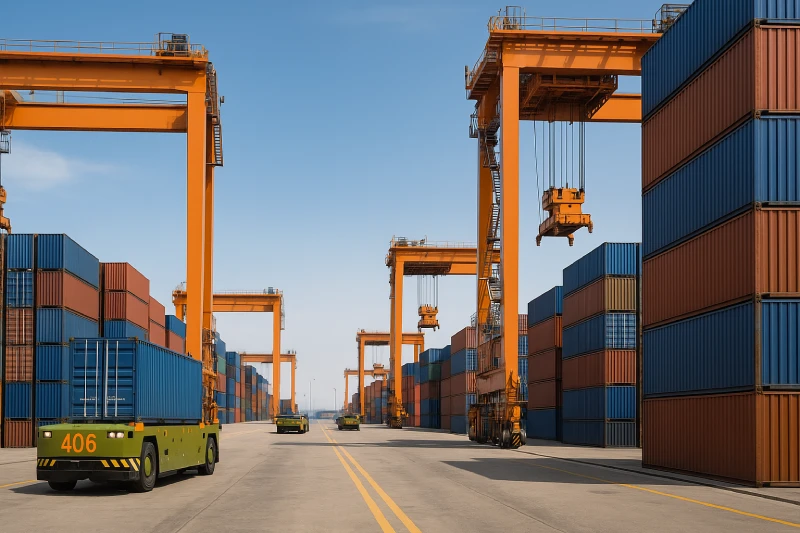
China is rapidly transitioning toward “smart ports”, where digital technology drives productivity and transparency.
Automation and data integration are reshaping port operations:
| Technology | Application | Key Port Examples |
|---|---|---|
| AI & IoT Monitoring | Real-time tracking of containers, equipment, and gate operations | Shanghai, Shenzhen, Ningbo |
| 5G Networks | Remote crane control and instant data exchange | Qingdao, Tianjin |
| Digital Customs Systems | Paperless clearance, e-declarations | Shanghai FTZ, Shenzhen Qianhai |
| Blockchain Logistics Platforms | Secure trade documentation | Guangzhou, Xiamen |
| Autonomous Vehicles & Drones | Automated transport within terminals | Yangshan, Nansha |
These innovations enable 24/7 operations, reduce human error, and improve visibility across the supply chain.
3. Port Services and Facilities
Chinese ports provide a full spectrum of maritime and cargo-handling services to support global exporters and importers.
Main Port Services Include:
- Container handling (FCL & LCL)
- Bulk cargo operations (coal, steel, grain, fertilizer)
- Ro-Ro terminals for vehicles and heavy machinery
- Refrigerated cargo storage for perishable goods
- Bonded warehousing and customs brokerage
- Transshipment and re-export services
- Ship repair and bunkering (fuel, water, provisions)
In addition, many ports—especially Shanghai, Ningbo, and Shenzhen—operate Free Trade Zones (FTZs) offering tariff exemptions and simplified import/export procedures.
4. Inland Connectivity and Multimodal Logistics
The efficiency of Chinese ports depends not only on their coastal infrastructure but also on how seamlessly they connect with inland manufacturing hubs.
China has invested heavily in multimodal transportation corridors, ensuring that goods from inland provinces reach ports efficiently.
Key corridors include:
- Yangtze River Economic Belt — linking inland cities (Wuhan, Chongqing) to Shanghai by barge.
- New International Land-Sea Corridor — connecting Chongqing to Qinzhou and Beibu Gulf ports by rail-sea route.
- China–Europe Railway Express — integrating with coastal ports for combined rail–sea services.
This multimodal integration supports door-to-port logistics and shortens delivery times for inland exporters.
5. Green Port Initiatives and Sustainability
China is leading Asia in developing eco-friendly ports to meet global sustainability targets.
Government programs emphasize energy efficiency, low-carbon logistics, and pollution control in port operations.
| Initiative | Description | Example Ports |
|---|---|---|
| Shore Power Systems | Allow ships to plug into electricity instead of running diesel engines | Shanghai, Xiamen |
| Electric Cargo Handling Equipment | Battery-powered cranes and trucks | Ningbo, Nansha |
| Renewable Energy Integration | Solar panels and smart grids | Shenzhen, Qingdao |
| Wastewater & Emission Control | Advanced treatment facilities | Tianjin, Dalian |
| Green Port Certification | National rating system for sustainable performance | 30+ major ports |
China’s “Green Port Plan” aligns with its carbon neutrality by 2060 commitment, reducing both emissions and operational costs.
6. Future Development and Digital Integration
China’s port strategy focuses on integration, automation, and digital connectivity for the next decade.
The government’s 14th Five-Year Plan prioritizes:
- Expansion of smart logistics networks
- Enhanced port–rail–air integration
- Upgraded deep-water capacity for ultra-large container vessels
- Wider adoption of blockchain-based trade documentation
- Stronger alignment with the Belt and Road maritime corridors
The goal: build a globally connected “Digital Maritime Silk Road,” enabling real-time logistics coordination across continents.
Summary — Key Strengths of China’s Port Infrastructure
| Category | Strength | Examples |
|---|---|---|
| Physical Infrastructure | Deep-water, automated mega-terminals | Shanghai, Ningbo |
| Technology | AI, 5G, blockchain integration | Qingdao, Shenzhen |
| Service Range | End-to-end logistics, FTZs | Guangzhou, Xiamen |
| Connectivity | Inland multimodal links | Chongqing, Wuhan |
| Sustainability | Green Port innovations | Xiamen, Tianjin |
| Strategic Vision | Belt & Road global integration | Beibu Gulf, Lianyungang |
Key Shipping Routes and Destinations
China’s ports serve as critical gateways connecting Asia’s largest manufacturing base to every major region of the world.
With over 600 global trade routes, Chinese carriers and international shipping alliances operate an extensive network linking the country’s coastal ports to Europe, North America, the Middle East, Africa, and Southeast Asia.
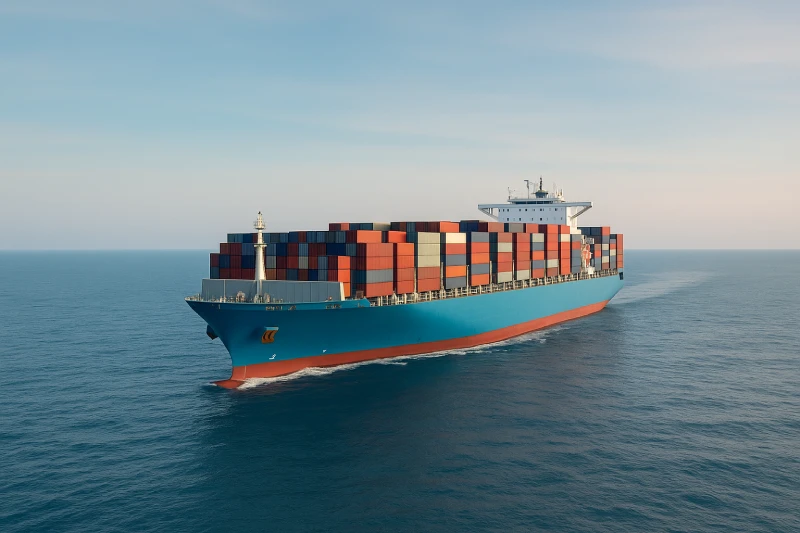
This section provides a detailed overview of China’s primary shipping routes, typical transit times, and key destination ports across global trade regions.
1. China–Europe Shipping Routes
The China–Europe sea freight corridor remains one of the busiest trade lanes on earth, handling more than 20% of global container traffic.
Most routes depart from Shanghai, Ningbo-Zhoushan, or Shenzhen, passing through the Strait of Malacca, Indian Ocean, and Suez Canal before reaching Europe.
| Major Route | Departure Ports | Destination Ports | Transit Time (Days) | Typical Carriers |
|---|---|---|---|---|
| East China → Northern Europe | Shanghai / Ningbo | Rotterdam, Hamburg, Antwerp | 28–35 | COSCO, Maersk, MSC |
| South China → Mediterranean | Shenzhen / Guangzhou | Valencia, Genoa, Piraeus | 25–30 | CMA CGM, Hapag-Lloyd, Evergreen |
| North China → Baltic Region | Tianjin / Qingdao | Gdansk, Helsinki | 35–40 | COSCO, ONE, HMM |
Route Highlights:
- Stable service frequency with weekly sailings.
- Major transshipment hubs in Singapore, Colombo, and Port Said.
- Increasing integration with China–Europe Railway Express for inland delivery.
2. China–North America Shipping Routes
The Trans-Pacific trade lane is vital for global supply chains, connecting China’s factories with the U.S. and Canadian west coasts.
Most routes cross the Pacific Ocean directly, departing from Shanghai, Ningbo, or Yantian (Shenzhen).
| Route | Departure Ports | Destination Ports | Transit Time (Days) | Frequency |
|---|---|---|---|---|
| China → U.S. West Coast | Shanghai / Ningbo / Yantian | Los Angeles, Long Beach, Oakland | 13–18 | Daily |
| China → U.S. East Coast | Shenzhen / Xiamen / Qingdao | New York, Savannah, Miami (via Panama Canal) | 28–33 | 3–4 / week |
| China → Canada | Shanghai / Ningbo | Vancouver, Prince Rupert | 15–18 | 4–5 / week |
Route Highlights:
- Fastest option for high-value goods like electronics, fashion, and e-commerce.
- Advanced port infrastructure on both ends enables smooth cargo flow.
- Transpacific freight rates fluctuate seasonally (Q4 peak season).
3. China–Middle East and Gulf Region Routes
China’s trade with the Middle East and Gulf Cooperation Council (GCC) countries has expanded rapidly under the Belt and Road Initiative (BRI).
Exports mainly include machinery, construction materials, and consumer goods, while imports are dominated by oil, petrochemicals, and aluminum.
| Route | Departure Ports | Destination Ports | Transit Time (Days) | Example Trade Flow |
|---|---|---|---|---|
| South China → UAE / Oman | Shenzhen / Guangzhou | Dubai (Jebel Ali), Sohar | 15–20 | Electronics, textiles |
| East China → Saudi Arabia / Qatar | Shanghai / Ningbo | Dammam, Hamad Port | 18–23 | Building materials |
| North China → Kuwait / Bahrain | Qingdao / Tianjin | Shuwaikh, Khalifa Bin Salman | 22–28 | Machinery, auto parts |
Route Highlights:
- Key transshipment hubs: Colombo, Port Klang, and Singapore.
- Strong DDP & door-to-door services via Winsail Logistics.
- Regular Ro-Ro shipments for construction and industrial equipment.
4. China–Africa Shipping Routes
Africa is one of the fastest-growing destinations for Chinese exports, supported by strong investment and infrastructure projects.
Main routes connect China’s southern and eastern ports with Africa’s east, west, and northern coasts.
| Route | Departure Ports | Destination Ports | Transit Time (Days) | Main Cargo Types |
|---|---|---|---|---|
| China → East Africa | Guangzhou / Shenzhen | Mombasa, Dar es Salaam | 25–30 | Consumer goods, machinery |
| China → West Africa | Ningbo / Qingdao | Lagos (Apapa), Tema | 30–40 | Building materials, electronics |
| China → North Africa | Shanghai / Tianjin | Alexandria, Casablanca | 25–35 | Chemicals, equipment |
Route Highlights:
- Frequent service by COSCO, CMA CGM, Maersk.
- Development of African logistics parks under BRI framework.
- Growing demand for DDP (Delivered Duty Paid) and door-to-door shipping.
5. China–Southeast Asia and Pacific Routes
Southeast Asia is China’s closest and fastest-growing trade partner, driven by regional supply chain integration under RCEP (Regional Comprehensive Economic Partnership).
| Route | Departure Ports | Destination Ports | Transit Time (Days) | Service Type |
|---|---|---|---|---|
| China → Vietnam / Thailand | Shenzhen / Xiamen | Ho Chi Minh City, Bangkok (Laem Chabang) | 3–6 | Feeder & short sea |
| China → Singapore / Malaysia | Shanghai / Ningbo | Singapore, Port Klang | 5–8 | Weekly |
| China → Indonesia / Philippines | Guangzhou / Shenzhen | Jakarta, Manila | 5–9 | Weekly |
Route Highlights:
- Frequent feeder services, ideal for LCL (Less than Container Load) shipments.
- Regional logistics hubs in Singapore and Port Klang handle transshipments for the Pacific Islands.
- Shortest and most cost-effective routes for intra-Asia trade.
6. Emerging Routes — China to Latin America and Russia
China’s expanding trade network now reaches Latin America and Eurasia through both sea and land corridors.
| Route | Departure Ports | Destination Ports | Transit Time (Days) | Main Commodities |
|---|---|---|---|---|
| China → Latin America (Pacific Coast) | Shanghai / Ningbo | Manzanillo (Mexico), Callao (Peru), Valparaíso (Chile) | 30–38 | Electronics, appliances |
| China → South America (Atlantic via Cape of Good Hope) | Shenzhen / Qingdao | Santos (Brazil), Buenos Aires (Argentina) | 40–45 | Machinery, textiles |
| China → Russia (Far East) | Dalian / Qingdao | Vladivostok | 3–5 | Industrial goods |
| China → Europe (Arctic Route – seasonal) | Shanghai / Dalian | Rotterdam | 25–28 | Trial service under Polar Silk Road |
Route Highlights:
- Growing strategic cooperation under Belt & Road maritime expansion.
- Increasing use of cold chain logistics for seafood and agricultural imports.
- Pilot Arctic shipping via the Northern Sea Route (reduces distance by ~40%).
Summary — China’s Global Shipping Network Overview
| Region | Main Destination Ports | Transit Time (Days) | Key Cargo |
|---|---|---|---|
| Europe | Rotterdam, Hamburg, Piraeus | 25–35 | Machinery, electronics |
| North America | Los Angeles, Vancouver, New York | 13–33 | Consumer goods |
| Middle East | Dubai, Dammam, Doha | 15–23 | Building materials |
| Africa | Mombasa, Lagos, Casablanca | 25–40 | Construction, textiles |
| Southeast Asia | Singapore, Bangkok, Jakarta | 3–9 | Regional trade goods |
| Latin America & Russia | Santos, Vladivostok, Valparaíso | 5–45 | Industrial and finished goods |
Port Handling Charges and Customs Procedures
Understanding the port handling charges and customs clearance process is crucial for importers and exporters working with China.
These costs and procedures directly affect your total shipping expense, lead time, and delivery reliability.
This section breaks down the major types of port-related fees, typical cost ranges across China’s major terminals, and how to navigate customs formalities efficiently to avoid delays.
1. What Are Port Handling Charges (THC)?
Terminal Handling Charges (THC) refer to the fees charged by ports for handling containers between the ship and the yard — including loading, unloading, stacking, and gate operations.
THC typically covers:
- Container lifting by crane (ship–shore movement)
- Yard stacking and storage within the terminal
- Terminal gate processing and documentation
- Equipment use and maintenance
These charges are usually included in ocean freight quotes under FOB or CFR terms, but may appear separately for EXW or FCA shipments.
| Port | Average THC (USD / 20FT Container) | 40FT Container | Notes |
|---|---|---|---|
| Shanghai | 120–150 | 180–200 | Most automated terminal, fast handling |
| Ningbo-Zhoushan | 100–130 | 160–180 | Slightly cheaper than Shanghai |
| Shenzhen (Yantian) | 110–140 | 170–190 | Ideal for electronics & e-commerce |
| Guangzhou (Nansha) | 100–120 | 150–170 | Lower surcharge, high capacity |
| Qingdao / Tianjin | 90–120 | 140–160 | Cost-effective for heavy cargo |
2. Other Port-Related Local Charges
In addition to THC, several local port surcharges and service fees may apply, depending on your shipping mode and terms.
| Charge Type | Description | Typical Rate (USD / Container) | Applies To |
|---|---|---|---|
| Port Security Fee | Covers terminal safety & surveillance | 5–10 | All shipments |
| Documentation Fee | Bill of lading, export docs processing | 25–40 | Export side |
| Seal Fee | Container sealing charge | 5–10 | Export only |
| Equipment Management Fee (EMF) | Container usage tracking | 10–20 | FCL shipments |
| Telex Release / Express BL | For paperless Bill of Lading | 30–40 | Optional |
| Port Congestion Surcharge | Temporary fee during peak season | 20–100 | Case-by-case |
💡 Tip: Always request a “local charges breakdown” from your freight forwarder before booking to avoid unexpected costs.
3. Customs Clearance Process in Chinese Ports
China’s customs system has become increasingly digitalized and transparent in recent years, with most major ports now operating paperless electronic declaration platforms.
Still, understanding the sequence helps avoid clearance delays.
Step-by-Step Customs Procedure
(1) Pre-declaration:
Exporter submits commercial invoice, packing list, HS code, and shipping documents online.
Customs reviews and pre-approves the declaration.
(2) Cargo Inspection (if required):
Random or risk-based physical inspection by China Customs.
X-ray or manual check for restricted goods.
(3) Duty & Tax Assessment:
Import duty and VAT are calculated based on the CIF value.
Certain categories (machinery, samples, bonded cargo) may be duty-exempt.
(4) Customs Release:
Once cleared, cargo is released for loading or delivery.
Electronic clearance certificate issued (no paper stamp needed).
(5) Data Integration:
Exporters can sync customs records with China’s National Single Window platform for compliance tracking.
| Document | Description | Required For |
|---|---|---|
| Commercial Invoice & Packing List | Must match declaration details | Export & Import |
| Bill of Lading (B/L) | Transport proof | Export & Import |
| Export License (if applicable) | For controlled items | Export only |
| Certificate of Origin (CO / Form E) | For tariff preference under FTAs | Optional |
| Import Permit | For restricted products | Import only |
4. Free Trade Zones (FTZ) and Bonded Warehouses
China operates over 20 Free Trade Zones (FTZs) that simplify customs and improve cost efficiency for exporters and importers.
Ports such as Shanghai Waigaoqiao, Shenzhen Qianhai, Tianjin Dongjiang, and Xiamen Haicang offer integrated customs, logistics, and warehousing.
Benefits of FTZ Operations:
- Simplified customs clearance and re-export procedures.
- Deferred import duties — pay tax only when goods enter domestic market.
- Bonded warehousing for storage and assembly of foreign goods.
- Cross-border e-commerce support, including B2C small parcel handling.
Many international traders use FTZs for transshipment and distribution, reducing both time and cost.
5. Tips for Smooth Customs and Port Operations
To ensure efficient clearance and minimize port-related delays:
Before shipment:
- Double-check HS codes and declared values.
- Ensure supplier provides all original documents.
- Confirm Incoterms (FOB, CIF, DDP) responsibilities clearly.
During shipment:
- Track cargo status via the shipping line or customs portal.
- Communicate early with your forwarder about customs inspection notices.
After shipment:
- Keep digital records for at least 5 years (required by Chinese Customs).
- Use licensed brokers familiar with the National Single Window system.
Summary — Port Charges and Customs in China
| Category | Description | Example Ports |
|---|---|---|
| Terminal Handling (THC) | Loading/unloading, yard handling | Shanghai, Ningbo |
| Local Port Fees | Documentation, seal, congestion | Shenzhen, Qingdao |
| Customs Process | Electronic declaration & clearance | All major ports |
| FTZ & Bonded Warehouses | Simplified procedures, duty suspension | Waigaoqiao, Qianhai |
| Optimization Tips | Clear Incoterms, digital tracking | Nationwide |
Why Choose Winsail Logistics for China Port Shipping
Choosing the right partner makes all the difference when shipping from China’s major ports.
With years of experience in international freight forwarding, Winsail Logistics provides end-to-end logistics solutions tailored for global importers.
Our Strengths
- 🌐 Nationwide Port Coverage — From Shanghai, Ningbo, Shenzhen, and Guangzhou to Qingdao and Xiamen.
- 🚢 Full-Service Modes — FCL, LCL, Air Freight, DDP, and Ro-Ro for all cargo types.
- 📦 Door-to-Door Solutions — Pickup, customs clearance, insurance, and delivery included.
- 📊 Transparent Cost Control — Clear breakdown of port and local charges with no hidden fees.
- 💡 Professional Support — Multilingual customer service and real-time shipment tracking.
Whether you’re a small e-commerce seller or a large importer managing multiple suppliers, Winsail ensures efficient, compliant, and cost-effective shipping through every major port in China.
Ready to Ship from China?
👉 Get a Free Shipping Quote Today — and let our experts help you choose the best route and port for your cargo.
FAQs
What are the main ports in China for international shipping?
China’s main international shipping ports include Shanghai, Ningbo-Zhoushan, Shenzhen, Guangzhou (Nansha), Qingdao, Tianjin, and Xiamen. Among them, Shanghai Port is the busiest container port in the world, known for its automation and high efficiency.
Which port should I choose for shipping from China?
It depends on where your supplier is located. If your factory is in southern China, Shenzhen or Guangzhou is ideal. For eastern provinces like Zhejiang or Jiangsu, Ningbo or Shanghai are best. Northern exporters often use Qingdao or Tianjin. Always choose the nearest port to save inland transport costs.
How long does shipping from China take?
Transit time varies by destination and transport mode. Sea freight from China to Europe usually takes 28 to 35 days, while shipments to the USA take 13 to 18 days. Air freight is much faster, typically 3 to 5 days door-to-door.
What are Terminal Handling Charges (THC) in Chinese ports?
THC refers to the cost of loading and unloading containers at the terminal, including crane operation and yard handling. The average THC in Chinese ports is about 100 to 150 USD per 20ft container, depending on the port and service type.
Can Winsail Logistics handle customs clearance and door-to-door delivery?
Yes. Winsail Logistics provides complete shipping solutions from China, including export customs clearance, international freight, import duty handling, and final delivery under DDP terms. This ensures a smooth and cost-transparent process for importers.
