
Customs Clearance in Nigeria: What Importers from China Need to Know
For many international buyers, customs clearance is the most uncertain part of shipping goods from China to Nigeria. While ocean or air transport is relatively predictable, clearance delays, document issues, or unexpected charges at Nigerian ports can disrupt delivery schedules and significantly increase landed costs if not properly planned.
Customs clearance in Nigeria is governed by the Nigeria Customs Service, and the process is highly document-driven. Clearance is not automatic upon cargo arrival. Each shipment is individually assessed based on declared value, HS code, cargo description, and compliance documents. Even small inconsistencies between paperwork can result in inspection, reassessment, or delay.
This guide is written specifically for importers shipping commercial cargo from China to Nigeria—including first-time buyers, trading companies, and overseas businesses without a local Nigerian office. It explains how the Nigerian customs clearance process works in practical terms, who is responsible under different Incoterms, what documents are required, and how long clearance typically takes.
Rather than repeating legal regulations, this article focuses on what matters most for importers: how to reduce risk, avoid common clearance problems, and choose the right clearance responsibility model—especially when considering options such as DDP shipping. When understood and planned correctly, customs clearance in Nigeria does not need to be unpredictable or difficult.
How Customs Clearance Works in Nigeria (Process Overview)
For importers shipping from China, understanding how customs clearance actually works in Nigeria helps remove much of the uncertainty around delays, costs, and responsibility. While the system may appear complex at first, the process follows a clear operational sequence once the required documents are properly prepared.
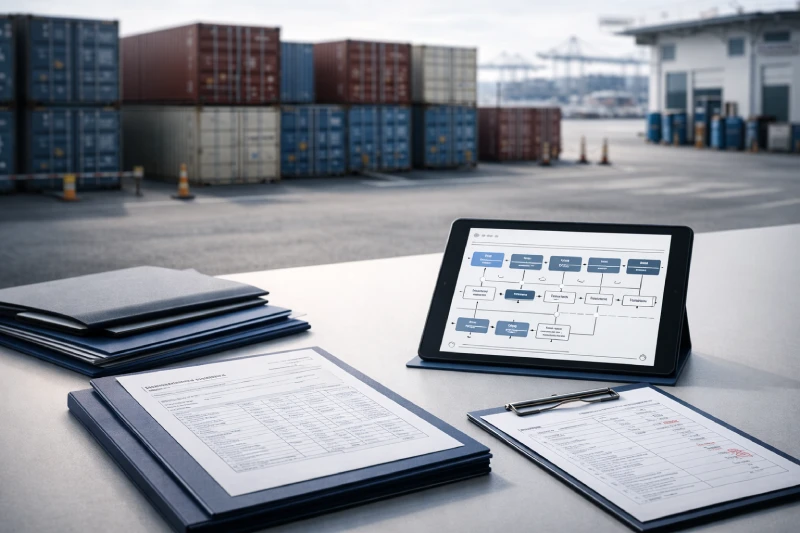
Below is a practical, step-by-step overview of how customs clearance typically works in Nigeria for commercial imports.
1. Cargo Arrival at Port or Airport
Customs clearance can only begin after the cargo physically arrives at a Nigerian seaport or airport. For shipments from China, this is usually a major seaport such as Lagos ports (for sea freight) or an international airport (for air freight). Arrival alone does not trigger clearance—customs processing depends entirely on document readiness.
2. Submission of Import Documents
Once the shipment arrives, the importer or their appointed clearing agent submits the full set of import documents through Nigeria’s customs system. These documents form the legal basis for assessing the shipment. Any mismatch in cargo description, value, or HS code at this stage can immediately lead to delays.
For this reason, document preparation should begin well before departure from China, not after arrival in Nigeria.
3. Customs Assessment and Duty Calculation
Customs officers review the submitted documents to determine:
- The correct HS code classification
- The declared customs value
- Applicable import duties, VAT, and other charges
The assessment is based on risk profiling. Shipments that are correctly declared and consistent with past records are more likely to pass smoothly, while unclear or high-risk cargo may be flagged for further checks.
4. Payment of Duties and Taxes
Once duties and taxes are assessed, payment must be completed before the cargo can move forward. Clearance cannot proceed until all required charges are settled. Delays in payment often result in storage or demurrage costs at the port.
5. Inspection (If Required)
Not all shipments are physically inspected. Some may be released based on document review alone, while others are selected for:
- Physical inspection
- Scanning or non-intrusive inspection
Inspections typically focus on verifying cargo type, quantity, and declared value. Accurate documentation significantly reduces inspection risk.
6. Cargo Release and Exit from Port
After customs approval is granted, a release notice is issued. The cargo can then exit the port or airport and proceed to inland delivery. At this stage, customs clearance is considered complete.
Sea Freight vs. Air Freight Clearance
While the clearance steps are similar, sea freight shipments generally take longer due to port congestion, container handling, and inspection queues. Air freight clearance is usually faster but far less tolerant of document errors.
Understanding this process is essential when choosing shipping methods, timelines, and responsibility models for imports from China to Nigeria.
Who Is Responsible for Customs Clearance? (By Incoterms)
One of the most common causes of customs delays in Nigeria is a misunderstanding of who is actually responsible for customs clearance. This responsibility is determined primarily by the Incoterms agreed between the buyer and the seller—not by the freight forwarder or the carrier.
Below is a clear, importer-focused explanation of customs clearance responsibility under the most commonly used Incoterms for shipments from China to Nigeria.
EXW (Ex Works)
Under EXW terms, the importer bears almost all responsibility from the moment the goods leave the seller’s factory in China.
For Nigeria imports, this means:
- The importer is responsible for export handling, international freight, and all customs clearance in Nigeria
- A local Nigerian clearing agent is required
- Documentation errors or delays directly affect the importer
EXW is generally high-risk for first-time or overseas importers who do not have a reliable Nigerian-side partner. While it may appear cheaper at first, it often leads to higher total costs due to clearance complications.
FOB (Free On Board)
FOB is one of the most commonly used Incoterms for China–Nigeria trade.
Under FOB terms:
- The seller handles export procedures in China
- The importer is responsible for international freight, insurance (if needed), and customs clearance in Nigeria
This structure gives the importer more control while keeping responsibilities clearly defined. However, it still requires:
- A registered importer in Nigeria
- Proper coordination with a clearing agent
- Accurate document preparation before shipment departure
FOB works well for importers who ship regularly to Nigeria and understand local clearance requirements.
CIF (Cost, Insurance, and Freight)
CIF is often misunderstood, especially by new importers.
Under CIF terms:
- The seller pays for ocean freight and insurance to Nigeria
- Customs clearance in Nigeria remains the importer’s responsibility
Despite the seller arranging transportation, the importer must still:
- Submit clearance documents
- Pay import duties and taxes
- Handle inspections and cargo release
Many delays occur when importers assume CIF includes customs clearance. It does not. CIF only covers delivery to the port of destination—not clearance.
DDP (Delivered Duty Paid)
DDP is the most comprehensive Incoterm from the importer’s perspective.
Under DDP terms:
- The seller or appointed logistics provider manages the entire process, including customs clearance in Nigeria
- Import duties, taxes, and clearance procedures are handled on behalf of the importer
- Goods are delivered after customs release
DDP is often preferred by:
- First-time Nigeria importers
- Overseas companies without a Nigerian entity
- Importers seeking predictable landed costs
However, even under DDP, importers must still provide accurate product information. Incorrect cargo descriptions or compliance issues can still affect clearance outcomes.
When evaluating shipping options, understanding how Incoterms shift customs responsibility is critical. Many Nigeria import problems begin not at the port—but at the contract stage, before the shipment ever leaves China.
Required Documents for Import Customs Clearance in Nigeria
Customs clearance in Nigeria is fundamentally document-driven. Even when cargo arrives on time, incomplete or inconsistent paperwork can prevent clearance from starting or trigger inspection and reassessment. For importers shipping from China, understanding which documents are required—and why they matter—is essential.
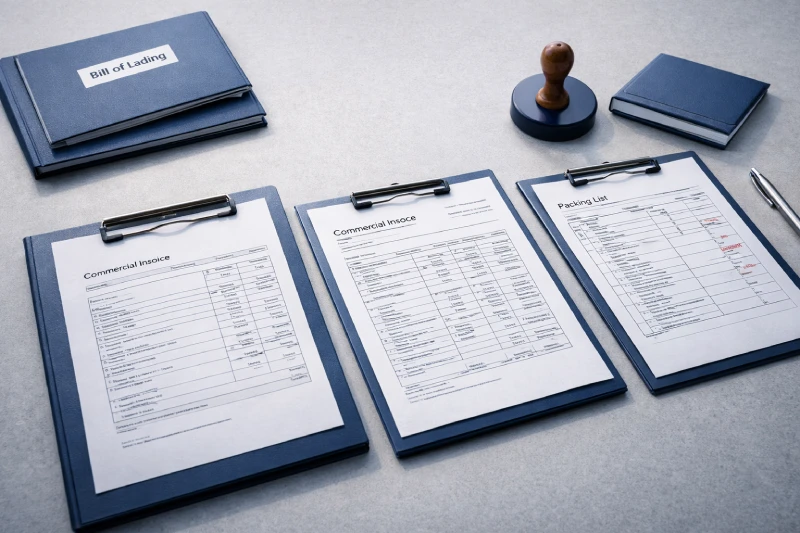
Below are the core documents typically required for commercial import customs clearance in Nigeria, explained in practical business terms.
Commercial Invoice
The commercial invoice is the primary reference document for customs valuation. It must clearly state:
- Seller and buyer details
- Accurate product description
- Quantity and unit price
- Total shipment value
- Agreed Incoterms
Customs uses this document to assess the declared value of the goods. Any undervaluation, vague descriptions, or inconsistencies with other documents can lead to reassessment or delay.
Packing List
The packing list provides a physical breakdown of the shipment, including:
- Number of cartons or packages
- Net and gross weight
- Packaging type
- Dimensions (when applicable)
Customs officers rely on the packing list during inspections to verify cargo quantity and structure. It must align exactly with the commercial invoice.
Bill of Lading (Sea Freight) or Air Waybill (Air Freight)
This transport document confirms shipment ownership and movement. It also:
- Identifies the consignee and notify party
- Confirms port or airport of discharge
- Links the shipment to the carrier
Incorrect consignee information or document type mismatches can prevent cargo release, even if duties are paid.
Form M
Form M is a mandatory import declaration document required before shipment departure from China. It registers the import transaction with Nigerian authorities and links the shipment to:
- Declared value
- HS code
- Product category
Failure to process Form M correctly or on time is one of the most common causes of customs clearance delays in Nigeria.
PAAR (Pre-Arrival Assessment Report)
The PAAR is issued based on the submitted Form M and shipping documents. It provides customs with a preliminary assessment of:
- Cargo classification
- Estimated duties and taxes
Without a valid PAAR, customs clearance cannot proceed.
Product-Specific Permits (If Applicable)
Certain goods—such as food products, chemicals, medical items, or regulated equipment—may require additional approvals or permits. These must be prepared in advance, as customs will not issue release without them.
Why Document Accuracy Matters
In Nigeria, customs clearance delays are rarely caused by the physical cargo itself. Most delays originate from:
- HS code inconsistencies
- Mismatched values across documents
- Missing or late Form M or PAAR
- Unclear product descriptions
Preparing documents early and ensuring consistency across all paperwork is the most effective way to reduce clearance risk and avoid unnecessary costs.
How Long Does Customs Clearance Take in Nigeria?
For importers shipping from China, understanding realistic customs clearance timelines in Nigeria is critical for inventory planning and cost control. While many expect a fixed clearance duration, the reality is that clearance time in Nigeria varies depending on shipment type, document readiness, and risk assessment.
Below is a practical overview of what importers should expect.
Typical Customs Clearance Timeframes
Under normal conditions, customs clearance in Nigeria generally takes:
- Air freight: 3–7 working days
- Sea freight: 7–14 working days
These are operational averages, not guarantees. Clearance may be faster for well-prepared shipments or significantly longer if issues arise.
Key Factors That Affect Clearance Time
Several variables directly influence how quickly a shipment clears Nigerian customs:
1. Document Readiness
Customs clearance cannot begin until all required documents are complete and consistent. Missing or incorrect documents—especially Form M or PAAR—almost always cause delays.
2. Cargo Risk Profile
Shipments are assessed based on product type, declared value, and importer history. Cargo considered higher risk is more likely to be selected for inspection, extending clearance time.
3. Inspection Requirements
Not all shipments are physically inspected. However, if inspection is required, clearance time increases due to:
- Scheduling availability
- Verification procedures
- Possible reassessment of duties
4. Port Congestion (Sea Freight)
Seaport clearance is often slower due to container volume, terminal operations, and truck availability. Even after customs release, congestion can delay cargo exit.
5. Payment Timing
Duties and taxes must be paid before release. Delays in payment approval or processing can stall clearance even after assessment is completed.
Why Importers Should Avoid Relying on “Fast Clearance” Promises
In Nigeria, customs clearance speed is driven more by pre-shipment preparation than by post-arrival intervention. Promises of unusually fast clearance often overlook:
- Mandatory customs controls
- Document verification processes
- Inspection selection procedures
Importers should plan shipping schedules with sufficient buffer time and focus on document accuracy rather than speed expectations.
Planning Tip for Importers
If clearance time is critical—such as for time-sensitive or first-time shipments—importers often reduce risk by:
- Preparing documents well before departure
- Choosing clearer responsibility structures
- Considering end-to-end solutions where clearance is professionally managed
Understanding realistic timelines helps importers avoid unnecessary pressure, demurrage costs, and supply chain disruptions when shipping from China to Nigeria.
Common Customs Clearance Issues and Delays in Nigeria
For shipments from China to Nigeria, customs delays are rarely random. In most cases, they result from predictable and preventable issues that arise before the cargo even leaves China. Understanding these common problem areas allows importers to reduce risk and avoid unnecessary costs.
Below are the most frequent customs clearance issues encountered by international importers in Nigeria, explained in practical terms.
Incorrect or Inconsistent HS Codes
HS code classification is one of the most sensitive elements of customs clearance. Problems occur when:
- The HS code on the commercial invoice differs from Form M or PAAR
- The code does not accurately reflect the product’s actual function or material
Incorrect HS codes often lead to:
- Duty reassessment
- Inspection requirements
- Clearance delays
HS code accuracy should be verified before shipment, not after arrival.
Under-Declared Cargo Value
Customs closely reviews declared values, especially for commonly imported goods from China. Declaring a value that is significantly below market norms may trigger:
- Valuation queries
- Reassessment of duties
- Inspection or audit
Even when the commercial price is legitimate, insufficient documentation to support the declared value can cause delays.
Missing or Late Form M and PAAR
Form M and PAAR are foundational to Nigeria’s import control system. Common problems include:
- Form M not opened before shipment departure
- Errors in Form M data that delay PAAR issuance
- PAAR not aligned with final shipping documents
Without valid Form M and PAAR, customs clearance cannot proceed, regardless of cargo arrival status.
Unclear or Generic Product Descriptions
Descriptions such as “spare parts,” “machinery,” or “electronics” are often insufficient for customs purposes. Vague descriptions may result in:
- Additional clarification requests
- Inspection selection
- Delays in duty assessment
Clear, specific product descriptions reduce the likelihood of customs queries.
Product Compliance and Restricted Goods
Certain products require additional approvals or are subject to stricter controls. When these requirements are overlooked:
- Cargo may be held pending permits
- Clearance timelines extend significantly
- Storage and demurrage costs increase
Importers should verify product-specific requirements early in the sourcing stage.
Lack of Importer Experience or Local Coordination
First-time importers or overseas companies without Nigerian representation often face challenges such as:
- Delayed decision-making
- Miscommunication with clearing agents
- Slow response to customs queries
Clear role assignment and early coordination are essential to avoid operational delays.
Key Takeaway for Importers
Most customs clearance issues in Nigeria originate before shipping, not at the port. The most effective risk-reduction strategies include:
- Accurate document preparation
- Consistent HS code and value declarations
- Early completion of Form M and PAAR
- Clear responsibility allocation under the chosen Incoterms
Addressing these areas in advance significantly improves clearance outcomes and reduces unexpected delays when importing from China to Nigeria.
Customs Clearance Under DDP Shipping (End-to-End Explanation)
For many international importers, especially those new to Nigeria, DDP (Delivered Duty Paid) shipping is often viewed as the simplest way to handle customs clearance. However, understanding what DDP actually covers—and what it does not—is essential to avoid false assumptions.
This section explains how customs clearance works under DDP shipping for cargo moving from China to Nigeria, in practical, end-to-end terms.
What DDP Means for Nigeria Imports
Under DDP terms, the seller or the appointed logistics provider takes responsibility for:
- Export procedures in China
- International transportation
- Customs clearance in Nigeria
- Payment of import duties, VAT, and related charges
- Delivery after customs release
From the importer’s perspective, the shipment arrives already customs-cleared, with no need to interact directly with Nigerian customs or clearing agents.
This is why DDP is often chosen by:
- First-time Nigeria importers
- Overseas companies without a Nigerian entity
- Buyers seeking predictable landed costs
How Customs Clearance Is Handled Under DDP
In a DDP shipment, customs clearance in Nigeria is typically managed by:
- A licensed local clearing agent
- Appointed by the seller or international freight forwarder
The clearing agent uses the shipment information provided by the importer to:
- Prepare Form M and PAAR
- Submit import documents
- Handle customs assessment, inspection, and release
Although the importer is not directly involved in the clearance process, accurate information from the importer remains critical.
What Importers Still Need to Provide Under DDP
DDP does not remove all importer responsibility. Importers must still ensure:
- Accurate product descriptions
- Correct cargo details (materials, usage, specifications)
- Honest declared commercial value
If product information is incomplete or incorrect, customs may still:
- Request clarification
- Reassess duties
- Delay release
In such cases, delays affect delivery timelines even under DDP.
Why DDP Reduces—but Does Not Eliminate—Risk
DDP significantly reduces operational complexity by shifting customs execution to experienced professionals. However:
- It does not bypass Nigerian customs procedures
- It does not exempt cargo from inspection or compliance checks
- It does not protect against inaccurate declarations
DDP works best when paired with transparent communication and proper documentation from the importer.
When DDP Is a Practical Choice
DDP customs clearance is particularly suitable when:
- Importers want minimal involvement in Nigerian customs procedures
- Shipments are time-sensitive
- The importer lacks local customs experience
Understanding how DDP functions helps importers choose it for the right reasons—risk control and simplicity—rather than assuming it guarantees problem-free clearance.
Who Should Handle Customs Clearance?
Choosing who handles customs clearance in Nigeria is a strategic decision that directly affects cost control, delivery time, and risk exposure. There is no single best option for all importers—the right choice depends on experience level, shipment value, and operational capacity.
Below is a practical decision guide to help importers shipping from China to Nigeria determine the most suitable clearance responsibility model.
Option 1: Importer Uses Own Clearing Agent
This option is typically suitable when:
- The importer ships to Nigeria regularly
- A trusted, licensed clearing agent is already in place
- The importer understands Nigeria customs documentation and procedures
Advantages:
- Greater visibility into the clearance process
- Potential cost savings on large or frequent shipments
Considerations:
- Requires active coordination
- Higher risk if documentation is incomplete
- Delays directly affect the importer
This approach is generally better suited for experienced importers with established local operations.
Option 2: Freight Forwarder Manages Clearance
In this model, customs clearance is handled by a freight forwarder acting through a local clearing agent.
Suitable when:
- The importer has limited customs experience
- Shipments are occasional or moderate in volume
Advantages:
- Professional handling of documentation and customs processes
- Reduced operational burden on the importer
Considerations:
- Importer must still provide accurate product and value information
- Responsibility remains shared
This option offers a balance between control and simplicity.
Option 3: DDP Shipping (Full Responsibility Shift)
Under DDP shipping, customs clearance is fully managed by the seller or appointed logistics provider.
Best suited for:
- First-time Nigeria importers
- Overseas buyers without a Nigerian entity
- Importers prioritizing predictable landed costs
Advantages:
- Minimal involvement in customs procedures
- Reduced risk of procedural errors
Considerations:
- Requires trust in the service provider
- Importer must still ensure data accuracy
How to Decide
A simple way to choose:
- High experience + high volume: Use own clearing agent
- Moderate experience: Use a freight forwarder
- Low experience or first shipment: Consider DDP
Selecting the right clearance model early—before the shipment leaves China—helps avoid confusion, delays, and unnecessary costs at Nigerian ports.
Customs Duties, Taxes, and Charges in Nigeria
Beyond documentation and procedures, importers shipping from China to Nigeria must clearly understand what costs are involved in customs clearance. While exact rates depend on product classification and regulatory updates, the structure of charges is relatively consistent across shipments.
This section explains the main cost components at a conceptual level, helping importers plan landed costs realistically—without relying on fixed numbers.
Import Duties
Import duty is calculated based on:
- The HS code assigned to the product
- The declared customs value of the goods
Different product categories attract different duty levels. Incorrect HS classification often results in:
- Duty reassessment
- Additional payments
- Clearance delays
This is why HS code accuracy is not only a compliance issue but also a cost-control issue.
Value Added Tax (VAT)
In addition to import duty, VAT is applied to most commercial imports. VAT is calculated on a base that typically includes:
- Customs value
- Import duty
- Certain port-related charges
Importers often underestimate VAT impact when budgeting for Nigeria imports, especially on higher-value goods.
Port, Handling, and Clearance-Related Charges
Apart from duties and VAT, importers should account for:
- Port handling charges
- Terminal and storage fees
- Clearing agent service fees
These charges are not imposed by customs directly but are part of the clearance and cargo release process. Delays in customs clearance can significantly increase these costs due to storage and demurrage.
Why Total Landed Cost Matters More Than Duty Alone
Focusing only on import duty can be misleading. In practice, the total landed cost of importing into Nigeria is influenced by:
- Duty and VAT
- Clearance efficiency
- Port dwell time
- Accuracy of documents
For this reason, many importers evaluate customs clearance strategy together with overall shipping cost planning, rather than treating them as separate decisions.
Understanding the structure of customs-related charges allows importers to make informed decisions on shipping terms, clearance responsibility, and budgeting—before the cargo arrives in Nigeria.
FAQs
How do I clear goods through customs in Nigeria?
To clear goods through customs in Nigeria, the importer (or their appointed clearing agent) must submit complete and accurate import documents, including the commercial invoice, packing list, Bill of Lading or Air Waybill, Form M, and PAAR. Customs will assess the shipment, calculate duties and taxes, and may conduct an inspection before releasing the cargo.
How long does customs clearance take in Nigeria?
Under normal conditions, customs clearance typically takes 3–7 working days for air freight and 7–14 working days for sea freight. Clearance time depends heavily on document readiness, cargo risk profile, inspection selection, and port congestion. Delays are common when documents are incomplete or inconsistent.
Can a foreign company clear goods in Nigeria without a local office?
In practice, customs clearance in Nigeria requires a registered importer and a licensed local clearing agent.
Foreign companies without a Nigerian entity usually clear goods by: sppointing a local agent, or using a freight forwarder or DDP shipping arrangement.
Direct clearance without local representation is generally not practical.
What happens if customs documents are incorrect?
Incorrect or inconsistent documents may lead to:
(1) Clearance delays
(2) Duty reassessment
(3) Physical inspection
(4) Additional storage and demurrage costs
Common issues include wrong HS codes, undervalued invoices, or missing Form M or PAAR. Most document-related problems must be resolved before cargo can be released.
Is DDP shipping safer for importing into Nigeria?
DDP shipping can reduce risk for importers by shifting customs clearance responsibility to the seller or logistics provider. It is often safer for first-time importers or overseas buyers without Nigerian experience. However, DDP does not eliminate the need for accurate product information—incorrect declarations can still cause delays.
Do all shipments get inspected by Nigerian customs?
No. Some shipments are cleared based on document review alone, while others are selected for inspection based on risk assessment. Accurate documentation, clear product descriptions, and consistent declarations reduce the likelihood of inspection but do not guarantee exemption.
Final Checklist Before Shipping from China to Nigeria
Before your shipment leaves China, a final review can prevent most customs clearance problems in Nigeria. This checklist summarizes the key actions importers should complete to reduce risk, control costs, and avoid unnecessary delays after arrival.
Pre-Shipment Customs Clearance Checklist
Confirm the Incoterms clearly
Make sure both buyer and seller understand who is responsible for customs clearance in Nigeria under the agreed Incoterms (EXW, FOB, CIF, or DDP).
Verify the HS code accuracy
Ensure the HS code correctly reflects the product’s material, function, and use. The same HS code should appear consistently across all documents.
Prepare Form M early
Form M should be opened and approved before shipment departure from China. Late or incorrect Form M is one of the most common causes of clearance delays.
Ensure document consistency
The commercial invoice, packing list, Bill of Lading or Air Waybill, Form M, and PAAR must match in:
- Product description
- Quantity
- Value
- Shipper and consignee details
Check for product-specific requirements
Confirm whether the cargo requires special permits or approvals. This should be verified during sourcing—not after shipment.
Decide who will handle customs clearance
Determine in advance whether clearance will be handled by:
- Your own clearing agent
- A freight forwarder
- A DDP shipping arrangement
Plan realistic timelines
Build buffer time into delivery schedules to account for customs assessment, inspection, and port congestion.
Final Reminder for Importers
Most Nigeria customs clearance issues originate before the shipment departs China, not at the port of arrival. Clear responsibility allocation, accurate documentation, and early preparation are the most effective tools importers have to ensure smooth clearance.
By completing this checklist in advance, importers significantly improve the likelihood of predictable delivery and controlled landed costs when shipping from China to Nigeria.
