
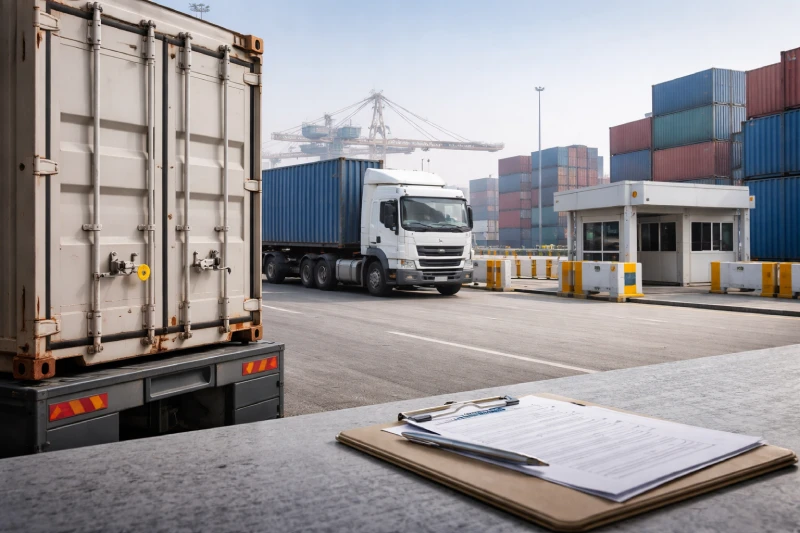
Customs clearance in Qatar is rarely delayed because of shipping itself.
In most cases, problems arise from documentation accuracy, importer eligibility, and how customs responsibility is defined before the cargo even leaves China.
For companies importing goods from China to Qatar, clearance is not a formality at the end of the journey—it is a compliance checkpoint that can directly affect delivery time, total cost, and even cargo release eligibility. A missing Commercial Registration (CR), an unclear HS code, or inconsistent invoice details can result in inspections, storage charges, or shipment holds at Hamad Port or Doha Airport.
This guide focuses on the practical realities of Qatar customs clearance: what documents are required, who is legally allowed to clear goods, how long the process typically takes, and why certain shipments face delays or unexpected charges. It is written for importers and exporters who want to avoid clearance risks, control costs, and plan shipments with fewer uncertainties—especially when importing from China into the Qatari market.
Understanding Customs Clearance in Qatar: What Importers Really Need to Know
Customs clearance in Qatar is structured around importer accountability rather than shipment movement. Unlike some markets where clearance can be managed flexibly by logistics agents, Qatar places clear legal responsibility on the importer and the accuracy of submitted information. This means that even well-planned shipments from China can face delays if the importer’s status or documentation does not fully comply with local requirements.
For importers, understanding this framework early is critical. Clearance issues in Qatar are usually predictable—and avoidable—when responsibilities are defined correctly before shipping.
Why Qatar Customs Is Strict Compared to Many Other Markets
Qatar Customs operates with a strong emphasis on regulatory compliance and documentation consistency. The clearance process is designed to ensure that imported goods meet national standards, fiscal requirements, and licensing rules before entering the local market.
In practice, this means:
- Customs authorities closely review invoices, HS codes, and product descriptions.
- Inconsistencies between documents are more likely to trigger inspections.
- Clearance speed depends less on shipment urgency and more on compliance accuracy.
As a result, shipments that are “acceptable” in other regions may still face questions or delays in Qatar if documentation is unclear or incomplete.
Who Is Responsible for Customs Clearance in Qatar
In Qatar, customs clearance must be completed by a locally registered importer holding a valid Commercial Registration (CR) and, where applicable, an import license. Freight forwarders and agents may assist with the process, but they cannot replace the legal role of the importer.
This distinction is critical for shipments from China:
- If the importer of record is not properly established in Qatar, clearance cannot proceed.
- Responsibility for duties, taxes, and compliance rests with the importer, regardless of who arranged the transport.
- The chosen Incoterms (such as DDP or non-DDP) directly affect how clearance obligations are managed.
Understanding who legally carries customs responsibility is the foundation for avoiding clearance disruptions later in the shipping process.
Required Documents for Customs Clearance in Qatar
Successful customs clearance in Qatar depends far more on document accuracy and consistency than on the number of documents submitted. Qatar Customs applies strict cross-checking between invoices, packing lists, HS codes, and importer records. Even minor discrepancies can result in clearance delays, inspections, or requests for document revision after cargo arrival.

For shipments imported from China, document preparation should be treated as a pre-shipment compliance task, not something handled after the vessel or aircraft departs.
Mandatory Import Documents for Qatar Customs
All commercial imports into Qatar require a core set of documents. These documents must be internally consistent and clearly describe the cargo.
The mandatory documents typically include:
- Commercial Invoice
- Packing List
- Bill of Lading (for sea freight) or Air Waybill (for air freight)
Customs authorities compare product descriptions, quantities, weights, and values across these documents. Mismatches—such as different product names or inconsistent weights—are among the most common causes of clearance delays.
Commercial Registration (CR) and Import License Requirements
Qatar customs clearance can only be completed by a locally registered company holding a valid Commercial Registration (CR). In addition, certain goods require a specific import license linked to the importer’s registered business activity.
Key points importers must understand:
- A foreign exporter or overseas buyer cannot act as the importer of record.
- Freight forwarders may assist, but clearance is legally tied to the local importer.
- If the importer’s CR does not match the nature of the goods, customs may reject or suspend clearance.
Confirming importer eligibility before shipping is essential to avoid cargo being held at port.
HS Code Declaration and Product Description Risks
HS code accuracy is a critical factor in Qatar customs clearance. Incorrect or overly generic HS codes can lead to reassessment of duties, inspection requests, or clearance suspension.
Common risk areas include:
- Using simplified HS codes commonly accepted in China but questioned in Qatar
- Vague product descriptions that do not reflect actual use or composition
- Declared values that do not align with the HS classification
Once customs challenges an HS code, clearance timelines and costs become far less predictable.
Certificate of Origin and Additional Certificates
Depending on the product category, Qatar Customs may require a Certificate of Origin or additional compliance documents. These requirements are more common for goods such as machinery, electrical products, construction materials, and regulated consumer items.
If required documents are missing or improperly issued, customs may request resubmission or hold the shipment pending clarification. Identifying certificate requirements in advance helps prevent avoidable clearance interruptions after arrival.
Customs Clearance Process in Qatar: Step-by-Step Overview
The customs clearance process in Qatar follows a structured but documentation-driven sequence. While the procedural steps are generally consistent, the actual clearance timeline depends heavily on how well documents are prepared and whether the importer meets all regulatory requirements before cargo arrival.

For shipments from China, understanding where clearance decisions are made helps importers anticipate risks and avoid last-minute complications.
Pre-Arrival Preparation Before Cargo Reaches Qatar
Effective clearance in Qatar starts before the shipment arrives at Hamad Port or Doha Airport. Most clearance delays originate from issues that could have been identified during pre-arrival review.
Key preparation steps include:
- Verifying that all documents are complete, accurate, and internally consistent
- Confirming the importer’s Commercial Registration (CR) and licensing status
- Reviewing HS codes and product descriptions for alignment with Qatar customs expectations
When documents are reviewed and aligned in advance, the clearance process is significantly smoother upon arrival.
Customs Clearance at Hamad Port (Sea Freight)
For sea freight shipments arriving at Hamad Port, customs clearance typically follows a defined sequence after vessel discharge.
The process generally includes:
- Submission of import declaration and supporting documents
- Customs review and risk assessment
- Possible physical inspection, depending on cargo type and compliance history
- Duty and tax assessment, followed by release approval
Sea freight clearance timelines are more sensitive to document accuracy, as containers selected for inspection may remain at the port until issues are resolved.
Customs Clearance at Doha Airport (Air Freight)
Air freight clearance at Doha Airport is usually faster than sea freight, but it is not immune to delays. Customs scrutiny remains the same, even when shipments are time-sensitive.
Air freight clearance typically involves:
- Immediate document submission upon cargo arrival
- Customs verification and potential inspection
- Payment of duties and taxes before cargo release
While air shipments benefit from shorter transit times, clearance delays caused by documentation or importer issues can quickly offset this advantage.
How Long Does Customs Clearance Take in Qatar?
Customs clearance time in Qatar varies depending on shipping mode, document accuracy, and importer compliance status. While some shipments are released quickly, others experience delays that extend total delivery time well beyond the original transit estimate from China.
Understanding what is considered a normal clearance timeframe—and what causes exceptions—helps importers plan more realistically.
Average Clearance Time for Sea Freight vs Air Freight
Under normal conditions, customs clearance in Qatar follows predictable time ranges once cargo arrives.
- Sea freight (Hamad Port):
Clearance is typically completed within a few working days after vessel arrival, assuming documents are correct and no inspection is required. - Air freight (Doha Airport):
Clearance is often completed faster, sometimes within one to two working days, due to lower cargo volume and faster handling cycles.
However, these timeframes assume that the importer’s CR is valid, documents are accurate, and the shipment is not selected for inspection.
Factors That Commonly Cause Clearance Delays
Most clearance delays in Qatar are not random. They usually result from specific, identifiable issues, including:
- Inconsistent or incomplete documentation
- HS code disputes or unclear product descriptions
- Missing or mismatched importer licensing
- Cargo selected for inspection or compliance verification
Once a shipment enters a review or inspection stage, clearance timelines become less predictable and may extend by several days or longer.
How Clearance Delays Affect Total Shipping Time from China to Qatar
Even when ocean or air transit from China is well planned, customs clearance delays can significantly extend overall delivery time. A shipment that arrives on schedule can still face unexpected holding periods if clearance requirements are not fully met.
For this reason, customs preparation should be considered an integral part of total shipping time planning—not a separate or final step.
Customs Duties, VAT, and Clearance-Related Costs in Qatar
When importing goods from China into Qatar, customs clearance costs extend beyond basic freight charges. While duties and VAT are generally predictable, additional clearance-related expenses often arise when documentation or compliance issues occur. Understanding how these costs are structured helps importers avoid unexpected increases in total landed cost.
Import Duties and VAT in Qatar
Qatar applies import duties and Value Added Tax (VAT) based on the declared value and classification of goods. The exact duty treatment depends on the HS code and the nature of the product.
From a practical perspective:
- Duties and VAT are calculated using the customs-assessed value, not the exporter’s internal pricing.
- Incorrect HS codes or undervaluation may trigger reassessment or further review.
- Duties and taxes must typically be settled before cargo release is granted.
Clear and accurate declarations help prevent disputes that could delay clearance and increase cost exposure.
Additional Customs Clearance Charges Importers Should Expect
Beyond duties and VAT, several operational charges may be incurred during the clearance process. These costs are often overlooked during initial shipment planning.
Common clearance-related charges include:
- Port or airport handling fees
- Customs processing and documentation fees
- Storage or demurrage charges if clearance is delayed
- Inspection-related costs, when applicable
These charges tend to increase rapidly when shipments are held for clarification or inspection.
Why Clearance Issues Often Increase Total Shipping Cost
Clearance-related problems affect more than just timing—they directly impact cost control. Delays can result in storage fees, resubmission costs, and extended use of transport equipment.
As a result, clearance efficiency plays a critical role in determining the final landed cost of shipments from China to Qatar. Proper preparation and compliance reduce both financial and operational uncertainty.
Common Customs Clearance Problems When Importing from China to Qatar
Most customs clearance problems in Qatar are not caused by the cargo itself, but by how the shipment is declared, documented, and structured from a compliance standpoint. These issues are recurring, predictable, and often avoidable when identified before shipping.
Understanding these common problem areas helps importers reduce clearance risk and avoid unnecessary delays or cost escalation.
Missing or Inconsistent Documentation
Documentation inconsistency is one of the most frequent causes of clearance delays in Qatar. Customs authorities routinely cross-check commercial invoices, packing lists, and transport documents for alignment.
Typical issues include:
- Product descriptions that differ across documents
- Quantity or weight discrepancies
- Invoice values that do not match declared shipment details
Even minor inconsistencies can trigger clarification requests or inspections, delaying cargo release until corrected documents are submitted.
Incorrect HS Code or Product Classification
HS code misclassification is another major source of clearance disruption. Codes that are commonly accepted at origin may be questioned by Qatar Customs if they do not accurately reflect the product’s use, material, or technical characteristics.
When HS codes are challenged:
- Duties and taxes may be reassessed
- Additional documentation may be requested
- Shipments may be selected for inspection
Once a classification dispute arises, clearance timelines and costs become far less predictable.
No Valid Local Importer or License
Qatar requires that customs clearance be conducted by a locally registered importer with a valid Commercial Registration (CR). If the importer’s registration is missing, expired, or does not cover the imported goods, clearance cannot proceed.
This situation often occurs when:
- Importer details are not verified before shipping
- The importer’s business scope does not match the cargo type
- Third parties attempt to clear goods without proper authorization
Such issues can result in cargo being held at port until a compliant importer is arranged.
Goods Subject to Special Controls or Inspection
Certain product categories are more likely to attract inspection or additional compliance checks in Qatar. These inspections are not necessarily negative, but they do require time and coordination.
Shipments may be subject to inspection due to:
- Product category sensitivity
- Random selection by customs
- Incomplete or unclear supporting documentation
Being prepared for inspection requirements reduces disruption and helps avoid extended holding periods during clearance.
DDP Shipping and Customs Clearance in Qatar
For many importers, customs clearance risks lead directly to one question: should clearance responsibility be transferred under DDP terms? In the Qatar market, DDP can simplify the process—but only when it is structured and executed correctly.

Who Handles Customs Clearance Under DDP Terms
Under DDP (Delivered Duty Paid), the seller—or the logistics provider acting on the seller’s behalf—assumes responsibility for customs clearance, duties, taxes, and compliance in Qatar. This includes appointing a qualified importer of record and ensuring all documentation meets local requirements.
In practice, this means:
- The buyer does not act as the importer for customs purposes
- Clearance is managed through a compliant local entity
- Duties, VAT, and clearance-related charges are settled before delivery
However, DDP does not eliminate compliance obligations—it reassigns them. If the party executing DDP lacks local capability, risks still remain.
When DDP Shipping Makes Sense for Qatar Imports
DDP is often suitable when:
- The buyer does not have a valid Commercial Registration (CR) in Qatar
- The importer wants predictable landed cost and delivery responsibility
- Shipments involve standardized products with clear HS classification
- The logistics provider has proven experience handling Qatar customs
In these cases, DDP can reduce coordination complexity and lower the chance of clearance delays caused by importer-side issues.
Risks of Poorly Executed DDP Shipments
DDP is not a universal solution. When executed without proper local setup, it can introduce new risks rather than removing existing ones.
Common DDP-related problems include:
- Use of unqualified or temporary importers
- Incorrect duty or VAT assessment
- Delays caused by insufficient local documentation support
For Qatar imports, the effectiveness of DDP depends entirely on who executes it and how well local customs requirements are managed.
Why Choosing an Experienced Freight Forwarder Matters for Qatar Customs Clearance
In Qatar, customs clearance outcomes are heavily influenced by local knowledge and preparation, not just by following standard procedures. An experienced freight forwarder understands how Qatar Customs interprets documentation, licensing, and compliance requirements—and uses that knowledge to prevent issues before cargo arrives.
Local Knowledge vs Generic Clearance Support
Generic clearance support often focuses on document submission after arrival. In contrast, forwarders with Qatar-specific experience identify potential problems earlier, during shipment planning and document preparation.
Key differences include:
- Awareness of product categories that commonly face inspection
- Familiarity with importer licensing requirements and limitations
- Ability to anticipate documentation questions raised by customs
This local insight reduces uncertainty and helps shipments move through clearance with fewer interruptions.
How an Experienced Forwarder Prevents Clearance Delays and Extra Costs
Experienced forwarders take a preventive approach to customs clearance. Rather than reacting to issues, they focus on minimizing risk exposure throughout the shipping process.
This typically involves:
- Pre-checking documents for consistency and compliance
- Advising on HS code accuracy and product descriptions
- Coordinating with local partners to address customs inquiries efficiently
By reducing the likelihood of inspections, reclassification, or document resubmission, forwarders help control both clearance time and total cost.
Supporting Smooth End-to-End Shipping from China to Qatar
Customs clearance is only one part of the overall logistics chain. When clearance planning is integrated with transport, cost control, and delivery strategy, shipments from China to Qatar become more predictable.
An experienced forwarder connects customs compliance with the broader shipping process, supporting smoother, end-to-end movement from origin to final destination.
Final Checklist Before Shipping from China to Qatar
Before goods leave China, a final compliance review can significantly reduce customs clearance risk in Qatar. Many delays and unexpected costs occur not because requirements are unclear, but because key checks are overlooked during shipment preparation.
Using a structured pre-shipment checklist helps ensure that clearance requirements are addressed proactively rather than reactively.
Documents to Double-Check
- Commercial invoice details match the packing list and transport documents
- Product descriptions are clear, specific, and consistent
- HS codes accurately reflect the product’s nature and use
- Declared values align with the invoice and shipment details
Importer and License Confirmation
- The importer of record holds a valid Commercial Registration (CR) in Qatar
- The importer’s registered business activity covers the imported goods
- Any required import licenses or approvals are confirmed in advance
Clearance Strategy: Standard vs DDP
- Customs responsibility is clearly defined under the chosen Incoterms
- Duties, VAT, and clearance-related charges are accounted for
- The logistics provider has proven experience handling Qatar customs clearance
Completing these checks before shipping helps minimize delays, control costs, and ensure a smoother import process when goods arrive in Qatar.
