
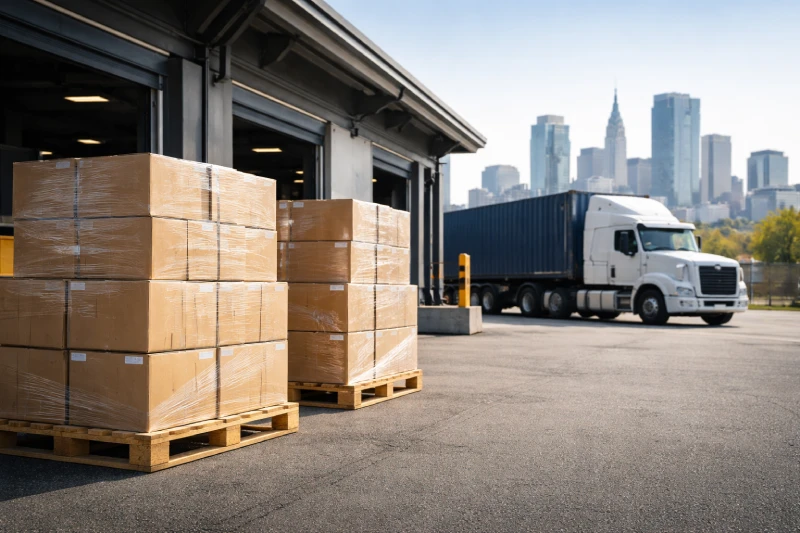
For Canadian importers and e-commerce sellers sourcing products from China, managing freight, customs clearance, duties, and final delivery can quickly become complex. DDP shipping (Delivered Duty Paid) simplifies this structure by placing transportation, customs clearance, and import tax responsibility under one coordinated arrangement — so your cargo arrives in Canada ready for delivery without separate brokerage or tax handling on your side.
In the context of shipping from China to Canada, DDP is often used by Amazon FBA sellers, small-to-medium importers, and companies that prefer predictable landed costs. Instead of coordinating multiple service providers, importers receive a door-to-door solution that includes international freight, CBSA clearance procedures, duties, GST/HST settlement, and last-mile delivery.
This guide explains how DDP shipping to Canada works in practice — including process flow, cost structure, transit time expectations, customs considerations, and when DDP is the right choice for your business.
What Is DDP Shipping from China to Canada?
DDP (Delivered Duty Paid) shipping from China to Canada means the seller or appointed freight forwarder assumes responsibility for the entire logistics chain — including export clearance in China, international transportation, customs clearance in Canada, payment of applicable duties and GST/HST, and final delivery to the agreed destination.
In practical Canada import operations, DDP is more than just an Incoterms definition. It requires proper coordination with the Canada Border Services Agency (CBSA), accurate HS code classification, compliant commercial documentation, and a clear Importer of Record (IOR) structure. Depending on the shipment, this may involve a Canadian business entity or a Non-Resident Importer (NRI) setup to legally clear goods into Canada.
Under a properly structured DDP arrangement, the importer does not need to separately appoint a customs broker or manage tax payments at the time of arrival. The forwarder handles customs submission, duty calculation based on declared value and classification, and settlement of GST/HST before releasing the cargo for inland delivery.
For businesses evaluating how to ship from China to Canada, DDP represents one structured solution that consolidates freight, compliance, and tax handling into a single coordinated process — reducing operational complexity while providing greater landed cost visibility.
Why Choose DDP Shipping from China to Canada?
DDP shipping is typically selected by businesses that prefer a simplified import structure and predictable landed costs. Instead of managing freight booking, customs brokerage, duty payment, and final delivery separately, importers receive a coordinated door-to-door solution under one agreement.
Ideal Scenarios for DDP
DDP is particularly suitable for:
- Small to mid-sized Canadian importers without an in-house customs team
- Amazon FBA Canada sellers who need goods delivered directly to fulfillment centers
- First-time importers unfamiliar with CBSA procedures
- Project-based shipments where timeline predictability matters
- Businesses shipping to multiple provinces without established brokerage relationships
For these users, DDP reduces administrative burden and limits unexpected clearance issues at arrival.
When DDP May Not Be the Best Fit
DDP is not always the optimal structure. It may be less suitable if:
- You already work with a preferred Canadian customs broker
- Your company is optimizing GST/HST input tax recovery internally
- You import high-volume shipments regularly and control your own clearance process
In such cases, alternatives discussed in best shipping methods from China to Canada may provide more flexibility.
DDP for Amazon FBA Canada
For e-commerce sellers shipping to Amazon fulfillment centers, DDP simplifies compliance coordination. The forwarder manages freight, clearance, and tax settlement before final delivery booking. This reduces the risk of cargo being held due to incomplete customs documentation or unclear tax handling — a common issue for new marketplace sellers.
Choosing DDP is ultimately a decision about risk management, operational simplicity, and cost predictability rather than just transportation.
DDP Shipping Process from China to Canada (Step-by-Step)
Understanding the full DDP workflow helps importers evaluate risk, timing, and cost visibility. While the structure is simplified for the buyer, the operational chain behind it involves multiple coordinated stages.
Step 1 – Cargo Collection & Export Clearance in China
The process begins with pickup from the supplier, whether under EXW or FOB terms. The forwarder arranges inland transportation to the airport or seaport and completes China export customs declaration. Accurate commercial invoices, HS codes, and packing details are critical at this stage to prevent downstream clearance issues in Canada.
Step 2 – International Transportation
Cargo is transported by air freight or ocean freight depending on urgency, size, and cost considerations. Air freight is typically used for urgent, lightweight, or high-value goods, while sea freight is more cost-efficient for larger volumes. Routing may involve major gateways such as Vancouver, Toronto, or Montreal.
Step 3 – Canada Customs Clearance
Upon arrival, customs documentation is submitted to the Canada Border Services Agency (CBSA). Duties are calculated based on HS classification and declared value, and GST/HST is assessed according to destination province rules. Proper Importer of Record (IOR) structuring ensures legal compliance.
Random inspections or document verification may occur, which can affect release timing.
Step 4 – Duty & Tax Settlement Under DDP
Under a genuine DDP structure, the forwarder settles applicable duties and GST/HST before cargo release. This removes the need for the consignee to make tax payments at arrival and helps maintain delivery continuity.
Step 5 – Final Delivery in Canada
Once cleared, the shipment moves to inland distribution. Delivery may be arranged to:
- Commercial warehouses
- Retail locations
- Residential addresses
- Amazon FBA fulfillment centers
Appointment scheduling, liftgate requirements, and regional surcharges may apply depending on the destination.
Although DDP simplifies the experience for the importer, each stage requires precise coordination to ensure compliance, cost control, and predictable delivery outcomes.
DDP Shipping Cost Breakdown to Canada
One of the main reasons importers choose DDP is to obtain clearer visibility over total landed cost. However, DDP pricing is not a flat rate — it is a structured combination of transportation, customs, tax, and delivery components.
Understanding how the cost is built helps buyers evaluate quotations more accurately.
1. International Freight Costs
This is the core transportation expense between China and Canada.
- Air freight is calculated based on chargeable weight (actual vs volumetric weight).
- Sea freight is calculated based on container size (FCL) or cubic meters (LCL).
Seasonal capacity, routing, and fuel adjustments can influence freight rates.
(For broader freight pricing logic, see the shipping cost from China to Canada overview.)
2. Origin & Destination Handling Fees
DDP includes operational handling charges such as:
- Export customs declaration in China
- Terminal handling charges (THC)
- Documentation processing
- Customs brokerage fees in Canada
These costs ensure compliant clearance and cargo processing at both ends.
3. Import Duties & GST/HST
Canada import duties are determined by:
- HS code classification
- Declared customs value
- Trade agreements (if applicable)
GST or HST is calculated based on the value of goods plus applicable duties. Under DDP, these amounts are settled before cargo release, removing the need for the importer to manage payment upon arrival.
4. Inland Transportation & Final Delivery
After customs clearance, the shipment moves to its final destination. Costs may vary depending on:
- Distance from port/airport
- Delivery type (commercial vs residential)
- Appointment booking requirements
- Remote area surcharges
Why DDP Quotes Can Differ
Two shipments with similar weight may still receive different DDP quotations due to:
- Product category risk profile
- Inspection probability
- Seasonal demand fluctuations
- Provincial tax differences
DDP pricing reflects a bundled logistics and compliance structure. Evaluating it requires understanding not just freight rates, but the full landed cost chain within Canada.
How Long Does DDP Shipping from China to Canada Take?
Transit time under a DDP structure depends primarily on transportation mode, customs clearance efficiency, and final delivery location within Canada. While DDP simplifies responsibility allocation, the physical logistics timeline still follows standard international freight patterns.
Air Freight DDP Transit Time
Air freight is typically used for urgent or time-sensitive shipments. Under normal operating conditions, door-to-door DDP air shipments from China to major Canadian cities may take approximately:
- Several days for flight transit
- Additional time for customs processing
- 1–3 days for inland delivery
Clear documentation and accurate classification significantly reduce clearance delays.
Sea Freight DDP Transit Time
Ocean freight is more economical for larger volumes but requires longer transit:
- Several weeks for port-to-port movement
- Customs clearance upon arrival
- Inland rail or trucking distribution to final destination
Routing to gateways such as Vancouver, Toronto, or Montreal may affect inland transit duration depending on destination province.
Key Variables That Affect DDP Timing
Even under a structured DDP arrangement, delivery timelines can be influenced by:
- Port congestion or peak season backlogs
- CBSA inspection or documentation review
- Weather-related disruptions
- Inland transportation capacity
For a broader comparison of air vs sea delivery timelines, refer to the shipping time from China to Canada guide.
When evaluating DDP transit time, it is important to consider both international freight speed and customs clearance readiness, as compliance accuracy directly impacts release efficiency.
DDP vs DAP / DDU / CIF – Which Is Better for Canada Imports?
Selecting the correct Incoterm affects not only transportation responsibility but also customs handling, tax exposure, and operational risk inside Canada. While these terms are often compared generically, the differences become more meaningful when applied to Canadian import regulations.
DDP vs DAP (Delivered at Place)
Under DDP, the seller or forwarder:
- Handles customs clearance in Canada
- Pays applicable import duties
- Settles GST/HST before cargo release
- Delivers goods to the final address
Under DAP, the seller delivers the cargo to the destination, but:
- The buyer is responsible for customs clearance
- The buyer pays duties and GST/HST
- A Canadian customs broker is typically required
For importers without established brokerage infrastructure, DDP reduces administrative complexity. However, businesses that manage their own tax recovery or brokerage processes may prefer DAP for greater financial control.
DDP vs DDU (Legacy Usage)
DDU (Delivered Duty Unpaid) is no longer an official Incoterms term and has largely been replaced by DAP. In practice, some quotations still reference DDU, but structurally it functions similarly to DAP — meaning duties and taxes remain the buyer’s responsibility.
Clarifying this distinction is important to avoid misunderstandings in Canada import transactions.
DDP vs CIF
CIF (Cost, Insurance, and Freight) only covers transportation to the destination port. Under CIF:
- The buyer handles Canadian customs clearance
- Duties and GST/HST are paid by the importer
- Inland transportation must be arranged separately
CIF may appear lower-cost initially, but it does not include clearance or inland delivery — which can introduce additional coordination and unexpected charges.
Decision Considerations for Canada Buyers
When choosing between DDP, DAP, or CIF, consider:
- Do you have a registered Importer of Record structure?
- Are you managing GST/HST recovery internally?
- Do you prefer predictable landed cost over flexible tax control?
- Do you ship occasionally or at high recurring volume?
For businesses evaluating how to ship from China to Canada, DDP provides a consolidated solution focused on compliance control and delivery predictability, while alternative terms offer varying degrees of operational involvement and financial management responsibility.
Canada Customs & Import Taxes Under DDP
When shipping under DDP to Canada, customs compliance is one of the most critical components of the process. While DDP shifts operational responsibility to the seller or forwarder, Canadian import regulations must still be strictly followed to ensure lawful entry and smooth cargo release.

Role of the Canada Border Services Agency (CBSA)
All commercial imports into Canada are regulated by the Canada Border Services Agency (CBSA). CBSA is responsible for:
- Reviewing commercial documentation
- Verifying HS code classification
- Assessing applicable duties
- Calculating GST or HST
- Conducting inspections when necessary
Even under DDP, documentation accuracy directly affects clearance speed. Misclassification or valuation discrepancies may trigger cargo holds or reassessments.
GST / HST Mechanism
Canada applies a federal Goods and Services Tax (GST), and in certain provinces, a Harmonized Sales Tax (HST). These taxes are calculated based on:
- The declared customs value of goods
- Applicable duties
- Provincial destination rules
Under a properly structured DDP arrangement, these taxes are settled before release. For Canadian-registered businesses, GST paid on imports may be recoverable through standard tax filing mechanisms, depending on company structure.
Importer of Record (IOR) Structure
Every shipment entering Canada must have a legally recognized Importer of Record. This may be:
- A Canadian business entity with a Business Number (BN)
- A Non-Resident Importer (NRI) structure, if applicable
Even if a forwarder coordinates clearance under DDP, the IOR remains legally responsible for the accuracy of declarations and compliance with Canadian import laws.
Documentation Requirements
Typical documents required for Canada import clearance include:
- Commercial invoice
- Packing list
- Bill of lading or air waybill
- Certificates or permits (if product-specific regulations apply)
Proper document preparation prior to departure from China significantly reduces the risk of clearance delays upon arrival.
Understanding how Canadian customs and tax mechanisms function under DDP allows importers to evaluate compliance risk, cost visibility, and operational responsibility more accurately.
Common Risks & Mistakes in DDP Shipping to Canada
While DDP simplifies the import experience on the surface, improper structuring or incomplete compliance can still create significant risk. Understanding common pitfalls helps importers evaluate quotations more carefully.
1. Incorrect HS Code Classification
HS code errors are one of the most frequent causes of customs delays. Misclassification can result in:
- Incorrect duty calculation
- Reassessment by CBSA
- Clearance holds or inspection
- Administrative penalties
Under DDP, the forwarder may handle submission, but the importer remains legally accountable for product accuracy.
2. Under-Declared Value or Incomplete Documentation
Declaring a lower value to reduce duties can trigger audits or cargo seizure. Canadian customs authorities verify valuation against market benchmarks and transaction records. Any discrepancy may result in fines and longer-term compliance scrutiny.
Accurate commercial invoices and consistent documentation between exporter and importer are essential.
3. “DDP” Offers That Exclude Real Clearance
Not all quotations labeled “DDP” include full destination compliance. Some low-cost offers may exclude:
- Genuine Importer of Record structure
- Proper tax settlement
- Destination brokerage
- Final-mile delivery charges
This can lead to unexpected invoices at arrival. Clarifying what is included in the DDP scope is critical before confirming shipment.
4. Amazon FBA Compliance Gaps
For sellers shipping to Amazon Canada, common issues include:
- Incorrect carton labeling
- Missing FNSKU application
- Non-compliant packaging dimensions
Even if customs clearance is completed properly, warehouse delivery may be rejected due to FBA-specific requirements.
DDP reduces coordination complexity, but it does not eliminate the need for compliance diligence. Evaluating forwarder experience and documentation control is essential to avoid costly disruptions.
Why You Need an Experienced DDP Forwarder for Canada
DDP shipping to Canada is not only a transportation arrangement — it is a compliance-driven logistics structure. The reliability of the shipment depends heavily on how well freight, customs, tax settlement, and inland delivery are coordinated.
Choosing an experienced forwarder reduces both operational and regulatory risk.
Understanding Canadian Compliance Requirements
Canada’s import framework requires accurate classification, proper valuation, and correct Importer of Record structuring. An experienced DDP forwarder will:
- Review HS codes before shipment
- Verify commercial invoice accuracy
- Confirm GST/HST handling structure
- Coordinate with licensed customs brokerage partners
Proactive document validation significantly reduces the likelihood of CBSA intervention.
Risk Control & Cost Predictability
Inexperienced handling may lead to reclassification, unexpected duty reassessment, or additional destination fees. A structured DDP provider focuses on:
- Transparent cost breakdown before shipment
- Realistic transit time estimates
- Clear clarification of what is included in the DDP quote
This reduces the risk of last-minute charges or release delays.
Integrated Logistics Capability
Shipping from China to Canada often requires multi-stage coordination — air or ocean freight, port handling, customs clearance, and inland distribution across provinces.
A capable forwarder ensures:
- Consistent communication between origin and destination teams
- Reliable carrier selection
- Proper appointment booking for warehouse or FBA delivery
- Contingency handling in case of inspection or routing changes
The difference between a smooth DDP shipment and a disrupted one is rarely visible at the quotation stage. It typically depends on experience, documentation control, and local regulatory familiarity.
Is DDP Shipping from China to Canada Right for You?
DDP may be suitable if you:
- Prefer predictable landed cost
- Do not maintain your own Canadian customs brokerage structure
- Ship occasionally or operate Amazon FBA in Canada
- Want to reduce internal coordination workload
If you are evaluating DDP shipping to Canada, sharing your product type, shipment volume, and delivery location allows for a more accurate assessment of transit time and total landed cost — helping you determine whether DDP aligns with your operational goals.
