
Introduction
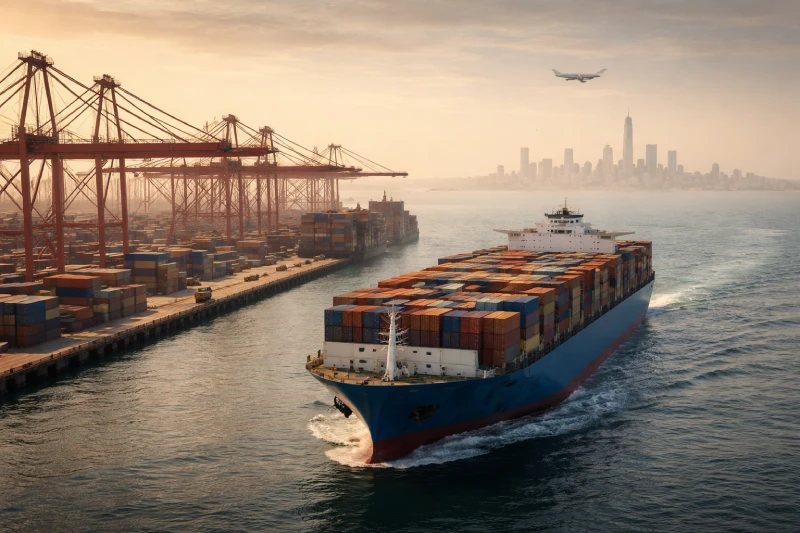
Importing goods from China to Kuwait can look straightforward on paper. In practice, many shipments slow down at the customs stage, where documentation accuracy, HS classification, and tax handling determine whether cargo is released smoothly or held for review. For businesses without a dedicated customs team in Kuwait, this stage often creates uncertainty around final landed cost and delivery timing.
DDP shipping from China to Kuwait is designed to remove that uncertainty. Under this model, the freight forwarder takes responsibility not only for export and international transport, but also for customs clearance, duty and VAT payment, and final delivery within Kuwait. The consignee receives the cargo cleared and delivered, without having to manage the clearance process directly.
This guide explains how DDP works specifically in the Kuwait import environment, what it really includes, how costs and timelines are structured, and when it is the right choice for commercial shipments.
What Does DDP Shipping from China to Kuwait Actually Mean?
Under DDP (Delivered Duty Paid) shipping from China to Kuwait, the seller or appointed freight forwarder assumes full responsibility for the shipment until it is delivered to the agreed address in Kuwait, with customs clearance completed and import duties and VAT settled. For the importer, this means the cargo arrives as a ready-to-use delivery rather than a shipment waiting for customs processing.
In the Kuwait context, DDP typically includes export customs clearance in China, international freight (by air or sea), preparation of compliant commercial documents, coordination with a licensed customs broker in Kuwait, payment of applicable import duties and VAT, and final delivery to a warehouse, retail location, project site, or e-commerce fulfillment point. The operational and financial risk during customs clearance remains on the forwarder’s side.
However, DDP does not eliminate compliance requirements. Accurate product descriptions, correct HS classification, and properly declared values remain essential. If documentation is inconsistent or goods fall under restricted categories, customs authorities may still require additional review. DDP shifts responsibility, but it does not override Kuwait’s regulatory framework.
Who Should Choose DDP Shipping from China to Kuwait?
DDP shipping is not a universal solution. It is most effective for businesses that prioritize cost predictability, simplified import handling, and reduced operational involvement in customs procedures.
For small and medium-sized importers in Kuwait without an in-house customs department, DDP offers structural simplicity. Instead of coordinating with brokers, arranging duty payments, and managing clearance documentation, the importer receives a shipment that has already been processed through customs. This reduces administrative workload and limits exposure to compliance errors.
E-commerce sellers and Amazon-focused traders also benefit from DDP. Their business model depends on stable landed cost calculations and reliable delivery timelines. Unexpected duty charges or customs delays can disrupt pricing strategy and inventory planning. DDP allows these sellers to forecast total cost before goods depart China.
Project-based importers—such as companies bringing in equipment, construction materials, or time-sensitive components—may also prefer DDP. When delivery deadlines are critical, consolidating responsibility under one logistics provider minimizes coordination gaps.
However, large-volume importers with established Kuwait customs licenses and negotiated brokerage arrangements may find DAP or CIF more cost-efficient. If a company already controls its own clearance infrastructure, DDP may not always be necessary.
Step-by-Step DDP Shipping Process (China → Kuwait)
Understanding the actual workflow behind DDP shipping helps clarify where responsibility sits and how risk is managed throughout the journey.

1. Supplier Pickup and Export Clearance in China
The process begins with cargo collection from the supplier’s factory or warehouse in China. The forwarder arranges export documentation, verifies product descriptions, confirms declared value, and completes Chinese export customs clearance. Accuracy at this stage is critical, as inconsistencies can later affect Kuwait customs processing.
2. International Freight (Air or Sea)
Once cleared for export, the cargo moves via air freight or sea freight, depending on urgency, volume, and cost structure. Air DDP is typically used for time-sensitive or higher-value shipments, while sea freight DDP is more common for bulk cargo. The chosen transport mode directly influences overall transit time and landed cost.
3. Kuwait Customs Clearance Under DDP
Upon arrival in Kuwait, a licensed local customs broker handles clearance on behalf of the forwarder. Documentation is reviewed, HS codes are assessed, and applicable import duties and VAT are calculated and prepaid under the DDP arrangement. If customs inspection is required, the broker coordinates resolution.
4. Final Delivery in Kuwait
After clearance approval, the shipment proceeds to the agreed delivery address—warehouse, commercial premises, or project site—completing the DDP responsibility cycle.
DDP Shipping Cost Breakdown to Kuwait
For most importers, the primary question is not whether DDP is convenient, but whether the quoted price accurately reflects the real landed cost structure.
A DDP shipping quote from China to Kuwait typically combines several cost layers into a single figure. These include export handling charges in China, international freight (air or sea), origin documentation, destination customs brokerage in Kuwait, import duties, VAT prepayment, and final inland delivery. Because these elements are bundled, DDP appears as an “all-in” solution, but each component follows its own pricing logic.
The largest variable in a DDP quote is usually the customs-related portion. Import duty and VAT are calculated based on the declared customs value and the applicable HS classification. Even small changes in declared value or product categorization can significantly affect the final duty exposure. This is why two shipments of similar weight may receive very different DDP quotations.
Freight mode also plays a decisive role. Air freight increases transport cost but shortens transit time, while sea freight reduces freight cost but extends delivery duration. Delivery location within Kuwait—such as central warehouse versus remote industrial area—can further influence last-mile charges.
For a broader analysis of freight pricing structures beyond DDP, see our guide on shipping cost from China to Kuwait, which explains how base transport rates are calculated.
DDP Shipping Time from China to Kuwait
Delivery time under DDP depends on two core elements: the international transport mode and the efficiency of customs clearance in Kuwait. While transit time is often discussed in terms of air versus sea freight, DDP adds an additional clearance layer that must be considered.
Air DDP shipments from China to Kuwait are typically used when speed is a priority. The flight transit itself may only take a few days, but total door-to-door delivery also includes export processing, customs clearance upon arrival, and local delivery coordination. Sea freight DDP shipments require longer international transit, yet for larger or heavier cargo, the extended timeline may be commercially justified by lower freight cost.
The most unpredictable variable is customs clearance. Accurate documentation, correct HS classification, and properly declared values significantly reduce the risk of inspection delays. If customs requests additional clarification or supporting documents, the release timeline can extend accordingly.
It is important to distinguish between pure transit time and full DDP delivery time. For a breakdown of standard freight transit durations by transport mode, refer to our guide on how long shipping from China to Kuwait takes, which explains base transport timelines before DDP clearance is added.
DDP vs DAP vs CIF for Kuwait Imports
Choosing the correct Incoterm for shipments to Kuwait directly affects who controls customs clearance, who pays import taxes, and who carries risk during the clearance stage.
Under DDP (Delivered Duty Paid), the forwarder or seller manages export, international freight, Kuwait customs clearance, duty and VAT payment, and final delivery. The importer receives goods cleared and delivered, without direct involvement in customs procedures.
Under DAP (Delivered at Place), the seller covers transport to Kuwait and delivery to the agreed address, but the importer remains responsible for customs clearance and payment of duties and VAT. This structure may work for companies that already maintain an active Kuwait import license and established brokerage relationships. However, it exposes the buyer to clearance delays and administrative coordination.
Under CIF (Cost, Insurance and Freight), responsibility transfers at the destination port. The importer must handle customs clearance, taxes, and inland delivery independently. In Kuwait, this often requires more direct involvement with local customs processes and documentation management.
Because Kuwait’s import system relies heavily on correct classification and compliant documentation, businesses without in-house clearance expertise often prefer DDP. It consolidates accountability and reduces the operational complexity associated with managing customs and tax payments separately.
Kuwait Customs & Import Taxes Under DDP
When shipping under DDP to Kuwait, import duties and VAT are prepaid by the forwarder as part of the overall service. However, the underlying calculation mechanism remains the same as with any standard import procedure.
Kuwait Customs assesses import duty based primarily on the product’s HS classification and its declared customs value. The declared value typically includes the commercial invoice value of the goods and may incorporate freight and insurance elements, depending on how the shipment is structured. Accurate product descriptions and correct HS codes are essential, as misclassification can lead to reassessment, additional review, or penalties.
VAT is calculated on the taxable base determined by customs regulations, which usually includes the customs value plus applicable duties. Even under DDP, VAT documentation must align with the commercial invoice and shipment paperwork. Any discrepancy between invoice value, packing list, and declared goods description can trigger inspection or requests for clarification.
It is important to understand that DDP does not reduce or bypass taxes. Instead, it transfers responsibility for calculation, payment, and procedural coordination to the forwarder and its licensed customs partner in Kuwait. C
Common Risks & Mistakes in Kuwait DDP Shipping
Although DDP simplifies the import process, it does not eliminate risk. Most issues arise from misunderstandings about pricing transparency, compliance requirements, or the capabilities of the service provider.
One common mistake is accepting unrealistically low DDP quotations. If a price appears significantly below market range, it may rely on undervalued declarations or aggressive HS classifications that do not accurately reflect the goods. While this can reduce the quoted landed cost initially, it increases the risk of customs reassessment, shipment delay, or penalties in Kuwait.
Another frequent issue is incorrect or incomplete product documentation. Even under DDP, customs authorities evaluate the declared product description, value, and classification. Vague invoice descriptions or inconsistent paperwork can lead to inspection requests and clearance delays.
Some importers also assume that any international forwarder can handle DDP to Kuwait. In reality, effective DDP service depends on having a licensed local customs broker and operational coordination within Kuwait. Without that local network, problem resolution becomes slower and less predictable.
Finally, misunderstanding what “all-inclusive” covers can create disputes. DDP should clearly define scope—taxes, brokerage, and delivery terms—so both parties understand what is included and what is not.
Why Local Experience Matters in Kuwait DDP Shipping
DDP shipping to Kuwait is not only a pricing model; it is an execution model that depends heavily on local coordination. While international freight can be arranged from China, customs clearance and final delivery require on-the-ground expertise within Kuwait.
A forwarder offering DDP must work with a licensed customs broker who understands Kuwait’s documentation standards, inspection procedures, and compliance expectations. Practical experience with HS classification, valuation logic, and clearance communication reduces the likelihood of delays. When customs authorities request clarification, the ability to respond quickly and accurately is often what determines whether cargo is released smoothly.
Local operational strength also affects last-mile delivery. Coordinating delivery appointments, handling warehouse access requirements, and resolving address-related issues require familiarity with Kuwait’s logistics infrastructure. Without this local framework, DDP becomes theoretical rather than operational.
For a broader overview of transport options and routing strategies between the two countries, see our guide on ship from China to Kuwait, which explains the main logistics pathways supporting different shipment types.
In practice, successful DDP execution depends less on promises and more on structured local capability.
Is DDP Shipping from China to Kuwait Right for You?
DDP is most suitable when the priority is clarity and operational simplicity. If your business prefers to know the total landed cost before goods leave China, and you do not want to manage customs clearance directly in Kuwait, DDP provides a structured solution. It centralizes responsibility for freight, tax payment, and delivery under one coordinated framework.
It is particularly practical for small and medium importers, e-commerce sellers, and project-based shipments where administrative resources are limited or delivery timing is critical. In these cases, reducing procedural uncertainty often outweighs the potential cost savings of managing clearance independently.
However, if your company already holds an active Kuwait import license, works regularly with a trusted customs broker, and prefers to control tax declarations directly, DAP or CIF structures may offer greater flexibility. The decision ultimately depends on how much control versus simplicity your operation requires.
To request a structured DDP quotation, prepare the following details: product description, declared commercial value, weight and dimensions, delivery address in Kuwait, and preferred shipping mode if known. Clear information at the outset enables accurate cost and timeline assessment.
