
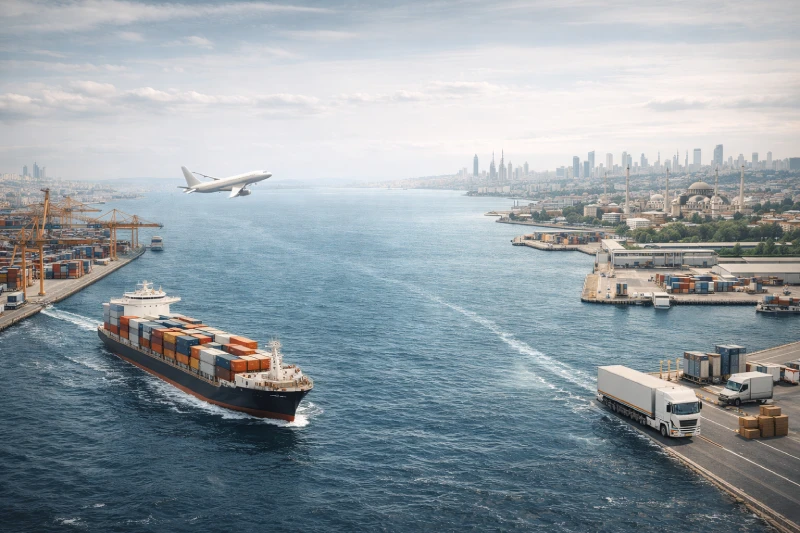
In today’s globalized market, businesses are constantly looking for efficient and cost-effective shipping solutions. For companies importing goods into Turkey or exporting from China, DDP (Delivered Duty Paid) shipping offers a seamless and all-inclusive option.
This comprehensive guide will help you understand how DDP shipping works, its benefits for importers and exporters, and why it might be the best solution for your logistics needs.
Whether you’re an e-commerce seller, project cargo client, or first-time importer, this guide will provide valuable insights into navigating the complexities of shipping from China to Turkey under DDP terms.
What is DDP Shipping from China to Turkey?
DDP is an Incoterm that places the responsibility for the entire shipping process on the seller, ensuring that all costs are covered up to the final destination. In the context of shipping from China to Turkey, DDP means that the Chinese exporter is responsible for:
- Shipping Costs: From the origin in China to the final delivery address in Turkey.
- Customs Duties and Taxes: The seller handles all the Turkish customs clearance processes, including paying all relevant import duties, taxes, and fees.
- Risk and Responsibility: The seller assumes all risk until the goods are delivered to the agreed destination.
For importers in Turkey, DDP shipping simplifies the process by eliminating the need to handle complex customs procedures and unexpected costs. This makes it a preferred choice for many businesses, particularly those looking for a hassle-free experience when importing goods from China.
With DDP, Turkish importers can focus on their business while leaving the logistics, including taxes and customs clearance, to the seller. It’s a convenient, all-in-one solution that eliminates any potential uncertainties or hidden fees during the shipping process.
For more information on the general process of shipping from China to Turkey, check out our Ship from China to Turkey page.
Why Choose DDP Shipping from China to Turkey?
DDP shipping offers several compelling advantages, making it a top choice for many businesses involved in importing goods from China to Turkey. Below are some of the key reasons why DDP is ideal for various types of businesses:
Convenience for Turkish Importers
DDP ensures that all logistics, including freight, customs clearance, duties, and taxes, are handled by the seller in China. This allows Turkish importers to receive goods directly at their doorstep without needing to deal with complex customs procedures. The seller covers all the risk and responsibility up to delivery, making it an excellent choice for businesses that prefer a hands-off approach to shipping.
Predictable Costs
One of the biggest challenges in international trade is managing costs. With DDP, the total cost of shipping is known upfront, eliminating unexpected fees or customs-related charges. This can help businesses in Turkey better plan their budgets without worrying about hidden expenses, such as import duties or additional charges at customs.
Ideal for E-commerce and Amazon Sellers
E-commerce sellers, especially those using platforms like Amazon, benefit greatly from DDP shipping. The ease of having products delivered directly to their customers in Turkey without additional customs handling or complications is invaluable. DDP simplifies the process, allowing sellers to focus on growing their businesses rather than logistics.
Risk-Free for First-Time Importers
For businesses in Turkey that are new to importing from China, DDP offers a lower-risk option. The seller takes on the responsibility for the entire journey of the goods, reducing the potential for errors or issues during customs clearance. This is particularly important for companies that may not be familiar with Turkish customs regulations or the logistics of international shipping.
No Need for Customs Knowledge
DDP eliminates the need for Turkish importers to have an in-depth understanding of customs regulations, as the seller in China handles all the paperwork and duties. This can save significant time and effort, especially for companies without a dedicated customs department.
The DDP Shipping Process from China to Turkey
Understanding the DDP shipping process from China to Turkey is essential for businesses looking to streamline their logistics and ensure smooth operations. Here’s a step-by-step breakdown of how DDP shipping works, ensuring that everything from customs clearance to final delivery is handled efficiently:
Product Preparation and Export from China
The first step in the DDP process begins in China, where the seller prepares the goods for shipment. This includes ensuring that the product is packaged properly, labeled correctly, and ready for transport. At this stage, the seller also arranges for the necessary export documentation, including the commercial invoice and any export licenses required by Chinese authorities.
Customs Clearance in China
Once the goods are ready, the seller handles the export customs clearance in China. This involves submitting the necessary paperwork to Chinese customs authorities, paying any export duties, and ensuring the goods are legally allowed to leave the country. The seller must also arrange for the goods to be transported to the port or airport, where they will be loaded onto a shipping vessel or aircraft.
Shipping to Turkey
After the goods have cleared Chinese customs, the seller arranges for the shipment to be delivered to Turkey. Depending on the agreement, this could be by sea, air, or land. The seller is responsible for all shipping costs, including the freight, insurance, and handling fees. The goods are transported directly to Turkey, and the seller assumes the risk of loss or damage until the goods arrive at the destination.
Customs Clearance in Turkey
Upon arrival in Turkey, the goods undergo customs clearance. In a DDP arrangement, the seller handles the entire process, which includes submitting the necessary documents to Turkish customs authorities, paying the import duties, and ensuring that the goods comply with Turkish regulations. The seller also manages the customs inspection process to avoid any delays in the clearance process.
Final Delivery to the Doorstep
Once the goods have cleared customs, the seller arranges for the last-mile delivery to the final destination in Turkey. This could be the importer’s warehouse, an office, or another location specified by the buyer. The seller covers all delivery charges, ensuring that the goods are delivered safely and on time. The importer receives the goods without needing to handle any further logistics, making DDP shipping an all-inclusive solution.
By following this structured process, DDP shipping ensures a smooth, risk-free experience for businesses in both China and Turkey. Importers in Turkey can rest assured that all aspects of the shipping journey, from the initial export to the final delivery, are managed by the seller, making it the most efficient and hassle-free option.
DDP Shipping Cost Breakdown for Turkey
One of the key advantages of DDP shipping is its transparency in pricing. The cost of DDP shipping from China to Turkey is all-inclusive, meaning the buyer doesn’t have to worry about unexpected fees or hidden charges.
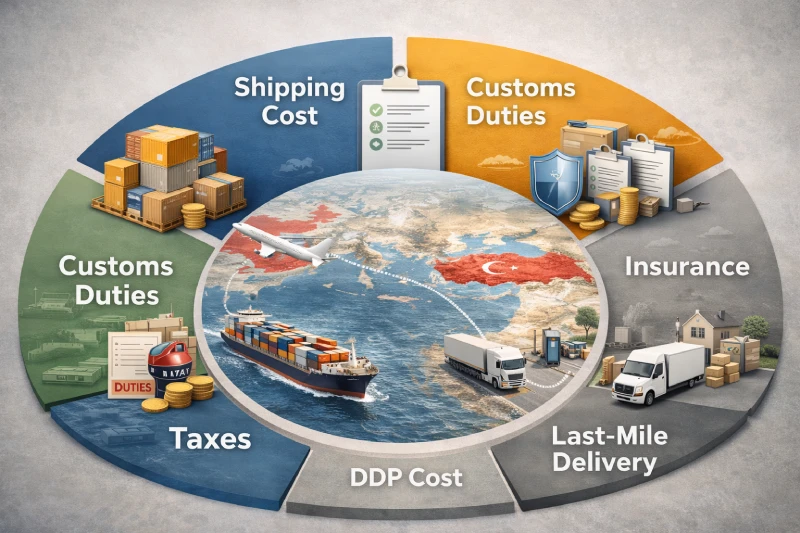
Below is a breakdown of the typical costs involved in DDP shipping, specifically tailored for Turkey:
Freight Charges
Freight charges cover the cost of transporting goods from the seller’s location in China to the destination in Turkey. This could be by sea, air, or land, depending on the shipping method selected. The cost varies based on:
- Shipping Mode: Sea freight is generally more affordable than air freight, but it takes longer.
- Volume and Weight: Heavier and bulkier shipments will incur higher freight costs.
- Distance: The longer the distance, the higher the freight charge.
Customs Duties and Taxes
Under DDP, the seller is responsible for paying all import duties and taxes in Turkey. These include:
- Customs Duty: A percentage of the product’s declared value, which varies depending on the product category.
- Value Added Tax (VAT): Turkey applies VAT on imported goods, which the seller pays on behalf of the importer.
- Other Fees: These may include environmental taxes, excise duties, and fees for specific types of products, such as electronics or alcohol.
Insurance Costs
Insurance is typically included in DDP shipments, covering the goods during transit from China to Turkey. The cost depends on:
- Value of Goods: Higher-value goods will have higher insurance premiums.
- Shipping Method: Air shipments may have higher insurance costs due to faster delivery but greater risk.
Handling Fees
Handling fees cover the cost of loading and unloading goods at ports, airports, or logistics hubs. These fees are typically set by the shipping line or the freight forwarder and can vary depending on:
- Type of Goods: Fragile or high-value items may incur higher handling charges.
- Port of Entry: Some Turkish ports or airports may charge higher handling fees based on their location or infrastructure.
Last-Mile Delivery Charges
Last-mile delivery refers to the final leg of the shipping journey, where the goods are delivered from the customs facility to the buyer’s specified destination. The cost will depend on:
- Distance: The further the destination from the port or airport, the higher the delivery charge.
- Delivery Type: Whether it’s a standard or express delivery, or if specialized handling is required for specific products (e.g., temperature-sensitive goods).
Other Potential Charges
While DDP includes most shipping-related costs, there can occasionally be additional charges, such as:
- Storage Fees: If the goods are delayed in customs or at a port, storage fees may apply.
- Demurrage Fees: These fees occur when goods exceed the free storage time at the port.
- Documentation Fees: If additional paperwork is needed for the shipment, such as special certifications or customs declarations.
By understanding the components of DDP shipping costs, businesses can have a clear idea of the overall price and avoid surprises. The benefit of DDP is that it consolidates all these costs into a single price, ensuring transparency and making budgeting easier.
DDP Shipping Time to Turkey
When planning for DDP shipping from China to Turkey, understanding the key factors that influence shipping time is crucial for both planning and customer satisfaction. While DDP provides an all-inclusive solution, the shipping time can vary based on several factors. Below are the main elements that affect the overall shipping time:
Shipping Method (Sea Freight vs. Air Freight)
The shipping method chosen has the most significant impact on the delivery time:
- Sea Freight: Typically takes longer, with transit times ranging from 25 to 35 days depending on the port in China and the destination in Turkey. This is a more economical option, especially for larger shipments.
- Air Freight: Offers a much faster delivery time, usually between 5 to 7 days, making it ideal for urgent shipments or smaller, high-value goods. However, air freight can be significantly more expensive.
Customs Clearance Time in Turkey
Customs clearance is a key factor that can affect the overall shipping time. Under DDP, the seller handles the customs process in Turkey, but the time it takes can vary based on:
- Product Type: Certain products may require additional documentation or inspection, leading to delays.
- Customs Procedures: Depending on the port or airport, customs clearance could take anywhere from 1 to 3 days if all documents are in order. Delays can occur if there are issues with the paperwork or the goods are flagged for additional inspection.
- Peak Seasons: During busy periods, such as holidays or times of high import volume, customs clearance may take longer.
Distance and Location of Delivery
The final delivery time can be influenced by the distance between the arrival port in Turkey (such as Istanbul, Mersin, or Izmir) and the final destination.
- Urban Areas: Deliveries to cities like Istanbul or Ankara are generally quicker, typically taking 1 to 2 days from the port.
- Remote Areas: For more rural or less accessible regions in Turkey, delivery can take longer, potentially up to 3 to 5 days for the last-mile delivery.
Weather and Seasonal Factors
Shipping times can also be impacted by weather conditions or seasonal variations:
- Winter Weather: Severe weather conditions, especially in the winter months, can cause delays in both sea and air shipping. For example, fog or snow may disrupt air travel or slow down port operations.
- Holiday Seasons: During peak shopping periods like New Year or Ramadan, demand for shipping services rises, and ports or airports may experience congestion. This can extend the overall delivery time.
Port and Airport Handling Times
The efficiency of the handling process at the port or airport in Turkey can also affect delivery speed. Some ports may be more efficient at processing incoming goods than others. If there are delays in unloading or sorting the goods, it could add to the total shipping time.
Other Potential Delays
- Unforeseen Events: Issues like strikes, port closures, or shipping disruptions can affect the transit time.
- Documentation Issues: If there are any issues with the shipping or customs documentation, it could lead to delays in clearance, further extending the delivery time.
In general, DDP shipping from China to Turkey typically takes between 5 to 35 days, depending on the chosen shipping method, customs clearance, and final delivery destination. By considering these factors, businesses can better plan their supply chain and set realistic delivery expectations.
DDP vs. DAP / DDU / CIF: Understanding the Differences in Turkey
When shipping goods from China to Turkey, it’s essential to understand the differences between various Incoterms like DDP, DAP, DDU, and CIF. Each of these terms defines the responsibilities of the seller and buyer differently, particularly when it comes to customs clearance, taxes, and delivery. Here’s a breakdown of how DDP compares to these other shipping options, focusing on the unique customs and tax requirements in Turkey:
DDP (Delivered Duty Paid)
- Seller’s Responsibility: Under DDP, the seller assumes full responsibility for the entire shipping process, including all costs and risks up to delivery at the buyer’s location. This includes freight charges, customs duties, taxes, and the final delivery.
- Buyer’s Responsibility: The buyer receives the goods at their doorstep without worrying about any customs or import taxes. The seller takes care of all paperwork, customs clearance, and payments related to duties and taxes in Turkey.
- Customs in Turkey: DDP is the most convenient option for Turkish importers as the seller handles customs clearance, taxes, and any required documentation.
DAP (Delivered at Place)
- Seller’s Responsibility: Under DAP, the seller is responsible for all costs and risks up to the point where the goods are delivered to a designated location in Turkey. However, the seller does not cover customs duties or taxes.
- Buyer’s Responsibility: The buyer is responsible for clearing the goods through Turkish customs and paying any associated taxes or duties.
- Customs in Turkey: The buyer must handle customs clearance, which means that Turkish importers need to be prepared to manage customs documentation and pay the required duties and taxes themselves. This can add complexity and risk compared to DDP, where the seller handles these aspects.
DDU (Delivered Duty Unpaid)
- Seller’s Responsibility: Similar to DAP, but the seller delivers the goods to a destination in Turkey without having paid for any duties or taxes.
- Buyer’s Responsibility: The buyer must clear the goods through customs and pay all associated taxes and duties.
- Customs in Turkey: DDU is often used when the buyer has more experience with customs procedures in Turkey or has a local agent handling customs for them. Like DAP, it shifts the burden of customs clearance to the buyer.
CIF (Cost, Insurance, and Freight)
- Seller’s Responsibility: The seller covers the cost of the goods, shipping (freight), and insurance to the destination port in Turkey. The seller is responsible for transporting the goods and ensuring they are insured during transit.
- Buyer’s Responsibility: The buyer is responsible for customs duties, taxes, and unloading the goods at the port. The buyer also takes responsibility for final delivery from the port to their final location.
- Customs in Turkey: Similar to DAP and DDU, CIF requires the buyer to handle Turkish customs clearance and pay any associated duties and taxes upon arrival. The key difference is that the seller includes the shipping and insurance cost to the Turkish port, but customs duties and taxes are still the buyer’s responsibility.
Key Differences Between DDP and Other Terms in Turkey:
- Customs Handling: DDP is the only term where the seller manages all customs duties and taxes in Turkey. In contrast, with DAP, DDU, and CIF, the buyer is responsible for customs clearance and taxes.
- Buyer’s Burden: DDP shifts all burdens and responsibilities onto the seller, ensuring that the buyer in Turkey has minimal involvement in the logistics process. In contrast, DAP, DDU, and CIF leave a significant part of the process to the buyer, especially when it comes to managing Turkish customs and taxes.
- Convenience for Importers: DDP is by far the most convenient option for importers in Turkey since it eliminates the need for them to manage customs procedures. DAP, DDU, and CIF can be more complicated for businesses without experience in customs clearance in Turkey.
In summary, while DDP offers the most hassle-free option for Turkish importers, terms like DAP, DDU, and CIF require more involvement from the buyer, particularly when it comes to managing customs and taxes in Turkey. Importers should carefully assess their ability to handle these responsibilities before choosing a shipping method.
Turkey Customs & Import Taxes Under DDP
When shipping goods from China to Turkey under DDP (Delivered Duty Paid) terms, the seller assumes full responsibility for customs clearance and paying all import taxes and duties. However, it’s important for businesses to understand how the Turkish customs system works and the mechanism behind import taxes to avoid potential issues.

Customs Clearance in Turkey
- Responsibility of the Seller: Under DDP, the seller handles all aspects of customs clearance in Turkey. This includes submitting the necessary paperwork to Turkish customs authorities and ensuring that the goods are cleared for import. The seller is responsible for paying any customs duties, taxes, and other fees associated with the import process.
- Documentation Required: The seller must provide all required documents for customs clearance, including:
- Commercial Invoice: Details the transaction, including the description, value, and origin of the goods.
- Packing List: Provides information about the packaging and contents of the shipment.
- Bill of Lading: A document issued by the shipping company acknowledging receipt of the goods.
- Customs Declaration: A form submitted to Turkish customs to declare the goods being imported.
- Import Permits (if applicable): For certain controlled goods, the seller may need to provide special permits.
Import Taxes in Turkey
- Value Added Tax (VAT): VAT is applied to nearly all goods imported into Turkey. The standard VAT rate is 18%, although some goods may be subject to reduced rates. Under DDP, the seller is responsible for paying this tax, ensuring the goods are delivered to the buyer without additional VAT charges at delivery.
- Customs Duties: Customs duties are calculated based on the customs value of the goods, which includes the product’s cost, insurance, and freight (CIF value). The duty rate varies depending on the product category. For example, electronics, textiles, and machinery often have different duty rates. The seller covers this duty under DDP, avoiding any surprises for the importer.
- Other Import Taxes: In addition to VAT and customs duties, there may be other taxes or fees that apply to specific product categories. For instance, luxury goods, alcohol, and tobacco may incur additional excise taxes. The seller ensures that these are paid as part of the DDP arrangement.
Customs Duties and Taxes Payment Process
- How Payments Are Made: As part of the DDP shipping arrangement, the seller handles the payments for both customs duties and taxes. These payments are typically made directly to Turkish customs at the time of clearance.
- Customs Bond: For large shipments, the Turkish customs authorities may require a customs bond, which guarantees the payment of duties and taxes. Under DDP, the seller would take care of securing this bond.
- Clearance Time: Customs clearance times can vary depending on the product type and the documentation provided. In most cases, goods under DDP clear customs faster since the necessary fees and paperwork are pre-arranged.
Impact on Importers
- Zero Hassle for the Buyer: One of the key benefits of DDP for Turkish importers is the simplicity of the process. The buyer does not have to worry about customs paperwork or additional taxes because these are all handled by the seller in China.
- Full Transparency: The seller provides a clear and final price for the goods, including all costs related to customs clearance, duties, and taxes. This helps Turkish businesses avoid unexpected fees at the time of delivery.
Why DDP is a Preferred Option
- Minimizes Delays: Since the seller handles all customs procedures, DDP minimizes the risk of customs-related delays in Turkey. Buyers don’t have to worry about clearance issues or the potential for goods being held up at the port.
- Simplifies Importing for First-Time Buyers: For businesses new to importing, DDP is the most straightforward and hassle-free option. The seller’s expertise in Turkish customs ensures that the process runs smoothly.
In conclusion, under DDP terms, the seller takes care of all customs duties and taxes, ensuring that the Turkish importer faces no additional hurdles when receiving the goods. This makes DDP an attractive option for businesses in Turkey looking for an easy, risk-free shipping solution.
Common Risks and Misconceptions in DDP Shipping to Turkey
While DDP shipping from China to Turkey offers convenience and ease, it is not without potential risks and common misconceptions. Understanding these challenges beforehand can help businesses avoid issues and ensure a smooth shipping experience. Below are some of the most common risks and misconceptions associated with DDP shipping to Turkey:
Risk of Customs Delays
- Potential Issue: Even though DDP covers the customs process, delays can still occur in Turkish customs due to various reasons, such as incorrect documentation, changes in customs procedures, or random inspections.
- How to Mitigate: Sellers should ensure that all documents are completed accurately, including the commercial invoice, packing list, and bill of lading. A trusted freight forwarder with experience in Turkey’s customs process can also help minimize the chances of delays.
Misunderstanding of DDP Coverage
- Potential Issue: Some importers may mistakenly believe that DDP covers everything related to the shipment, including any post-delivery charges. However, DDP covers all costs and risks up to the delivery at the agreed destination point, but it does not cover costs such as warehousing fees after delivery or any additional charges due to incorrect handling.
- How to Mitigate: It’s important for the buyer and seller to clearly define the delivery point and any potential additional costs outside of the scope of DDP. Importers should confirm that they are aware of all aspects of the delivery, including handling after the goods are delivered.
Overestimating DDP’s Simplicity
- Potential Issue: While DDP simplifies the logistics for Turkish importers, it can create challenges for sellers who may not be fully aware of Turkish customs regulations and tax structures. Inexperienced sellers might miscalculate the costs or miss key documentation, leading to delays or additional costs.
- How to Mitigate: Sellers should work with experienced freight forwarders and customs brokers who are familiar with the Turkish import process. Ensuring that the seller is well-versed in the regulatory landscape will help mitigate this risk.
Unexpected Customs Duty or Tax Changes
- Potential Issue: Customs duties and taxes in Turkey can sometimes change unexpectedly due to shifts in government policies or customs regulations. This can result in additional costs that may not have been factored into the initial DDP quote.
- How to Mitigate: Sellers should regularly check for updates to Turkey’s customs laws and import taxes. By maintaining strong relationships with logistics partners and staying informed about the latest regulations, sellers can better manage these risks.
Shipping Delays Due to Seasonal Factors
- Potential Issue: Shipping times can be delayed during peak seasons, such as during holidays or after significant economic events, when the volume of goods passing through customs increases. These delays can affect the final delivery time, even if all customs duties and taxes have been pre-paid under DDP.
- How to Mitigate: Businesses should plan shipments well in advance, especially during peak periods. Communicating with the freight forwarder about potential delays and tracking shipments in real-time can help to mitigate the impact of these seasonal delays.
Misconception About the Total Cost of DDP
- Potential Issue: A common misconception about DDP is that it’s the most cost-effective solution. Some businesses might believe that because the seller covers all costs, including customs duties and taxes, the final price will always be lower than other options like DAP or CIF.
- How to Mitigate: While DDP offers convenience, businesses should carefully assess the total cost breakdown of the service, including freight charges, insurance, and handling fees. It’s essential for the buyer to understand how much they are paying for each service under DDP, so they can compare it accurately to other shipping terms.
Incorrect Classification of Goods
- Potential Issue: Incorrectly classifying goods can lead to issues with customs clearance, additional duties, or delays. For example, if goods are classified under the wrong tariff code, Turkish customs may apply incorrect duty rates or hold the goods for further inspection.
- How to Mitigate: Sellers should ensure that all goods are correctly classified according to Turkish customs regulations. This can be done by consulting a customs expert or working with a freight forwarder who understands the specific requirements for different product categories.
Failure to Understand the Local Market
- Potential Issue: Sellers who are new to shipping to Turkey may fail to fully understand the Turkish market, including local regulations, import practices, and consumer preferences. This can result in incorrect shipment planning or compliance issues.
- How to Mitigate: Sellers should invest time in understanding Turkey’s import regulations and market conditions. Working with a local freight forwarder or customs broker can help ensure compliance and a smoother shipping process.
In conclusion, while DDP shipping simplifies many aspects of international logistics, there are still risks and misconceptions that both buyers and sellers should be aware of when shipping from China to Turkey. By understanding these challenges and taking proactive measures, businesses can avoid potential issues and ensure a seamless, efficient shipping process.
Why You Need an Experienced DDP Forwarder for Turkey Shipments
While DDP shipping offers significant convenience by covering all costs and responsibilities, navigating the complexities of Turkish customs and import regulations can be a challenge without local expertise. This is why choosing an experienced DDP forwarder is essential for businesses looking to import goods from China to Turkey smoothly and efficiently. Below are the key reasons why an experienced DDP forwarder is crucial for successful shipments:
Expertise in Turkish Customs Regulations
- Customs Knowledge: Turkish customs regulations are subject to change and can be complex, especially for certain types of products. An experienced DDP forwarder will have in-depth knowledge of the ever-changing rules and requirements, including tariffs, taxes, and necessary documentation. They ensure that all paperwork is properly filled out and submitted to avoid delays.
- Smooth Clearance: Customs clearance is one of the most critical aspects of the DDP process. A forwarder who knows the ins and outs of Turkish customs can ensure faster clearance, preventing potential delays that could otherwise hold up the shipment.
Managing Duties, Taxes, and Fees
- Correct Duty Calculation: Duties and taxes in Turkey can be unpredictable for newcomers. An experienced forwarder will accurately calculate the applicable import duties and taxes, ensuring that the right amounts are paid on behalf of the seller. This helps avoid overpayments or fines for incorrect payments.
- Avoiding Hidden Costs: An experienced forwarder ensures that all possible costs, such as taxes, duties, insurance, and handling fees, are included in the overall DDP cost. This reduces the likelihood of any surprise fees that could arise later in the shipping process.
Ensuring Compliance with Local Regulations
- Product Classification: Certain products might have special import requirements in Turkey. An experienced forwarder can classify products correctly under Turkish tariff codes, ensuring that the goods are subject to the correct duty rates and any other specific regulations (e.g., restricted items or controlled goods).
- Labeling and Documentation: Correct labeling, documentation, and certifications are critical for customs clearance in Turkey. A knowledgeable forwarder will ensure that all required documents—such as certificates of origin, commercial invoices, and packing lists—are prepared and submitted correctly.
Managing the Shipping Process Efficiently
- Optimized Routes and Shipping Methods: Experienced DDP forwarders know how to choose the best shipping methods (sea, air, or land) and routes to minimize transit time and reduce costs. They also stay updated on changes to shipping routes or regulations that could affect the delivery schedule.
- Handling Delays or Issues: In the event of delays, unexpected customs inspections, or documentation discrepancies, a seasoned forwarder has the experience to handle these issues quickly and effectively. They act as a liaison between the seller, buyer, and authorities to resolve any problems that arise during transit.
Navigating the Complexity of the Turkish Market
- Local Market Expertise: An experienced forwarder has a solid understanding of Turkey’s market dynamics and regulatory environment. They can advise the seller on how to best approach Turkish import laws and procedures, ensuring compliance and efficient delivery.
- Customs Bond Management: In certain cases, Turkish customs may require a bond to guarantee the payment of duties and taxes. An experienced forwarder will ensure that the bond is managed appropriately, preventing any customs-related complications.
Reducing Risk and Liability
- Risk Mitigation: The DDP terms place significant responsibility on the seller to deliver goods to the buyer’s doorstep, including paying duties, taxes, and handling the risk during transit. An experienced forwarder minimizes risks associated with lost or damaged goods, late shipments, or customs fines, helping to ensure smooth delivery.
- Insurance and Claims Handling: Forwarders with experience in DDP shipments understand the importance of insuring goods during transit. They also handle any claims in the event of damage or loss, saving the seller and buyer time and stress in the event of a problem.
Proactive Problem Solving
- Preemptive Action: An experienced forwarder anticipates potential problems and takes preemptive action to avoid them. Whether it’s an issue with customs clearance, logistical delays, or unexpected shipping charges, a skilled forwarder has the knowledge and resources to address problems before they escalate.
- 24/7 Support: The shipping process often involves tight timelines and potential issues that can arise at any time. A professional forwarder provides continuous support and updates throughout the shipment, ensuring that both the seller and buyer stay informed and prepared.
Cost Efficiency
- Negotiating Best Rates: With their established relationships with carriers, forwarders can often negotiate better shipping rates for their clients, which helps reduce overall shipping costs. Their expertise ensures that the DDP price quoted to the buyer is competitive and covers all required fees.
- Streamlined Operations: By managing all aspects of the DDP process, an experienced forwarder allows businesses to save on operational costs. Instead of dealing with multiple service providers, the seller and buyer only need to rely on one trusted partner, simplifying the process and improving efficiency.
In conclusion, partnering with an experienced DDP forwarder is essential for businesses shipping from China to Turkey. Their expertise in customs clearance, duty management, and logistics ensures that goods are delivered on time and in compliance with all Turkish regulations. This minimizes risks, reduces costs, and enhances the overall efficiency of the shipping process.
Get a Quote for DDP Shipping from China to Turkey
Now that you understand the advantages, process, and key considerations of DDP shipping from China to Turkey, it’s time to take the next step toward simplifying your shipping experience. Whether you’re a first-time importer or a seasoned business looking for a more efficient shipping solution, getting a customized quote will help you make informed decisions and ensure smooth logistics.
Why Get a Customized Quote?
- Tailored Pricing: A customized quote will consider the specific details of your shipment, including the size, weight, shipping method (air or sea), and the final delivery destination in Turkey. By obtaining a tailored quote, you ensure that the cost you receive is accurate and reflects your unique shipping needs.
- Transparent Cost Breakdown: A quote provides a clear breakdown of all costs involved in the DDP process—freight charges, customs duties, taxes, handling fees, and last-mile delivery costs. This transparency helps you avoid unexpected charges and plan your budget effectively.
- Flexibility: A quote can give you options for different shipping methods (e.g., faster air freight versus more economical sea freight) and help you choose the best balance of cost and delivery time for your business.
What Information Will You Need to Provide?
To get an accurate DDP shipping quote from China to Turkey, you’ll need to provide the following details:
- Product Information: Description of the goods you’re importing, including any special handling requirements (e.g., perishable goods or fragile items).
- Shipment Size and Weight: Provide the dimensions and weight of the shipment so that the forwarder can calculate the most cost-effective shipping method.
- Destination: The specific location in Turkey where the goods will be delivered. This will impact the shipping cost and delivery time.
- Preferred Shipping Method: Whether you prefer air or sea freight, or a combination of both.
- Import Restrictions: If your goods require special permits or have import restrictions in Turkey, make sure to mention these to get an accurate quote.
How to Request a Quote
- Online Request: Most logistics companies, including those offering DDP services, allow you to request a quote directly through their website. Simply fill out an online form with your shipment details, and you’ll receive a tailored quote based on your information.
- Consult with a Freight Forwarder: If you’re unsure about certain aspects of your shipment, consult with a freight forwarder who specializes in DDP services. They can help you understand your options and provide a more accurate quote based on their expertise in shipping from China to Turkey.
- Evaluate Multiple Quotes: For larger shipments or ongoing business, it may be beneficial to obtain quotes from multiple service providers. Comparing quotes can help you choose the best service for your needs, balancing cost and delivery speed.
What Happens After You Receive the Quote?
- Review and Confirm: After receiving your quote, carefully review the terms and conditions. Ensure that all charges are included and that you fully understand the payment structure. Once you’re satisfied with the quote, you can confirm the shipping agreement.
- Finalize the Shipment Details: Once the quote is accepted, you’ll need to finalize the details with the forwarder. This includes arranging payment for the shipping costs and confirming the logistics for pickup, transit, customs clearance, and final delivery to Turkey.
- Track Your Shipment: After dispatch, most forwarders provide tracking information so you can monitor the progress of your shipment in real-time. This gives you peace of mind and allows you to anticipate any delays or issues.
Contact Us for a Customized DDP Shipping Quote
If you’re ready to start shipping from China to Turkey, we’re here to help. Our team of logistics experts can provide you with a comprehensive, customized DDP shipping quote tailored to your specific business needs. With years of experience handling international shipments, we’ll guide you through the process, ensuring timely, cost-effective delivery every time.
By following these steps and getting a customized quote, you’ll be well on your way to efficient, hassle-free DDP shipping from China to Turkey. Reach out today to start the process and make your international shipping experience as smooth as possible.
