

Introduction
Shipping parcels from China to the United States has become faster and more accessible than ever, especially with the rise of eCommerce, Amazon FBA, and small-batch B2B shipments. Yet one question continues to dominate: Which courier is the cheapest and most reliable—DHL, FedEx, or UPS?
Each carrier offers strong global coverage, express delivery capabilities, and competitive pricing, but the differences in fuel surcharges, weight tiers, handling efficiency, delivery speed, and peak-season performance can significantly affect your final shipping cost.
For businesses sending samples, replenishing FBA inventory, or shipping small commercial goods, choosing the right courier is not just about saving money—it directly impacts delivery speed, customer satisfaction, and overall supply-chain efficiency. This guide breaks down the 2025 comparison of DHL vs FedEx vs UPS for shipments from China to the USA, helping you identify the most cost-effective option based on parcel weight, urgency, and shipping needs.
Related Guide:
China–USA shipping options overview
Quick Comparison Summary
When shipping small parcels or urgent goods from China to the United States, most businesses choose between DHL, FedEx, and UPS—the three dominant express carriers with the strongest global networks. While all three offer fast delivery and reliable tracking, they differ in cost structure, transit speed, surcharge policies, and performance during peak seasons.
The quick comparison table below provides an at-a-glance overview to help you understand which carrier may fit your needs depending on shipment weight, urgency, and budget.
2025 At-a-Glance Comparison Table
| Carrier | Typical Cost Range | Transit Time (China → USA) | Strengths | Best For |
|---|---|---|---|---|
| DHL | Moderate to high | 2–4 days | Fastest customs clearance; most stable express speed | Urgent parcels, small lightweight shipments, Amazon FBA |
| FedEx | Mid-range | 3–5 days | Balanced cost & reliability; strong for commercial accounts | Electronics, higher-value goods, regular B2B shipments |
| UPS | Often cheapest for heavier parcels | 4–6 days | Competitive for 5 kg+; predictable pricing | Cost-sensitive shipments, bulkier packages |
This snapshot makes it clear:
- DHL is typically fastest,
- FedEx is the most stable for business clients,
- UPS is often the cheapest for heavier parcels.
As the article continues, we will dive deeper into detailed price comparisons, transit-time differences, and real scenarios to help you make a confident decision.
Price Comparison: Which Is Cheapest in 2025?
Shipping rates from China to the USA vary widely depending on parcel weight, dimensions, service type, destination ZIP code, and weekly fuel surcharges. While DHL, FedEx, and UPS all adjust pricing frequently, certain patterns remain consistent in 2025.
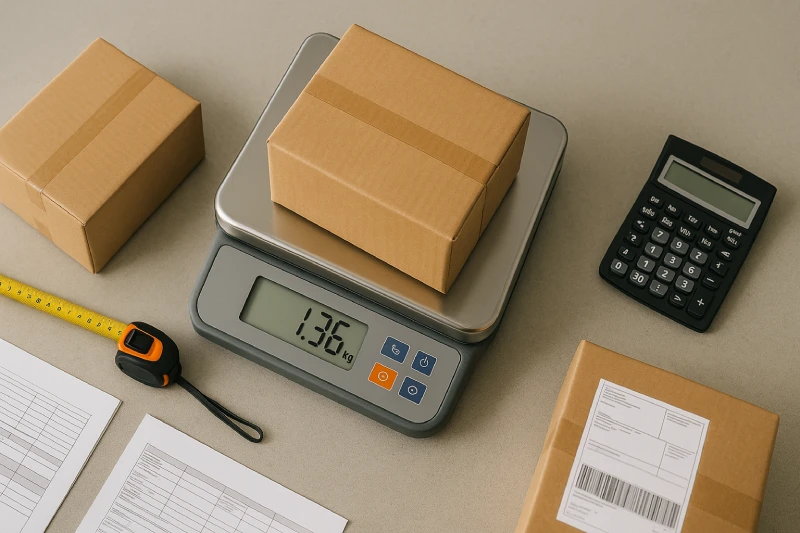
For lightweight parcels (under 2 kg), DHL often provides the most competitive base rates. For mid-weight parcels (5–20 kg), UPS tends to offer the lowest cost. FedEx, meanwhile, frequently sits in the middle range but becomes highly competitive for businesses that ship regularly and qualify for contract pricing.
Below is a general reference table showing typical price ranges for commercial shipments from China to the USA. These are broad, realistic ranges used for comparison—not fixed quotes.
Typical Cost Comparison (China → USA)
(Prices vary by fuel surcharge, season, and courier discounts)
| Weight Tier | DHL | FedEx | UPS |
|---|---|---|---|
| 0.5–2 kg | Usually the cheapest | Moderate | Slightly higher |
| 3–5 kg | Moderately priced | Competitive | Often the cheapest |
| 6–10 kg | Higher than UPS | Stable mid-range | Usually the lowest |
| 11–20 kg | Higher | Competitive with UPS | Often the best price |
| 20 kg+ | Premium pricing | Competitive with contract terms | Commonly the cheapest |
Key Insights
1. DHL is often the cheapest for very small parcels
DHL’s lightweight brackets are aggressive, making it ideal for samples, documents, and small eCommerce items.
2. UPS is usually the most economical for 5–20 kg shipments
UPS maintains predictable pricing and strong performance on mid-weight parcels, especially to commercial addresses.
3. FedEx becomes cost-effective when you ship frequently
Many businesses enjoy 20–40% contract discounts, bringing FedEx close to UPS pricing—sometimes even lower.
4. Dimensional weight matters
Large but light parcels may cost more than expected. Choosing compact packaging significantly reduces express costs.
Transit Time Comparison: Who Delivers Fastest?
Transit time is one of the most important factors when choosing between DHL, FedEx, and UPS. Although all three carriers operate mature express networks between China and the United States, their speed and consistency can vary depending on the origin city, destination ZIP code, flight availability, customs efficiency, and seasonal demand.
In 2025, DHL remains the fastest overall for door-to-door delivery, especially for small parcels and shipments moving through major U.S. entry hubs. FedEx follows closely with reliable commercial performance, while UPS tends to be slightly slower but still consistent, particularly for heavier parcels.
Transit Time Comparison Table (China → USA)
Typical business-day ranges; may extend during peak seasons
| Carrier | Standard Transit Time | Peak Season Behavior | Notes |
|---|---|---|---|
| DHL | 2–4 days | Still the most stable | Fastest customs clearance; strong air freight capacity |
| FedEx | 3–5 days | Slight delays possible | Very stable for business shipments and scheduled pickups |
| UPS | 4–6 days | May extend to 5–7 days | Strong for heavier parcels; slightly slower than DHL/FedEx |
Key Insights
1. DHL is the fastest door-to-door option
DHL’s international express network is optimized for speed, making it ideal for urgent shipments and Amazon FBA replenishment.
2. FedEx offers reliable transit for commercial shipments
Its performance is very stable, especially for U.S. corporate addresses and regular B2B delivery routes.
3. UPS is slightly slower but still dependable
UPS prioritizes cost efficiency and cargo consolidation, leading to slightly longer transit times but consistent reliability.
4. Peak seasons (Q4 and Chinese New Year) affect all carriers
Transit times may increase by 1–2 days during high-volume periods.
Understanding transit times helps clarify whether paying extra for DHL is worthwhile—or whether UPS and FedEx can provide a better balance of speed and cost.
Service Type Comparison (Express vs Economy vs Freight)
DHL, FedEx, and UPS each offer multiple service tiers designed for different budgets, delivery speeds, and shipment types. Understanding these service levels helps businesses choose the most cost-effective option, especially when shipping regularly from China to the USA.
While Express services prioritize speed and reliability, Economy options trade a slightly longer transit time for lower rates. For heavier B2B shipments, certain couriers also provide freight-based express solutions that can significantly reduce costs.
Key Service Types Compared
DHL
- Express Worldwide (Fastest) – 2–4 days, premium pricing, ideal for urgent shipments and FBA.
- Economy Select – More affordable but longer transit time; not available to all destinations.
- DHL eCommerce – Cheaper but slower, best for lightweight eCommerce parcels.
FedEx
- International Priority – 3–5 days, very stable, strong for commercial shipments.
- International Economy – 5–7 days, cheaper than Priority while still reliable.
- FedEx International Connect – Budget service commonly used by B2C sellers.
UPS
- Worldwide Saver – 4–6 days, dependable express option.
- Worldwide Expedited – Slower but cheaper alternative for less-urgent parcels.
- UPS Worldwide Economy – Entry-level solution suitable for cost-sensitive shipments.
Recommended Service Matrix (When to Use What)
| Service Type | Best For | Typical Carriers | Notes |
|---|---|---|---|
| Express (Fastest) | Urgent parcels, samples, high-value goods | DHL Express Worldwide, FedEx Priority, UPS Saver | Highest cost, fastest delivery |
| Economy Express | Non-urgent B2B shipments | FedEx Economy, UPS Expedited | Balance of cost and speed |
| Economy / eCommerce | Lightweight B2C parcels | DHL eCommerce, FedEx Connect, UPS Economy | Slower but much cheaper |
| Express Freight | 20–100 kg+ commercial cargo | DHL / FedEx / UPS Freight Programs | More cost-efficient for heavy shipments |
Key Insights
- DHL Express Worldwide is consistently the fastest, but its premium pricing is not always necessary for non-urgent shipments.
- FedEx Economy provides the best balance for U.S. commercial deliveries where timing is flexible.
- UPS is preferred for heavier parcels, especially in Economy tiers.
- For shipments over 20–30 kg, freight-based express services can significantly reduce your cost per kilogram.
This service-level understanding sets the foundation for evaluating which carrier best fits your operational goals and shipping budget.
DHL from China to the USA: Strengths, Weaknesses & Best Use Cases
DHL remains one of the most popular express options for shipments from China to the United States, especially for time-sensitive parcels and eCommerce fulfillment. Known for its exceptional global network and rapid customs clearance, DHL is often the go-to choice for businesses that prioritize speed and reliability over cost.
Strengths of DHL
1. Fastest door-to-door delivery time
DHL consistently achieves 2–4 days transit to most U.S. destinations, making it the preferred option for urgent shipments and Amazon FBA inventory replenishment.
2. Excellent customs efficiency
Its ability to pre-clear shipments and streamline import processing results in fewer delays at U.S. entry points.
3. Strong performance for small parcels
DHL’s lightweight tiers (0.5–2 kg) are typically more cost-effective compared to FedEx and UPS.
4. Reliable tracking & high visibility
Tracking updates are timely, detailed, and accurate, which benefits both B2B and eCommerce customers.
Weaknesses of DHL
1. Higher pricing for mid- to heavy-weight parcels
For shipments above 5–10 kg, DHL is often more expensive than UPS and sometimes FedEx.
2. Peak-season surcharges can be steep
During Q4 and Chinese New Year, DHL’s peak fees may reduce its cost advantage for lightweight goods.
3. Limited budget services
Compared to FedEx and UPS, DHL offers fewer low-cost economy options for non-urgent deliveries.
Best Use Cases for DHL
- Urgent shipments requiring the fastest possible door-to-door speed
- Samples, prototypes, and small parcels under 2 kg
- Amazon FBA replenishment, especially to U.S. West Coast fulfillment centers
- High-value items where rapid customs clearance reduces risk
- Businesses needing consistent 2–4 day delivery
DHL is not always the cheapest option, but it delivers the highest speed and stability—making it ideal when timing is critical.
FedEx from China to the USA: Strengths, Weaknesses & Best Use Cases
FedEx is a global logistics leader with a strong reputation for reliability, predictable transit times, and professional handling—making it a top choice for commercial shipments moving from China to the United States. While FedEx is not always the cheapest, its consistency and business-oriented service options give it a competitive edge in the B2B sector.
Strengths of FedEx
1. Highly consistent delivery performance
FedEx International Priority typically delivers in 3–5 days with stable reliability, even during moderate peak seasons. This makes it a trusted option for companies requiring predictable timelines.
2. Competitive rates for regular shippers
Businesses that ship weekly or monthly can access 20–40% contract discounts, often making FedEx pricing equal to—or even lower than—UPS on mid-weight shipments.
3. Strong for electronics & high-value goods
FedEx is known for excellent handling procedures, making it suitable for sensitive items such as electronics, medical devices, and branded consumer products.
4. Broad service coverage across the U.S.
FedEx’s extensive U.S. network ensures fast final-mile delivery, especially to corporate addresses and distribution centers.
Weaknesses of FedEx
1. Not the cheapest for lightweight parcels
FedEx rarely beats DHL for parcels under 2 kg and may include higher surcharges on small items.
2. Slightly slower than DHL on average
Although stable, FedEx generally runs 1 day slower than DHL on similar routes.
3. Peak-season delays more visible
During Q4 and Chinese New Year, FedEx transit times may extend by 1–2 days depending on airport congestion.
Best Use Cases for FedEx
- Regular B2B shipments where consistency matters more than being the absolute cheapest
- Commercial accounts that qualify for discounted FedEx rates
- Electronics, medical equipment, and high-value goods requiring safer handling
- Shipments between 5–30 kg, especially for U.S. corporate delivery addresses
- Businesses requiring predictable weekly shipping schedules
FedEx offers a strong balance between speed, stability, and cost—making it a strategic choice for companies that ship frequently or handle valuable products.
UPS from China to the USA: Strengths, Weaknesses & Best Use Cases
UPS is widely recognized for its dependable performance and competitive pricing, especially for mid- to heavy-weight parcels shipped from China to the United States. While UPS may not be the fastest among the three major couriers, its strength lies in offering excellent value for shipments where cost efficiency is more important than speed.
Strengths of UPS
1. Best pricing for 5–20 kg shipments
UPS is frequently the cheapest option for medium-weight parcels, making it popular among cost-conscious businesses and eCommerce sellers shipping bulkier items.
2. Predictable, stable pricing structure
UPS maintains consistent fuel and peak-season surcharge policies, providing better cost visibility compared to DHL and FedEx.
3. Strong performance for commercial deliveries
UPS has a robust U.S. delivery network, especially for business addresses where it performs final-mile delivery with fewer delays.
4. Reliable tracking and customer support
UPS’s tracking platform is accurate and easy to follow, offering real-time updates and good visibility.
Weaknesses of UPS
1. Slightly slower transit time
UPS typically delivers in 4–6 days, making it slower than DHL and sometimes FedEx.
2. Lightweight parcels are less cost-effective
For parcels under 2 kg, UPS is usually more expensive than DHL and FedEx.
3. May face more delays during peak season
While stable, UPS can experience route congestion or sorting delays during Q4 and Chinese New Year.
Best Use Cases for UPS
- 5–20 kg shipments, especially when cost savings are a priority
- Non-urgent commercial parcels where predictable delivery is acceptable
- Bulkier B2B shipments where dimensional weight optimization matters
- eCommerce sellers shipping medium parcels with more flexible timelines
- Businesses that want cost stability and fewer surcharge surprises
UPS is ideal for companies seeking a reliable, economical solution for larger or heavier parcels—making it a strong competitor when speed is not the primary concern.
Which Carrier Should You Choose?
Choosing between DHL, FedEx, and UPS is easier when viewed through real shipment scenarios. Different parcel weights, delivery requirements, and budget priorities can make one carrier significantly more suitable than the others. The following scenarios summarize typical business use cases and identify which carrier generally provides the best value.
Scenario-Based Carrier Recommendation Table
| Scenario | Recommended Carrier | Reason |
|---|---|---|
| Lightweight parcels (0.5–2 kg) | DHL | Fastest speed + competitive lightweight pricing |
| Medium parcels (5–10 kg) | UPS | Often the cheapest in this weight range |
| Urgent shipments needing 2–4 day delivery | DHL | Fastest customs and transit performance |
| Flexible delivery timeline, budget-focused | UPS | Lower costs for non-urgent shipments |
| High-value items (electronics, branded goods) | FedEx | Stable handling + reliable U.S. commercial network |
| Regular weekly shipments | FedEx | Contract pricing discounts (20–40%) improve long-term cost efficiency |
| Bulky parcels with high dimensional weight | UPS | More competitive volumetric pricing |
| Amazon FBA replenishment | DHL | Fast customs clearance and consistent delivery to FBA centers |
Detailed Scenario Insights
1. For small eCommerce parcels under 2 kg → DHL
DHL’s efficient lightweight pricing structure makes it ideal for sample shipments, DTC items, or small Amazon FBA replenishment.
2. For 5–20 kg commercial shipments → UPS
UPS offers excellent value, predictable pricing, and stable performance for medium-weight parcels—often 10–20% cheaper than DHL.
3. For urgent or high-priority shipments → DHL
When timing is critical, DHL’s 2–4 day transit consistently outperforms competitors.
4. For high-value, fragile, or electronic goods → FedEx
FedEx’s secure handling and commercial delivery coverage make it a safer choice for sensitive shipments.
5. For consistent weekly or monthly shipments → FedEx with contract pricing
Regular shippers benefit from negotiated discounts that significantly reduce FedEx rates.
6. For bulky items where dimensional weight applies → UPS
UPS’s volumetric pricing rules limit cost increases for oversized packaging.
The “best” carrier depends entirely on your shipment profile. DHL wins on speed, UPS wins on cost for heavier parcels, and FedEx excels in reliability and commercial consistency.
Cost-Saving Tips When Shipping Express from China to the USA
Express courier shipping is fast and reliable, but costs can escalate quickly—especially for businesses shipping frequently or handling products with high dimensional weight. Fortunately, there are several effective strategies to reduce DHL, FedEx, and UPS costs without compromising delivery quality.
Practical Ways to Lower Express Shipping Costs
1. Use consolidated express channels through a freight forwarder
Forwarders like Winsail often secure discounted bulk rates from DHL, FedEx, and UPS.
This can reduce costs by 10–40% compared to walk-in or retail pricing.
2. Optimize packaging to reduce volumetric weight
Couriers charge the greater of actual or dimensional weight.
Small reductions in package size can significantly cut costs for bulky items.
3. Ship to commercial addresses instead of residential
Residential surcharges in the U.S. can add US$3–6 per parcel.
Shipping to warehouses, offices, or fulfillment centers avoids these fees.
4. Avoid oversized packaging and irregular dimensions
Couriers apply “oversize” or “non-standard” surcharges for parcels that exceed certain length or girth limits.
Keeping packaging compact reduces these penalties.
5. Plan shipments weekly to avoid urgent surcharges
Instead of sending parcels one by one, consolidating on a weekly schedule:
- Lowers per-shipment cost
- Reduces fuel surcharge volatility
- Streamlines customs paperwork
6. Compare DHL, FedEx, and UPS weekly—prices fluctuate
Fuel index changes, peak season fees, and capacity shifts mean one carrier may be cheaper one week and more expensive the next.
7. Use express freight for 20–50 kg+ shipments
Instead of paying parcel-level express rates, switching to cargo-based express can reduce cost per kg by 20–30%.
Why Cost Optimization Matters
A well-planned express shipping strategy can dramatically increase profit margins—especially for Amazon sellers, direct-to-consumer brands, and companies sending regular B2B shipments.
How Winsail Logistics Helps You Reduce DHL / FedEx / UPS Costs
Choosing the right express carrier is only half the equation—reducing your actual shipping cost requires access to better rates, optimized packaging, and expert coordination. Winsail Logistics provides all of these advantages through long-term partnerships with DHL, FedEx, and UPS, along with specialized express solutions tailored for U.S.-bound shipments.
How Winsail Helps You Ship Smarter & Cheaper
1. Access to discounted express rates
Because Winsail consolidates large volumes of express shipments from China, we secure significantly lower commercial rates than standard retail pricing.
These savings are passed directly to our clients.
2. Consolidated express solutions
We combine parcels from multiple clients into optimized shipments, which helps:
- Reduce per-kg pricing
- Minimize fuel surcharges
- Improve customs clearance efficiency
3. Faster and smoother customs processing
Our team handles pre-clearance, documentation review, and U.S. compliance checks to help prevent delays at major U.S. gateways such as Los Angeles, Chicago, and Cincinnati.
4. Packaging optimization guidance
We help you reduce dimensional weight by advising on carton size, material thickness, and protective packaging layout—an easy way to cut express costs by 10–25%.
5. Real-time shipment visibility
Our tracking support ensures that you always know where your packages are, helping you maintain accurate delivery commitments for customers or suppliers.
Ready to Lower Your China → USA Express Costs?
Winsail can help you compare DHL, FedEx, and UPS rates instantly and choose the most cost-effective option for your shipment size, weight, and delivery deadline.
FAQs
1. Which carrier is the cheapest for China → USA in 2025?
UPS is often the cheapest for 5–20 kg parcels, while DHL can be cost-effective for very small parcels under 2 kg. FedEx becomes affordable when businesses qualify for contract pricing.
2. Which courier is the fastest?
DHL is consistently the fastest, delivering in 2–4 days to most U.S. destinations.
3. Which is best for Amazon FBA shipments?
DHL is typically the best choice because of fast customs clearance and stable delivery times to Amazon U.S. fulfillment centers.
4. Can I ship electronics or battery products by express?
Yes—DHL, FedEx, and UPS all accept electronics.
However, lithium battery shipments require proper documentation and UN-compliant packaging.
5. Why do express prices vary week to week?
Prices change due to:
(1) Fuel index adjustments
(2) Peak season surcharges
(3) Carrier capacity shifts
(4) Exchange rate fluctuations
6. When should I avoid express and choose air freight instead?
If your shipment is over 50–70 kg or is not time-sensitive, air freight or economy air can be much cheaper than express delivery.
7. Do DHL, FedEx, and UPS all deliver to residential addresses in the U.S.?
Yes, but residential surcharges apply, making deliveries to warehouses or business addresses more economical.
8. Can Winsail help me compare DHL, FedEx, and UPS rates?
Yes—Winsail provides side-by-side rate comparisons, cost-saving advice, and access to discounted express channels.
