

Introduction
At some point in sourcing from China, almost every importer runs into the same practical question: do I actually need a freight forwarder for this shipment?
It’s not always obvious. Some shipments move without issue when handled directly with a supplier or courier. Others look simple on the surface, but fall apart once documentation, customs clearance, or coordination across parties comes into play. The risk isn’t always visible at the start.
This article focuses on that decision line. Not how to choose a freight forwarder, and not why freight forwarding exists—but whether your current shipment really requires one. We’ll look at what “handling it yourself” actually means, the situations where a forwarder adds little value, and the conditions where skipping one often creates more cost, delay, or exposure than expected. The goal is to help you judge where your shipment sits before problems force the decision for you.
What You’re Really Taking On If You Handle Shipping Yourself

Choosing not to use a freight forwarder doesn’t remove work—it shifts responsibility. When you handle shipping from China yourself, you become the party coordinating everything that sits between your supplier’s factory and your final delivery point.
That starts with coordination. You—or your team—must align suppliers, carriers, pickup schedules, ports or airports, and delivery timelines. If something slips, there is no intermediary to absorb or resolve the mismatch. Every delay comes back to you.
Documentation is another core responsibility. Commercial invoices, packing lists, HS codes, export data, import declarations, and compliance requirements all need to be accurate and aligned. Errors here don’t usually show up immediately; they surface at customs, when cargo is already moving and costs escalate quickly.
Timing and exception handling matter just as much. Vessel rollovers, missed cutoffs, port congestion, inspections, or weather disruptions are normal parts of international shipping. Without a forwarder, you are the one chasing updates, rebooking space, and deciding how to respond—often across different time zones.
Finally, there’s communication. You’ll be dealing with suppliers, carriers, terminals, customs brokers, and last-mile providers, each with their own priorities and response times. Nothing is centralized unless you make it so.
Understanding this scope is critical. “Not using a freight forwarder” doesn’t mean shipping disappears—it means you are taking ownership of every moving part, whether you planned to or not.
When Handling Shipping Without a Forwarder Usually Works
There are cases where using a freight forwarder adds little practical value. Being clear about these boundaries matters—because it helps separate genuine need from habit or assumption.
One common scenario is very small shipments moved by express couriers. If you’re shipping low-volume, low-value goods via DHL, FedEx, or UPS, the courier typically handles pickup, export, import clearance, and delivery as a bundled service. The process is standardized, and your involvement is minimal.
Another case is a single supplier, a single shipment, and a straightforward destination. When nothing needs to be consolidated, routes are predictable, and the shipment is infrequent, direct coordination can be manageable—especially if timelines are flexible.
You may also not need a forwarder when the supplier clearly arranges door-to-door delivery under defined responsibility. This only works if Incoterms, liability, and customs handling are explicitly agreed and consistently executed—not just assumed.
Finally, low-value commercial or non-complex cargo with minimal customs scrutiny often doesn’t justify an extra coordination layer. Fewer documents, lower risk exposure, and limited downside make self-handling more viable.
These situations aren’t rare—but they are specific. If your shipment fits cleanly within them, skipping a freight forwarder can be a rational, low-risk choice rather than a shortcut.
Where Things Start to Break Without a Freight Forwarder
The need for a freight forwarder usually appears at specific trigger points, not by shipment size alone. Once your shipment crosses certain boundaries, coordination and risk increase faster than most importers expect.
One clear trigger is multiple suppliers or consolidation requirements. When cargo needs to be collected from different factories, aligned to a single cutoff, and shipped together, someone has to manage timing, discrepancies, and last-minute changes. Without a forwarder, this coordination burden lands entirely on you.
Another trigger is commercial cargo that requires formal customs clearance. As soon as your shipment is no longer treated as a simple courier parcel, documentation accuracy, HS classification, and regulatory compliance become central. Mistakes here don’t just cause delays—they can block release or generate penalties.
Larger shipment volumes, including LCL and FCL ocean freight or palletized air cargo, also shift the equation. Booking space, managing cutoffs, handling rollovers, and resolving port-side issues are ongoing operational tasks, not one-time actions.
Destination complexity matters as well. Countries with stricter import procedures, frequent inspections, or unpredictable clearance timelines amplify small errors. In these cases, local knowledge and established processes matter more than price.
Finally, limited internal logistics experience is itself a trigger. Even a “simple” shipment becomes fragile when no one is actively managing exceptions. At that point, a freight forwarder isn’t just moving cargo—they’re absorbing operational risk you would otherwise carry yourself.
What You Gain — and What You Give Up — Either Way
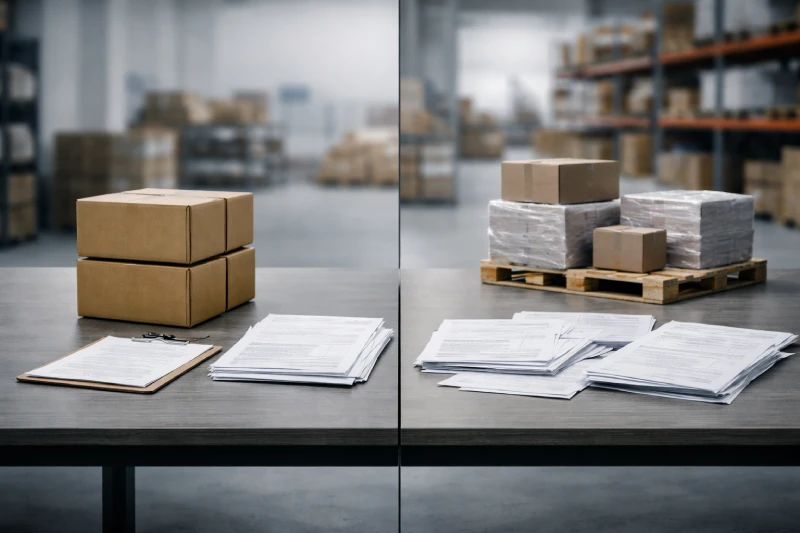
This decision isn’t about right or wrong—it’s about what you’re willing to carry yourself. Using a freight forwarder and handling shipping internally each come with clear trade-offs, and the differences show up most when something goes off plan.
Cost visibility vs. hidden costs is the first tension. Handling shipping yourself may look cheaper on paper, but gaps often appear later: demurrage, storage, rebooking fees, customs penalties, or internal time costs. A forwarder’s quote is more visible upfront, but you’re paying to externalize many of those risks.
Then there’s control vs. coordination burden. Managing everything directly can feel like tighter control, but it also means coordinating multiple parties, tracking details, and resolving conflicts. A forwarder reduces that workload, though you give up some direct touchpoints.
Speed vs. error risk is another balance. Direct handling can be fast when everything aligns. When it doesn’t, small mistakes slow the entire chain. Forwarders often move slightly slower at the start—but reduce the chance of preventable errors later.
Finally, flexibility vs. responsibility. Doing it yourself allows on-the-fly decisions. Using a forwarder means sharing responsibility—but also sharing accountability when plans change.
What matters isn’t which side sounds better. It’s which set of trade-offs fits your shipment, your team, and your tolerance for operational risk.
The Assumptions That Usually Lead to Trouble
This is the point where decisions often go wrong—not because of lack of effort, but because of incorrect assumptions about how shipping actually plays out.
A common belief is: “I’ll only use a freight forwarder if problems appear.” In reality, most problems can’t be solved retroactively. Once cargo is delayed at a port or stuck in customs, options narrow and costs rise. Forwarding value is mostly preventive, not reactive.
Another frequent misjudgment is “My supplier will handle everything.” Suppliers may arrange transport to move goods out of the factory, but they rarely take full responsibility for international shipping risks unless it’s clearly defined. What’s “handled” is often just the first leg.
Some importers assume freight forwarding is only about transport. In practice, transport is just the visible layer. Documentation accuracy, compliance, timing, and exception handling are where most failures—and costs—occur.
Finally, there’s the idea that using a forwarder means losing control. What usually gets lost is direct execution, not decision authority. Without a forwarder, control doesn’t disappear—it turns into constant operational involvement.
These misjudgments tend to surface only after something goes wrong. Recognizing them early helps prevent learning the hard way.
A Practical Way to Judge Your Own Shipment
The decision becomes clearer once you stop thinking in terms of services and start looking at your shipment’s profile. The question isn’t whether freight forwarding is good or bad, but how much risk and coordination your specific shipment creates.
If your shipment looks like A—small volume, low value, one supplier, courier-based delivery, and minimal customs exposure—you can usually proceed without a freight forwarder. The process is standardized, and the downside of mistakes is limited.
If your shipment looks like B—commercial cargo, multiple documents, ocean or palletized air freight, or a destination with tighter import controls—a freight forwarder is no longer optional in practice. You’re not just moving goods; you’re managing compliance, timing, and exceptions.
Many shipments sit somewhere in between. In those cases, the deciding factor is often risk tolerance rather than cost. Ask yourself: if this shipment is delayed, inspected, or misclassified, do you have the experience, time, and fallback options to recover without disruption?
There’s no universal threshold. But once you evaluate volume, complexity, destination, and internal capability together, the right choice usually becomes obvious—before the shipment forces the decision on you.
So, Do You Actually Need a Freight Forwarder?
Whether you need a freight forwarder isn’t a permanent label—it’s a stage-dependent decision. As volumes change, suppliers increase, or destinations expand, a setup that once worked can quietly become fragile. What matters is revisiting the decision as your shipment profile evolves, not locking yourself into a fixed approach.
Once you’re clear on whether a freight forwarder makes sense for your current situation, the next challenge shifts from necessity to selection. Not all forwarders solve the same problems, and the wrong fit can introduce friction rather than remove it.
If you’re ready to move forward, the logical next step is understanding how to choose a freight forwarder in China—based on your shipment type, risk exposure, and operational priorities—so the support you add actually matches the complexity you’re dealing with.
