

Why Import Documents Matter for China–Nigeria Trade
Importing goods from China to Nigeria is no longer just about finding the right supplier or shipping method. In 2026, accurate import documents and customs paperwork have become the deciding factor between smooth cargo clearance and costly delays at Nigerian ports. With stricter enforcement by Nigeria Customs Service (NCS), increased use of PAAR risk assessment, and tighter checks on valuation and product compliance, even minor documentation errors can result in penalties, cargo holds, or reclassification of duties.
This guide explains the essential import documents required for shipping from China to Nigeria, who is responsible for each document, and how to prepare them correctly. Whether you are a first-time importer or managing regular commercial shipments, understanding Nigeria’s import documentation requirements is critical to controlling cost, time, and compliance risk.
Quick Summary Table: All Essential Import Documents at a Glance
Before reviewing each document in detail, the table below provides a clear overview of the key import and customs documents required for shipping from China to Nigeria.
It helps importers quickly identify which documents are mandatory, who issues them, and at which stage they are used during the import process.
This summary is especially useful for early planning, internal checks, and coordination with suppliers, freight forwarders, and customs brokers to avoid missing critical paperwork.
| Document Name | Issued By | Mandatory | Used At Which Stage | Nigeria-Specific Notes |
|---|---|---|---|---|
| Commercial Invoice | Chinese Supplier | Yes | Customs clearance | Basis for customs value & duty |
| Packing List | Chinese Supplier | Yes | Inspection & clearance | Must match physical cargo |
| Bill of Lading / Air Waybill | Carrier / Forwarder | Yes | Cargo release | Consignee accuracy is critical |
| HS Code & Customs Declaration | Importer / Broker | Yes | Duty calculation | Errors trigger penalties |
| Certificate of Origin | Chamber / Authority | Conditional | Clearance | Required for certain goods |
| Arrival Notice | Carrier / Agent | Yes | Pre-clearance | Needed for port procedures |
| Form M | Importer | Yes (most cases) | Pre-shipment | Mandatory Nigeria import form |
| SONCAP / NAFDAC | Authorized bodies | Product-based | Clearance | Required for regulated goods |
Commercial Invoice
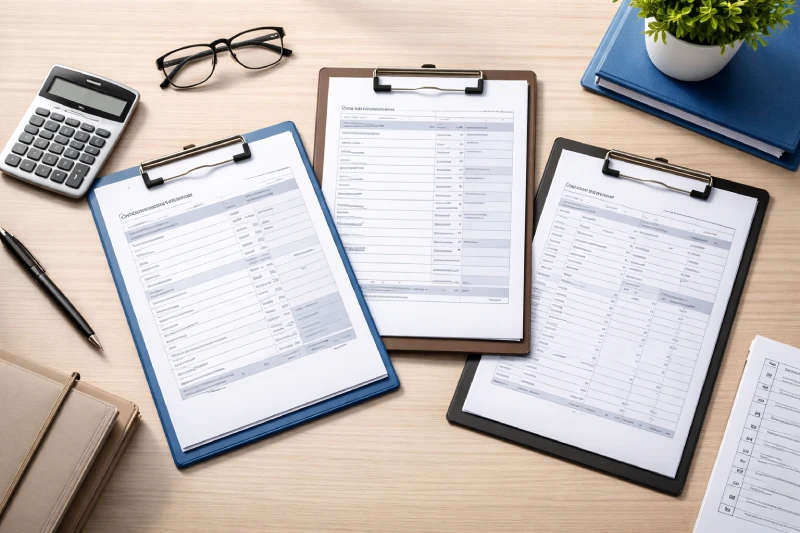
The Commercial Invoice is the most critical import document for customs clearance in Nigeria, as it forms the basis for customs valuation, duty calculation, and regulatory review. Nigeria Customs Service (NCS) relies heavily on the information stated on the invoice to assess whether the declared value and product details are accurate and compliant.
A compliant commercial invoice for China–Nigeria shipments should clearly include the exporter and importer names, detailed product descriptions, HS codes, unit price and total value, currency, Incoterms, country of origin, and payment terms. Any inconsistency between the invoice, packing list, and Form M can immediately trigger a query or revaluation by customs.
One of the most common risks is undervaluation or vague product descriptions, which often leads to delayed clearance, reassessed duties, or penalties. To avoid issues, importers should ensure the commercial invoice accurately reflects the actual transaction value and matches all other shipping and customs documents exactly.
Packing List
The Packing List supports the commercial invoice by providing a detailed breakdown of how the cargo is physically packed, and it plays a key role during customs inspection and cargo examination in Nigeria. While it does not affect duty calculation directly, Nigeria Customs Service uses the packing list to verify quantities, weights, packaging types, and cargo consistency.
A proper packing list should include the number of packages, packaging method (cartons, pallets, crates), gross and net weight, dimensions, and item-level packing details.
For LCL shipments, accuracy is especially important, as discrepancies can cause delays during consolidation or deconsolidation at Nigerian ports.
For FCL shipments, mismatches between the packing list and the actual container contents may trigger physical inspection.
Common issues include missing weights, unclear package counts, or inconsistencies with the commercial invoice. To avoid clearance delays, the packing list must match the invoice and Bill of Lading exactly and reflect the actual shipped cargo without estimates or assumptions.
Bill of Lading / Air Waybill
The Bill of Lading (B/L) for sea freight and the Air Waybill (AWB) for air shipments are the core transport documents used to prove ownership of cargo and authorize cargo release upon arrival in Nigeria. Without a correctly issued B/L or AWB, shipments cannot be released from the carrier or terminal, regardless of whether duties have been paid.
For sea freight, Nigerian importers must pay close attention to whether the Bill of Lading is issued as an original B/L or telex release. Errors in the consignee name, notify party, or port of discharge often result in release delays and additional amendment fees. For air freight, while the AWB is non-negotiable, accuracy is equally critical, as customs uses it to cross-check shipment value, quantity, and routing.
To avoid clearance issues, the Bill of Lading or Air Waybill must fully align with the commercial invoice, packing list, and Form M, including consignee details and shipment description. Even minor discrepancies can lead to customs queries or port-side delays in Nigeria.
HS Code & Customs Declaration
The HS Code and customs declaration determine how much import duty, levy, and VAT you will pay when importing from China to Nigeria. An incorrect HS code is one of the most common causes of customs disputes, reassessment of duties, and clearance delays at Nigerian ports.
Nigeria Customs Service uses the HS code to classify goods, apply tariff rates, and identify whether additional regulatory approvals—such as SONCAP or NAFDAC—are required. If the declared HS code does not match the product’s actual characteristics, customs may reclassify the cargo, resulting in higher duties, penalties, or physical inspection.
Importers are ultimately responsible for HS code accuracy, even when a freight forwarder or customs broker prepares the declaration. To reduce risk, HS codes should be confirmed before shipment, and product descriptions on the commercial invoice should clearly support the chosen classification. Accurate HS coding not only ensures compliance but also helps prevent unexpected cost increases during customs clearance in Nigeria.
Certificate of Origin
The Certificate of Origin (CO) is used to confirm the country where the goods were manufactured and may be requested by Nigeria Customs Service during clearance, depending on the product type and import conditions. While it is not mandatory for every shipment from China to Nigeria, it becomes important for certain regulated goods or when customs requires additional verification of origin.
The certificate is usually issued by an authorized chamber of commerce or relevant authority in China and must match the exporter details and product information shown on the commercial invoice. Any inconsistency in exporter name, product description, or country of origin can raise compliance questions during customs review.
To avoid delays, importers should confirm in advance whether a Certificate of Origin is required for their specific products and ensure it is prepared accurately and submitted together with the main customs documents.
Arrival Notice
The Arrival Notice is issued by the shipping line, airline, or their local agent once the shipment is approaching or has arrived in Nigeria. It informs the importer or customs broker of key shipment details, including vessel or flight information, container number, estimated arrival date, and local charges payable before cargo release.
Although the arrival notice is not a regulatory document itself, it is operationally essential for initiating customs clearance and coordinating port procedures. Nigerian importers use it to arrange payment of local fees, prepare customs declarations, and schedule cargo pickup.
Delays often occur when the arrival notice is not received on time or when shipment details do not match the Bill of Lading or Air Waybill. To avoid clearance disruptions, importers should ensure their contact details are correctly listed and closely monitor arrival notifications from the carrier or freight forwarder.
Importer of Record (IOR): Roles & Responsibilities
The Importer of Record (IOR) is the legal entity responsible for ensuring that goods imported from China into Nigeria fully comply with customs, tax, and regulatory requirements. In Nigeria, the IOR is typically a locally registered company or individual with a valid Tax Identification Number (TIN) and the ability to engage licensed customs agents.
As the IOR, you are legally accountable for the accuracy of all import documents, including the commercial invoice, HS code declaration, Form M, and any required regulatory certificates such as SONCAP or NAFDAC approvals. Even when a freight forwarder or customs broker prepares and submits documents on your behalf, liability remains with the importer of record.
Failure to meet IOR responsibilities can result in duty reassessment, penalties, shipment delays, or cargo seizure. For this reason, Nigerian importers should clearly define who acts as the IOR before shipment and ensure all documentation reflects the correct importer details consistently across every customs document.
Power of Attorney (POA) for Customs Broker
A Power of Attorney (POA) authorizes a licensed customs broker or freight forwarder to act on behalf of the importer during customs clearance in Nigeria. This document allows the broker to submit declarations, process Form M–related procedures, communicate with Nigeria Customs Service (NCS), and handle clearance formalities legally and efficiently.
The POA must clearly identify the Importer of Record, the appointed customs agent, and the scope of authority granted. In many cases, Nigerian customs authorities will not proceed with clearance unless a valid POA is on file, especially for first-time importers or new broker relationships.
To avoid clearance delays, importers should prepare the POA in advance, ensure it is properly signed and stamped where required, and confirm that it aligns with the importer details shown on all other customs documents.
Product-Specific Certificates & Regulatory Documents
In addition to standard shipping and customs documents, Nigeria requires specific regulatory certificates depending on the type of goods being imported from China. These product-based documents are closely checked during clearance and are a common cause of shipment delays when overlooked.
For most regulated products, the SONCAP Certificate is mandatory. It applies to items such as electronics, building materials, machinery, and consumer goods, confirming conformity with Nigerian standards. Products related to food, beverages, cosmetics, pharmaceuticals, and medical devices typically require NAFDAC approval before importation. Without valid NAFDAC permits, such goods cannot be cleared, regardless of other documentation.

Nigeria also requires Form M for most commercial imports, which must be approved before shipment. For certain cargo types, additional documents such as MSDS (for chemicals or batteries), test reports, or conformity certificates may be requested. Importers should always verify product-specific requirements in advance to prevent cargo holds, penalties, or forced re-export.
Document Requirements by Shipping Method
While the core import documents remain the same, documentation requirements and risk points vary depending on the shipping method used for China–Nigeria shipments. Understanding these differences helps importers prepare the right paperwork and avoid clearance delays.
For sea freight (FCL and LCL), the full document set is required, including the commercial invoice, packing list, Bill of Lading, Form M, and any applicable SONCAP or NAFDAC certificates. LCL shipments face stricter scrutiny on packing lists and cargo descriptions due to consolidation processes at Nigerian ports.
For air freight, documentation accuracy is critical because customs processing moves faster. Any inconsistency between the Air Waybill and commercial invoice can immediately delay clearance despite the shorter transit time.
Express courier shipments may use simplified paperwork for low-value goods, but regulated or higher-value cargo still requires full customs documentation.
Under DDP shipments, the seller or appointed forwarder typically manages documentation and duty payment, but the importer remains legally responsible for compliance, making document transparency essential.
Step-by-Step Document Preparation Workflow
A structured document preparation process is essential for avoiding delays when importing from China to Nigeria. Most clearance problems occur not because documents are missing, but because they are prepared too late or without cross-checking.
The workflow typically starts with product classification and compliance review, including HS code confirmation and verification of whether SONCAP, NAFDAC, or other certificates are required. Next, the supplier prepares the commercial invoice and packing list, which should be reviewed carefully before shipment to ensure consistency and accuracy.
Once documents are confirmed, Form M and any required regulatory approvals should be completed before cargo departure. After shipment, the Bill of Lading or Air Waybill and arrival notice are issued, allowing the customs broker to submit declarations and arrange clearance. Following this step-by-step approach significantly reduces clearance risk and unexpected costs at Nigerian ports.
Common Import Document Mistakes & How to Avoid Them
Many clearance delays in Nigeria are caused by avoidable documentation errors rather than regulatory complexity. One of the most frequent mistakes is inconsistent information across documents, such as mismatched consignee names, product descriptions, or values between the commercial invoice, packing list, and Bill of Lading. Nigerian customs systems quickly flag these discrepancies for review.
Another common issue is incorrect or poorly supported HS codes, which often leads to duty reassessment or requests for additional certificates. Missing product-specific approvals—such as SONCAP, NAFDAC, or Form M—also regularly result in cargo holds at the port.
To avoid these problems, importers should conduct a full document cross-check before shipment, confirm regulatory requirements in advance, and work with experienced customs brokers familiar with China–Nigeria import procedures. Early verification is far more cost-effective than correcting errors after cargo arrival.
Nigeria-Specific Compliance & Regulatory Notes (2026)
Importing into Nigeria requires close attention to local customs procedures and enforcement practices, which continue to evolve in 2026. Nigeria Customs Service (NCS) places strong emphasis on PAAR (Pre-Arrival Assessment Report) data, using it to assess shipment risk, customs value, and compliance before cargo arrival. Any inconsistency between declared documents and PAAR records can lead to delays or reassessment.
Port congestion and inspection backlogs remain practical risks, making timely and accurate document submission critical. Nigerian authorities also rely heavily on licensed customs agents, and importers are expected to work through approved brokers for clearance activities.
To reduce compliance risk, importers should stay informed of regulatory updates, ensure all documents are submitted early, and avoid last-minute amendments. Proactive compliance planning remains the most effective way to achieve smooth customs clearance in Nigeria.
FAQs
What documents are mandatory to import from China to Nigeria?
At a minimum, Nigerian imports require a commercial invoice, packing list, Bill of Lading or Air Waybill, HS code declaration, and Form M. Additional certificates may apply based on the product type.
Is Form M required for all imports into Nigeria?
Form M is required for most commercial imports and must be approved before shipment. Only limited low-value or special cases may be exempt.
What happens if the HS code is declared incorrectly?
Incorrect HS codes can lead to duty reassessment, penalties, shipment delays, or physical inspection by Nigeria Customs Service.
Do all products require SONCAP certification?
No. SONCAP applies only to regulated products such as electronics, machinery, building materials, and certain consumer goods.
When is NAFDAC approval required?
NAFDAC approval is required for food, beverages, cosmetics, pharmaceuticals, medical devices, and related products.
Who prepares customs documents in Nigeria?
Documents are usually prepared by a licensed customs broker, but the Importer of Record remains legally responsible for accuracy.
Conclusion: Simplifying China–Nigeria Import Documentation
Successfully importing from China to Nigeria depends less on shipping speed and more on document accuracy, preparation timing, and regulatory compliance. From the commercial invoice and HS code declaration to Form M and product-specific certificates, each document plays a critical role in determining whether cargo clears smoothly or faces costly delays.
By understanding Nigeria’s import documentation requirements and preparing paperwork correctly before shipment, importers can reduce clearance risk, avoid penalties, and maintain predictable logistics costs. If you are unsure about any document or compliance requirement, working with an experienced freight forwarder familiar with China–Nigeria trade can help ensure your shipment moves through customs efficiently and without disruption.
Need help reviewing your import documents or planning a compliant shipment from China to Nigeria? Contact Winsail Logistics for professional guidance and end-to-end documentation support.
