
Introduction
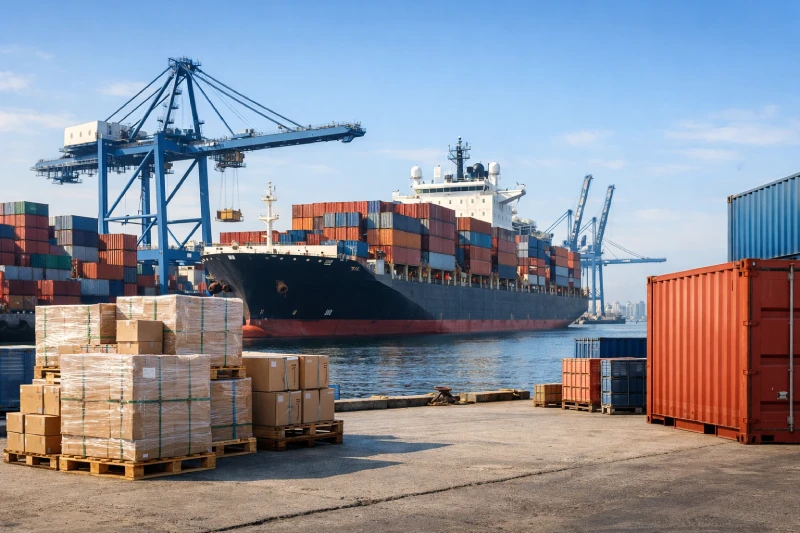
Importing goods from China to Cameroon often involves multiple logistics steps, including supplier coordination, export procedures, international transportation, customs clearance, and local delivery. For many importers, especially businesses without a dedicated logistics team, managing these stages separately can be complex and time-consuming.
Door-to-door shipping provides a simplified logistics solution. Instead of arranging different providers for pickup, freight transport, and customs handling, a freight forwarder coordinates the entire process from the supplier’s location in China to the final delivery address in Cameroon. This integrated approach helps businesses reduce operational complexity and maintain clearer shipment visibility.
In this guide, we explain what door-to-door shipping from China to Cameroon actually means, how the logistics process works, which transport methods are typically used, and when this service model is the most practical choice for importers.
What Door-to-Door Shipping from China to Cameroon Means
Door-to-door shipping from China to Cameroon refers to a logistics service where a freight forwarder manages the entire transportation process from the supplier’s location in China to the importer’s final delivery address in Cameroon. Instead of arranging separate services for pickup, international transport, customs clearance, and local delivery, the importer works with a single logistics provider that coordinates all stages of the shipment.
In a typical door-to-door arrangement, the freight forwarder collects the cargo directly from the supplier or factory, handles export procedures in China, arranges international transport, manages import customs clearance in Cameroon, and organizes final delivery to the consignee’s warehouse or business location. This integrated workflow simplifies shipment management and reduces the need for importers to coordinate multiple logistics parties.
What “Door” Means on Both Ends
| Stage | Example |
|---|---|
| Origin door | Chinese factory, supplier warehouse, or production facility |
| Destination door | Importer’s warehouse, distribution center, or office in Cameroon |
It is important to understand that door-to-door shipping is not a specific transport method. Instead, it is a service model that combines several logistics stages into a single coordinated solution. Depending on shipment size, urgency, and cargo type, the international transport portion may still use sea freight, air freight, or express courier services.
How Door-to-Door Shipping from China to Cameroon Works
Although door-to-door shipping simplifies the logistics experience for importers, the shipment still moves through several operational stages. The main difference is that a freight forwarder coordinates these steps on behalf of the customer, ensuring the cargo moves smoothly from the supplier in China to the final destination in Cameroon.
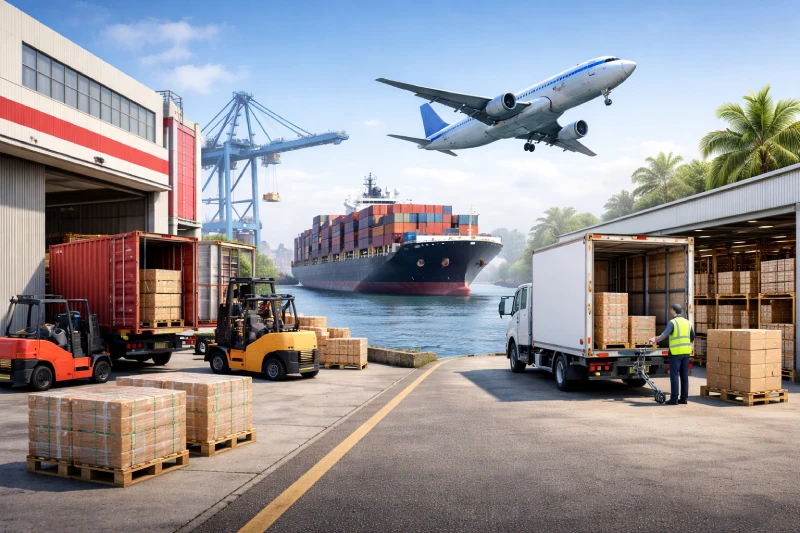
The process typically begins once the importer confirms shipment details with the freight forwarder, including cargo specifications, pickup location, and delivery address. From there, the forwarder organizes the necessary transport arrangements and documentation required for international shipping.
Below is a simplified overview of the typical door-to-door shipping workflow.
| Step | Logistics Activity |
|---|---|
| 1 | Cargo pickup from the supplier’s factory or warehouse in China |
| 2 | Export documentation preparation and customs clearance in China |
| 3 | International transport via sea freight, air freight, or express service |
| 4 | Arrival at the destination port or airport in Cameroon |
| 5 | Import customs clearance and regulatory procedures |
| 6 | Final delivery to the consignee’s warehouse or business location |
Throughout this process, the freight forwarder coordinates with carriers, customs authorities, and local delivery partners. The importer generally provides the necessary commercial documents, such as invoices and packing lists, while the logistics provider manages the operational execution of the shipment.
Transport Methods Used for Door-to-Door Shipping
Door-to-door shipping from China to Cameroon is not limited to a single transportation method. Instead, the logistics provider selects the most suitable transport mode based on the shipment’s size, urgency, and cargo characteristics. The door-to-door service simply means the freight forwarder manages the entire journey, regardless of which international transport method is used.
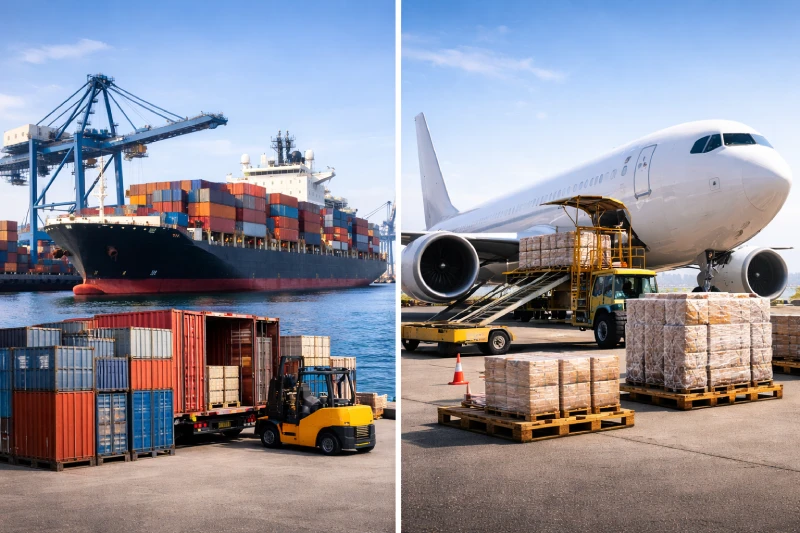
In most cases, door-to-door shipments rely on one of three main transport solutions: sea freight, air freight, or international express services. Each option serves different types of cargo and delivery requirements.
| Transport Method | Best For | Typical Cargo Type |
|---|---|---|
| Sea Freight Door-to-Door | Large or heavy shipments with flexible delivery schedules | Containers, palletized cargo, bulk goods |
| Air Freight Door-to-Door | Time-sensitive shipments requiring faster delivery | Electronics, spare parts, high-value goods |
| Express Courier | Small and lightweight shipments | Samples, documents, small parcels |
Sea freight is generally the most common option for commercial shipments because it offers the most economical transportation for larger cargo volumes. Air freight, on the other hand, is chosen when speed is more important than cost. Express courier services are typically used for small shipments that need fast delivery without complex logistics coordination.
Freight forwarders usually recommend the most appropriate transport solution after evaluating the shipment details and delivery requirements.
DDP vs DAP in Door-to-Door Shipments
Door-to-door shipping can be arranged under different delivery terms depending on how import responsibilities are shared between the shipper and the importer. In international logistics, the two most common arrangements used in door-delivery shipments are DDP (Delivered Duty Paid) and DAP (Delivered At Place).
Both models can still provide door delivery, but the key difference lies in who handles import duties, taxes, and certain customs responsibilities in Cameroon.
| Delivery Model | Duties & Taxes | Importer Responsibility |
|---|---|---|
| DDP | Paid by the shipper or logistics provider | Minimal involvement after booking shipment |
| DAP | Paid by the importer | Importer settles duties and taxes before delivery |
Under DDP, the freight forwarder or seller typically manages most logistics and customs-related costs, including import duties and taxes. This option is often chosen by businesses that prefer a more simplified and predictable shipping arrangement.
Under DAP, the logistics provider still organizes transportation and delivery to the destination address, but the importer is responsible for paying import duties and taxes when the shipment arrives in Cameroon.
Both options can support door-to-door logistics. The most suitable choice usually depends on the importer’s experience with customs procedures, their preference for cost control, and how they want responsibilities divided between the trading parties.
Main Cost Factors in Door-to-Door Shipping
The total cost of door-to-door shipping from China to Cameroon depends on several operational and logistical factors. Because this service includes multiple stages—such as pickup, international transport, customs clearance, and final delivery—the final quote usually reflects the combined cost of these activities.
One of the most important factors is the cargo’s weight and volume, which directly influences freight charges. Larger or heavier shipments typically require containerized transport or higher freight capacity, affecting the overall cost structure.
Another key element is the transport method used for the international journey. Sea freight is generally the most economical option for larger shipments, while air freight or express services are faster but usually more expensive.
Other factors that can influence door-to-door shipping costs include:
- Pickup location in China – Inland factories may require additional domestic transport to reach the export port or airport
- Destination city in Cameroon – Deliveries to locations outside major port cities may involve longer trucking distances
- Import duties and taxes – These vary depending on the cargo type and the delivery terms used
- Customs clearance complexity – Certain goods require additional documentation or regulatory checks
- Last-mile delivery arrangements – Local trucking, warehouse handling, and delivery access conditions can affect final charges
Because these variables differ between shipments, freight forwarders usually prepare door-to-door quotes based on the specific cargo details and delivery requirements.
Typical Transit Time for Door-to-Door Shipments
The total transit time for door-to-door shipping from China to Cameroon depends mainly on the transport method used and the time required for customs clearance and local delivery. Because door-to-door services include multiple logistics stages—such as cargo pickup, export procedures, international transport, and final delivery—the total timeline usually reflects the complete supply chain rather than only the international shipping segment.
Different transportation methods offer different delivery speeds. Businesses typically choose the option that best balances urgency, shipment size, and cost considerations.
| Transport Method | Estimated Door-to-Door Transit Time |
|---|---|
| Sea Freight | Approximately 35–50 days |
| Air Freight | Approximately 7–12 days |
| Express Courier | Approximately 3–7 days |
Sea freight generally takes longer because shipments must move through container handling processes at both the origin and destination ports. However, it remains the most common option for large commercial cargo because of its cost efficiency.
Air freight significantly reduces transit time and is often selected for urgent or high-value shipments. Express courier services are typically the fastest solution for small packages and documents that require rapid delivery.
Actual transit times may vary depending on port congestion, customs processing speed, and the final delivery distance within Cameroon.
Advantages of Door-to-Door Shipping for Importers
Door-to-door shipping is widely used by businesses importing goods from China to Cameroon because it simplifies the logistics process. Instead of coordinating with multiple service providers for different shipping stages, importers can rely on a single freight forwarder to manage the entire shipment from pickup to final delivery.
One of the main advantages is simplified logistics management. The freight forwarder coordinates transportation, documentation, customs procedures, and local delivery, allowing the importer to focus more on procurement and sales rather than shipment operations.
Another benefit is having one primary point of contact throughout the shipping process. This reduces communication complexity and helps importers track shipment progress more easily.
Additional advantages include:
- Reduced coordination effort – The forwarder manages carriers, customs brokers, and delivery partners
- More predictable shipment workflow – A structured logistics process helps avoid operational confusion
- Better visibility of shipment status – Importers receive updates from a single logistics provider
- Convenient solution for companies without logistics teams – Particularly helpful for smaller businesses or first-time importers
For many businesses trading with overseas suppliers, door-to-door shipping offers a practical way to streamline international logistics while maintaining reliable delivery arrangements.
Limitations Importers Should Understand
While door-to-door shipping offers a convenient logistics solution, importers should also understand its practical limitations. Although the service simplifies coordination and reduces operational workload, it does not eliminate every complexity involved in international shipping.
One potential limitation is that door-to-door services may cost slightly more than port-to-port shipping. Because the logistics provider manages additional stages such as cargo pickup, customs coordination, and final delivery, the service includes more operational handling compared to basic freight transport.
Importers should also be aware that door-to-door shipping may provide less direct control over individual shipping stages. Since the freight forwarder coordinates the full logistics chain, the importer relies on the forwarder’s operational planning and partner network to manage the shipment.
Other considerations include:
- Documentation responsibilities still remain – Importers must still provide accurate commercial documents such as invoices and packing lists
- Customs delays can still occur – Import inspections or regulatory procedures may affect delivery timelines
- Delivery conditions may vary by location – Remote destinations or areas with limited infrastructure may require additional delivery arrangements
Understanding these factors helps importers set realistic expectations and choose the most appropriate logistics solution for their shipments.
When Businesses Should Choose Door-to-Door Shipping
Door-to-door shipping is not always necessary for every shipment, but it can be a highly practical solution in certain situations. Many businesses importing goods from China to Cameroon choose this service when they prefer a simplified logistics process and fewer operational responsibilities.
For companies without extensive experience in international shipping, managing multiple logistics stages—such as export documentation, freight booking, customs clearance, and local delivery—can be challenging. Door-to-door shipping allows a freight forwarder to coordinate these steps, reducing the need for the importer to manage separate service providers.
The service is particularly useful in the following situations:
| Business Situation | Why Door-to-Door Works Well |
|---|---|
| First-time importer | Simplifies logistics and reduces operational complexity |
| Limited customs experience | Forwarder assists with documentation and clearance coordination |
| Small logistics team | Fewer partners to manage during shipment |
| Regular shipments from Chinese suppliers | Creates a consistent and repeatable logistics workflow |
| Buyers located far from ports | Direct delivery reduces additional inland transport arrangements |
By evaluating these scenarios, importers can determine whether door-to-door shipping provides the most efficient balance between convenience, cost management, and operational control.
Common Questions About Door-to-Door Shipping to Cameroon
Businesses importing goods from China often have practical questions about how door-to-door shipping works in real operations. The following answers address some of the most common concerns raised by importers considering this logistics model.
Can door-to-door shipping include customs clearance?
Yes. In most door-to-door arrangements, the freight forwarder coordinates both export clearance in China and import customs procedures in Cameroon. However, the exact responsibilities may depend on the delivery terms used, such as whether duties and taxes are paid by the shipper or the importer.
Is door-to-door shipping available for both sea and air freight?
Yes. Door-to-door delivery can be arranged for shipments transported by sea freight, air freight, or express courier services. The international transport method does not change the overall service model, as the freight forwarder still manages the full shipment from pickup to final delivery.
Do importers still need to provide shipping documents?
Yes. Importers typically need to provide key commercial documents such as the commercial invoice, packing list, and product information. Accurate documentation helps ensure smooth customs clearance and prevents delays during the import process.
Can shipments be delivered outside major cities in Cameroon?
In many cases, yes. Freight forwarders can arrange inland delivery to locations beyond major ports or airports, depending on local transport infrastructure and delivery accessibility.
How are door-to-door shipping quotes calculated?
Freight forwarders usually calculate quotes based on cargo size, weight, transport method, delivery location, and customs-related costs. Because each shipment is different, quotes are normally prepared after reviewing the shipment details.
Choosing a Reliable Door-to-Door Freight Forwarder
Selecting the right freight forwarder is an important step when arranging door-to-door shipping from China to Cameroon. Because the logistics provider coordinates multiple stages of the shipment—from pickup and international transport to customs clearance and final delivery—the reliability and experience of the forwarder can significantly influence the overall shipping process.
Importers should first look for a logistics partner with experience in the China–Africa trade lane. Familiarity with regional shipping routes, customs procedures, and local delivery networks can help reduce operational risks and improve shipment efficiency.
It is also important to choose a forwarder that offers transparent pricing and clear service scope. A detailed quotation should explain what stages of the shipment are included, such as pickup, freight transport, customs handling, and final delivery.
Other key factors to consider include:
- Customs clearance capability – Ability to coordinate import procedures in Cameroon
- Shipment tracking and communication – Regular updates on cargo status
- Cargo consolidation options – Useful for smaller shipments from multiple suppliers
- Reliable local delivery partners – Ensures smooth final-mile transportation
Working with an experienced freight forwarder helps importers manage international shipments more efficiently and maintain better visibility throughout the logistics process.
