
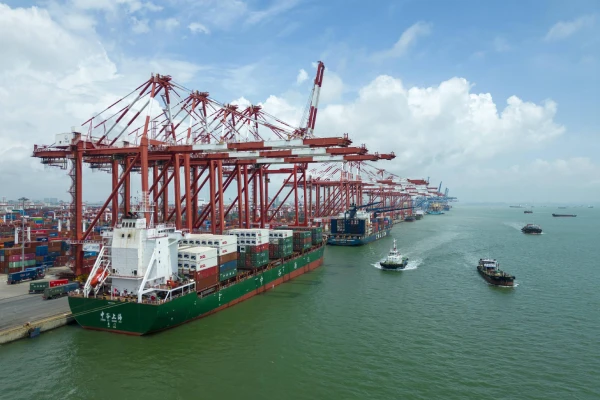
Guangzhou Port — especially Nansha Port — is one of South China’s most efficient deep-water export hubs.
It offers competitive freight rates, fast container handling, and stable weekly sailings to major global markets including the Middle East, Africa, Europe, and North America.
With short trucking distances from key manufacturing zones such as Foshan, Dongguan, Zhongshan, Huizhou, and Jiangmen, Nansha is often the most cost-effective choice for exporting electronics, home appliances, furniture, hardware, and general consumer goods.
For most businesses sourcing from the Pearl River Delta, Guangzhou/Nansha Port provides a reliable, cost-efficient, and time-saving option for both FCL and LCL shipments.
Guangzhou Port Overview
Guangzhou Port is one of South China’s most important gateways for international trade and a core hub for exporting manufactured goods worldwide. Strategically located at the heart of the Pearl River Delta—one of China’s largest and most productive industrial regions—the port handles a diverse mix of commodities including electronics, appliances, furniture, hardware, machinery, and automotive parts.
The port consists of several major port areas, with Nansha Port serving as the primary deep-water terminal for global container traffic. Nansha has rapidly grown into a preferred alternative to Shenzhen and Hong Kong thanks to its modern infrastructure, high automation level, efficient customs procedures, and competitive handling costs. It provides extensive weekly sailings to key markets such as the Middle East, Africa, Europe, Southeast Asia, and North America.
In addition to Nansha, Huangpu Port and Xinsha Port support specialized cargo types, including bulk goods, chemicals, breakbulk, and Ro-Ro shipments. Together, these port areas create a comprehensive, multi-functional logistics system that supports both traditional manufacturing exporters and emerging e-commerce supply chains.
With its strategic location, expanding capacity, and strong connectivity to regional production zones, Guangzhou Port plays a vital role in facilitating the global movement of goods from Southern China and remains one of the fastest-growing international trading ports in the country.
Location Map & Geographic Advantage
Guangzhou Port is strategically located at the center of the Pearl River Delta (PRD), one of the world’s most densely concentrated manufacturing regions. Its main deep-water facility—Nansha Port—sits at the mouth of the Pearl River, providing direct maritime access to major international sea routes while maintaining close proximity to China’s key export-oriented industrial zones.
The port’s advantageous location allows exporters to significantly reduce inland transportation time and trucking costs. From Nansha Port, most major factory clusters in Guangdong Province can be reached within 1–2 hours, including:
- Foshan – furniture, ceramics, home appliances
- Dongguan – electronics, machinery, plastics
- Zhongshan – lighting, small appliances
- Huizhou – electronics, batteries, consumer goods
- Jiangmen – hardware, motorcycles, metal products
- Shunde – household appliances, kitchen equipment
This geographic advantage makes Guangzhou/Nansha one of the most cost-efficient departure points for shippers whose suppliers are located in the PRD region.
Nansha’s waterfront position also allows for deep-water berths capable of handling the latest ultra-large container vessels (ULCVs), ensuring stable connections to global trade lanes. Combined with modern highway networks, inland depots, and intermodal rail links, the port provides seamless access between manufacturing hubs and international markets.
Overall, Guangzhou Port’s strategic position at the center of South China’s industrial heartland gives it a significant logistical and economic edge, making it a preferred origin for exporting a wide range of products to destinations worldwide.
Terminals & Facilities
Guangzhou Port operates through several major port areas, each serving different cargo types and logistics functions. Together, these terminals form one of South China’s most comprehensive and diversified port systems, supporting containerized cargo, bulk commodities, breakbulk shipments, Ro-Ro vehicles, and specialized industrial goods.
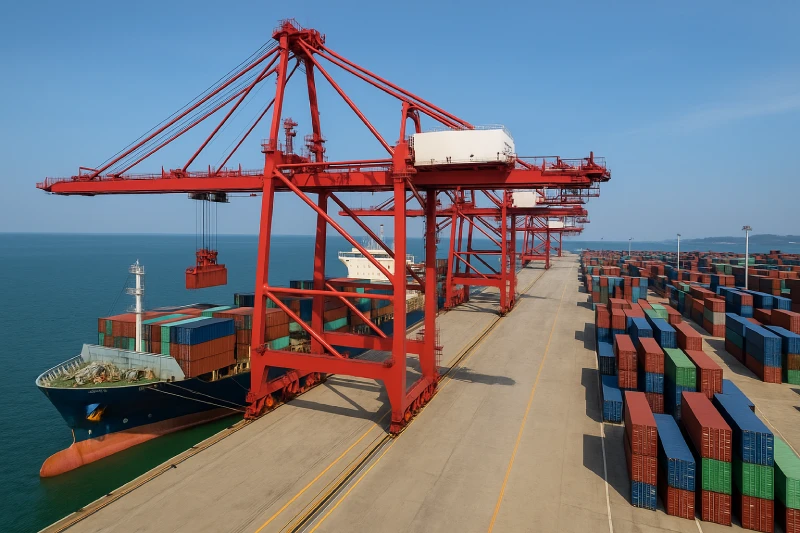
1. Nansha Port – Main Deep-Water Container Terminal
Nansha Port is the primary engine of Guangzhou’s international container traffic and one of China’s fastest-growing deep-water ports. Equipped with advanced automation, high-capacity quay cranes, and state-of-the-art terminal management systems, Nansha provides efficient operations suitable for large-scale global shipping.
Key features of Nansha Port:
- Multiple deep-water berths supporting ULCVs
- Modern automated container yards
- Fast loading/unloading efficiency with reduced turnaround times
- Extensive weekly sailing schedules to the Middle East, Africa, Europe, Southeast Asia, and North America
- Well-connected road network linking PRD factories within 1–2 hours
- Dedicated facilities for FCL, LCL consolidation, cold-chain, and hazardous goods
Nansha’s rapid expansion and competitive costs make it a strong alternative to Shenzhen’s Yantian and Shekou ports for exporters sourcing from Guangdong’s manufacturing zones.
2. Huangpu Port – Bulk, General Cargo, Chemical Products
Huangpu Port is the historic core of Guangzhou Port and remains a major hub for bulk commodities, breakbulk cargo, and chemical products. It plays a crucial role in handling raw materials and industrial goods for factories located across the Pearl River Delta.
Key functions of Huangpu Port:
- Breakbulk and general cargo terminals
- Specialized handling for chemicals and liquid bulk
- Warehousing and bonded storage
- Rolling cargo and project cargo support
- Strong customs processing for non-containerized shipments
Huangpu is commonly used for machinery parts, steel, ceramics, logs, chemicals, and project cargo for PRD manufacturers.
3. Xinsha Port – Ro-Ro and Vehicle Transportation Hub
Xinsha Port is Guangzhou’s dedicated terminal for Ro-Ro (roll-on/roll-off) operations and vehicle logistics. It is designed to handle automobiles, equipment, machinery, and oversized cargo that cannot be loaded into containers.
Key capabilities of Xinsha Port:
- Large Ro-Ro berths and wide open yards
- Dedicated vehicle inspection and storage facilities
- Seamless handling for cars, trucks, buses, and heavy machinery
- Support for project cargo and oversized shipments
Xinsha plays an increasingly important role as China’s automobile exports continue to grow.
4. Integrated Logistics & Supporting Facilities
Across all port areas, Guangzhou Port offers a mature logistics ecosystem, including:
- Bonded warehouses and container freight stations (CFS)
- Cold-chain warehouses for food, medical, and temperature-sensitive cargo
- Inland depots and intermodal rail connections
- Modern highway links to all major PRD cities
- Comprehensive customs and inspection centers
- Digital documentation and EDI systems for faster clearance
These integrated facilities ensure stable and efficient movement of goods from factory to vessel, supporting both traditional exporters and fast-growing cross-border e-commerce shipments.
Main Export Commodities
Guangzhou Port handles a wide range of export commodities driven by the strong industrial base of the Pearl River Delta. The region is home to some of China’s largest manufacturing clusters, supplying products that are shipped globally through Nansha, Huangpu, and Xinsha ports.

Below are the main categories of goods commonly exported from Guangzhou Port:
1. Electronics & Electrical Appliances
The PRD is a global center for electronics and home appliance production, especially in cities such as Dongguan, Foshan, Zhongshan, and Huizhou.
Typical exports include:
- Consumer electronics
- Mobile accessories
- LED lighting and fixtures
- Small home appliances
- Audio equipment
- Batteries and power supplies
These products form one of the largest export segments for Nansha Port due to steady demand from markets in the Middle East, Africa, Europe, and North America.
2. Furniture & Home Products
Foshan, Shunde, and Zhongshan are world-famous furniture and home goods manufacturing hubs.
Common exports include:
- Wooden and metal furniture
- Office and home furniture
- Mattresses and bedding
- Kitchenware and home décor
Guangzhou/Nansha is widely used by furniture exporters due to lower trucking costs and direct services to major global ports.
3. Machinery, Hardware & Tools
The region around Jiangmen, Foshan, and Dongguan produces a wide range of industrial goods and mechanical components.
Key exports:
- Machinery and machine parts
- Tools and hardware
- Metal products and fittings
- Pumps, motors, and industrial equipment
These products are exported globally through Nansha and Huangpu terminals.
4. Auto Parts, Motorcycles & Vehicles
Supported by Guangzhou’s strong automotive industry and surrounding vehicle manufacturing bases.
Common exports:
- Auto components
- Motorcycles and scooters
- Electric vehicles (EVs)
- Vehicle accessories and spare parts
- Machinery vehicles (via Xinsha Ro-Ro terminal)
Xinsha Port’s Ro-Ro capability is especially important for this category.
5. Building Materials & Construction Products
Guangdong is a major exporter of construction and renovation materials.
Typical exports:
- Ceramics and tiles
- Sanitary ware
- Glass and aluminum profiles
- Paints and coatings
- Doors, windows, and flooring
These products are frequently shipped to the Middle East, Africa, and Southeast Asia—key growth markets.
6. General Consumer Goods
Guangzhou Port also handles a large volume of mixed consumer goods produced throughout the PRD, such as:
- Toys
- Stationery
- Textiles and garments
- Plastics and household products
- E-commerce shipments
The port’s strong LCL consolidation services make it ideal for exporters shipping smaller batches or diverse SKUs.
Overall, Guangzhou Port supports nearly every major export category produced in South China, making it one of the most versatile and high-volume export gateways in the region.
Key Trade Routes & Global Destinations
Guangzhou Port—particularly Nansha Port—offers extensive global connectivity supported by major international carriers such as COSCO, Maersk, MSC, CMA CGM, Evergreen, Hapag-Lloyd, and ONE.
Its strategic location and expanding deep-water capacity allow it to maintain stable weekly sailings to the world’s most important trade regions.

Below is an overview of the major trade routes and destination markets served from Guangzhou/Nansha:
1. Middle East & Gulf Region
The Middle East is one of Guangzhou’s strongest outbound regions, supported by frequent direct services and fast transit times.
Key destinations include:
- Jebel Ali (UAE)
- Dammam (Saudi Arabia)
- Doha (Qatar)
- Kuwait
- Oman
- Bahrain
This route is popular for shipping electronics, appliances, furniture, and general consumer goods.
2. Africa (East, West & South)
Guangzhou Port plays an increasingly important role in Africa-bound shipments due to strong demand from African markets for Chinese-manufactured goods.
Major African destinations:
- Mombasa (Kenya)
- Dar es Salaam (Tanzania)
- Lagos / Apapa (Nigeria)
- Tema (Ghana)
- Durban (South Africa)
- Abidjan (Ivory Coast)
Cargo commonly includes hardware, building materials, electronics, and household products.
3. Europe
Guangzhou/Nansha offers regular services to key European gateways, providing reliable scheduling for FCL and LCL shipments.
Main destinations:
- Rotterdam (Netherlands)
- Hamburg (Germany)
- Antwerp (Belgium)
- Felixstowe (UK)
- Barcelona / Valencia (Spain)
Many long-haul Europe-bound vessels call at South China before heading to major transshipment hubs.
4. North America
Although some routes operate via transshipment, Guangzhou maintains strong connectivity to both the U.S. West Coast and East Coast.
Key destinations:
- Los Angeles / Long Beach
- Oakland
- Seattle / Tacoma
- Vancouver (Canada)
- New York / New Jersey
- Savannah
Electronics, home appliances, and furniture are major export categories to this region.
5. Southeast Asia
Short-haul Southeast Asia services are frequent and ideal for regional supply chains or cross-border e-commerce.
Common destinations:
- Singapore
- Port Klang (Malaysia)
- Bangkok / Laem Chabang (Thailand)
- Ho Chi Minh City / Haiphong (Vietnam)
- Jakarta (Indonesia)
- Manila (Philippines)
These routes offer some of the most stable schedules due to high intra-Asia demand.
6. South Asia
Guangzhou also connects strongly with the Indian Subcontinent.
Key destinations:
- Nhava Sheva (India)
- Chennai (India)
- Colombo (Sri Lanka)
- Karachi (Pakistan)
- Chittagong (Bangladesh)
Machinery, textiles, and hardware are among the top exports.
7. Latin America
Exports to Latin America have been growing rapidly through both direct and transshipment services.
Main destinations:
- Santos (Brazil)
- Buenos Aires (Argentina)
- Manzanillo (Mexico & Panama)
- Callao (Peru)
- Cartagena (Colombia)
This region is particularly strong for furniture, home appliances, and general merchandise.
Overall, the global reach of Guangzhou Port ensures efficient access to nearly every major international market, making it a preferred origin for businesses exporting a wide variety of products from Southern China.
Transit Time Table
Transit times from Guangzhou/Nansha Port vary by destination region, carrier, and transshipment route.
However, the port is well known for offering stable and competitive schedules, especially to the Middle East, Africa, Europe, and Southeast Asia.
Below is a general overview of typical transit times from Guangzhou Port to major global markets:
1. Middle East
| Destination | Typical Transit Time |
|---|---|
| Jebel Ali (UAE) | 14–18 days |
| Dammam (Saudi Arabia) | 16–20 days |
| Doha (Qatar) | 16–22 days |
| Kuwait | 18–24 days |
| Oman (Sohar/Salalah) | 15–20 days |
South China → Middle East is one of the most stable lanes with frequent weekly departures.
2. Africa
| Destination | Typical Transit Time |
|---|---|
| Mombasa (Kenya) | 22–28 days |
| Dar es Salaam (Tanzania) | 25–30 days |
| Lagos / Apapa (Nigeria) | 30–40 days |
| Tema (Ghana) | 32–38 days |
| Durban (South Africa) | 24–32 days |
Africa-bound cargo often includes hardware, building materials, electronics, and consumer goods.
3. Europe
| Destination | Typical Transit Time |
|---|---|
| Rotterdam (Netherlands) | 28–35 days |
| Hamburg (Germany) | 30–38 days |
| Antwerp (Belgium) | 30–36 days |
| Felixstowe (UK) | 32–40 days |
| Barcelona / Valencia (Spain) | 28–35 days |
Most Europe sailings are long-haul routes departing directly from South China.
4. North America
| Destination | Typical Transit Time |
|---|---|
| Los Angeles / Long Beach (USA) | 15–20 days |
| Oakland (USA) | 18–23 days |
| Seattle / Tacoma (USA) | 16–22 days |
| Vancouver (Canada) | 17–22 days |
| New York / New Jersey (USA) | 30–38 days |
| Savannah (USA) | 28–36 days |
Some services operate via transshipment hubs such as Busan or Singapore.
5. Southeast Asia
| Destination | Typical Transit Time |
|---|---|
| Singapore | 3–5 days |
| Port Klang (Malaysia) | 4–6 days |
| Bangkok / Laem Chabang (Thailand) | 5–8 days |
| Ho Chi Minh City (Vietnam) | 3–5 days |
| Jakarta (Indonesia) | 7–10 days |
| Manila (Philippines) | 3–5 days |
These are among the fastest and most frequently serviced routes.
6. South Asia
| Destination | Typical Transit Time |
|---|---|
| Nhava Sheva (India) | 10–14 days |
| Chennai (India) | 12–16 days |
| Colombo (Sri Lanka) | 8–12 days |
| Karachi (Pakistan) | 10–14 days |
| Chittagong (Bangladesh) | 9–15 days |
Guangzhou → South Asia shipments benefit from high intra-Asia demand and stable schedules.
7. Latin America
| Destination | Typical Transit Time |
|---|---|
| Santos (Brazil) | 35–45 days |
| Buenos Aires (Argentina) | 40–50 days |
| Manzanillo (Mexico) | 25–32 days |
| Callao (Peru) | 28–35 days |
| Cartagena (Colombia) | 30–38 days |
Demand for home appliances, furniture, and general merchandise is strong in this region.
Note:
Transit times are approximate and depend on shipping line, season, routing, and congestion.
For accurate schedules, Winsail Logistics can provide real-time sailing plans based on your supplier’s location and preferred port of discharge.
Advantages vs Other Ports
Guangzhou Port—led by the modern deep-water Nansha Port—offers several competitive advantages over nearby South China ports such as Shenzhen (Yantian, Shekou) and Hong Kong.
These advantages make it one of the most cost-efficient and reliable export gateways for manufacturers across the Pearl River Delta.
1. Lower Drayage Costs from PRD Manufacturing Zones
One of Guangzhou Port’s greatest strengths is its proximity to major factory clusters.
Suppliers in Foshan, Zhongshan, Dongguan, Huizhou, Jiangmen, Shunde, and surrounding areas can reach Nansha Port within 1–2 hours.
This results in:
- Lower trucking costs
- Shorter inland transit time
- Reduced risk of delays during export cut-off
For many exporters, inland cost savings make Nansha more economical than Shenzhen ports.
2. Less Congestion Compared to Shenzhen Ports
Shenzhen’s Yantian and Shekou ports often face congestion during peak seasons due to high container volumes and limited road access.
In contrast, Nansha Port offers:
- Wider terminal space
- Faster truck turnaround
- More predictable gate-in/gate-out timing
- Smoother vessel operations
This means fewer delays and more consistent shipping schedules.
3. Competitive Handling Fees and Flexible Cut-Off Times
Compared with Hong Kong and Shenzhen, Nansha provides:
- Lower terminal handling charges (THC)
- More flexible CY cut-off windows
- Fewer surcharges for exporters
This is especially beneficial for exporters dealing with fluctuating production schedules.
4. Strong Global Coverage with Major Carriers
Nansha Port hosts extensive weekly sailings operated by:
- COSCO
- MSC
- Maersk
- CMA CGM
- Evergreen
- ONE
- Hapag-Lloyd
These carriers offer reliable direct services to the Middle East, Africa, Europe, Southeast Asia, and North America, ensuring consistent capacity even during peak seasons.
5. Modern Infrastructure & Deep-Water Capability
Unlike many river ports, Nansha features:
- Deep-water berths suitable for ULCVs
- Automated container yards
- Advanced EDI and digital processing systems
- Efficient customs and inspection procedures
This enhances productivity and reduces vessel turnaround time.
6. Access to Both Ocean and Inland Transport Networks
Guangzhou Port integrates seamlessly with:
- Expressway networks
- Inland depots
- River barge routes
- Rail connections to South China and Western China
This makes it an ideal origin for both coastal exports and inland factory shipments.
7. More Cost-Efficient Alternative to Hong Kong
Hong Kong is a major transshipment hub but often more expensive due to:
- Higher trucking fees from mainland factories
- Higher THC and port surcharges
- Longer inland travel distance
Nansha provides a cost-effective mainland alternative without sacrificing global connectivity.
Nearby Manufacturing Hubs
One of Guangzhou Port’s greatest strategic advantages is its proximity to the Pearl River Delta (PRD), one of the world’s most productive and export-driven manufacturing regions.
Thousands of factories located within 50–120 km of Nansha Port make it a preferred gateway for a wide range of industries.
Below are the major manufacturing hubs commonly served by Guangzhou Port and the types of products shipped through Nansha, Huangpu, and Xinsha terminals.
1. Foshan – Furniture, Ceramics & Home Appliances
Foshan is one of China’s largest production bases for:
- Furniture (wood, metal, office, home)
- Ceramics and tiles
- Sanitary ware
- Kitchen equipment
- Home appliances (Shunde district)
Due to close distance, Foshan exporters benefit significantly from lower trucking costs when using Nansha Port.
2. Dongguan – Electronics, Plastics & Machinery
Dongguan is a world-renowned electronics and manufacturing hub.
Typical export categories include:
- Consumer electronics
- Computer and mobile accessories
- Plastics and molds
- Precision machinery
- Toys and small appliances
Nansha offers fast and cost-effective access for these high-volume industries.
3. Zhongshan – Lighting & Small Home Appliances
Zhongshan supplies a large share of global lighting and household product exports.
Key products:
- LED lighting and fixtures
- Decorative lighting
- Fans and electrical appliances
- Home-use machines and tools
These goods frequently move through Nansha and Huangpu terminals.
4. Huizhou – Electronics, Batteries & Consumer Goods
Huizhou has strong production clusters for:
- Electronic components
- Lithium batteries and chargers
- Mobile accessories
- Chemical materials
- Consumer appliances
These products benefit from proximity to both Nansha and Shenzhen, but exporters often choose Nansha due to cost advantages.
5. Jiangmen – Hardware, Auto Parts & Metal Products
Jiangmen manufacturers supply:
- Hardware and tools
- Metalware and fittings
- Motorcycles and scooters
- Auto parts and accessories
- Household metal products
Vehicle-related products also make use of Xinsha’s Ro-Ro terminals.
6. Guangzhou (Local Districts) – Automotive, Machinery & Textiles
Guangzhou itself remains a major industrial center producing:
- Automobiles and automotive parts
- Engineering machinery
- HVAC and industrial equipment
- Textiles and garments
- Chemicals and plastics
These factories enjoy extremely short transit distances to Nansha and Huangpu ports.
7. Shunde – Home Appliances & Kitchen Equipment
Shunde, part of Foshan, is famous for China’s largest home appliance cluster.
Main exports:
- Air conditioners
- Refrigerators
- Small kitchen appliances
- Fans and electrical equipment
These goods often move through Nansha to Middle Eastern, African, and European markets.
8. Widespread Supplier Network Across the PRD
Beyond the major cities, thousands of small and medium-sized factories across the PRD supply:
- Textiles
- Plastics
- Fast-moving consumer goods
- Packaging materials
- E-commerce products
The integrated road network makes Nansha the closest and most economical port for most suppliers.
Overall, Guangzhou Port serves as the primary export gateway for the entire Pearl River Delta manufacturing ecosystem, offering unmatched access to factories that produce a significant share of China’s global exports.
Best Shipping Modes (FCL / LCL / Ro-Ro / Bulk)
Guangzhou Port supports a full range of shipping modes suitable for different cargo types and export needs.
Thanks to its modern deep-water terminals, extensive carrier network, and proximity to major factory clusters, the port can efficiently handle FCL, LCL, Ro-Ro, bulk, and special cargo shipments.
Below is an overview of the most common shipping modes and why Guangzhou—especially Nansha Port—is ideal for each.
1. FCL (Full Container Load) – Most Efficient for Large Shipments
FCL is the most widely used export mode from Guangzhou Port.
With multiple deep-water berths and stable carrier schedules, Nansha Port offers:
- Fast vessel turnaround and reliable weekly sailings
- Competitive freight rates for 20GP / 40GP / 40HQ containers
- Lower trucking cost from PRD factories
- Smooth customs clearance and flexible CY cut-off times
Best for: electronics, appliances, furniture, machinery, hardware, automotive parts, and high-volume general goods.
2. LCL (Less than Container Load) – Ideal for Small or Mixed Shipments
Guangzhou/Nansha is one of South China’s strongest hubs for LCL consolidation, supported by dense supplier clusters and large forwarder networks.
Advantages include:
- Frequent LCL consolidation services to major global destinations
- Lower cost for exporters with small volumes
- Convenient for e-commerce and multi-SKU shipments
- Strong CFS (Container Freight Station) infrastructure around Nansha and Huangpu
Best for: mixed consumer goods, small appliances, accessories, hardware, toys, and cross-border e-commerce shipments.
3. Ro-Ro Shipping – Xinsha Port for Vehicles & Heavy Equipment
For automobiles and oversized cargo, Xinsha Port serves as Guangzhou’s dedicated Ro-Ro terminal.
Key capabilities:
- Large open yards for vehicle storage
- Smooth handling for cars, trucks, buses, machinery, and equipment
- Safe loading/unloading for rolling cargo
- Popular lane for exports to the Middle East, Africa, and Southeast Asia
Best for: cars, electric vehicles (EVs), motorcycles, trucks, construction machinery, oversized cargo.
4. Bulk & Breakbulk Cargo – Handled Mainly at Huangpu Port
Huangpu Port specializes in:
- Industrial bulk materials
- Breakbulk cargo
- Chemical products
- Steel, timber, and construction materials
It offers:
- Dedicated chemical terminals
- Warehousing and bonded storage
- Flexible handling of irregular and project cargo
Best for: ceramics, paints, chemicals, steel coils, wood, machinery parts, building materials.
5. Special Cargo & Temperature-Controlled Shipments
Guangzhou Port also supports specialized export needs through:
- Cold-chain warehouses for food and pharmaceuticals
- DG (dangerous goods) handling areas
- Oversized and project cargo logistics
- Reefer container support for temperature-sensitive products
Best for: frozen food, pharmaceuticals, chemicals, temperature-controlled goods.
6. Which Shipping Mode Should You Choose?
The right mode depends on:
- Shipment size
- Cargo type
- Destination
- Budget and delivery timeline
- Supplier’s factory location
For most exporters in the Pearl River Delta, FCL or LCL through Nansha Port provides the most cost-effective and reliable solution, while Xinsha is ideal for vehicles and Huangpu for bulk or specialized cargo.
Freight Example
To illustrate how Guangzhou Port supports real-world export operations, here are two recent shipments handled by Winsail Logistics.
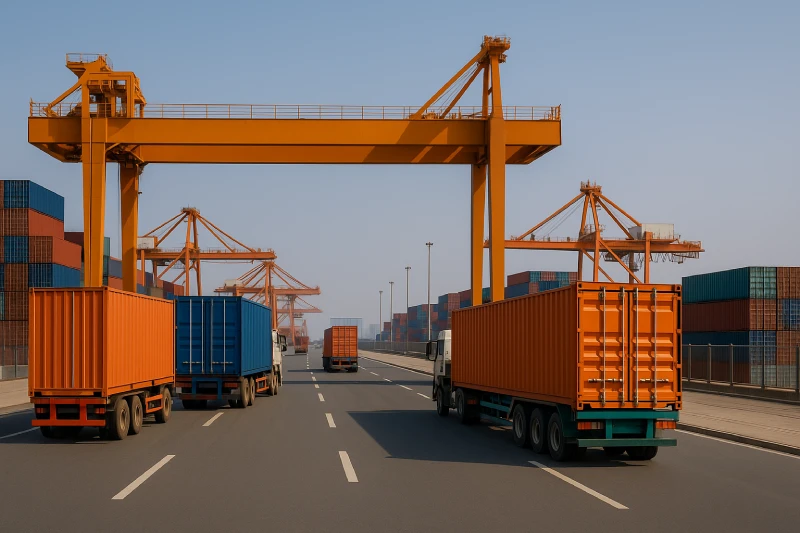
These examples highlight the port’s efficiency in both ocean and air freight, as well as its suitability for different cargo types and delivery timelines.
1. Ocean Freight: Fuel Filters from Guangzhou to Jebel Ali (UAE)
Winsail Logistics arranged a door-to-door SEA+DDP shipment from Guangzhou to Jebel Ali, transporting 3.27 CBM of fuel filters.
The cargo was delivered within 25 days, including export handling, international transportation, destination customs clearance, and final delivery to the client’s warehouse.
This case demonstrates Guangzhou/Nansha Port’s reliability for:
- Medium-volume industrial goods
- Middle East FCL/LCL shipments
- Time-sensitive DDP deliveries with smooth customs handling
Full case study:Door-to-Door Fuel Filter Shipment from Guangzhou to Jebel Ali
2. Air Freight: Solar Panels from Guangzhou to Doha (Qatar)
In another project, Winsail Logistics supported a Qatar-based renewable energy installer by exporting 276 kilograms of solar panels from Guangzhou to Doha via CZ Airlines.
The goods were delivered within 1 day, ensuring fast, secure transportation for urgent photovoltaic equipment required at the client’s site.
This example highlights Guangzhou’s advantages for:
- High-value and fragile cargo
- Urgent air freight shipments
- Time-critical deliveries to the Middle East
Full case study:Air Freight Solar Panels from Guangzhou to Doha
FAQs
1. What is the main advantage of exporting from Guangzhou/Nansha Port?
Guangzhou—especially Nansha Port—offers lower trucking costs from major Pearl River Delta manufacturing zones, stable weekly sailings, less congestion, and competitive freight rates. It is often more cost-efficient than Shenzhen or Hong Kong for suppliers in Foshan, Zhongshan, Dongguan, Huizhou, and Jiangmen.
2. Is Nansha Port better than Shenzhen ports (Yantian / Shekou) for exports?
For many exporters, yes. Nansha usually provides lower inland transportation costs, more flexible cut-off times, smoother traffic flow, and shorter truck turnaround. Shenzhen ports offer strong global routes, but Nansha is often more economical and efficient for PRD-based suppliers.
3. What are the main types of cargo exported through Guangzhou Port?
Guangzhou Port handles a wide range of products including electronics, home appliances, furniture, lighting, hardware, machinery, auto parts, consumer goods, and building materials. Xinsha Port also supports Ro-Ro shipments for vehicles and heavy machinery.
4. How long does it take to ship from Guangzhou to the Middle East, Africa, Europe, or the U.S.?
Typical ocean freight transit times are:
• Middle East: 14–20 days
• East Africa: 22–30 days
• West Africa: 30–40 days
• Europe: 28–40 days
• U.S. West Coast: 15–20 days
Actual timing depends on the carrier, routing, and season.
5. Does Guangzhou Port support LCL consolidation for small shipments?
Yes. Nansha and Huangpu offer strong LCL consolidation services with frequent departures to major global markets. This makes Guangzhou a good option for mixed goods, e-commerce shipments, and smaller export volumes.
6. Is Guangzhou Port suitable for urgent or high-value air freight shipments?
Absolutely. Guangzhou Baiyun International Airport offers extensive air freight capacity, and many exporters use a combined “factory pickup + airport export” workflow for urgent deliveries. This is ideal for electronics, solar equipment, spare parts, and time-sensitive goods.
7. Can Winsail Logistics arrange door-to-door or DDP shipments from Guangzhou?
Yes. Winsail Logistics provides end-to-end export solutions including factory pickup, consolidation, customs declaration, international shipping, destination customs clearance, and final delivery. DDP services are available for selected countries and cargo types.
Need Help Shipping from Guangzhou Port?
Shipping from Guangzhou or Nansha Port can be highly efficient when supported by the right logistics partner.
Whether you are handling FCL, LCL, air freight, Ro-Ro, or time-sensitive shipments, Winsail Logistics can coordinate everything—from factory pickup and customs clearance to international transportation and final delivery.
If you are sourcing from Foshan, Dongguan, Zhongshan, Huizhou, Jiangmen, or anywhere in the Pearl River Delta, our team can recommend the best route, carrier, and shipping mode based on your product type, budget, and timeline.
Contact our logistics specialists today to receive a tailored shipping quote and expert guidance for your next shipment from Guangzhou/Nansha Port.
